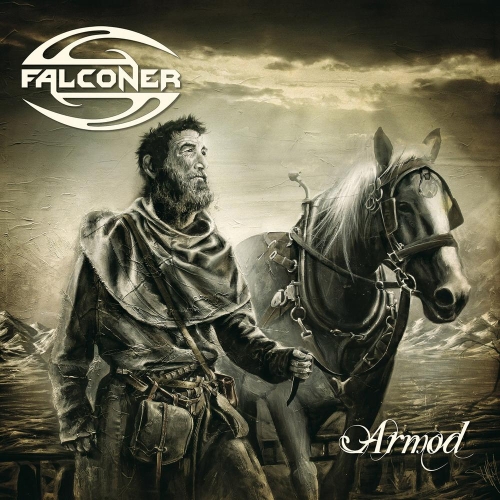
Falconer is a band I’ve been encouraged to listen to for close to a decade now, and a few song samples aside I did a fine job of ignoring them. The term “power metal”, for all the fabulous bands associated with it, is something of a caution sign. I see it and brace myself for either high-pitched whiny singing or operatic vocals excessive to the point of being cheesy, coupled with completely generic, repetitive riffs that without fail give way after the second chorus into the guitar solo equivalent of a mid-life crisis mobile.
Song: Svarta Änkan
Thankfully, Armod is not that kind of power metal album. You might think it is briefly on the first track, but there are early signs of deviation. Within 45 seconds Mathias Blad softly explodes onto the stage with a vocal performance reminiscent of Vintersorg’s work with Otyg. Not too much later (around 1:20) the guitarist changes course, mimicking the vocals with deep and pronounced tones that likewise resemble Otyg. Sure, the structure of the song follows a power metal standard, complete with a slightly overdone guitar solo that you hear coming a mile off, but Mathias’s singing, his choice of Swedish over English, and that folk metal style guitar that accompanies him and takes the spotlight around 5:15 all point to something more.
Song: Herr Peder Och Hans Syster
That something fully manifests in the second track, Dimmornas Drottning, but I’m going to go ahead and post Herr Peder Och Hans Systerinstead, it being my favorite on the album. It lacks the violin that distinguishes Dimmornas Drottning (another feature reminiscent of Otyg), but the vocals and guitar pair up just perfectly from start to finish. And with the exception of a mild reminder in the chorus, you would never know the band had heard of power metal let alone performed it for ten years. It’s about as folk metal as you can get with nothing but guitars, drums and vocals.
Song: Griftefrid
What’s really great about Armod though is that it’s not a folk metal album either. It will go down as folk/power metal, and rightly so I suppose, but what I’m really hearing is a conscious melding of styles. When I say some of the songs remind me of Otyg, it goes beyond a mere coincidental resemblance. I think their music was actively influential on the creation of this album. Likewise, Griftefrid offers up the power of black metal-influenced symphonic acts like Equilibrium because, I think, Falconer actively listens to music of that sort and made a conscious effort to integrate it into their own sound.
Song: Eklundapolskan
The end result is one of the most stylistically diverse albums I’ve heard all year, and it is diverse in the best possible way. This is the sort of album you could have never experienced in the dark ages of the 90s, when people still had to hunt down new music in person and pay hard cash for every release. I could be wrong, but I think Falconer really did their research on this one.
The album’s only down side is a set of “bonus” tracks at the end, comprised of songs from the album proper remixed with English vocals. Skip them, I beseech you. The Swedish vocals are the centerpoint of this album, around which all of the various metal trends Falconer incorporate coalesce.
With Rise of the Planet of the Apes coming out in August, I figured why not go ahead and review the original Planet of the Apesfilms. No, I don’t mean the terrible Tim Burton film. I’m talking about the old school sci-fi series from the early 70s. For the next five days, I’ll be reviewing each installment of this landmark series of monkey-centric Let’s start at the beginning with 1968’s Planet of the Apes.
The plot of Planet of the Apes is pretty well-known. Arrogant earthman takes off from Earth, goes through some sort of time portal, and crash lands at some point in the far future. Our “hero” finds himself on a planet where all the humans are mute savages and society is dominated by equally arrogant, talking apes. (“A planet where apes evolved from man!?”) Eventually, the Earthman reveals that he can speak, he escapes captivity, and — accompanied by his mute concubine — he enters what the Apes call the forbidden zone. And, once in the forbidden zone, he discovers “his destiny” as old Dr. Zaius puts it.
It’s difficult to review a film like the original Planet of the Apes because the film itself has become a part of American culture. Even if you’ve never seen the film, you feel as if you have. Whether you’ve seen the famous ending or not, you know that it features Taylor (Charlton Heston) on his knees in front of the ruins of the Statue of Liberty, raving and cursing while the mute and confused Nova (Linda Harrison) watches. Everyone understands the significance of such famous lines as: “Take your stinking paws off of me, you damn, dirty ape!” and “Goddamn you all to Hell!” regardless of whether they’ve actually seen them delivered.
Of course, it can be argued that the fact that the film has become such a part of our culture is proof of the film’s quality. However, I would argue that the proof of the film’s quality comes from the fact that it remains a watchable and entertaining film despite having become such a part of the culture. It says a lot that a film can stay enjoyable despite being respectable.
Why does the film still work despite the film’s main selling point — the surprise ending — being neautralized by the passage of tinme? A lot of the credit, I think, has to go to the apes themselves. Even under all that makeup, Roddy McDowall as Cornelius, Kim Hunter as Zira, and especially Maurice Evans as the iconic Dr. Zaius all manage to create interesting and intriguing characters who just happen to be apes. Before long, you forget about the makeup and instead, you’re more interested in seeing how Zaius is going to handle this latest challenge to his society.
That challenge, of course, comes from Charlton Heston. Everyone is always quick to make fun of Heston as an actor and it’s true that his range was limited. Frequently, the men he played came across as the type of chauvinistic, pompous heroes that were never quite aware of the fact that everyone was secretly laughing at him. And it is true that Heston has several of those moments here in Planet of the Apes. Even his famous final scene is, to be honest, almost painfully over the top.
And you know what?
In this film, it works perfectly. I don’t know if an actor has ever been more perfectly cast than Charlton Heston was in Planet of the Apes. In the role of Taylor, Heston basically spends the entire movie acting like a complete and total pompous ass. Whether he’s recording a “fuck you” message for Earth at the beginning of the film or if he’s arrogantly dismissing Zaius before entering the Forbidden Zone, Heston comes to epitomize every single thing that we tend to dislike in our fellow human beings. As played by Heston, Taylor is the perfect clueless hero and a lot of the film’s perverse pleasure comes from watching this paragon of masculinity and superiority repeatedly humbled.
And that, ultimately, is why Planet of the Apes remains a watchable film so many decades after it was made. Good satire never goes out of style.
Let’s be honest — the Academy Awards are rarely presented to the best in film. That’s part of why I love them — you can spend a lifetime debating and second guessing the films, performers, and craftsman. that the Academy annually chooses to recognize with an Oscar.
With that in mind, here’s the first entry in a little something that I like to call Let’s Second Guess The Academy.
In this post, I’m focusing on the contest for Best Picture of 1990. In that contest, the Academy nominated five films — Awakenings, Dances With Wolves, Ghost, The Godfather Part III, and Goodfellas. In the end they named Dances With Wolves the best film of 1990. Were they right?
You tell me.
And now, let’s make things really interesting by considering which films you would have nominated if those five nominees had never been made. Vote for up to five and let’s show the Academy how it’s done.
Earlier this year, I said that — based on the trailer alone — Sanctum appeared to be a terrible film. At the time, a few people disagreed with me. “Yes,” they said, “the trailer is a collection of clichés and the plot looks incredibly predictable and the selected dialogue is so tin-plated that it probably attracts radio waves but this is just an adventure film. STOP BEING SO GODDAMN JUDGMENTAL, LISA MARIE!”
Well, needless to say, that made me shut my little ol’ mouth all nice and quick.
Anyway, Sanctum opened in theaters on Super Bowl weekend and, if I remember correctly, it didn’t even play for a full week. It was such a box office bomb that it was yanked out and replaced by a Miley Cyrus film on Tuesday. Again, that’s if my memory serves correctly. As a result, I didn’t get a chance to see this film in the theaters. Instead, I had to wait to see it OnDemand. Was it as bad as I expected? Well, it wasn’t quite the disaster I was expecting but, at the same time, I still find myself resenting having to admit that I actually “demanded” to see Sanctum.
There are two misconceptions that need to be cleared up about Sanctum. One is that it’s a James Cameron film. Cameron is credited as being executive producer because his 3-D cameras were used to film the movie. (Also, I’ve read that he is a friend of Andrew Wright, who co-wrote the script.) However, the film itself was directed by Alister Grierson who tries to give everything a Cameronesque feel. In Grierson’s defense, he succeeds in that all of the characters are forgettable and that you’re never actually surprised by anything that happens on-screen.
The other is that the film is, as we’re told during the opening credits, based on a true story. Actually, it’s based on the fact that Andrew Wright apparently likes to swim around in caves and he once got trapped with a party he was leading and nearly drowned. However, nobody in his party died and I’m guessing that, at some point, someone may have actually said something half-way witty. As a result, that incident doesn’t really seem to have much to do with anything seen during Sanctum. As a lover of grindhouse and exploitation films, the blatant falsehood of the “Based on a true story” credit doesn’t bug me. In fact, it was my favorite part of the film.
Anyway, Sanctum is about a bunch of cave divers who get stuck in a flood and have to swim and dive their way to safety. It actually starts out pretty well, with a lot of aerial footage of Papua New Guinea and the initial cave diving scenes are genuinely exciting. But then, eventually, the story has to start up and everyone start to talk and the actors have to breathe some life into the cardboard characters and the whole film becomes so determined to be nothing special that it starts to get genuinely annoying.
Eventually, the cave ends up flooding and I guess you’re supposed to wonder — who will survive? Will it be model Victoria (Alison Parkinson), who keeps panicking because she’s a woman? Or how about Victoria’s boyfriend (played by Ioan Gruffod), who is rich and unlikable? How about George (Dan Wylde), who is getting older and serves as a mentor/sidekick to the group? Or maybe it’ll be Luko (Cramer Crain), who is a native who specifically decides to stick around to save all the white foreigners. Or how about the crusty, veteran diver (Richard Roxburgh, who has apparently never met a line he couldn’t shout into pointlessness) who has a strained relationship with his headstrong song (Rhys Wakefield) who just happens to be trapped down there with them all?
Seriously, who’s going to survive!?
Anyway, if it seems like I’m being really hard on this film, it’s because there’s enough hints of what the film could have been that it makes you resent, all the more, what the film eventually turned out to be. As I said before, even at its worst, the film is beautiful to look at. Admittedly, I’m both scared of water and intensely claustrophobic but, even taking that into account, the early scenes of the cave flooding and the characters fighting for survival are well-directed and genuinely frightening. This is a film that is at it’s best when characters are drowning because it means they can’t speak and we don’t have to listen to anymore of that terrible dialogue.
In the end, Sanctum goes to show that sometimes, you should trust the trailer…
This latest “Song of the Day” marks the final and third entry in the weekend-long theme of picking song and music from The Lord of the Rings Trilogy. What better choice to cap of this themed weekend than picking the final song to close out Peter Jackson’s fantasy epic: “Into the West”.
It’s this song as composed and arranged by the trilogy’s master composer, Howard Shore, featuring the vocal talents of singer Annie Lennox. Her work on this song was at times quite gentle and subdued with some strong vocals once the chorus arrives and repeats a second time. Some have complained that someone with more classical training would’ve been better suited to tackle this song, but I rather enjoyed Lennox’s powerful rendition of the chorus in the song.
“Into the West” is a song that’s both one of hope and a bittersweet lament as it speaks of the leaving of the Elf race on their Grey Ships to sail into the west towards Valinor. Some of the lyrics in the song even comes from sections of the final chapter of The Return of the King novel.
When this song played at the end of The Return of the King it surely brought more than just a few people to tears as it helped marked the end of three years of fantasy filmmaking which became a cultural phenomenon from 2001 through 2003 as the world became enraptured by Peter Jackson’s fantasy trilogy. What better song to end this weekend theme than the very song which ended the trilogy of which this weekend was all about.
Into the West
Lay down Your sweet and weary head Night is falling You have come to journey’s end Sleep now And dream of the ones who came before They are calling From across a distant shore Why do you weep? What are these tears upon your face? Soon you will see All of your fears will pass away
Safe in my arms You’re only sleeping
What can you see On the horizon? Why do the white gulls call? Across the sea A pale moon rises The ships have come to carry you home And all will turn To silver-glass A light on the water All souls pass
Hope fades Until the world of night Through shadows’ falling Out of memory and time Don’t say We have come now to the end White shores are calling You and I will meet again
And you’ll be here in my arms Just sleeping
What can you see On the horizon? Why do the white gulls call? Across the sea A pale moon rises The ships have come to carry you home And all will turn To silver-glass A light on the water Grey ships pass Into the West
“Arise, arise Riders of Théoden (Riders of Rohan)! Fell deeds awake: fire and slaughter! Spear shall be shaken, shield be splintered, a sword-day, a red day, ere the sun rises! Ride now, ride now! Ride for ruin… and the world’s ending! Death! Death! Forth Eorlingas!” – Theoden, King of Rohan
This marks the final “Scenes I Love” series from Peter Jackson’s fantasy epic, The Lord of the Rings. The last couple days have seen a favorite scene picked from the first two film. Today’s pick was a tie between two scenes. One a third of the way into The Return of the King with the second being two-thirds in and a logical consequence of the first scene picked. I could’ve easily picked one over the other, but I’ve always seen the two as connected in some way. I also didn’t want to pick one over the other so we have two scenes instead of one. I say that’s a bonus for everyone.
The first scene was (continues to be one of my most favorite scenes ever put on film) the lighting of the beacons which signals Gondor’s call for aid to it’s far neighboring kingdom of Rohan. This scene just builds and builds until the rousing “Gondor theme” reaches it’s peak and shows each beacon lighting up one right after the other until it reaches the mountain peaks outside Rohan. No matter how often I see this scene (especially now on blu-ray) I can’t help but still feel a sense of awe at what Peter Jackson and his crew pulled off. One buys into the scene and just marvels at the sequence. A film which, up until the lighting of the beacons, had such a hopeless tone to it suddenly had hope appear.
The second scene finally sees the culmination of the lighting of the beacons. Rohan has responded in force as every able-bodied man and his horse have gathered on a rise above Pelennor Fields. With Theoden knowing the forces of Sauron arrayed and besieging Mina Tirith dwarfs even his own cavalry force he nonetheless orders his men to charge the Mordor lines to help break the siege. His speech in this scene trumps even Aragorn’s own rousing speech later on in the film which is saying much. The charge of the Rohirrim down into the Mordor lines gets a nice assist from Howard Shore’s score which begins with the “Rohan theme” signalling the arrival of the Rohirrim to the battle then transitioning to the “Nature theme” which is heard for the first time in full orchestral mode before returning to the “Rohan theme” as the Rohirrim charge finally crashes into the Mordor lines.
The charge itself looked great when I saw it on the big-screen and still the best way to see it. Barring not seeing it on the big-screen the best option would be to see it on blu-ray and on a large HDTV screen. The wide, overhead shot of the massed cavalry gradually gaining speed with Theoden at the elongating tip in the middle makes for great, epic filmmaking. The scene sells itself as Jackson used hundreds of extras in real armor and on charging horses (with CGI copies expanding their numbers into the thousands) to show true weight to the scene. I recommend to those who want to revisit this scene to watch it again but using their surround sound system on high and feel the thundering hooves of the charging Rohirrim until they crash into the Mordor lines. It’s the only way to see and experience the scene.
“Say goodbye to classical reality, because our logic collapses on the subatomic level… into ghosts and shadows.”
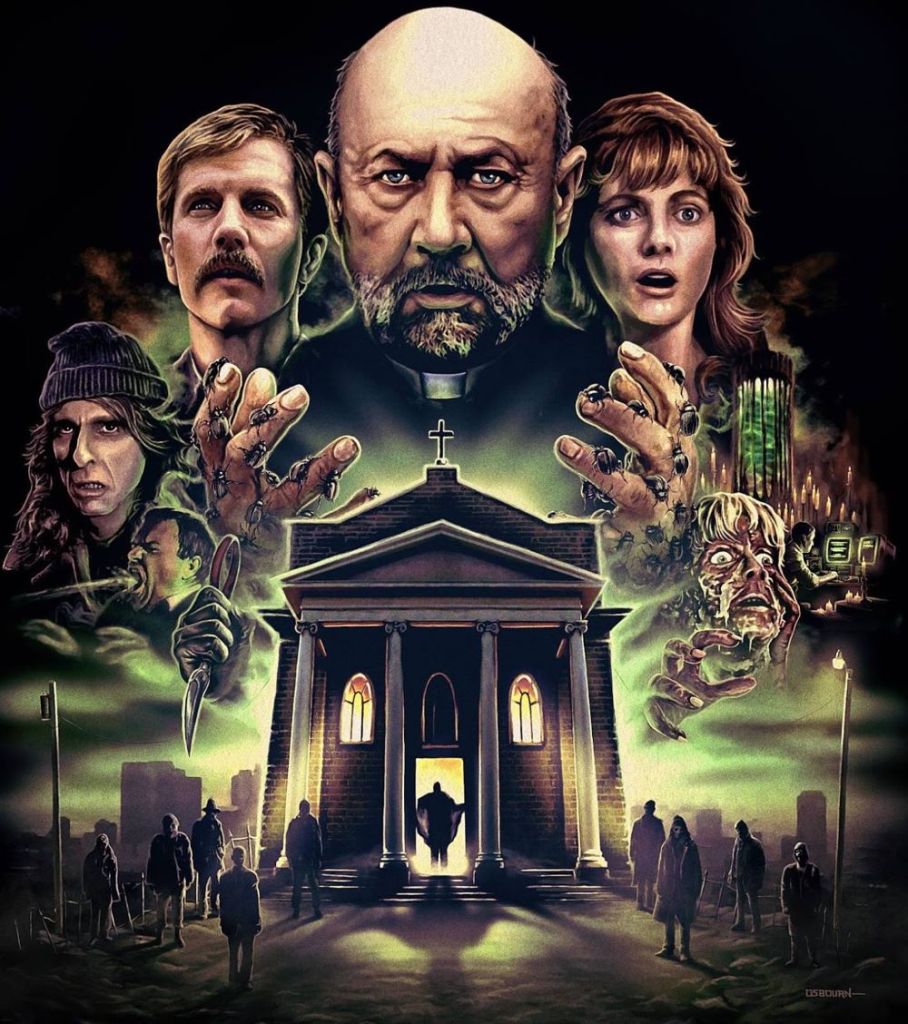
John Carpenter’s Prince of Darkness is a criminally underrated entry in his canon—a blend of philosophical, apocalyptic horror and supernatural mystery that’s as unsettling as it is deliberately strange. Released in 1987, the film often gets eclipsed by Carpenter classics like The Thing and In the Mouth of Madness. Even so, it stands out as a unique organic link between science-driven paranoia and cosmic horror—the sort of film that grows on you as you unravel its layers.
The setup is simple but immediately offbeat: In a derelict Los Angeles church, Father Loomis (Donald Pleasence, always at his nervous best) stumbles on a swirling green cylinder hidden away in the basement. Loneliness and age hang over Loomis as he realizes this is no mere relic but possibly the essence of absolute evil—the literal embodiment of Satan. Sensing he’s in over his head, the priest reaches out to Professor Birack (Victor Wong), a physicist whose rational mindset is quickly tested by the uncanny. Birack arrives with a diverse team of grad students and lab techs, each bringing curiosity, skepticism, and just enough personality to keep things lively.
What starts as an academic investigation quickly goes off the rails. Strange, shared dreams trouble the researchers—fragmented transmissions from the future, warning of disaster in unsettling, VHS-glitch style. Meanwhile, the area outside the church transforms into a kind of urban wasteland: homeless people, gripped by an unseen force, stumble with zombie-like intent, trapping the group inside. Inside, members fall prey to unsettling phenomena, from unexplained possession to increasingly grotesque violence. There’s a sense that the evil in the cylinder isn’t content to simply stay put—and the combination of supernatural implication and scientific uncertainty gives everything a persistent, gnawing tension.
Carpenter directs the film with measured, stifling precision. His color palette—rotting yellows, bruised greens, washed-out sunlight—creates a perpetually uneasy mood. He uses slow tracking shots and carefully composed frames to ratchet up suspense, and the score (co-composed with Alan Howarth) pulses with ominous synths that buzz beneath all the dialogue, making even the film’s quieter moments feel restless and charged with threat. Compared to the gooey spectacle of The Thing, the terror in Prince of Darkness is more metaphysical—less visible monsters, more eroding reality.
Sound and image work together to keep the audience on edge: moments of unsettling silence are punctuated by visual oddities, like swarms of bugs or the warped geometry of the church’s shadows. The group’s scientific attempts to decode the evil—a jumble of quantum theory, apocalyptic Christian lore, and unsettling mathematics—do more to ramp up anxiety than offer answers. Carpenter seems to delight in ambiguity; the revelations never clarify so much as deepen the void, giving shape to a primordial kind of fear.
The film’s most iconic device is its recurring nightmare sequence, where the group—cut off from the world—witnesses a cryptic, shadowy figure emerging from the church, broadcast as a tachyon transmission from the future. It’s classic Carpenter: deeply unsettling, oddly hypnotic, and open to any number of interpretations. The blending of science fiction and theological horror feels fresh and ambitious, and it’s fair to say these sequences alone have ironically kept the film alive in horror culture discussions and remixes.
The cast, featuring Pleasence and Wong, manages the film’s shifts in tone—moving from banter about theoretical physics to genuine terror with surprising ease. The grad students are likable enough for you to root for, especially Lisa Blount and Jameson Parker, who carry the emotional brunt as things collapse. Alice Cooper’s cameo as a silent, menacing street dweller further anchors the film’s reputation for “unexpected creepy” in the best way possible.
While there are flashes of gore—possessions, injuries, even some memorable stabbings—Carpenter resists making violence the centerpiece. The real horror here is psychological: paranoia, loss of agency, and the collapse of foundational beliefs. Where The Thing was about trusting (or not trusting) your friends, Prince of Darkness is about grappling with a world where even faith and science seem powerless and interchangeable in the face of the unknown.
Thematically, this is Carpenter at his most cerebral and bleak. The notion that neither faith nor science can adequately tackle the unfathomable echoes Lovecraft, yet Carpenter grounds it all in urban decay and deadpan dialogue rather than Gothic flourish. The questions get bigger—what good is faith if truth is poisonous, and what does science matter against a force older than logic? Dialogue about quantum uncertainty and theological paradoxes isn’t there to solve anything, but to make everything less secure.
If the film has a flaw, it’s that its pacing feels deliberately patient—some might say slow. Tension accumulates gradually, and you’re invited to sit in the discomfort as the group loses sleep, loses one another, and loses touch with reality. As the stakes escalate, the line between dream and waking life shreds, leading to an ending that’s haunting, ambiguous, and deeply open-ended. There’s no neat wrap-up or cathartic victory—only trauma, unsolved terror, and a lingering sense that evil never really left, just waited.
It’s this refusal to explain or comfort that gives Prince of Darkness its lasting cult appeal. Carpenter puts cosmic pessimism front and center: knowledge itself stands as a kind of curse, and both faith and reason bend beneath the weight of mystery. Rather than offer solutions, the movie warns about the dangers of peeling back reality’s surface—a theme that’s only grown more unsettling in the years since it was made.
Watching Prince of Darkness now, the film may not fit everyone’s idea of a fun Friday-night scarefest. But if you want horror that’s slow, dense, and sticks with you, this is essential viewing. Carpenter delivers a bleak, hypnotic nightmare about what happens when explanations fail—when the universe itself seems ready to swallow us whole. Whether you’re a die-hard genre fan or someone looking for something different, Prince of Darkness is cult horror at its most unshakable—proof that the scariest stories are often those that leave their deepest secrets unexplained.
For my chosen song from Howard Shore’s orchestral film score for Peter Jackson’s The Lord of the Rings: The Two Towers I picked the tune which starts off my favorite scene in from that film. This will be the latest song for “Song of the Day”.
“Theoden Rides Forth” begins with the scene of Theoden, Aragorn, Legolas and what remains of the Rohan cavalry riding out for one last time out of the Keep at Helm’s Deep into the thick of the Uruk-Hai forces. The song takes the “Rohan theme” first heard in the early part of the film, but with a heroic flair that transitions to full brass blaring the theme to great effect. The song then segues into a brief appearance of the “Fellowship theme” as Gandalf, Eomer and the Rohirrim appear to save their king and companions. From there the song brings in the “Shadowfax theme” with child soprano Ben Del Maestro providing the solo chorus as the charge comes down the steep incline and into the ranks of Uruk-Hai waiting below. But the song doesn’t end there as it moves into the follow-up scene using the “Nature theme” to show Treebeard and the Ents make their final march to war against Isengard.
This track from the score finishes off the two parallel story lines of Helm’s Deep and Isengard. The transitions in the song from one story line to the other were flawless. The fact that Shore was able to incorporate and combine so many different themes not just from this film but from the previous one shows an artist who is definitely a master of his craft. There’s no denying why “Theoden Rides Forth” became the best tune from the The Two Towers film score and why so many fans of the film and the score wholeheartedly agree.
Yesterday, I had chosen my favorite scene from Peter Jackson’s The Lord of the Rings: The Fellowship of the Ring. Today, I just finished re-watching the sequel to that film (though I think of it more as the second act of a 12-hour film), The Two Towers. From this second act I chose the one of the three climactic sequences in the film: Gandalf the White’s arrival and subsequent charge of the Rohirrim to break the siege of Helm’s Deep.
This second act had so many excellent scenes. From the last march of the Ents as they go to war against Isengard, to Gandalf’s descent and fight against the Balrog right up to the hour-long battle for Helm’s Deep. In the end, it was the charge by Gandalf, Eomer and the Rohirrim which sealed the deal for me. It wasn’t just the dramatic entrance of these characters to save their friends, but Howard Shore’s score which really added to the scene.
I love how just as the Rohirrim charge was about to smash into the front ranks of the Uruk-Hai spearmen the sun behind the charge peaked above the top of the incline and blinded the defenders at the bottom. For someone who has studied military tactics and maneuvers in battle this was a textbook use of the sun at a charging forces back to blind and confuse the enemy. Many who saw this film probably just saw it as just part of the scene, but not I. This is the major reason why this scene was my favorite in The Lord of the Rings: The Two Towers.
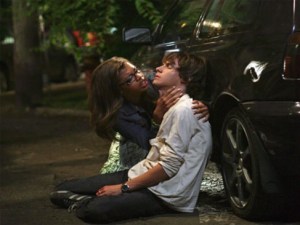
So last night, as I fought insomnia and planned my upcoming road trip, I happened to watch an infamous episode of Degrassi: The Next Generation, Rock This Town. This was the 11th episode of the 6th season and it’s probably inspired more YouTube music videos than any other episode of the show.
Why Was I Watching It?
Okay, so I’ll just be honest here. Degrassi: The Next Generation has been one of my guilty pleasures ever since it first started airing here in the states. And when I say guilty, that’s not necessarily a slam on the show. As far as shows about teenagers dealing with every social issue under the sun are concerned, none can come close to Degrassi. When I was younger, the pleasure of this show came from the fact that the characters were actually doing the same stupid stuff that I was doing in school. Then, in college, Degrassi was the show that you’d get high and then watch. And now that I’m technically an adult, this show just makes me nostalgic. Either way, it serves a good purpose. Or at least it did. I hear that the more recent episodes kinda sorta suck but I only catch the reruns anyway.
What Was It About?
In this episode, Emma’s parents went out of town so every high school student in Canada showed up at her house to party. She had been planning on having sex with her boyfriend Sean that night but unfortunately, she ended up getting so drunk that she instead ended up spending the whole night vomiting in a trash can. (Been there, done that — no, you can’t quite recover from it but you can just get a new boyfriend.)
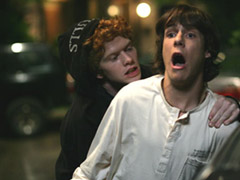
Meanwhile, reformed class clown J.T. realized — while at the party — that he was still in love with his boring ex-girlfriend Liberty, despite the fact that Liberty’s kind of a pill and was always my least favorite character on the show. J.T. went looking for Liberty to tell her that he loved her but before he found her, he ended up getting stabbed in the back by a kid from the rival high school. Liberty comes across J.T. who dies without ever letting her know that he loves her.
Seriously, that’s what happens.
What Worked
The thing I loved about this show is the way it always managed to embrace the principle of the worst possible thing that can happen will happen. For all the controversy over the fact that the show regularly dealt with issues like teen sex and teen violence, few commentators seemed to notice just how reactionary this show usually is. In the world of Degrassi, if you have unprotected sex, you will get pregnant. If you try drugs, you will end up getting addicted and having a psychotic breakdown in front of someone who could have been very important to your future. If you drink and drive, you’re going to total the car. If you bully another student, you better believe that student is going to attempt suicide by the end of the episode. And here, we learn that if you throw a party while your parents are away, the funniest, most likable student at school will end up getting murdered by a complete stranger.
Seriously, whenever I start to get annoyed with all of my Catholic guilt, I watch this show and realize that I’m right. I am doomed.
What Didn’t Work?
Liberty was such an annoying character and the fact that J.T. died because he was looking for her didn’t serve to make her any less annoying.
“Oh my God! Just like me!” Moments
As I already mentioned, I couldn’t help but relate to Emma as her night of passion was ruined by the fact that she was busy throwing up in a trash can. Luckily, she had someone there to hold back her hair. Seriously guys, there’s an art to doing that. I speak as someone who has had her hair manhandled by far-too-many clumsy good Samaritans. I mean, don’t get me wrong — I love you guys but ouch! Holding my hair back does not mean ripping it out by the roots.

 Through the Shattered Lens