It is once again time for another offering of The Daily Grindhouse. This time around our latest grindhouse flick comes straight from Spain. I speak of the classic zombie flick, Tombs of the Blind Dead.
The film was shot and filmed wholly in Spain in 1971 by one of Spain’s foremost horror directors, Armando de Ossorio. His film became part of what he became famous for in the horror circles and that is his Blind Dead Tetralogy. This first film in the series I still consider the best of the bunch. While it helped bring about the renaissance of the European zombie cinema craze of the 1970’s this film by Ossorio takes on a different tack from its more gross-out and gore-laden Italian cousins.
Ossorio’s film was all about supernatural and less about zombie apocalypse. His zombies were the ressurected Templars (evil in the way the film portrays them) whose eyes were plucked out by birds during their executions by way of the gallows. The film described them as demon-worshipping knights who performed Satanic rituals to gain power and immortality (propaganda pushed by the French king of the 13th Century and the Catholic Church in Rome to paint the knightly order in a bad light). These zombie knights never did get a full explanation why they rose from their tombs during the film, but for films such as these the scant explanations were always part of their charms. One either bought into the premise in the first 10 minutes or they didn’t. I, for one, bought into it hook, line and sinker the moment the first zombie knight rose.
The film was gory but not in the flesh-eating variety most zombie flicks tended to be. Tombs of the Blind Dead in its international version also showed a lot of sexuality in some of the scenes with nudity part of the norm. The film also was quite good in establishing dread and horror by the use of a creep atmosphere not just from the dark Spanish countryside but from the way the zombies hunted. Being blind they hunted by the sound of the living victims’ breathing and heartbeat. This premise led to some very tense moments as those trying to escape the zombie knights would try to stay silent as the zombies approached their hiding places.
It’s a shame that Ossorio never got the budget to truly pull of what he envisioned with this film and the rest of the tetralogy, but for having as low-budget that he had to make them he definitely created some of the higher-quality grindhouse flicks of the 1970’s.
James Gunn first got his chance to work in the horror-comedy genre with his time in Troma Films. His first contribution to the genre being a send up of Shakespeare’s Romero and Juliet aptly titled as Tromeo and Juliet. He next moved on to penning scripts for the major studios with his first two being the critically-panned, but profitable two Scooby-Doo live-action films. Gunn next moved on to writing a script reimagining George A. Romero’s classic Dawn of the Dead. Despite howls of protest from the original film’s legion of fans, the film went on to be a modest success and helped bring about the renaissance of the current zombie mania in all facet of entertainment. Gunn follows up the success of his Dawn remake by not just writing the script but finally getting behind the camera and directing it himself. I’m glad to say that James Gunn’s first directorial debut with Slither has turned out to be one fun, gross-out, disgustingly hilarious horror-comedy that brings to mind the splatter-comedy films of the 1980’s.
I say that Slither has alot in common with the horror-comedy during the 80’s just for the fact that we’ve not seen a film of this kind since. Slither brings to mind such 80’s B-movie shlock classics like Critters, Return of the Living Dead, and Night of the Creeps. But Gunn also pays some an homage to cult classics like John Carpenter’s The Thing. One of the character’s in the film and a store are even named after The Thing‘s badass antihero, R.J. MacReady. Then there’s the tip of the hat to Romero’s zombies, though this time around I would say that Gunn had more in mind the quickthinking and funny undead from John Russo’s Return of the Living Dead. There’s even a shout out to Invasion of the Body Snatchers as the alien slug-controlled populace are actually part of a much larger organism who thinks for all.
The story Gunn came up with for Slither was pretty straightforward and simple. Intelligent alien organism bent on world domination hitches a ride on a meteor which travel the depths of space until it falls on an unsuspecting planet. Unfortunately, the planet in question for the film happens to be Earth. Right from the get go the comedic aspect of the film begins even as the alien-laden meteor crash lands its way to one Wheelsy, N.C. A podunk town where the most interesting to happen each year is the annual Deer Cheer which signals the start of Deer Hunting season. We get to see the mundane day-to-day life of the townspeople from the pretty high school teacher Starla Grant (adorably played and with a strong sense of marital fidelity by Elizabeth Banks), the town’s obnoxious and foulmouthed Mayor MacReady (Gregg Henry’s performance was hilarious and he gets pretty much all the best one-liners), to its Chief of Police Bill Pardy (Nathan Fillion in Han Solo mode).
The alien soon finds a host in the town’s richest person who also happens to be Starla’s much older husband, Grant Grant. Michael Rooker (Henry: Portrait of a Serial Killer) plays Grant and his performance was both funny and sad. He pretty much starts morphing into a creature somewhere between Jabba the Hutt and a Lovecraftian squid-person. But through it all, Grant’s love for his wife manifests itself by way of the alien’s collective intelligence. When the townspeople all start getting infected by the large, slug-like offsprings of the main alien, it’s hilarious to find that they all share Grant’s love for Starla. It would seem that the alien collective learned abit or two from Grant about marital love and also a love of Air Supply’s syrupy ballad, “Every Woman in the World.” These zombies chant the word “Starla” instead of “brains.” The rest of the film was pretty much Starla, Bill Pardy and a small band of survivors trying to stop the Grant-alien, the slugs and the zombified townspeople from spreading out of Wheelsy and out onto the rest of the planet.
The film balances well between horror and comedy. The horror aspect of Slither comes from the many gory scenes. Trust me when I say that this film has more than its share of blood, gore and splatter. We’re shown dead and gutted pets and farm animals. Not to mention the requisite flesheating performed by the zombies. the great thing about the scenes of horror in Slither was the absence of CGI except for a scene or two and even then it was difficult to pinpoint which was CGI and which was animatronics and make-up effects. Slither‘s monster effect owes alot to the work of Rob Bottin and his crew who did the disgustingly creative effects on Carpenter’s The Thing. I’m glad to see that Gunn decided to forgo CGI for these scenes and went for more realism. Even if such realism were nauseatingly disgusting and gross. Just what a horror movie was suppose to be. The comedy part came not from the aliens and the scenes of horror, but from the characters reactions to the unfolding events around them.
Just like Shaun of the Dead, Slither’s characters stumble, bumble and trip their way through the crisis. Even Fillion’s character of Bill the Chief goes against the stereotypical hero from these type of film. He’s a smartass about his job and how he sees the people he’s suppose to protect, but when the time comes to do his job as protector he tries to do the best he can even though the best he can doesn’t measure up to what we’re suppose to get from our heroes. The dialogue was fast and wickedly sharp which made for alot of hilarious one-liners and most of them coming from the mouth of Slither’s Mr. Pibb-obssessed Mayor MacReady and his penchant for overreacting to everything and also for calling everyone cocksucker.
Slither doesn’t try to be anything but what it set out to be: a funny horror film with a large helping of slapstick, splatter and slime. In that respect, James Gunn succeeded with his writing and directing of Slither. The movie doesn’t bring any originality to the horror-comedy genre. To be honest, there’s not much originality left to bring to the genre, but Slither takes all the usual conventions from those 80’s horror-comedies and gives it a new millenium vibe. The acting by the cast was well-done and showed that they must’ve have fun doing the film. The special effects were done old-school style with nary a CGI-effect to be seen except for a few brief scenes. In the end, Slither was one fun, rollercoaster of a movie that scared the audience into jumping and recoiling in their seats and at the same time making them scream, shout and laugh when doing so. I’ve never had as much fun these last couple years watching a movie like I did with Slither.
I’ve always found the zombie debate amongst horror fans quite interesting as it offers a glimpse at people’s personalities. The debate I’m talking about is which zombies are better and scarier.
There are those who will always choose the zombies that were born out of George A. Romero’s imagination. I’m talking about the recently dead who have been revived to feed on fresh human flesh. These zombies also could be distinguished by their slow-moving nature with speed only a consequence of stumbling forward when prey is near. These are the zombies which made the genre itself so popular and so widely imitated since Romero first introduced them in the 1968 horror classic, Night of the Living Dead. While slow and easily avoided their numbers alone is the danger. The fact that not just those bitten turn into zombies, but anyone who dies whether by natural or unnatural cause makes them scary. This literally means that death itself has died and anyone who dies and not found immediately returns as a threat to the group.
The second type of zombies which have made a major renaissance in the last decade are the running zombies. Running zombies are not really new since Italian horror filmmakers during the 80’s used them frequently and were really made popular by the horror-comedy franchise of Return of the Living Dead their ability to scare lies more towards the fact that they’re fast. They’re not slow-moving and not easily avoided. It’s their very lively movements which puts the scare into people. The one consequence of the running zombies have been those using them to create a cause for the zombie. Whether it’s a biological/viral weapon gone amok or something supernatural (Brian Keene’s zombie novels uses this).
The third type is a combination of the two where the zombies are not slow moving, but can get up to speed when really motivated. These types also have a tendency to have intelligence beyond mere primal. They’ve retained either a modicum of their former brainpower or all of it. Enough so that they can talk, create plans to trap and/or even organize beyond the hive-mentality of the Romero-type. These kind of zombies have been relegated to novels and short stories. While still not prevalent in films they do provide genuine scares due to the fact that intelligence of the surviving humans stop being an advantage when fighting against zombies.
My choice has always been the Romero-type since they remain the most frightening in the most existential way possible. There’s no reason why people should lose to them yet in every film and story using the type these zombies always end up prevailing in the end. The other two I like as well, but bring up too many reasons of why losing to them is a possibility even with the advantages resting mostly on the survivors.
I’m sure this debate will continue to rage amongst horror fans and I’m sure it will get heated at times.
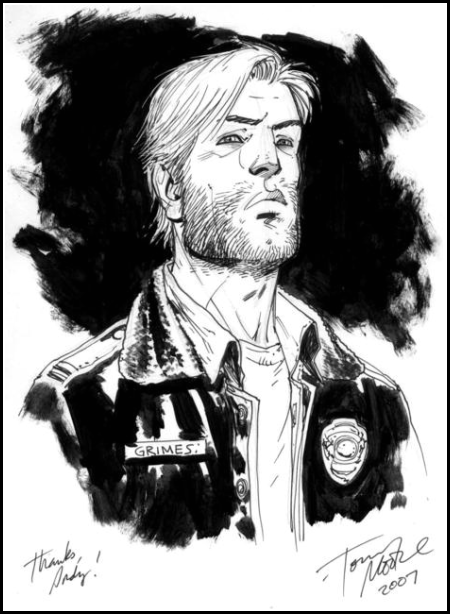
It looks like Andrew Lincoln’s character of Rick Grimes for AMC’s upcoming horror tv series, The Walking Dead, has finally found it’s wife. According to Michael Ausiello of Entertainment Weekly the role of Lori Grimes has finally been cast with Sarah Wayne Callies (previously seen in the now-cancelled Prison Break). She joins Andrew Lincoln to form the husband-and-wife in the tv series adaptation of Robert Kirkman’s popular and critically-acclaimed zombie apocalypse comic book series.
I like this choice in casting not just because Sarah Wayne Callies actually looks like the character, but her previous role in Prison Break looks to have been the perfect practice role for the part of Lori Grimes. Rick Grimes’ wife Lori could only be described as very troubled and keeping secrets of her own during her time away from Rick at the beginning of the series. While I wouldn’t call the character as hysterical she does pose some instability in the group dynamics which Rick has to carefully navigate if he has any chance of keeping his small group of survivors from dying out.
As more and more names get announced as becoming part of the show’s cast it looks like the series (6-episodes ordered for the moment) continues to move towards it’s early summer production start date. The Walking Dead looks to be one of the 2010 fall schedule’s most-anticipated new shows and here’s to hoping Darabont and crew’s initial 6-episodes hit it out of the park and earn the show more ordered episodes.
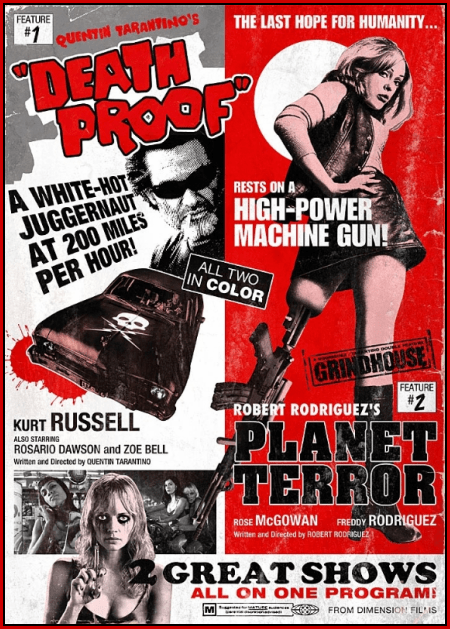
Robert Rodriguez and Quentin Tarantino have always professed to anyone within hearing distance their extreme and fanboyish love for the grindhouse days of filmmaking. Both directors’ resume of work look like a modern grindhouse films but with better writing, effects and directing. Anyone who grew up watching grindhouse film’s of the 70’s and 80’s can see it’s heavy influence on films such as From Dusk Til Dawn, Desperado, Pulp Fiction and Kill Bill. With 2007’s Grindhouse, both Rodriguez and Tarantino take their fanboy love for all things grindhouse and exploitation to a whole new level with personal take on the cheap John Carpenter-knock offs, zombie gorefests, slasher film and revenge-driven flicks that made being a young kid during the 70’s and 80’s quite enjoyable.
For those who do not know what grindhouse films are they’re the ultra-cheap and, most of the time, very bad, shlocky horror, revenge, softcore porn, badly-dubbed kung fu flicks and a myriad of other B- to Z-grade movies. These movies were shown in dingy, decrepit (usually former burlesque stagehouses) movie houses which showed double to triple-bills of titles for a low, cheap price all day long (where the popcorn and concession snacks were as stale as week-old coffee). These places and their films were book-ended by the cheap drive-in theaters which grew out of the suburban sprawl boom era of the 60’s and 70’s. One could not avoid the fact that the projector equipment were in bad shape and in desperate need of maintenance while the films played out. Then there’s the film reels themselves with their washed out sequences, out of focus scenes, burnt-in spots and missing film reels where the sex scenes would’ve been. This was the grindhouse experience and with the rise of Hollywood as a corporate entity even moreso than it’s been in the past and urban renewal projects by big city leaders, the grindhouse experience has pretty much faded away and kept alive only in the memories of its fans worldwide.
What Robert Rodriguez and Quentin Tarantino have cranked out with their three-hour long opus to those grindhouse days has been both a literal and thematic homage to an era long since gone. Grindhouse also has allowed Rodriguez and Tarantino to pull out all the stops in filming their respective halves of the film. Rodriguez went all-out in paying literal homage to the zombie gore-fests of George A. Romero, Lucio Fulci and Umberto Lenzi. Planet Terror plays like a hodgepodge of all the zombie movies from these masters of the walking dead but Rodriguez has the use of digital effects to match the over-the-top feel of the past zombie-fests without making the effects look too cheap.
The story for Planet Terror is quite simple yet full of so many incoherent subplots that trying to keep track with whats going on would just confuse a viewer even more. Rodriguez gets the grindhouse feel with such a ludicrous storyline. Whether it was done on purpose or not, the feeling of confusion in addition to the non-stop zombie action was only compounded even more by the digitally-added film stock scratches, burns to the edges of the reel and when the movie was about to get all hot and sexy, missing reel footage. Anyone who watched movies in grindhouse theaters would recognize the look quite well. Rodriguez goes all out in letting his zombie fanboy out. The violence in Planet Terror begins strong and just gets stronger and even more over-the-top right up to the final frame. Zombie’s getting their heads blown apart is shown in scratchy, loving detail with an impossible amount of blood, bone and brain for people to gawk at. The female characters are hot and sexy. Rose McGowan as Cherry Darling holds Planet Terror together with her spunky go-go dancer dreaming to be a stand-up comedienne turning into Ellen Ripley minus a leg but gaining an M16A3 w/ M203 grenade launcher as a leg prosthetic. Freddy Rodriguez as El Wray, her wayward and mysterious lover, almost seem to be channeling a hilariously bad version of Snake Plissken. These two make for quite the explosive couple as they must try and save their small Texas town from the infected townspeople turned pus-oozing, boil-ridden zombies.
Planet Terror sports a nice collection of current B-list actors like Josh Brolin (making like a Nick Nolte at his growliest) and Marley Shelton as a pair of married doctors with marital problems compounded by the increasing amount of zombies their hospital seem to be bringing in for medical help. There’s also genre veterans Michael Biehn, Jeff Fahey and Tom Savini to give Planet Terror the appropriate grindhouse look and feel to it. Ever the good friend and buddy collaborator, Rodriguez even gives Quentin Tarantino a role in his half of the film. He’s shown in the credits for Planet Terror as The Rapist. If any director seem destined to be one, if their love for movies didn’t steer them on the right path, Tarantino seem to look just like one to be called “Tha Rapist”.
There’s explosion and gore galore in Rodriguez’s ode to the zombie genre. Some who sees it might say there’s too much and they would be right if the title of the whole film wasn’t Grindhouse. I, for one, am glad Rodriguez decided to not hold back with what he threw onto the screen. I’m sure that when the dvd finally comes out and the unedited full version of Planet Terror is shown it’ll even surpass the 85-minute running time in the film. I think I can forgive Rodriguez for his gore excess and at times I actually wished for more, but then that would mean taking even more time before I get to Tarantino’s half of the movie. Planet Terror truly got the look of a grindhouse flick, but it’s Tarantino’s Death Proof half which got the spirit of grindhouse down to near-perfect.
Before Tarantino’s Death Proof half of Grindhouse begins the audience gets treated to a sort of intermission involving three fake trailers for movies which celebrate just how ridiculously fun grindhouse movies really were during the 70’s and 80’s. There’s Rob Zombie’s Werewolf Women of the SS which was this weird mish-mash of the women-in-prison flicks with that of the infamous Ilsa: She-Wolf of the SS films that brought about the exploitation in grindhouse. This trailer was great just for the inspired casting of Nicolas Cage as Fu Manchu and Sybil Danning as one of the so-called SS women werewolves. There’s also Edgar Wright’s fake trailer for Don’t (director of Shaun of the Dead and Hot Fuzz) which parodies the trailers for all the gothic, European haunted and horror movies where none of the actors in the trailer speak a word to make sure the film doesn’t get labeled as a “foreign film”. But it’s the third trailer in that intermission trio which had everyone in the audience reacting wildly.
Eli Roth’s Thanksgiving is a throwback to the seasonal-themed slasher flicks like Black Christmas but this time turns the yearly, turkey day and Pilgrim celebration into a trailer with some of the most disturbingly inventive scenes for a fake slasher movie. I don’t know what the Pilgrim serial killer was doing with that turkey at the end of the trailer but I’m sure it will have many people talking about it afterwards. It’s this Eli Roth trailer which fully captures the gritty and gratuitious nature of what makes a grindhouse horror movie. It’s also the one fake trailer I hope Roth would re-visit and turn into a full-length movie.
Now, with the trailers out of the way, Tarantino’s half of Grindhouse begins and we’re treated to a different take on the grindhouse experience. Death Proof begins as if it will continue Rodriguez’s literal examination and homage to the grindhouse experience, but after messing with the film’s focus, adding a few film scratches to the celluloid and even adding a missing reel gag, Tarantino suddenly slows all those grindhouse trickeries and actually ends up making a rip-roaring slasher-revenge-carchase flick. Tarantino takes one part slasher movie adds in a heavy dose of his own Reservoir Dogs (the talking between the female characters in Death Proof are as foul-mouthed and trivial as the diner scene in Reservoir Dogs) then mixes in equal amounts of Vanishing Point, Faster Pussycat! Kill! Kill! and I Spit On Your Grave. Instead of just mimicking these particular grindhouse classics, Tarantino uses his own flair for extended dialogue to slow down the pace of the film thus lulling the audience for the two pay-offs which happen in the middle and the end of Death Proof. Tarantino’s half of Grindhouse could’ve went nowhere with all its estrogen-laced talkies, but Kurt “I AM SNAKE PLISSKEN” Russell really saves the day once he makes his appearance as the automotive-themed serial killer, Stuntman Mike. Where Jason uses farming and bladed implements as his tool of the serial killing trade, Stuntman Mike uses both a 1971 Chevy Nova SS and a 1970 Dodge Charger R/T 440 as his weapons of choice. Both vehicles have been made death proof for filming violent car stunt sequences, but in order to appreciate it’s unique life-saving properties then one has to sit where Mike sits.
Kurt Russell can now add Stuntman Mike to his classic list of badass roles. Mike would feel quite welcome amongst the like of Snake Plissken, John J. MacReady, and Jack Burton to name a few of Russell’s classic characters. Mike comes across as cooly and slickly dangerous, yet not psychotic. His charm is quite disarming until it turns deadly. He really takes the slasher-character stereotype and turns it on its ear. Death Proof once again shows that when Tarantino gets to work with one of his boyhood idols he really gives them a role that they could sink their teeth into.
Death Proof captures the spirit of what makes a grindhouse exploitation film. Even with the heavy references to Vanishing Point, especially with a white 70’s Dodge Challenger used just like in that movie, Tarantino still injects his own brand of craziness to the whole movie. I know many who have complained that Death Proof was too much talk with only the car chase in the end being the saving grace. I politely disagree and say that it’s that very long periods of dialogue between the women in Death Proof that brings some of the spirit of grindhouse to the story. Many forget or don’t remember that most grindhouse cheapies had so much extraneous dialogue to hide the fact that the budget was low to none when the movies were being made so they had to fill-up the movie’s running time with as much nonsensical dialogue before the big effect shots payoff.
The final chase-scene between the Russell’s Stuntman Mike and the female-trio of Rosario Dawson, Tracie Thoms (channeling Jules from Pulp Fiction) and real-life stuntwoman Zoe Bell (she doubled as Uma Thurman in the more dangerous stunts in Kill Bill) has to go down as one of the craziest, whiteknuckling, barnburning car chase sequences of the modern times. No CGI-effects trickery and fancy MTV-style editing was used. George Miller, John Frankenheimer and Richard Sarafian would be proud of what Tarantino was able to accomplish with Death Proof‘s 20-minute long car chase. By the time Death Proof ends the audience have bee put through the wringer and one was hard-pressed not to cheer and root for Stuntman Mike even though we know we shouldn’t. Death Proof proves that “hell hath no fury like a woman scorned” or at least a trio of women endangered.
Grindhouse is a film not for everyone. There’s going to be quite a few people who won’t “get” the film homages and references by both Robert Rodriguez and Quentin Tarantino. Some would say that the movie was too over-the-top, badly made and just out there, but then they would be missing the point of the whole project altogether. For those who grew up watching these kind of films as kids and teenagers, it’s a belated Valentine’s gift from two fanboy filmmakers who finally were able to do the films they grew up idolizing and enjoying. For the rest who are not as well-versed in the grindhouse cinema, this is a good enough starter before they move on to try the classic ones which are now on video (I would suggest they find a worn-out VHS copy of it instead of the cleaned up DVD version). The film is over three-hours long, but one who goes in really can’t say that they didn’t get their money’s worth when they went in to watch Grindhouse.
One of my most anticipated events for 2010 is close to happening. Animation Studio MadHouse has adapted the very popular manga title, Gakuen Mokushiroku aka Highschool of the Dead. This manga is the brainchild of Sato Daisuke (writer) and Sato Shouji (illustrator) who combine a couple of themes popular with the shōnen (stories popular with young men and teens) demographic. I’m talking about heavy action, horror and, most important of all, very high on the “fan-service” aspect of the genre.
The plot to Highschool of the Dead is quite simple. An unknown event causes those who die to return to life as flesh-eating zombies and it has spread globally within hours. There’s never an explanation as to whether its viral, biological or even supernatural which has caused the dead to return to life as zombies. The manga (and the soon-to-be-released anime series) focuses on a group of Japanese highschool students who band together to find their family and survive in a zombie-infested Tokyo. While it’s an ensemble cast the manga does concentrate on the character of Komuro Takashi who must help his friends and strangers survive the zombies and the humans who have taken advantage of the seeming apocalypse which have grabbed a hold of the world.
Highschool of the Dead doesn’t have earth-shattering themes outside of friendship and honor. It doesn’t have the same gravitas as some of the best zombie stories and films in the market, but what it does have is a story that’s fast-paced with little filler, lots of violence and gore, and the aforementioned “fan-service” which means lots of provocative poses from the heavily endowed female characters. It’s really tailor-made for the teenage boy and young men crowd. The trailer above shows hints of those “fan-service” shots. The fact that the illustrator is also a well-known hentai artist shouldn’t make the look of the women in Highschool of the Dead too much of a shock and surprise.
I wasn’t born yet when George A. Romero’s Night of the Living Dead was first released in theaters, but I’ve wished many a night that I was old enough to have seen this classic horror film on the big screen. Night of the Living Dead simply changed the film industry forever and showed that horror was taking an uncharted road toward realism, brutality, and true terror. Before Romero’s film, horror often echoed the classic 1940s Universal style or the technicolor Hammer Films. Night of the Living Dead became the torchbearer of what would soon evolve into the splatter and exploitation films of the following decades. The influence this film has had on horror filmmakers is still ongoing.
Zombie films existed long before Night of the Living Dead, but they mostly depicted the traditional Haitian voodoo variety—with zombies as heavily drugged victims forced into slave labor for merciless masters. Romero changed all that in 1968. Made on a shoestring budget even by the standards of the time, Romero and his friends decided to make their own horror movie. The premise was simple: radiation from a returning Venus probe (though later films in the series abandoned that explanation for something more vague) somehow reanimated the recently deceased—though these zombies only had the most basic motor skills. That alone was terrifying enough. But Romero took it further by giving the zombies a new motivation: an unending hunger for the flesh of the living. With this, Night of the Living Dead marked the birth of horror at its most extreme.
The story was heavily influenced by Richard Matheson’s apocalyptic vampire novel I Am Legend, and Herschel Gordon Lewis’ Blood Freaks and Two Thousand Maniacs. Matheson’s novel contributed the idea of an encroaching horror besieging the survivors, while Lewis’ films provided an unflinching portrayal of exploitative violence and gore. Lewis didn’t shy away from gore, but Romero was the first to put a solid story behind the carnage.
The film opens simply enough, with a brother and sister heading to a rural cemetery to visit their dead mother. Right away, it takes on a disturbing tone, as both siblings come under attack from what seems to be a transient. Barbara, played by Judith O’Dea, flees for her life, with her brother Johnny already down. The tension of the opening sequence still makes my pulse pound every time I watch it. Soon, the story introduces the strongest character: Ben, played by Duane Jones in what became his signature performance. But even as strong-willed and level-headed as Ben is, he shares flaws that lead to critical mistakes later. The rest of the cast follows: Harry Cooper (Karl Hardman), his wife Helen (Marilyn Eastman), their injured daughter Karen (Kyra Schon), and the local couple Tom (Keith Wayne) and Judy (Judith Ridley). As the farmhouse becomes surrounded by a growing horde of undead, attracted by their noise, you’d expect the group to band together to survive the night until help arrives. But instead, misunderstandings and bitterness divide them, escalating into open conflict and self-preservation without concern for others.
The infighting and inability to cooperate is Night of the Living Dead’s strongest message—a bleak reflection of human nature in times of upheaval. The characters are fully realized, complex, and rare for horror films of that era. Their realistic portrayal makes their conflicts hit harder. After watching them fall apart, it’s easy to judge them as foolish, but realistically, many others faced with the same pressure might behave just as destructively. Romero’s harsh commentary on humanity’s failure to unite has led to conflict throughout history, and the film points this out in the bluntest, most brutal way possible.
The horror of Romero’s film is intensified by an economic choice. Color film was available in the 1960s but still expensive; only major studios or wealthy independents could afford it. Romero instead used black and white, helped by his background in documentary filmmaking, which made film stock easier to procure. This gave Night of the Living Dead its signature cinéma vérité look—grainy, raw, and immediate, like 8mm home movies of the era. Combined with Romero’s economical editing and minimalist, bass-heavy soundtrack, the film gains a life of its own. Its creeping dread was so tangible, I’m surprised more viewers didn’t walk out when it first played. The horror lingered long after watching.
There really isn’t much to complain about this film. Horror fans were given a movie that went well beyond exploitation. It also opened the door for a new generation of filmmakers who saw that movies could be more than entertainment—they could express social, political, and economic truths of their era. Night of the Living Dead had it all. It told audiences young and old that the era of silly, fantastical horror was over, and a new wave of realistic horror was about to descend. It didn’t shy away from violence. Flesh was ripped from limbs; intestines and organs were shown being handled and devoured. This “Vietnamization” of film violence launched a new era in what filmmakers could depict. But in 1968, this was the kind of violence usually reserved for drive-in exploitation fare—and initial audiences were unprepared. Not just adults, but 11- and 12-year-olds saw this as part of Saturday morning double features. One moment they were watching Flash Gordon or Buck Rogers, the next they faced flesh-eating ghouls and damning social themes bombarding their minds.
1968 is now seen as a turning point in filmmaking history. Night of the Living Dead influenced not just horror directors but filmmakers in all genres. It’s no surprise the film lives in the Smithsonian National Film Registry as a work that reshaped filmmaking art. Decades later, it still shocks first-time viewers and delights devoted fans. Night of the Living Dead didn’t just usher in a new era of horror and cinema; it announced the arrival of a genuine guerrilla auteur, a master of his craft.
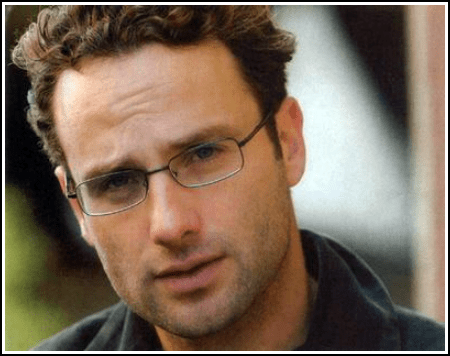
The good folks over at The Hollywood Reporter have reported that Frank Darabont’s tv series adaptation of Robert Kirkman’s award-winning comic book, The Walking Dead, have finally found the actor to play the series’ lead protagonist, Rick Grimes. The actor chosen came out of left field as his name was never even one people were clued in on. Fan favorites like Peter Krause and Mark Pellegrino were not even seen or heard having tried out for the lead role. Other names like Jamie Bamber (Battlestar Galactica’s Lee “Apollo” Adama) and Johnny Lee Miller (Eli Stone and Hackers) were also mentioned as having tried out for the role with the latter seen as the front-runner.
So, it’s seen as a surprise by many following the production of The Walking Dead to see the name Andrew Lincoln come up as the actor chosen to play Rick Grimes. The UK actor has worked in mostly shows and films in his native UK w/ Love Actually being the more recognizable of those he’s worked on. I think the choice was, and is, a good one. This is literally an unknown actor to US audiences so it will be easier for suspension of disbelief to be achieved for those watching.
While the reaction to this news is mostly one of guarded optimism there’s a very tiny but vocal group that seem to cry foul at this choice just for the fact that Andrew Lincoln will be a British-actor playing an American from the South. I think fans at times just think that dream choices for roles in their favorite stories should be the only ones chosen to play those roles whether they actually want to take on the role or not, or if they’re even good for the role.
For the detractors I say give the man a chance to get into the role before you put the man down. Oh yeah, one other thing…just be glad the show is actually being down and with strong creative people behind it. Put the fanboy/girl hat into storage.
I love movies and I love books so I guess it would stand to reason that I love books about movies the most of all. (I also love movies about books but there are far fewer of those, unfortunately.) Below are my personal favorites. I’m not necessarily saying that these are the ten greatest film books ever written. I’m just saying that they’re the ones that I’m always happy to know are waiting for me at home.
10) Soon To Be A Major Motion Pictureby Theodore Gershuny — This is one of the great finds of mine my life. I found this in a used bookstore and I bought it mostly because it only cost a dollar. Only later did I discover that I had found one of the greatest nonfiction books about the shooting of a movie ever written! Gershuny was present during the filming of a movie called Rosebud in the early 70s. I’ve never seen Rosebud but, as Gershuny admits, it was a critical disaster that managed to lose a ton of money. The book provides a fascinating wealth of backstage gossip as well as memorable portraits of director Otto Preminger and actors Robert Mitchum (who was originally cast in the lead role), Peter O’Toole (who took over after Mitchum walked off the set), and Isabelle Huppert. If nothing else, this book should be read for the scene where O’Toole beats up critic Kenneth Tynan.
9) Suspectsby David Thomson — A study of American cinema noir disguised as a novel, Suspects imagines what would happen if George Bailey from It’s a Wonderful Life fell in love with Laura from the movie of the same name. Well, apparently it would lead to Sunset Boulevard’s Norma Desmond having an affair with Chinatown’s Noah Cross and to one of George’s sons, sensitive little Travis, getting a job in New York City as a Taxi Driver. And that’s just a small sampling of what happens in this glorious mindfuck of a novel.
8 ) Profondo Argentoby Alan Jones — Long-time fan Alan Jones examines each of Dario Argento’s films (even Argento’s obscure historical comedy The Five Days of Milan) and proceeds to celebrate and (in many cases) defend Argento’s career. Jones also interviews and profiles several of Argento’s most frequent collaborators — Daria Nicolodi, Asia and Fiore Argento, Simon Boswell, Claudio Simonetti, Keith Emerson, George Romero, Lamberto Bava, Michele Soavi, and many others. Jones’ sympathetic yet humorous profile of Luigi Cozzi is priceless.
7) Spaghetti Nightmaresby Luca Palmerini — Spaghetti Nightmares is a collection of interviews conducted with such Italian filmmakers as Dario Argento, Ruggero Deodato, Umberto Lenzi, Lucio Fulci, and others. Among the non-Italians interviewed are Tom Savini (who, as always, comes across as appealingly unhinged) and David Warbeck. (Sadly, both Warbeck and Fulci would die shortly after being interviewed.) What makes this interesting is that, for once, Argento, Fulci, et al. are actually being interviewed by a fellow countryman as opposed to an American accompanied by a translator. As such, the subsequent interviews turn out to be some of the most revealing on record.
6) Sleazoid Expressby Bill Landis and Michelle Clifford — Landis and Clifford’s book is both a history and a defense of the old grindhouse theaters of New York City. Along with describing, in loving and memorable detail, some of New York’s most infamous grindhouses, they also write about some of the more popular movies to play at each theater. Along the way, they also offer up revealing profiles of such legendary figures as David Hess and Mike and Roberta Findley. Reading this book truly made me mourn the fact that if I ever did find myself in New York City, I won’t be able to hit the old grindhouse circuit.
5) Beyond Terror: The Films of Lucio Fulciby Stephen Thrower — Fulci has always been a terribly underrated director and, indeed, it’s easy to understand because, in many ways, he made movies with the specific aim of alienating and outraging his audience. It requires a brave soul to take Fulci on his own terms and fortunately, Stephen Thrower appears to be one. Along with the expected chapters on Fulci’s Beyond Trilogy and on Zombi 2, Thrower also devotes a lot of space to Fulci’s lesser known works. Did you know, for instance, that before he became the godfather of gore, Fulci specialized in making comedies? Or that he also directed two very popular adaptations of White Fang? Thrower also examines Fulci’s often forgotten westerns as well as his postapocalyptic sci-fi films. And, best of all, Thrower offers up a defense of the infamous New York Ripper that, when I read it, actually forced me to consider that oft-maligned film in a new light. That said, Thrower does admit to being as confused by Manhattan Baby as everyone else.
4) Immoral Talesby Cathal Tohill and Pete Toombs — Tohill and Toombs offer an overview of European “shock” cinema and some of the genre’s better known masters. The book contains perhaps the best critical examination of the work of Jean Rollin ever written. The authors also examine the work of Jesus Franco and several others. This is a great book that reminds us that the Italians aren’t the only ones who can make a great exploitation film.
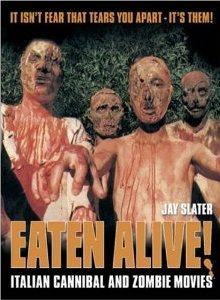
3) Eaten Aliveby Jay Slater — This book offers an overview of the Italian film industry’s legendary cannibal and zombie boom. Along with reviewing every Italian movie to feature even the slightest hint of cannibalism or the living dead (this is one of the few books on Italian cinema that discusses both Pasolini and Lucio Fulci as equals), Eaten Alive also features some very revealing interviews with such iconic figures as Catriona MacColl, Ian McCullough, and especially Giovanni Lombardo Radice. Radice, in fact, also contributes a memorable “guest” review of one of the movies featured in the book. (“What a piece of shit!” the review begins.) Memorable reviews are also contributed by Troma film founder Lloyd Kaufman who brilliantly (and correctly) argues that Cannibal Holocaust is one of the greatest films ever made and Ramsey Campbell who hilariously destroys Umberto Lenzi’s infamous Nightmare City.
2) The Book of the Deadby Jamie Russell — If, like all good people, you love zombies then you simply must do whatever it takes to own a copy of this book. Starting with such early masterpieces as White Zombie and I Walked With A Zombie, Russell proceeds to cover every subsequent zombie film up through George Romero’s Land of the Dead. Russell offers up some of the best commentaries ever written on Romero’s Dead films, Fuci’s Beyond Trilogy, Rollin’s Living Dead Girl, and Spain’s Blind Dead films. The pièce de résistance, however, is an appendix where Russell describes and reviews literally ever zombie film ever made.
1) All The Colors Of the Darkby Tim Lucas — This is it. This is the Holy Grail of All Film Books. If you’ve ever asked yourself if any book is worth paying close to 300 dollars, now you have your answer. This one is. Tim Lucas offers up the most complete biography of director Mario Bava ever written. In fact, this may be the most complete biography of any director ever written! Lucas examines not only Bava’s life but also every single movie that Bava was ever in any way connected to, whether as a director or as a cameraman or as the guy in charge of the special effects. This is 1,128 pages all devoted to nothing but the movies. This is the type of book that makes me thankful to be alive and I owe a huge debt of gratitude to Tim Lucas for writing it.
It looks like Frank Darabont’s TV adaptation of Robert Kirkman’s award-winning comic book title, The Walking Dead, just got closer to it’s production start. Shock Till You Drop has confirmed with Greg Nicotero of KNB EFX will be part of the AMC horror tv series. Nicotero (w/ co-founder Howard Berger) and the KNB visual effects house has done many of the horror, sci-fi and action films of the past decade. They last worked with Frank Darabont in the 2007 film-adaptation of Stephen King’s novella, The Mist. They’ve also been the premiere visual effects house when it comes to bringing the classic Romero zombie look and gore on the big-screen. Romero’s last three zombie films having been done by KNB.
This news makes me even more hyped to see how The Walking Dead translates onto the small-screen. With zombie films starting to reach a plateau when it comes to quality (Romero’s latest Survival of the Dead being mediocre at best) it will be interesting how a series centered around a zombie apocalypse and the travails of the survivors would be seen by the general audience. Having KNB EFX will at least appease the zombie fans who will flock to see this series. The question now is whether AMC will allow enough of the graphic violence from the comic book series to be shown. I’m guessing they will if their other critical-darling drama series Breaking Bad is a way to measure how far AMC will go.
Here are some of the films KNB EFX have worked on.
Kill Bill, Vol. 1-2
Land of the Dead
Hostel
Chronicles of Narnia: The Lion, The Witch and The Wardrobe
 It is once again time for another offering of The Daily Grindhouse. This time around our latest grindhouse flick comes straight from Spain. I speak of the classic zombie flick, Tombs of the Blind Dead.








 Through the Shattered Lens