Review: Lost Odyssey


“When people die, they just… go away. If there’s any place a soul would go… It’s in your memories. People you remember are with you forever.” – Kaim Argonar

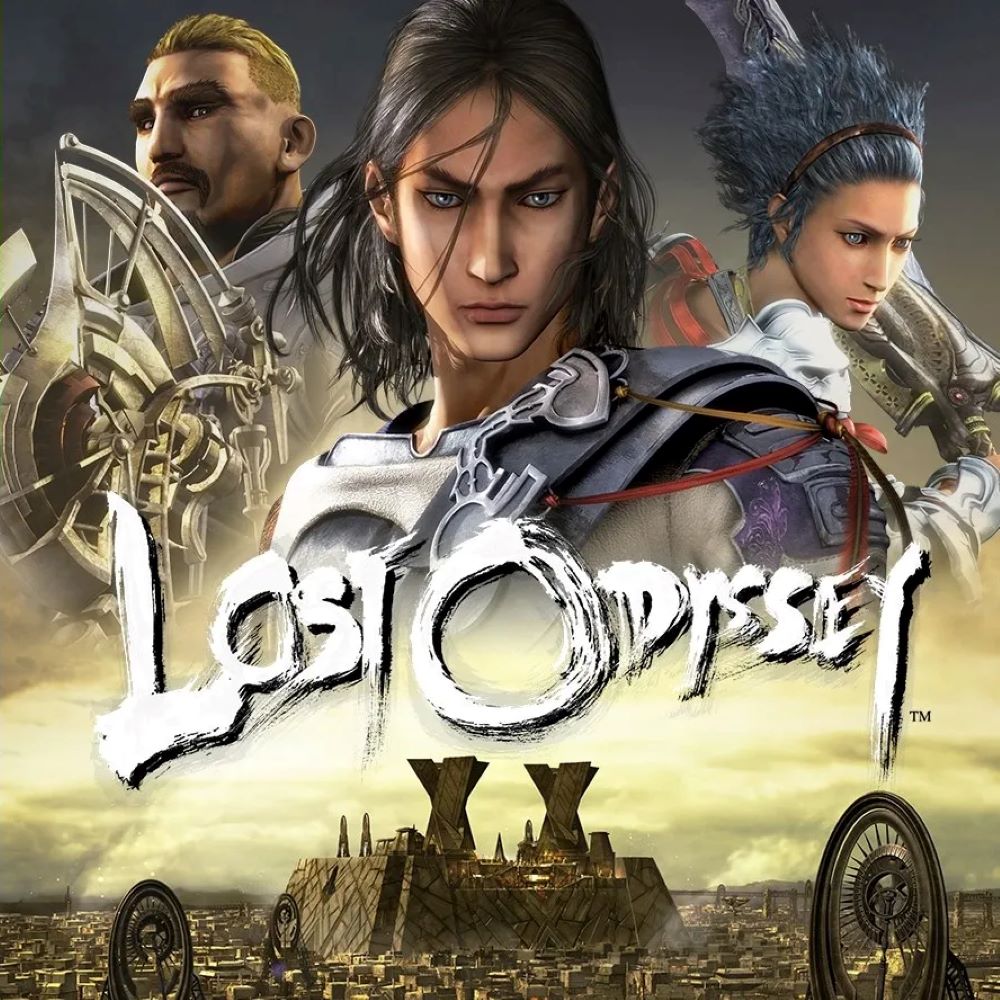
Lost Odyssey stands out as one of those RPGs from the late Xbox 360 era that doesn’t scream for attention with flashy mechanics or boundary-pushing innovations, but instead draws you in through its deeply introspective storytelling and a commitment to emotional depth that feels almost defiant in its restraint. Developed by Mistwalker’s Hironobu Sakaguchi—the mastermind behind the original Final Fantasy games—this title arrived in 2007 as a love letter to classic JRPG traditions, complete with turn-based combat, sprawling world exploration, and a narrative centered on immortality’s quiet horrors. It’s a game that rewards patience, asking players to linger in moments of melancholy rather than rushing toward bombastic climaxes, and in today’s landscape of hybrid action-RPGs like Clair Obscur: Expedition 33, it feels both timeless and a touch nostalgic.

The protagonist, Kaim Argonar, is an immortal wanderer who’s lived for over a thousand years, his memories eroded by time like sand slipping through fingers. This setup immediately sets Lost Odyssey apart, turning what could have been a rote hero’s journey into something far more personal and haunting. Kaim isn’t driven by prophecy or destiny in the typical sense; he’s haunted by fragments of lives long lost, piecing together his past while grappling with the present. Accompanied by a party of fellow immortals and mortals who bring their own baggage—Seth, a fierce queen-turned-revolutionary; Jansen, the wisecracking raconteur and black magic user; Mack, Cooke’s adventurous brother and a spirit magic specialist; Cooke, the earnest white mage sister; and others who evolve from archetypes into fully fleshed-out companions—the story unfolds across a world on the brink of magical and technological upheaval. Wars rage between nations like the Republic of Uhra and the Kingdom of Goht experimenting with dangerous “aether” energy, ancient gaia cults stir forgotten powers from the earth’s core, and a comically over-the-top villain named Gongora pulls strings from the shadows with his dream-manipulating sorcery. But it’s the immortals’ shared curse—living forever while everyone else fades—that grounds everything in raw, relatable humanity, forcing reflections on attachment, regret, and the passage of time.

What truly elevates the narrative are the “Thousand Years of Dreams,” a collection of over thirty short story interludes scattered throughout the game like hidden treasures, all penned by acclaimed Japanese author Kiyoshi Shigematsu. These vignettes replay key moments from Kaim’s (and later other immortals’) pasts: a father’s quiet desperation as his family starves during a harsh winter, a lover’s betrayal amid wartime chaos that shatters trust forever, a child’s innocent wonder abruptly ended by sudden violence in a peaceful village. They’re presented as dream sequences with minimal interactivity—just reading the poignant prose accompanied by subtle animations and ambient sounds—but their impact is profound, blending poetic introspection with raw emotional punches that make loss feel visceral and immediate. Shigematsu, known for his family-centered novels like Naifu and Bitamin F, infuses these tales with his signature themes of everyday struggles, parental love, and quiet resilience, drawing from his own life experiences such as overcoming a childhood stammering disorder. These aren’t mere filler; they mirror and deepen the main plot’s themes of memory, fleeting bonds, and the futility of outliving joy, often landing harder than the epic set pieces like airship chases or gaia temple collapses. In a fair assessment, though, not every dream hits the mark equally—some lean repetitive in their focus on tragedy and separation, and the heavy reliance on text-heavy exposition can test players who prefer more visual or interactive storytelling over contemplative reading.

Comparatively, the core plot treads more familiar JRPG ground, with globe-trotting quests to collect six magic seeds capable of restoring the world’s fading magic, infiltrate enemy strongholds like the White Citadel, and unravel a conspiracy involving dreamless immortals, experimental magic tech, and an impending apocalypse. It’s competently paced for its 40-60 hour runtime (longer for completionists), building to satisfying reveals about Kaim’s origins, the party’s interconnected fates, and the true nature of immortality in a world where magic is dying. Yet it lacks the moral ambiguity that makes contemporaries like Clair Obscur: Expedition 33 so gripping—that game thrives on tough choices where apparent triumphs often sow seeds of future doom, forcing players to question if their “expedition” against the Paintress is true heroism or just delayed hubris. Lost Odyssey flirts with similar existentialism—Kaim repeatedly forms bonds only to anticipate their inevitable fraying—but ultimately resolves in a more optimistic, collective salvation arc centered on hope and reunion. This makes it comforting for fans of straightforward fantasy epics with clear good-vs-evil lines, yet somewhat safe for a tale about eternal life, where deeper philosophical dives into immortality’s ethics, like the morality of intervening in mortal affairs, could have pushed boundaries further without alienating its audience.

The supporting cast shines as a counterbalance, with banter during airship travels and camp rests that humanizes even the most ancient immortals. Take Gongora, the flamboyant antagonist whose Shakespearean monologues, reality-warping sorcery, and personal grudge against his immortal brethren make him a delightfully theatrical foe worth rooting against. Or the mortal siblings Cooke and Mack, whose dynamic starts as lighthearted comic relief—pranks, inventions gone wrong, sibling squabbles—with Mack’s adventurous spirit driving bold escapades while Cooke provides steady white magic support, maturing into poignant growth arcs as they confront loss and responsibility together. Jansen brings levity as the wisecracking raconteur, spinning tales and unleashing black magic with reluctant flair that often steals scenes during downtime. Party chemistry fosters organic moments, like shared reflections on recent dreams or lighthearted ribbing during skill training, that deepen player investment over the long haul. Not all characters resonate equally; some, like the naive inventor Littleton or the initially whiny prince Tolten, lean into tropes without much subversion, leading to occasional eye-rolls amid the stronger portrayals from Seth’s fiery leadership. Still, the innovative “Immortal” skill-sharing system, where immortals permanently absorb abilities from fallen mortals via “Skill Link” beads, ingeniously reinforces the core theme: eternity doesn’t preclude learning, growth, or change through relationships with the temporary.

Combat embodies Lost Odyssey‘s old-school soul, sticking faithfully to turn-based roots with thoughtful layers that demand strategy over button-mashing reflexes. Battles unfold on a grid-like interface where positioning is crucial—front-row tanks like Kaim absorb hits for backline healers like Cooke and her white magic or mages like Jansen with his black magic arsenal, while the signature “Ring” system adds tension to every basic attack or spell: time your button presses precisely to hit colored rings for boosted damage, critical hits, or multi-hit combos. Condition management becomes key, as poison, sleep, paralysis, and weakness can derail even well-planned fights, encouraging thorough prep with items, protective spells, and the flexible “Skill Link” beads that let any character equip enemy-learned abilities like fire immunity or poison breath. Boss encounters ramp up dramatically with multi-phase patterns, status ailment spam, massive HP pools, and environmental hazards, rewarding exploitation of elemental weaknesses (fire vs. ice foes, etc.), party swaps, and layered buffs/debuffs for tense, chess-like victories.

Yet fairness demands noting the system’s notable flaws, which haven’t aged gracefully. Random encounters populate every screen with alarming density, leading to grindy slogs in weaker areas before you unlock enemy visibility via skills or items, and early-game pacing suffers from these constant interruptions amid tutorial-heavy chapters. Load times between battles and zone transitions feel archaic by modern standards—often 10-20 seconds on original hardware—and the lack of auto-battle, speed-up toggles, or robust fast travel exacerbates repetition for completionists chasing ultimate weapons, all 33 dreams, or optional gaia quests. Contrast this with Clair Obscur‘s slick hybrid combat, which fuses turn-based planning with real-time dodges, parries, and QTEs in a fluid “expedition” rhythm inspired partly by Lost Odyssey itself—every fight, from trash mobs to epic bosses, pulses with immediacy and the “dial of fate” mechanic that turns timing into life-or-death dance steps. Lost Odyssey prioritizes cerebral, menu-driven setups—buff-stacking, weakness chains, formation tweaks—over kinetic flair, appealing deeply to tacticians who savor the deliberate pace but alienating those craving Clair-style adrenaline and fluidity. It’s a classic strategic depth versus modern dynamic polish tradeoff, and your mileage will vary sharply based on tolerance for 2007-era JRPG rhythms.

​​

Exploration weaves together standard JRPG fare with moments of quiet wonder—roaming a vast overworld via massive airship (the Nautilus), delving into multi-floor dungeons with hidden chests and switch puzzles, solving environmental riddles involving weight balances, light beams, or wind currents—but injects personality through diverse biomes: mist-shrouded ancient ruins teeming with spectral foes, frozen tundras where blizzards obscure paths, volcanic badlands with lava flows and ash-choked air. Sidequests expand the lore meaningfully, like aiding immortal Seth’s rebel faction in underground networks, delving into sacred gaia shrines for permanent power-ups, or hunting elusive immortal encounters for rare skills, though many lesser ones boil down to repetitive fetch tasks or escort missions. The world map’s sheer scale impresses, hiding optional superbosses like the immortal-hunting Black Knights, treasure troves in hard-to-reach ledges, and secret dream triggers, but frequent backtracking without comprehensive fast travel can drag, especially post-game. Presentation captures the Xbox 360’s graphical peak for its time: cinematic FMV cutscenes rival Hollywood trailers in scope and polish, character models boast fluid animations, expressive facial captures (rare for 2007), and detailed costumes, while environments blend stunning pre-rendered backgrounds with real-time lighting and particle effects for moody, immersive atmospheres. Draw distance limitations, occasional texture pop-in, and lower-res models show their age on HD displays, but the art direction—shadowy, desaturated palettes evoking faded memories and encroaching oblivion—holds up remarkably well.

Nobuo Uematsu’s soundtrack remains the undisputed MVP, a masterclass in emotional orchestration blending sweeping orchestral swells with intimate piano solos and ethnic instrumentation. Battle themes like the pulse-pounding “Battle with Immortal” or tense “Boss Battle” drive adrenaline without overpowering, dream sequences float on delicate harpsichord, strings, and solo vocals for heartbreaking intimacy, and overworld motifs evoke vast, lonely skies over crumbling civilizations. It’s Uematsu post-Final Fantasy at his most evocative and personal, rivaling series highs and clearly influencing modern scores—direct echoes resonate in Clair Obscur‘s painterly OST, where swelling choirs and haunting flutes underscore expedition perils with a similar blend of grandeur, sorrow, and fragile hope. Voice acting offers a mixed bag: highs like Kaim’s gravelly, world-weary delivery from Jeff Kramer or Seth’s commanding fire from Sarah Tancer contrast with occasional stiff accents and wooden line reads in lesser roles. The English localization shines brightest in Shigematsu’s dreams—preserving nuanced melancholy and cultural subtlety—but occasionally clunks in casual banter or expository dumps.

Pacing represents Lost Odyssey‘s biggest double-edged sword, perfectly suiting its themes of slow erosion and reflection but testing modern attention spans. The game’s deliberate rhythm manifests in long linear chapters (Disc 1’s tutorial stretch, Disc 3’s sidequest marathon), mandatory backtracks to missed dreams or seeds, and optional hunts that balloon playtime to 70+ hours without always advancing the central plot. Mid-game lulls, particularly after major reveals like the immortals’ gathering or Gongora’s betrayal, lean heavily on grinding and collection, demanding commitment from players not fully hooked by the dreams. Technical quirks persist too: occasional frame drops in massive battles, finicky ring input timing on controllers, and long save/load cycles remind players of its 2007 origins, though Xbox One/Series backward compatibility smooths some edges with Auto HDR and FPS boosts. The game earned widespread praise for its story depth, Uematsu’s music, and emotional resonance, tempered by critiques of its dated combat pacing, grind, and conservative design in an era shifting toward action hybrids.

Against Clair Obscur: Expedition 33Lost Odyssey feels like the contemplative grandfather to a bold, innovative successor—Clair‘s tighter 20-30 hour sprint packs nonlinear branching choices, grotesque evolutions of its turn-based system, and a fractured, painterly world where expeditions literally rewrite reality through “painted” fates, with its combat’s “dial of fate” parries making every decision feel consequential and irreversible. Lost Odyssey sprawls longer and commits to strict linearity to pace out Shigematsu’s dreams methodically, trading reactive choice systems for patient, interior reflection on grief. Both excel at probing mortality’s sting—Clair through visceral, grotesque horrors and ambiguous victories, Lost Odyssey via intimate, lived-through tragedies—but Mistwalker’s effort prioritizes small-scale, personal grief over systemic reinvention or high-stakes moral quandaries.

Ultimately, Lost Odyssey endures as a balanced, heartfelt gem for JRPG purists and story enthusiasts: stellar writing from Kiyoshi Shigematsu anchors a solid but unflashy package, with Uematsu’s music, immortal hooks, and dream vignettes lingering longest in the mind. It’s not flawless—grindy encounters, safe plotting, and archaic pacing hold it from undisputed masterpiece status—but its emotional core crafts a rare resonance, blending melancholy fantasy with subtle wisdom about time’s toll. In an era dominated by Clair-like hybrids blending action and choice, it reminds why pure turn-based tales still captivate, offering a somber, patient journey for those willing to dream along with Kaim’s thousand years.
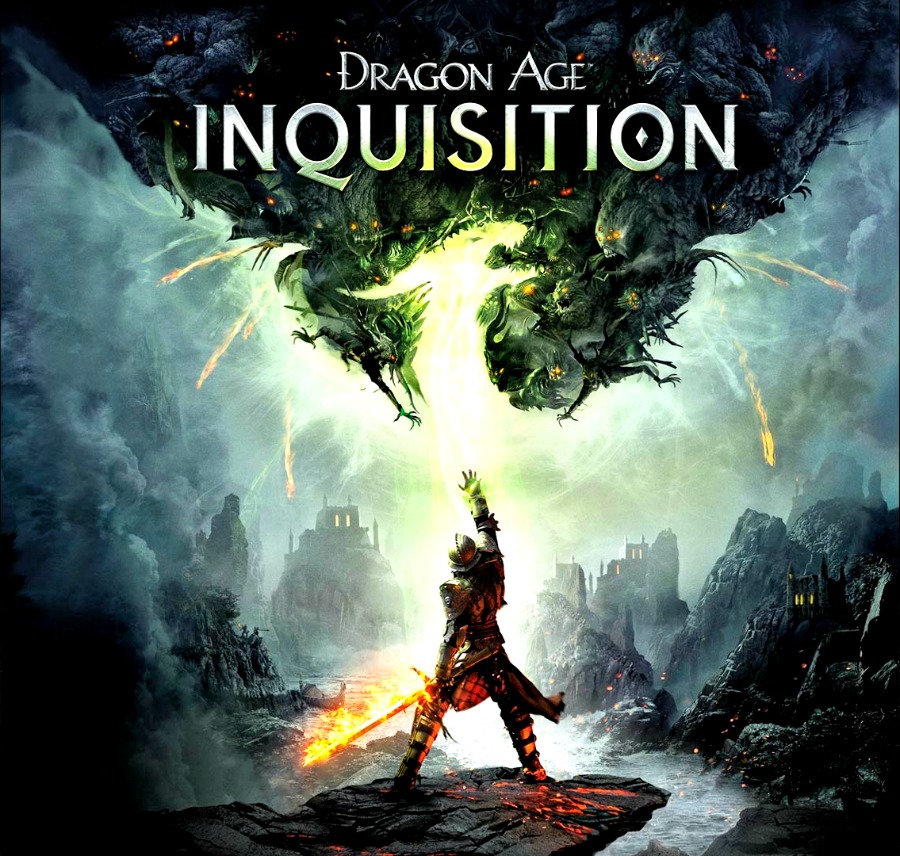
Dragon Age: Inquisition Has Arrived


DragonAgeInquisition

I’ve not been buying that many games this year, but this is one little title from EA’s BioWare I know I must have and play before year’s end. That title is the third game in their fantasy rpg series Dragon Age.

Dragon Age: Inquisitor will mark the arrival of BioWare onto the nextgen platforms (Xbox One, PS4) and looks to combine what was good with the first two titles in the series while trimming off what went wrong with those two.

The game already looks gorgeous from just clips and gameplay videos shown leading up to this release. If the title looks to expand on the world-building that has been laid down by the first two titles in the series then I should expect to be playing this game for at least a minimum of 80 hours, if not more.

Now, I just need to decide on race and class for my character.

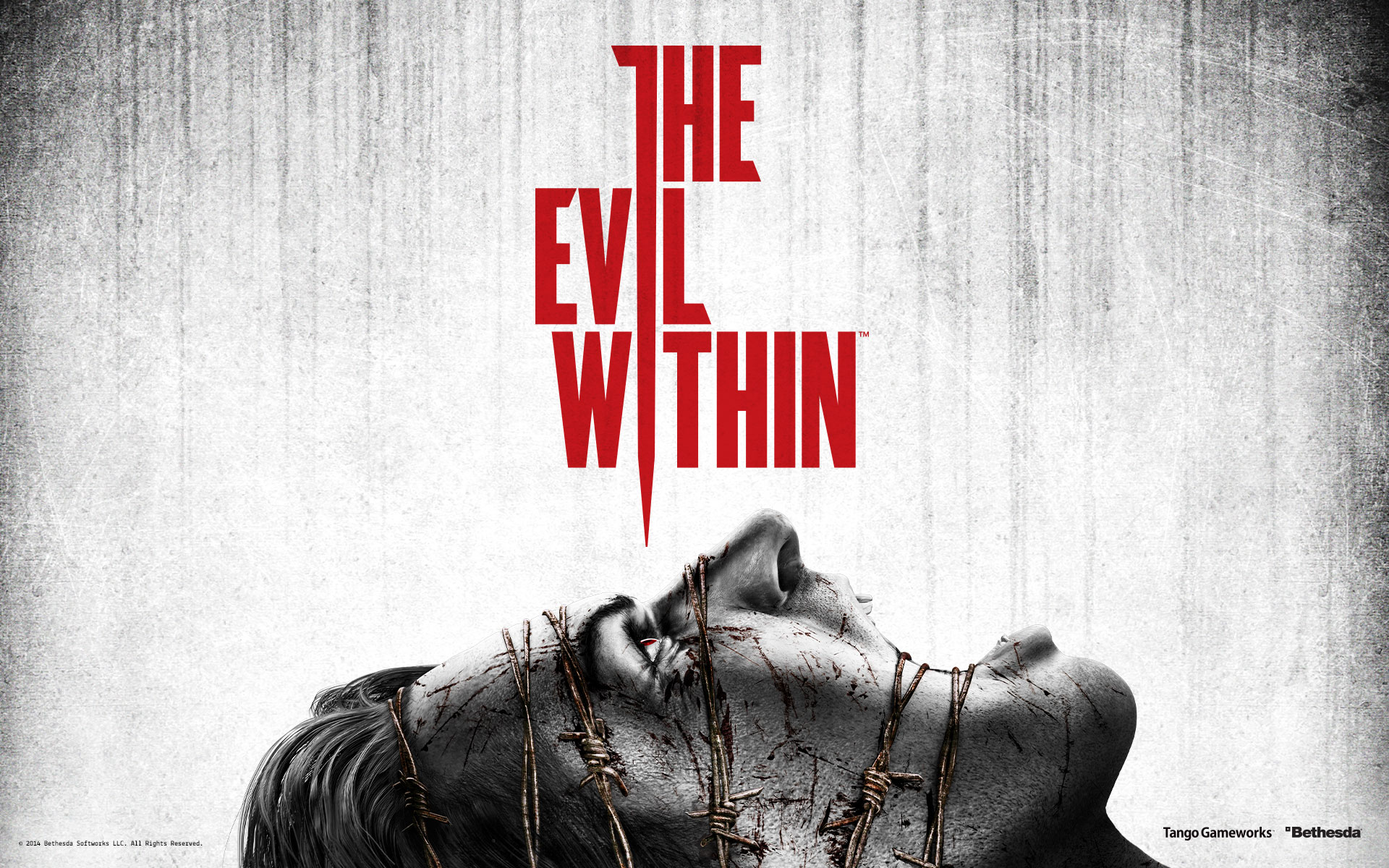
Horror Review: The Evil Within


evil-within-4
The Evil Within’s announcement was met with huge expectations for being an original horror title directed by Shinji Mikami, creator of Resident Evil, benchmark of modern horror videogames. Over the years he personally directed a few projects with very fluctuating results, but his leadership of the Resident Evil games was competent, and they only really squandered when he cut ties with the series after his involvement right after Resident Evil 4, which many regard as one of the best games of the last decade. No pressure in this new intellectual property then.

And I’ll just straight out say it. It’s a disappointment. It would be hard not to be one. But it’s not a normal disappointment. If it were I’d give it a passable review and say that people might enjoy it just for the effort. However, The Evil Within is, pardon me, utter piss. I realize negative reviews are very “in” nowadays and people do them just for the sake of it, but this one is sincere. I wouldn’t buy something on retail price crossing my fingers, HOPING, it would be such a mess. I spent cash on this shit. This money was invested. I wanted it to give some return in the form of entertainment. Which was wishful thinking, of course.

First of all let me talk about the technical issues. Full disclosure; I played the PC port; not a good option, apparently. To be honest I only had one issue with it, but I understand that “it is not a good port” because this piece of trivia was bombarded on me by my peers. So don’t buy the PC version, it’s bad (maybe until they release some patches). That being stated, we’re left with “the game”. The real horror.

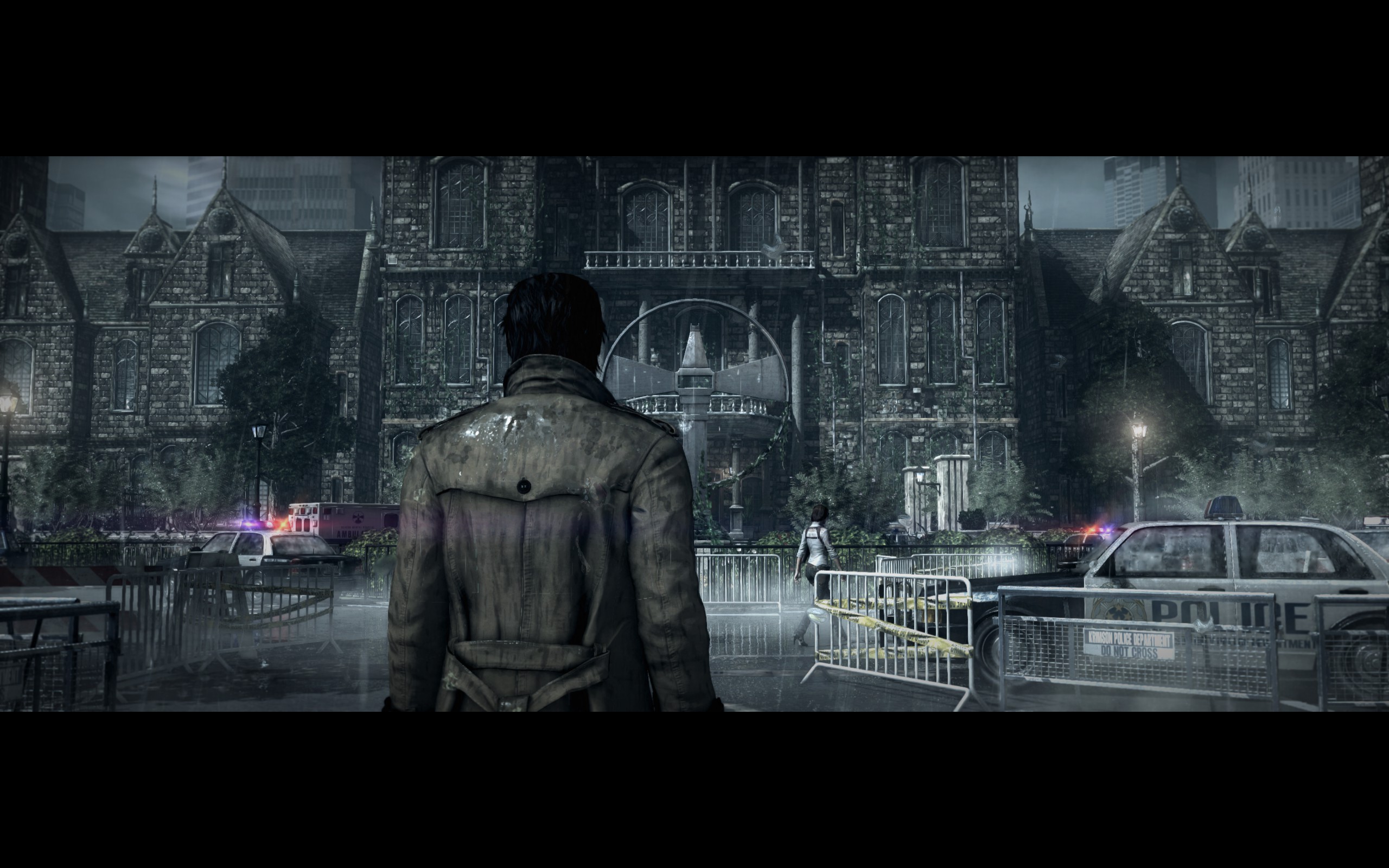
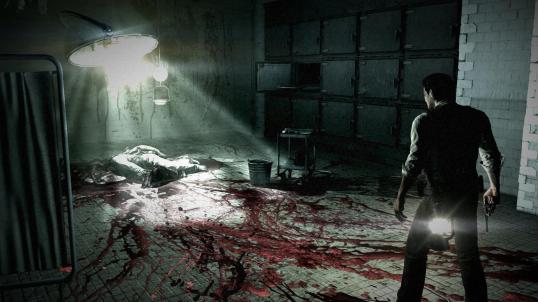
Probably under the pretense that this would make the game scarier, the development team decided that the camera just had to be forever stuck on letterbox view. This is not just pretentious, it is an OBSTACLE. It takes maybe a third of everything in your field of view. Your eyes are hindered by two monstrous gaps of black bars, top and bottom. And you need to actually look at stuff to be able to pick them, so you can only imagine how this is cumbersome on the playing experience (By items, I mean ammo, medicine, documents, same kind of thing that was in Resident Evil). Are you a fan of collecting stuff? A perfectionist maybe? You’ll either spend more time than you should inside one map to make sure you’ve gotten everything or you’ll forget that. Chances are you’ll miss items either way. This camera is out of this world. It is a monster incarnate full of spite toward you. Catching inbound enemies is an equally hard job, as the lack of proper vision of your immediate surroundings makes it hard to realize if you’re being chased, or to know exactly how many enemies are around you. This might lead to some unintentional scares if that fancies you, but fact of the matter is that it’s simply put, bad camera mechanics. And let’s not talk about the obtuse amount of film grain. That being said, this title is not entirely offensive on a visual scale. The art and graphics are quite nice, even if hamfisted on the gore. It’s just too bad it’s so hard to see it properly.

Apparently it actually covers something around 45% of the screen

Actually, it seems to cover something closer to 45% of the screen

A document early on the playthrough makes a point of telling you that the protagonist, Sebastian Castellanos is one of the fastest ever policemen of Krimson City to rise to the rank of detective (I feel like the name of the city might have been suggested by me when I was 14 and thought I was really death metal) . You will quickly notice though that Detective Castellanos isn’t the physical marvel he is laid out to be. The act of sprinting in the beginning takes a full 3 seconds from top speed to complete exhaustion. At his best, Sebastian can run for ten seconds before needing to stop and breathe in the middle of a full herd of enemies (which he WILL do if you rely on sprinting too much). He’s not a very good shot either, even at ranges close to point blank he’ll miss often unless you upgrade his weapon. Walking is awkward, running away is awkward, shooting is awkward. Some of these can be improved by buying common sense into the game in the form upgrades for the character with green goop. Seriously, that’s their currency. I confess to maybe having missed something, but I don’t think that part was ever explained.

If you think objectively about it, Resident Evil was awkward. Even the fourth one. The controls were always strange at best. It comes to me that, while people were begging for a new, good Resident Evil, Mikami acknowledged their wants and needs. That’s what The Evil Within is. I mean, the zombies are there, the alien controls as well, and it’s ever so slightly scarier, which was another major complaint, since some viewed the Resident Evil series as having swayed from survival horror to mostly action with some horror elements. In this sense, people got just what they asked for: A survival horror made by Mikami that is very much like Resident Evil. However since Resident Evil 4, Mikami directed two titles, a four year gap between each of them (2006, 2010, and The Evil Within in this Gregorian year of 2014), and the other two were not even close to being horror games. So what we got is a newly released outdated survival horror with ten year old survival horror mechanics.

B

What happened!? I heard there was a good game in here!

The sad realization is that maybe Shinji Mikami isn’t a master of horror. The Evil Within isn’t very scary past the few initial chapters, where you’re completely powerless (and maybe this was this game’s real element, which in my opinion he failed to realize). Some of the more tense parts orchestrated by him come from trial and error, when some scripted event or other makes you face something new, something you’re totally willing to fight against. Then, upon closer inspection, you notice your head has just been pulverized by this new thing you perceive. So it occurs to you that you don’t fight this thing, you run from it. Of course, that’s after you died. Not very fair, honestly. The story is intriguing, but extends itself far too much. My interest was gradually lost on what could be a great mixture of body and psychological horror. It failed because while the art was on the right spot, the writing lost its way and somewhere it just became a zombie game. And I hoped it would pick up again. It never did.

It seems The Evil Within has few redeeming features and is somewhat obsolete in a very weird way. The space reserved for its image projection is malevolent. The gameplay is unimpressive and clumsy. It is artistically well intentioned, but ultimately poor. It does have, however, a very nice character in the form of an otherworldly and cryptic nurse that helps you through the story during dreamlike sequences. Her personality and oddities make her seem like a character from a Suda51 game, maybe something learned by Mikami in his time working with Suda on Shadows of the Damned. Man, now that’s a good title. Suda is really good, isn’t he?

The-evil-within

Horror on the Lens: Alien Isolation (Dev. by Creative Assembly, Published by Sega)


Alien-IsolationThere’s a quote from one of my old White Wolf books – I think Richard Dansky wrote it in Wraith:The Oblivion – that goes like this:

“The other aspect of horror is its sense of finality and the inability of a character to change it. If terror is the moment when the monster charges down the hall, horror is the instant you discover your feet are rooted to the spot.” 

Everyone who’s seen Ridley Scott’s Alien remembers the scene where Lambert is cornered by the Alien. Yaphet Kotto’s Parker is yelling at her to get out of the way so that he could use his Flamethrower, but she replies, crying..”I can’t!” I always thought that all she had to do was just kind of jump down and crawl or roll and then Parker could blast the damn thing. The movie would end. There’d be a gaping hole of acid in the Nostromo, but our heroes would get in the lifeboat and leave.

And yet, in playing Sega and Creative Assembly’s “Alien Isolation”, I found myself in almost the exact same position, huddled inside of a locker minutes after being introduced in the Alien and utterly terrified to move. Even worse, I’ve had situations where it appeared and I’m frozen in place, completely drawing a blank on my next move. I owe both Brett and Lambert an apology, rest their characters souls.

In the game you play Amanda Ripley, daughter of Ellen Ripley in the Alien films. In the special edition of James Cameron’s Aliens, there’s a brief scene between Burke and Ellen Ripley mentioning her daughter. For you trivia fans, the image used in that film was actually Sigourney Weaver’s actual mother. Anyway, It’s been 15 years since the disappearance of the Nostromo and Amanda is searching for any kind of clue that will help her find her mother or find out what happened to her. Supposedly, the flight recorder for the Nostromo was recovered and taken to Sevastopol station, a ship of roughly the same size. Basically, it’s a starship the size of Hogwarts. After finding herself separated from her crew, she has to both get her answers and find her way out of the station.

Easier said than done, of course. This game knows no mercy, even on it’s easiest setting.

The lighting effects are wonderful in next gen (especially PC). That molotov will only make the Alien mad.

The lighting effects are wonderful in next gen (especially PC). That molotov will only make the Alien mad.

The first rule of Alien Isolation is knowing that there are no safe places. Where most games have mechanics that allow you to take a breather to gear up and plan ahead or pause to get out the right weapon, Isolation will keep flowing as you take action. In Metal Gear, your game pauses when you use your backpack to look through your weapons. In Resident Evil (at least the earlier renditions), you had areas that were designated Save Rooms, places where the monsters couldn’t get at you. Alien Isolation does just the opposite.  Unless you’re checking your map for your next location, the game doesn’t pause. I’ve died while reading information on a workstation. I’ve died while rewiring a door. I’ve even died while putting myself in a locker and walking away from the console for food. It’s a strange kind of game design that forces you to keep one eye on what you’re doing and the other scouting around you to make sure you’re not being stalked. You essentially become a meerkat, poking its head up and going..”Did you hear something?”

And the sound is downright fantastic, especially where the Alien is involved. This is where the true horror lies. Anyone who is familiar with the Alien franchise knows what a Xenomorph looks like. We’ve seen so many of them over the years that they’ve lost that fear factor. The horror doesn’t come from having it charge you, but knowing how close it can be before everything gets to that point. There are tons of playthrough videos out there, and it’s great to see the reactions of players as they navigate this. If I worked at Creative Assembly, I’d chuckle at some of them with pride.

Case in Point: In one area, I open a door to a hallway. It’s clear, but I hear something behind me, causing me to duck behind some boxes. Taking out a noisemaker, I figure I can throw the noisemaker out the way I came (before the door closes) and quickly make my way towards my objective. As I slowly step backwards and to my left ready to pull a Romo-like pass, I just happen to turn to look at the direction I need to go.

The Alien is right there in that entraceway, standing at full height and is peering into the room behind me. There’s a collective “Holy shit!” from everyone in the room I’m in, and I freeze. It must have shot up a vent and came down a vent behind me somewhere. The Xenomorph doesn’t see me, and goes into the room it was looking at. This frees me to make my way down the hallway I need to travel, leaving a trail of fresh urine in my wake.

Heavy footsteps echo in the dark, and when it moves from the ground to the vents, there’s a distinct difference. The game begs to be played either on an extreme surround sound system or noise canceling headphones. If you even more courageous, you can enable your Xbox’s Kinect or PS3/4’s Camera – the microphone in both will pick up the sounds of your room. So, if you’re hiding in a locker with the Xenomorph outside and a friend yells out…”Are we ordering Chinese tonight?!”, the Alien will assume you’re a tender morsel dipped in duck sauce and take you out.

From a control standpoint, Alien Isolation is simple enough that you might not forget what to do when in a panic. For the more complex acts, like lighting a flare and throwing it, you’re given on screen instructions to help you follow through. This becomes a hit or miss at first. While you’re learning that action, there’s always a chance you’ll find yourself under attack by the Xenomorph. A training room feature would be nice here, but at the same time, you’re figuring out what to do with these items just as Ripley does. You’ll find yourself scouting safe areas (and by this, I mean under a table somewhere for a minute) ahead of time to craft different items out of the spare parts you find. At your disposal are flares, medkits, EMP’s, Noisemakers, Smoke Bombs, and more. Of course, before these items can be made, you’ll have to search around for the actual blueprints (which can be anywhere). The game will thankfully teach you how to use items as you get them (if you pay attention). Eventually, you’ll get Molotovs and Flamethrowers, but the Alien understands the nature of fire. To quote Newt, “It won’t make any difference.”

As Ripley turned the corner for a bite to eat from the lunchroom, she suddenly lost her appetite.

As Ripley turned the corner for a bite to eat from the lunchroom, she suddenly lost her appetite.

Saving the game can also be a nuisance at times. Rather than having an autosave, the system incorporates the added task of having to find Save Stations disguised as phone booths to save your progress. Just as with everything else, you have the ability to die if any enemy happens to be near. It can become annoying if you’re in an area where you have a large task and find yourself all the way back at previous place once you die. It’s a drawback, indeed, but it also inspires the player (or it did for me anyway) to treat these stations like an oasis in the middle of a long stretch of desert. You’d think you were playing Ninja Gaiden sometimes, without all the flipping.

Navigating Sevestopol is done in a Metroid / Metal Gear like fashion. Basically, some areas will be locked to you without the right tool. Once you find it (be a blowtorch or a wrench), you can come back to that area. I’m not exactly sure how I feel about this just yet. It’s not exactly linear in that sense, but at the same time, I stopped playing Metroid Prime for almost the same reason. If it works for you, you’ll love it. If not, you might find yourself groaning in agony. If you’re lost, your handy Motion Tracker will help you find your nearest objective by way of a marker on the outside of your display.

4

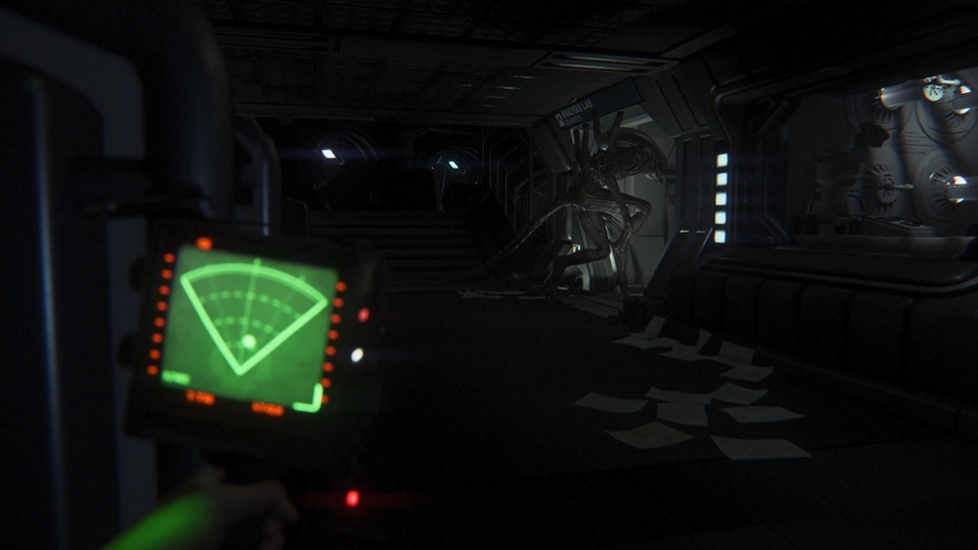
Even in Space, the Alien can hear that beep. Put that Motion Tracker away if you have it in your line of sight. Note the marker on the outer edge telling you where to go.

Alien Isolation is slow. I mean………slow. Not in the story so much, but in the movement. You’ll want to run from point A to Point B, but with the enemies around, you’ll will sneak around for nearly the entire duration of the game (from what I’ve played so far). Don’t even bother sprinting, especially on the hardest difficulty. If you feel you’ve enough patience to play the game in this fashion, it’s a treat. If you’re hoping for something more Splinter Cell / Metal Gear like in that you’re stalking prey, it’s not happening here. Alien Isolation may have On Site Procurement of weapons, but you’ll find these are to be used sparingly, either due to the lack of ammunition / fuel, or from the echoing boom from firing the weapons. In using them you’re indirectly screaming “Hey! I’m right here on the southwest corner of the 3rd floor, kill me now! Do it!! I’m Here!!”

There are other threats on Sevastopol. You have the remaining humans on board who are just trying to survive, synthetics that can swarm you (like Bishop or Ash but not as technologically advanced), but these are enemies that can be defeated depending on what you have on you, and even then, they’re formidable. The Xenomorph, however is an 8 foot beast who delivers a one hit kill to you every time. Its presence will have you hiding in a locker frantically checking your motion tracker – but note that even enemies can sometimes hear the beep coming from it. You may even contemplate how long it’ll take for you to adjust to living in said locker for the rest of your days. According to Creative Assembly, the Alien was built with an adaptable AI that changes on the fly. I’ve had strange interactions in my experiences:

The Alien has no set patrol patterns as far as I can tell. You can watch it walk into a side room from a hiding point at the other end of the room, only to find it double back to the next room you enter. Despite how slow or silent you can be, the doors you move through still make noise, so as you progress, you never really “lose” the Alien so much as you throw it off for a minute or two.

The senses on this thing are creepy. If you are walking fast enough to hear your own feet on the floor, I absolutely guarantee you the Alien knows, too. Again, the Motion Tracker is your friend when it’s at a distance, but it’s also a problem if you’re close. My rule of thumb is that if I have a visual on it, the Motion Tracker isn’t necessary. Even then, use it sparingly to find where you need to go.

Vents. I can’t even tell you how many times I’ve had a chance to escape via a vent and chose a closet or death over it. I’m told you can use these to move around and escape even, but I haven’t even bothered.

Visually, I’ve played this on both the PS3 and the PS4. There’s nothing wrong with the PS3’s version of the game graphically (which is amazing), but if you have access to one, the lighting engines are just better on the next gen consoles. Shadow affects are nice between the two, but there’s a better gradient on the PS4’s newer hardware and smoke / fire effects are that much stronger on that system. Also note that the PS3 runs the game at about 720p, while the PS4 easily handles a 1080p playthrough. I am told that there can occasionally be some glitches where in crawling, you can fall through a room, but I have yet to run into these.

Renderings of the Sevastopol feel like they’re taken right from the first Alien film, as Creative Assembly was pretty much given as much access as they could get to 20th Century Fox’s archives. If you ever wondered what it would feel like to walk those dark halls of the Nostromo with a giant man sized Bone Dragon at your heels, this is the game for you. From the title sequence alone, you get an idea that CA were fans of the first film, and tried to design a game that does its best to immerse you into that universe. It doesn’t get everything right, but it does present the player with a sense of fear and stress unlike anything I’ve played before. Perhaps it’s just me.

In terms of drawbacks, one of the problems comes in the renderings of humans. They don’t seem to have the same sense of care that the Alien gets, most of them walking around with “dead eye” syndrome (like in Final Fantasy: The Spirits Within). The voice acting is okay, but isn’t particularly memorable. It’s like watching a Friday the 13th film. Do you really remember Kevin Bacon’s last lines before he was killed? Maybe, maybe not, but you do remember how he died.

ps4_online_preview_screen001_copy

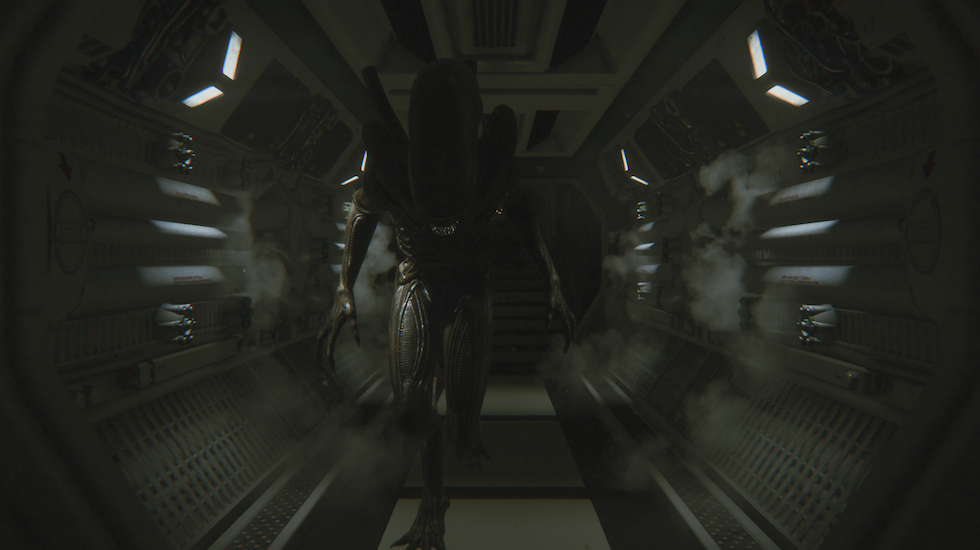
If this is what you see from your Point of View, you’re probably already dead.

 Part of the soundtrack is built off of Jerry Goldsmith’s original score, and the same also features that weird “space wind” sound occasionally, which is so damn eerie. This may actually be (despite it’s flaws) the best movie tie-in/adaptation I’ve ever played. Most movie related games are either rushed projects (I’m looking at you Gearbox. I love Borderlands, but I remember the bad taste of Aliens: Colonial Marines) or fail to completely capture the feel of the movie. I’m very eager to see what Creative Assembly does next, Alien related or not. I’ve truly had fun with this game, despite it being as frustrating as Dark Souls.

Overall, Alien Isolation is a solid game for any fan of the original film. It’s the closest you’ll get to experiencing that universe (or at least playing the ultimate version of Cat & Mouse), even though the slow pace, saving mechanic and unforgiving AI may prove frustrating / unexciting to some.

Horror Review: The Walking Dead Season Two


739932_722955184385317_1243052435_o

The Walking Dead by Telltale Games scarcely needs any introduction. Widely agreed to be one of the best games of 2012, its narrative dictated by your choices punched at the player’s gut with its strong emotional content in a subtle sidestory of atonement, fatherhood, and of course, survival, in the zombie universe of The Walking Dead.

Clem does keep that hair short, whether you like it or not.

Clem does keep that hair short, whether you like it or not.

However, the gameplay and its difficult choices were an illusion. A magic trick. As long as you looked at the story you didn’t notice how much you didn’t make a dent at the course of the storytelling. Two playthroughs will prove that the story is almost exactly the same, even if you interpreted protagonist Lee Everett two polar opposite characters. Not that it mattered, since it was made to play once; to become emotionally involved and keep your little saved game until next time, for the next season, much like the TV Series.

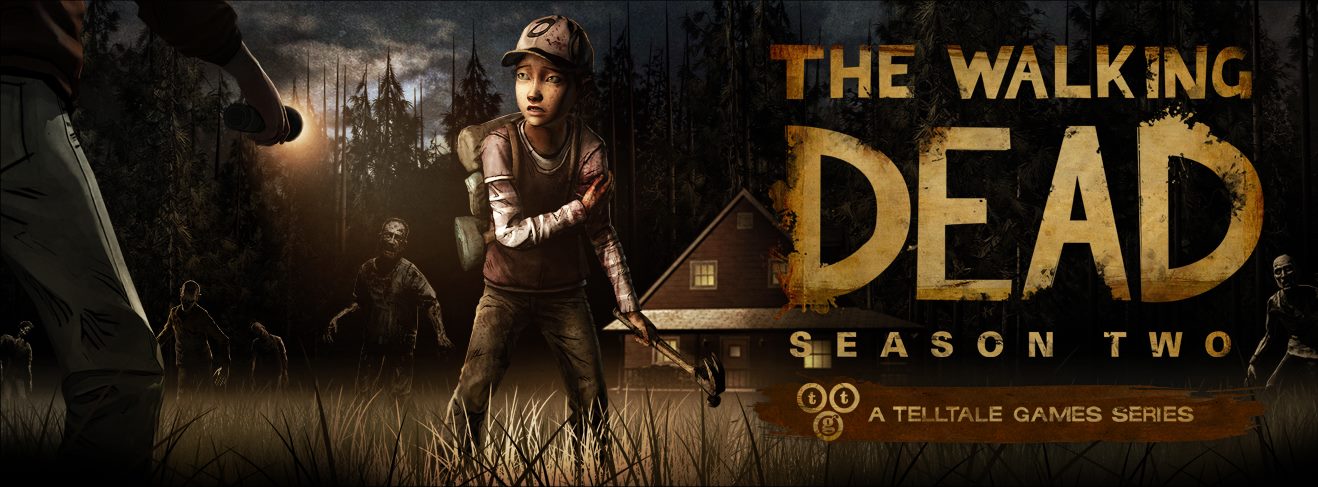
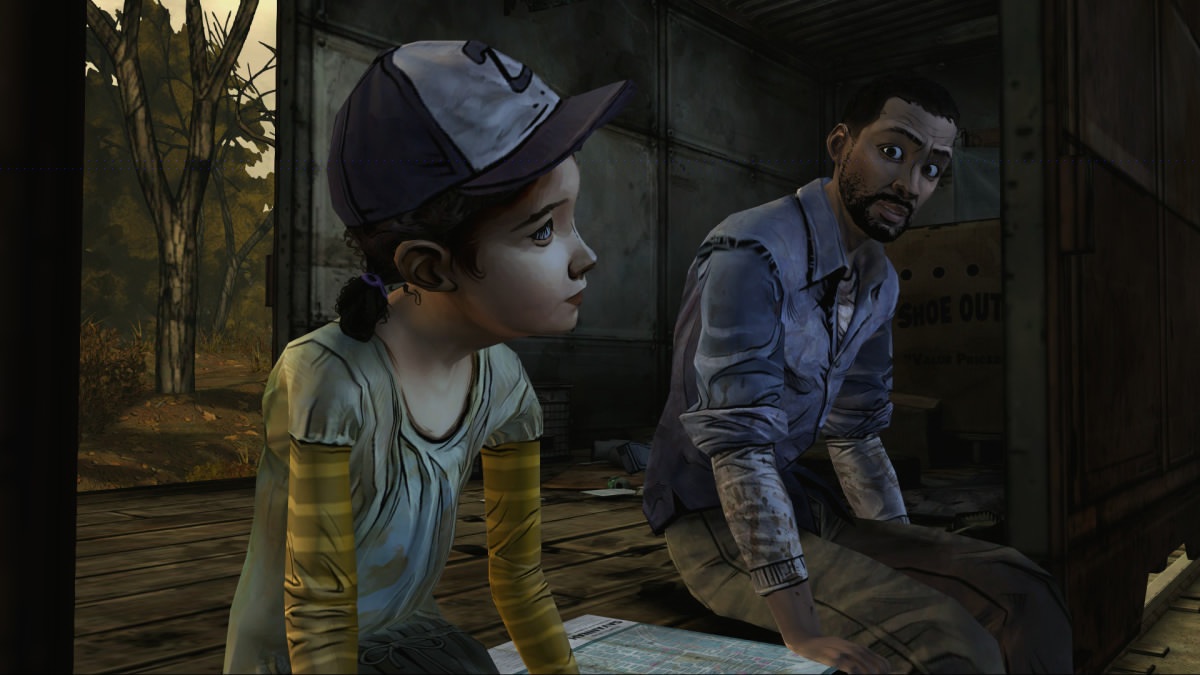
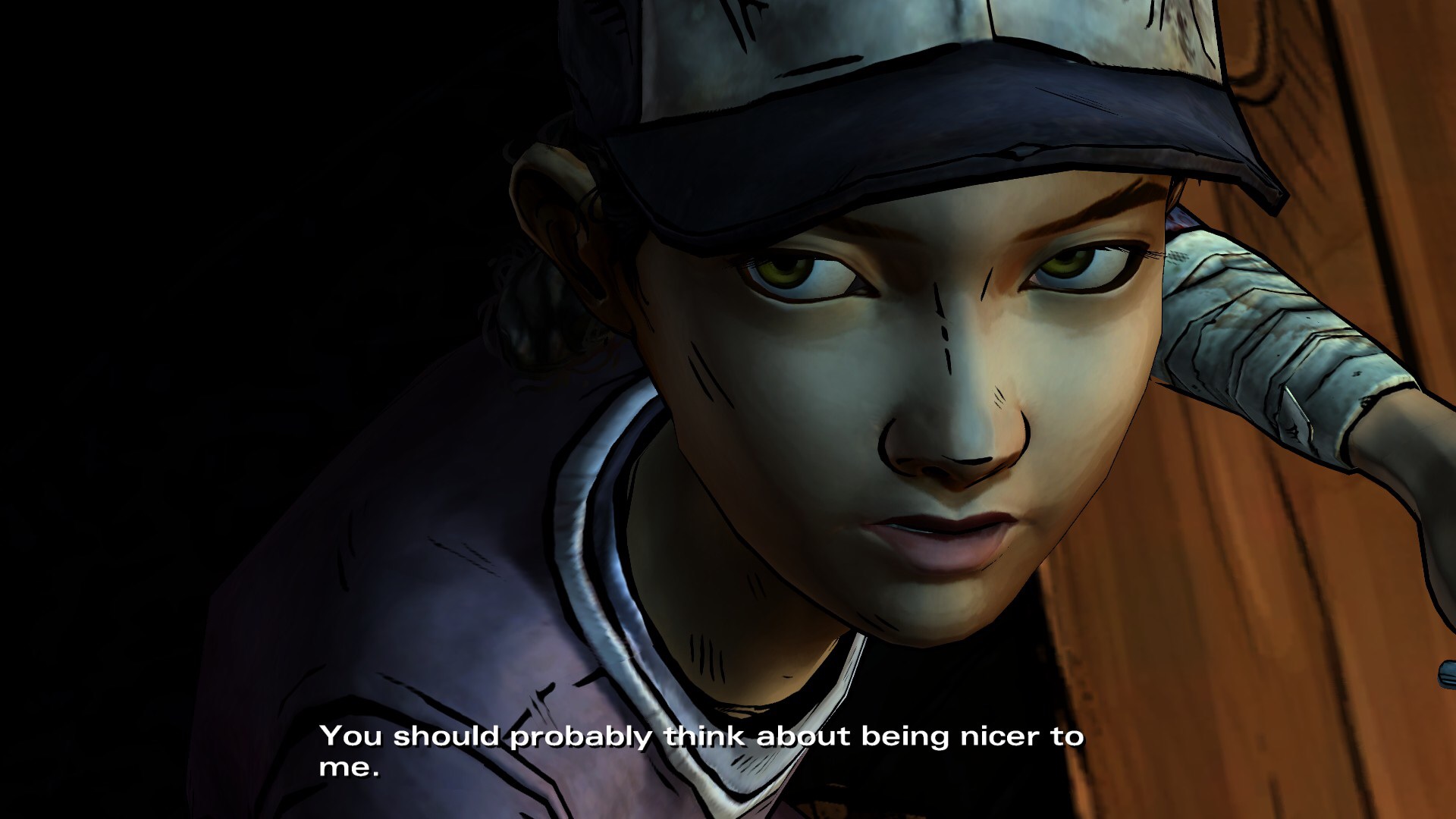
And so it came to pass that Season Two came out. Through the emotional roller coaster we go again, load your season one save for vaguely rewarding shoutouts to your playthrough of season one. This time the story is set two years after the its predecessor. You play as Clementine, Lee’s (now) eleven year old protegé. Having survived through the hell zombie apocalypses tend to dish out, young Clem is not the the little girl up in the treehouse anymore, having become sullen and untrusting, used to the bedouin life of scavenging and killing after society breaks.

The story does progress ostensibly slow at first. Episodes One and Two may appear as uninspired reflections of the original game and may be hard to tolerate for some, but it’s worth it. Seeing the full game, they are justified. The magic trick was being set up again, with more flair this time. As you start interpreting this little girl’s choices and behavior, you start to become emotionally involved again. Her persona becomes an extension of your own (Verily, in a way, you become an eleven-year old, which is super fucking weird). By episode three it’s all set, and you’re looking at the magic hand again, while the other supposedly weaves a defined scenario.

Reminder: Eleven years old.

Reminder: Eleven years old.

This time is different though. If in the first game you (Lee) took the role of leadership, in Season Two, you (Clem) are the pivot character. People want to do what’s safer for the child, she is the motive of concern of every survivor group, and being forced to take sides ultimately creates different paths that don’t end the same way, in contrast to Season One. The multiple endings pay off. Enthralled by this story, you’re encouraged to follow through it as if you were a wildly different person, with feelings and thoughts. You feel the weight of being Clementine.

From the beggining of episode three to the end of five, the last one, Clem is swept in a crescendo of intrigue. The group is trying not to break and she is often encouraged to voice her opinions, except when she disagrees with someone, in which case it doesn’t matter because adults know better. But that may also mean that she’s agreeing with another person, and her opinion is defended as the most important because the weakest needs to feel safe. You can’t seem to fix this group, driving it further into discord in fact. You may take one side entirely or try to keep things nice and easy for everyone, and in the end you are responsible for Clem’s fate. For better or for worse. The subject “Clem” and the subject “you” are sort of interchangeable in this paragraph.

The new season is more emotionally complex and more morally ambiguous. Really, it’s about the evil that men do rather than zombies. Though not an entirely original concept, Season Two does create a very nice example of it. It’s difficult to say if it’s better or worse than the first one. It’s just different. However, it shows improvement in its immersion and narrative, and proves that Telltale is capable of carrying on the quality of their own version of The Walking Dead.

Review: The Wolf Among Us


The-Wolf-Among-UsThe Wolf Among Us was the first game released by Telltale after the extraordinary success of The Walking Dead. They had finally found their element, and decided (prudently) to stick with it. But how do you follow up a title based on a comic book series recognized by some as the best game of its year?

It’s simple. Make another title based on a comic.

Fables, the series Telltale’s following project was based upon, is about fairy tale characters we grew up reading about secretly living in our real world, in a real city, hiding their existence by creating their own society. None of that Once Upon A Time cutsey niceness. They are opressed and opressors, have severe flaws in their characters, vices and, in some cases, signs of antisocial personality disorder. That is to say, they’re often psychopaths.

I'll reconcile the shit out of you!

I’ll reconcile the shit out of you!

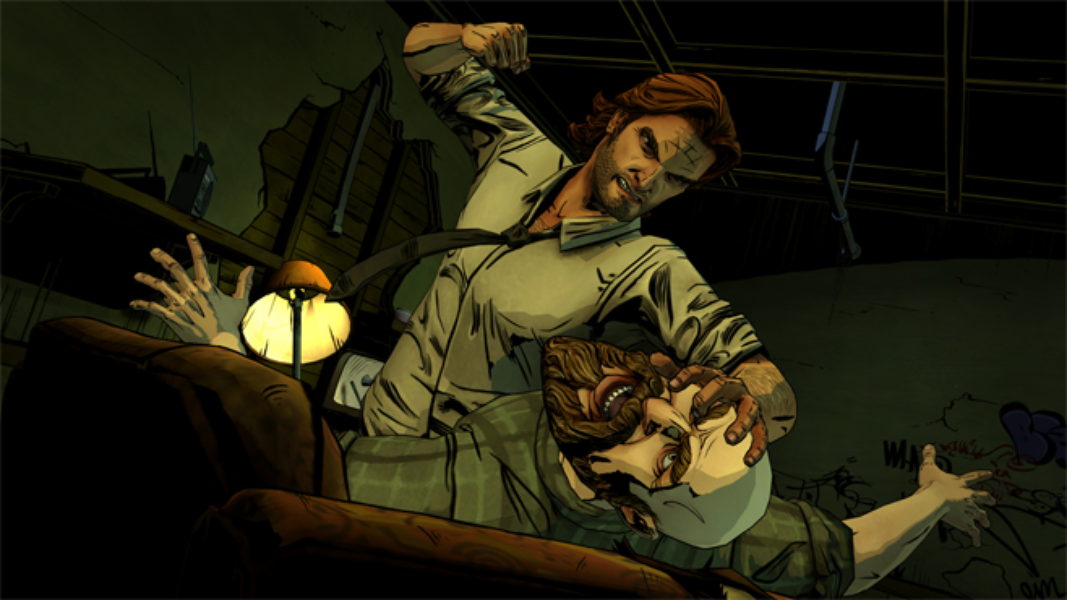
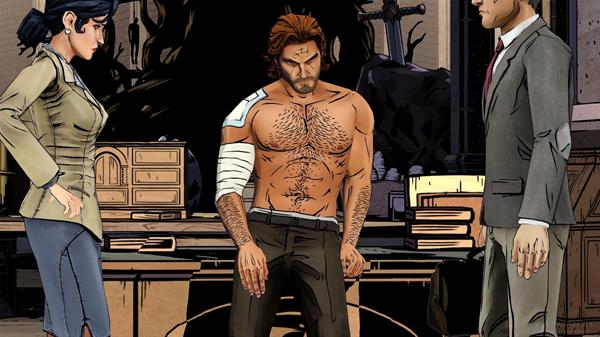
The game gives you control of Bigby Wolf, sheriff of the fables. As you might have guessed, previously known as the Big Bad Wolf of Little Red Riding Hood and Three Little Pigs fame. Reformed and willing to put his past behind him, Bigby tries to reconcile the poor and rebelious with the powerful and bureaucratic, in a very socially imbalanced society of mythical people.

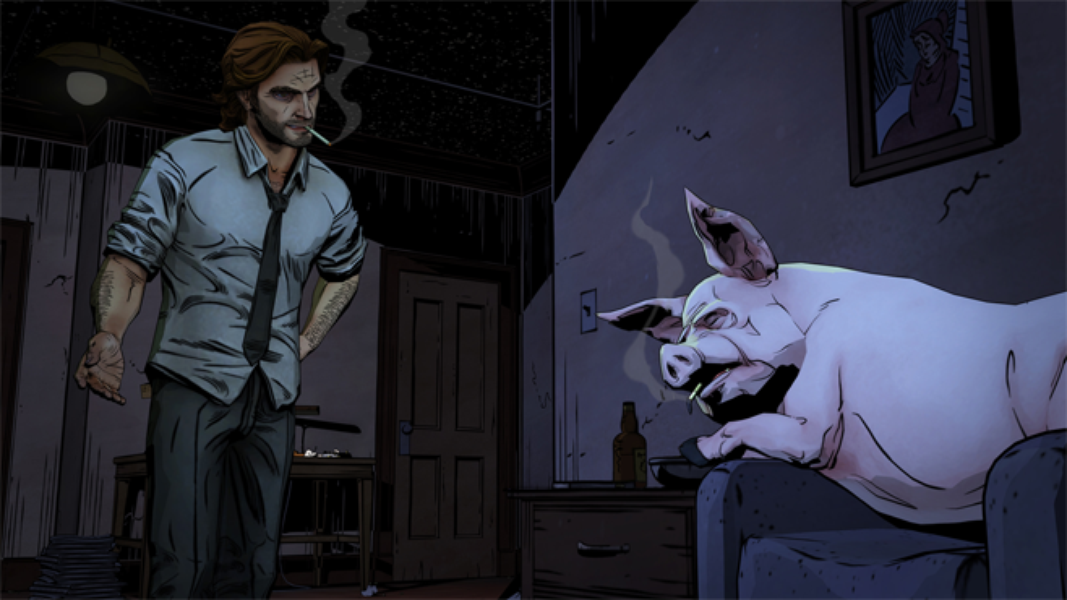
Bigby is the most human of all characters, ironically. Given the task of upholding the law in this broken, small society where everyone knows everyone else, he lives a lonely life, being recognized and feared for doing his job, which frustrates him. His tendency to bend the rules makes the fables’ mayor office see him as a loose cannon. Bigby is a noir hero, chain smoking and full clad in trenchcoat. Bitter with having to raise his hand against unsatisfied citizens and with the impunity of guileful villains; forced against rebellion, but resentful towards the bureaucrats, he often passes his own kind of law. His humanity is revealed through conversations with the only people close to him. Colin, one of the three pigs he used to terrorize, and Snow White, secretary of the mayor office and object of his affections.

the-wolf-among-us-004The amount of deviance from the path of justice in the game vary depending on your playing style. As you solve a series of murders during the span of the game, you decide how violent Bigby will be towards everyone, from the mostly innocent to the very guilty. However, this is not a story about choices like The Walking Dead, but about people leading double lifes. By taking fables, one of our most powerful cultural symbols of purity and innocence, and twisting and corrupting them, The Wolf Among Us is a modern and allegorical story with heavy noir influences, with fantasy and magic playing a part in the narrative.

It is not without flaws, however. It should be noted that, as the game needs a central story, the mystery of the series of murders obfuscate this amazing world, and one purely interested in the big picture; the unjust society of the fantastical, would be better served by reading the Fables comics. The Wolf Among Us has lots of ups far too early in the game and a few too many downs too late into it. It serves as a decent mystery thriller, and more importantly as an origin story for the comic book series, and it does have absolutely thrilling moments. However, it doesn’t bring much new to the table of longtime Fables fans other than focusing on one of the most interesting characters of its mythos.

the-wolf-among-us-episode-3-review-a-crooked-mile-1109968

As a standalone story, The Wolf Among Us has amazing action sequences and is a very exciting story up until the last quarter where it disappoints. As part of the Fables series, and possibly first chapter of others to come, it’s a perfect entry point and highly recommended. The complexity of its premise and excellence of some of its moments more than compensates for the lackluster closure of this first chapter. If that’s not enough to convince you, play it for Bigby Wolf, who might just be the coolest detective in videogame history.

Horror Scenes I Love: Alan Wake


AlanWake

SPOILER ALERT

For those who have played the Xbox 360 exclusive game Alan Wake should remember this scene I have chosen. It comes right at the end of the game where the title character has finally figured out the secret of what happened to his missing wife and how to save her from the game’s main antagonist.

This antagonist is not some psycho killer or monomaniacal villain. It’s a villain that’s more akin to an evil entity. In fact, we learn throughout the game that the villain, known as the Dark Presence, is like something out of a Lovecraft story. It’s an evil intelligence that has spanned eons and yearns to free itself from it’s watery prison.

Alan Wake realizes that the only way to save his wife was to take her place and fight the Dark Presence from within and this is where the brief scene begins. It’s a scene that starts creepy enough until the very end when the real payoff arrives.

Payday 2


Payday2_logo_white

A little while back, a little studio called Overkill put a game on Steam called Payday: The Heist. The release completely passed me by. In fact, I was totally ignorant even of the existence of the title until a group of my friends all bought it and decided to start robbing banks together. They were so taken with it that they demanded that I join them, and I couldn’t have been happier with the purchase. We passed many nights (and into the early mornings, sometimes!) trying to grind our way through harder difficulties, and try to learn more advanced ways to stealth through the various ‘heists’, which included stuff ranging from your standard-issue bank job through a Left 4 Dead inspired hospital mission called, fittingly, No Mercy, where a shadowy anonymous buy was willing to pay bank in exchange for a sample of infected blood.

The game was marked by a number of good ideas. It includes minor RPG elements in that your account ‘levels up’ as you play more heists, granting access to useful abilities. In the original game, most of these bonuses were tied directly to weapons and armor and your ability to last in combat against the inevitable waves of police and SWAT forces that would attempt to keep you from escaping with your ill-gotten gains. Being stealthy at the start of a heist by using silenced weapons and preventing any civilian hostages in the area from escaping to summon help could pay significant dividends as you waited for your large thermal drill to bore its way into this vault or that one. A variety of weapons and gadgets rounded out your heisting arsenal, modeled off of real-life weapons augmented by just a bit of fancy. The game included multiple difficulty levels for every heist which would affect the number and types of enemies that spawn, and add other random factors that could make heists substantially more challenging. Indeed, that random AI Director feature of the game also helped its replayability dramatically, as heists could play out very differently if things went right – or very much wrong.

Payday 2 improves noticeably upon almost all of this. The heists are now more elaborate, including multi-day criminal enterprises (such as a ‘Watchdog’ mission where you must first secure a shipment of cocaine against an FBI operation, then in ‘day 2’ load the coke onto a drug boat at the docks, all while under police assault), and a wider variety of possible objectives – your crew are no longer strictly robbers, but rather highly skilled specialists for higher, men of limited principles and significant hardware.

The skill trees (Mastermind, Enforcer, Technician and Ghost, respectively) now include a wider variety of abilities, many of which can be directly employed for greater speed or stealth in the missions. Now, being a high level player with access to the best gadgets can make the simpler heists significantly easier, allowing the players to focus on the greater challenges of high difficulty level multi-day jobs. I personally find it very rewarding to try and work through missions in a stealthy way. Not only can some rewards become greater when you don’t have to battle you way through police lines, but the heists can also (often) be done cleaner and more quickly with the application of stealth. Returning is the oft-failing thermal drill which is the centerpiece of a number of missions where you try to gain access to a safe or other place you shouldn’t be, but this can now be circumvented if your technician is skilled enough to deploy shaped charges to blow off hinges, or if your ghost has an ECM Jammer that can bypass electronic security. The Mastermind can talk down inquisitive guards on the other end of the phone, easily intimidate and control civilians, and provide a slew of buffs to the group, and the Enforcer can (among so many other things) bring a powerful rotary saw to slice open less-imposing lockboxes, ATM machines, and encroaching enemies who draw too close.

Also notable in Payday 2 is a more credible electronic opponent. In the original game, the challenge was typically increased by sending more powerful units earlier in the mission, legions of ‘special’ units, and an unending stream of SWAT goons and their guns. To an extent, this is still completely true. However, the enemy now employs lesser raw numbers in favour of better tactics, and more threatening enemy units. Of course, stealth your way through the missions, and you may never have to suffer their wrath…

Payday 2 is not by any means a perfect game, however. The mission select is now done through an interface called Crime.net, which is a black and white overhead map of a city on which missions appear as ‘pings’ (as if the job just became available, complete with a timer before the job eventually disappears). Because of this system, if your crew is in favour of running a particular heist, it quite literally might take as long as half an hour of ‘browsing’ Crime.net for it to appear (or perhaps even longer!). In the most recent update, Overkill added some very basic filters to the Crime.net interface, allowing you to opt out of missions below a certain difficulty level… but this seems woefully inadequate. Though the game contains 10 heists, they re-use a couple of maps between them, and some of them are completely basic – there’s almost nothing to them. These are offset by some very complex heists higher up in pay scale, but some of them start to feel less replayable after a couple of solid nights with the group. This happened in the first game too, of course, but it’s much more annoying now with the obstacle of Crime.net possibly throwing you copy after copy of an undesirable heist that you are totally burned out on… instead of something you’d really like to do. I frankly do not understand the creative choice behind not offering better filters for this system.

While it is true that the police do not attack in such great numbers as before, they do still leave a lot of artifacts around the map, with corpses, piles of ammo, and miscellaneous gear (such as riot shields) strewn about, and I have seen the game start to chug on systems that are powerful enough to run many other contemporary games without issue. By its nature, this is probably something that’s hard for this game to overcome, but it’s a frustrating problem to have when the key resource that you need to enjoy this game to its fullest is friends who can also play it with you.

Yes, Payday 2 has in-game voice chat, and yes, you can jump into public games with strangers anytime you want. Some people might really enjoy doing so, in fact, and I don’t really mind it…. but I would much rather gather a group of 3 friends to roll with and work in tandem to complete heists. The AI team-mate can be valuable in combat because of their accuracy (though sometimes the team AI seems bewildered in a way the police AI rarely is… failing to respond even in a dire emergency) but is also frustratingly useless as they cannot transport filthy lucre, or drugs, or whatever, cannot advance mission objectives, and will occasionally blunder into unwinnable firefights against a legion of police in the middle of the street… where they can’t even be reached for a quick revive. As a result, you really want a full party, regardless of how you have to get it.

One thing to admire entirely about Payday 2 is its price point. At $29.99 on Steam (it’s also available on Xbox 360 and Playstation 3, the physical media involved means your price point will be $39.99 instead), this game has real value, though I can’t necessarily recommend it if you don’t have at least one friend who would be willing to buy the game as well and commit to playing it with you. Your mileage may vary with teaming up with strangers (I’ve had a mixed bag of results, myself) but I wouldn’t have purchased the game without friends I knew for certain would play, so I certainly won’t tell you to do it!

Mirror’s Edge – Dice’s E3 Reveal


One of the best surprises for me during yesterday’s E3 show was the announcement that another Mirror’s Edge is on the way, though no date’s been set for release. It’ll be out “when it’s ready”, which leads me to believe that they still need to form a story around the visuals. Hey, At least Dice is giving it a try. That’s more than I can ask for.

Mirror’s Edge was a quiet release in 2008, a first person platformer that implemented some the same Parkour elements as the Assassin’s Creed series, though with more concentration on the techniques. While the graphics were simple and polished, that sense of vertigo from staring over the edge of a drop was always there (for me, anyway). The only drawback to the game were the loadtimes in the elevators. Hopefully, on the next gen systems, they’ll find a way around this. This trailer seems to focus more on the fighting than anything else, and it’s nice to see that, but I’m hoping that in the future, we’ll get to see some of the level designs and perhaps some added features. If they can get Rhianna Prachett back on board for the story (who had a lot of success with the recent Tomb Raider game), they should be fine.

Looking good so far.


Trailer: The Walking Dead: 400 Days


TheWalkingDeadGameEp1

One of the most critically-acclaimed video game titles of 2012 returns sometime in late 2013 with a new season of episodic content. The Walking Dead by Telltale Games announced at E3 earlier today that new DLC content will be arriving sometime later this year.

This new season will be called The Walking Dead: 400 Days and it looks to take adventure point-and-click success story of 2012 further into Robert Kirkman’s zombie apocalypse world. There’s no word on whether a certain Clementine will make an appearance in this new season, but the producers from tElltale Games have made it known that they plan to try and get the video game more in line with the tv series on AMC and maybe even get the acting talent from the show in showing up on the game.

The Walking Dead: 400 Days is set to be released in late 2013 for the Xbox 36, PS3, PS Vita, Microsoft Windows, Mac OS X and iOS.