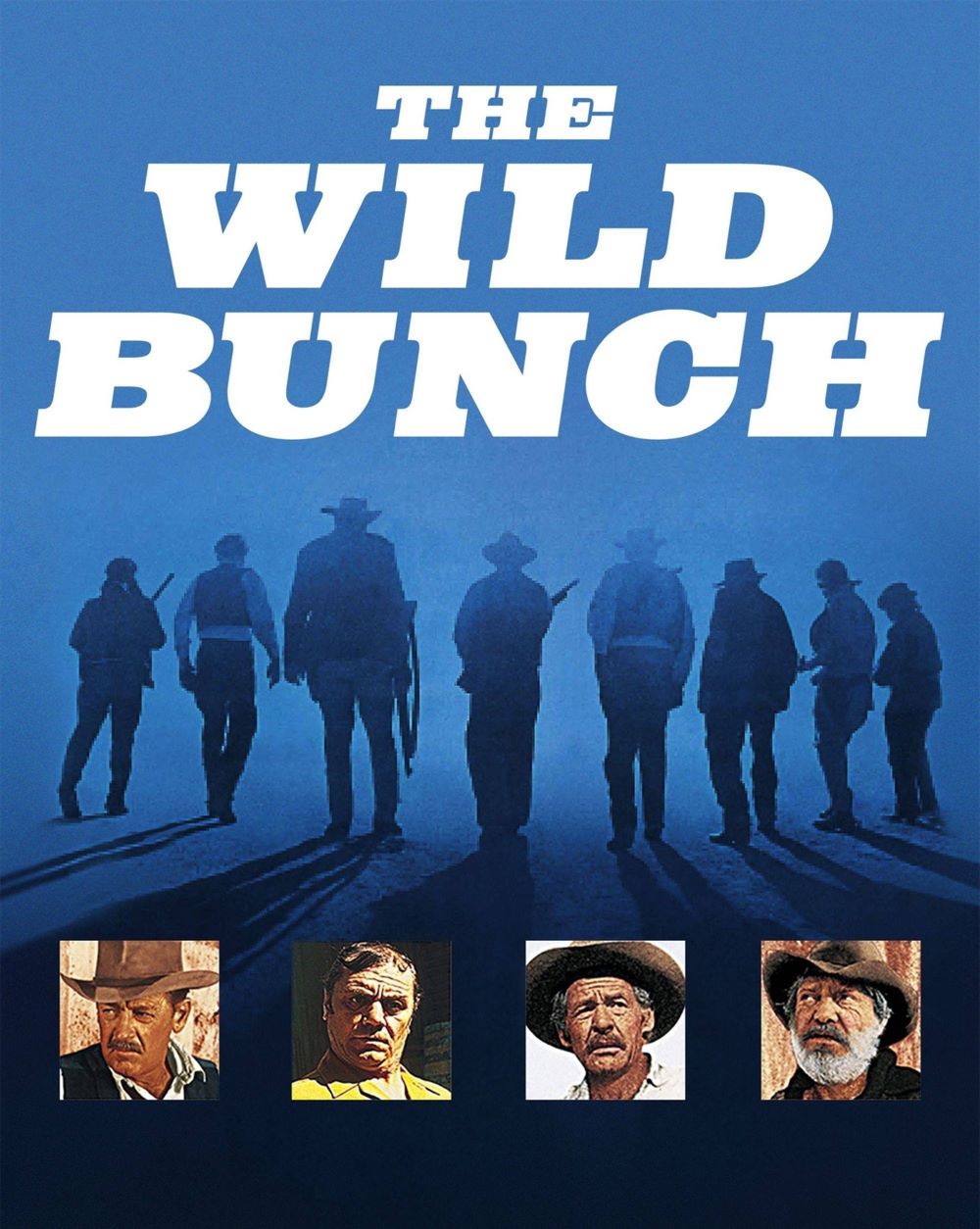
Review: The Wild Bunch (dir. by Sam Peckinpah)


“We’ve got to start thinking beyond our guns. Those days are closin’ fast.” — Pike Bishop

Sam Peckinpah’s The Wild Bunch stands out as a landmark in the Western genre, famous for its daringly harsh depiction of both violence and the fading mythos of the American West. Rather than following the traditions of earlier Westerns, the film presents a gritty portrait of aging outlaws on the edge of extinction, wrestling with a society that has evolved past them. It’s a movie that’s difficult to shake, both for its unapologetic style and the unresolved feelings it leaves long after the final shots ring out.

At its core, the story centers on Pike Bishop and his band—a crew of seasoned criminals aiming for one last grand heist as modernity encroaches on their world. Hoping to pull off a train robbery, they end up entangled in deeper complications after being betrayed and soon are thrust into the turbulence of the Mexican Revolution. Peckinpah builds a narrative where clear-cut morality falls away. The criminals and those pursuing them, supposed bringers of justice, are equally compromised and dangerous. This balancing act challenges the audience to reassess their sympathies, since the characters rarely line up as traditional heroes or villains.

The film’s notoriety is inseparable from its treatment of violence. In an era when Westerns often depicted gunfights as almost bloodless, The Wild Bunch arrived blazing with slow-motion fatalities, realistic wounds, and chaos that feels nearly documentary. Peckinpah didn’t intend to sugarcoat death; the film’s fight scenes are designed to unsettle rather than thrill, making viewers register the true cost of violence on screen. The movie’s most infamous sequences, particularly the opening and closing shootouts, still provoke debate over whether their artistry justifies their brutality. Peckinpah reportedly wanted to expose the real consequences of violence, not celebrate them, and the resulting imagery remains both striking and disturbing decades later.

Beyond its bloodshed, the film is packed with melancholy, exploring the futility and obsolescence of its central figures. The Wild Bunch themselves—Pike, Dutch, Lyle, Angel, and others—all feel the weight of their era’s end. They are not just outdated in terms of time; their entire way of life has been mechanized and modernized beyond their grasp. The film depicts this through powerful imagery, from horses being supplanted by cars and trucks to rifles giving way to machine guns. This mechanization highlights that Pike and his men live in a world that has moved on, leaving them behind. Their code of honor and rough camaraderie are relics in a brutal, mechanized landscape that favors efficiency and merciless violence. The emergence of rapid-fire weaponry and vehicles is more than a backdrop; it symbolizes their growing irrelevance and the passing of a wild, untamed frontier.

Technically speaking, The Wild Bunch is as impressive as it is influential. The cinematography captures wide Mexican landscapes with dust and sunlight, conveying both beauty and bleakness. The editing—particularly in the action scenes—was ahead of its time, with its expressive use of multiple camera angles and slow-motion adding an almost ballet-like rhythm to chaotic violence. The music, a mix of Jerry Fielding’s score and traditional Mexican songs, deepens the film’s sense of place and loss. All of this technical prowess merges in set pieces that are still studied by action directors today.

One of the film’s most enduring legacies is its profound influence on a slew of filmmakers in the years following its release. Directors like Martin Scorsese, Quentin Tarantino, and John Woo have all cited The Wild Bunch as a key inspiration, particularly in how it reshaped the depiction of violence and complex characters onscreen. Peckinpah’s innovative use of slow motion during action scenes transformed gunfights into sequences that feel almost balletic, bringing an eerie beauty to brutality. This technique became a hallmark of John Woo’s work, where slow-motion shootouts are choreographed with a dance-like precision, making the violence stylized yet emotionally impactful. Meanwhile, Scorsese and Tarantino embraced the moral ambiguity and character complexity Peckinpah championed, pushing their own stories beyond clear-cut good and evil. Through these directors and many others, The Wild Bunch continues to resonate and shape modern cinema.

The performances in The Wild Bunch are integral to its powerful impact, with its ensemble cast bringing layered humanity to otherwise rough, sometimes brutal characters. William Holden leads as Pike Bishop with a mix of weary charisma and existential urgency, embodying a man caught between the fading wild past and a ruthless present. Holden’s Pike is not just a leader of outlaws, but a man wrestling with his own moral contradictions—as loyal and protective as he is capable of cold violence. This complexity allows the character to stay compelling rather than becoming a cliché tough guy.

Ernest Borgnine as Dutch Engstrom offers a grizzled, weary presence, conveying the toll that years of violence have taken on his spirit, while Warren Oates imbues Lyle Gorch with a volatile and rebellious energy that adds tension within the gang. His brother, Tector Gorch, played by Ben Johnson, brings a contrasting steadiness, portraying a man caught between loyalty and survival. Robert Ryan’s portrayal of Deke Thornton, the relentless bounty hunter, stands out as a tragic figure torn between his past friendship with Pike and his duty. This character conflict gives the story a deeper emotional layer and adds weight to the relentless pursuit central to the plot.

Supporting performances by Edmond O’Brien as Freddie Sykes and Jaime Sánchez as Angel enrich the group dynamic, each adding distinct personality traits that feel authentic and lived-in. The chemistry between the cast helps ground the film’s heavy themes in real human experience, making the characters’ struggles with obsolescence and loyalty resonate beyond the screen.

However, despite the strong male performances, the film’s treatment of female characters is notably sparse and limiting. Women in the film often fall into marginal roles, lacking development or agency, which reflects the gender dynamics of many Westerns from the era but feels particularly dated today.

For viewers seeking straightforward heroism or moral clarity, The Wild Bunch can be a challenging experience. Its bleak, nihilistic worldview and refusal to deliver easy answers may leave some feeling drained. The story culminates in a violent, unresolved climax with no tidy resolution, emphasizing loss and the end of an era. But it is precisely this rawness and technical mastery that keep the film compelling and worthy of close viewing.

The Wild Bunch demands you shed simple notions of good versus evil and prepare for a rough, often brutal ride. It’s a story about men fighting not just other men but inevitability—caught between their own fading values and the relentless march of modernization and change. Peckinpah doesn’t offer comfort; instead, he forces the viewer to reckon with violence’s cost and the price of nostalgia. Even with all its grit and flaws, the film’s artistry and influence remain undeniable, securing its status as a masterwork that redefined Westerns and action cinema alike. It’s a wild ride that continues to inspire and provoke long after the credits roll.
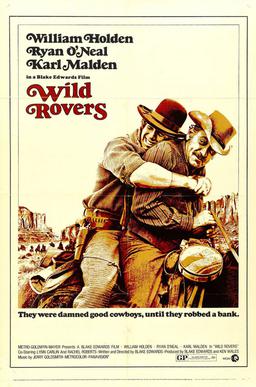
Wild Rovers (1971, directed by Blake Edwards)


In Montana, Walter Buckman (Karl Malden) runs his ranch with an iron hand, warning his neighbor, Hansen (Sam Gilman) not to even think of allowing his sheep to graze on his land.  Walter has two sons, hot-headed John (Tom Skerritt) and the laid back and good-natured Paul (Joe Don Baker).  When Walter learns that two of his ranch hands — aging Ross Bodine (William Holden) and young Frank Post (Ryan O’Neal) — have robbed a bank and are heading down to Mexico, he sends John and Paul to bring them back.  Walter is a big believer in the law and he’s not going to allow any of his people to get away with breaking it.

Ross is a veteran cowboy, who only robbed the bank after Walter withheld his pay to cover the damage of a saloon fight between Ross and Hansen’s men.  Frank is the wilder of the two.  He looks up to Ross and Ross is protective of Frank, even if he has a hard time admitting it.  Ross and Frank are heading down to Mexico so Ross can retire in peace.  Instead of going straight to Mexico, though, they make the mistake of stopping by a small town so Frank can play a little poker and visit the town’s brothel.

Wild Rovers was Blake Edwards’s attempt to make an epic, revisionist western and he includes plenty of shots of the sun setting over the mountains as well as several violent shoot-outs that are shot in Peckinpah-style slow motion.  Unfortunately, the story itself isn’t really strong enough to support Edwards’s ambitions and all of the shots of the countryside, while nice to look at, don’t really add up too much.  Wild Rovers was also a troubled production, with MGM slashing Edwards’s original three-hour film down to 106 minutes and advertising it with a poster featuring O’Neal hugging Edwards from behind, making the film look like a buddy comedy in the style of Butch Cassidy and the Sundance Kid (or an early version of Brokeback Mountain) as opposed to a violent and elegiac western.  (In 1986, a director’s cut was released, which ran for 136 minutes.)  If you only know Blake Edwards from his Pink Panther movies, the grim and tragedy-filled Wild Rovers will come as a surprise.

One thing that Wild Rovers does have going for it is a good cast.  William Holden and an energetic Ryan O’Neal are a solid team and Karl Malden, Tom Skerritt, Rachel Roberts, James Olson, and Moses Gunn all give good performances too.  This movie also provides Joe Don Baker with a sympathetic role and he’s very likable as the laid back Paul Buckman.  It’s not the type of role that Baker often got to play and it’s obvious that a lot of scenes between John and Paul were cut from the film but, in the truncated version, Joe Don Baker’s Paul Buckman becomes the moral center of the film’s story.

Wild Rovers was a disappointment at the box office, one of many that Edwards suffered in the 70s before he and Peter Sellers brought back Inspector Clouseau.

Scenes That I Love: William Holden and Kim Novak in Picnic


Today is Kim Novak’s 92nd birthday!

Today’s scene of the day is the wonderfully sensual dance scene that she shares with William Holden in 1955’s PicnicPicnic is a film that has its flaws, the main one being that William Holden, as charming and ruggedly handsome as he is, is a bit too old for the lead role.  But none of that matter once he and Kim Novak start dancing.

(At around the 18 second mark, the picture appears to freeze but don’t panic.  That’s a glitch in the upload and it only lasts for a second or two.)

Lisa Marie Reviews An Oscar Nominee: The Country Girl (dir by George Seaton)


First released in 1954 and based on a play by Clifford Odets, The Country Girl is centered around the production of a believably terrible stage musical called The Land Around Us.

Director Bernie Dodd (William Holden) is known for his willingness to take risks.  One of his previous plays was about a punk-drunk boxer so he cast an actual punch-drunk boxer in the role.  For The Land Around Us, Bernie wants to cast Frank Elgin (Bing Crosby), a former singing star who has fallen on hard times.  Frank was once a hitmaker but, after the tragic death of his son, his career went downhill.  He’s now lucky if he can get a job singing a commercial jingle.  Though Frank aces his audition, the show’s producer (Anthony Ross) insists that Frank is just too unreliable and that everyone know that he’s now a drunk.  Bernie, however, insists on casting Frank and Bernie, as always, gets his way.

Bernie grew up looking up to Frank and it’s hard for him to see that his idol is now struggling.  Bernie squarely puts the blame on Frank’s wife, Georgie (Grace Kelly, wearing glasses and her hair tied back).  Whenever Bernie sees Georgie, she seems to be criticizing Frank and micromanaging his life.  Bernie tells Frank that Georgie is holding back his career but Frank explains that Georgie is unstable and that, whenever he’s tried to leave her, she’s responded by attempting to commit suicide.  Bernie, who seems to have issues with women in general, believes everything that Frank says.  Whenever Frank makes a demand during the rehearsal process, Bernie blames Georgie.  Whenever Frank seems to be insecure about whether or not he can still be a star, Bernie blames Georgie.

Of course, Bernie’s wrong.  As is obvious to everyone watching the film (and as should have been obvious to Bernie from the moment he first saw Frank and Georgie together), Georgie is the the only person who is keeping Frank from totally falling apart.  If she seems to be demanding, she knows that it’s because Frank is so desperate to be a star again that he tends to let people walk all over him.  If she’s overprotective of Frank, that’s because she knows that Frank is an alcoholic who blames himself for the death of their son.  Frank is the one who tried to commit suicide, not Georgie.  Georgie has dedicated her life to taking care of Frank and, if she is sometimes overly critical with him, it’s because she alone understands that Frank is throwing his life away.

It’s a sad film.  Both Georgie and Bernie are almost fanatically loyal to Frank but it’s hard not to feel that the self-centered and self-destructive Frank doesn’t really deserve their loyalty.  That we have any sympathy at all for Frank is due to the performance of Bing Crosby, who plays the role with just enough self-awareness that the audience gets a hint of the man Frank was before he turned to alcohol and self-pity.  As usual, William Holden is well-cast as a cynical but ultimately kind-hearted character and he does a good job of hinting at what lies underneath Bernie’s rough exterior.  Grace Kelly won her only Oscar for playing Georgie and she does a fairly good job, even if she does seem to be miscast.  Georgie is far cry from the glamorous characters that Kelly usually played.  Personally, I think she was far more Oscar-worthy in Rear Window, which was released the same year and featured Kelly in a far more interesting role.  George Seaton directs the film as if it were a film noir, with Holden, Crosby, and Kelly often acting in the shadows.  The Country Girl works best when it contrasts the artificiality of Bernie’s show with the real-life human drama taking place backstage.

The Country Girl was nominated for Best Picture, Director, Actor, and Actress.  While Grace Kelly was named Best Actress, the rest of the awards were won by On The Waterfront, with Bing Crosby losing to Marlon Brando.

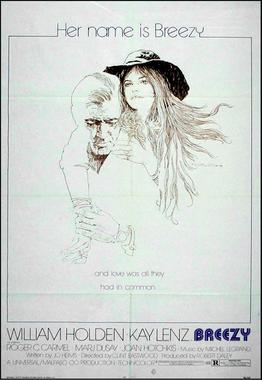
Cleaning Out The DVR: Breezy (dir by Clint Eastwood)


1973’s Breezy tells the story of two seemingly different people.

Breezy (Kay Lenz) is a teenage girl who moves to California after she graduates high school.  Breezy is intelligent and free-spirited.  She’s also practically homeless, moving from bed to bed and never getting tied down to anyone.  Many people assume that Breezy is a runaway but her parents died a long time ago and her aunt approves of Breezy pursuing her own happiness.  Many people also assume that Breezy is a hippie but Breezy doesn’t consider herself to be one and doesn’t even smoke weed.  She may hang out with hippies and runaways but, for the most part, Breezy just wants to be herself, free of all of society’s labels and hang-ups.

Frank Harmon (William Holden) is a fifty-something real estate agent.  He drives a nice car.  He owns a lovely home.  He has money but he’s also freshly divorced and obviously in love with his best friend, Betty (Marj Dusay).  Most people would consider Frank to be a part of the establishment, though it soon becomes clear that he’s as disillusioned as any long-haired protestor.  Frank has reached the point of his life where he looks at everything that he has and he asks, “Is this all there is?”

Together …. they solve crimes!

No, actually, they fall in love.  Breezy ends up outside of Frank’s house after escaping a creepy man who had earlier offered her a ride.  When she sees that Frank is getting into his car and driving into the city, she decides that Frank can give her a ride too.  She also decides to keep hanging out near Frank’s house.  Though Frank is initially annoyed by Breezy’s presumptuousness, he still allows her to spend the night when a sudden storm comes up.  Frank and Breezy become unlikely friends and eventually, even more.  But Frank continues to worry about the difference in their ages, especially when his friends find out that Breezy is living with him.

Really, Breezy is a film that should not work and it does run the risk of turning into a typical midlife crisis fantasy, with Breezy having no concerns beyond keeping Frank happy.  That the film does work is largely a testament to the performances of William Holden and Kay Lenz and the sensitive and nonexploitive direction of Clint Eastwood.  When screenwriter Jo Heims first wrote the script for Breezy, she envisioned Eastwood in the role of Frank.  Reading the script, Eastwood said that he could relate to Frank’s disillusionment but that he felt he was too young for the role.  Instead, Eastwood directed the film and he cast William Holden as Frank.  Breezy was Eastwood’s third film as a director and the first in which he didn’t star.  It was also nobody’s idea of what a Clint Eastwood film would be and it struggled at the box office.  That said, it’s a film that has a legion of devoted fans.  Paul Thomas Anderson is one of those fans and even worked a few references to the film into Licorice Pizza.

Holden and Lenz both give excellent performances, with Lenz playing Breezy as being free-spirited but not foolish.  Holden, meanwhile, captures Frank’s boredom without giving a boring performance.  (It helped that, while Holden was the right age of the role, he still retained enough of his good looks and his movie star swagger that it was believable that Breezy would find him attractive.)  Wisely, the film doesn’t make the mistake of idealizing either Frank or Breezy.  They’re both complex characters, with their own individual flaws and strengths.  At the end of the film, one can be forgiven for having doubts about whether or not they’ll still be together in a year or two but one does definitely wish them the best, no matter what happens.

Though politically conservative, Breezy reveals that Clint Eastwood had some sympathy for the counter-culture.  Eastwood has always straddled the line between being a member of establishment and being a rebel.  Like Breezy and Frank, he belongs to both worlds.

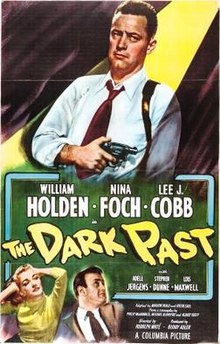
30 More Days of Noir #6: The Dark Past (dir by Rudolph Mate)


Now, this is an interesting little film noir!

This 1948 film stars William Holden, Lee J. Cobb, Nina Foch and Lois Maxwell.  William Holden is Al Walker, an escaped convict and a ruthless murderer.  Nina Foch is Betty, Walker’s devoted girlfriend and partner in crime.  Lee J. Cobb is Dr. Andrew Collins.  Lois Maxwell, years before she would be cast as Miss Moneypenny in the first Bond films, plays Ruth Collins, Andrew’s wife.  When Walker, Betty, and the gang break into the Collins home, they hold he doctor and his family hostage.

That may sound like a similar set-up to Desperate Hours and hundreds of other low-budget crime movies.  And, indeed, it is.  What sets The Dark Past apart from those other films is that Dr. Collins is a psychiatrist and his response is not to try to defeat or trick Walker but instead to understand him.  Even after Walker kills a friend of the family’s, Collins remains convinced that he can get to the heart of Walker’s anger and help the criminal start the process of reform.

When the nervous and violent Walker threatens the family, Collins calmly offers to teach him how to play chess.  When it looks like Collins might have a chance to escape, he instead stays in the house and continues to talk to Walker.  Eventually, he finds out about a recurring dream that Walker has been having, one that involves Walker standing in the rain under an umbrella that has a hole in it.  Collins links the dream to Walker’s traumatic childhood and he shows Walker why he feels the need to be violent and destructive.  But will it make a difference when the cops show up?

The Dark Past is an interesting relic.  Watching it today, it can seem a bit strange to see just how unquestioning the film is of the benefits of analysis and dream interpretation.  Nowadays, of course, we know that dream symbolism is often just random and that it’s impossible for a psychiatrist to “cure” a patient after only talking to them for an hour or two.  However, The Dark Past was made at a time when psychiatry was viewed as being the new science, the thing that that no one dared to question.  This was the time of The Snake Pit and Spellbound.  The Dark Past suggests that all any criminal needs is just a night spent talking to someone who had studied Jung and Freud.  Today, the film seems a bit naive but it’s still an interesting time capsule.

William Holden is great as Al Walker.  That, in itself, isn’t a surprise because William Holden was almost always great.  Still, Holden does an outstanding job of making Walker and his neurosis feel real and, like the best on-screen criminals, he brings a charge of real danger to his performance.  Lee J. Cobb has the less showy role but he also does great work with it.  It takes a truly great actor to make the act of listening compelling but Cobb manages to do it.

The Dark Past may not be as well-known as some film noirs but it’s an interesting and occasionally even compelling film.  Keep an eye out, eh?

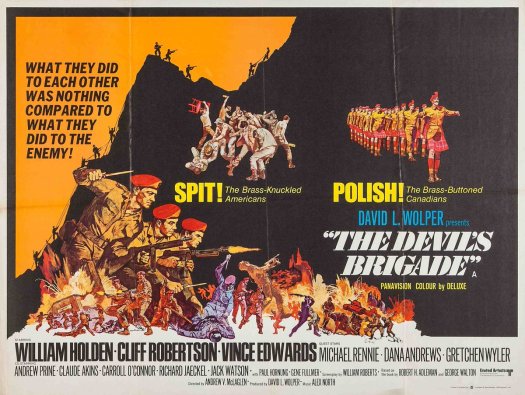
Special Memorial Day Edition: THE DEVIL’S BRIGADE (United Artists 1968)


gary loggins's avatarcracked rear viewer

In the wake of 1967’s THE DRITY DOZEN came a plethora of all-star, similarly themed films. THE DEVIL’S BRIGADE is one of those, though just a bit different: it’s based on the true-life exploits of the First Special Service Force, a collection of American misfits straight from the stockades and the crack, highly disciplined Canadian military, forging them into one cohesive fighting unit.

William Holden  heads the cast as Lt. Col. Robert Frederick, tasked with putting the units together. His seconds-in-command are the cigar chomping American Major Brecker (Vince Edwards) and proud Canadian Major Crown (Cliff Robertson). The Americans, as rowdy a bunch of reprobates as there ever was, include Claude Akins , Luke Askew, Richard Jaeckel, and Tom Troupe, while the Canadians are represented by the likes of Richard Dawson, Jeremy Slate, and Jack Watson , war movie vets all.  Andrew Prine is also aboard as an AWOL…

View original post 365 more words

SUNSET BOULEVARD (Paramount 1950): Film Noir or Hollywood Horror Story?


“Sunset Boulevard” airs tonight on TCM at 8:00pm EST

gary loggins's avatarcracked rear viewer

“I AM big. It’s the pictures that got small”

  • -Gloria Swanson as Norma Desmond in SUNSET BOULEVARD

I hadn’t seen Billy Wilder’s SUNSET BOULEVARD for quite some time until a recent rewatching. I’ve told you before how much I love a good Hollywood behind-the-scenes movie, and this one is no exception. But as I watched the tale unfold, I began to see the film in a different light. SUNSET BOULEVARD is always called a film noir classic, but this go-round found me viewing it through a lens of horror.

It’s certainly got all the elements of film noir. There’s protagonist William Holden, trapped in a bottomless downward spiral. Gloria Swanson is the femme fatale who ensnares Holden and pulls him into her dark web. The cinematography of John F. Seitz portrays a shadow-world of despair. And we’ve got Billy Wilder directing, the man behind noir masterpiece DOUBLE INDEMNITY, working…

View original post 540 more words

Lisa Reviews An Oscar Nominee: Love Is A Many-Splendored Thing (dir by Henry King)


(With the Oscars scheduled to be awarded on March 4th, I have decided to review at least one Oscar-nominated film a day.  These films could be nominees or they could be winners.  They could be from this year’s Oscars or they could be a previous year’s nominee!  We’ll see how things play out.  Today, I take a look at the 1955 best picture nominee, Love Is A Many-Splendored Thing!)

Before I talk about Love Is A Many-Splendored Thing, let’s play a little trivia game.

I’m going to list ten films.  Your job is to guess what they all have in common:

Did you guess?  All ten of these films came out in 1955 and not a single one of them was nominated for best picture.  That’s something that I found myself thinking about quite a bit as I watched Love Is A Many-Splendored Thing on TCM last night.  Of course, at this point, everyone knows that deserving films are often ignored by the Academy and that what seems like a great film during one year can often seem to be rather forgettable in subsequent years.

So, you can probably guess that I wasn’t terribly impressed with Love Is A Many-Splendored Thing but, before I get too critical, I want to start things off on a positive note.  William Holden was, without a doubt, one of the best actors to ever appear in the movies.  He started his film career in the 1930s and worked regularly until his death in 1981.  Just consider some of the films in which Holden appeared: Golden Boy, Our Town, Sunset Boulevard, Stalag 17, Sabrina, Picnic, Network, and so many others.  Of course, not every film in which Holden appeared was a masterpiece.  He made his share of films like Damien: Omen II and When Time Ran Out.  But the thing is that, regardless of the film, Holden was always good.

That’s certainly the case with Love Is A Many-Splendored Thing.  It’s not one of Holden’s better films but William Holden is his usual dependable self.  He plays Mark Elliott, a rugged American correspondent who is living in Hong Kong in the 1940s.  While the Chinese Civil War rages nearby, Mark deals with his failing marriage.  His wife is back in the States.  They’re separated but not quite divorced.  Mark owns a really nice car and, since he’s played by William Holden, he delivers the most world-weary of lines with an undeniable panache.  He also appears shirtless for a good deal of the film.  Between this and Picnic, 1955 was the year of the shirtless Holden.

The problem with Love Is A Many-Splendored Thing is not with William Holden.  Instead, the problem is with the miscasting of Jennifer Jones as Han Suyin, the woman with whom Mark Elliott falls in love.  Han Suyin was a real-life person, a doctor who wrote the autobiographical novel on which Love Is A Many-Splendored Thing was based.  Han Suyin was Eurasian.  Jennifer Jones most definitely was not.  Throughout the film, Han Suyin and Mark often discuss what it’s like to be Eurasian and to be in the middle of two very different cultures.  There’s even a discussion about whether Han Suying should try to pass as European.  It all has the potential to be very interesting except for the fact that Jennifer Jones, who was so good in so many films, is in no way convincing in her role.  Whenever she mentions being Eurasian, which she does frequently, the film come to a halt as we all stare at Jennifer Jones, one of the first film stars to ever come out of Tulsa, Oklahoma.

It all leads to a rather strained movie, one that never really drew me into its cinematic world or story.  (For the record, a lot of people on twitter disagreed with me on this point.)  Ultimately, the main reason to watch it was for William Holden.  According to the film’s Wikipedia entry (how’s that for in-depth research), Holden and Jones reportedly did not get along during filming, with Jones apparently chewing garlic before their love scenes and there was a definite lack of chemistry between them.  Maybe I got spoiled by William Holden and Kim Novak dancing in Picnic but I never believed that Mark and Han Suyin were attracted to each other.  Interestingly, Jones and Holden would later both appear in another best picture nominee, 1974’s The Towering Inferno.  However, they didn’t share any scenes.

Love Is A Many-Splendored Thing was nominated for best picture but it lost to a far different love story, Marty.  This was also the final film directed by Henry King to be nominated for best picture.  Previous King films to be nominated included State Fair, In Old Chicago, Alexander’s Ragtime Band, The Song of Bernadette, Wilson, and Twelve O’Clock High.

Dances Scenes That I Love: William Holden and Kim Novak in Picnic


Hi, everyone!  Well, I just watched Sharknado 4 twice and I live tweeted it both times!  You can expect to see my review either tomorrow or on Tuesday, depending on how well I recover from tonight.

But, until then, it’s time to share this week’s final dance scene that I love.  This wonderfully sensual scene comes from the 1955 best picture nominee, Picnic!  Check out this wonderfully sensuous scene with William Holden and Kim Novak!

I hope everyone’s had a great July and I hope that August will be even better!

Love ya!

(Oh, at around the 18 second mark, the picture appears to freeze but don’t panic.  That’s a glitch in the upload and it only lasts for a second or two.)