Artist Profile: Karl Kopinsky


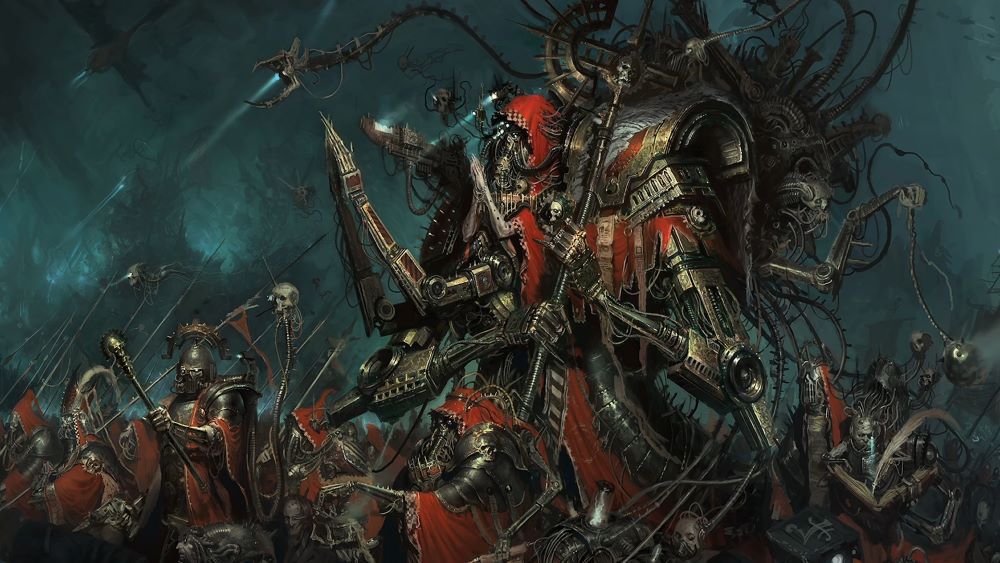
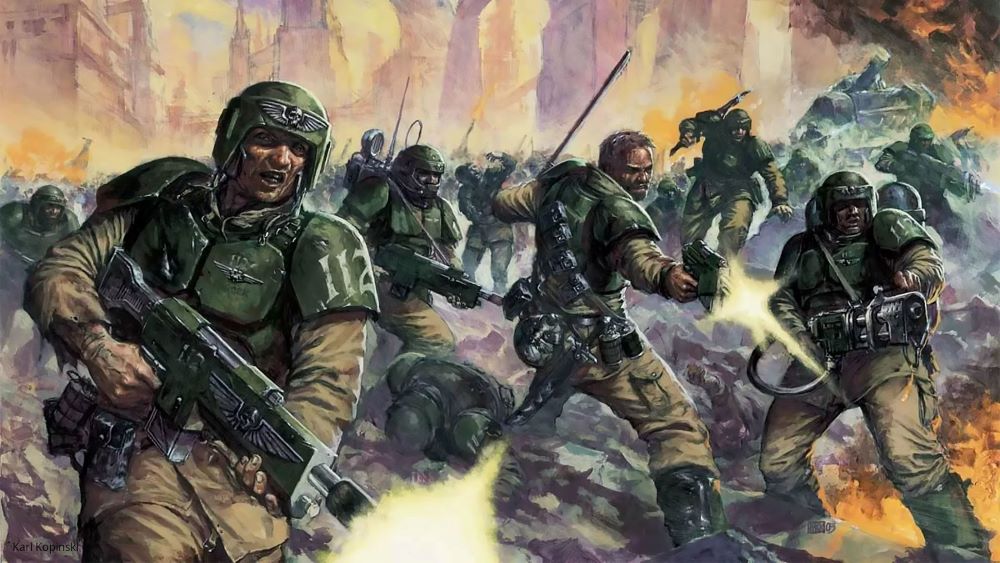
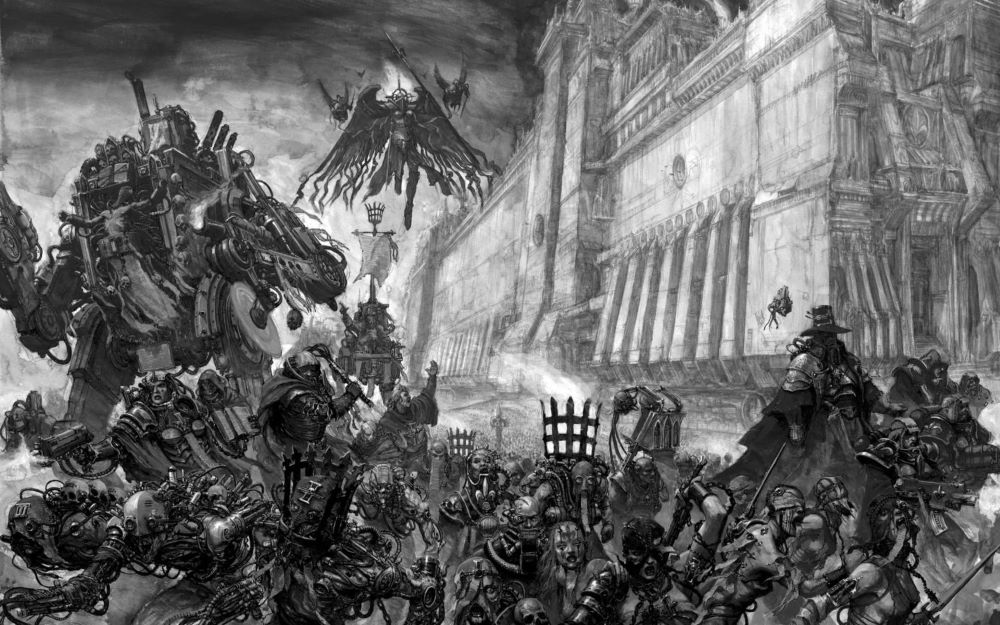
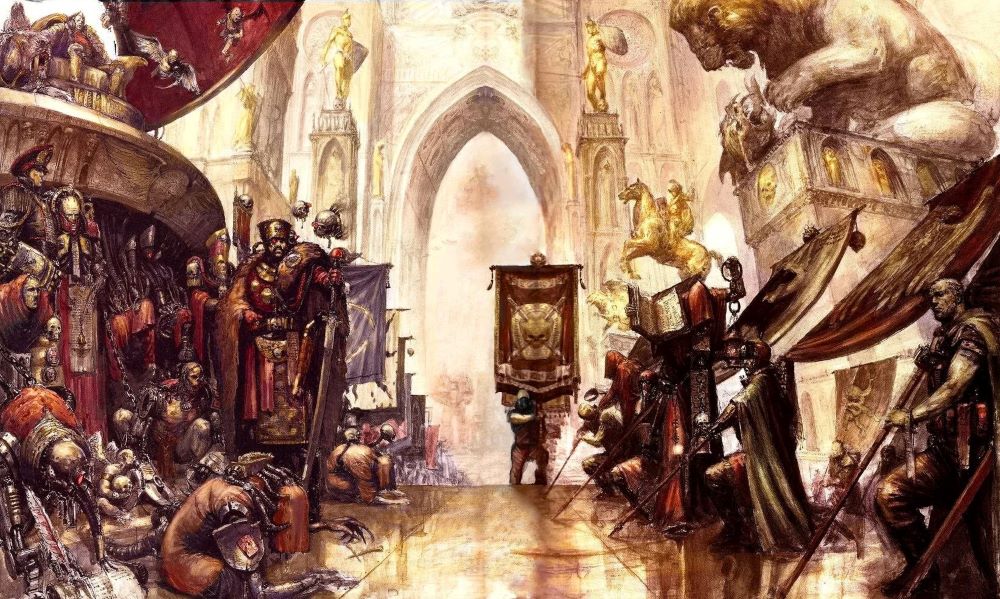
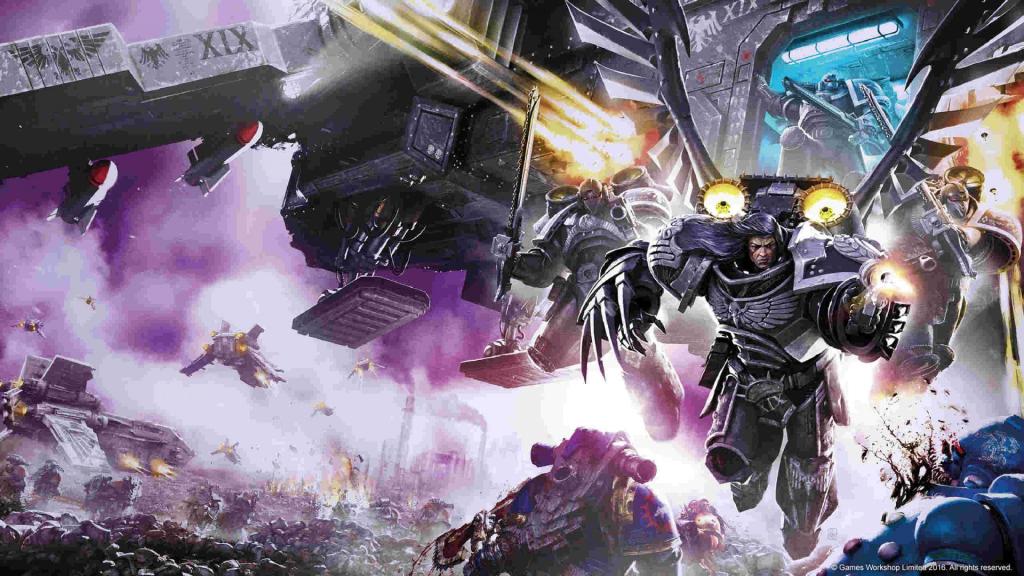
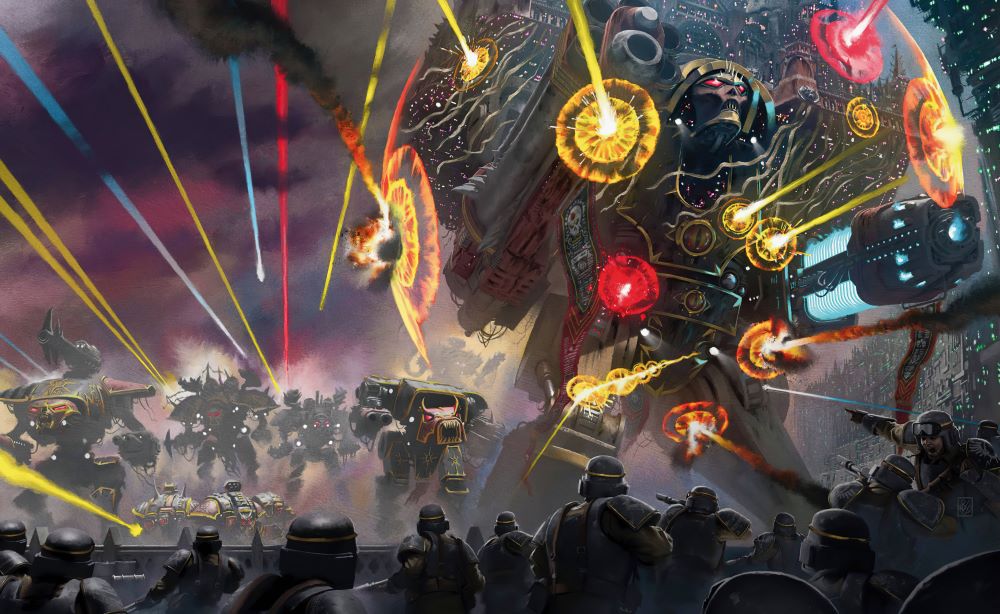
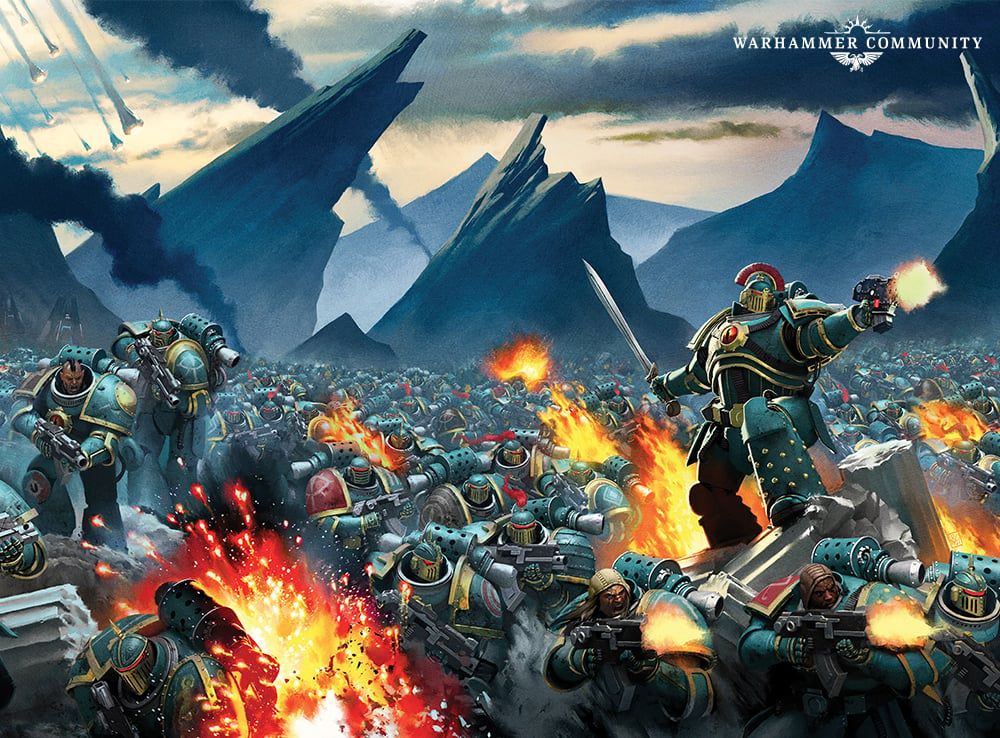
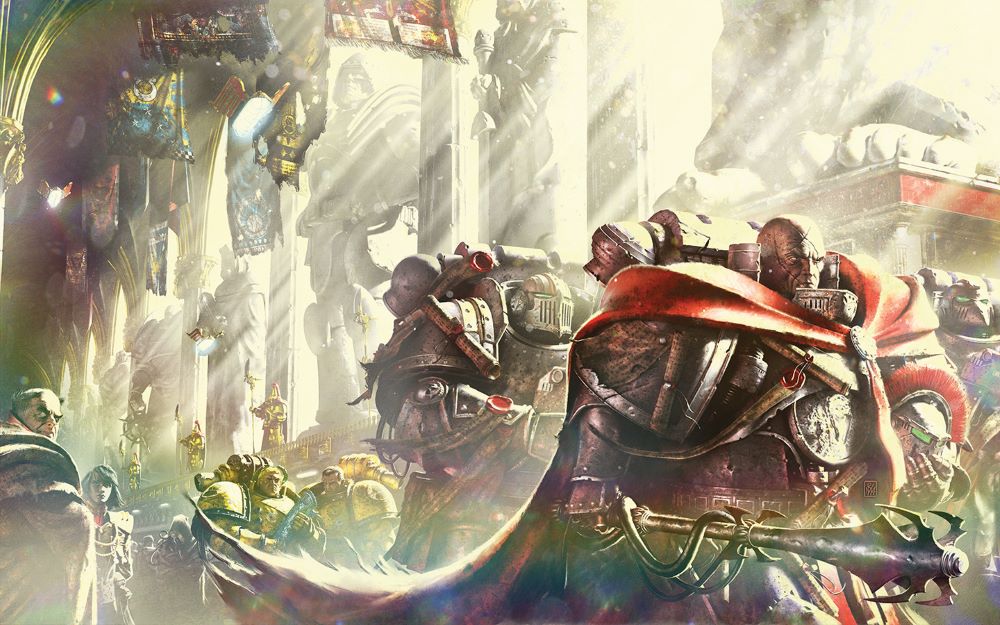
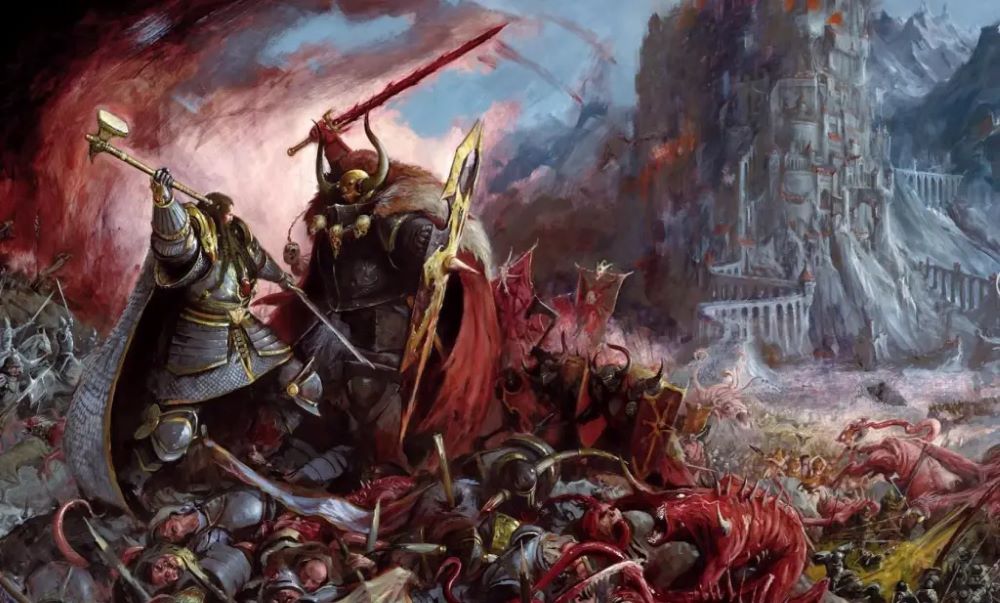
Karl Kopinski is well-known for his powerful and vivid artwork within the Warhammer 40,000 and Warhammer Fantasy universes. His illustrations bring to life the dark and intense atmosphere of these worlds, combining detailed pencil sketches with digital painting techniques. Kopinski’s art captures the ruggedness and drama of the characters and environments, giving fans a strong visual connection to the stories and miniature figures. His early work with Games Workshop helped establish the distinctive look and feel that many associate with the Warhammer brand.

In his Warhammer 40K pieces, Kopinski focuses on dynamic characters and battle scenes that feel full of energy and history. From armored soldiers to monstrous creatures, his work emphasizes strong contrasts and vivid expression, creating images that suggest an ongoing saga of conflict and heroism. Similarly, his fantasy art conveys mythical themes with a fresh, raw energy, balancing realism with imaginative design. His style invites both players and artists to immerse themselves in the rich narratives of these fantasy worlds while inspiring miniature hobbyists who recreate his detailed designs.

Beyond his contributions to Warhammer, Kopinski continues to explore fantasy art through various projects, blending realistic anatomy and dramatic light with creative storytelling. His illustrations stand out for their ability to mix traditional drawing techniques with modern digital tools, offering a unique and compelling look that appeals to a broad audience.

Artist Profile: Neil Roberts


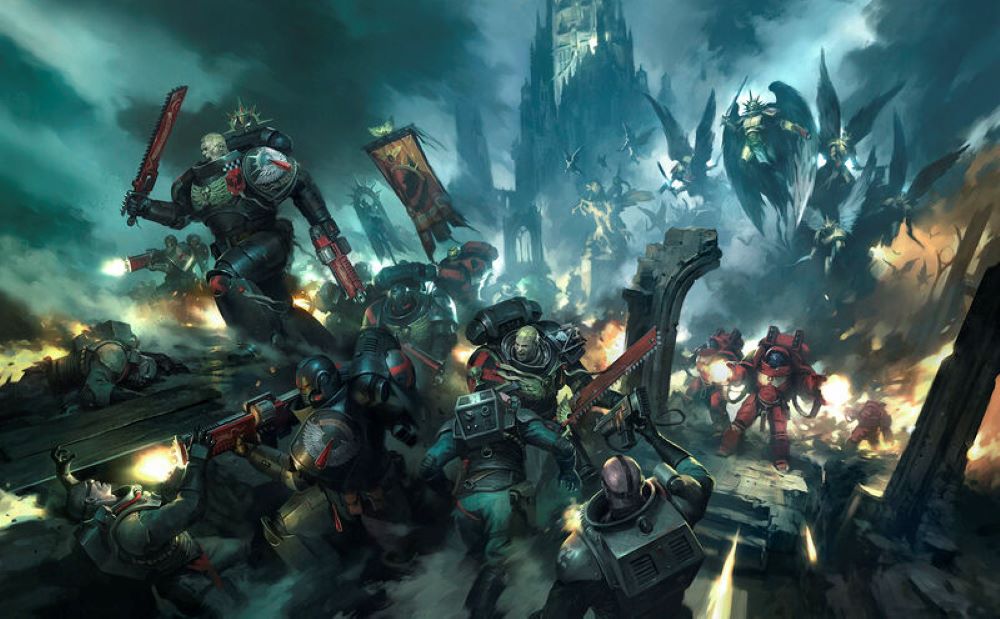
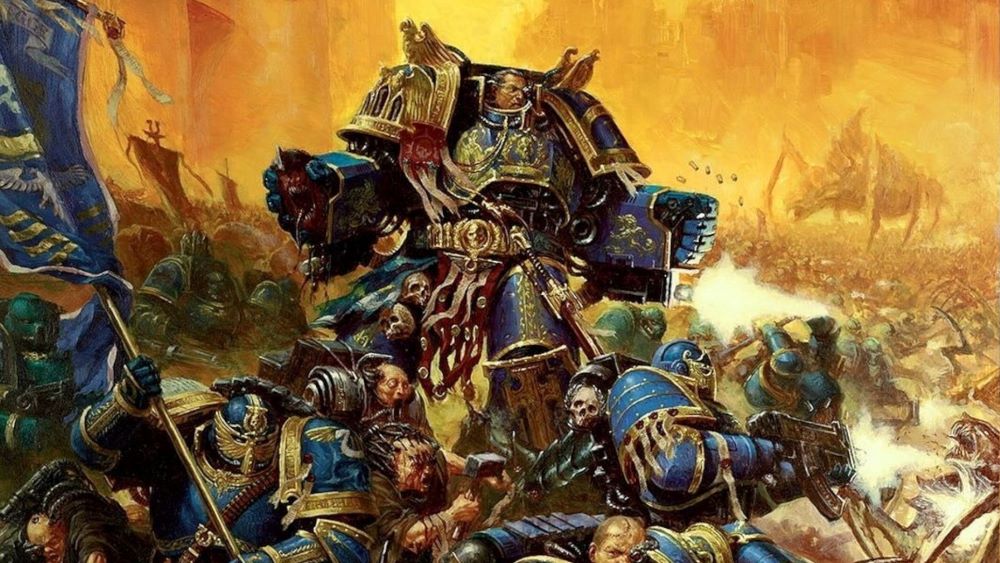
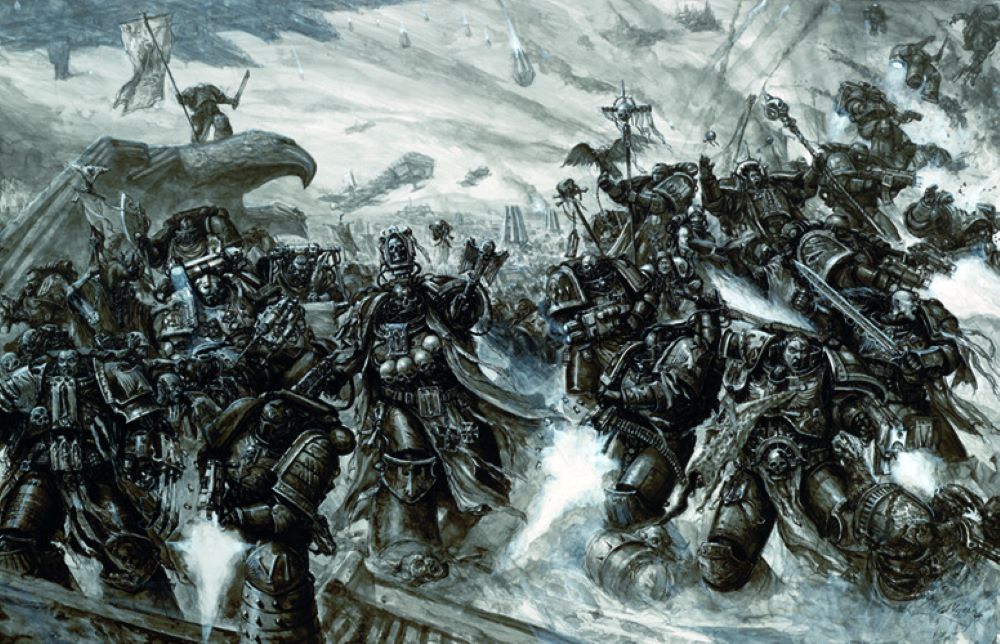
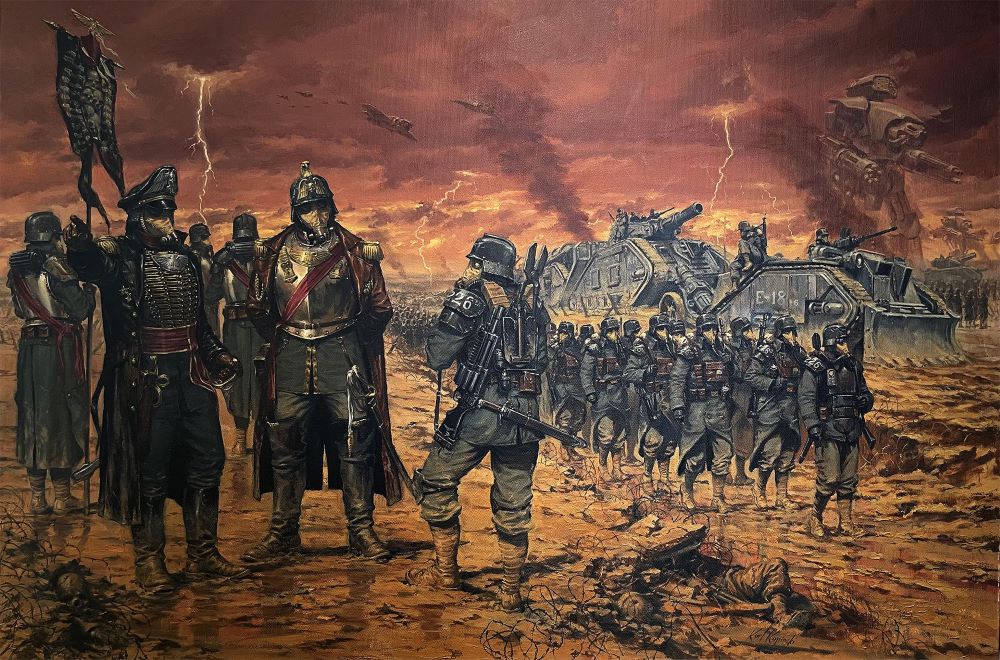
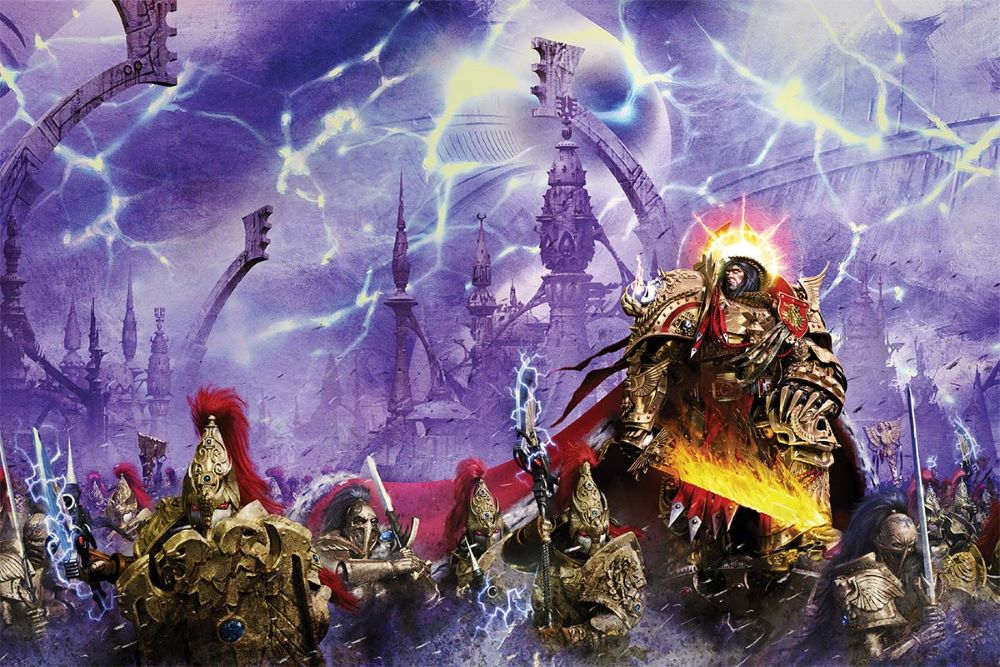
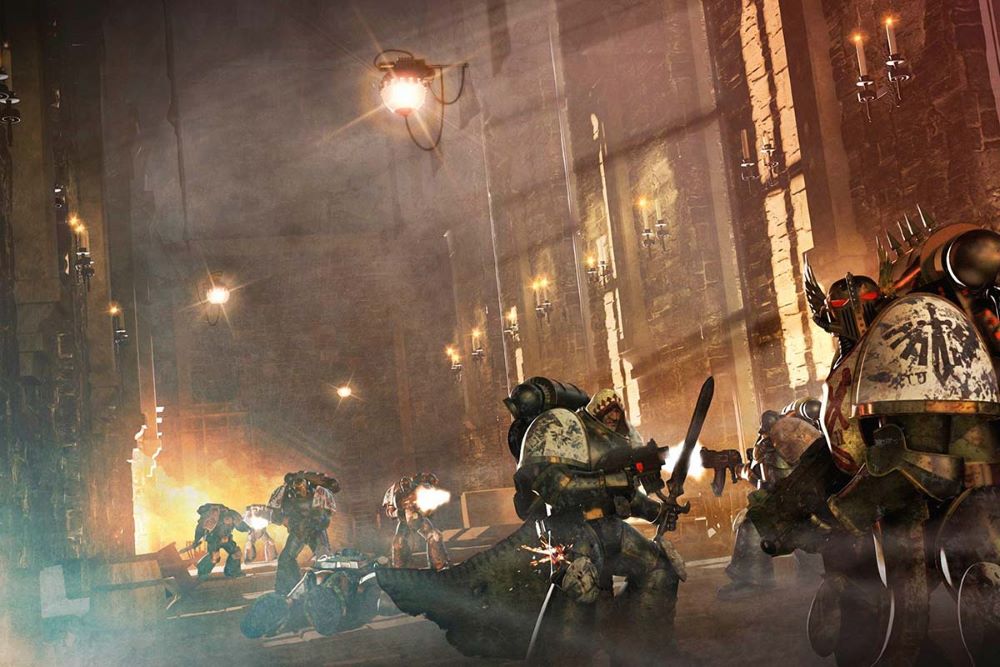
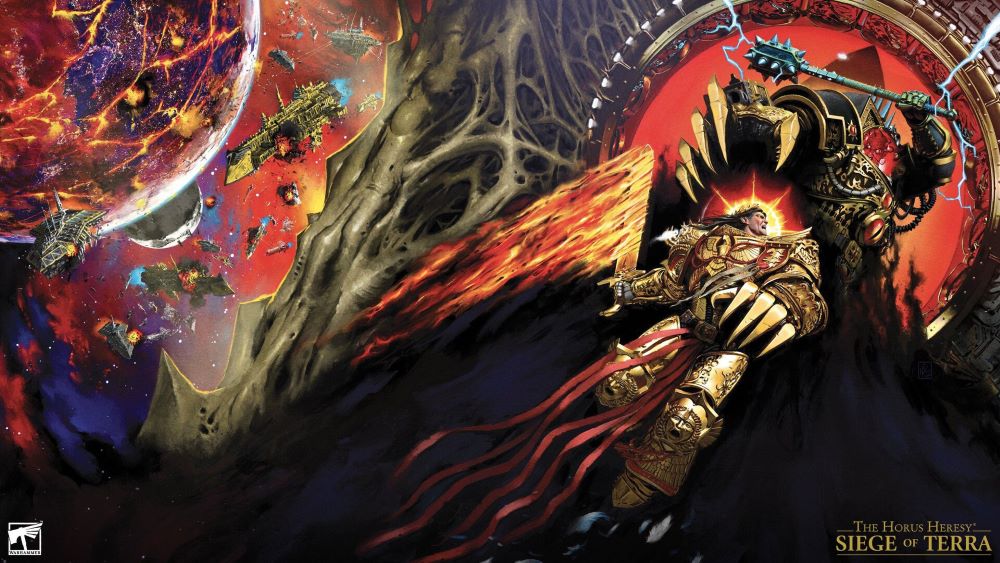
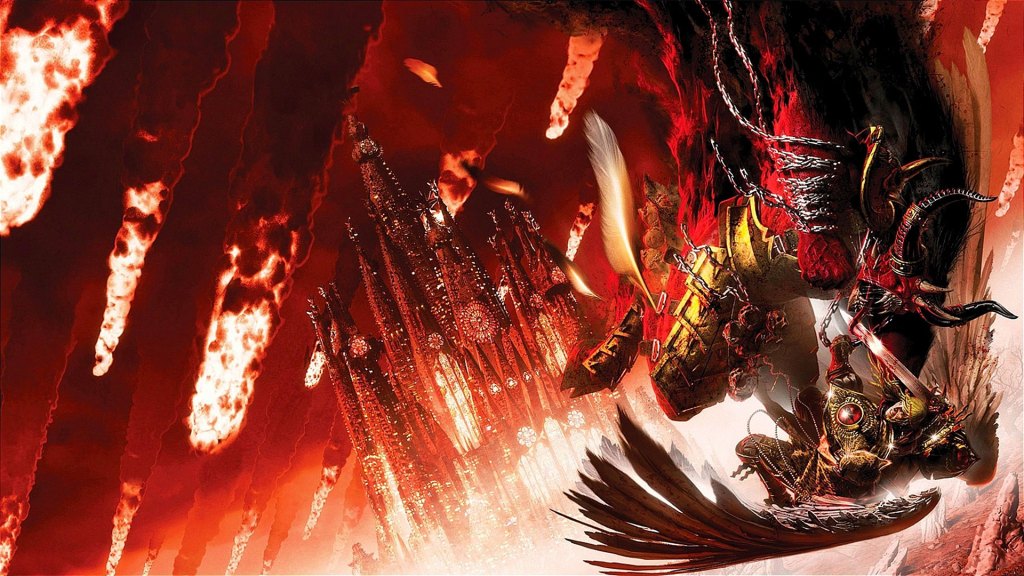
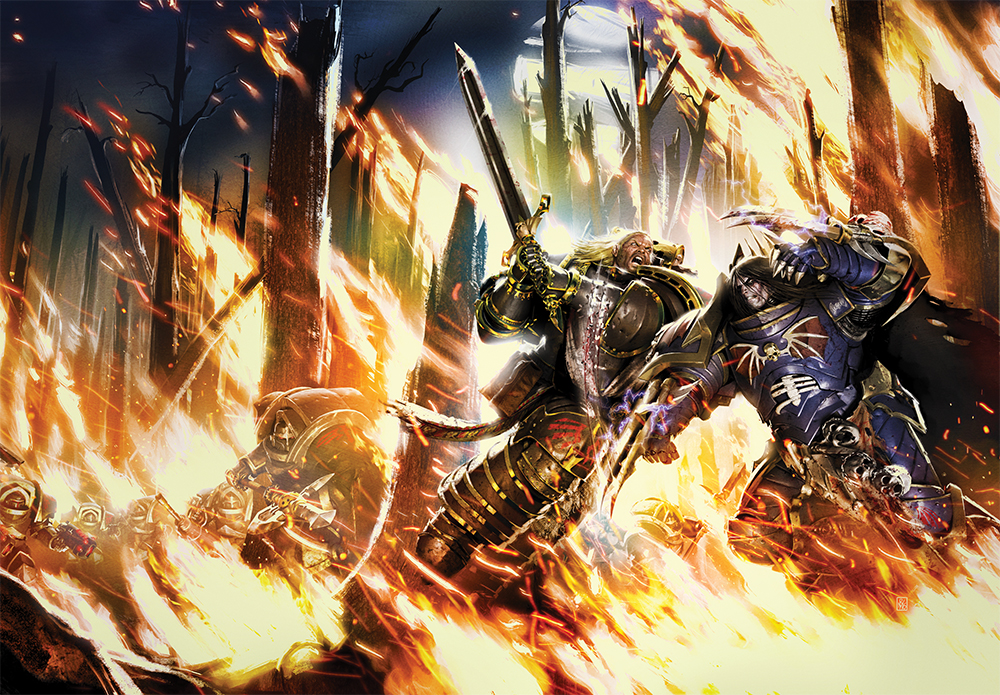
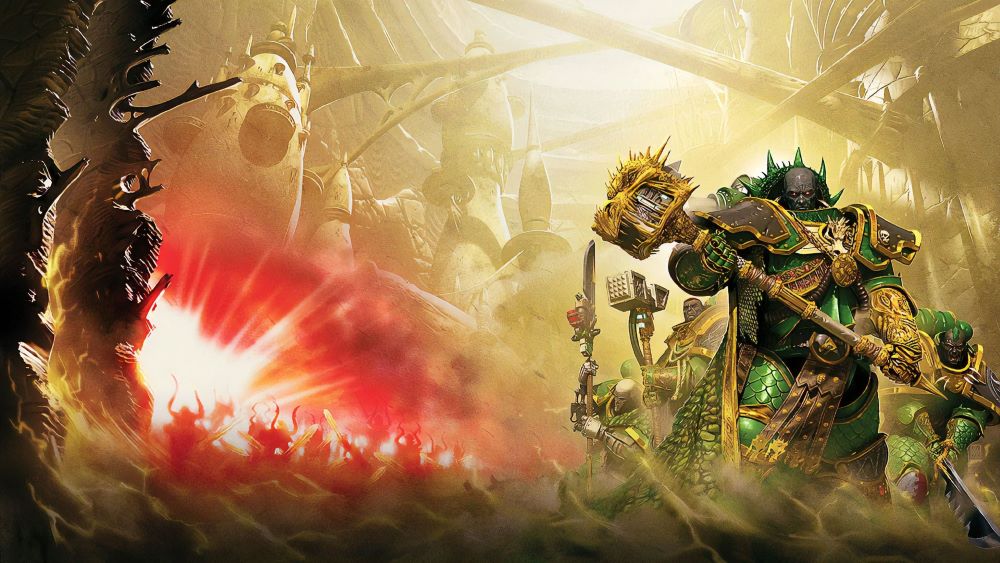
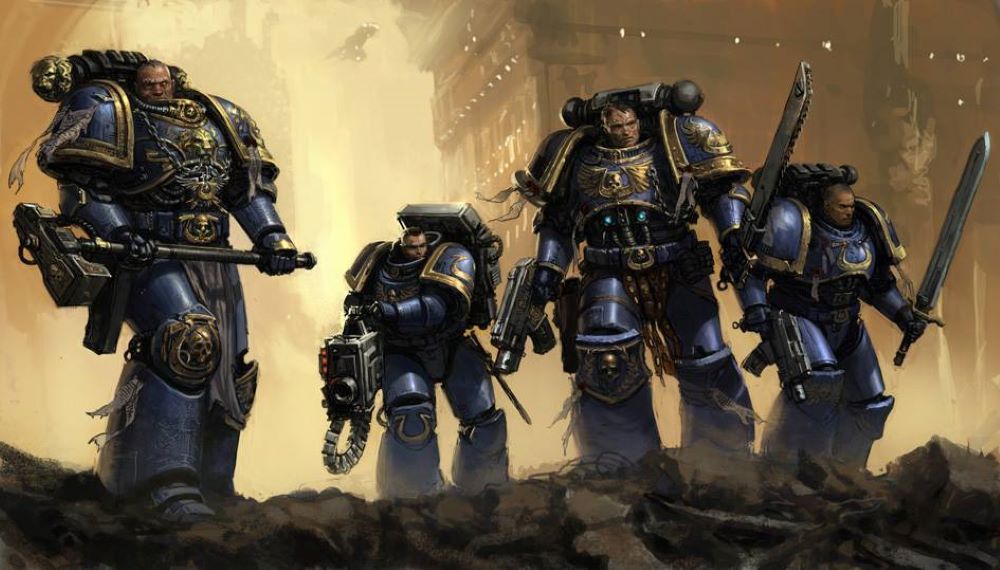
Neil Roberts has a knack for bringing the dark, brutal world of Warhammer 40K’s Horus Heresy to life with his cover art. His paintings do an amazing job of showing the grim and epic atmosphere that defines the setting — filled with shadows, war-torn armor, and a sense of endless struggle. The moody lighting and intense detail in his work really pull you into a universe that feels both vast and oppressive, perfectly matching the tone of the stories inside.

What makes his art stand out is how he captures that feeling of dread mixed with heroism. His Space Marines and iconic characters aren’t just soldiers; they’re larger-than-life figures bathed in harsh light and surrounded by chaos, which really nails the “grim darkness” aspect Warhammer fans expect. Every cover looks like a scene from a massive battle where hope is scarce, but courage burns bright—which is exactly how the Horus Heresy saga plays out.

Roberts’ style balances digital polish with a painterly touch, giving his art depth and life without losing the hand-crafted vibe. This approach makes the scenes feel immersive, like a visual gateway to the brutal and tragic history of the Imperium. For fans, his covers aren’t just illustrations; they’re essential to experiencing the full weight of the Warhammer 40K universe’s darkest moments.

Horror Review: Event Horizon (dir. by Paul W. S. Anderson)


“You know nothing. Hell is only a word. The reality is much, much worse.” — Dr. Weir

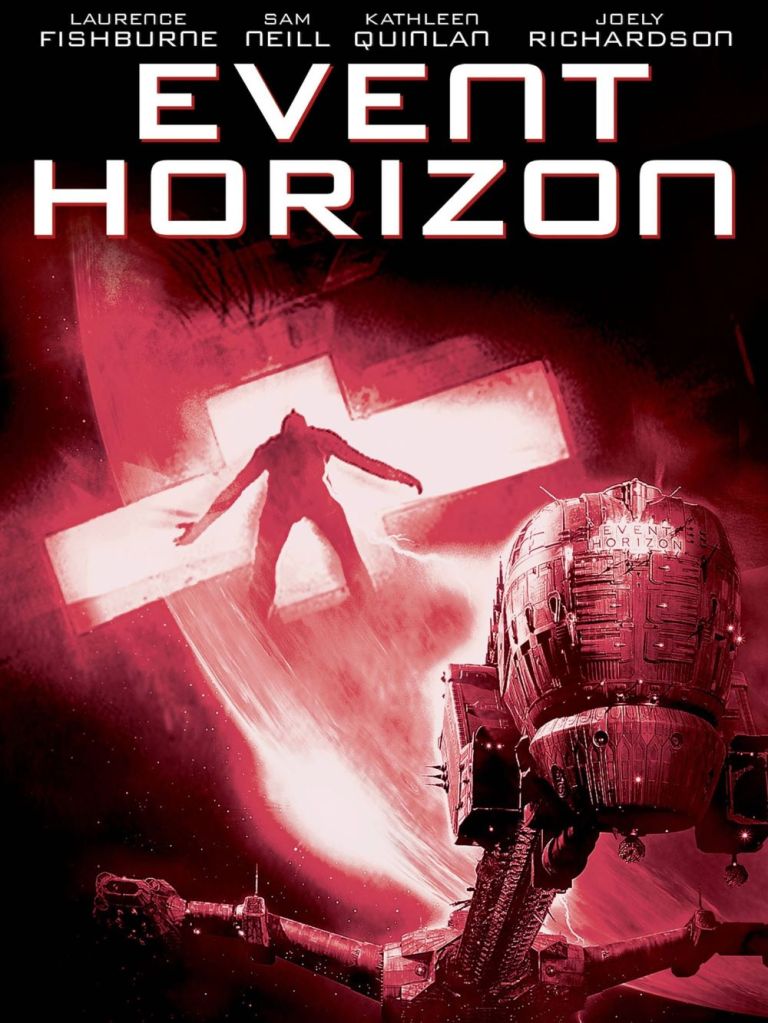
Paul W.S. Anderson’s 1997 film Event Horizon stands out as a memorable mix of science fiction and horror, remembered for its gripping atmosphere and disturbing visuals. The story is set in 2047: a rescue crew aboard the Lewis and Clark is sent out to recover the long-missing spaceship Event Horizon, a vessel built to test a new kind of faster-than-light travel. Onboard with them is Dr. William Weir, the Event Horizon’s creator, who explains that the ship vanished after first activating its “gravity drive,” which can fold space to allow for instant travel across vast cosmic distances.

Soon after reaching the drifting Event Horizon, the crew discovers signs of mass violence and horror. They recover a disturbing audio message and realize something traumatic happened to the original crew. As they search for survivors, they experience intense and personal hallucinations—memories and fears brought to life by the ship. It becomes clear that the Event Horizon didn’t just jump through space; it traveled to a place outside reality, a nightmarish interdimensional realm resembling hell.

What makes Event Horizon particularly unique is its concept of hell as an alternate dimension that can infect and corrupt whatever or whoever crosses into it. The ship’s gravity drive doesn’t simply facilitate faster travel—it accidentally opens a gateway to this chaotic, malevolent place. This portrayal of hell as a dangerous interdimensional reality that preys on minds and bodies echoes the idea found in the massive gaming property Warhammer 40K, where hell is depicted as the Warp, a dimension of chaos that corrupts and drives people insane. Like the Warp, the film’s hell is an unpredictable, hostile realm where sanity and physical form break down, infecting and warping everything that comes into contact.

Visually, the film relies on claustrophobic corridors, flickering lights, and unsettling sounds to keep the audience off-balance. The design of the ship itself—part gothic cathedral, part industrial nightmare—adds to the sense of unease and dread throughout. The use of practical effects and detailed sets grounds the sci-fi terror in something tangible, making it all feel more immediate and believable.

Event Horizon also hints at bigger philosophical questions: how far should science go, and what happens when the drive for knowledge is unchecked by ethics or humility? The gravity drive is a technological wonder, but it’s treated with little caution by its inventor, and the catastrophic results suggest that some discoveries may be better left unexplored. The ship becomes both a literal and figurative vehicle for exploring the limits of human ambition and the dangers of pushing beyond them.

As the movie builds toward its climax, the rescue crew faces increasingly desperate odds. The possessed Dr. Weir, now an outright villain, sees the hellish dimension the gravity drive visited as the next step for humanity—a place of chaos and suffering. Multiple characters die in gruesome ways, and the survivors have to fight their own fears and the haunted ship itself. The ending is chilling and ambiguous, leaving open the possibility that the ship’s evil has not been fully contained.

At release, Event Horizon divided critics and audiences. Some found the violence and nightmare imagery too intense or the story too messy to follow. Others praised its ambition and the way it blends psychological horror with cosmic sci-fi. Over the years, the film has developed a cult reputation, frequently cited as one of the more effective and original space horror movies. Its legacy can be seen in later media, especially in video games that tackle similar haunted spaceship scenarios.

However, the film is not without flaws. Many viewers and critics point out uneven pacing, especially in the second half where tension sometimes drains away. The characters often act inconsistently or make choices that feel unrealistic for trained astronauts, which undermines the suspense. The script’s tonal shifts—from serious psychological drama to moments that unintentionally verge on camp—can jolt the viewer out of the experience. The use of jump scares is sometimes predictable, and the film’s heavy reliance on loud, chaotic sequences instead of quiet suspense can feel overwhelming. Some CGI effects haven’t aged well, contrasting with the otherwise impressive practical effects and set design. Acting performances are mixed too; while Sam Neill and Laurence Fishburne are strong, some supporting cast members lack conviction, making emotional engagement uneven.

Importantly, Event Horizon represents Paul W.S. Anderson at his most subtle and effective in directing. Compared to many of his later films, where his style often becomes frenetic and unchecked—possibly due to a lack of producer control—Event Horizon is more controlled, atmospheric, and haunting. This balance between style and substance makes it one of Anderson’s better directorial works, if not his best to date. The film showcases his interest in spatial geography, the use of negative space, and claustrophobic production design, all elements he would expand on in his later work but never as effectively deployed as here. The haunting visual touches, combined with his ability to direct actors and maintain tension, set Event Horizon apart from his more bombastic, less focused later entries.

Despite its flaws, Event Horizon remains gripping and memorable. Its strengths lie in combining deeply personal psychological horror with the vast, terrifying unknown of space and alternate realities. The film explores not just external threats, but also how guilt, fear, and trauma can be weaponized by forces beyond human understanding. For viewers seeking more than a standard haunted spaceship story, Event Horizon offers a disturbing, thought-provoking glimpse into the dark frontier of science, faith, and madness. It stands as a cult classic of sci-fi horror that continues to inspire discussion about the dangers of pushing too far into the unknown.

Space Hulk


space-hulk-03

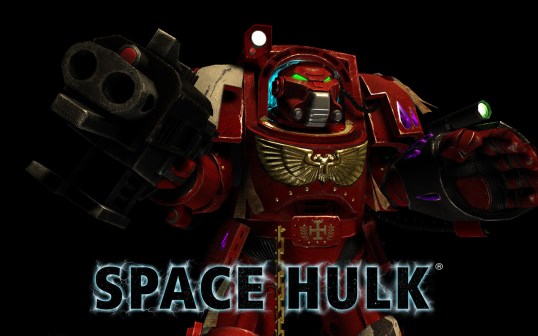
A long time ago, Games Workshop released a board game for their popular “Warhammer 40,000” game franchise. It featured a web of interlocking pieces that could be fashioned together to create the claustrophobic interior of a derelict spacecraft, adrift an unknowable period of time in the great beyond. Obstacles such as doors (both functional and not) populated the game board, and then one player took control of an incursion team of elite Space Marine Terminators as they attempt to secure the derelict. In the lore of the universe, this is done because such derelicts, or “Space Hulks”, have the awesome potential to harbor lost technologies from the distant past. Also, such ships could be full of random marauding Orks, or much worse… the Tyranid Genestealers controlled by Space Hulk’s second player.

You don’t need to know what all of that stuff is to understand that the game was fun. The Space Marine player deploys their squad of Terminators and attempts to achieve their objective, while the Genestealers spawn into the map after play begins as ‘radar blips’. Until visual contact is made, the Terminators can’t know how many Genestealers each blip represents… and even a single one of them is a mortally dangerous adversary at close quarters. Of course, the Terminators prefer to do most of their fighting at range, and have stormbolters (think assault rifles), assault cannons (think miniguns) and heavy flamers (think heavy flamers!) they can deploy to wipe out the Genestealers before they can close to close-combat range. Combat within the game is capriciously lethal, and the whole experience was half an hour or so of good, clean fun.

Fast forward to 2013. Space Hulk (even its re-issue!) has been out of print for a long time. It is now very expensive to acquire, and must be procured second-hand (‘new’ copies exist, but you’ll more than likely have to resort to various hobbying or miniatures sites on the Internet to find them). Enter Full Control Studios, a UK-based developer with several other turn-based strategy credits to their name, who on 15 August of this year dropped “Space Hulk”, a fully realized 3-D recreation of the board game experience that some of us will remember. You know, from a long time ago. Their stated goal was to faithfully recreate the board game experience. The tension of that game primarily came from the uncertainty facing both the Genestealer and Terminator players. The Terminators knew their objective and had prior knowledge of the spawn points for the Genestealers, but had no way of knowing which spawn location they might choose to use, and as I mentioned before… the Genestealers always ride single file, to hide their numbers. The Genestealers need these advantages to make up for their deficiencies in long-range firepower, which the Space Marines have brought in spades.

At the time of the game’s launch, it was met with very mixed reviews. I’ll get to some of the game’s high points in a moment, but it was rightly criticized at launch for an obscene number of bugs. I’m happy to report (in fact, it’s the reason that I’m doing this review now) that with the advent of the 1.3 version patch and the release of the new DLCs, that the game has been running smooth and bug free for me ever since I revisited it. I have not even noticed any jarring graphical anomalies, though they seem like an inevitability in modern game experiences. With the game now smoothly playable, I feel like I can much more authentically recommend it to the interested player. If you are interested… read on, I guess!

Couched in these terms, the video game experience is a very pleasing one. The 3-D graphics are pretty (maybe nothing awe-inspiring, but this is 2013, you’d have to work very hard to impress me with game graphics), and more importantly, the environments have been well constructed to recreate the claustrophobia of the original game. Because, my friends, the corridors aboard the space hulk are only one square wide. You can’t just have your marines spread out in a fire line and advance under a withering hail of machine gun bullets. Instead, the winning tactic tends to be advancing slowly using the ‘Overwatch’ command to fire at moving Genestealers off-turn, or to deploy the heavy flamer or the powerful psionics of the Terminator Librarians to deny certain passageways to the Genestealers completely. Otherwise, what tends to happen, is that a whole bunch of Genestealers charge your position, and your guys die one after another. Oh, and that’s one thing to keep in mind if you do try out Space Hulk: Some of your guys will die. Trying to prevent all friendly casualties? That way lies madness.

If some of this stuff sounds at least a little reminiscent of another recent release (specifically, 2012’s XCOM: Enemy Unknown) that’s because the interfaces share some similarities. Veterans of the new XCOM game will probably find that they have an upper hand in some respects, as you’ll understand what kind of tactics work against enemies that you don’t always know the position of, and who are hilariously deadly if approached in a cavalier fashion. Each of your Terminators, by default, has four ‘Action Points’ available in a turn. One AP allows your space marine to take a step, change his facing 90 degrees, or discharge his firearm (the Heavy Flamer requires 2 action points). You can also use 2 AP to enter Overwatch or Guard (Guard gives you a marginally better chance of success in melee, can be effective on units who already have a leg-up in melee combat)… AP is also used for things like opening doors, acquiring mission critical objects, and so on.

The Genestealer player’s traditional disadvantage, on the other hand, is that she does not know how many command points the Terminator squad has on a given turn, which (in the original version) allowed them to do certain things ‘out of turn’. In the 2013 video game release, command points are rolled at the start of turn (1-6, and you can re-roll them if your squad’s ‘Sergeant’ is still alive), and can be used (at a 1:1 exchange rate) to supplement a Terminator’s normal limit of 4 AP in a turn. In addition, when autofiring while on Overwatch, any roll of ‘doubles’ (1s, 2s, 3s, 4s, whatever) will jam the overwatching weapon…but your Terminator can automatically unjam at the cost of a leftover Command Point.

The game is entirely tactical, without any sort of overarching strategic framework. You enter each scenario (or multiplayer match) with the Terminator’s forces and objectives pre-determined. Only the tactical combat on the map is in play. For that, I find it to be both engaging and fun… in small doses. The game play deepens when you add in all of the game’s potential features, like the Genestealers being able to loose Broodlords into the hulk, and the full Terminator arsenal, including heavy melee weapons, assault cannons, heavy flamers, and psionic Librarians, rather than just the vanilla stormbolter guys…but still doesn’t really match the tactical depth of a game like XCOM, which has many varied enemy types, special unit skills, and a wider arsenal of weapons. An average scenario can clock in at 40 minutes or so, which is not at all disagreeable for me, and, unlike XCOM, Space Hulk is quite amenable to the idea of saving, taking a break, and coming back to your game later.

Oh, one more thing: Space Hulk normally retails at $29.99 from Steam, but is featured in the 2013 year-end sale at 50% off!
Trailer: Warhammer 40K: Space Marine (I Am War)


Been an uneventful day for me today which usually means a slow posting day. One thing that I did come across which came out today was a new trailer for one of my more highly-anticipated games this year. The latest trailer for THQ and Relic Entertainment’s Warhammer 40,000: Space Marine has been released and shows more gameplay footage and hints at the single-player campaign’s storyline.

I was once asked if I ever was given a chance to be a fictional character who would I choose to be. Well, as this trailer clearly shows I definitely want to be a Space Marine (or the more accurate term used in this fictional world: Adeptus Astartes). I mean look at the size of these guys and they even get to wear very ornate and baroque looking armor. Though I’m sure Lisa Marie would want that I paint the armor in more pastel colors.

Warhammer 40,000: Space Marine still set for a September 6, 2011 for the Xbox 360, PS3 and Windows PC.

Warhammer 40K: Dark Millenium Trailer


E3 2010 has made some announcements in regards to several MMORPGs set for release in the near future. One game is Square-Enix’s Final Fantasy XIV which is the sequel to their previous MMORPG in Final Fantasy XI. The second is BioWare’s much-anticipated MMORPG based on George Lucas’ iconic space opera franchise, Star Wars: The Old Republic. Both titles have their fanbase looking forward to play them if just to take a break from the 800 lb. gorilla of the MMO-world: World of Warcraft.

Flying under the radar, but no less anticipated by their own legions of fans is Vigil Studios and THQ’s foray into the MMORPG genre. I am talking about their MMORPG title based on the very popular Games Workshop IP, Warhammer 40,000. Building upon the success and popularity of THQ’s own Dawn of War franchise (also based on the 40k universe), this MMORPG is to be called Warhammer 40K: Dark Millenium Online.

I’m not a huge fan of MMORPG titles since despite how well they play and how much they really look they’re major timesinks that require almost complete dedication from the player to really get into the game. This means almost leaving other games by the wayside and as a gamer that’s a big decision. Either play one game all the time and ignore other great games or only play casually the MMO title and not really get into it.

With this title I may have to rethink about how I feel about MMORPGs since this is one IP that even I am excited over. I have been a huge Warhammer 40K fan since 1990 when I was a senior in high school and my interest has never waned one bit. Now that the franchise has successfully made it’s transition over to video gaming I’m excited for the prospect of enjoying the franchise even more than just reading the lore and playing the tabletop.

The game looks to be like your typical persistent-world MMORPG with two opposing factions having their own unique classes. What I like from looking at the trailer is how heavily it’s based on combat and from the looks of things it might be similar to another scifi-based MMO of the past and that’s Sony’s very own Planetside. I like that vehicles are something that a player can use to fight NPCs and other players of the opposing faction. The only question I and other fans probably have is whether Vigil and THQ will avoid the mistakes Mythic made with Warhammer Online by actually creating a game with an endgame for people to use as their goal.

I’m sure more details will follow as the months pass by. Here’s to hoping that a release date or, at the very least, a beta date for people to participate in, gets announced in the near future. I already know what I shall play and that’s as a Space Marine and hopefully of the Dark Angels Chapter.