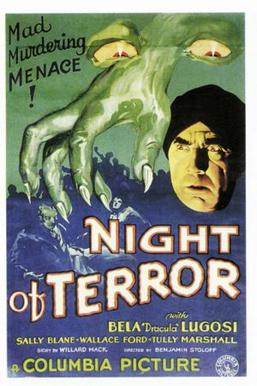
Horror Film Review: Night of Terror (dir by Benjamin Stoloff)


1933’s Night of Terror opens with a character known simple as The Maniac (Edwin Maxwell) attacking random people with a knife.  The Maniac is on a murder spree.  He leaves taunting newspaper articles on the bodies.  (Don’t look at me, I didn’t write the script,)  Wisecracking newspaper reporter Tom Hartley (Wallace Ford ) would love to track the Maniac down.

Meanwhile, the richest man in town has been murdered.  Was he killed by the Maniac?  No one is sure.  What is known is that he divided his large fortune amongst not only his heirs but also his servants.  Of course, if an heir or a servant should die, that just means more money for everyone else!  Meanwhile, the man’s nephew — scientist Arthur Hornsby (George Meeker) — is busy trying to talk his family into burying him alive so that he can test his new suspended animation serum.  Arthur swears that he’s figured out a way for people to live without oxygen for a period of time!

Okay, Arthur, that’s great.  Anyway….

This sixty-one minute horror film features Bela Lugosi as Degar, the butler.  Degar and his wife, Sika (Mary Frey), are regularly referred to as being “heathens” by some of the other members of the family.  And yet, when the family needs someone to hold a seance so that they can figure out who is trying to kill all of them, who do they ask to conduct it?  Degar’s not happy about it but Sika agrees to do so.  Needless to say, things don’t go well.

It’s a bit of silly film and the final twist doesn’t make much sense.  One gets the feeling that the script was written over the course of one night and no one really spent that much time worrying about whether or not it all came together to tell a coherent story.  Moments of humor are mixed in with moments of would-be terror.  The family chauffeur is easily scared.  The members of the family all toss out insults at each other.  When the police show up, they speak in the rat-a-tat fashion of 1930s police officers.  No one in the film yells, “Scram!” and yet it seems like they should have.  It’s that type of movie.  My favorite scene featured a handcuffed Lugosi offering a police officer a cigarette from “Asia.”  Needless to say, the cigarette caused the cop to pass out.  Its 1930s stoner humor.

Bela Lugosi got top-billing but his role is actually pretty small.  Still, Lugosi gives a good performance and delivers his lines with a straight face.  He gets the honor of explaining the mystery to all of the police officers and family members.  That said, the film is stolen by Edwin Maxwell as the Maniac.  Maxwell gets to break the fourth wall at the end of the film and he probably sent many young audience members home with nightmares.  The Maniac tells the audience not to reveal how the film ended, lest they want to be haunted by him.  Hitchcock would have been proud.
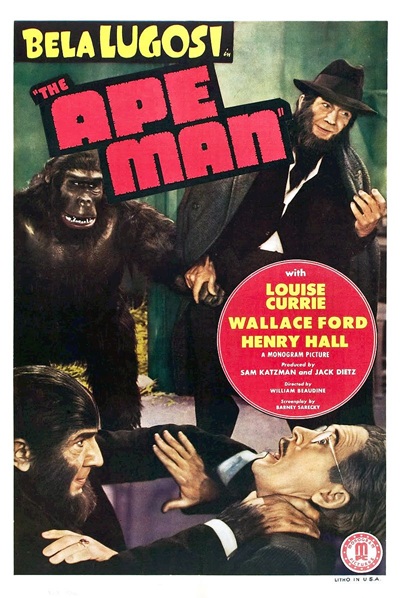
Horror Film Review: The Ape Man (dir by William Beaudine)


In this 1943 film, a mysterious man suggests to reporter Jeff Carter (Wallace Ford) that he should go out to the mansion of Dr. James Brewster (Bela Lugosi) and look into the recent disappearance of the doctor.  Dr. Brewster’s sister (Minerva Urecal) is a well-known ghost hunter and Carter’s editors likes the idea of Carter and photographer Billie Mason (Louise Currie) heading out to the mansion and getting a picture of a ghost.

Carter is upset because he’s having work with a — gasp! — woman.  Bliie is not impressed by the fact that Carter is still in America while all the other men his age are fighting overseas.  Carter explains that he’ll be enlisting in the Navy in a week.  Billie realizes that Carter is not an unpatriotic coward and we, the viewers, are reminded that this film was made during World War II.  I like the fact that America was so unified during World War II that even fictional characters were expected to explain what they were doing for war effort.

For the record, Dr. Brewster’s mansion is not haunted by ghosts.  Instead, the problem is that Dr. Brewster’s experiments have turned him into a man-ape hybrid.  He has a beard, he walks like a monkey, and he fears that he’s turning more into an ape everyday.  He spends almost all of his time locked up in a cage with a gorilla.  Dr. Brewster has (somehow) discovered that the only way to reverse the process is to get regular injections of spinal fluid.  However, it’s impossible to extract the spinal fluid without also killing the donor.  Dr. Brewster’s colleague, Dr. Randall (Henry Hall), refuses to be a party to murder but he still wants to help Brewster.  Unfortunately, Brewster is beyond saving and he’s also losing his mind as he finds himself slowly becoming more and more of an ape.

The Ape Man was directed by William Beaudine, a filmmaker who directed 179 movies over the course of his long career.  Beaudine worked in all genres, starting off as a major director during the silent era before then becoming a prolific B-movie maker during the sound era.  As a B-movie director, Beaudine was famous for rarely doing second take.  If someone flubbed a line or a piece of scenery nearly fell over, that was too bad.  Of course, it should be noted that Beaudine was working for various Poverty Row production companies and he probably didn’t have the budget to do multiple takes.  His job was to get the film shot quickly and for as little money as possible.

That certainly seems to be the philosophy between The Ape Man, which is only a little over an hour long and which features all of the usual plot holes and continuity eras that one might expect to find in a film that was tossed together in just a few days.  That said, The Ape Man is kind of a fun movie.  Bela Lugosi does his best, even when he’s wearing a totally ludicrous beard.  Wallace Ford and Louise Currie deliver their lines in the rat-a-tat fashion that seemed to be popular with journalists in the films of the 30s and 40s.  The plot’s cheeful lack of coherence actually becomes rather charming and the story ends with a nice moment of 4th wall breaking, as the film itself is saying, “Hey, we had fun, didn’t we?”

Horror Film Review: The Mummy’s Tomb (dir by Harold Young)


1942’s The Mummy’s Tomb picks up 30 years after the end of The Mummy’s Hand.

Archeologist Steve Banning (Dick Foran) is now living a peaceful life in the small town of Mapleton, Massachusetts.  As the film opens, he is telling his guests about the time that he and his friend, Babe Hanson (Wallace Ford), went to Egypt and discovered the tomb of an Egyptian princess.  He tells them how Andoheb (George Zucco) tried to use the ancient mummy, Kharis, to protect the tomb.  Steve assures everyone that Andoheb is now dead and Kharis is no longer a threat to anyone.

The film then travels to Egypt where we discover that Steve was not quite correct.  Adoheb survived being shot at the end of The Mummy’s Hand.  He’s now an old man, dying but still obsessed with getting revenge.  He instructs his disciple, Mehemet Bey (Turhan Bey), to travel to America with Kharis (now played, under a bunch of bandages, by Lon Chaney, Jr.) and to get revenge on the remaining members of the Banning expedition.

Bey and Kharis travel to Massachusetts and soon, the entire town of Mapleton is gripped in fear as Kharis starts to murder people.  Steve Banning is the first victim.  Then Steve’s sister, Jane (Mary Gordon). Kharis even kills Babe Hanson, whose role in the previous film was largely comic relief.  Seriously, not even Frankenstein’s Monster killed the comic relief.  Kharis is a ruthless and unstoppable killer and, in a performance that is totally focused on his hulking physicality, Lon Chaney, Jr. makes for a frightening mummy.  Kharis moves slowly, dragging one foot behind him.  But when he does attack, he’s relentless.  This movie reminded me of why the mummy has, to me, always been the scariest of the old Universal monsters.

Despite the fact that Kharis is leaving bandages and ancient mold all over the place, the authorities are not quite convinced that an ancient mummy has come to their small town.  However, the townspeople have no doubt what’s happening and, since this is a Universal film, they are soon running around with torches and pitchforks.  Meanwhile, Steve’s son, John (John Hubbard), tries to figure out how to destroy the mummy and how to protect his fiancée, Isobel (Elyse Knox).  Bey has decided that he’s in love with Isobel and he orders Kharis to bring her to him.  Even under all the bandages, Kharis’s facial expression still suggests that he knows this isn’t a good idea.

The Mummy’s Tomb suffers from the same problem that afflicted The Mummy’s Hand.  It feels like it takes forever to actually get to the good stuff.  This is only a 60-minute film and ten of those minutes is taken up with a flashback to The Mummy’s Hand.  But no matter!  Once Kharis arrives in America, the pace of the film picks up and it becomes an effective little horror film.  Lon Chaney, Jr. is frightening Kharis.  I wouldn’t want him following me down a dark alley!

Previous Universal Horror Reviews:

  1. Dracula (1931)
  2. Dracula (Spanish Language Version) (1931)
  3. Frankenstein (1931)
  4. Island of Lost Souls (1932)
  5. The Mummy (1932)
  6. The Invisible Man (1933)
  7. The Bride of Frankenstein (1935)
  8. Dracula’s Daughter (1936)
  9. Son of Frankenstein (1939)
  10. Black Friday (1940)
  11. The Invisible Man Returns (1940)
  12. The Mummy’s Hand (1940)
  13. The Wolf Man (1941)
  14. Ghost of Frankenstein (1942)
  15. Invisible Agent (1942)
  16. Frankenstein Meets The Wolf Man (1943)
  17. Son of Dracula (1943)
  18. House of Frankenstein (1944)
  19. The Invisible Man’s Revenge (1944)
  20. House of Dracula (1945) 
  21. Creature From The Black Lagoon (1954)

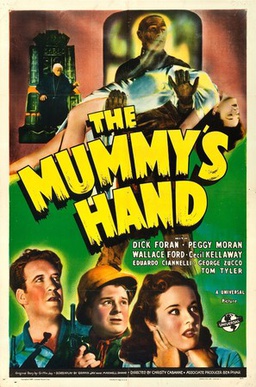
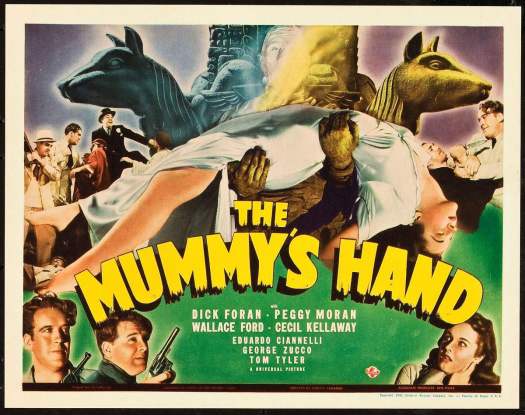
Horror Film Review: The Mummy’s Hand (dir by Christy Cabanne)


In 1940, having brought back The Invisible Man and Frankenstein’s Monster, Universal Pictures decided that it was also a good time to bring back The Mummy!

The Mummy’s Hand takes place in what we’re told is Egypt, though it’s obvious just a Universal backlot.  Two archeologists — Steve Banning (Dick Foran) and Babe Jenson (Wallace Ford) — are penniless and stuck in Egypt.  Babe wants to find a way to return to Brooklyn and his ex-girlfriend.  Steve is a bit more serious about archeology, though it must be said that he’s no Indiana Jones when it comes to discovering relics and taking them to museums.  If Indiana is the type who will risk his life to search a hidden cave in the Amazon Rain Forest, Steve is far more likely to just wander around an Egyptian market until he comes across someone selling an ancient vase.

Which is exactly what happens!  Steve finds someone selling a vase and, after he learns where it came from, he buys the vase.  He takes the vase to Prof. Andoheb (George Zucco), not knowing that Andoheb is an Egyptian high priest who has been sworn to protect the tomb of Princess Ananka.  When Andoheb realizes that the vase could lead to the discovery of the tomb, he lies and claims that it’s a forgery.  He then “accidentally” breaks it in order to keep Steve from showing the vase to anyone else.  Steve, however, is not deterred and a chance meeting with an American magician named Tim Sullivan (Cecil Kellaway) leads to Sullivan agreeing to finance Steve’s expedition to discover where the vase came from.  Sullivan’s daughter, Marta (Peggy Moran), worries that Steve and Babe are just trying to steal her father’s money so she insists on coming on the expedition with Steve.  Also following the expedition is Andoheb, who is himself starting to fall for Marta and who is hoping that he can use a secret serum hidden in the tomb to make both himself and Marta immortal.

Of course, the tomb itself is protected by Kharis (Tom Tyler, under a ton of bandages), a mummy who is immortal due to the serum and who has sworn to protect the tomb from any outsiders.  Kharis moves slowly but efficiently.  He’s a ruthless and silent killer, one whose eyes appears to just be two black holes, the better to reflect his own lack of a soul.

The main problem with The Mummy’s Hand is that it takes forever for the Mummy to actually show up.  This is only a 67-minute film and the Mummy mayhem doesn’t really start until around the 50 minute mark.  As a result, the viewer spends a lot of time watching Steve and Babe wander around Egypt and essentially act like stereotypical American tourists.  Even when the expedition finally gets started, the audience still has to sit through endless scenes of Marta accusing Steve of being some sort of con artist.  This is a movie that will truly leave you saying, “When is the mummy going to show up!?”

That said, The Mummy itself is a frightening creature, especially with his empty eyes.  Mummy’s are naturally frightening, especially when they’re walking towards you and dragging their decaying bandages  behind them.  The Mummy is effective, I just wish he had been featured in more of the movie.

Previous Universal Horror Reviews:

  1. Dracula (1931)
  2. Dracula (Spanish Language Version) (1931)
  3. Frankenstein (1931)
  4. Island of Lost Souls (1932)
  5. The Mummy (1932)
  6. The Invisible Man (1933)
  7. The Bride of Frankenstein (1935)
  8. Dracula’s Daughter (1936)
  9. Son of Frankenstein (1939)
  10. Black Friday (1940)
  11. The Invisible Man Returns (1940)
  12. The Wolf Man (1941)
  13. Ghost of Frankenstein (1942)
  14. Invisible Agent (1942)
  15. Frankenstein Meets The Wolf Man (1943)
  16. Son of Dracula (1943)
  17. House of Frankenstein (1944)
  18. The Invisible Man’s Revenge (1944)
  19. House of Dracula (1945) 
  20. Creature From The Black Lagoon (1954)

Lisa Reviews An Oscar Nominee: Spellbound (dir by Alfred Hitchcock)


The 1945 Best Picture nominee, Spellbound, tells the story of Dr. Constance Petersen (Ingrid Bergman), a psychoanalyst at a mental hospital in my least favorite state, Vermont.

Constance has fallen in love with a man (Gregory Peck) who she believes to be Dr. Anthony Edwardes, the newly appointed director of the hospital.  Dr. Edwardes is youngish and handsome and idealistic and authoritative …. well, he’s Gregory Peck.  However, he also has an intense phobia about seeing any set of parallel lines.  Curious to discover the reason for Edwardes’s phobia, Constance does a little digging on her own and discovers that Dr. Anthony Edwardes is not a doctor at all!  Instead, he’s a guilt-stricken amnesiac who is convinced that he murdered Dr. Edwardes and took his place!

Constance, however, doesn’t believe that the Amnesiac is a murderer.  She thinks that he is suffering from some sort of deep-rooted guilt that had led him to believe that killed the doctor.  She wants a chance to psychoanalyze him and discover the truth about his background.  Unfortunately, the police do think that the Amnesiac is a murderer and their determined to arrest him.

Constance and the Amnesiac go on the run, heading to the home of Constance’s mentor, Dr. Alexander Brulov (Michael Chekhov, the nephew of Anton Chekhov).  With Brulov’s help, Constance analyzes a dream that the Amensiac had, one involving curtains decorated with eyes, the faceless proprietor of a casino, and a man falling off a mountain.  Can Constance and Brulov solve the mystery of the Amnesiac’s identity before the police take him away to prison?

Spellbound was the last of the four Hitchcock best picture nominees and it was also the last film that Hitchcock made for producer David O. Selznick.  Selznick was quite a fan of psychoanalysis and he insisted that Hitchcock not only make a movie about it but that he also use Selznick’s own therapist as a technical advisor on the project.  Hitchcock, for his part, was able to bring in the surrealist Salvador Dali to help design the Amnesiac’s dream sequence but Selznick felt that the 20-minute sequence was too long and too weird and, as a result, it was cut down to two minutes for the final film.  All this considered, it’s not a surprise that, despite the fact that Spellbound was a hit with critics and audiences, Hitchcock himself didn’t care much for it and considered it to be more of a Selznick film than a Hitchcock film.  And it is true that the film’s total faith is psychoanalysis feels more like something one would expect to hear from a trendy producer than from a director like Hitchcock, who was known for both his dark wit and his rather cynical attitude towards anyone in authority.

For a film like Spellbound to truly work, there has to be some doubt about who the Amnesiac is.  For the suspense to work, the audience has to feel that there’s at least a chance, even if it’s only a slight one, that the Amnesiac actually could be a murderer, despite the attempts of Constance and Brulov to prove that he’s not.  And Spellbound is full of scenes that are meant to leave the audience wondering about whether or not the Amnesiac should be trusted.  However, because the Amnesiac is played by Gregory Peck, there’s really no doubt that he’s innocent.  Hitchcock was not particularly happy with Gregory Peck as his leading man.  Peck projected a solid, middle-American integrity.  It made him ideal for heroic and crusading roles but made him totally wrong for any role that required ambiguity.  It’s difficult to believe that the Amnesiac is suffering from a guilt complex because it’s difficult to believe that Gregory Peck has ever done anything for which he should feel guilty.  Cary Grant could have played the Amnesiac.  Post-war Jimmy Stewart could have done an excellent job with the role.  But Peck is just too upstanding and stolid for the role.  In a role that calls from neurosis, Peck is kind of boring.

That said, the rest of the cast is fine, with Ingrid Bergman giving one of her best performance as Constance and Michael Chekhov bringing some needed nuance to a role that could have turned into a cliché.  Leo G. Carroll has a small but pivotal role and he does a good job keeping the audience guessing as to his motivation.  Even at a truncated two minutes, the Dali dream sequence is memorably bizarre and the famous shot of a gun pointed straight at the camera still carries a kick.  This is a lesser Hitchcock film but, that said, it’s still a Hitchcock film and therefore worth viewing.

As I mentioned previously, this was the last of Hitchcock’s films to be nominated for Best Picture.  Ironically, his best films — Rear Window, Vertigo, and Psycho among them — were yet to come. Spellbound was nominated for six Oscars but only won for Miklos Rozsa’s score.  (Ingrid Bergman was nominated for Best Actress that year, not for her role in Spellbound but instead for The Bells of St. Mary’s.)  The big Oscar winner that year was Billy Wilder’s The Lost Weekend.

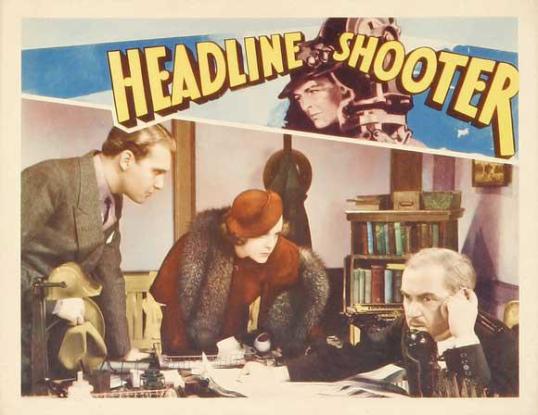
Cleaning Out The DVR: Headline Shooter (dir by Otto Brower)


Bill Allen (William Gargan) is cynical newsreel cameraman.  Everywhere he goes, he’s got a tripod and a camera ready to go.  He films the disasters that other people are too scared to go near.  When there’s an earthquake, he runs outside to film it.  When a building catches on fire, he risks life and limb to record the event.  When a dam breaks, Bill is there to not only record the devastation but also help expose the man responsible for the poorly constructed dam.  When the man later commits suicide, Bill shrugs it off.  The public, he says, had a right to know.

Jane Mallory (Frances Dee) is a reporter.  She tough and she can just as sarcastic as Bill.  When she’s held hostage by  bunch of gangster, she proceeds to not only challenge them to a game of gin rummy but she beats them too!  Jane loves pursuing a good story but she worries that she might end up as cynical and callous as some of her colleagues.  As much as Jane loves it, a part of her is desperate to get out of the news business and, instead, marry the decent but boring Hal Caldwell (Ralph Bellamy, of course).

Together, Bill and Jane …. SOLVE CRIMES!

Actually, they do.  Of course, that doesn’t happen until towards the end of this zippy 61 minute film from 1933.  Before they solve a crime and run afoul some gangsters, Bill and Jane fall in love.  Of course, it’s a cynical journalist type of love, where quips and snarky put-downs replace the traditional endearments.  But it’s love just the same.  Bill and Jane share an understanding of what it feels like to pursue a big story.  It’s something that Hal, as decent a person as Ralph Bellamy ever played in a 1930s movie, just cannot understand.

This is a pre-code film, which means that the characters are allowed to smoke and drink and the dialogue is full of double entendres.  When Bill mentions that a woman he knows has a cold, Jane replies, “Let me guess.  It kept you up all night.”  That’s the type of dialogue that, in just a few short years after the release of Headline Shooter, studio productions would no longer be allowed to get away with.

Headline Shooter is a fast-paced film, one where everyone speaks almost exclusively in the fast rat-a-tat style of 1930s New York.  Considering that it’s only an hour long, it still manages to fit in a lot of plot.  There’s also a lot of real footage of actual disasters, the majority of which is passed off as being footage that was shot by either Bill or his colleagues.  Watching the film today, it’s interesting to consider that the newsreel cameraman were essentially early versions of the paparazzi, searching the city for anything worth shooting and, for the most part, not concerning themselves with the ethical concerns of exploiting disaster.  Many of the issues raised by Headline Shooter are still pertinent today.  One could almost argue that a film like Nightcrawler is a direct descendant of Headline Shooter.

Of course, Headline Shooter in never as dark as something like Nightcrawler.  Instead, all things considered, it’s a rather cheerful melodrama.  Gargan and Dee are wonderful in the lead roles and the cast is full of wonderful 1930s character actors.  This film shows up occasionally on TCM so keep an eye out for it!

(Unless, of course, you’re a Comcast customer….)

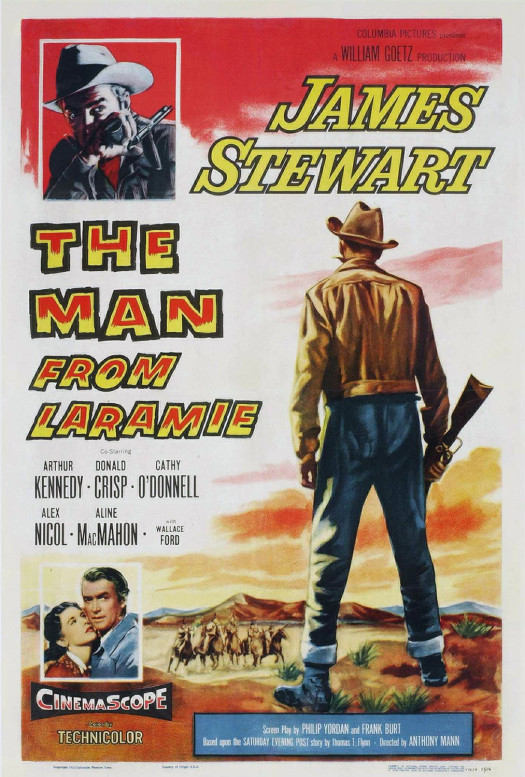
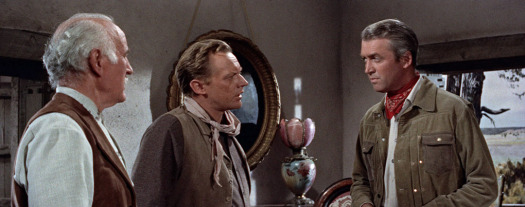
End of the Trail: James Stewart in Anthony Mann’s THE MAN FROM LARAMIE (Columbia 1955)


gary loggins's avatarcracked rear viewer

I’ve covered several of the  Anthony Mann/James Stewart Western collaborations here. Their final sagebrush outing together THE MAN FROM LARAMIE was shot in Cinemascope and gorgeous Technicolor, features a bunch of solid character actors, has beautiful New Mexico scenery… yet felt like a letdown to me. Maybe it’s because Mann and Stewart set the bar so high in their previous Westerns, but THE MAN FROM LARAMIE is an anti-climactic climax to the director/star duo’s pairings.

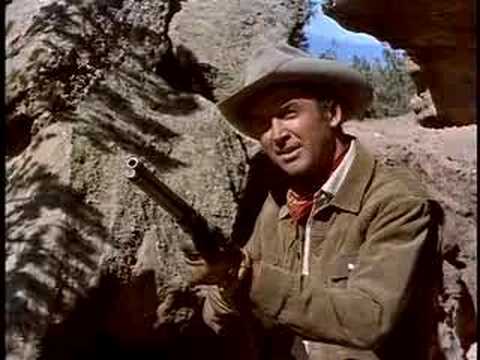
Stewart’s good as always, playing bitter Will Lockhart, whose brother was killed by Apaches and whose mission is to find out who’s selling the guns to them. But the film came off flat, feeling like just another routine Western – good, but not in the same category as WINCHESTER ’73 or BEND OF THE RIVER. Those Mann film noir touches are nowhere to be found, replaced by (dare I say it!)… soap opera elements!

Cathy…

View original post 356 more words

Halloween Havoc!: THE MUMMY’S HAND (Universal 1940)


gary loggins's avatarcracked rear viewer

Universal revived The Mummy in 1940’s THE MUMMY’S HAND, but except for the backstory (and judicious use of stock footage), there’s no relation to the 1932 Karloff classic . Instead of Imhotep we’re introduced to Kharis, the undead killing machine, as the High Priest of Karnak (Eduardo Cianelli in old age makeup) relates the tale of Princess Ananka, whose tomb is broken into by Kharis, who steals the sacred tanna leaves to try and bring her back to life. Kharis gets busted, and is condemned to be buried alive! For he “who shall defile the temple of the gods, a cruel and violent death shall be his fate, and never shall his soul find rest for all eternity. Such is the curse of Amon-Ra, king of all the gods”. So there!

The High Priest croaks, making Andoheb (George Zucco ) the new High Priest. Meanwhile in Cairo, Americans Steve…

View original post 591 more words

Halloween Havoc!: Tod Browning’s FREAKS (MGM 1932)


gary loggins's avatarcracked rear viewer

Ex-carnival and sideshow performer Tod Browning had combined his love for the macabre and carny life in films before in two silent films with the great Lon Chaney Sr (THE UNHOLY THREE, THE UNKNOWN), but with FREAKS Browning took things to a whole new level. The cast is populated with genuine “abnormalities of nature”, legless and armless wonders, bearded ladies and skeletal men, a crawling human torso and microcephalic pinheads, parading across the screen to shock and frighten the audience. Yet it’s not the “freaks” that are the monsters in this movie, but two specimens of human physical perfection, their healthy bodies hosting malice and murder.

The film opens with a sideshow barker drawing a crowd to a horror hidden in a box, victim of what happens when you dishonor the code of the freaks – “offend one and you offend them all”. A flashback introduces us to the members of this dark carnival…

View original post 858 more words

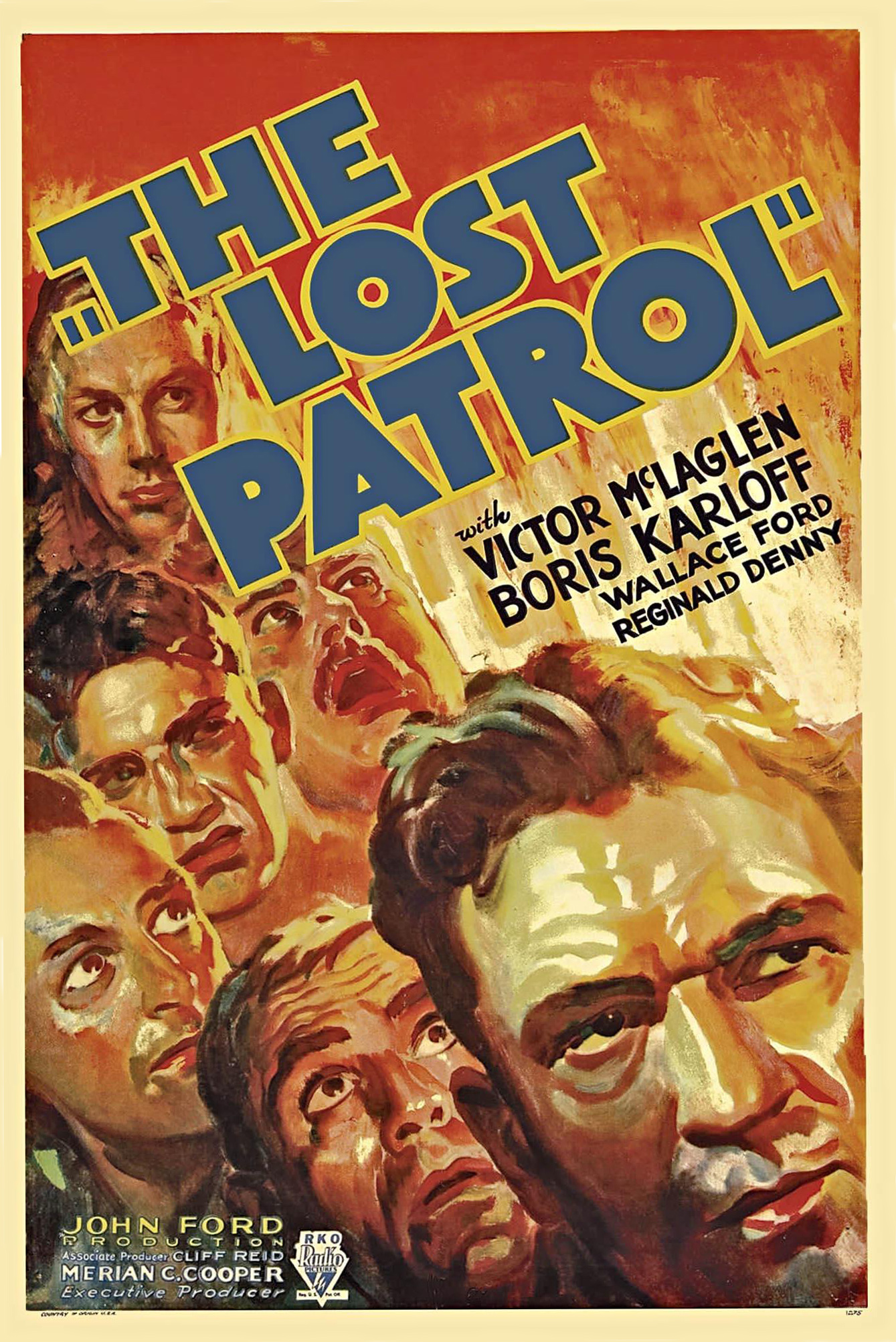
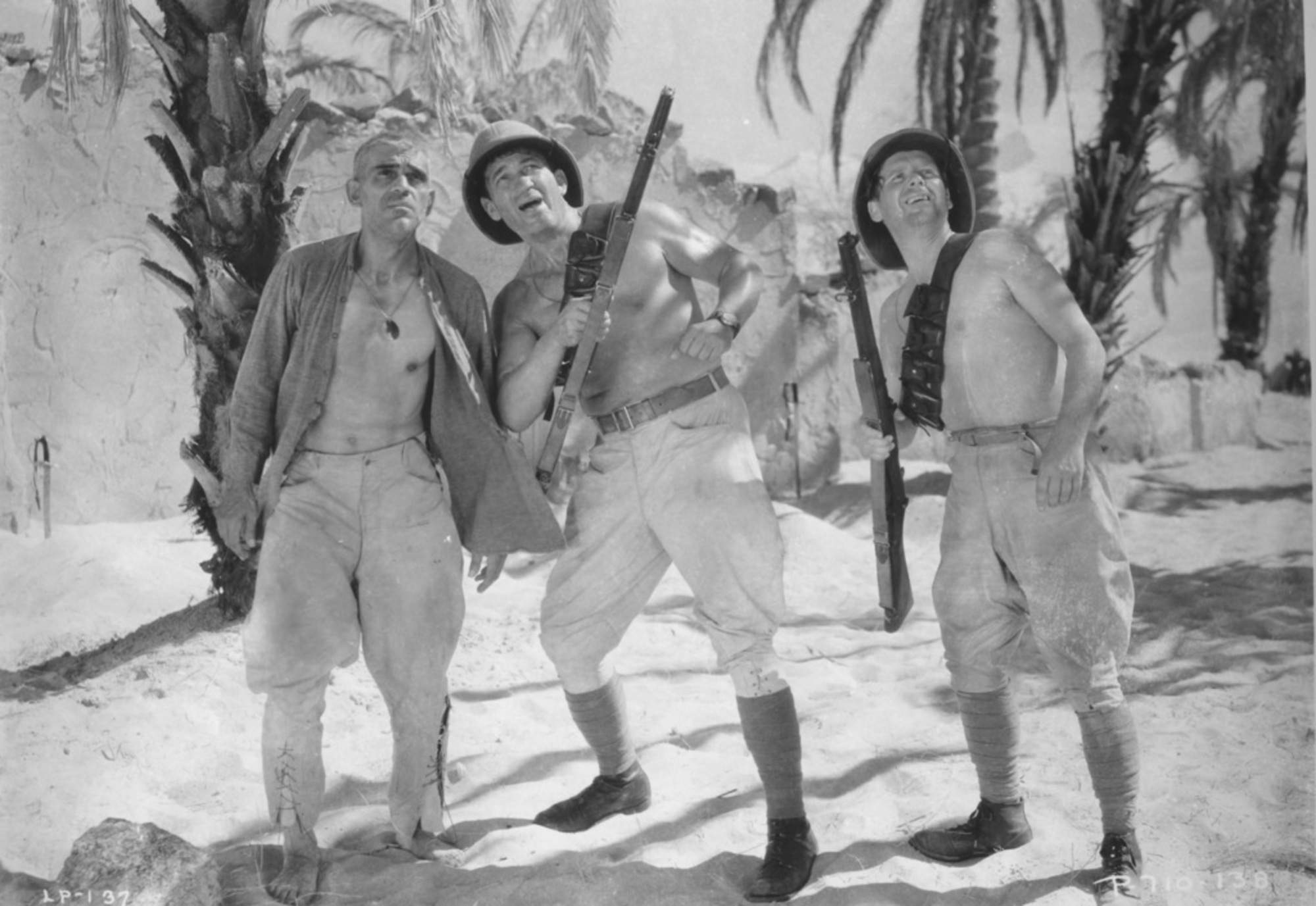
Happy Birthday Boris Karloff: John Ford’s THE LOST PATROL (RKO 1934)


gary loggins's avatarcracked rear viewer

lost1

King of Classic Horror Boris Karloff was born on this date in 1887. The actor is beloved by fans for his work in genre flicks like FRANKENSTEIN, THE MUMMY , THE BLACK CAT, THE BODY SNATCHER , and many other screen tales of terror. But Karloff had always prided himself on being a working actor, and stepped outside the genre bounds many times. He excelled in some early gangster classics (THE CRIMINAL CODE, SCARFACE), played George Arliss’ nemesis in HOUSE OF ROTHSCHILD, was a Chinese warlord in WEST OF SHANGHAI, an Oriental sleuth in Monogram’s MR. WONG series, the psychiatrist in THE SECRET LIFE OF WALTER MITTY, and a scientist in THE VENETIAN AFFAIR . And then there’s John Ford’s THE LOST PATROL.

lost5

The film itself tells the story of a British troop traveling through the Mesopotamian desert circa 1917. When their leader is shot dead by an unseen Arab bullet, the stoic Sergeant…

View original post 519 more words