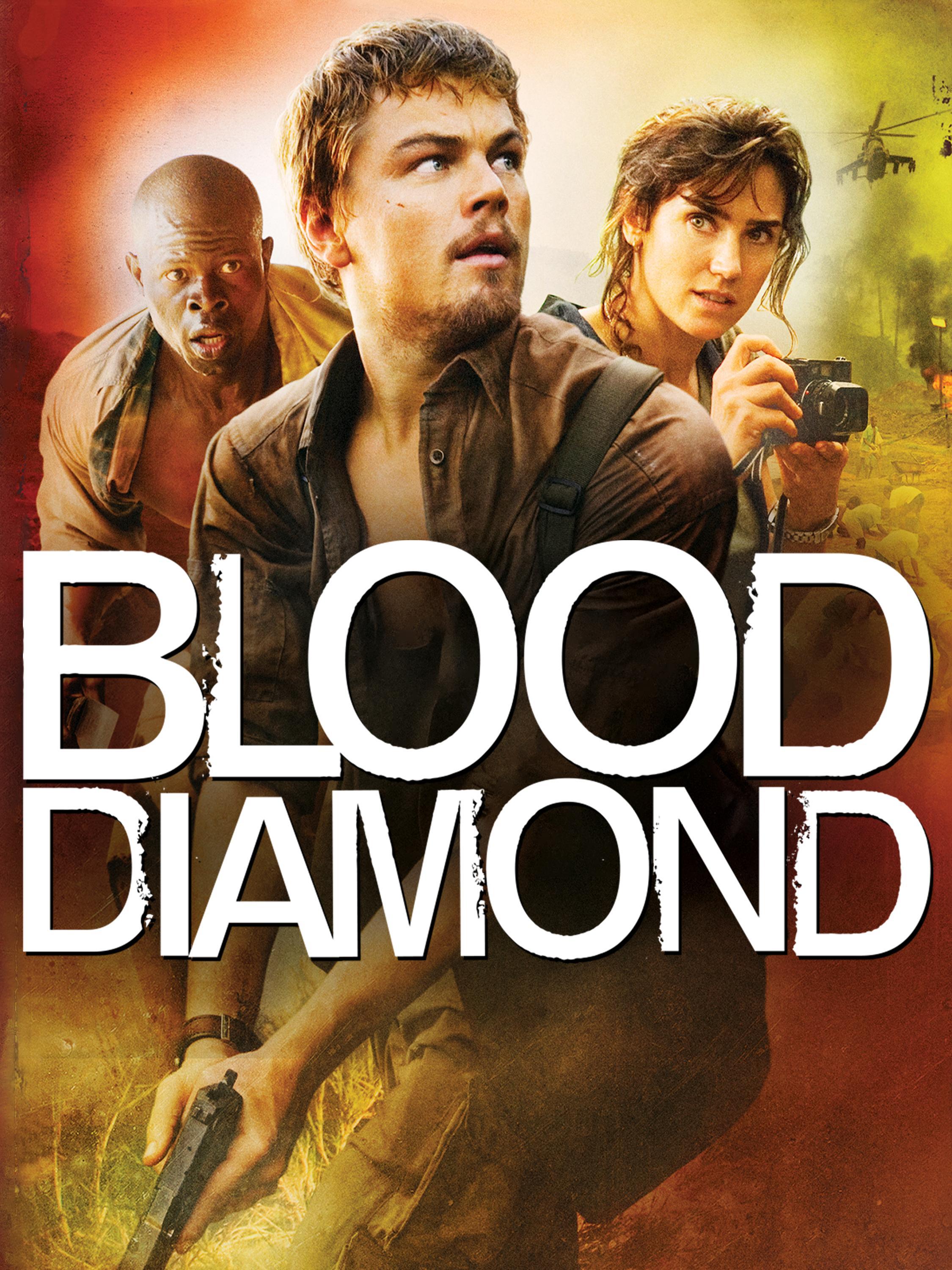
Review: Blood Diamond (dir. by Ed Zwick)


“Sometimes I wonder… will God ever forgive us for what we’ve done to each other? Then I look around and I realize, God left this place a long time ago.” — Danny Archer

Edward Zwick’s 2006 film Blood Diamond is one of those big Hollywood productions that tries to be both a gritty, globe-trotting thriller and a politically conscious indictment of the diamond trade’s role in African civil wars. Set in Sierra Leone during the 1990s, it stars Leonardo DiCaprio as Danny Archer, a Rhodesian mercenary and diamond smuggler, and Djimon Hounsou as Solomon Vandy, a fisherman torn from his family by rebels and forced into brutal diamond mining. Rounding out the leads is Jennifer Connelly as Maddy Bowen, a tenacious reporter determined to expose the atrocities fueling the global supply of conflict diamonds. The film is ambitious, harrowing, and, at times, as slickly entertaining as it is bluntly didactic. But like many socially minded blockbusters, it walks a tightrope between genuine drama and Hollywood sensationalism.

The story kicks off with a bang—literally—as Solomon’s village is raided by Revolutionary United Front militants, a moment that quickly plunges the viewer into Sierra Leone’s chaotic civil war. Solomon’s family is fragmented: he ends up a slave at a rebel-run mining camp, his son is eventually brainwashed into a child soldier, and his wife flees for safety. Meanwhile, DiCaprio’s Archer lands in jail after a failed smuggling run—which sets the two men on a collision course. Archer learns of Solomon’s discovery of an enormous, rare pink diamond—a stone that could mean escape or redemption for both men but is a magnet for greed, violence, and compromise. Their uneasy partnership with Maddy Bowen, who’s chasing a story, adds layers as their individual motives collide and evolve.

The movie doesn’t shy away from illustrating the devastating effects of the diamond trade—child soldiers, forced labor, mass displacement, and political corruption. While most of the on-screen violence is handled to maximize emotional punch, it never lets the viewer forget the real-world stakes of the Blood Diamond narrative. The film ultimately points viewers toward the establishment of the Kimberley Process—a set of international regulations designed to combat the illicit diamond trade.

A lot of the film’s emotional weight lands on DiCaprio and Hounsou, and for good reason. Leonardo DiCaprio nabs the complex role of Danny Archer with a layered performance and goes the extra mile by working hard on the Zimbabwean (Rhodesian) accent. While accents in film can be divisive, DiCaprio immersed himself deeply, working with dialect coaches and spending time with people from the region to best capture the regional nuances. Although some viewers and critics felt the accent was uneven or shifted at points, many others praised him for nailing this challenging and rare dialect. For an American actor to convincingly embody a mercenary with roots in that part of the world is no small feat. DiCaprio’s commitment brings credibility to Archer’s character, who is morally ambiguous but immensely human.

Djimon Hounsou, playing Solomon Vandy, serves as the emotional core and grounding presence of the film. His portrayal of a man torn apart by civil war, who fights desperately to reclaim his family, is heartbreaking and physically compelling. Their scenes together create genuine tension, as trust is both scarce and necessary for survival. Jennifer Connelly’s Maddy Bowen, while less fleshed out, brings determination and serves as the moral compass driving the film’s exposé of conflict diamonds.

Director Edward Zwick has a way of blending spectacle with raw storytelling. The action sequences, especially the firefights and escapes, feel intense and immersive. The cinematography captures the lush, dangerous landscape of Sierra Leone vividly, contrasting beauty with brutality. Some technical aspects do show their age—like certain digital effects that can feel artificial—but these don’t significantly dampen the overall experience. The soundtrack by James Newton Howard underscores the drama without veering into heavy-handed territory.

Blood Diamond scores high on several fronts. The performances by DiCaprio and Hounsou are standout elements, their evolving relationship carrying the film’s emotional heft. The pulse-pounding action sequences inject thrills while highlighting the chaos of civil war. Perhaps most importantly, the movie exposes the grim realities behind the glittering allure of diamonds, educating audiences about child soldiers, forced labor, and the complicity of international markets in perpetuating violence. Though it sometimes leans into melodrama and moralizing dialogue, the film’s commitment to its message is fairly unambiguous and impactful.

That said, the film sometimes succumbs to the trappings of big-budget Hollywood storytelling. The plot can feel overly convenient, with coincidences and resolutions that stretch credibility. Supporting characters, aside from the leads, are underdeveloped, mainly functioning as plot devices. Dialogue can at times be heavy-handed, particularly in the final act where scenes verge on preachy. Some narrative contrivances—like the recovery and passing of the pink diamond—can feel forced even in a tense, action-driven context. On the technical side, a few CGI moments fail to hold up under scrutiny, but these are minor irritants in an otherwise immersive film.

An important and unavoidable observation about Blood Diamond is how, like many of Edward Zwick’s previous action-dramas, it leans heavily into the “white savior” trope, if not outright embodying it. This trope centers a white protagonist—in this case, Danny Archer—who becomes the crucial figure in the salvation or redemption of non-white characters and communities. While the film sheds light on the horrors and complexity of Sierra Leone’s civil war and the conflict diamond trade, the narrative perspective and moral center overwhelmingly revolve around Archer’s personal journey from cynical mercenary to reluctant hero. The African characters, though vital and powerful especially through Hounsou’s Solomon, are often cast in more reactive roles, with Archer positioned as the key agent for change. The film also features a white journalist, Maddy Bowen, reinforcing this pattern.

Zwick’s leanings toward this trope are not new or isolated. His earlier films Glory (1989) and The Last Samurai (2003) also engage with the white savior narrative. Glory, a Civil War epic about the 54th Massachusetts Infantry Regiment, tells a historically significant story but largely centers on Colonel Robert Gould Shaw, a white officer played by Matthew Broderick, as the story’s main emotional and narrative anchor. The film has been noted for respectfully addressing racism and heroism but still revolves around Shaw’s perspective and sacrifice as a key redemptive figure for the African American soldiers. The Last Samurai similarly places Tom Cruise’s character, an American military advisor, at the heart of a narrative about Japanese samurai culture and resistance, blending cultural appreciation with the problematic trope of the white outsider who becomes indispensable to a non-white community’s fate.

This approach, familiar in Hollywood, walks the line between broad audience engagement and ethical storytelling. Zwick’s films often balance studio and audience expectations with a desire to tell compelling stories about marginalized communities. Yet inevitably, this framing simplifies complex histories and contributes to critiques that such films center whiteness and diminish the agency of non-white characters.

Casually speaking, Blood Diamond is not subtle, but that directness is part of its appeal. For viewers looking for a gripping action drama with strong performances and an ethical core, it delivers. It entertains while providing a sobering look at the high cost of luxury goods. DiCaprio’s portrayal of Danny Archer, complete with an authentically worked-on accent from the region, puts to rest doubts about his action lead capabilities. Hounsou’s performance lingers emotionally, especially in scenes grappling with the trauma of child soldiering. The violence depicted is raw and unvarnished, contributing to a visceral sense of the film’s urgent themes.

Running for about two hours and 23 minutes, the film has plenty of time to develop its complex story and deliver tense action sequences without feeling rushed or padded. Ultimately, Blood Diamond is an effective historical thriller that balances high stakes and moral urgency. While it’s not nuanced in every aspect and occasionally tips into cliché and convenience, it makes a strong case for itself beyond mere entertainment. Whether you’re interested in history, action, or the human stories behind the diamond trade, this film offers a thought-provoking, emotionally resonant experience. Leonardo DiCaprio’s dedication to portraying a Rhodesian mercenary authentically, especially through his accent work, is a highlight that complements the film’s broader narrative ambitions.

Review: V for Vendetta (dir. by James McTeigue)


“Remember, remember the fifth of November, the gunpowder treason and plot. I know of no reason why the gunpowder treason should ever be forgot.”

Alan Moore’s decision to want his name off the final credits for the film adaptation of V for Vendetta now makes sense. Moore has had a hate/hate relationship with Hollywood and the film industry in general. They’ve taken two of his other works in The League of Extraordinary Gentlemen and From Hell. and bollocks’d them up (to borrow a term used quite a bit in V for Vendetta). Outside of Watchmen, Alan Moore sees V for Vendetta as one of his more personal works and after reading the screenplay adaptation of the graphic novel by The Wachowski Brothers his decision afterwards was to demand his name be removed from the film if it was ever made. Part of this was his hatred of the film industry for their past mistakes and another being his wish for a perfect adaptation or none at all. Well, V for Vendettaby James McTeigue and The Wachowski Brothers is not a perfect film adaptation. What it turns out to be is a film that stays true to the spirit of Moore’s graphic novel and given a modern, up-to-the-current news retelling of the world’s state of affairs.

V for Vendetta starts off with abit of a prologue to explain the relevance of the Guy Fawkes mask worn by V throughout the film and the significance of the date of the 5th of November. I think this change in the story from the source material may be for the benefit of audiences who didn’t grow up in the UK and have no idea of who Guy Fawkes was and what his Gunpowder Plot was all about. The sequence is short but informative. From then on we move on to the start of the main story and here the film adheres close enough to the source material with a few changes to the Evey character (played by Natalie Portman) but not enough to ruin the character. Caught after curfew and accosted by the ruling government’s secret police called Fingermen, Evey soon encounters V who saves her not just from imprisonment but rape from these so-called Fingermen.

Right from the start the one thing McTeigue and The Wachowski Brothers got dead-on was casting Hugo Weaving as the title character. Voice silky, velvety and sonorous, Weaving infuses V with an otherworldly, theatrical personality. Whether V was speaking phrases from Shakespeare, philosophers or pop culture icons, the voice gave a character who doesn’t show his face from behind the enternally-smiling Guy Fawkes mask real life. I’d forgiven the makers of this films for some of the changes they made to the story and some of the characters for keeping V as close to how Moore wrote him. Once V and Evey are thrown in together by the happenstance of that nightly encounter their fates became intertwined. Portman plays the reluctant witness to V’s acts of terrorism, murders and destruction in the beginning, but a poignant and emotionally powerful sequence to start the second half of the film soon brings Evey’s character not much towards V’s way of doing things, but to understanding just why he’s doing them. This sequence became the emotional punch of the whole film and is literally lifted word for word from the graphic novel. This is the sequence in the film which should resonate the loudest for most people whether they buy into the rest of the film or not.

The rest of the cast seemed like a who’s who of the British acting community. From Stephen Rea’s stubborn and dogged Chief Inspector Finch whose quest to find V leads him to finding clues about his government’s past actions that he’d rather not have found. Then there’s Stephen Fry’s flamboyant TV show host who becomes Evey’s only other ally whose secret longings have been forbidden by the government, but who’s awakened by V’s actions to go through with his own form of rebellion. Then there’s John Hurt as High Chancellor Adam Sutler who’s seen chewing up the scenery with his Hitler-like performance through Big Brother video conferences (an ironic bit of casting since John Hurt also played Winston Smith in the film adaptation of the Orwell classic 1984). I really couldn’t find any of the supporting players as having done a bad job in their performances. Even Hurt’s Sutler might have seemed over-the-top to some but his performance just showed how much of a hatemonger Sutler and, in the end, his Norsefire party really were in order to stay in power.

The story itself, as I mentioned earlier, had had some changes made to it. Some of these changes angered Moore and probably continues to anger his more die-hard fans. I count myself as one of these die-hards, but I know how film adaptations of classic literary works must and need to trim some of the fat from the main body and theme of the story to fully translate onto the silver screen. The Wachowski Brother’s screenplay did just that. They trimmed some of the side stories and tertiary characters from the story and concentrated on V, Evey and Inspector Finch’s pursuit of both the truth of V and his own journey in finding that truth. This adaptation wa much closer to how Peter Jackson adapted The Lord of the Rings. As a fan of Moore I understood why he was unhappy with the changes, but then Moore was and still is an avowed perfectionist and only a perfect adaptation would do.

Critics on both sides of the aisle have called V for Vendetta revolutionary, subversive, daring to irresponsible and propagandist. All because the film dares to ask serious questions about the nature and role of violence as a form of dissent. But the granddaddy question the film brings up that has people talking is the question: terrorist or freedom fighter? Is V one or the other or is he both? Make no mistake about it, V for all intents and purposes is a terrorist if one was to use the definition of what a terrorist is. The makers of this film goes to great lenghts to describe throughout the film just how Sutler and his Norsefire (with its iconic Nazi-like imagery and extreme fundamentalist Christian idealogy) party rose to power in the UK. Partly due to what seemed like the failed US foreign policy and its subsequent and destructive decline as a superpower and the worldwide panic and fear it caused as a result. V for Vendetta also ask just who was to blame for allowing such individuals to rule over them. V has his reasons for killing these powers-that-be, but he also points out that people really should just look in the mirror if they need to know who really was to blame. For it was the population — whose desire to remain safe and have a semblance of peace — gave up more and more of their basic liberties and rights for a return to order. If one was to look at the past 100 years they would see that it’s happened before. There was the regime of Pol Pot in Cambodia, Milosevic’s Greater Serbia, and the king of the hill of them all being Adolf Hitler and his Nazi Inner Circle.

Another thing about V for Vendetta that will surely talked about alot will be the images used in the film. Not just images and symbols looking so much like Nazi icons, but images from the events of the past decade which have become symbols of oppression and censorship. The film shows people bound and hooded like prisoners from Abu Ghraib. The reason of the war on terror used time and time again by Sutler to justify why England and its people need him and his group to protect them by any means necessary. V for Vendetta seems like a timely film for our current times. Even with the conclusion of the film finally accomplishing what Guy Fawkes failed to do that night of November 5th some 400 plus years ago, V for Vendetta doesn’t give all the answers to all the questions it raises. I’m sure this would be something that’ll frustrate them some audiences. So much of people who go to watch thought-provoking films want their questions answered as clearly as possible and all of them. V for Vendetta doesn’t answer them but gives the audience enough information to try and work it out themselves.

In final analysis, V for Vendetta accomplishes in bringing the main themes of Alan Moore’s graphic novel to life and even does it well despite some of the changes made. It is a film that is sure to polarize the extreme left and right of the political pundits and commentators. But as a piece of thought-provoking and even as a politically subversive film, V for Vendetta does it job well. It is not a perfect film by any respect, but the story and message it tries to convey in addition to its value as a piece of entertainment mor than makes up for its flaws. Alan Moore and his followers might not love and approve of this film, but it doesn’t mean the film in and of itself wasn’t a good one. Sometimes calls for literal adaptations of beloved works or no adaptation at all also becomes a form of creative oppression and censorship.

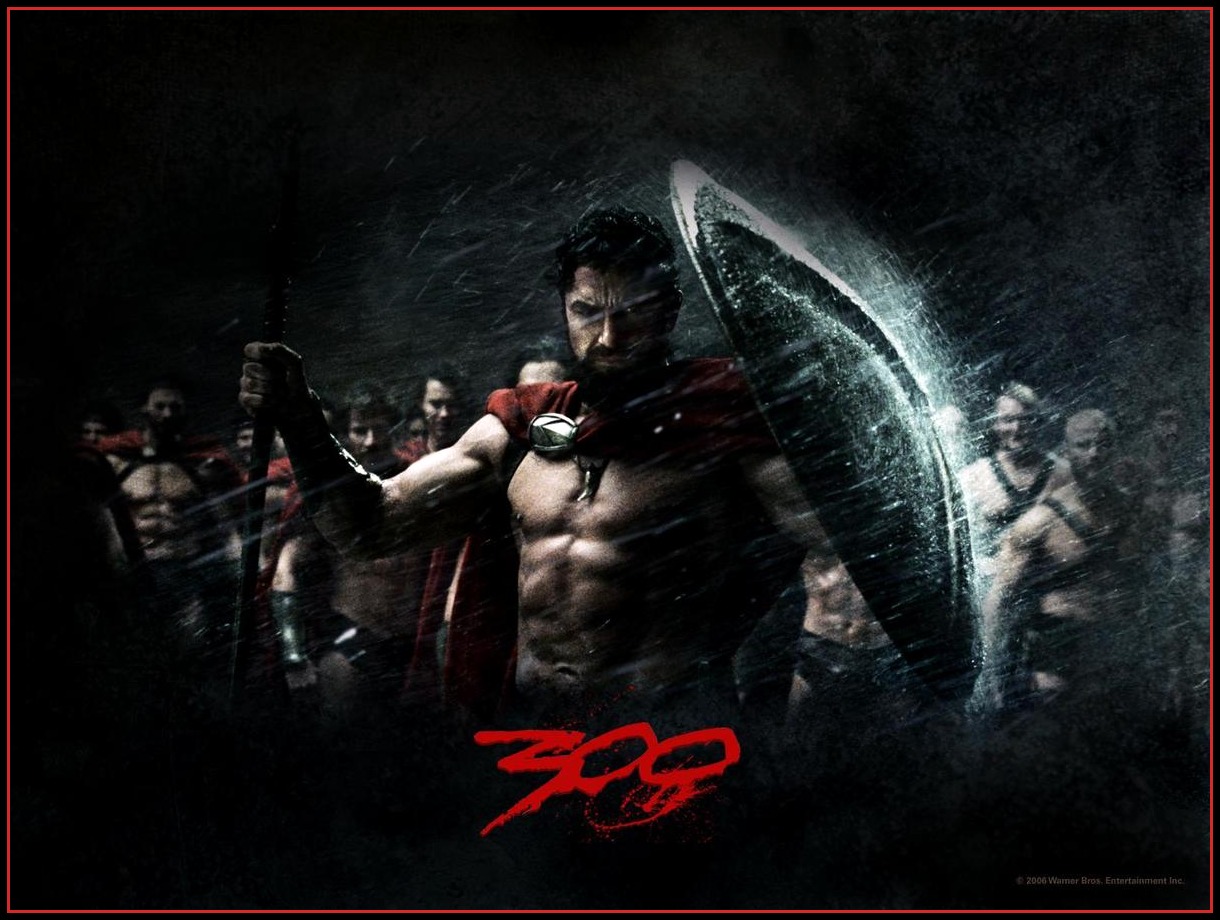
Review: 300 (dir. by Zack Snyder)


I will get it out of the way and say that this was not and was not meant to be a historically accurate depiction of Ancient Greece. It was never meant to be even when it was still just an Eisner-Award winning graphic novel from the mind of iconic graphic novelist and artist Frank Miller. With that out of the way I was able to watch and enjoy Zack Snyder’s film adaptation on its own terms without the criticism of historical accuracies looming dangerously over my head. 300 deserves the label of being an event film. From start to finish, Snyder’s film practically screams blockbuster and popcorn and I wouldn’t have it any other way.

Frank Miller’s 300 was at its time an interesting depiction of one of history’s greatest military last stands. Miller already known for hyperstylizing the look and feel of the noir genre with his Sin City graphic novels, takes the same approach with his depiction of King Leonidas and his 300 Spartans taking a final last stand against Persian God-King Xerxes at a narrow mountain pass called Thermopylae (literally meaning Hot Gates in Greek). Zack Snyder took this graphic novel and painstakingly stayed true to the visuals Miller and his colorist wife, Lynn Varley put on paper. Looking back at my memory of some of the panels and images from the graphic novel. Snyder and his crew of art directors, cinematographers and CGI-artists were successful in translating almost every page of the graphic novel onto the screen.

Like Robert Rodriguez’s adaptation of Miller’s Sin City, Zack Snyder’s 300 pretty much brings the graphic novel to moving life. This means he stuck to the source material quite literally which limits his own take on the graphic novel. Like Rodriguez, Snyder doesn’t really put his own signature stamp as a director to the film. It’s not too much of criticis since he does a great job of translating Miller’s work onto film, but one wonders what sort of personal touches he could’ve added to the finished look that wasn’t lifted from Miller’s style and whether it would’ve changed the overlook look and feel of the film.

The story is quite simple and just takes the basic summary of the historical event itself. Spartan King Leonidas (played with visceral gusto and machismo by Scottish thespian Gerard Butler) makes a decision to go to war and confront the encroaching and fast approaching massive Persian Army led by Xerxes (Rodrigo Santoro) intent on conquering the Hellenic city-states of the Greek Peninsula. Persian ambassadors ride forth to demand oaths of fealty from those city-states ahead of the army’s path. Sparta is one such city-state, but different from the rest of its Hellenic brethrens. Sparta has gone down in history as a word synonymous with unbending dedication to a strict, ascetic warrior code. Warfare and battle were what Spartans were born and trained to do from an early age. Weakness and physical imperfections weeded out from the time of birth (the film explains just what happens to male newborns with physical imperfections and deformities). The answer Leonidas gives the Persian delegation could be seen as somewhat extreme, but not contrary to his nation’s warrior-culture of never surrendering and seeing death in battle the greatest glory for a Spartan to achieve. From this sequence right up to the end of the film we get to see just how much of a warrior culture the Spartans were in extreme detail.

It’s during the prolonged battle scenes between Leonidas’ Spartans and Xerxes army which will have everyone chomping at the bit. If you have to see this film for any particular reason outside of watching superbly-trained underdogs slaughtering and endless supply of enemy troops then you will most likely be disappointed by the slower scenes away from Thermopylae. Indeed, this film an its original source material would’ve worked even better without the extra filler Snyder and his writers added to give the film more depth. I’m all for more emotional depth and characterization in my films but when a movie is all about a bloody and heroic last stand of a few against the many, scenes which slow the story down does more to break the rhythm and tone of a film than add to it. Othe than a deeper understanding of the kind of partnership Leonidas had with Gorgo, his Spartan Queen, most of the subplots added by Snyder and his writers could easily have been left out and still ge a kick ass action epic.

It’s the action scenes which reall stand out visually. Some people might see the style tricks of speed ramping certain action sequences then slowing it down considerably to show the minute detail of the battle scene as being to gimmicky, but I would disagree and say it actually gives the movie a mythical quality in its storytelling. One thing I have to say about Zack Snyder as a director (his remake of George A. Romero’s Dawn of the Dead better than what detractors have made it out to be) is that he knows how to film action and with special mention to bloody and gory action. He makes these scenes of dismemberments, decapitations, and disembowlments look like a piece of performance art.

These scenes of carnage would be considered extremely gratuitious if it didn’t look so made up good. Even the way the blood flows, spurts and splashes look like something Jackson Pollock would take interest in. The speed up and slow down of the sequences also gives the fight scenes a certain rhythm that once an audience picks up on will follow it through to the end. This is why the scenes back in Sparta with a duplicitous politician and his powerplay to assume control and power seem such a downer instead of enhancing the sacrifice of Leonidas and his men. Those scenes just feel tacked on and completely superfluous. Luckily, there’s not enough of them to slow down the frantic pace developed by the battle itself.

The performances by all actors involved really doesn’t require too much criticism or reflection over. Gerard Butler does a great and convincing job as the Spartan King and his conviction in confronting Xerxes and his army with so few seem very believable. It’s not a star-making performance but it does show that Butler can add a bit of gravitas to a character and role so basic in characterization. Lena Hedley is radiant as his partner and Queen. Despite the weird sounding name of Gorgo, Hedley plays the strong-minded and equally influential wife to Butler’s Leonidas. It’s only her scenes back in Sparta as she tries to rally her people to support their king which keeps these slower sequences from fully pulling down the film. The performances were good enough to keep the acting in the film from becoming too campy or too serious. It’s an action film and with enough action going on in the movie I could forgive the writers (both Miller and the screenwriters) from scrimping on character build up.

All in all, Zack Snyder’s film adaptation of Frank Miller’s 300 succeeds in bringing the book to moving life. Throughout the run of the film it was hard not to get lost in the beautiful visuals. Whether it was the muted color pallette which puts most of the scenes in an almost sepia-tone look to over-emphasizing certain colors to set a certain mood. From oversaturation of reds in one sequence to one where everything seem to be tinted with the many shades of blues at night. This is what 300 will be best remembered for. It’s technical use of CGI to paint the environment in unrealistic but beautiful ways which gives the scenes a lyrical and mythical look to them once the actors were superimposed over them. The film really was a painting come to life and it shows once again how computer and digital filmmaking technology have now afforded directors in making what used to be impossible technically to something that could be done with the limit being the artist’s imagination.

This film will not win many acting, directing and even screenwriting awards (which it didn’t once award season rolled around), but it doesn’t have to for people to enjoy it. It will entertain and pull its audience into a living and modern retelling of a legend. Whether all that happened on the screen was exactly as it happened in 480 B.C. doesn’t matter. What it does show is that through retelling down the years even all the embellishments added to the story of Leonidas and his men doesn’t diminish the fact that what they did and accomplished was how legendary heroes were made and remembered.