Horror Film Review: The Strange Case of Dr. Jekyll and Mr. Hyde (dir by Charles Jarrott)


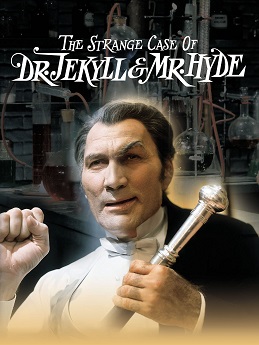
First released in 1968, The Strange Case of Dr. Jekyll and Mr. Hyde is a somewhat loose adaptation of the famous novella by Robert Louis Stevenson.

Jack Palance stars as Dr. Henry Jekyll, a mild-mannered and respected doctor who lives in Victorian-era London and who is convinced that there is a good and dark side lurking in every single person.  The dark side is what forces people to break the law and fight with each other.  Jekyll feels that his experiments will allow people to get closer to their dark side and, in doing so, defeat it.  When Dr. Jekyll explains his theories to a medical association, he is violently jeered and booed.  Jekyll returns to his home, enters his laboratory, and takes a drink of the serum that he’s been developing.

The next morning, Dr. Jekyll wakes up with a hangover and no memory of how he spent the previous night.  Trying to retrace his steps, Jekyll finds himself in a dance hall where everyone is talking about a well-dressed but ugly man named Edward Hyde.  Hyde showed up the previous night, spent a lot of money on a woman named Gwyn (Billie Whitelaw), and then got into a fight with two men.  Hyde broke a window to make his escape.  Jekyll, sensing what must have happened, pays for the window on behalf of his “friend,” Edward Hyde.

Jekyll continues to drink the serum and he continues to indulge in all of the forbidden vices as Edward Hyde.  Eventually, we get to see Palance as Hyde.  Unlike a lot of other actors who have played the role, Palance uses a minimum of makeup to suggest his transformation.  Instead, he hunches over, scrunches up his face, and he has a unibrow.  One of the stranger things about this production is that we are continually told that Hyde looks nothing like Jekyll but we know that’s not true.  Instead, Hyde looks exactly like Jekyll making a funny face.

Palance gives one of his more eccentric performances as Jekyll and Hyde.  Somewhat surprisingly, he’s far more convincing as the kindly and troubled Dr. Jekyll than as the villainous Mr. Hyde.  (As Hyde, Palance is often trying to so hard to maintain his facial paralysis that it’s hard to understand exactly what it is that he’s saying.)  With each drink of the serum, Jekyll becomes a bit more confident in himself.  However, he also finds himself losing the ability to control the transformations.  One morning, he wakes up in his bed and is shocked to discover that he is still Hyde.  That same morning, he learns that Hyde is suspected of committing a senseless and brutal murder.  Jekyll has no memory of it but he knows that Hyde is guilty.  And if Hyde is guilty, so is Jekyll.  (Those who make the argument that Dr. Jekyll and Mr. Hyde is ultimately about drug addiction will find plenty to back up that argument in this production,)  Jekyll’s anguish as he realizes what he has become is rather poignant to watch.

Produced by horror impresario Dan Curtis, The Strange Case of Dr. Jekyll and Mr. Hyde can seem a bit creaky today.  It was apparently highly acclaimed when it first aired but, seen today, it can feel rather stagey and talky.  That said, the film has a strong supporting cast, with Denholm Elliott especially giving a good performance as Jekyll’s best friend.  Jack Palance’s performance is so bizarre that it transcends the usual standards used to determine good and bad.    It’s definitely a film worth watching.
Horror on TV: One Step Beyond 2.4 “Doomsday” (dir by John Newland)


Tonight’s episode of One Step Beyond deals with that classic horror theme, the curse of a dying witch.  In this case, a woman burned at the stake in Scotland curses the family of her wealthy persecutor, saying that the eldest son will be destined to always die before his father.

I swear, witch’s curses are always so complicated!

The episode aired on October 13th, 1959.

In the words of Criswell, “Can you prove it didn’t happen?”

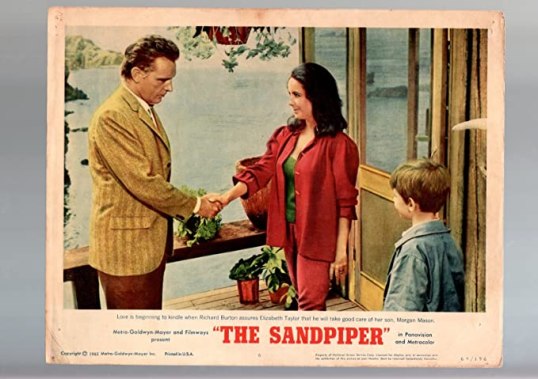
Cleaning Out The DVR: The Sandpiper (dir by Vincente Minnelli)


I recorded The Sandpiper that last time that it aired on TCM.  This 1965 film is one of the many films that Elizabeth Taylor and Richard Burton made together after they fell in love during the making of Cleopatra.  And while it’s true that Who’s Afraid of Virginia Woolf? won Taylor an Oscar and probably should have won one for Burton as well, the majority of the Taylor/Burton films were overproduced melodramas that often seemed as if they’d been rushed into production in order to capitalize on the couple’s tabloid popularity.  Unfortunately, Virginia Woolf aside, neither Taylor nor Burton seemed to bring out the best in each other as actors.

The Sandpiper finds Taylor playing Laura Reynolds, an artist who lives in a California beach house with her young son, Danny (Morgan Mason).  Laura is a free spirit who believes that everyone, including her son, should have the freedom to make their own choices.  She is resistant to any and all authority.  She’s a bohemian, a rebel, the type who doesn’t care what society has to say and who flaunts her refusal to follow the dictates of respectability.  Good for her!  However, she’s also Elizabeth Taylor, which means that she’s impossibly glamorous and even her “cluttered” beach house looks like it’s a hundred times more expensive than anything that anyone viewing the film will ever be able to afford.  Though Taylor tries hard, there’s nothing convincingly bohemian about her.

Richard Burton plays Dr. Edward Hewitt, who runs the nearby Episcopal school.  Dr. Hewitt is not a free spirit.  Instead, he and his wife, Claire (Eva Marie Saint), very much believe in structure and playing by the rules.  They believe in a traditional education and, when a judge orders Danny to be enrolled at their school, that’s what Hewitt plans to give him.  This, of course, brings Hewitt into conflict with Laura.  Both of them have differing ways of looking at the world and Laura is not a fan of religion in general.  However, since they’re played by Burton and Taylor, they’re destined to fall in love and have a scandalous affair.

Dr. Hewitt is one of the many religious figures that Burton played throughout his career.  In fact, Burton played so many alcoholic priests that I spent most of the movie assuming that Hewitt was an alcoholic as well.  However, he’s not.  He’s just Episcopalian.  That said, Burton delivers every line of dialogue in his trademark “great actor” voice and every minute that he’s onscreen just seems to be full of self-loathing.  Even before he cheats on his wife, Hewitt seems to hate himself.  Of course, once Burton does start cheating on his wife, it only gets worse.  The film presents Hewitt as being something of a hesitant participant, someone who knows that he’s doing the wrong thing but he simply cannot stop himself.  Laura, meanwhile, is presented as being someone who is fully willing to break up a marriage to get what she wants.  One gets the feeling that 1965 audiences probably just assumed they were watching the true story of how Taylor and Burton fell in love during the making the Cleopatra.  That said, it’s all pretty tame.  Just like Taylor, director Vincente Minnelli was too much of a product of the old Hollywood to truly embrace this story for all of its sordid potential.

If you’ve ever wanted to watch Charles Bronson debate religion with Richard Burton, this is the film for you.  Bronson plays a sculptor and an atheist who upsets Hewitt by calling him “reverend.”  Bronson is actually more convincing in the film than either Burton or Taylor, bringing a rough authenticity to his role.  Whereas Burton and Taylor both seem to be going through the motions, Bronson comes across as if he actually has a personal stake in the film’s story.  It’s not enough to save the movie, of course.  Fortunately, a year later, Liz and Dick would be used to better effect in Who’s Afraid of Virginia Woolf?


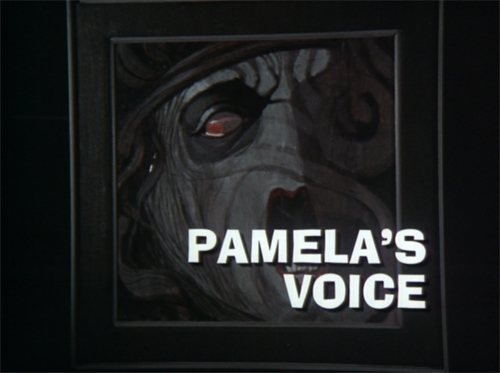
TV Review: Night Gallery 1.5 “Pamela’s Voice/Lone Survivor/The Doll”


The fifth episode of Night Gallery originally aired on January 13th, 1971.  It featured three stories, each one of which was introduced by Rod Serling walking through a darkened museum.

Pamela’s Voice (dir by Richard Benedict, written by Rod Serling)

Jonathan (John Astin) kills his wife, Pamela (Phyllis Diller), because he’s sick of listening to her shrill voice.  However, it turns out that not even death can stop Pamela.  While Jonathan is staring at a coffin, he starts to hear Pamela’s voice.

At first, you might think that this is going to be one of those stories where it’s going to turn out that the murderer has been driven made by his crimes and he’s imagining being taunted by his victim.  But then Pamela makes an post-death appearance herself and the story reveals it’s final twist.

For the most part, Pamela’s Voice is entertaining.  Both John Astin and Phyllis Diller give such eccentric performances that their fun to watch even if the majority of the audience will be able to guess this segment’s big twist.

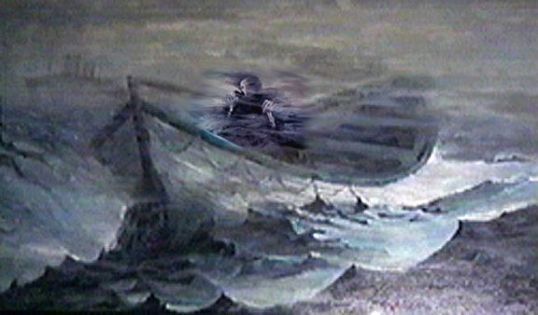
Lone Survivor (dir by Gene Levitt, written by Rod Serling)

This wonderfully atmospheric story opens in 1915, with the crew of the Lusitania discovering a man (John Colicos) floating in a lifeboat.  The lifeboat is from the Titanic and the man, who claims to be a crewmember of that doomed ship, is wearing a dress, leading the ship’s doctor to assume that the man survived the sinking of the Titanic by pretending to be a woman and stealing someone else’s rightful spot in the lifeboat.

At first, his rescuers are skeptical.  If the man was indeed a survivor of the Titanic, that would mean that he had spent the past three years floating in that lifeboat?  How could the man have survived?  And, assuming that he is telling the truth about the ship that he came from, what has now brought him to the Lusitania?  Could the man possibly be a German spy?  After all, World War I has just broken out and the sea is no longer as safe as it once was….

Lone Survivor is an example of this often uneven show at its best.  It’s a genuinely creepy short film, one that ends on a frightening and rather sad note.  Lone Survivor is the tale of man trying to escape both his own guilt and the whims of fate and discovering that neither can be easily conquered.  In the main role, John Colicos gives a wonderfully intense and haunted performance.

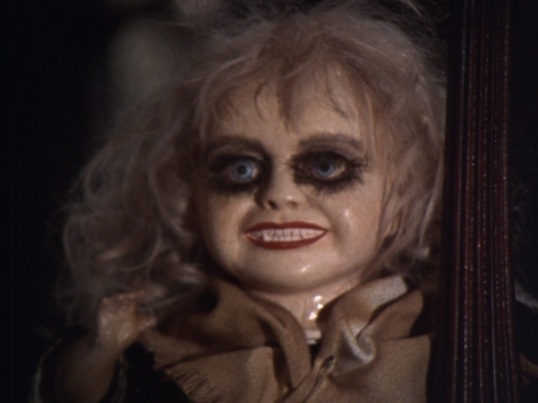
The Doll (dir by Rudi Dorn, written by Rod Serling)

“Our painting is called The Doll,” Rod Serling says as he introduces this one, “and it’s one that you better not play with.”  Truer words were never spoken!

In this one, British Col. Hymber Masters (John Williams) returns home from India and discovers that his niece (Jewel Branch) has a new doll.  Someone mailed the doll to her.  Everyone assumed that Col. Masters sent the doll but he actually had nothing to do with it.  Masters is not happy to see his niece carrying around that doll and it makes sense when you consider just how ugly the doll is.  I mean, this is one creepy doll!

It turns out that the Masters was correct to be concerned because the doll was sent by Pandit Chola (Henry Silva), who holds Masters responsible for the death of his brother.  The doll has been sent to take revenge….

The Doll is another triumph, largely because the doll itself is so creepy that it looks like something that sprung straight out of a nightmare.  John Williams does a good job playing the well-meaning if somewhat stuffy colonel and Henry Silva is well-cast as the villain of the piece.  This segment deserves a lot of credit for taking a fanciful story and playing it totally straight.

The fifth episode of Night Gallery is a triumph.  After a run of uneven episodes, this episode is consistently creepy and entertaining.  For this episode, at least, Night Gallery lived up to its potential.

Previous Night Gallery Reviews:

  1. The Pilot
  2. The Dead Man/The Housekeeper
  3. Room With A View/The Little Black Bag/The Nature of the Enemy
  4. The House/Certain Shadows on the Wall
  5. Make Me Laugh/Clean Kills And Other Trophies

Lisa Reviews An Oscar Nominee: Great Expectations (dir by David Lean)


“My Christian name was Philip Pirrip, which I pronounced Pip….”

SHUT UP, PIP!

Seriously, there’s a lot of good things that can be said about Charles Dickens’s Great Expectations but most readers simply can’t get past the fact that the narrator insists on being called Pip.  I don’t necessarily blame them, as Pip might be a good nickname for a child but, by the time you’re 16, you should be demanding that everyone call you Phil.  That said, I’ve always liked Great Expectations.  Despite the fact that Charles Dickens could be a terribly pedantic writer, the plot of Great Expectations is genuinely interesting and the book is full of interesting characters, the majority of whom don’t demand to be known by their childhood nicknames.  Plus, I’ve always related to Estella.

The 1946 film adaptation of Great Expectations was at least the third movie to be made from the novel and it would be followed by many more.  (In 1998, there was a modernized version where Pip was wisely renamed Finn.)  Still, the 1946 adaptation is the best.  As directed by David Lean (and based on a stage version that was put together by none other than Alec Guinness), Great Expectations remains true to the source material while, at the same time, cutting away a lot of extraneous material.  As a result, Lean’s film version of the story maintains a clear narrative momentum, which is something that eluded Dickens in his sprawling original.

John Mills plays Pip, an orphan who is being raised by his wicked aunt and her husband, the simple but kind-hearted blacksmith, Joe Gargery (Bernard Miles).  One night, Pip helps out an escaped convict named Magwitch (Finlay Currie) and, though Magwitch is eventually recaptured, that one act of kindness will determine the rest of Pip’s life.

Pip is invited to visit the mansion of a recluse named Miss Havisham (Martita Hunt) and it’s there that he first meets and falls in love with the beautiful but rather cold-hearted Estella (Jean Simmons and then, after Estella grows up, Valerie Hobson).  Of course, what Pip doesn’t realize is that Miss Havisham has specifically raised Estella to destroy the hopes and dreams of every man that she meets.

Eventually, Pip grows up and discovers that he has a mysterious benefactor who feels that Pip should be transformed into a gentlemen so that he might be able to meet the “great expectations” that the benefactor has for him.  Pip, of course, assumes that it’s Miss Havisham but even those who haven’t read the book will probably suspect that there’s more to it than just that.  Pip moves to London, where he stays with Herbert Pocket (Alec Guinness), a pale young man (for that’s how Dickens described him) who teaches Pip that a gentleman does not use his knife as a fork.  Herbert was always my favorite character in the book and he’s my favorite character in the film, largely because he’s played by the totally charming Alec Guinness.

Anyway, Pip becomes a bit of a snob but eventually, he discovers the truth about his benefactor and the last few years of his life.  It causes him to not only rip down a lot of curtains but also to reconsider what it truly means to be a a gentleman.

It’s all very well-done, largely because David Lean doesn’t allow the fact that he’s making a film out of a great novel get in the way of telling a good story.  The film is well-acted by a wonderful cast of British thespians, all of whom manage to make even the most artificial of scenes and lines seem naturalistic and believable.  Even though Pip is a bit of a jerk, John Mills manage to turn him into a sympathetic character.  (Mills plays Pip as if he himself cannot stand the fact that he’s turned into such a snob.)  Both Jean Simmons and Valerie Hobson do a wonderful job of bringing the potentially problematic character of Estella to life and Bernard Miles is wonderfully empathetic in the role of the Joe Gargery.  The scene where a nervous Gargery first meets Pip after Pip has become a gentleman is a true example of great acting.

Not surprisingly, Lean also does a great job of bringing 19th century England to life.  Watching this film is a bit like stepping into a time machine and going back to the Dickensian era.  As filmed by Lean, London is as bright and vibrant as Pip’s childhood home is dark and constraining.  When Pip finds Magwitch on the beach, Lean directs the scene as if it were from a film noir.  When Pip enters the darkened home of Miss Havisham and meets the beautiful but destructive Estella, the film flirts with becoming a Rebecca-style gothic romance.  And when it’s just Pip and Herbert Pocket talking, it becomes a comedy of manners.  Not surprisingly, Great Expectations won Oscars for both its art design and its gorgeous black-and-white cinematography.

Great Expectations was also nominated for Best Picture.  However, it lost to Gentleman’s Agreement.

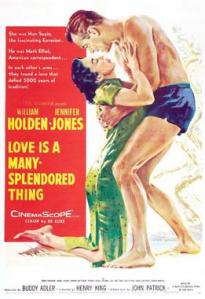
Lisa Reviews An Oscar Nominee: Love Is A Many-Splendored Thing (dir by Henry King)


(With the Oscars scheduled to be awarded on March 4th, I have decided to review at least one Oscar-nominated film a day.  These films could be nominees or they could be winners.  They could be from this year’s Oscars or they could be a previous year’s nominee!  We’ll see how things play out.  Today, I take a look at the 1955 best picture nominee, Love Is A Many-Splendored Thing!)

Before I talk about Love Is A Many-Splendored Thing, let’s play a little trivia game.

I’m going to list ten films.  Your job is to guess what they all have in common:

Did you guess?  All ten of these films came out in 1955 and not a single one of them was nominated for best picture.  That’s something that I found myself thinking about quite a bit as I watched Love Is A Many-Splendored Thing on TCM last night.  Of course, at this point, everyone knows that deserving films are often ignored by the Academy and that what seems like a great film during one year can often seem to be rather forgettable in subsequent years.

So, you can probably guess that I wasn’t terribly impressed with Love Is A Many-Splendored Thing but, before I get too critical, I want to start things off on a positive note.  William Holden was, without a doubt, one of the best actors to ever appear in the movies.  He started his film career in the 1930s and worked regularly until his death in 1981.  Just consider some of the films in which Holden appeared: Golden Boy, Our Town, Sunset Boulevard, Stalag 17, Sabrina, Picnic, Network, and so many others.  Of course, not every film in which Holden appeared was a masterpiece.  He made his share of films like Damien: Omen II and When Time Ran Out.  But the thing is that, regardless of the film, Holden was always good.

That’s certainly the case with Love Is A Many-Splendored Thing.  It’s not one of Holden’s better films but William Holden is his usual dependable self.  He plays Mark Elliott, a rugged American correspondent who is living in Hong Kong in the 1940s.  While the Chinese Civil War rages nearby, Mark deals with his failing marriage.  His wife is back in the States.  They’re separated but not quite divorced.  Mark owns a really nice car and, since he’s played by William Holden, he delivers the most world-weary of lines with an undeniable panache.  He also appears shirtless for a good deal of the film.  Between this and Picnic, 1955 was the year of the shirtless Holden.

The problem with Love Is A Many-Splendored Thing is not with William Holden.  Instead, the problem is with the miscasting of Jennifer Jones as Han Suyin, the woman with whom Mark Elliott falls in love.  Han Suyin was a real-life person, a doctor who wrote the autobiographical novel on which Love Is A Many-Splendored Thing was based.  Han Suyin was Eurasian.  Jennifer Jones most definitely was not.  Throughout the film, Han Suyin and Mark often discuss what it’s like to be Eurasian and to be in the middle of two very different cultures.  There’s even a discussion about whether Han Suying should try to pass as European.  It all has the potential to be very interesting except for the fact that Jennifer Jones, who was so good in so many films, is in no way convincing in her role.  Whenever she mentions being Eurasian, which she does frequently, the film come to a halt as we all stare at Jennifer Jones, one of the first film stars to ever come out of Tulsa, Oklahoma.

It all leads to a rather strained movie, one that never really drew me into its cinematic world or story.  (For the record, a lot of people on twitter disagreed with me on this point.)  Ultimately, the main reason to watch it was for William Holden.  According to the film’s Wikipedia entry (how’s that for in-depth research), Holden and Jones reportedly did not get along during filming, with Jones apparently chewing garlic before their love scenes and there was a definite lack of chemistry between them.  Maybe I got spoiled by William Holden and Kim Novak dancing in Picnic but I never believed that Mark and Han Suyin were attracted to each other.  Interestingly, Jones and Holden would later both appear in another best picture nominee, 1974’s The Towering Inferno.  However, they didn’t share any scenes.

Love Is A Many-Splendored Thing was nominated for best picture but it lost to a far different love story, Marty.  This was also the final film directed by Henry King to be nominated for best picture.  Previous King films to be nominated included State Fair, In Old Chicago, Alexander’s Ragtime Band, The Song of Bernadette, Wilson, and Twelve O’Clock High.

Horror on TV: Thriller 1.23 “Well of Doom” (dir by John Brahm)


For tonight’s televised horror, here’s another episode the Boris Karoloff-hosted anthology series, Thriller!

This episode, Well of Doom, shows what happens when two demons kidnap two men on their way to a bachelor party and force them to slog across the moors, to a mysterious castle.  This episode is full of atmosphere and it also features great work from Henry Daniell and Richard Kiel as the two demons.

Enjoy!

http://www.youtube.com/watch?v=Thxj6DIPS7Y