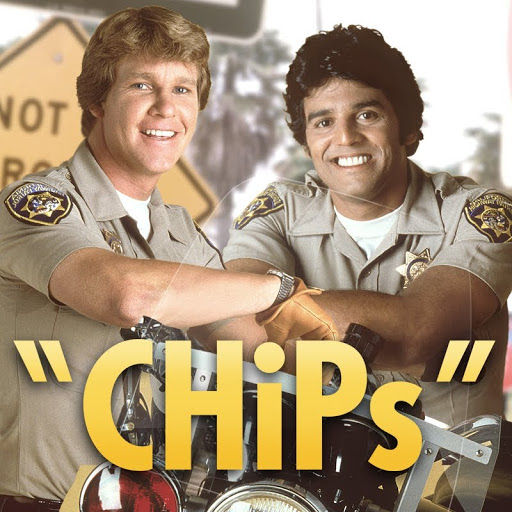
Late Night Retro Television Review: CHiPs 5.12 “Mitchell & Woods”


Welcome to Late Night Retro Television Reviews, a feature where we review some of our favorite and least favorite shows of the past!  On Mondays, I will be reviewing CHiPs, which ran on NBC from 1977 to 1983.  The entire show is currently streaming on Prime!

This week …. hey, what is this!?

Episode 5.12 “Mitchell & Woods”

(Dir by Bernard L. Kowalski, originally aired on December 18th, 1981)

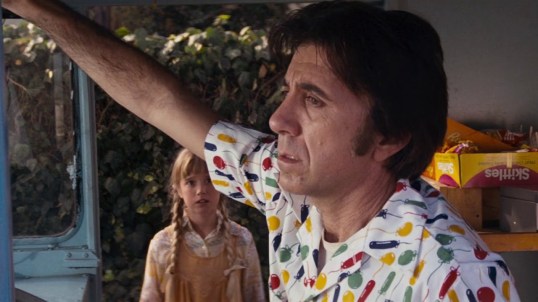
Paula Woods (Jayne Kennedy) and Melanie Mitchell (Cindy Morgan) may have once just been two members of the highway patrol who were trained by Ponch but they’ve now been promoted to working as plainclothes detectives in Ocean City!

“Look out Ocean City!” Jon Baker says.

When an old high school friend of Michell’s is murdered, Mitchell and Woods uncover a male prostitution ring.  Along with bringing the guilty to justice, they also help Chickee (Pamela Susan Shoop) find the courage to leave her abusive relationship….

No, there’s not much motorcycle action.  No, there’s no slow motion car crashes.  Yes, this is an episode of CHiPs.  Well, kind of.

It’s actually a backdoor pilot for a show about Mitchell and Woods.  Ponch and Baker show up at the start of the show to wish Mitchell and Woods luck.  Ponch and Baker return halfway through the show so that Ponch can tell Mitchell and Woods about an informant named Avrom (Tony Burton).  And, finally, Ponch and Baker return at the end of the episode and give our erstwhile detectives a parking ticket.

Backdoor pilots at the worst!  You’re all prepared to spend 40 minutes with people you know and suddenly, a bunch of new folks show up and start demanding your attention.  It doesn’t help that Mitchell & Woods is a terrible pilot and I’m not really surprised that it didn’t become an actual series.  Can Mitchell and Woods prove that woman can be good detectives?  Will they ever impress their new boss (Paul Gale)?  I don’t really know the characters so I don’t care.

I swear, they could have at least brought back Caitlyn Jenner for this episode.

Film Review: Assault on Precinct 13 (dir by John Carpenter)


Legend has it that, when John Carpenter originally offered the role of Dr. Sam Loomis to Donald Pleasence, Pleasence was reluctant to accept it.  To Pleasence, Halloween sounded like it would just be another forgettable horror film.

However, when Donald mentioned to his daughter, actress Angela Pleasence, that he had been offered a role in a film by a young director named John Carpenter, Angela immediately told him to accept.  She assured him that it would turn out to be a great film.  When Donald asked her why she was so sure about this, Angela replied that she had seen Assault on Precinct 13 at the Cannes Film Festival.

1976’s Assault on Precinct 13 was John Carpenter’s second feature film.  (The first was Dark Star, which started out as a student film and, even after being extended to feature length, still ended up feeling very much like a student film.)  The film takes place in Los Angeles, at an isolated police precinct house that is scheduled to be abandonedd.  When the father (Martin Lawson) of a girl (Kim Richards) who was murdered earlier in the day seeks refuge at the precinct, a Che Guevara-influenced street gang launches a relentless late night attack on the building.  (Frank Doubleday, who later played Romero in Escape From New York, appears as a member of the gang.)  Lt. Ethan Bishop (Austin Stoker) is forced to work with criminal Napoleon Wilson (Darwin Joston) to defeat the gang.

Assault on Precinct 13 (1976, dir by John Carpenter. DP: Douglas Knapp)

John Carpenter later said that Assault of Precinct 13 was his attempt to make a Howard Hawks-style western and, despite taking place in the modern era, it is very much a western.  Ethan Bishop is the strong and moral lawman who refuses to allow the untamed land around him to change who he is and what he believes.  Napoleon Wilson is the outlaw who finds redemption.  In most westerns, the attackers would represent the last gasp of the lawless frontier fighting against encroaching civilization.  In the case of Assault on Precinct 13, the opposite is true.  The attackers represent the collapse of society and the people in the precinct find themselves fighting not only for their lives but also the ideals of modern civilization.  With their relentless drive to attack, the members of the street gang resemble the zombies from George Romero’s Night of the Living Dead.  They’re so nihilistic and destructive that even a hardened criminal like Napoleon Wilson knows that they have to be stopped.  The film’s ultimate message seems to be that, even if Bishop and Wilson and Leigh (Laurie Zimmer) survive the night, the assault on Precinct 13 will never truly end.  In a way, we’re all trapped in that abandoned precinct house.

Wow, that sounds pretty grim!  And really, it is a grim film.  This, after all, is the film in which little Kim Richards is graphically shot in the chest while trying to buy ice cream.  (From the start, Carpenter understood the importance of shocking the audience.)  That said, there are unexpected moments of dark humor to be found in the film.  (Even Kim Richards’s indignation over being given the wrong flavor ice cream is rather humorous, up until she asks for a replacement and gets shot as a result.)  Both Bishop and Wilson make for compelling heroes.  As Angela Pleasence realized when she saw the movie at Cannes, John Carpenter was and is a natural-born storyteller.  Assault on Precinct 13 is a film that wastes no time in getting started and is relentless in both its suspense and its action.

Assault on Precinct 13 has been overshadowed by Carpenter’s subsequent successes but it’s still one of Carpenter’s best films.  Without Assault on Precinct 13, we would never have gotten Donald Pleasence as Dr. Sam Loomis.  That alone is reason enough to celebrate the film.

Horror Film Review: The Shining (dir by Stanley Kubrick)


The Shining is one of the few horror movies that still scares me.

I say this despite the fact that I’ve lost track of the number of times that I’ve watched Stanley Kubrick’s 1980 adaptation of Stephen King’s third novel.  It’s a film that I watch nearly every October and it’s a film that I’ve pretty much memorized.  Whenever I watch the film, I do so with the knowledge that Jack Torrance (Jack Nicholson), the caretaker of the Overlook Hotel, is eventually going to start talking to ghosts and he’s going to try to kill his wife Wendy (Shelley Duvall) and his son, Danny (Danny Lloyd).  Whenever I watch this film, I know what Jack is going to find Room 237.  I know about the blood pouring out the elevator like the Tampax commercial from Hell.  I know what Danny means when he says, “Redrum….”  I know about the twins and their request of “Come play with us, Danny.”  And, of course, I know about the film’s famous ending.

Whenever I start watching this film, I know everything that is going to happen.  And yet, as soon as I hear the booming beat of of Wendy Carlos’s theme music and I see the overhead shot of the mountain roads leading to the Overlook Hotel, I start to feel uneasy.  Whenever Barry Nelson (played the hotel’s general manager) starts to blandly explain that a previous caretaker got cabin fever and chopped up his twin daughters, I smile because Nelson delivers the lines so casually.  But I also get nervous because I know Charles (or is it Delbert) Grady is going to show up later.

(Incidentally, Barry Nelson never gets enough credit for his brilliant cameo as the friendly but guarded hotel manager.  In Stephen King’s original novel, the character was a stereotypically unsympathetic middle manager, a martinet who existed largely to be told off.  In Kubrick’s film, the manager is one of the most fascinating of the supporting characters.)

I still get nervous when I see Wendy and Danny, sitting in their disturbingly sterile Colorado home while Jack interviews for the caretaker job.  Wendy smokes and Danny talks about how his imaginary friend, Tony, doesn’t want to go to the hotel.  With her unwashed her and her tentative voice, Shelley Duvall is a far cry from the book’s version of Wendy.  However, Duvall’s Wendy is also a far more compelling character, an abused woman who finds her strength when her son is put in danger.  Duvall is the perfect choice for Wendy because she seems like someone who you might see in the parking lot of your local grocery store, trying to load the bags in her car and keep an eye on her young child at the same time.  She seems real and her reactions remind us of how we would probably react if we found ourselves in the same situation.  Wendy makes the mistakes that we would all probably make but she refuses to surrender to her fear.

Why does The Shining remain so powerful and so frightening, even after repeated viewings?  Most of the credit has to go to Stanley Kubrick.  Stephen King has been very vocal about his dislike of the film, claiming that The Shining was more Kubrick’s version than his.  King has a point.  Film is a director’s medium and few directors were as brilliant as Stanley Kubrick.  (Along with The Shining, Kubrick also directed Paths of Glory, 2001, Barry Lyndon, Dr, Strangelove, Spartacus, Lolita, The Killing, A Clockwork Orange, Eyes Wife Shut, and Full Metal Jacket.  Stephen King directed Maximum Overdrive.)  From the minute we see the tracking shots that wind their way through the desolate mountains and the empty hallways of the Overlook, we know that we’re watching a Kubrick film.  Those tracking shots also put us in the same role as the spirits in the Overlook.  We’re watching and following the characters, observing and reacting to their actions without being able to interact with them.  King has complained that Kubrick’s version of The Shining offers up no hope.  But, honestly, what kind of hope can one have after discovering that ghosts are real and they want to kill you?  Once Jack Torrance finally accepts that drink from Joe Turkel’s Lloyd and meets Phillip Stone’s Grady, there is no more room for hope.  King’s book ends with the Overlook destroyed and Jack Torrance perhaps redeeming himself in his last moments.  Kubrick’s film suggests that Jack Torrance never cared enough about his family to be worthy of redemption and that the evil that infected the Overlook is never going to be destroyed.  In the end, not even the kindly presence of Scatman Crothers in the role of Dick Halloran can bring any real hope to the Overlook.

The Shining is unsettling because, more than being a ghost story, it’s a film about being tapped.  Physically, the Torrances are trapped by the blizzard.  Mentally, Jack is trapped by his addictions and his resentments.  One gets the feeling that he’s deeply jealous of Danny, viewing him as someone who came along and took away all of Wendy’s attention.  Wendy is trapped in a bad and abusive marriage and there’s something very poignant about the way Duvall both captures Wendy’s yearning for outside contact (like when she uses the radio to communicate with the local rangers station) and her hope that, if she’s just supportive enough, Jack will get his life together.  Danny’s trapped by his psychic visions and his knowledge of what’s to come.  The victims of the Overlook appear to be trapped as well.  Grady’s daughters are fated to always roam the hallways, looking for someone to play with them.  The Woman in 237 will always wait in her bathtub.  Were these spirits evil before they died or were the twisted by the Overlook?  It’s an unanswered question that sticks with you.

As I mentioned earlier, Stephen King has been very vocal about his dislike of both The Shining and its director.  (King once boasted about outliving Kubrick, a comment that showed a definite lack of class on the part of America’s most commercially successful writer.)  Why does King hate the Kubrick film with such a passion?

I have a theory.  Both King’s second novel, Salem’s Lot, and The Shining feature a writer as the man character.  In both cases, King obviously related to the main character.  Ben Mears in Salem’s Lot is charming, confident, articulate, and successful.  He’s a writer that everyone respects and he’s even well-known enough to have a file with the FBI.  Jack Torrance, on the other hand, is a struggling writer who has a drinking problem, resents authority figures (like the hotel manager), and has issues with his father.  Torrance is a much more interesting character than Ben Mears, precisely because Torrance is so flawed.  (King, and I give him full credit for this, has been open about his own struggles with substance abuse and how he brought his own experiences to the character of Jack Torrance.)  I’ve always suspected that, at the time that King wrote Salem’s Lot and The Shining, Ben Mears was King’s idealized version of himself while Jack Torrance, with all of his struggles and flaws, reflected how King actually felt about himself.  (That the Wendy Torrance of the novel is a beautiful blonde who sticks with her husband despite his drinking problem feels like a bit of wish fulfillment on the part of King.)  When Stanley Kubrick made his version of The Shining and presented Jack Torrance as essentially being a self-centered jerk who, even before arriving at the hotel, had a history of abusing his wife and son, it’s possible King took it a bit personally.  Since King had poured so much of himself into Jack Torrance, it was probably difficult to see Kubrick present the character an abusive narcissist whose great novel turned out to be literally a joke.  And so, Stephen King has spent the last 45 years talking about how much he hates Kubrick’s film.

King’s opinion aside, Kubrick’s The Shining is probably the most effective Stephen King adaptation ever made, precisely because Kubrick knew which parts of the book would work cinematically and which parts were best excised from the plot.  As opposed to later directors who often seem intimidated by King’s fame, Kubrick was able to bring his own signature style to the story.  Stanley Kubrick’s The Shining is a masterpiece and one that I look forward to revisiting this October.

Mission of Justice (1992, directed by Steve Barnett)


Suspended from the police force because he does thing his way and doesn’t follow the book, martial artist Kurt Harris (Jeff Wincott) joins the Peacekeepers, a Guardian Angel-like group that is led by Dr. Rachel K. Larkin (Brigitte Nielsen).  Larkin is running for mayor on a law-and-order platform.  Just as the Peacekeepers have protected the local bodegas, Dr. Larkin will clean up the streets.

Kurt has a reason beyond just bitterness for joining the Peacekeepers.  Kurt suspects that the Peacekeepers is actually a criminal enterprise and that they are responsible for the murder of his mentor, Cedric Williams (Tony Burton, who does not throw the damn towel when confronted by the bad guys).

There were some good fight scenes and the idea of the Peacekeepers hiding their crimes behind their vigilante activities was an interesting one. The Peacekeepers were obviously based on New York’s Guardian Angels and it’s interesting that both the leader of the Angels and the leader of the Peacekeepers ended up running for mayor.  Of course, Curt Sliwa’s campaign was not as destructive or evil as Dr. Larkin’s.  In fact, I wasn’t really sure why Dr. Larkin was running for mayor, out of all the things that she could have done with her money and her paramilitary force.

Brigitte Nielsen always makes a good villain and the movie also features dependable straight-to-video action mainstays like Matthias Hues, Luca Bercovivi, and Karen Sheperd.  Unfortunately, Jeff Wincott was always one of the blandest of the 90s second tier action heroes, lacking the charisma of a Dolph Lundgren, a Jean-Claude Van Damme, or even as Steven Seagal.  Wincott was the star you called only after exhausting every attempt to sign Lorenzo Lamas.  Wincott is convincing when he’s throwing a punch or kicking someone in the face but when he has to show emotion or deliver dialogue, the movie come to a halt.

With a more charismatic star, Mission of Justice could have been a B-classic but instead, it’s just another forgettable straight-to-video action movie.

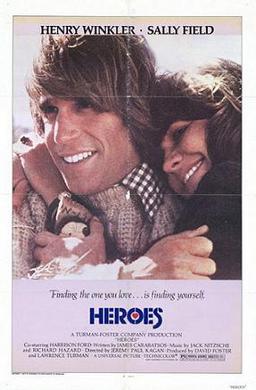
Film Review: Heroes (dir by Jeremy Kagan)


The 1977 film, Heroes, tells the story of Jack Dunne (a young Henry Winkler).

Jack spent four years fighting in Vietnam.  Since returning to America, he has struggled to adjust to civilian life.  Though he’s mentally blocked out much of what happened in Vietnam, he’s haunted by nightmares,  When we first meet him, he’s a patient at a mental health facility in New York City.  He has big plans, though.  He wants to open up a worm farm in Eureka, California.  He’s convinced that he can make a ton of money selling worms to fisherman and he wants all of the old members of his unit to join him in the venture.  After Jack escapes from the hospital, he boards a bus heading for California.

He also meets Carol (Sally Field), who is supposed to be getting married in four days but who has decided to board a bus and take an impromptu vacation instead.  When Carol is told that the bus is already full and she’ll have to wait for the next one, Jack bribes the ticket agent to get Carol on the bus.  Once on the bus, Jack makes himself into a nuisance, continually bothering the driver (Val Avery) and embarrassing Carol.  (In the film’s defense, it’s later established that Jack isn’t just being a jerk for fun.  The driver’s uniform makes Jack nervous.  That said, it’s hard not to feel bad for the driver, who is just doing his stressful job to the best of his ability.)  Carol and Jack do eventually strike a tentative friendship.  They’re linked by the fact that they’re both trying to escape from something.

At a diner, Jack tells her that he served in Vietnam.

“I protested the war,” Carol says.

“I fought it,” he replies.

Carol eventually joins with Jack in his quest to track down the three people who he expects to go into business with.  One of them is missing.  One of them never returned home from the war.  And the third, Ken (Harrison Ford), is living in a trailer and raising rabbits for a living.  Ken is also a stock car racer, though he eventually admits that he rarely wins.  In fact, he seems to spend most of his time drinking and shooting off the M16 that he keeps in his car’s trunk.  Meeting Ken sends Jack spiraling into depression but, with Carol’s help, Jack is finally starts to come to terms with the reality of what happened to him and his friends in Vietnam.

Heroes was one of the first films to sympathetically portray the plight of Vietnam veterans struggling to adjust to life back in the United States and it certainly deserves a lot of credit for its good intentions.  (Indeed, it’s implied that a part of Carol’s concern from Jack comes from her own guilt over how the anti-war movement treated the returning soldiers.)  That said, the film itself is an awkward mix of drama and comedy.  The first half of the film, in which Henry Winkler comes across like he’s doing a manic Al Pacino impersonation, is especially uneven.  Winkler and Field are both naturally likable enough that the film remains watchable but, during the first half of the film, most viewers will never buy their relationship for a second.  It’s hard to believe that the driver wouldn’t have kicked Jack off the bus as soon as he started to cause trouble and the other passengers often seem to be unrealistically charmed by Jack’s behavior.  If I’m on a crowded bus and some dude insists on walking up and down the aisle and taunting the driver, I’m probably going to get off at the first stop and refuse to get back on.  Traveling with a bunch of strangers is already nerve-wracking enough without having to deal with all of that.

Not surprisingly, things improve once Harrison Ford shows up.  This was one of Ford’s last character parts before he was cast as Han Solo in Star Wars.  (Heroes, however, was released after Star Wars, which explains why Ford is mentioned prominently in the trailer despite having a relatively small role.)  Ford gives a strong performance as the amiable but ultimately self-destructive Ken.  Ford plays Ken as someone whose quick smile is a cover for the fact that his entire life is a mess.  Whereas Jack wears his emotions on his sleeve (and Winkler never stops projecting those emotions), Ken is someone who has repressed his anger and his sadness and Ford gives an internalized and controlled performance.  Perhaps not coincidentally, Winkler calms down a bit when he’s acting opposite Ford and, as a result, his own performance starts to improve.

After the meeting with Ken, Jack starts to realize that it’s not going to be as easy to start his business as he thought.  Jack starts to come down from his manic high and, even more importantly, Henry Winkler stops overacting and instead, starts to dig into the sadness at the heart of Jack’s life.  During its second half, the film finally settles on being a drama and Heroes becomes a much stronger story as a result.  Even Jack and Carol’s relationship seems to make more sense during the second half of the film.  Things end on a note of cautious optimism, which also acknowledging that life can never go back to what it was before the war.

Today, if anyone watches Heroes, it’s probably going to be for Harrison Ford.  (I imagine the presence of Harrison Ford is the reason why it’s currently available on Netflix.)  It’s a bit of an uneven film, one that feels as if it should have been stronger than it actually was.  Still, it’s a worthwhile time capsule of 1977 and America’s struggle to come to terms with the Vietnam War.  Today, we’re still struggling to come to terms with what happened in Iraq and with the botched withdrawal from Afghanistan and, again, it seems like the country is too busy trying to move on to take the time to take care of its veterans.  It’s sad that so many people only seem to care about the soldiers who fight in popular wars.  Heroes was a plea to America not to forget its veterans.  It’s a plea that still needs to be heard.

Film Review: The Black Godfather (dir by John Evans)


The 1974 film, The Black Godfather, opens with two black men attempting to break into the house of a white drug dealer.  Unfortunately, the drug dealer happens to be home.  Both of the men are shot.  One dies in the alley.  The other, J.J. (Rod Perry), is shot in the arm but survives.

J.J. may not have been able to rob the dealer but his bravery impresses Nate Williams (Jimmy Whitherspoon), a powerful neighborhood crime lord.  Nate allows J.J. to hide out at his place and, while J.J. heals, Nate offers up some advice on how to survive on the streets.  J.J. says that he’s only interested in making some “bread,” but Nate thinks that J.J. has what it takes to become one of the top men in his organization.

One opening credits montage later and J.J. has indeed become a powerful man on the streets.  Though he may sell drugs, J.J. is a gangster with a conscience.  As he explains to his old friend, Diablo (Damu King), there’s no way to create change unless you make some money beforehand.  Diablo is a political militant who has no interest in working with J.J. until he discovers that J.J. is planning on running Tony (Don Chastain) out of the neighborhood.  Tony is a white gangster who has made a fortune by destroying black communities with heroin.  Diablo and his followers become J.J.’s enforcers as he wages war against Tony.

Unfortunately, the always pragmatic Nate doesn’t want J.J. to wage war against Tony.  Nate believes that it is important to keep the peace.  That Nate is tying to prevent a war doesn’t matter to Tony, of course.  As soon as Tony finds out that J.J. has been seeing Nate’s daughter, Yvonne (Diane Sommerfeld), he makes his move.

Made at the height of the Blaxploitation era, The Black Godfather‘s title brings to mind memories of Don Corleone, Michael, Sonny, and Tom Hagen.  And it is true that the wise and patient Nate does, in many ways, come across like a black version of Don Corleone.  Nate is pragmatic and cautious almost to a fault.  Just as Don Corleone resisted going to the war with the Tattaglias, Nate resists going to war with Tony.  (And, much like the Tattaglias, Tony proves himself to be unworthy of Nate’s generosity.)  However, J.J. has far more in common with Sonny than with Michael.  Unlike the  calculating and patient Michael, J.J. is in a hurry to prove that he’s the most powerful gangster in the community.  Like Sonny, J.J. doesn’t hesitate before striking back at his enemies.

Unfortunately, despite having an intriguing premise, The Black Godfather is a bit of a chore to sit through.  The story moves slowly and even the scenes of gangster violence feel rather rudimentary.  Rod Perry projects a confident charisma and Jimmy Witherspoon does a good job as the wise Nate but otherwise, the cast is stiff and unconvincing.  It’s a shame.  The mix of crime and militant politics had potential.  Early on, Diablo and J.J. debate whether or not good can come out of bad, with J.J. arguing that money can get a lot more done than idealism.  It’s a debate that’s still relevant today but it’s also an issue that the film abandons fairly quickly.  Based on the film’s title, I had some hope for The Black Godfather but, in the end, it’s just too slow and amateurish to really be memorable.

Cleaning Out the DVR: Scared Straight! Another Story (dir by Richard Michaels)


Who is ready to be scared straight … again!?

Scared Straight!  Another Story is a made-for-television movie from 1980.  As you can tell by the name, the movie was inspired by the documentary Scared Straight! and the addition of Another Story to the title would lead one to suspect that this was actually a follow-up or continuation to that documentary and I guess it kind of is.  A group of teenagers, all of whom have been in trouble with the law, are sent to a prison where they are finger-printed, forced to stay in a cell, and then yelled at by a bunch of prisoners who assure them that they don’t have what it takes to survive in prison.  Then, just as in the documentary, the teenagers leave the prison.  Some of them continue to get in trouble and some of them are scared straight.  As for the prisoners, they remain imprisoned.

The main difference is that, instead of featuring real prisoners and real delinquents, Scared Straight! Another Story is a dramatization.  As a result, the prisoners are saying the same thing that they said in the first Scared Straight! but now the prisoners themselves are played by actors who will be familiar to anyone who has watched enough old TV shows.  The prisoners may be yelling about how much life sucks but the viewer knows that they are all actors and, as a result, Scared Straight!  Another Story lacks the rough authenticity of the first film.  (It also doesn’t help that most of the profanity from the original documentary has been replaced with softer expressions of disgust.)  The film again makes the argument that the Scared Straight program can turn someone’s life around but it’s not as effective because, again, the troubled teens are all actors.  The viewer knows that they’re actors.  Their lives have already been turned around.

Surprisingly, the scenes of the prisoners yelling are the least effective parts of this film.  Instead, Scared Straight!  Another Story works best when it is exploring everyone’s life before and after the trip to the prison.  Stan Shaw, in particular, is effective as a prisoner who is inspired to take part in the program after he comes across the body of an inmate who has been driven to suicide.  Also well-cast is Terri Nunn, playing Lucy, the girlfriend of a small-time drug dealer.  Both she and her boyfriend are scared straight but it turns out to be too little too late as her boyfriend is eventually sent to jail for the crimes that he committed before the program.  (There’s an interesting scene, one that I wish had been explored in greater detail, where Lucy’s father observes the scared straight program and, instead of understanding that prison is a terrible place to send a kid, reacts by saying that the prisoners are all getting what they deserve.)  Finally, Cliff De Young, who has played a lot of corrupt government agents and out-of-touch teachers over the course of his career, gets a sympathetic role as Paul, the idealistic juvenile probation officer who sends three of his clients to the program.  The program works for two of them while the other eventually ends up joining the inmates who previously tried to warn him.  If nothing else, the film deserves some credit for admitting that the Scared Straight program isn’t going to magically reform everyone who attends.

Despite some good performances, Scared Straight! Another Story lacks the rough edged authenticity of the documentary.  It’s just not as effective when you know that everyone, including the prisoners, could go home at the end of the day.  Today, this is one of those films that is mostly interesting as a historical artifact.  Apparently, there really was a time when anything could inspire a TV movie.

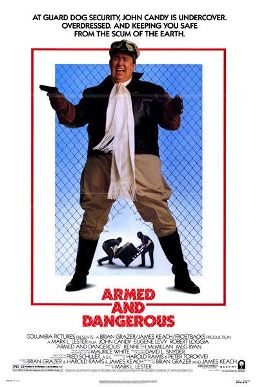
A Movie A Day #224: Armed and Dangerous (1986, directed by Mark L. Lester)


John Candy and Eugene Levy make a great team in the underrated comedy, Armed and Dangerous.

John Candy plays Frank Dooley, a member of the LAPD.  One of the first scenes of the movie is Frank climbing up a tree to save a little boy’s kitten and then getting stuck in the tree himself.  When Frank discovers two corrupt detectives stealing televisions, Frank is framed for the theft and kicked off the force.

Eugene Levy plays Norman Kane, a lawyer whose latest client is a Charles Manson-style cult leader who has a swastika carved into his head.  After being repeatedly threatened with murder, Norman asks for a sidebar and requests that the judge sentence his client to life in prison.  The judge agrees on the condition that Norman, whom he describes as being “the worst attorney to ever appear before me,” find a new line of work.

Frank and Norman end up taking a one day training course to act as security guards and are assigned to work together by their tough by sympathetic supervisor (Meg Ryan!).  Assigned to guard a pharmaceutical warehouse, Frank and Norman stumble across a robbery.  The robbery leads them to corruption inside their own union and, before you can say 80s cop movie, Frank and Norman are ignoring the orders of their supervisors and investigating a crime that nobody wants solved.

Armed and Dangerous was one of the many comedy/cop hybrid films of the 1980s.  Like Beverly Hills Cop, it features Jonathan Banks as a bad guy.  Like the recruits in Police Academy, all of Frank and Norman’s fellow security guards are societal misfits who are distinguished by one or two eccentricities.  There is nothing ground-breaking about Armed and Dangerous but Mark Lester did a good job directing the movie and the team of Candy and Levy (who has previously worked together on SCTV) made me laugh more than a few times.

Armed and Dangerous was originally written to be a vehicle for John Belushi and Dan Aykroyd.  It’s easy to imagine Belushi and Aykroyd in the lead roles but I think the movie actually works better with Candy and Levy, whose comedic style was similar to but far less aggressive than that of Belushi and Aykroyd.  One of the reasons that Armed and Dangerous works is because John Candy and Eugene Levy seem like the two last people to ever find themselves in a shootout or a car chase.  With Belushi and Aykroyd, it would have been expected.  After all, everyone’s seen The Blues Brothers.


TV Review: Twin Peaks 2.12 “The Black Widow” (directed by Caleb Deschanel)


Twin Peaks

Ladies and Gentlemen, welcome back to Twin Peaks!

Here we are at Episode 12 of Season 2, “The Black Widow” was directed by Caleb Deschanel, who happens to be the father of Emily (Bones) and Zooey (New Girl). The episode opens with Bobby Briggs (Dana Ashbrook) paying a visit to Ben Horne (Richard Beymer). Ben is somewhat down on his luck, having learned the truth about Audrey’s (Sherilyn Fenn) visit to One Eyed Jack’s and Hank (Chris Mulkey) informing him that the brothel has been taken over by Jean Renault (Michael Parks). Ben gives Bobby a mission to follow Hank and get him on film, handing him a camera. Anything mischievous or crazy, Ben needs it for blackmail.

On the way out of Ben’s office, Bobby watches a screaming Lana Milford (Robyn Lively, who I found out is actress Blake Lively’s sister) as she runs through the hallways. Given the title of the episode, I think we may be able to get an idea of what happened.

Dale Cooper (Kyle MacLachlan) is finally settling down in Twin Peaks, and with a realtor in his office, he’s given two options for Open Houses. Being Dale, he leaves the decision to chance with the flip of a quarter. The quarter spins and lands on the picture of a third property that was left out. The realtor tells him that the property is known as “Dead Dog Farm”, and no one really stays there long. It’s the place for Dale and he asks to see it right away.

Judy Swain (Molly Shannon, SNL)  from the Happy Helping Hands Organization stops by the precinct to speak with Andy (Harry Goaz), Lucy (Kimmy Robertson) and Dick (Ian Buchanan) about little Nicky (Joshua Harris). Judy has some interesting news on Little Nicky. It turns out that his parents were killed by mysterious circumstances, and he was bounced around to various homes. Judy doesn’t say whether Nicky had a hand in his parents death, but we can figure the best course of action here maybe to get those Megiddo daggers from The Omen and take that little kid to a church.

TP-Molly Shannon

Sheriff Truman (Michael Ontkean) calls out to Andy as they have to make a run to the Great Northern. A tragedy has occurred. Sure enough, the next scene gives us the recently deceased Dougie Milford (Tony Jay) laying in bed. Doc Hayward (William Frost) declares it – a heart attack. Apparently, Dougie was in the throes of passion when his heart gave out. Mayor Dwayne Milford (John Boylan) says his brother couldn’t refuse a beautiful woman, and on seeing Lana in the hallway, he calls her out as a witch and a succubus. Hawk (Michael Horse) approaches Lana and attempts to console her, listening to her state that she’s cursed. Her Prom Night date in High School tried to kiss her, but his braces malfunctioned, leaving him with a lockjaw. Knowing a thing or two about curses, Hawk tells her not to worry and that when things go down, he’s the man. The scene ends on a laughable note.

Gym Class at the High School. The coach introduces the newest member of the wrestling team to her peers, Ms. Nadine Hurley (Wendy Robie). She challenges her crush Mike Nelson (Gary Hershberger) to a sparring session. Mike sets Nadine up in a grapple hold, but she easily tackles him to the ground. She manages to also put him in a head lock and even body slam the poor fellow. Mike is down and out for the count, waiting for someone to throw a python on him and call it a day. In the next scene, we see a damaged Mike as he makes his way down the hallways of school. He reaches Donna and begs her to help him get Nadine off his back. She tells him that maybe an older woman is what he needs.

At Evelyn Marsh’s (Annette McCarthy) residence, James (James Marshall) meets Malcolm Sloan (Nicholas Love) Evelyn’s brother and the family chauffeur. If you recall from the previous episode, James is staying with Evelyn to fix her husband’s Jaguar. He was given the job by his sister, and without it would have probably gone on to drink himself into a corner. He alludes to the idea that her husband Jeffrey (John Apicella) beats her often, and to get back at him, she damages his things. Apparently, she was the one to put the Jaguar in traction. Malcolm leaves James to deal with the info he’s just provided.

Irene Littlehorse (Geraldine Kearns) brings Cooper to Dead Dog Farm.

A tiny digression here. Angelo Badalamenti has a sweet eerie tune here that sounds very much like something Charlie Clouser (Saw, The Collector) would have worked on. The closest contemporary sound I could find was as a song called “Talk to Me” by Porcelain Raft. If you get a chance, give it a listen. I wouldn’t be shocked to discover Badalamenti was an influence to them and others. This might also explain how Trent Reznor’s involved in the Revival.

Anyway, Irene and Cooper find that Dead Dog Farm was recently visited. As they go inside, they discover more clues. It appears someone’s been there in the past few hours (how Cooper realizes that is beyond me, but he’s Cooper. He deals in luck and sorcery, we’ll just accept it). He discovers baby laxative in the sink, and cocaine in a chair. With a smile, he tells Irene that they have to contact the Sheriff. The trail has become hot, and he wasn’t even trying.

Dick and Nicky are at their campsite, and Dick is trying to fix a flat. Nicky is being somewhat annoying by playing with the steering wheel and honking the horn. Dick yells at him, and Nicky puts himself out of the way, somewhat happy at the mayhem he’s caused. However, when the jack on the car gives way and almost injures Dick, Nicky runs and hugs him, worried about if he died. Dick seems a little surprised by this, and it’s something of a bonding moment between them. Then again, perhaps Nicky was just setting a trap for Dick.

At the preceinct, Truman and Cooper are talking with Colonel Riley(Tony Burton) regarding Garland Briggs’ (Don Davis) disappearance. There appears to be a connection between some messages from deep space that pertain to Agent Cooper. According to the Colonel, the source of the messages weren’t from space, but from an area very near to, or practically in Twin Peaks. The Colonel mentions that Briggs’ disappearance is a very serious thing with extreme ramifications to national security.

At the Marsh residence, James is finished fixing the Jaguar. He asks Evelyn about her husband, about what he’s done to her. She argues the point, but after a kiss and the honk of a car, she goes on alert. Jeffrey has come home, and she runs out to meet him.

Audrey meets Bobby at the Great Northern, congratulating him on the job he’s acquired with her father. She also asks him if he’d be willing to work with her as well. Misunderstanding the meaning of business, he leans in for a kiss, which she deftly evades. He smiles, saying he likes the way she thinks and heads to Ben Horne’s office.

That scene bothered me a little, and this may have to do with the idea that at the time, Lara Flynn Boyle was dating Kyle MacLachlan. Since the two of them were together, it supposedly caused a bit of a rift between she and Sherilyn Fenn. The setup that would have possibly led to an Audrey / Cooper courtship was derailed and by this point, it looked like the writers weren’t entirely sure of where to put Audrey in the scheme of things. As long as she was far from Cooper, it worked out. That’s just my speculation.

Audrey snoops in on Ben and Bobby from one of the cubbyholes in the lodge. She sees that he was able to get the pictures for Ben, though to what end, we’re not sure.

Josie (Joan Chen) is doing maid duty for Catherine Martell (Piper Laurie) to pay for her scheming against here. There isn’t much to the scene save that Catherine is relishing where she has Josie here.

Cooper records something for Diane, saying that the response to Windom Earl’s first move was printed in the local paper, but he received the response to that move the day before. He understands that Windom is one step ahead of him, and needs to find a way to change that. He also points out that in the time since his suspension, he’s looked for a home, and he has to worry about his defense, which could be a problem.

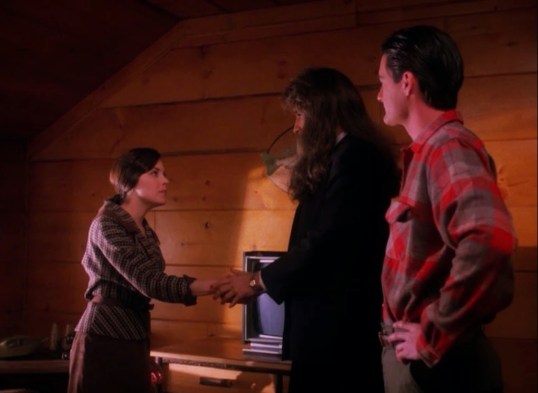
Just in time, Audrey knocks on the door, presenting Cooper with a package. Inside are the pictures from Ben’s office. Pictures that include Ernie Niles (James Booth). Audrey’s happy here, considering that the information may actually exonerate Cooper, but before she could continue, Cooper’s door knocks again. This time, it’s Denise Bryson (David Duchovny), who is introduced to Audrey.
Tp-Denise-Audrey-Coop

“They have women agents?” she says, shaking Denise’s hand, a glint in her eye that suggests she may have found her calling.

“More or Less.”, Denise responds. Audrey thanks the both of them and kisses Cooper (Finally!!!) before leaving the room. It’s here that Denise points out something I missed in Audrey’s age. Cooper smiles, telling Denise that with her change in perception and identity, he assumed girls wouldn’t factor into all that. Her response is simple and it’s an effective close to the scene:

“Coop. I may be wearing a dress, but I still pull my panties on one leg at a time, if you know what I mean.”

Norma (Peggy Lipton) and Ed (Everett McGill) have a small moment over Pie about the lives they planned, and the plans that didn’t work out. She touches his hand, and says that they can make new plans, but this falls within earshot of someone holding a domino in their hands. Hank perhaps? We’re not shown. They better be careful.

Dick comes into the Precinct, pulls Andy aside and whispers that Little Nicky may very well be the Devil. Called it. Totally called it.

Mayor Milford is in Truman’s office with Truman and Doc Hayward, looking to press charges against Lana over his brother’s death by sex. He yells that she won’t get a red cent of Dougie’s money and storms out.

And here’s one of the best scenes of the episode, if short. Hawk, standing in the doorway of the room with Lana (playing the Ingenue) behind him asks the men in the main room (Hayward, Andy, Truman, and Dick) for some Irish creme to add to Lana’s coffee. Dick breaks into Act 1, Scene 5 of Romeo & Juliet, with Hayward joining in. They’re all transfixed on the redhead in the room, which reminded me of both Rita Hayworth’s introduction in Gilda, the cover models in some of the detective stories that Erin has posted here on the Lens, and Lindy Booth’s character in Cry Wolf. When everyone disperses, a phone call comes in on the line, which Lucy picks up. She finds, however, that she’s unable to reach Truman, Andy or anyone. Walking back to the room where Lana was in, she opens to door to find everyone laughing and listening to Lana’s stories. Even Andy is caught up in the magic. This, of course, infuriates Lucy, who leaves and slams the door behind her. I would have loved to know if slamming the door had any effect on the guys in the room. Whether Lana presents any kind of danger is unknown at this point, but that honestly was a great setup if we do find she’s a Femme Fatale.

We’re back at the diner, with a pair of heeled legs that step into the room. Ernie Niles is having dinner when Denise slides into the seat across from him. Taking out the pictures that Audrey stole, she informs Niles that he’s guilty of a parole violation and unless he helps her (she says, reapplying her lipstick), she’ll do everything she can to make sure he stays there. It’s a cute little scene.

We then find Ernie being interrogated by Cooper and Denise in a cabin under the midst of a thunderstorm. Ernie confesses he had about four kilos of coke, and Denise has him set up a meet at the Dead Dog Farm, where she’ll meet him as a drug trafficker. On realizing that Denise is more than who she says she is, he kind of has a bad reaction and runs to the restroom.

Cut to the Marsh residence. Screaming. Glass breaking. James wakes up to these sounds and when Malcolm steps into the room, he asks if Evelyn will be alright. He states that he once thought revenge, but she stopped him for both of their sakes. This leaves James wondering if he should intervene.

The final scene of this episode has Betty Briggs (Charlotte Stewart), weeping over the loss of Major Briggs. Bobby has a great moment here where he tells her of the dream his father had about him and his future. During the storm, the lights go out, and in the darkness, we find Major Briggs suddenly in the living room. How did he get there? Where the heck was he?! He asks Bobby to fix him a drink, and when asked if everything’s alright, his answer is simple.

“Not exactly.”

And isn’t that always how is it in Twin Peaks? That’s the episode. This one was actually really good, and so far the show is holding up well. Tune in tomorrow for “Checkmate”, the next episode in our Marathon.

Previous Entries in The TSL’s Look At Twin Peaks:

  1. Twin Peaks: In the Beginning by Jedadiah Leland
  2. TV Review: Twin Peaks 1.1 — The Pilot (dir by David Lynch) by Lisa Marie Bowman
  3. TV Review: Twin Peaks 1.2 — Traces To Nowhere (directed by Duwayne Dunham) by Jedadiah Leland
  4. TV Review: Twin Peaks 1.3 — Zen, or the Skill To Catch A Killer (dir by David Lynch) by Lisa Marie Bowman
  5. TV Review: Twin Peaks 1.4 “Rest in Pain” (dir by Tina Rathbone) by Leonard Wilson
  6. TV Review: Twin Peaks 1.5 “The One-Armed Man” (directed by Tim Hunter) by Jedadiah Leland
  7. TV Review: Twin Peaks 1.6 “Cooper’s Dreams” (directed by Lesli Linka Glatter) by Lisa Marie Bowman
  8. TV Review: Twin Peaks 1.7 “Realization Time” (directed by Caleb Deschanel) by Lisa Marie Bowman
  9. TV Review: Twin Peaks 1.8 “The Last Evening” (directed by Mark Frost) by Leonard Wilson
  10. TV Review: Twin Peaks 2.1 “May the Giant Be With You” (dir by David Lynch) by Leonard Wilson
  11. TV Review: Twin Peaks 2.2 “Coma” (directed by David Lynch) by Jedadiah Leland
  12. TV Review: Twin Peaks 2.3 “The Man Behind The Glass” (directed by Lesli Linka Glatter) by Jedadiah Leland
  13. TV Review: Twin Peaks 2.4 “Laura’s Secret Diary” (dir by Todd Holland) by Lisa Marie Bowman
  14. TV Review: Twin Peaks 2.5 “The Orchid’s Curse” (dir by Graeme Clifford) by Lisa Marie Bowman
  15. TV Review: Twin Peaks 2.6 “Demons” (dir by Lesli Linka Glatter) by Leonard Wilson
  16. TV Review: Twin Peaks 2.7 “Lonely Souls” (directed by David Lynch) by Jedadiah Leland
  17. TV Review: Twin Peaks 2.8 “Drive With A Dead Girl” (dir by Caleb Deschanel) by Lisa Marie Bowman
  18. TV Review: Twin Peaks 2.9 “Arbitrary Law” (dir by Tim Hunter) by Lisa Marie Bowman
  19. TV Review: Twin Peaks 2.10 “Dispute Between Brothers” (directed by Tina Rathbone) by Jedadiah Leland
  20. TV Review: Twin Peaks 2.11 “Masked Ball” (directed by Duwayne Dunham) by Leonard Wilson
A Movie A Day #71: Side Out (1990, directed by Peter Israelson)


Monroe (C. Thomas Howell) is a young lawyer who moves to California and gets a job working for his Uncle Max (Terry Kiser).  Max wants Monroe to concentrate on evicting beach bums.  Monroe wants to play beach volleyball.  Together, they solve crimes.  No, actually, Max orders Monroe to evict Zack (Peter Horton), a former volleyball champion who was once “king of the beach.”  Zack agrees to coach Monroe and his goofball friend, Wiley (Christopher Rydell) in a volleyball tournament.  But when Zack misses a match because he is having underlit, PG-13 sex with his ex-wife (Harley Jane Kozak), uncoached Monroe accidentally breaks Wiley’s arm.  Now, Zack has to step in as Monroe’s partner and reclaim his status as king of the beach!

When I was a kid, Side Out was a HBO perennial, which is not the same thing as being a good movie.  There have not been many movies made about beach volleyball and Side Out shows us why.  Beach volley ball is just not that exciting to watch, especially when the main competitors are two out of shape actors.  All the jump cuts and close-ups in the world can’t disguise the fact that neither actor looks like he could get the ball over the net, never mind playing for over ten minutes without getting out of breath.  In Side Out, beach volleyball teamwork comes down to a lot of yelling and whenever Monroe yells at either Wiley or Zack, he sounds just like the “Put him in a body bag, Johnny!” guy from The Karate Kid.

At least Kathy Ireland has a small role.  Also, in the role of Zack’s friend, keep an eye out for Duke himself, the great Tony Burton!

What are you doing here, Duke!?