Late Night Retro Television Review: Degrassi High 1.15 “Stressed Out”


Welcome to Late Night Retro Television Reviews, a feature where we review some of our favorite and least favorite shows of the past!  On Sunday, I will be reviewing the Canadian series, Degrassi High, which aired on CBC and PBS from 1989 to 1991!  The series can be streamed on YouTube and Tubi

This week, the first season of Degrassi High comes to a close!

Episode 1.15 “Stressed Out”

(Dir by John Bertram, originally aired on February 13th, 1990)

The first season of Degrassi High comes to an end with an episode that once again establishes Caitlin as being the worst.

The school year is coming to a close and everyone is stressed about final exams.  Michelle is taking speed to stay up and study.  Normally, this would be a big deal but this episode only devotes a few scenes to it and we don’t even get a big dramatic meltdown on Michelle’s part.  I mean, I guess it’s good that Michelle finally got a plotline that doesn’t revolve everyone being shocked about her dating BLT but why would you do a drug storyline without a meltdown?

The majority of this episode is taken up with Caitlin getting upset because Ms. Avery will not be working at Degrassi anymore.  Under the impression that Ms. Avery has been fired, Caitlin passes around a petition.  When Ms. Avery says she appreciates the support but that she’s actually the one who decided to quit, Caitlin freaks out (in much the same way that Michelle should have freaked out) and gets all upset and says that she’s not even going to go to the end-of-the-year school party.

Hey, Caitlin — IT’S NONE OF YOUR BUSINESS!

Seriously, Caitlin — Ms. Avery is an adult.  She has every right to quit her job.  Now, it does turn out that Avery quit because the school board wanted her to become a substitute teacher.  Avery wants her own classroom.  Caitlin is still upset.  How can Ms. Avery be so selfish to abandon the one student who actually cares about whether or not she has a job or not?  Avery really should have just told Caitlin to get a life but finally, Ms. Avery takes a job teaching at another school.  So, Ms. Avery will get her own classroom and, even more importantly, she won’t have to deal with Caitlin anymore.

Whatever happened to Caitlin’s court case?  Shouldn’t she be doing community service or something?

This finale was a bit of a letdown but it happens.  Not every school year ends with something exciting happening.  Next week, we start the second and final season of Degrassi High!

Retro Television Review: Homicide: Life On The Street 3.7 “Happy To Be Here”


Welcome to Retro Television Reviews, a feature where we review some of our favorite and least favorite shows of the past!  On Sundays, I will be reviewing Homicide: Life On The Street, which aired from 1993 to 1999, on NBC!  It  can be viewed on Peacock.
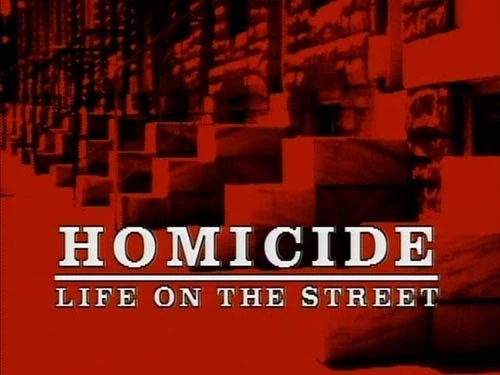
This week, Bayliss loses it!

Episode 3.7 “Happy To Be Here”

(Dir by Lee Bonner, originally aired on November 18th, 1994)

This week’s episode was depressing even by Homicide standards.

Felton’s wife is still missing.  Felton confronts both Kay and Megan, convinced that they know something about it.  Does it ever occur to Felton that maybe, just maybe, he wouldn’t have so much trouble in his marriage if he wasn’t always stumbling around like hulking dunk, sweating through his shirt and smoking up a storm?  Be the change, Felton.  Be the change.

Sam Thorne, the journalist played by Joe Morton, is assassinated by a Colombian cartel.  It turns out that his assassin was a teenager who agreed to do it in return for a new bike.  Giardello is shaken by the death of his friend and there’s a wonderfully acted scene in which Giardello visits Sam’s daughter (Maggie Rush).  This storyline served to remind the viewer that Yaphet Kotto, even if he spends most of the show in his office, really is the glue that holds this show together.  He’s the heart and the moral soul of Homicide.

Meanwhile, Bayliss has gone from being the clean-cut rookie to being someone who appears to be on the verge of having a complete and total breakdown.  He’s still seeing Emma Zoole and Lewis is still angry with him about it.  Emma likes to make love in a coffin.  Bayliss can accept that.  Emma wants Bayliss to hit her and that pushes Bayliss over the edge.  When he stops by a convenience store to pick up a six-pack of beer, he discovers that he’s a few pennies short.  The clerk says it doesn’t matter.  He can’t sell Bayliss the beer.  Bayliss responds by drawing his gun and robbing the place!  When the police arrive, Bayliss is sitting in his car and drinking a beer.

So, I guess Bayliss is going to prison now, right?  No, not in Baltimore.  Instead, Bayliss shows off his badge.  When that doesn’t work, he calls Pembleton.  Pembleton comes down to the store and gets the clerk to drop the charges in exchange for Bayliss serving as an unpaid security guard.  At the end of the episode, Bayliss is sitting in front of that store and hopefully thinking about how close he came to being sent to prison.

This was a good episode, one that looked at the pressure that goes along with being exposed to the worst that humanity has to offer.  Bayliss holding that store was a scene that probably should not have worked but it did, due to the performance of Kyle Secor.  In a manner of minutes, Secor took Bayliss from being tired but friendly to being so angry that I was worried he was actually going to shoot the clerk.  Not only did we see Bayliss’s dark side but we also saw Pembleton’s good side as he went out of his way to keep his partner from going to prison.

How much darker can things get in Baltimore?  We’ll find out next week!

Late Night Retro Television Review: Check it Out! 3.12 “Howard Hemingway”


Welcome to Late Night Retro Television Reviews, a feature where we review some of our favorite and least favorite shows of the past!  On Saturdays, I will be reviewing the Canadian sitcom, Check it Out, which ran in syndication from 1985 to 1988.  The entire show is currently streaming on Tubi and Peacock!

This week’s episode makes even less sense than usual.

Episode 3.12 “Howard Hemingway”

(Dir by Alan Erlich, originally aired on November 22nd, 1987)

Weird episode.

Howard Bannister notices how many of the store’s customers are also buying trashy romance paperbacks.  He also notices how much Marlene and Edna enjoy reading them.  Howard decides that he should write a book of his own and become a millionaire!

(Heh heh …. go tell any working writer about the idea of becoming a millionaire off of one book and see how they react.)

Howard struggles.  He sits in his office and tries to write a book about a safari.  Because this episode aired in the 80s, he uses a typewriter.  Because I’ve worked as an administrative assistant, I immediately noticed that Howard was a terrible typist.  Soon, the floor of his office is covered in crumpled papers.  He just can’t find the right hook for his story.  Edna points out that he’s never been on safari.  All Howard knows about is running a grocery store.

And so Passion Aisle is born!

Howard writes a book based on Cobb’s and the people that he works with.  Since he only appears to work with five other people, I’m a little bit surprised that the book appeared to be as long as it was.  Somehow, Howard is able to talk a publisher into publishing his book.  Howard doesn’t even have an agent so I’m curious how he pulled that off but anyway….

No one wants to buy the book!  Howard finally ends up giving copies away at the store.  Some of the customers read it and immediately figure out that the trampy cashier “Arlene” is based on Marlene.  The employees at Cobb’s decide that, since the book is based on them, they deserve some of the money that Howard is making off of it.  Howard agrees even though there’s absolutely no reason for Howard to have done so.  Howard wrote the thing.  The employees really didn’t do anything.  Still, they get a 50/50 split….

Seriously, I don’t want to overanalyze this but it really bothers me that Howard finally managed to accomplish something on his own and his employees, rather than accepting that, immediately demanded that they be rewarded for his hard work.  Just because you inspired someone to write a book or paint of picture or do anything else doesn’t mean that your entitled to financial compensation.  Not even Canada has gone that communist yet.  Howard should have stood his ground.

But, he didn’t.  Everyone got a little bit of money and I assume that Howard is never going to write another book.  That’s kind of sad.  Howard’s been looking for an escape from Cobb’s since the show began.  He finally got one and was immediately punished for his initiative.  Poor Howard!

Retro Television Review: Welcome Back, Kotter 4.22 “I’m Okay, But You’re Not”


Welcome to Retro Television Reviews, a feature where we review some of our favorite and least favorite shows of the past!  On Saturdays, I will be reviewing Welcome Back Kotter, which ran on ABC  from 1975 to 1979.  The entire show can be purchased on Prime.

We’re nearly done.

Episode 4.22 “I’m Okay, But You’re Not”

(Dir by Norman Abbott, originally aired on June 1st, 1979)

The next-to-last episode of Welcome Back, Kotter centers on Beau, the Southern transfer who was introduced as a replacement for Barbarino.  This is only the second episode to focus on Beau and it aired right as the show was about to end.  Judging from some of the comments made in the episode and the fact that no mentions that Horshack is now married, I’m going to guess that this episode was probably originally meant to air earlier in the season.

Anyway, the Sweathogs read their student evaluations when Julie, for some reason, leaves Arnold in charge of the office while she goes to another classroom to get a skirt that’s been hemmed for her by the Home Economics teacher.  Why Julie couldn’t have just gotten the skirt after the students had left for the day isn’t really clear.  The Sweathogs are not happy to discover that Woodman hates all of them except for Beau.  Beau, looking to prove that he’s not Woodman’s favorite, steals Woodman’s pants (Woodman is asleep at his desk) and runs them up a flagpole.  He also rings the fire alarm.  Woodman is forced to put on Julie’s skirt before leaving his office.

(What about Gabe?  Gabe is nowhere to be seen.  Gabe became assistant principal and then stopped hanging out at the school.)

Beau confesses that he was behind the prank.  Woodman says that it’s honorable for Beau to take the blame but he knows that Epstein, Washington, and Horshack are to blame.  Woodman gives the three “bad” Sweathogs detention.  There’s something inherently weird about watching three actors in their 30s complain about getting detention.  So, Beau again says that he was solely responsible and then insults Woodman until Woodman snaps, gives Beau three weeks detention, and promises that he’ll be keeping on eye on everything Beau does.

Good luck with that, Woodman.  The show’s nearly over!

Poor Stephen Shortridge.  He wasn’t a bad actor but the character of Beau was never that clearly defined and, even worse, Shortridge was brought in to replace Travolta’s Barbarino.  The show never figured out what to do with Beau and he ended up as something of a footnote in the show’s history.

This episode was just dumb.  It’s the type of episode that the show did well when it first started, back when the Sweathogs were still plausible as being high school students and when Travolta and Gabe Kaplan were still willing to appear on the show.  But, by the time the fourth season rolled around, the cast was too old to be playing high school pranks and neither Barbarino nor Gabe were around anymore.

Next week, the show finally ends!

Late Night Retro Television Review: Friday the 13th: The Series 3.8 “Night Prey”


Welcome to Late Night Retro Television Reviews, a feature where we review some of our favorite and least favorite shows of the past! On Fridays, I will be reviewing Friday the 13th: The Series, a show which ran in syndication from 1987 to 1990. The entire series can be found on YouTube!

This week on Friday the 13th: The Series, Micki and Jack come across vampires in their city but the real threat comes from the man who has dedicated his life to destroying them.

Episode 3.8 “Night Prey”

(Dir by Armand Mastroianni, originally aired on November 13th, 1989)

Back in 1969, Kurt Bachman (Michael Burgess) could only watch helplessly as his wife was abducted and turned into a creature of the night by vampire Evan Van Hellier (Eric Murphy).  Kurt has spent twenty years searching for Evan and trying to kill other vampires.  (Jill Hennessy makes her second appearance on Friday the 13th, this time playing a vampire who lures an unsuspecting victim into an alley.)  However, Kurt now has a new tool at his disposal.  He has a cursed crucifix that can destroy a vampire but only after it is first used to kill an innocent person.  Kurt may be trying to do the right thing by ridding the world of vampires but, as is so often the case with this show, it’s impossible to do the right thing while using a cursed object.  Kurt gets his revenge but at the cost of his own life.  Spilling blood to destroy a bloodsucker just doesn’t work in the long term.

This is another episode in which Jack gets involved after a friend of his is killed.  Poor Jack.  He friends were always dying.  In this case, Jack’s friend was a priest who attempted to keep Kurt from stealing the crucifix.  (Kurt, for all that he’s suffered, doesn’t really seem to be too upset over killing an innocent priest.  Maybe his obsession got the better of him.  Maybe Kurt was just a jerk.)  Jack and Micki investigate the local decadent vampire scene while Johnny stays at the store and has pizza and beer.  Jack confesses that he sometimes envies the vampires but fear not, Jack does not go over to the dark side.  For that matter, neither does Micki.  They both learned their lesson the last time they had to deal with a vampire.

This was a stylish episode, though the idea of vampires being decadent, leather-clad nightclubbers is not really as shocking an idea as the show seems to think it is.  Michael Burgess gives a good performance as the obsessed Kurt.  In  the end, he destroys the vampire who abducted his wife but at the cost of his own soul as his now vampiric wife puts the bite on him and soon, Kurt is a vampire himself.  Fortunately, Jack has some holy water to take care of that.  People spend so much time on stakes and crucifixes that they overlook the power of holy water.  This episode was full of atmosphere and I always like it when Jack gets to do something more than just wait back at the store.  This was a good Friday.

Retro Television Review: St. Elsewhere 1.17 “Brothers”


Welcome to Retro Television Reviews, a feature where we review some of our favorite and least favorite shows of the past! On Fridays, I will be reviewing St. Elsewhere, a medical show which ran on NBC from 1982 to 1988.  The show can be found on Hulu and, for purchase, on Prime!

Another day, another death in Boston.

Episode 1.17 “Brothers”

(Dir by Mark Tinker, originally aired on March 15th, 1983)

I swear, St. Eligius must have the worst security guards in Boston.

In this episode, Walter Schaefer (Pat Hingle), a blue collar fisherman, manages to smuggle a freaking hunting rifle into the hospital so that he can use it to kill his brother, Arthur (Richard Hamilton).  Arthur was dying of cancer and didn’t have much time left.  Walter had previously begged Dr. Westphall to cease giving Arthur chemotherapy and to just let his misery come to an end.  Westphall declined to do so so Walter killed his brother.  The episode was designed to make the viewer feel that Walter had no choice but …. eh, I don’t know.  I’m not a fan of euthanasia and I find the enthusiasm for it in television and film to be a bit icky.  This episode’s treatment of the issue was about as heavy-handed as they come.  And seriously, couldn’t Walter have just smothered Arthur with a pillow or something?  Shooting a man is dramatic but now I’m wondering about who had to clean up the room afterwards.  Plus. Arthur was hooked up to a bunch of medical equipment that was probably ruined as well.

(I don’t know, it’s hard for me to judge this storyline.  My Dad died in hospice care and I had to sign a DNR order before he could start it.  The aggressiveness that those people showed in demanding that I sign the order still haunts me.)

On a lighter note, Ehrlich managed to get another date with Shirley, despite the fact that their previous date ended with Ehrlich drunk and making a fool of himself.  Fiscus recommended a nice romantic restaurant.  Of course, when Ehrlich couldn’t make the date due to his work as a doctor, Fiscus took Shirley to the restaurant.  The end result is that Shirley has a crush on Fiscus and Fiscus needs to find a new place to stay because Ehrlich responded by kicking him out of the apartment.

Speaking of relationships, Dr. White is such a sleaze!  He’s separated from his wife so he’s now involved with a nurse.  While talking to that nurse on the phone, White was flirting with another nurse.  But then, Dr. White happened to see his wife out with another man and decided he had the right to get all jealous.  Ugh!  What a jerk!

Finally, the episode ended with Nurse Rosenthal on the operating table, about to undergo a mastectomy.  This was the subplot that actually got to me, not all of the stuff about Walter murdering his brother.  Christina Pickles, who has been such a steady presence during the first season, gave a wonderful performance as Rosenthal tried to keep it together as the day of her surgery approached.  This storyline brought tears to my eyes and that’s really all I have to say about it.

This was an uneven episode.  The stuff with the brothers didn’t do much for me but, when the episode just focused on the doctors and the nurses, it shined.

Late Night Retro Television Review: Highway to Heaven 3.18 “A Mother And A Daughter”


Welcome to Late Night Retro Television Reviews, a feature where we review some of our favorite and least favorite shows of the past!  On Thursdays, I will be reviewing Highway to Heaven, which aired on NBC from 1984 to 1989.  The entire show is currently streaming on Tubi and several other services!

This week, Jonathan is considered for a promotion!

Episode 3.18 “A Mother And A Daughter”

(Dir by Michael Landon, originally aired on February 4th, 1987)

Jonathan and Mark are in Hollywood …. again!

Seriously, it’s interesting how many episodes of Highway to Heaven found Jonathan and Mark dealing with movie stars and entertainment executives in Hollywood.  Every Hollywood episode basically followed the same plot.  Jonathan is all-business while Mark is excited to meet one of his old screen idols.  One thing that is a bit odd is that Mark always acts as if he’s never been in Hollywood before, even though almost every season usually featured several Hollywood episodes.

This time, they’ve been assigned to repair the relationship between veteran film star Phoebe Hall (Gloria DeHaven) and her estranged daughter, Gail (Judith Chapman).  Gail is writing a tell-all book about Phoebe, one that is set to be published at the same time that Phoebe is receiving a lifetime achievement award at a televised ceremony.  Can Jonathan get Gail to forgive her mother by showing Gail a bunch of old home movies?  Can Mark show Pheobe how much her career means to her fans?  Episodes in which Jonathan dealt with a film star who hadn’t been there for their children always seemed to hit Michael Landon extra hard.  His children have said that Landon was a bit of a workaholic and not always the most present of fathers.  One gets the feeling that this episode was Landon’s way of dealing with his own regrets.

While Jonathan works, he’s observed by another angel, Henry Clifford (Basil Langston).  Henry confides to Mark that Jonathan is being considered for a promotion into Heaven.  Mark briefly thinks about purposefully tanking the assignment so that Jonathan will stay on Earth with him.  Jonathan explains that they can’t do that and, to the show’s credit, Mark quickly realizes that Jonathan’s correct.  (Doing a bad job on purpose would have gone against everything the show had established about Mark’s character.)  In the end, Henry says that Jonathan will be staying on Earth for the time being because that’s obviously where Jonathan can do the most good.  Jonathan and Mark are happy.

That said, I do find it curious that the show has never really examined how Jonathan feels about the prospect of finally heading “upstairs.”  I mean, as Jonathan explains during this episode, he’s dead.  He’s been dead for a long time.  Wouldn’t he like to relax and enjoy his final reward?  Some people really like to work.  To be honest, I’d probably be the same way.  Give me a choice between going to Heaven and reviewing movies as a ghost …. well, it would be a hard decision for me.

Anyway, this was a sweet episode.  Highway to Heaven‘s strength was that it was shamelessly optimistic and earnest and that’s certainly the case here.

Retro Television Review: Malibu CA 2.7 “The Long Goodbye”


Welcome to Retro Television Reviews, a feature where we review some of our favorite and least favorite shows of the past!  On Thursdays, I will be reviewing Malibu CA, which aired in Syndication in 1998 and 1999.  Almost the entire show is currently streaming on YouTube!

Yes, this is from the first season. I don’t care. I refuse to waste my time looking for a second season advertisement.

This week, Jason ruins his life.  Or at least, that’s what I assume happened.

Episode 2.7 “The Long Goodbye”

(Dir by Gary Shimokawa, originally aired on November 20th, 1999)

Here’s the plot of this week’s episode, according to the imdb:

After a successful audition before Alex’s uncle the producer, Jason gets the go-ahead to make a demo recording. He’s surprised to see that the producer sent to work with him is a woman: a young, attractive one. Jason works with Kendall and there seems to be a spark between them. Stads calls from Europe. Jason tells her about the demo but not that the producer is female.

Wow, that sounds great!  (If you’re detecting heavy sarcasm, you are indeed a perceptive reader.)  Too bad this episode is one of the ones that has not been uploaded to YouTube.  Or actually, maybe it’s not that bad that I have an excuse not watch it.  I’ve never bought into the whole idea of Jason being this massively talented singer and songwriter.  According to Wikipedia, this episode was the last appearance as Stads so I’m going to guess that Jason not mentioning his producer being female led to a break-up.  Oh well!

Consider this a placeholder.  If this episode ever is uploaded, I’ll review it.

Late Night Retro Television Review: Monsters 3.13 “Malcolm”


Welcome to Late Night Retro Television Reviews, a feature where we review some of our favorite and least favorite shows of the past! On Wednesdays, I will be reviewing Monsters, which aired in syndication from 1988 to 1991. The entire series is streaming on YouTube.

This week, we have an episode directed by Tom Noonan and starring Ed Lauter!  Come discover what’s eating Malcolm….

Episode 3.13 “Malcolm”

(Dir by Tom Noonan, originally aired on December 23rd, 1990)

When he was younger, Malcolm (Ed Lauter) was a romantic who played the clarinet.  Now, he’s just a boring old businessman.  When his wife (Carole Shelley) asks him to play the clarinet again, he collapses in pain.  Their doctor (Farley Granger) discovers that Malcolm has what appears to be a tumor in his stomach.  Of course, the glowing tumor is actually alive.  It’s a weird, giant worm that gives Malcolm his musical talent.  The worm is removed but now, Malcolm has lost his talent.  One night, the worm shows up again….

This was an odd and moody episode, which I guess is not surprising as it was directed by Tom Noonan, a director and actor who specializes in the odd and moody.  Moving at its own deliberate pace, the episode benefitted from a good performance from Ed Lauter, a good deal of atmosphere, and some Cronenbergian body horror.  The worm was obviously a stand-in for the self-destructive nature of many artists.  The worm gives Malcolm his talent but it also has the potential to eat him from the inside.  When the worm returns, Malcolm makes his decision and the whole thing plays out like a moody nightmare.

In other words, this was a good episode, one that was willing to be both surreal and a bit grotesque.  Tom Noonan and Ed Lauter made for an excellent combination.

SHANE (The TV Series) – Episode 14: The Big Fifty (originally aired December 10th, 1966)


Episode 14 begins with one of Rufe Ryker’s men, Ed Bain, cutting barbed wire fence on the Starett ranch so their herd of cattle can go to a watering hole. As he’s cutting the fence, the sounds of gunshots from a “Big 50” rifle ring out as he’s shot and falls over. Shane (David Carradine) and Joey (Christopher Shea), who are riding through the area, hear the shots and find the wounded man. He rushes him to Sam Grafton’s saloon to see if Sam (Sam Gilman) can do anything to save him. Unfortunately the man was shot in the gut and there is no hope. About the time he dies, Rufe Ryker (Bert Freed) and his men come into the bar. He immediately asks Shane why he killed him. Shane, picking the wrong time to be a smartass, tells Ryker that if he had killed him it would have been for his cutting their fence, but that he didn’t do it. Ryker doesn’t believe him and neither do his men. They decide that Ed Bain deserves justice because “he was not only a good hand, but he was a good man.” Out for blood, Ryker decides he’s going to put Shane on trial for murder right then and there with only his men as the witnesses and jury. I call this the “Saint Bain” portion of the story. Harve (Lawrence Mann) tells us what a brave and hardworking man Bain was. Bain’s best friend Greevey (a guest starring Wayne Rogers) tells about all of their good times and card playing together. It seems that Bain is such a good guy that Shane clearly deserves to die even though none of them actually saw him shoot the man. 

While the sham of the trial is going, the saloonkeeper Ben (Owen Bush) slips out the back and rides out to the Starett ranch to tell Tom (Tom Tully) and Marian (Jill Ireland) what’s going on. The two immediately set about trying to round up some of the homesteaders to go into town with them to try to stop Ryker and his men from hanging Shane. One by one, each of the homesteaders turn them down because “this is not their fight” and reason that Shane probably did it because “he’s a gunfighter.” Knowing they have zero chance against Ryker on their own, Tom and Marian come up with a plan. He’ll head to Laramie to get the U.S. Marshall, and she’ll go try to buy some time from Ryker with the only bargaining chip they have, the deed to the family ranch. 

Episode 14 of Shane is a bit of a mixed bag. On the positive side, the gun that is used to kill Ed Bain at the beginning is a unique and interesting element of the story. The weapon is a Sharps “Big 50,” a .50 caliber rifle that was designed for buffalo hunting and introduced in 1872 by the Sharps Rifle Manufacturing Company. The Big 50 joins a tradition of powerful weapons in filmed entertainment that provide their users with an advantage over their adversaries. Other examples include the Winchester 73 rifle, Dirty Harry’s 44 Magnum and Paul Kersey’s 357 Wildey Magnum in DEATH WISH 3. At one point, the killer is firing the Big 50 into the Starett cabin at Shane, Marian and Joey. Based on the power of the gun as already shown, there is a real sense of danger that someone could be seriously hurt. There was also one good scene centered around the unspoken love between Shane and Marian, even if Shane wasn’t a part of it. With Shane’s life seriously in jeopardy, Tom reassures his daughter-in-law, “honey, you’ve only been in love with 2 men in your whole life. I’m gonna make sure you don’t lose them both.” She sure doesn’t protest. It was a sweet scene and I enjoyed that as well. 

On the negative side, episode 14 featured the most lazy storytelling thus far in the series. The series has gone to great lengths to show Rufe Ryker as a man who’s hard-as-nails, but also mostly reasonable. The writers throw that out the window in this storyline and require him to behave completely irrational in his quest for vengeance for his hired man. It would be one thing if Ed Bain was his son or something, but Ryker’s line about him being a “good man” doesn’t get close to explaining the turnaround in his behavior. And not only do they present him as irrational, they make him incompetent to boot. Joey rides up and convinces Ryker that he’s only there to take Shane some food. Ryker even checks his slicker for a gun before letting him go in. Turns out Joey did have a gun under his jacket and Ryker just didn’t find it. The show had seemed to really be hitting its stride before this episode and the lazy storytelling surprised me. They should have introduced a new character if they were going to make him so irrational and incompetent. That description just doesn’t fit the Ryker of the first 13 episodes. 

Overall, this may have been the least enjoyable episode so far. While it did have some good moments, I’m still struggling to let go of the way they changed Ryker’s character so completely for this one. We’ll see what happens with him over the last few episodes of the series. While I’m slightly disappointed with episode 14, I’m still looking forward to seeing what happens next.