In 1989’s Out of the Dark, a man dressed in a clown costume is killing phone sex operators. He lurks in the darkness and jumps out of the shadows to commit his dastardly crimes. Especially during the first hour or so, the film has its share of both suspense and gruesome moments. In the style of Italian giallo and pre-Halloween American slasher pics, the film actually tries to create some mystery about who the killer could be. Lt. Frank Meyers (Tracey Walter) suspects that the killer might photographer Kevin Silvers (Cameron Dye). Kevin and his girlfriend, Kristi (Lynn Danielson-Rosenthal), think that the police should be taking a closer look at David Stringer (Bud Cort), an accountant who has an office in the same building as the phone sex company. Meanwhile, Detective Langella (Divine) thinks that the murders might be linked to a serial killer who is targeting prostitutes.
The main problem with Out of the Dark is that it’s pretty obvious from the start who the killer is and it’s hard not to judge the people who can’t figure it out for themselves. The movie doesn’t really offer up enough viable suspects to keep you guessing and than it spends so much time trying to make it look like one of the suspects is guilty that any experienced film watcher will automatically know that he isn’t. The viewers are supposed to be shocked by the killer’s identity but there’s nothing shocking about it. It’s pretty obvious.
On the plus side, OutoftheDark does have a one-of-a-kind cast. Divine and Tracy Walter play detectives. Bud Cort is intense and nerdy as the bitter accountant. Cameron Dye is vacuously handsome as the photographer. Geoffrey Lewis shows up as an alcoholic. Lainie Kazan plays an aging prostitute. Tab Hunter drives a car. Paul Bartel manages a motel and gets upset when he sees the blood pooling in one of his rooms. And finally, Karen Black plays the owner of the phone sex company and gives a far better performance than the material actually deserves. Black brings some much needed emotional reality to the film.
As I said at the start of this review, OutoftheDark has its moments. The clown costume is truly creepy and the opening murder is all the more disturbing because it happen outside and in a public park. (You do have to wonder how no one noticed a weirdo dressed like a clown wandering around.) A scene in which the clown attacks a phone sex operator who has agreed to serve as bait is also well-done and genuinely frightening. The story moves at a quick and steady pace and it deserves some credit for ending on a definitive note as opposed to trying to copy the ambiguity that was so popular with other slasher films of the era.
If only the identity of the killer had actually been a surprise, Out of the Dark would probably be considered a classic. As it is, it’s just another well-made slasher film.
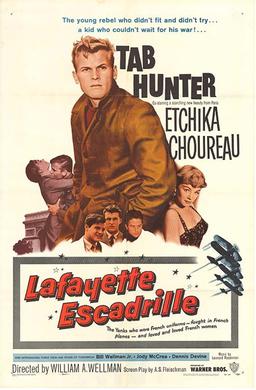
In the days leading up to World War I, spoiled rich kid Thad Walker (Tab Hunter) flees Boston after getting hit with a car theft charge and ends up in Paris. He befriends a group of American expatriates (including David Janssen, Will Hutchins, Jody McCrea, and William Wellman, Jr.) and eventually joins the French Air Force as a members of the Lafayette Escadrille. Thad also falls in love with a French prostitute named Renee (Etchika Choureau) and, after Thad strikes a French officer, he goes on the run with her.
I always wonder how many people have watched this film over the years because of the presence of a young Clint Eastwood in the cast, just to discover that he doesn’t get many lines and his character is largely interchangeable with the other young actors playing the members of the Lafayette Escadrille. This is a Tab Hunter movie, meaning that the action is dominated by Hunter’s sincere but bland screen persona. Director William Wellman wanted to cast Paul Newman in the lead role and that would have been something to see. Instead, the studio insisted on Hunter. They also insisted that Wellman change the film’s ending so that Hunter could survive instead of getting shot down on his very first mission. William Wellman was so disgusted with the studio that he retired from directing.
What had to make it all especially galling for the director was that LafayetteEscadrille was based on his own life. His son, William Wellman Jr., plays “Bill Wellman” in the film and Thad was based on actual friend of Wellman’s. The film was meant to be a tribute to his friends, many of whom did not survive World War I. Instead, the studio insisted that it be just another Tab Hunter service comedy. The best scenes are the ones where it’s just Thad and his friends trying to make it through basic training. Unfortunately, those scenes are overshadowed by Thad on the run.
The film is still there for those of us who enjoy catching future stars. Clint Eastwood, David Janssen, Tom Laughlin, Will Hutchins, Brett Halsey, and Jody McCrea are all present and accounted for. Rumor has it that James Garner can spotted in the background but I couldn’t find him and Garner had already co-starred with Brando in Sayonara when this move was made so I doubt he was doing background work. Tab Hunter’s blandness sinks the production but the rest of the cast would go on to better things.
As the saying goes, everyone has to start somewhere and, for Curtis Hanson, that somewhere was with 1973’s Sweet Kill.
Curtis Hanson, of course, would go on to become one of Hollywood’s top genre directors, directing films like The River Wild, Bad Influence, Wonder Boys, The Hand That Rocks The Cradle, 8 Mile, and the Oscar-nominated L.A. Confidential. But, in the early 70s, he was just one of the many recent film school grads who approached Roger Corman for a job.
Having previously worked on the script for the Corman-produced Dunwich Horror, Hanson approached Roger and told him that he had an idea for a Psycho-inspired movie about a female serial killer. Corman replied that he would help finance the film if Hanson made the killer into a man. Hanson did so but Corman still ended up only putting up a third of the film’s budget as opposed to the two/thirds that he had originally offered. Hanson ended up convincing his parents to take out a mortgage on their home to help finance the movie.
Hanson shot the film in 1971. Corman said that the film showed promise but that it needed more nudity and a better title if it was going to be successful. Corman re-edited the film and additional nude scenes were shot and inserted into the film. Despite this, Sweet Kill was a box office disappointment when it was originally released. Corman re-titled the film Kisses For Eddie but it didn’t help at the box office. Finally, the film was released under a third title, The Arousers. Despite a lurid ad campaign built around “the arousers,” the film once again failed at the box office. It wouldn’t be until years later, when Hanson started to achieve some mainstream success, that Sweet Kill would be rediscovered.
After all of the drama that went into post-production, it would be nice to be able to report that Sweet Kill was some sort of overlooked masterpiece but, to be honest, it’s pretty bad. The film stars Tab Hunter as Eddie Collins. When Eddie was a kid, he used to hide in the closet and watch as his mother lounged around her bedroom in lingerie. Now that Eddie is a grown-up and working as a high school gym coach, he is still so haunted by his mother that he’s impotent. As a result, Eddie spends his time breaking into apartments, stealing underwear, and having a prostitute dress up like his mother so that he can undress her while sobbing. After a chance meeting with a hippie girl leads to Eddie once again failing to get it up, he shoves the girl hard enough to kill her. The film implies that this act of violence leads to Eddie getting aroused for the first time and soon, Eddie is killing people and …. well, that’s pretty much the whole movie. There’s not really a plot, beyond Eddie looking confused and trying to keep his sympathetic neighbor from finding out that he’s a serial killer.
Sweet Kill has gotten some attention because of the casting of former teen idol Tab Hunter in the role of psycho Eddie. Tab Hunter has the right blonde look for Eddie, who is basically a homicidal beach bum, but otherwise, Hunter’s performance is fairly dull. Watching the film, it’s obvious that he wasn’t particularly comfortable with the role of Eddie and, as such, he sleepwalks through the performance. (Ironically, Eddie was based on Norman Bates, who was played by Hunter’s former partner, Anthony Perkins.) There are a few creepy moments where Hunter stares off into the distance with a blank look on his face but otherwise, this isn’t a particularly memorable performance nor is Sweet Kill a particularly interesting film.
That said, Curtis Hanson went on to have quite a career so, on that level, Sweet Kill‘s bland badness is inspiring. If the director of Sweet Kill could still go on to direct and produce some of the best films of the past 50 years, there’s hope for everyone looking to achieve their dreams. Don’t let one failure get you down.
While doing research for a story at Potter’s Field, a reporter (Tab Hunter) sees a stranger who looks much like him. At first, the reporter thinks that it’s a coincidence but then the reporter starts to run into the stranger everywhere. His friends think that he’s getting upset over nothing. His girlfriend thinks that he’s in danger. The reporter knows that he has to figure out who the stranger is and why he’s haunting him.
The second-to-last episode of Circle of Fear aired on March 23rd, 1973. Tab Hunter is a bit of a bland hero but the episode still had creepy moments.
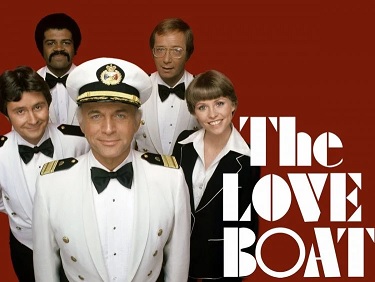
Welcome to Retro Television Reviews, a feature where we review some of our favorite and least favorite shows of the past! On Wednesdays, I will be reviewing the original Love Boat, which aired on ABC from 1977 to 1986! The series can be streamed on Paramount Plus!
Come aboard, we’re expecting you….
The Love Boat 1.5 “The Joker Is Mild / Take My Granddaughter, Please / First Time Out”
(Dir by Richard Kinon and Alan Rafkin, originally aired on October 29th, 1977)
This week’s cruise is all about remaining true to yourself!
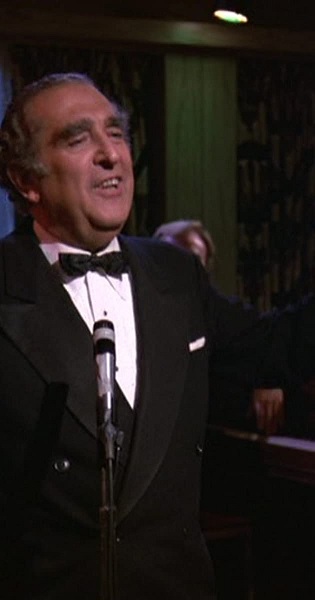
For instance, Julie makes what appears to be a big mistake when she agrees to let a washed-up comic named Barry Keys (Phil Foster) do a show in the ship’s lounge. Throughout the cruise, Barry gets on everyone’s nerves with his old-fashioned jokes and his vaudeville stylings. Captain Stubing gives Julie an annoyed look whenever Barry starts to speak. Julie knows that her career is on the line but she made a promise. And Barry, it turns out, know what he’s doing. When it comes time for his performance, he asks for a stool so that he can sit in the middle of the stage and talk about the generation gap. (“Let’s rap, as the kids say,” Barry says.) Hooray! Barry has revived his career and Julie still has a job.
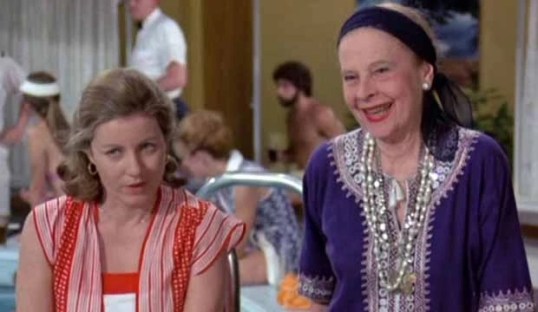
Meanwhile, Mrs. Warner (Ruth Gordon) is determined to find a husband for her granddaughter, Shirley (Patty Duke, who spends the entire episode looking as if she’s wondering how she could go from winning an Oscar to this). Shirley would like to hook up with the pleasantly bland Dave King (played by Tab Hunter). Mrs. Warner wants her to go out with Dr. Bricker! In the end, Shirley stands up for herself, as any single 30 year-old should. (To be honest, I thought Patty Duke’s character was closer to 40 but that’s mostly the fault of whoever in the costume department decided to make her wear some of the least flattering outfits available.) It’s all for the best. Dave is a nice guy and Doc has an exam room full of pornographic magazines to take care of.
Finally, a group of college students board the ship with one mission in mind. They want their friend Dan (Robert Hegyes, who has a truly impressive head of hair) to lose his virginity. Dan, it turns out, is not only shy but he also has no idea how to talk to women. Fortunately, her runs into Marcia Brady (Maureen McCormick) and it turns out that Marica likes shy, socially awkward guys with a lot of hair. Okay, technically Maureen is playing Barbara Holmes but seriously, we all know that Barbara was actually Marcia.
This was a majorly uneven episode. Barry’s revised act didn’t seem any funnier than his old stuff and it was kind of hard to sympathize with Shirley and her inability to make her own decisions. That said, Maureen McCormick and Robert Hegyes made for a cute couple and their storyline was the most satisfying of the episode. Personally, I think this episode would have worked better if Ruth Gordon had played Maureen McCormick’s grandmother as opposed to Patty Duke’s. McCormick was young enough that it would have been a bit less pathetic for her to be bossed around by her grandmother and one can imagine how Ruth Gordon would have reacted to McCormick picking hairy Dan over a doctor.
Oh well! The important thing is that everything worked out in the end and love won’t hurt anymore.
During the lawless day of the old west, a drifter named Roy Bean (Paul Newman) wanders into the desolate town of Vinegaroon, Texas. When he enters the local saloon, he meets the vagrants who run the town. They beat him, they rob him, and they tie him to the back of his horse and leave him to die.
Bean, however, does not die. Instead, he’s nursed back to health by a beautiful young woman named Maria Elena (Victoria Principal). Carrying a gun, Bean reenters the saloon and promptly kills nearly everyone who previously attacked him. (“I’m not done killing you yet!” Bean yells at one fleeing woman.) Bean sits down in front of the saloon and waits for justice. Instead, he’s visited by a lecherous traveling preacher (Anthony Perkins), who buries the dead and gives Bean absolution. Bean declares that he is now the “law of the West Pecos.” As the preacher leaves, he looks at the audience and says that he never visited Bean again and later died of dysentery in Mexico. He hasn’t seen Bean since dying so the preacher is sure that, wherever Bean went, it wasn’t Heaven.
Judge Roy Bean dispenses rough and hard justice from his saloon and renames the town Langtry, after the actress Lillie Langtry. Bean has never met Langtry or even seen her perform but he writes to her regularly and pictures of her decorate the walls of his saloon. Bean hires outlaws to serve as his town marshals and sentences prostitutes to remain in town and marry the citizens. Lawbreakers are left hanging outside of the saloon. Bean enters into a common law marriage with Maria and, for a while, they even own a bear, who drinks beer and helps Bean maintain order in the court. Bean may be crazy but his methods clean up the town and Langtry starts to grow. As Langtry becomes more civilized and an attorney named Arthur Gass (Roddy McDowall) grows more powerful, it starts to become apparent that there may no longer be a place for a man like Judge Roy Bean.
The real-life Judge Roy Bean did hold court in a saloon and he did name the town after Lilly Langtry. It’s debatable whether or not he was really a hanging judge. Because he didn’t have a jail, the maximum punishment that he could hand out was a fine and usually that fine was the same amount of however much money the accused had on him at the time of his arrest. Because of his eccentricities and his reputation for being the “only law west of the Pecos,” Roy Bean became a legendary figure. The Life and Times of Judge Roy Bean acknowledges from the start that it’s not a historically accurate, with a title card that reads, “Maybe this isn’t the way it was… it’s the way it should have been.”
Based on a script by John Milius and directed by Hollywood veteran John Huston, The Life and Times of Judge Roy Bean is one of the strangest westerns to ever be released by a major studio. Featuring multiple narrators who occasionally speak directly to the camera, The Life and Times of Judge Roy Bean is an episodic mix of low comedy, graphic violence, and syrupy romance. (The film’s sole Oscar nomination was for the song that played over scenes of Bean and Maria going on a romantic picnic with their pet bear.) Familiar faces show up in small roles. Along with Perkins and McDowall, Tab Hunter, Ned Beatty, Jacqueline Bissett, Ava Gardner, and Anthony Zerbe all play supporting roles. Even a heavily made-up Stacy Keach makes an appearance as an albino outlaw named Bad Bob.
Jacqueline Bisset in The Life and Times of Judge Roy Bean
Milius has gone on the record as calling The Life and Times of Judge Roy Bean a “Beverly Hills western” and he has a point. He envisioned the script as starring Warren Oates as a less likable and much more morally ambiguous version of Judge Roy Bean and he was not happy that his original ending was replaced by a more showy pyrotechnic spectacle. Milius envisioned the film as a low-budget spaghetti western but Huston instead made a Hollywood epic, complete with celebrity cameos and a theme song from Maurice Jarre and Marilyn Bergman. Milius said that his experience with The Life and Times of Judge Roy Bean is what led to him deciding to direct his own films.
Again, Milius has a point but John Huston’s version of The Life and Times of Judge Roy Bean has its strengths as well. Though he may not be the madman that Milius originally envisioned, Paul Newman gives a good, grizzled performance as Roy Bean and the role served as a precursor for the type of aging but determined characters that Newman would specialize in during the final phase of his career. Due to its episodic structure, the film is uneven but it works more often than it doesn’t. The chaotic early scenes reflect a time when the west was actually wild while the later scenes are more cohesive, as society moves into Langtry and threatens to make formerly indispensable men like Roy Ban obsolete. Even the cameo performances fit in well with the film’s overall scheme, with Anthony Perkins standing out as the odd preacher. Finally, the young Victoria Principal is perfectly cast as the only woman that Roy Bean loved as much as Lily Langtry.
Though it’s impossible not to wonder what Warren Oates would have done with the title role, The Life and Times of Judge Roy Bean is a good end-of-the-west western.
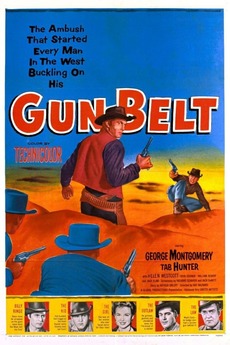
Outlaw Matt Ringo (John Dehner) escapes from prison and reunites with his old gang. Riding out to Tombstone, Matt tracks down his son, Chip (Tab Hunter). Chip is now living with his uncle, Billy Ringo (George Montgomery). Billy was once a member of Matt’s gang but he’s gone straight, he’s given up his guns, and he now has a ranch of his own. Billy tries to keep the naive Chip from idolizing his father but Chip is bored with life on the ranch. Matt not only works to turn Chip against his uncle but he also frames Billy for a bank robbery. With the town convinced that Billy has returned to his outlaw ways, Billy has no choice but to reach out to the most honest lawman in town, Wyatt Earp (James Millican).
The most interesting thing about this western is the way that it blends real people, like Wyatt and his brother Virgil (Bruce Cowling), with characters who were obviously fictionalized versions of the participants in the gunfight at the OK Corral. The Ringos are obviously based on Johnny Ringo who, as anyone who has seen Tombstone has seen you, never went straight in real life. Meanwhile, the head of the gang is named Ike Clinton. Did someone misspell Ike Clanton’s name while writing the script or was the name really changed for some unknown reason? Ike Clanton wasn’t around to sue over the way he was portrayed in the movie.
Beyond the mix of a little truth with a lot of fiction, Gun Belt is a traditional western with bad outlaws and upstanding lawmen and a naive cowpoke who has to decide whether he wants to follow the path of good or evil. George Montgomery has the right presence to be a believable as both a retired outlaw and rancher and James Millican brings quiet authority to the film’s version of Wyatt Earp. Western fans will be happy to see Jack Elam in the role of one of the gang members. The only really false note is provided by Tab Hunter, who comes across as very young and very callow and not believable at all as someone who could work on a ranch or successfully pursue a career as a professional lawbreaker.
Seven years after it was released, Gun Belt was remade as Five Guns To Tombstone.
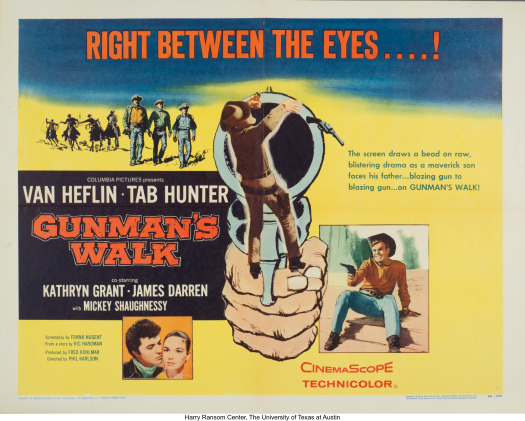
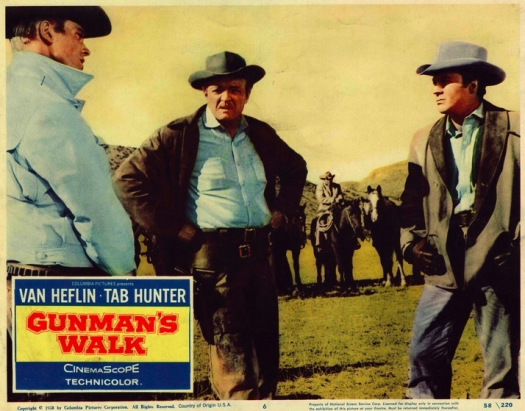
GUNMAN’S WALK may not be a classic Western like THE SEARCHERS or HIGH NOON, but it was entertaining enough to hold my interest. That’s due in large part to a change of pace performance by All-American 50’s Teen Idol Tab Hunter as a sort-of Rebel Without A Cause On The Range, an unlikable sociopath with daddy issues, aided and abetted by Phil Karlson’s taut direction and some gorgeous panoramic Cinemascope shots by DP Charles Lawton Jr.
Boisterous cattle rancher Lee Hackett (Van Heflin) is one of those Men-Who-Tamed-The-West types, a widower with two sons. Eldest Ed (Hunter) is a privileged, racist creep who’s obsessed with guns, while younger Davy (played by another 50’s Teen Idol, James Darren) is more reserved. The Hacketts are about to embark on a wild horse round-up, and enlist two half-breed Sioux, the brothers of pretty young Clee (Kathryn Grant, young wife of crooner Bing Crosby).
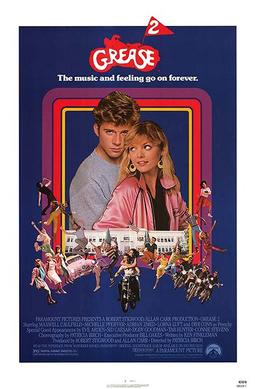
So, the whole reason that I watched Grease last week was so I would be prepared to watch the 1982 sequel Grease 2 over the weekend. As I’ve mentioned many times on this site, I absolutely hate Grease and I know what you’re probably asking yourself:
“But Lisa, if you hate Grease so much, why did you want to see Grease 2?”
Well, there’s a very good answer to that question but I’m not going to reveal it. I’m going to encourage you to learn to love the mystery. For whatever reason, I wanted to watch Grease 2. Perhaps it was because I’ve heard that Grease 2 is the worst sequel ever made. I really didn’t see how that was possible. How, I wondered, could a film be any worse than the original Grease?
And, so, I watched Grease 2 on Netflix and yes, it was really, really bad. But you know what? It was so bad that it became almost compulsively watchable. Unlike the first Grease, which is full of slow spots, Grease 2 is oddly exciting in its mediocrity. I watched much of it in open-mouthed horror, wondering if things could possibly get any worse. And, with each scene, it did get worse. It was so overwhelmingly and shamelessly bad and so thoroughly misguided that, strangely enough, I really want to rewatch it.
Grease 2 takes place in 1961. There’s a whole new gang of students at Rydell High! Well, actually, Frenchy (Didi Conn) has returned. You may remember that, in the previous film, Frenchy dropped out of high school and went to beauty school. (She was also visited by Satan, who came to her disguised as the Teen Angel.) But now Frenchy is back, trying to pass a chemistry class so she can … well, I’m not really sure what the whole deal with Frenchy was. I imagine that Didi Conn was probably free for a weekend.
The T-bird and the Pink Ladies are still around but they have a whole new membership. The head of the Pink Ladies is Stephanie Zinone (played, in her film debut, by Michelle Pfeiffer). Her boyfriend, Johnny Nogorelli (Adrian Zmed), is the chain-smoking leader of the T-birds. Actually, Johnny is now her ex-boyfriend. He cheated on her over the summer.
And there’s a new boy at Rydell! He’s originally from England and he’s Sandy’s cousin! His name is Michael Carrington (superhandsome Maxwell Caulfield, who is perhaps fated to always be best known for playing Rex Manning in Empire Records) and, when we first meet him, he’s getting off a school bus and he’s wearing a suit! Michael really likes Stephanie but you have to be a T-bird if you’re going to date a Pink Lady and…
AGCK!
Sorry, that was a primal scream. Trying to describe the plot of Grease 2 inspires a lot of primal screams.
Anyway, this is a film is also a musical but apparently, none of the original Grease composers were involved with the sequels. All the songs kinda sound like something you would hear in a parody of Grease, as opposed to a sequel. Also adding to bizarre feel of this sequel is that everyone delivers their lines as if they’re appearing in a stage production, projecting to the back of the theater and overenunciating every single syllable. This may have made sense for Grease, which was adapted from an actual stage show and, despite efforts to open up the action, was still deliberately stagey. Grease 2, meanwhile, is an adaptation of a stage show that never actually existed.
The film starts with a 7 minute production number called Back To School Again. As the Pink Ladies and the T-birds and all the other students show up outside of Rydell, they sing, “Woe is me! The Board of Education took away my parole.” And the scene just keeps going and going, until you start to wonder if Rydell High is a cult compound.
This is followed by a song about bowling (!) that’s called “Score Tonight.”
And it just keeps getting worse from there. The film becomes sickly fascinating as you find yourself trying to predict how much more worse it can possibly get. You may be tempted to give up but you’ll definitely want to stick around for the scene in which Michael discovers that Stephanie wants a “cool rider.” How does he know that? She sings a song about it!
Naturally, Michael gets a motorcycle, a helmet, and pair of goggles and he starts to romance Stephanie. Stephanie doesn’t know who that Michael is the mysterious motorcyclist, despite the fact that Michael is just wearing a helmet and a pair of goggles. Though you have to admire Pfieffer’s commitment to her role (and she gives a fairly good performance, considering the material she was working with), you can’t help but feel that Stephanie might not be the smart. Especially after she sings, “Who’s that guy?”
Uhmmm … it’s Michael. It’s not like he’s dressed up like a bat or wearing the Iron Man armor. He’s just got a helmet and goggles on. Add to that, while Maxwell Caulfield doesn’t give a bad performance (he seems to be doing the best he can with what he’s been given to work with), he also doesn’t attempt to act any differently when he’s the mysterious motorcyclist than when he’s Michael.
There are other things going on as well. The film is full of vignettes about life in 1961, all featuring the students and teachers at Rydell High. For instance, former teen idol Tab Hunter shows up as a substitute teacher and sings a song about reproduction.
And again, it’s so bad that you can’t look away and you watch knowing that you’ll never get the images and the songs out of your head. So compulsively watchable is this bad movie that I may have to watch it again after I finish this review. (Then again, I’ll probably just rewatch the fifth season of Degrassi…)
(That said, I would actually argue that Grease 2 is a better directed film than the first Grease. Grease 2 was directed by Grease‘s choreographer and, as opposed to the first film, the dance numbers are actually framed with modicum of care.)
(By the way, I’ve always wanted to use the phrase “modicum of care” in a review.)
Anyway, Grease 2 apparently bombed at the box office and, as a result, there have been no further Grease films. It’s a shame because you so know that Grease 3 would have taken place in 1967 and featured hippies.



 Through the Shattered Lens