Retro Television Review: St. Elsewhere 3.3 “Two Balls And A Strike”


Welcome to Retro Television Reviews, a feature where we review some of our favorite and least favorite shows of the past! On Fridays, I will be reviewing St. Elsewhere, a medical show which ran on NBC from 1982 to 1988.  The show can be found on Daily Motion.
This week, the nurses go on strike.  Fire all of them!, I say.

Episode 3.3 “Two Balls and a Strike”

(Dir by David Anspaugh, originally aired on October 3rd, 1984)

It’s another depressing few days at St. Eligius.

When negotiations break down, all of the nurses — except for Shirley Daniels — go on strike.  Led by Nurse Rosenthal, they march out of the hospital and join a picket line in the rain.  Triumphant music plays on the soundtrack  Rosenthal gets on her bullhorn and announces that anyone making deliveries to the hospital will be crossing the picket line and not showing solidarity with the union.  Honestly, though?  Screw the union.  It’s a hospital!  It needs supplies.  There are people dying inside of that building and they’re not even going to have the dignity of clean linen because of Nurse Rosenthal and her stupid union.  And another thing …. Rosenthal is the head of union at St. Eligius.  So, why isn’t she marching in the rain and carrying a sign?  Why does she get to stand in the doorway and shout at people?  Get out there and suffer for your union, you British commie!

Obviously, the show wanted me to be inspired by Rosenthal and the union.  Whenever it switched over to the picket line, triumphant music started playing.  I’m with Nurse Daniels on this one, though.  Daniels didn’t vote the union so why should she have to suffer in the rain?  She stays on the job.  “Good luck,” Rosenthal tells her, “you’ll need it.”  And all I can say to that is that at least Shirley Daniels isn’t deserting the hospital’s patients.

While the nurses are on strike, Dr. Canavero is attacked by a hulking man wearing a ski mask.  Canavero is able to fight him off.  Westphall and everyone else at the hospital immediately assumes that the man was Peter White but Peter has an alibi.  He was in radiology when Canavero was attacked.  So, is there a new ski mask rapist haunting the hospital?  The first ski mask rapist storyline was pretty disturbing, especially since Peter got away with it.  I’m not sure I want to go through a second one.

Dr. Craig and Ellen went to couples therapy.  As usual, Dr. Craig got annoyed with the whole thing.  There’s really nothing more fun than watching Dr. Craig get annoyed.  No one gets annoyed better than William Daniels.  Still, it seemed to do Dr. Craig and Ellen some good, with Ellen making plans to go to Hawaii and Dr. Craig acknowledging that he’s not always the easiest person to deal with.

As for Dr. Westphall …. he spent most of this episode depressed.  Westphall is always depressed.

This is my final St. Elsewhere review for 2025.  Retro Television Review is taking a break for the holidays, so I can focus on Awards Season and Christmas movies!  St. Elsewhere will return on January 9th.

Retro Television Review: St. Elsewhere 3.2 “Playing God: Part Two”


Welcome to Retro Television Reviews, a feature where we review some of our favorite and least favorite shows of the past! On Fridays, I will be reviewing St. Elsewhere, a medical show which ran on NBC from 1982 to 1988.  The show can be found on Daily Motion.

This week, the hospital is a depressing place.

Episode 3.2 “Playing God: Part Two”

(Dir by Bruce Paltrow, originally aired on September 26th, 1984)

There was a lot going on in this episode.

Sister Domenica demanded that Sister Theresa be taken off of life support and she threatened to sue the hospital if it didn’t happen.  This led to Dr. Westphall telling another long and depressing story about his dead wife.  I don’t mean to be flippant about anyone’s tragedies but it’s hard not to notice that almost everything seems to lead to Westphall telling a depressing story.  Westphall is one of the most saddest television characters that I’ve ever come across.

The nurses are closer to striking.  A labor negotiator named Richard Clarendon (Herb Edelman) is brought in by the nurses and it’s hard not to notice that he looks a lot like Helen Rosenthal’s ex-husband.  I think I can already guess where this is heading.

A sick child was brought in by a woman (Tammy Grimes) who claimed to be his fairy godmother.  This gave Fiscus an excuse to get a consultation from Kathy Martin, who has abandoned the morgue for psychiatry and who is no longer dressing exclusively in black.

At home, Dr. Craig struggled with impotence.  At the hospital, Dr. Ehrlich gave an awkward lecture about whether or not one can have sex after heart surgery.

The firefighters are still recovering from their burns.

Clancy got an abortion, despite Morrison’s objections.

And yet, all that drama was overshadowed by the fact that the Dr. Peter White — the drug-addicted rapist who nearly killed more than a few patients due to his own incompetence — is once again walking the halls of St. Eligius.  White won his lawsuit.  I’m not really sure that I understand what the basis of his lawsuit was.  St. Eligius could only ask a select number of residents to return and, even if you overlook the fact that White was accused of rape, it’s not as if Dr. White was ever an especially competent doctor.  It would seem that just his struggle with drug addiction would be enough to justify not asking him to return.  And yet, somehow, Dr. Peter White is once again a resident at St. Eligius.  (The ruling was probably handed down by a Carter judge.)

“You just can’t admit that you were wrong about me!” White snaps at Westphall.

Westphall replies that White is a terrible human being and not worthy of being a doctor and that he will not be allowed to work with any patients at the hospital.  And, for once, I wanted to cheer Dr. Westphall.  He may be depressing but he understands exactly who and what Peter White is.

Whatever the future may hold for the hospital, I have a feeling that it’s not going to be happy.  Two episodes in and the third season has already settled into a pit of melancholy.  That said, melancholy is perhaps the right mood for a medical show.  When it comes to hospitals, there aren’t many happy endings.

Retro Television Review: St. Elsewhere 3.1 “Playing God, Part One”


Welcome to Retro Television Reviews, a feature where we review some of our favorite and least favorite shows of the past! On Fridays, I will be reviewing St. Elsewhere, a medical show which ran on NBC from 1982 to 1988.  The show can be found on Daily Motion.

Today, we start the third season of St. Elsewhere with some new opening credits!

Episode 3.1 “Playing God, Part One”

(Dir by Bruce Paltrow, originally aired on September 19th, 1984)

The opening of the third season finds that St. Eligius is just as depressing as it’s ever been.

Fiscus leads a group of new residents, including Dr. Elliott Axelrod (played by new series regular Stephen Furst), through the hospital.  Fiscus comes across as being an arrogant jackass.  I guess that’s the appeal of being a second-year resident.  You get to look down on all of the first-years.

Jack is still dating Clancy (young Helen Hunt).  When Clancy tells Jack that she’s pregnant, he’s shocked when she says she’s planning on getting an abortion.  Jack proposes to her.  Clancy says she’s not ready to get married and she’s not ready to have a baby.

Dr. Craig is still yelling at Dr. Ehrlich.  Dr. Ehrlich is still annoying the nurses.

Speaking of the nurses, they’re going on strike!

Three firefighters (one of whom is played by Erin Hudson) are injured while on the job and are rushed to St. Eligius with severe burns.  Luckily, plastic surgeon Bobby Caldwell (Mark Harmon, without that terrible mustache he wore during season two) is on call.

Dr. Peter White is working in a shady clinic and is still suing for his right to be a resident.

A traffic accident leaves one nun in a coma and apparently brain-dead.  Sister Doemnica (Michael Learned) wants to take her off life-support.  Westphall (Ed Flanders), who seems even more depressed than usual, disagrees.  It looks like there’s going to be some conflict about this.  For once, I’m on Westphall’s side.  I’m believer in hope.

Auschlander is still battling his cancer.

In other words, it’s another day at St. Eligius.  The third season premiere did a good job of re-introducing viewers to the hospital.  The snarkiness of Fiscus’s tour nicely balanced all of the more dramatic moments in the episode.  If anything has me worried, it’s the possible return of the loathsome Peter White.  How is the hospital going to deal with the return of a man who they all know is a rapist, even if he was somehow acquitted?  I guess we’ll find out.

Beverly Hills Cop (1984, directed by Martin Best)


Two years after teaming with Nick Nolte in 48 Hrs., Eddie Murphy returned to the action genre in what remains he best-known action comedy, Beverly Hills Cop.

We all know the story.  Eddie Murphy is Axel Foley, a streetsmart detective in Detroit whose childhood friend, Mickey (James Russo), is murdered because of something that he saw while working as a security guard in Beverly Hills.  Axel plays by his own rules and gets results even as he gives his boss, Inspector Todd (Gil Hill), heartburn.  Todd refuses to allow Foley to investigate Mickey’s death so Axel puts in for some vacation time and catches the first plane to Beverly Hills.

In Beverly Hills, he meets up with another childhood friend, Jenny (Lisa Eilbacher).  Axel thinks that Mickey’s murder was ordered by a shady businessman named Victor Maitland (Steven Berkoff).  The Beverly Hills Police Department orders Axel to leave Maitland alone and to return to Detroit.  Axel won’t go until he gets justice for Mickey.  Lt. Bogomil (Ronny Cox) assigns Taggart (John Ashton) and Rosewood (Judge Reinhold) to follow Axel in Beverly Hills.

Like 48 Hrs., the story is serious but the comedy comes from how the well-drawn characters interact with each other and from seeing how Axel reacts to the strange and wealthy world of Beverly Hills.  Axel has the same reactions that we would have but, because he’s played by Eddie Murphy, he always has the perfect response to everything that he sees, whether it’s dealing with a snooty hotel clerk or with someone like Serge (Bronson Pichot), Jenny’s co-worker who speaks with an unidentifiable accent.  Even more so than in 48 Hrs or Trading Places, Murphy reveals himself to be a natural star here.  One reason why we like Axel is because he’s not just funny but he’s also the type of confident hero that we all wish we could be.  He’s not intimidated by Beverly Hills for a second.

It’s now impossible to picture anyone else in the role of Axel Foley but, when the film’s script was first being shopped around, it was originally offered to Sylvester Stallone, who said the story had potential but was missing something.  He rewrote the script and took out all of the humor, turning it into a grim and serious action film.  (It is rumored that Stallone later turned his version of the script into Cobra.)  Fortunately, Stallone eventually dropped out of Beverly Hills Cop so that he could co-star with Dolly Parton in Rhinestone.  Producers Don Simpson and Jerry Bruckheimer, then at the start of their producing careers, then offered the role to Eddie Murphy, who took Stallone’s script and added back all of the humor.  Murphy also ended up ad-libbing several of the film’s best one-liners, improvising the hotel lobby scene and the meeting with Serge on the spot.

Beverly Hills Cop was a huge success, cementing Murphy’s status as a star and proving that Murphy could carry a movie on his own.  The film still holds up, certainly better than any of the sequels that followed.  Even though Murphy was clearly the main attraction, the movie also gave actors like John Ashton, Judge Reinhold, Ronny Cox, Bronson Pinchot, and even Paul Reiser a chance to shine.  The villainous performances of Steven Berkoff and Jonathan Banks would serve as a model for countless bad guys through the 80s and 90s.  Beverly Hills Cop is a movie that makes you happy that Sylvester Stallone didn’t have a better sense of humor.

DEATH WISH – It’s a wonderful life…at least it has been for me!


Over the next 5 days, I will discuss Charles Bronson’s DEATH WISH series in chronological order. This series has brought me countless hours of entertainment over the last 40 years, so enjoy and let me know your thoughts!

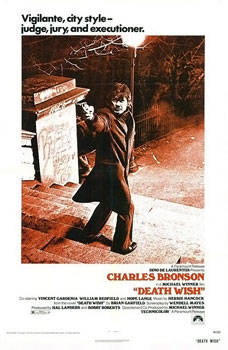
“Don’t ever make a death wish, because a death wish always comes true!” – I’ve always thought this was kind of a corny saying on the original DEATH WISH trailer, but as one of the world’s biggest Charles Bronson fans, I still hold the original DEATH WISH (1974) in extremely high regard. This is the 70’s revenge classic that made Bronson a box office superstar in his home country, while simultaneously influencing the way vengeance was depicted on screen for decades to come. DEATH WISH is one of the most underrated and influential films from a decade that was full of great films.  

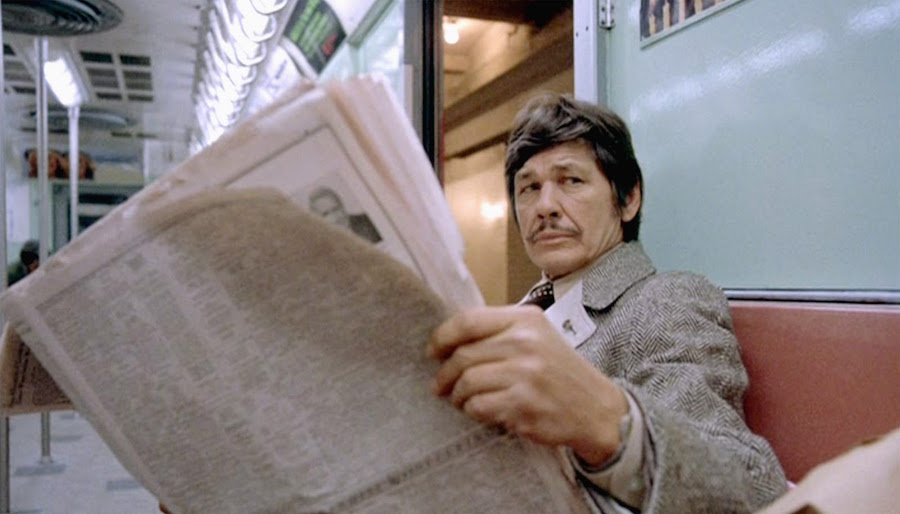
If you’re reading this review, I’d be about 99% positive that you know the basic story of the film. Charles Bronson plays Paul Kersey, a conscientious objector whose wife is killed and whose daughter is raped by a group of criminal thugs in New York City. When the police are incapable of providing justice, Kersey turns into a sidewalk vigilante and stalks the streets and subways of New York, luring thugs to mug him so he can shoot them with his 32-caliber Colt Police Positive pistol. Vincent Gardenia plays detective Frank Ochoa, who’s put in charge of finding the vigilante and putting an end to his one-man mission of justice.  

It’s been 50 years since DEATH WISH was released into theaters and it’s hard to fathom just how controversial the film was in its time, especially since I wasn’t even 1 year old when it was released. The graphic rape scene that kicks off the events of the film, combined with the vigilante subject matter, turned off so many big stars, including Jack Lemmon, Henry Fonda and George C. Scott. This opened up the door for Charles Bronson who didn’t have any such misgivings. They just didn’t understand what a nerve the film would touch with the filmgoing public, who were tired of their cities being overrun by violent criminals. The movie became an audience participation movie unlike any others of the time with cheering in the seats every time Kersey offed another criminal. The controversial film became one of the top box office hits of the year and the biggest of Bronson’s career. 

DEATH WISH was the fourth of six films directed by Michael Winner and starring Charles Bronson. In typical Winner fashion, the film has some strange touches, but the director is extremely effective in building the motivation for vigilante justice that was required for the film to thrive. He handles the action sequences well, and his cast is outstanding. Bronson & Gardenia are perfect in the lead roles, and the lovely Hope Lange has the brief, infamous role as Kersey’s brutalized wife. Stuart Margolin is especially memorable as the Arizona businessman who gives Kersey his gun. There are also a number of actors in small roles who were not well known when the movie was made who would go on to successful film careers. The biggest is Jeff Goldblum who has the most memorable role of the three muggers who attack Kersey’s wife and daughter at the beginning of the film. It’s a brief, but no holds barred performance for sure. Oscar winning actress Olympia Dukakis has a small role as a cop who expresses her frustration about the amount of leg work expected of her by Detective Ochoa. And finally, Christopher Guest has one scene as a young cop who finds the wounded vigilante and recovers his gun.  

On a personal note, this film holds a special place in my heart as the first Charles Bronson film I ever saw. It was probably in 1984 or ‘85, and I stayed up with my dad to watch the late movie on our local TV station. The movie happened to be DEATH WISH. As bad things were happening to Kersey’s family at the beginning of the film, my dad told me not to worry, that “Charles would get them.” That intrigued me and let me know that Bronson had a reputation that preceded him. From that point forward, I wanted to rent a Charles Bronson film every time we went to the video store. And the rest, as they say, is history!

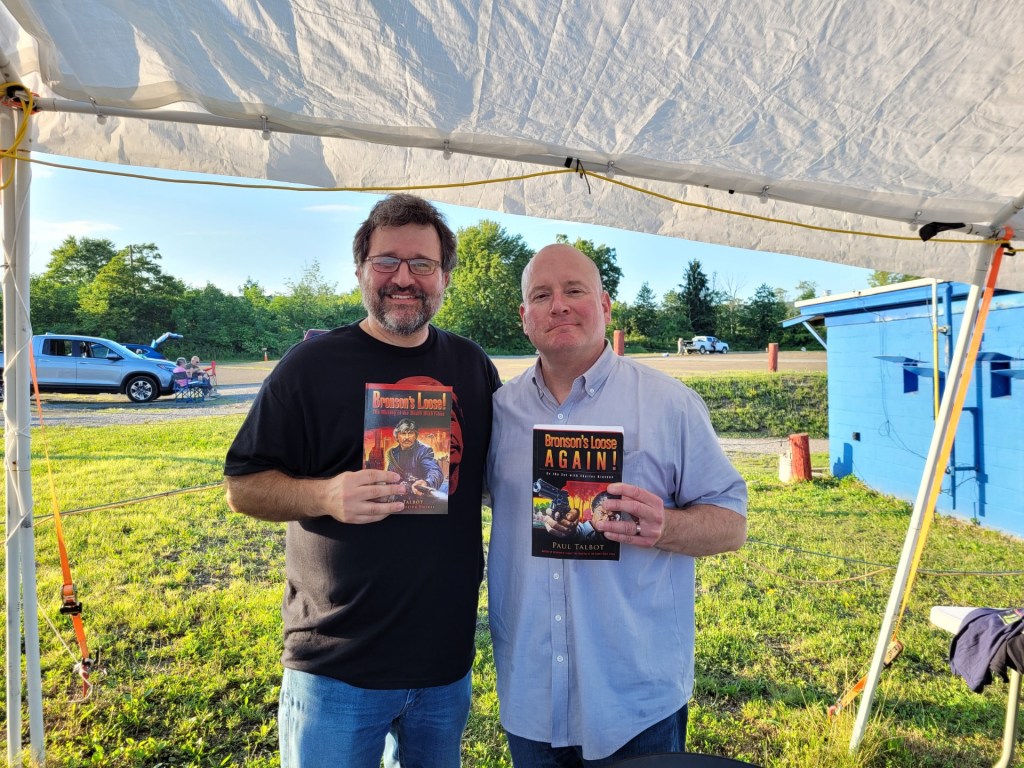
BONUS: The definitive book about the DEATH WISH film series was written by my friend, author and film historian Paul Talbot. The name of the book is BRONSON’S LOOSE: THE MAKING OF THE DEATH WISH FILMS. If you have any interest in Charles Bronson, the DEATH WISH series or Cannon Films, I can’t recommend Paul’s books more highly.

Late Night Retro Television Review: Highway to Heaven 1.24 & 1.25 “Thoroughbreds”


Welcome to Late Night Retro Television Reviews, a feature where we review some of our favorite and least favorite shows of the past!  On Thursdays, I will be reviewing Highway to Heaven, which aired on NBC from 1984 to 1989.  The entire show is currently streaming on Freevee and several other services!

This week, season one concludes with a two-part episode.

Episodes 1.24 and 1.25 “Thoroughbreds”

(Dir by Michael Landon, originally aired on May 1st and 8th, 1985)

For their last assignment of the first season, Jonathan and Mark are sent to work at a stable owned by the wealthy Mr. Armstong (Stephen Elliott).  Lizzy MacGill (a young Helen Hunt) is the daughter of one of Amrstrong’s employees (Noble Willingham) and has practically grown up at the stables.  She loves horses and, as the first episode progresses, she also falls in love with Mr. Armstrong’s spoiled son, Garth (John Hammond).

Garth falls in love with Lizzie as well, learning how to be both a better horseman and just a better man from his interactions with her.  Despite his father’s threat to disown him, Garth breaks off his engagement to Ms. Richy McSnobby Snob (that may not have been her actual name) and he elopes with Lizzie.

Yay!

Except …. Lizzie has cancer and she doesn’t know it!  The test comes back on the exact same day that she runs off with Garth.  Part one ends with two fathers in tears, though each for different reasons.

At the start of Part Two, Jonathan tracks down Lizzie and informs her of her diagnosis.  Without telling Garth what’s going on, she returns home and is informed that 1) she must start chemotherapy immediately and 2) she’s pregnant.  Her doctor (Richard Bull) tells Lizzie that she’ll have to have an abortion if she wants to start treatment.  Lizzie runs from the hospital.

As for Garth, he naturally wants to know what’s going on.  Lizzie lies to him and tells him that she only wanted him for his father’s money and since he’s now cut-off, they might as well just call off the marriage as well.  Heart-broken, Garth decides to marry RIchy McSnobby Snob.

Worst ending ever, right?  Well, don’t worry, it’s not over yet.  Jonathan and Mark crash the wedding (and Jonathan tells a lie to get into the church, which I thought was a no-no for angels) and Jonathan causes A FIRE TO BREAK OUT IN THE CHURCH’S BASEMENT!  Again, this does not seem like good angel behavior.  Anyway, all the smoke gives Garth time to realize that he actually does love Lizzie and, after Mark informs him about why Lizzie actually left him, Garth rushes back to Lizzie and they go to the local Justice of the Peace to get married.  Fortunately, Jonathan is able to convince Mr. Elliott to come to that wedding as well.

The episode ends with a flashforward,  in which we see Lizzie and Garth’s toddler son playing outside while an apparently healthy Lizzie watches.

Yay!

It’s not a bad way to end the first season, though I do think the story could have just as easily been told in one episode as opposed to two.  (The first episode especially feels padded out.)  Helen Hunt and John Hammond made for a perfectly adorable couple and their chemistry ensured that the show’s signature mix of sentimentality and melodrama never felt too cloying.  All in all, this was a good ending to a fairly strong first season.

Next week, season 2 begins!

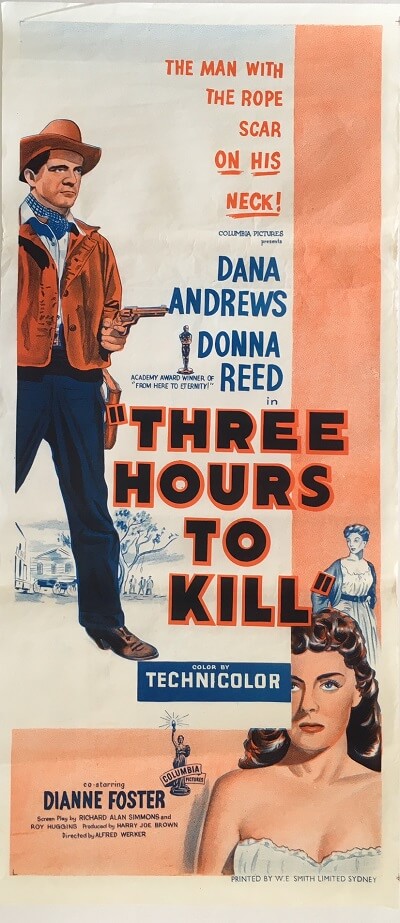
Time Well Spent: THREE HOURS TO KILL (Columbia 1954)


gary loggins's avatarcracked rear viewer

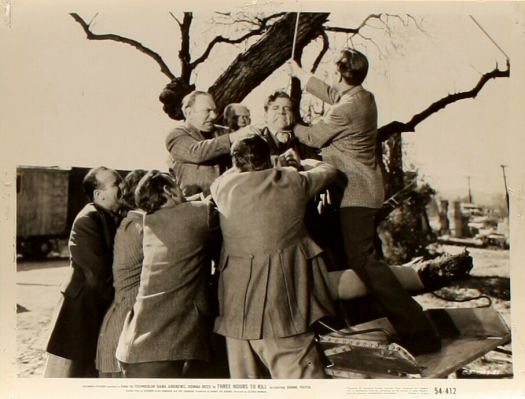
I don’t think you’ll find THREE HOURS TO KILL among anyone’s Top Ten Films list, or Top Ten Westerns, or even Top Ten Dana Andrews Movies. What you will find, if you give this movie a chance, is a solid, adult themed Technicolor Western with just a hint of film noir, made by Hollywood pros in front and behind the cameras. And you can’t ask for much more than that.

Jim Guthrie returns after a three year absence to the town that once tried to hang him. Jim relates the tale via flashback to old friend and current sheriff Ben East: a big night in town had everybody drinking and partying it up. Sexy hotel owner Chris Palmer comes on to Jim, but he only has eyes for pretty Laurie Mastin, bringing out the jealous side of banker Niles Hendricks. Laurie’s brother Carter disapproves of Jim, and a fight…

View original post 672 more words

Bronson’s Revenge: Death Wish (1974, directed by Michael Winner)


To quote “Dirty” Harry Callahan, “I’m all broken up about his rights.”

In 1972, a novel by Brian Garfield was published.  The novel was about a meek New York City accountant named Paul Benjamin.  After Paul’s wife is murdered and his daughter is raped, Paul suffers a nervous breakdown.  A self-described bleeding heart liberal, Paul starts to stalk the streets at night while carrying a gun.  He is hunting muggers.  At first, he just kills the muggers who approach him but soon, he starts to deliberately set traps.  Sinking into insanity, Paul becomes just as dangerous as the men he is hunting.  Garfield later said that the book was inspired by two real-life incidents, one in which his wife’s purse was stolen and another in which his car was vandalized.  Garfield said that his initial response was one of primitive anger.  He wondered what would happen if a man had these rageful thoughts and could not escape them.

The title of that novel was Death Wish.  Though it was never a best seller, it received respectful reviews and Garfield subsequently sold the film rights.  At first, Sidney Lumet was attached to direct and, keeping with Garfield’s portrayal of Paul Benjamin, Jack Lemmon was cast as the unlikely vigilante.

Lumet, ultimately, left the project so that he could concentrate on another film about crime in New York City, Serpico.  When Lumet left, Jack Lemmon also dropped out of the film.  Lumet was replaced by Michael Winner, a director who may not have been as thoughtful as Lumet but who had a solid box office record and a reputation for making tough and gritty action films.

Winner immediately realized that audiences would not be interested in seeing an anti-vigilante film.  Instead of casting an actor with an intellectual image, like Jack Lemmon, Winner instead offered the lead role (now named Paul Kersey and no longer an accountant but an architect) to Charles Bronson.  When Winner told Bronson that the script was about a man who shot muggers, Bronson replied, “I’d like to do that.”

“The script?” Winner asked.

“No, shoot muggers.”

At the time that he was cast, Charles Bronson was 52 years old.  He was the biggest star in the world, except for in America where he was still viewed as being a B-talent at best.  Bronson was known for playing tough, violent men who were not afraid to use violence to accomplish their goals.  (Ironically, in real life, Bronson was as much of an ardent liberal as Paul Kersey was meant to be at the beginning of the movie.)  Among those complaining that Charles Bronson was all wrong for Paul Kersey was Brian Garfield.  However, Bronson accepted the role and the huge box office success of Death Wish finally made him a star in America.

To an extent, Brian Garfield was right.  Charles Bronson was a better actor than he is often given credit for but, in the early scenes of Death Wish, he does seem miscast.  When Paul is first seen frolicking with his wife (Hope Lange) in Hawaii, Bronson seems stiff and awkward.  In New York City, when Paul tells his right-wing colleague (William Redfield) that “my heart does bleed for the less fortunate,” it doesn’t sound natural.  But once Paul finds out that his wife has been murdered and his daughter, Carol (Kathleen Tolan), has been raped, Paul gets mad and Bronson finally seems comfortable in the role.

In both the book and the original screenplay, both the murder and the rape happened off-screen.  Never a subtle director, Winner instead opted to show them in a brutal and ugly scene designed to get the audience as eager to shoot muggers as Bronson was.  Today, the power of the scene is diluted by the presence of Jeff Goldblum, making his screen debut as a very unlikely street thug.  Everyone has to start somewhere and Goldblum got his start kicking Hope Lange while wearing a hat that made him look like he belonged in an Archie comic.

With his wife dead and his daughter traumatized, Paul discovers that no one can help him get justice.  The police have no leads.  His son-in-law (Steven Keats) is a weak and emotional mess.  (As an actor, some of Bronson’s best moments are when Paul makes no effort to hide how much he loathes his son-in-law.)  When a mugger approaches Paul shortly after his wife’s funeral, Paul shocks himself by punching the mugger in the face.

When Paul is sent down to Arizona on business, he meets Ames Jainchill (Stuart Margolin), a land developer who calls New York a “toilet” and who takes Paul to see a wild west show.  Later at a gun club, Paul explains that he was a conscientious objects during the Korean War but he knows how to shoot.  His father was a hunter and Paul grew up around guns.  When Paul returns to New York, Ames gives him a present, a revolver.  Paul is soon using that revolver to bring old west justice to the streets of New York City.

As muggers start to show up dead, the NYPD is outraged that a vigilante is stalking the street.  Detective Frank Ochoa (Vincent Gardenia) is assigned to bring the vigilante in.  But the citizens of New York love the vigilante.  Witnesses refuse to give an accurate description of Paul.  When Paul is wounded, a young patrolman (Christopher Guest, making almost as unlikely a film debut as Jeff Goldblum) conspires to keep Paul’s revolver from being turned over as evidence.

The critics hated Death Wish, with many of them calling it an “immoral” film.  Brian Garfield was so disgusted by how Winner changed his story that he wrote a follow-up novel in which Paul is confronted by an even more dangerous vigilante who claims to have been inspired by him.  Audiences, however, loved it.  Death Wish was one of the top films at the box office and it spawned a whole host of other vigilante films.

Death Wish is a crude movie, without any hint of subtlety and nuance.  It is also brutally effective, as anyone who has ever felt as if they were the victim of a crime can attest.  In a complicated and often unfair world, Kersey’s approach may not be realistic or ideal but it is emotionally cathartic.  Watching Death Wish, it is easy to see why critics hated it and why audiences loved it.

It is also to see why the movie made Bronson a star.  Miscast in the role or not, Bronson exudes a quiet authority and determination that suggests that if anyone could single-handedly clean-up New York City, it’s him.  An underrated actor, Bronson’s best moment comes after he punches his first mugger and he triumphantly reenters his apartment.  After he commits his first killing, Bronson gets another good scene where he is so keyed up that he collapses to the floor and then staggers into the bathroom and throws up.  Garfield may have complained that the Death Wish made his madman into a hero but Bronson’s best moments are the ones the suggest Paul has gone mad.  The real difference between the book and the movie is that the movie portrays madness as a necessary survival skill.

This Friday, a new version of Death Wish will be playing in theaters.  Directed by Eli Roth, this version starts Bruce Willis as Dr. Paul Kersey.  Will the new Death Wish be as effective as the original?  Judging from the trailer, I doubt it.  Bruce Willis or Charles Bronson?  I’ll pick Bronson every time.

Tomorrow, Bronson returns in Death Wish II!

Playing Catch Up: First Daughter, Ice Girls, Raising The Bar, Walk Like A Man


So, this year I am making a sincere effort to review every film that I see.  I know I say that every year but this time, I really mean it.  Unfortunately, over the past two weeks, real life has interfered with my movie reviewing, if not my move watching.

So, in an effort to catch up, here are four quick reviews of some of the movies that I watched over the past two weeks!

  • First Daughter
  • Released: 2004
  • Directed by Forest Whitaker
  • Starring Katie Holmes, Marc Blucas, Amerie, Michael Keaton, Margaret Colin, Lela Rochon

Michael Keaton as the President of the United States!?  Now, that’s a great idea.  Michael Keaton plays President Mackenzie.  First Daughter was made long before Birdman so Michael Keaton doesn’t really have a huge part but, whenever he does appear, he is totally believable as a world leader.  You buy the idea that this guy could win an election and that he’d probably be a good (if not necessarily a great) President.  Someone really needs to make another movie where Michael Keaton plays the President.  Maybe President Birdman.  Just don’t give it to Inarritu to direct because he’ll make it too political…

Anyway, the majority of the film is about Katie Holmes as the President’s daughter, Samantha.  Samantha has been accepted to a college in California.  She’s excited because it means that she’ll finally be able to have a life outside of the White House.  The President is concerned because he loves his daughter and he knows that, if she makes any mistakes in California, his political opponents will try to use her against him.  Samantha goes off to college and tries to have a good (but rather chaste) time.  Making that somewhat difficult is her secret service entourage.  Fortunately, Samantha meets a guy (Marc Blucas) who loves her for who she is and not because her father is the President.

It’s all pretty silly and shallow but I have to admit that I get nostalgic whenever I see this movie.  Much like From Justin To Kelly, it’s definitely a film from a more innocent and less angry time.  To date, it’s also the last film to be directed by actor Forest Whitaker.

  • Ice Girls
  • Released in 2016
  • Directed by Damian Lee
  • Starring Michaela du Toit, Lara Daans, Arcadia Kendal, Sheila McCarthy, Taylor Hunsley, Shane Harte, Elvis Stojko

Struggling financially, Kelly (Lara Daans) is forced to move back to her hometown and move in with her sister (Sheila McCarthy).  Until she got married and gave up that part of her life, Kelly was once an up-and-coming figure skater.  Fortunately, her daughter, Mattie (Michaela du Toit), has inherited her mother’s talent.  However, a serious injury shook Mattie’s confidence.  Now, she says she doesn’t want to skate anymore.  Still, she’s willing to accept a job from Mercury (Elvis Stojko) at the local rink and it’s not too long before, under Mercury’s guidance, Mattie is skating once again.  Mattie also befriends another skater, Heather (Taylor Hunsley).  Heather happens to be the daughter of Rose (Natasha Henstridge), who was once in love with Kelly’s father…

It sounds like the set-up of a melodramatic Lifetime movie but actually, Ice Girls is a sweet-natured film about two ice skaters, one who has a mother who is too protective and the other who has a mother who is too driven.  In the end, both of them end up skating for themselves and not their mothers and that’s a good message for the film’s target audience of young skate fans.  The majority of the cast is made up of actual ice skaters, so the skating footage is pretty impressive.  It’s a predictable movie but I enjoyed it when I watched it on Netflix.

  • Raising the Bar
  • Released in 2016
  • Directed by Clay Glen
  • Starring Kelli Berglund, Lili Karamalikis, Tess Fowler, Emily Morris, Peta Shannon

I also watched this one on Netflix, a day after I watched Ice Girls.  (I was in an Olympics sort of mood, even though neither film took place at the Olympics.)  Raising the Bar feels a lot like Ice Girls, except that the ice skaters were now gymnasts and instead of relocating to Toronto, the family in Raising the Bar relocates all the way to Australia.  Once in Australia, Kelly (Kelly Johnson) finds the courage to re-enter gymnastics and ends up competing against her former teammates.

Kelly Johnson gives a good performance in the lead role.  Though it may be predictable, Raising the Bar is an effective and sweet-natured family film.  Perhaps the most interesting thing about watching the film was that I quickly found myself rooting against the American team.  Australia all the way!

  • Walk Like A Man
  • Released 1987
  • Directed by Melvin Frank
  • Starring Howie Mandel, Amy Steel, Cloris Leachman, Christopher Lloyd, Colleen Camp, Stephen Elliott, George DiCenzo, John McLiam, Earl Boen

Oh, what sweet Hell is this?

Okay, I’m going to try to explain what happens in this movie.  You’re not going to believe me.  You’re going to think that I’m just making all of this up.  But I swear to a God … this is an actual movie.

When he was a baby, Boba Shand (Howie Mandel) got separated from his family.  His mother and his father assumed that he was gone forever but what they didn’t know was that Bobo was found and raised by a pack of wild dogs.  For twenty years, Bobo lives as a dog.  Then he’s discovered by Penny (Amy Steel), an animal researcher who tries to teach Bobo how to be a human.  However, as time passes, Penny comes to realize that maybe she’s making a mistake trying to change Bobo.  Bobo is innocent and child-like and obsessed with chasing fire engines.  When he has too much to drink, he runs around on all fours.  And … PENNY’S IN LOVE WITH HIM!

Seriously, she’s in love with a man who thinks he’s a dog.

However, Bobo stands to inherit a fortune and his evil brother (Christopher Lloyd) is planning on having him committed.  Penny has to prove that Bobo is human enough to manage his own affairs while also respecting his desire to continue living like a dog.

I’m serious.  This is a real movie.

Anyway, making things even worse is the performance as Howie Mandel.  Mandel has always been a rather needy performer and the role of a man who thinks he’s a dog only serves to bring out his worst instincts.  Remember when Ben Stiller played Simple Jack in Tropical Thunder?  Well, Mandel’s performance is kinda like that only worse.  At one point, Bobo walks up to a mannequin in a mall and says, “I have to go pee pee.  Come with me,” and I nearly threw a shoe at the TV.  Oh my God, it was so bad.

The main problem with Walk Like A Man is that it wants to have it both ways.  It wants to be a wild comedy about Howie Mandel chasing fire engines but it also makes us want to tear up when Penny explains why Bobo should be allowed to live as a dog.

All in all, it’s a really bad movie.  And yes, it does actually exist.

A Movie A Day #250: Taking Care of Business (1990, directed by Arthur Hiller)


Jimmy Dworski (Jim Belushi) is a convicted car thief who only has a few days left in his criminal sentence but still decides to break out of prison so he can go see the Cubs play in the World Series.  Spencer Barnes (Charles Grodin) is an uptight ad executive who needs to learn how to relax and have a good time.  When Spencer loses his organizer, Jimmy finds it.  Before you can say “The prince and the pauper,” Jimmy has access to all of Spencer’s money and the mansion that Spencer is supposed to be staying at over the weekend.  While Spencer tries to survive on the streets and track down his organizer, Jimmy is living it up, spending money, impressing a Japanese businessman (Mako), romancing the boss’s daughter, and taking care of business.

Made in the uncertain period between the end of the culture of 80s materialism and the start of the 90s indie boom, Taking Care of Business is a rip-off of Trading Places that came out six years too late to be effective.  Everything that needs to be known about Jimmy and Spencer is apparentl from the minute that Charles Grodin’s and Jim Belushi’s names appear in the credits.  Grodin was usually the best when it came to playing uptight yuppies but he seems bored in Taking Care of Business.  Belushi mugs through his role, overplaying his character’s blue collar roots.  The movie builds up to a huge confrontation between Belushi and Grodin but it never really delivers, instead devolving into a predictable buddy comedy, complete with a trip to Wrigley Field and an elaborate plan to sneak Belushi back into prison before the warden (Hector Elizondo) discovers that he’s been gone for the weekend.  Taking Care of Business has a few laughs but it’s never as good as the BTO song.