Song of the Day: A Return, Indeed…(by Uematsu Nobuo from Lost Odyssey)


b0006633_4cac04a6f289f

One of the best gaming experiences I’ve had in the past ten years was from a title that was the creation of the man (Sakaguchi Hironobu) who made the wildly-popular Japanese role-playing game franchise, Final Fantasy, before he left to start up his own company. This company would be called Mistwalker and they would release two rpgs for the Xbox 360 between 2008 and 2009. The second of these two titles was Lost Odyssey and this was the title of which I spoke of above.

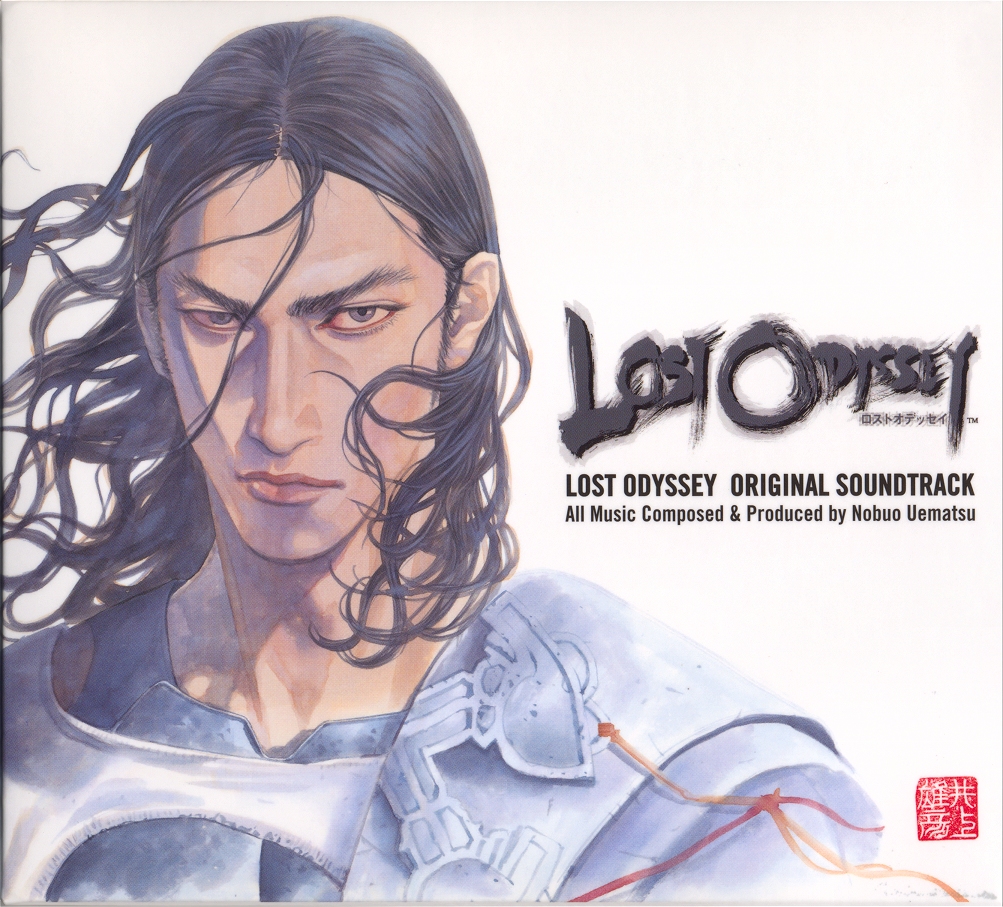
The title was a nice throwback to the classic Final Fantasy titles Sakaguchi was responsible for while dressed up in nextgen visuals. But what made this game so memorable an experience for me wasn’t just the visuals but the great storytelling and music it also had in great abundance. The music itself was the product of one (if not the greatest) of the greatest video game music composer in the industry, Uematsu Nobuo. It’s from Uematsu’s soundtrack for Lost Odyssey that I pick the latest “Song of the Day”.

“A Return, Indeed…” (“Kaette kuru, kitto…” in Japanese) is part of the game’s soundtrack which makes several appearances throughout the game, but it was during the first found dream sequence (the game’s greatest highlight and reason to play it) which really sold the song and the whole soundtrack as whole as being great. This version is the piano solo one which is really the best version which appears in the game. This piano solo version was arranged by Satoshi Henmi from Uematsu’s original composition and it fully convey’s the song’s sorrow melody in the beginning but gradually transitions into a sound full of hope before finally ending in a simple few notes. Those few notes giving a hint that hope is always a possibility but in the end always fleeting.

What better way to inaugurate 33 days of “A Thousand Years of Dreams” than the song which kicks it off in the game.

Song of the Day: When Your Mind’s Made UP (performed by Glen Hansard and Marketa Irglova)


It’s St. Patrick Day!  Now, I can’t speak for everyone but for me, this is the only holiday that matters.  For one thing, it gives me a convenient excuse to show off some of my Irish Folk Dance moves.  For another, it gives me an excuse to say things like, “I’m just a good Irish girl,” in the closest I can come to an Irish accent.  (Admittedly, that’s not very close.  My own accent tends to be kinda twangy and country.) 

Oh!  And there’s another great thing about St. Patrick’s Day.  It gives me an excuse to wear green and I look really good in green.  Today, I’m green from my eyeshadow to my underwear.

Anyway, with all that mind, it was pretty easy to pick today’s song of the day.  One of my favorite films of 2007 was a wonderfully romantic and charmingly low-key Irish film called Once.  The film’s soundtrack, which I’ve been listening to all day today, is one of my all-time favorites. 

One of my favorite songs on that soundtrack — and my pick for song of the day — is When Your Mind’s Made Up, performed by the film’s stars Glen Hansard and Marketa Irglova.  As actors, performers, and as a real-life couple (awwwwwww!)*, Hansard and Irglova have this amazing chemistry and it’s on display in the video posted below.

(By the way, can I be like really, really sappy here without everyone rolling their eyes and getting all “Gaggggggg!” on me?  Sometimes, if I’m feeling really sentimental and silly, I think about how Jeff is like Glen Hansard and I’m like Marketa Irglova.  And then I start singing another song from the movie — the Oscar-winning Falling Slowly.  Or at least I sing a version of it because I have a hard time remembering lyrics.)

Happy St. Patrick’s Day!

——————-

*According to Wikipedia, Hansard and Irglova are apparently no longer a couple. 😦

Song of the Day: Klendathu Drop from Starship Troopers (by Basil Poledouris)


The latest “song of the day” is chosen as I continue working on a particular film review about an alien invasion and war. I’ve chosen a particular favorite piece of film music from 14 years ago to be the latest song of the day.

“Klendathu Drop” is from the film soundtrack for the scifi/war/propaganda film Starship Troopers. This film wasn’t well-received when it first came out and it’s film score by Basil Poleduris was similarly dismissed. In the intervening years since the film’s release more and more people have begun to appreciate both film and soundtrack. Basil Poledouris’ soundtrack for this film has become a fan favorite of not just his soundtrack work, but of just fans of film soundtracks and scores.

Just listening to this particular track is quite invigorating and really does a good job into making one think about doing very heroic things. Poledouris’ really makes great use of both the brass and percussion section of his orchestra. The percussion giving the whole song a militaristic, martial tempo while the brass (once again an inordinate amount of French horns as Poledouris is fond of using) helps give it a swelling, patriotic melody. Halfway through the song we get the addition of strings to signify a calm to the storm that’s about to be unleashed (the song is used in the first planetside landing where the Mobile Infantry get its ass kicked every way til Sunday).

Even if you’re not a fan of the film this song at the very least makes for great listening.

Song of the Day: Lelianna’s Song (by Inon Zur and Aubrey Ashburn)


My latest “Song of the Day” was chosen because this week also saw the release of one of the g ames which shall be ruling my life for the forseeable future: Dragon Age II. The song I chose is from the first game in the series, Dragon Age: Origins, and was sung in the game by one of the characters in the game once a certain relationship  level has been reached between the main character and the bard who sings the song, Leliana.

The soundtrack to this game was composed by Israeli-born composer Inon Zur and his work on the score captures the fantasy-theme of the game. In the soundtrack the song is called “Lelianna’s Song” (a misprint by the soundtrack publisher) but in the game the song is properly titled, “In Uthenera” and is sung by the singer, Aubrey Ashburn. I chose this song because of all the tracks in the soundtrack this is the one that stuck with me the most.

The thing about role-playing game soundtracks, especially those set in a fantasy setting, is that the music goes a long way in creating the world of the game. The game could be great but if the music sucks it ruins much of the game’s enjoyment. Luckily, Inon Zur didn’t fail in his task thus he made Dragon Age: Origins such a joy to play despite its flaws.

“Lelianna’s Song” just sounds so ethereal. I can hear late-medieval and early-Rennaisance bard influences in the music not to mention Irish ballad in how the lyrics were sung. This song I could listen to over and over. Below, right before the lyrics is the video of the scene in the game where Leliana sings the song to the group at rest in their camp.

Lelianna’s Song

Elven:

Hahren na melana sahlin
Emma ir abelas
Souver’inan isala hamin
Vhenan him dor’felas
In Uthenera na revas

Vir sulahn’nehn
Vir dirthera
Vir samahl la numin
Vir lath sa’vunin

Translation:

Elder your time is come
Now I am filled with sorrow
Weary eyes need resting
Heart has become grey and slow
In waking sleep is freedom

We sing, rejoice
We tell the tales
We laugh and cry
We love one more day

Songs of the Day: Anvil of Crom & Riddle of Steel/Riders of Doom (by Basil Poledouris)


For today’s “Song of the Day,” I couldn’t decide between two tracks I had in mind—so I decided to feature them together. This time, it’s not just a “song of the day,” but “songs of the day.” Once you hear what I’ve chosen, you’ll understand why they belong side by side.

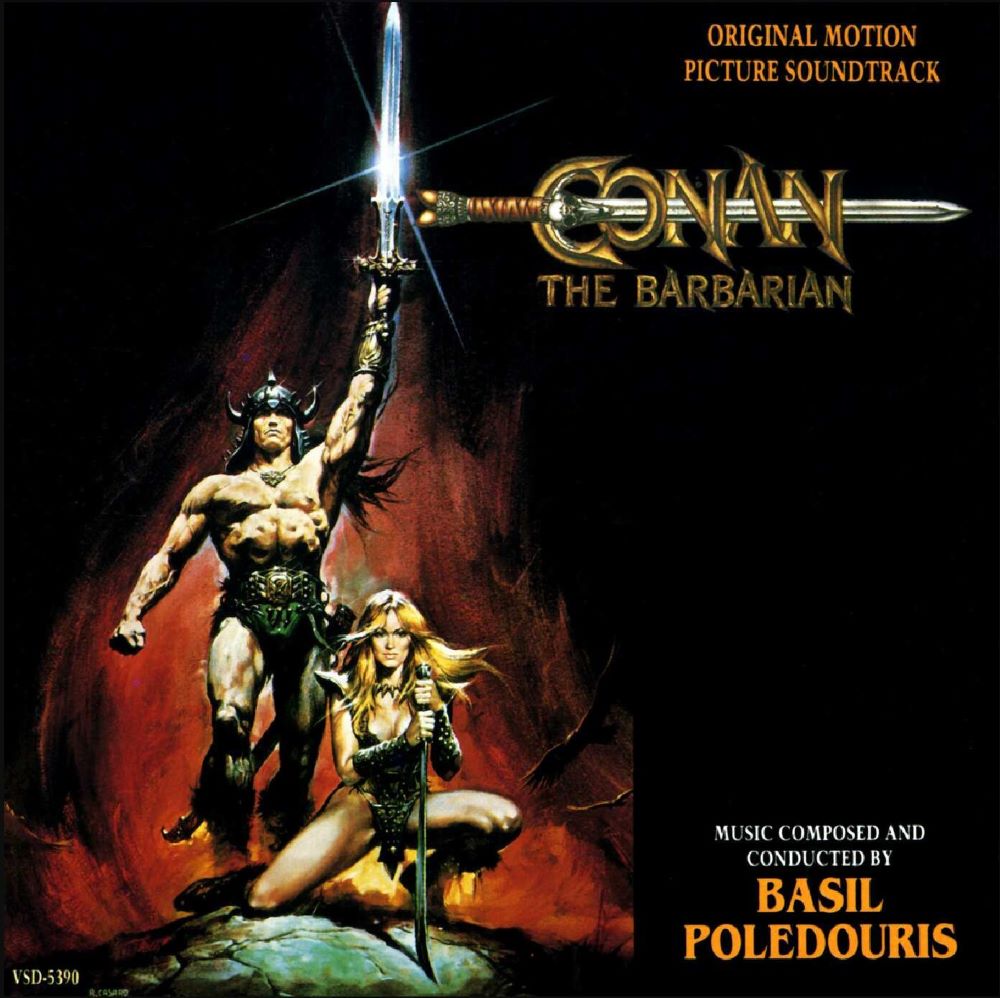
The latest selections come from film score composer Basil Poledouris, taken from what many consider his finest work and one of the greatest film scores ever written for the big screen: Conan the Barbarian (1982). The two tracks—Anvil of Crom and Riddle of Steel/Riders of Doom—especially in the Varese Sarabande release, form the powerful and unforgettable musical introduction to the Hyperborean world Conan inhabits.

Anvil of Crom opens the film with thunderous intensity. Timpani drums drive the rhythm while a massive ensemble of 24 French horns and bold brass deliver an overwhelming sense of might and grandeur. This introduction has become synonymous with Conan the Barbarian, earning fame well beyond the film itself—it’s often reused by other filmmakers in trailers for its commanding energy. Even though the piece runs under three minutes, Poledouris’s composition immediately establishes the epic tone audiences should expect from the journey ahead.

Following it is Riddle of Steel/Riders of Doom, which introduces the musical motifs for Conan and his nemesis, Thulsa Doom. The track begins peacefully, gradually building into Conan’s theme—the “riddle of steel” referenced in the title. This serenity is soon shattered as Riders of Doom emerges, dark and orchestral, marking Thulsa Doom’s presence. The second half bears a clear resemblance to Carl Orff’s Carmina Burana, and while some critics suggest Poledouris leaned too heavily on Orff’s influence, I disagree. He may have drawn inspiration, but his execution stands triumphantly on its own, resulting in one of the most iconic pieces of film music ever composed.

Heard back-to-back, it’s evident why these two tracks must come as a pair. Anvil of Crom and Riddle of Steel/Riders of Doom are inseparable—an epic one-two punch that gives real force to the film’s opening narration by Conan’s chronicler, who speaks of “the days of high adventure.” The music doesn’t just accompany the words—it drives them home with a surge of raw, mythic power that perfectly captures the spirit of ancient legends and the world’s forgotten ages.

A Quickie With Lisa Marie: Buio Omega (performed by Goblin)


One of my favorite movies of all time is Joe D’Amato’s haunting 1979 romance Beyond The Darkness.  Not only is it one of the best Italian films ever (and the best film ever directed by D’Amato) but I think it’s also one of the best films ever made.

One reason the film is so effective is because of its soundtrack, which was composed and performed by  (who else?) Goblin.  The music will be familiar to any Italian horror fan, largely because it was reused by about a thousand other movies that came out in the years after Beyond The Darkness.  (Director Bruno Mattei, in particular, was fond of it.)

Now Playing: The Disco Love Theme From Caligula


When the infamous epic Caligula was first released back in 1979, a disco version of Caligula’s love theme — We Are One — was also released as a promotional gimmick.  If you’ve sat through the behind-the-scenes footage on the Caligula Imperial Edition DVD, this song has probably been forever branded on your brain.

And that’s not necessarily a bad thing.

This song is so over-the-top, so blatantly exploitive, so insidiously catchy, and so totally inappropriate for the film it was written for that it simply cannot be ignored.  To me, this song represents everything that makes the Grindhouse great. 

(As well, I hope whoever was playing bass got paid extra…)

While we’re on the subject, I’m also going to include the opening credits of Caligula because I’ve always liked the use of Profokiev’s Romeo and Juliet.

(I also love the fact that the screenplay is credited as being adapted from a script by Gore Vidal yet no one is given credit for doing the adapting, the editing is credited to “the production,” and director Tinto Brass is credited with “principal photography.”)

Song of the Day: Suteki Da Ne (by Uematsu Nobuo)


maxresdefault

The newest Song of the Day is a favorite piece of video game music of mine.

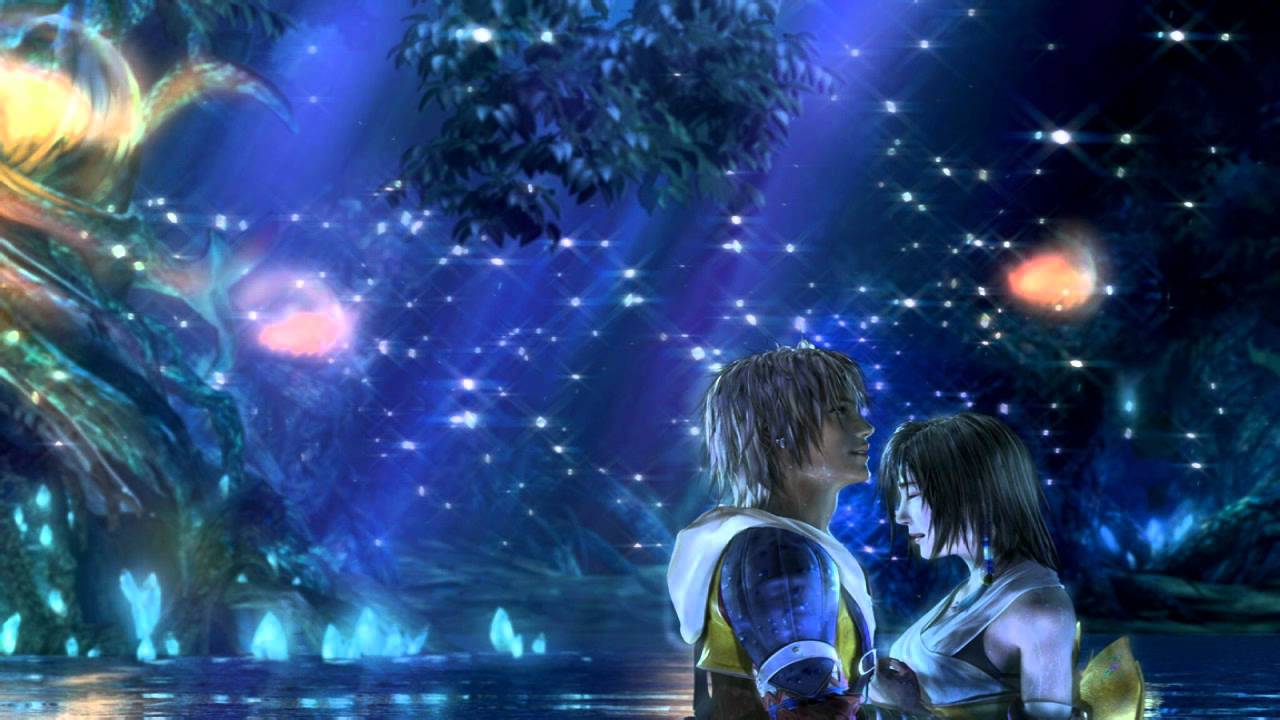
“Suteki Da Ne” is the love theme to Square-Enix’s very popular and long-running rpg series Final Fantasy. The song would mark the point in the game when the lead male and female characters finally realize their love for each other. It’s become a favorite of many game score aficionados and especially those of Japanese game soundtracks. Some consider it one of the best pieces of video game music there is, but that would be going a tad too hyperbolic.

The song is composed by well-renowned game music composer Uematsu Nobuo. He had been instrumental in composing the music for most of the Final Fantasy games until he left Square-Enix in 2004. “Suteki Da Ne” also had other collaborators outside of Uematsu. The lyrics for the song was written by Final Fantasy X scenario writer Nojima Kazushige while the arrangement for the song was done by Hamaguchi Shiro. In the end, most of the credit for the song really belongs to Uematsu-san. He was able to compose a song that worked to not just score a lovely and emotional scene between the two leads in the game but also convey their feelings very clearly through the music.

The lyrics below includes both the original Japanese version as sung by Japanese pop-idol RIKKI and the English translation.

Suteki Da Ne (Isn’t It Wonderful)

Kaze ga yoseta kotoba ni
Oyoida kokoro
Kumo ga hakobu ashita ni
Hazunda koe

(My heart, swimming
In the words the wind has borne
A voice, bouncing
On a tomorrow carried by clouds
)

Tsuki ga yureru kagami ni
Furueta kokoro
Hoshi ga nagare, koboreta
Yawarakai namida

(A heart, trembling
On a mirror where the moon quivers
A star falls, spills
Gentle teardrops)

Suteki da ne
Futari te o tori aruketa nara
Ikitai yo
Kimi no machi, ie, ude no naka

(Isn’t it wonderful
If we could walk, holding hands
I’d want to go
To your town, your house, into your arms
)

Sono mune
Karada azuke
Yoi ni magire
Yume miru

(To your heart
I leave my body
Mixed into the night
I dream)

Kaze wa tomari; kotoba wa
Yasashii maboroshi
Kumo wa yabure; ashita wa
Tooku no koe

(The wind stops; your words
Are a kind illusion
The clouds break apart; tomorrow
Is a distant voice
)

Tsuki ga nijimu kagami o
Nagareta kokoro
Hoshi ga yurete, koboreta
Kakusenai namida

(A heart flowing
In a mirror where the moon has seeped in
A star wavers, spills
Tears you can’t hide)

(kurikaeshi)(repeat)

Sono kao
Sotto furete
Asa ni tokeru
Yume miru

(That face
Touch it, just so
And dream a dream
That melts in the morning)

Review: Conan the Barbarian Soundtrack (composed by Basil Poledouris)


In 1982, maverick director John Milius wrote and directed a sword-and-sorcery epic based on Robert E. Howard’s pulp hero, Conan the Cimmerian. While Milius made several changes to the original character and his adventures to create a more accessible fantasy experience, Conan the Barbarian became a tremendous success and ushered in the Age of Schwarzenegger. With his charismatic leading man and a script filled with action and exotic locales, Milius now needed someone to compose a score worthy of the film’s mythic scale. His ultimate choice—composer Basil Poledouris—proved inspired.

Poledouris took an unconventional approach to scoring Conan the Barbarian. Rather than merely providing musical background to accompany scenes, he treated the score like an opera. Drawing from the influence of Richard Wagner and Carl Orff—particularly Orff’s Carmina Burana, which heavily inspired tracks like “Riddle of Steel/Riders of Doom” and “Battle of the Mounds”—Poledouris crafted a composition that could stand on its own as an operatic masterpiece. His use of leitmotifs to introduce and define characters echoed Wagner’s Ring Cycle. In “Riddle of Steel/Riders of Doom”, the intertwining themes of Conan and his nemesis Thulsa Doom are marked by pounding drums, crashing brass, and triumphant horns—a motif that returns with heightened intensity in “Battle of the Mounds.”

Another brilliant motif appears in the film’s introspective section—a more lyrical, meditative theme where Poledouris trades the martial power of drums and brass for a lighter, more emotional palette. This motif runs through a trio of tracks: “Theology/Civilization”“The Wifeing”, and “The Leaving/The Search.” The first is a playful and airy piece that transitions seamlessly into the intimate and mournful middle section, culminating in a final movement that fuses both moods, reflecting Conan’s inner struggle and resolution in his quest for vengeance.

Other tracks contribute distinct emotional and narrative textures. “Gift of Fury” begins as a slow dirge following the destruction of Conan’s village, then swells to a dramatic crescendo that marks the end of his innocence and his descent into bondage. “The Kitchen/The Orgy” stands out for its complex duality—starting with Doom’s militaristic motif before morphing into a sensuous, decadent, and subtly discordant theme that embodies his contrasting nature: both disciplined and depraved. This piece showcases Poledouris’ deep understanding of the film’s characters and the psychological layers behind their actions.

Poledouris’ final score perfectly complements the film’s imagery and narrative while enhancing its dramatic weight. Even separated from the visuals, the symphonic and choral elements tell the story vividly—listeners can follow the emotional arc using only the liner notes. As a standalone work, it functions like a grand symphony; merged with Milius’ visuals, it achieves something transcendent.

Conan the Barbarian not only launched Arnold Schwarzenegger’s star power but also proved that sword-and-sorcery epics could be cinematic art. Milius’ decision to entrust Poledouris with the score would influence film composers for decades, demonstrating that a film’s music need not be a mere afterthought. To this day, Poledouris’ score remains his magnum opus and a benchmark for fantasy film music. Its influence can be heard as recently as Howard Shore’s The Lord of the Rings trilogy, where Shore applied Poledouris’ Wagnerian leitmotif approach to weave his own operatic storytelling through music. Conan the Barbarian endures as a masterful collaboration between director and composer—a timeless work that will continue resonating long after its creators have passed into legend.

Below are videos of the only live concert conducted by Basil Poledouris of the Conan the Barbarian symphonic score.

Part 1: Anvil of Crom/Riddle of Steel/Riders of Doom

Part 2: Gift of Fury/Atlantean Sword/Love Theme

Part 3: Funeral Pyre/Battle of the Mounds

Part 4: Orphans of Doom/The Awakening

Part 5: Anvil of Crom/Encore