You knew this one was coming, right? Seriously, no tribute to Ennio Morricone is complete without the main theme from The Good, The Bad, and the Ugly.
Morricone’s score is as much of a character in this film as the ones played by Clint Eastwood, Eli Wallach, and Lee Van Cleef. It perfectly sets the moods, telling us that we’re about to see something that is truly epic. The opening notes, which have so often been parodied but which have never lost their power, truly capture the feel of Sergio Leone’s mythical vision of the old west.
Today’s song of the day comes to us from the classic score that Ennio Morricone wrote for Sergio Leone’s The Good, The Bad, and the Ugly! When we started our tribute to Morricone, there was no doubt that we would eventually include at least a few songs from this film’s soundtrack. Today, we share The Ecstasy of Gold, which plays in the background of one of the greatest scenes in the history of cinema. It’s hard to listen to this without thinking about Eli Wallach (as Tuco) joyfully running through that cemetery.
Once Upon A Time In the West (dir. by Sergio Leone)
For the first week of our tribute to Morricone, I kind of shied away from his best-known spaghetti western themes, just because I wanted to highlight some of his other films. I wanted to remind people that Morricone’s genius wasn’t just limited to his work with Sergio Leone or the western genre.
That said, there’s a reason why Morricone’s western themes have become classics and that’s because they’re really, really good. They capture the grandeur of both Leone’s visuals and his themes. For all the credit that rightfully goes to Sergio Leone, Clint Eastwood, Lee Van Cleef, and Charles Bronson, the music of Ennio Morricone is one of the main reasons why we remember films like Once Upon A Time In The West and The Good, The Bad, and the Ugly while forgetting about certain other westerns that were being made in Europe at the same time. In Leone’s films, Morricone’s music is just as much of a character as The Man With No Name.
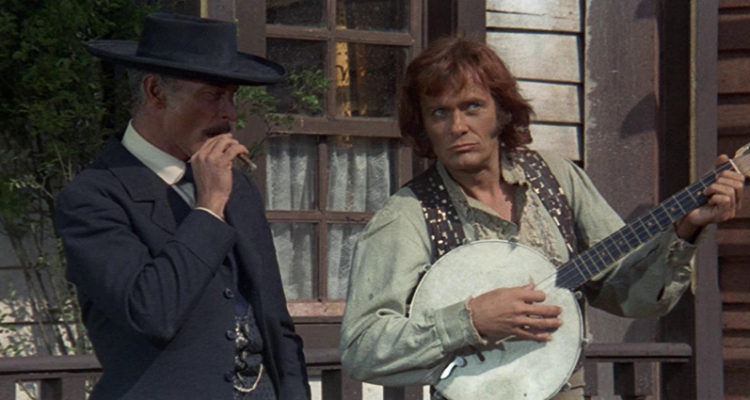
So, any tribute to Morricone has to include the music that he composed for Leone. Therefore, today’s song of the day is a familiar one but a great one. Here is Man With A Harmonica from 1969’s Once Upon A Time In The West:
4 Shots From 4 Films is just what it says it is, 4 shots from 4 of our favorite films. As opposed to the reviews and recaps that we usually post, 4 Shots From 4 Films lets the visuals do the talking!
Today is Clint Eastwood’s 90th birthday!
Though Clint famously had to go to Italy to really get his film career going, he’s gone on to become an icon of American film. While his early films were often criticized as glorifying violence and of being reactionary, his later films have — more often than not — been meditations on aging, moral ambiguity, and what a lifetime of violence does to a person’s soul. Though Eastwood has fallen out-of-favor with a few critics as a result of the speech he gave at the 2012 Republican Convention (Film Twitter, to the shock of no one, had a particularly over-the-top reaction to it as many of them discovered, I guess for the first time, that not every artist is a Leftist), he’s a filmmaker whose legacy will be rediscovered and probably appreciated in the future.
Here are….
4 Shots From 4 Films
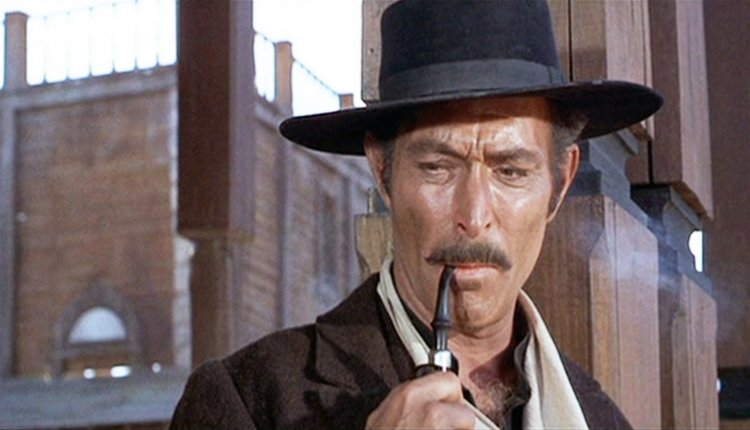
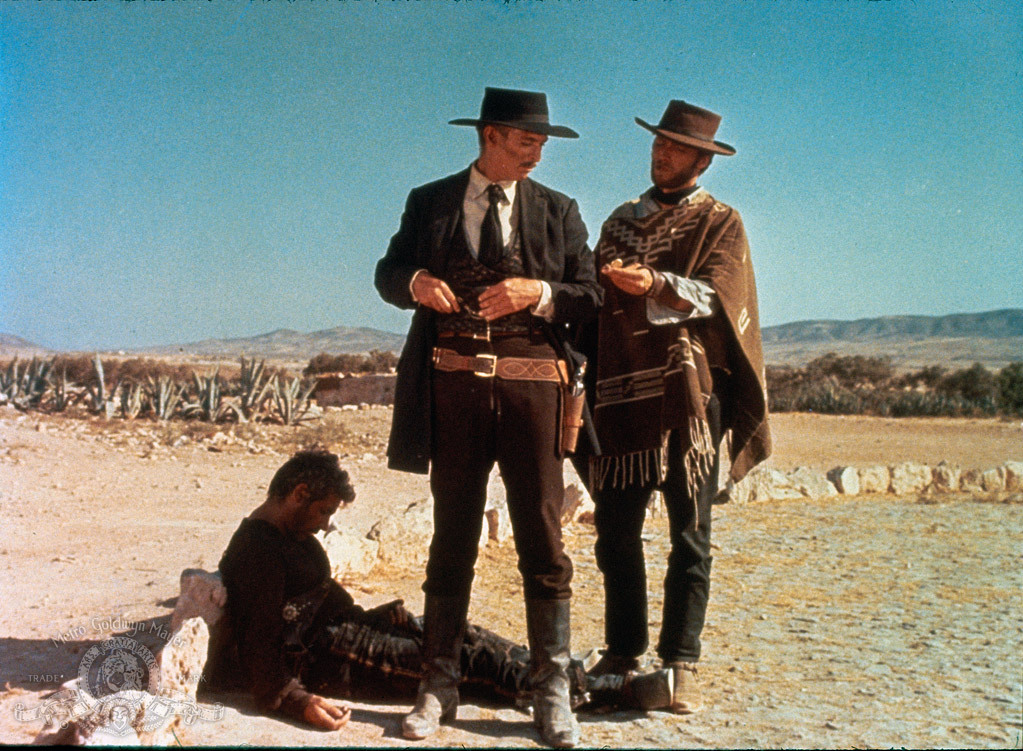
For A Few Dollars More (1965, dir by Sergio Leone)
4 Shots From 4 Films is just what it says it is, 4 shots from 4 of our favorite films. As opposed to the reviews and recaps that we usually post, 4 Shots From 4 Films lets the visuals do the talking!
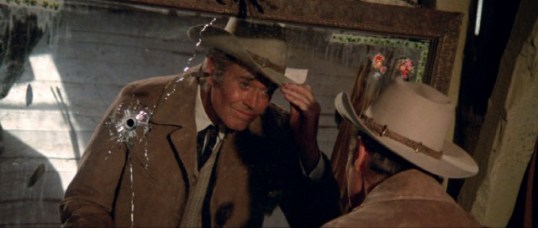
Today, we celebrate the birthday of Henry Fonda! Fonda was born 115 years ago today and, over the course of his long career, he was often cast in role the epitomized everything great about America. It’s rare to find a Henry Fonda film in which he played an out-and-out villain, though he did just that in Sergio Leone’s Once Upon A Time In The West. (Leone, in fact, cast Fonda as the evil Frank because he knew audiences would be shocked to see Fonda coldly gunning down settlers and their families.)
In honor Henry Fonda’s legacy, here are….
4 Shots From 4 Films
My Darling Clementine (1946, dir by John Ford)
Fort Apache (1948, dir by John Ford)
Once Upon A Time In The West (1968, dir by Sergio Leone)
4 Shots From 4 Films is just what it says it is, 4 shots from 4 of our favorite films. As opposed to the reviews and recaps that we usually post, 4 Shots From 4 Films lets the visuals do the talking.
Today is the 95th birthday of the great, late Lee Van Cleef! Van Cleef got his start playing western outlaws in Hollywood westerns like High Noon and The Man Who Shot Liberty Valance. In the 1960s, Van Cleef did what many American actors of the time. He went overseas to find better roles and bigger paychecks. A series of roles in Spaghetti westerns made Van Cleeef one of the biggest stars in Europe and it also made him a timeless film icon.
In honor of the career and legacy of Lee Van Cleef, here are 4 shots from 4 films.
4 Shots From 4 Lee Van Cleef Films
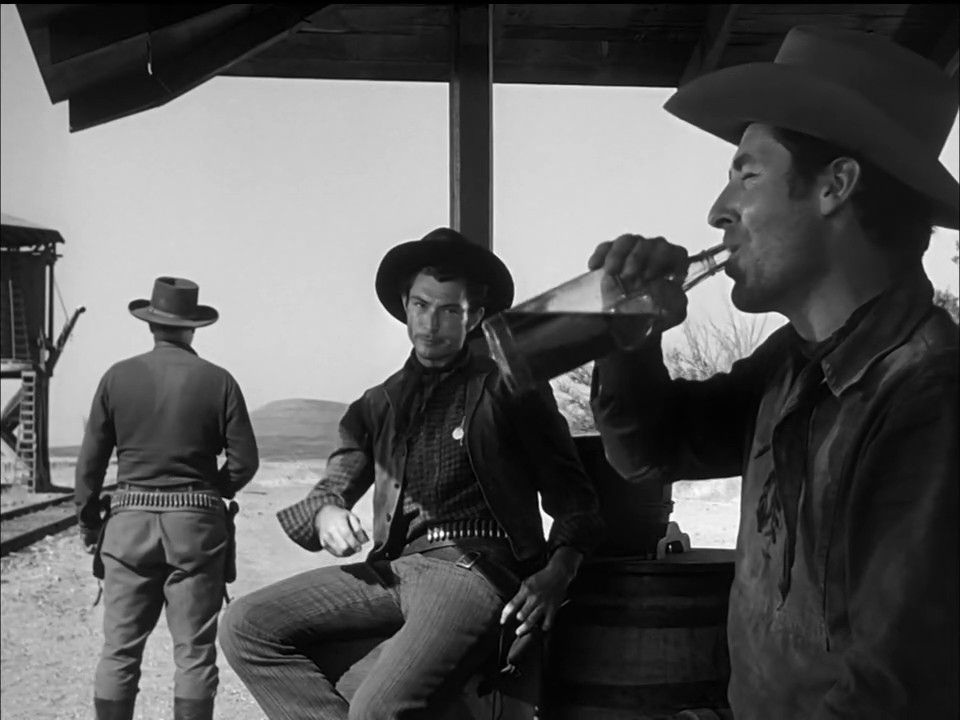
High Noon (1952, directed by Fred Zinnemann)
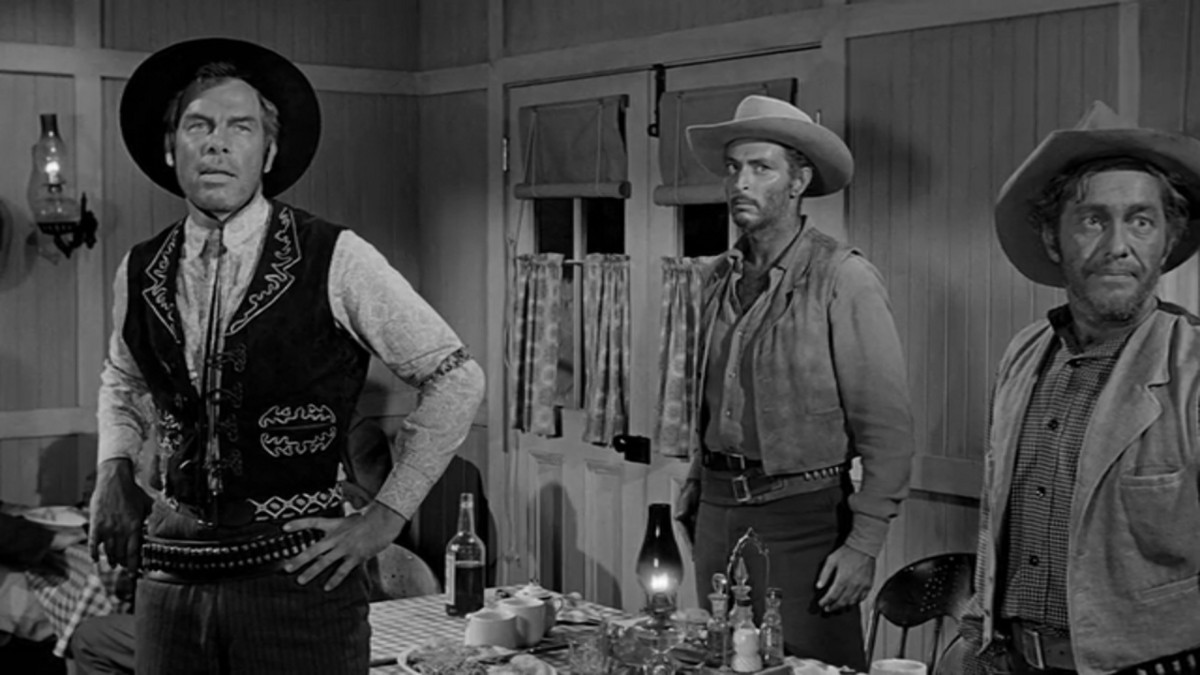
The Man Who Shot Liberty Valance (1962, directed by John Ford)
For A Few Dollars More (1965, directed by Sergio Leone)
Rob Lowe and Snow White perform at the 1989 Oscars
Continuing our look at good films that were not nominated for best picture, here are 6 films from the 1980s.
Out of the Blue (1980, dir by Dennis Hopper)
After spending several years in the cultural wilderness, Dennis Hopper directed his best film, this downbeat study of a young girl, her junkie mother, and her irresponsible father. From the film’s first scene, in which Hopper crashes his truck into a school bus to the film’s explosive ending, Out of the Blue is a fascinating trip into the heart of American darkness. It was definitely too dark for the Academy.
Fast Times At Ridgemont High (1982, dir by Amy Heckerling)
Fast Times would appear to take place in a totally different universe from Out of the Blue. Still, it’s an unexpectedly intelligent look at growing up in the suburbs and it’s influenced practically every high school film that’s come after. Plus, this may be the only movie in which Sean Penn was intentionally funny. Despite good reviews and a cast full of future stars, Fast Times At Ridgemont High received not a single nomination.
Once Upon A Time In America (1984, dir by Sergio Leone)
Sergio Leone’s final film, this epic gangster film might be a look at how America grew and changed over the first half of the 20th Century. It might be a trenchant critique of capitalism. It might be an homage to the classic gangster films of the 30s. Or it might just be a hallucination that Robert De Niro is having while visiting an opium den. That critics are are still debating just watch exactly this film actually means says a lot about the power of Once Upon A Time In America. However, because the film was originally released in a severely edited form, Once Upon A Time In America received not one nomination.
Brazil (1985, dir by Terry Gilliam)
Much like Once Upon A Time In America, Brazil is a brilliant film that was betrayed by the studio that distributed it. Convinced that Terry Gilliam’s satire was too strange for American audiences, Universal Pictures initially released the film in a severely edited version. Fortunately, Gilliam’s version was eventually released but the controversy undoubtedly hurt Brazil when it came time for the members of the Academy to select their nominees for Best Picture.
The Breakfast Club (1985, dir by John Hughes)
Perhaps the Academy understood just how unfair it was that Anthony Michael Hall had to write the essay while everyone else got either a makeover or a new romance. For whatever reason, this classic high school film — perhaps the classic high school film — received not a single nomination.
Blue Velvet (1986, dir by David Lynch)
David Lynch was nominated for Best Director but the film itself proved to be just a bit too controversial for the Academy to give it a Best Picture nomination. David Lynch described this film as being “the Hardy Boys In Hell” and it would have been an uncoventional, though very worthy, nominee for Best Picture.
Sonny and Cher walk down the 1968 Oscars Red Carpet
Continuing our look at good films that were not nominated for best picture, here are 6 films from the 1960s.
Psycho (1960, dir by Alfred Hitchcock)
The director was nominated. Janet Leigh was nominated. Amazingly enough, Anthony Perkins was not nominated for playing the role that would come to define him. And, in the end, the film itself was not nominated for best picture. Perhaps it was too sordid for the Academy. Perhaps they resented no longer feeling safe in the shower. Regardless, Psycho has gone on to influence every horror thriller made since 1960. And let’s not even talk about how much we all cried while watching the finale of Bates Motel.
From Russia With Love (1963, dir by Terence Young)
The first great James Bond film should have also been the first Bond film to be nominated for best picture. Actually, looking over the films that actually were nominated in 1963, From Russia With Love should have been the first Bond film to win best picture.
Blow-Up (1966, dir by Michelangelo Antonioni)
Mimes playing tennis and David Hemmings briefly breaking out of his shell of ennui to investigate a murder that has no solution! How could the Academy resist? Somehow, they did. Michelangelo Antonioni received a nomination but the film was, at the time, considered to be too controversial to nominate.
The Good, The Bad, and the Ugly (1967, dir by Sergio Leone)
Though initial reviews were mixed, Sergio Leone’s Civil War epic has come to be recognized as one of the greatest and most important Westerns of all time. Perhaps it’s understandable that the Academy of 1967 would be skeptical of an Italian western starring Clint Eastwood, Eli Wallach, and Lee Van Cleef. Still, it would have been one of the coolest best picture nominees of all time. (Shockingly, not even Ennio Morricone’s iconic score was nominated.)
Petulia (1968, dir by Richard Lester)
Though Richard Lester will probably always be best known as the man who directed the first two Beatles films, he also directed one of the definitive 60s films, Petulia. Sadly, in a year when many lackluster films were nominated, the challenging and rather melancholy Petulia was not.
Night of the Living Dead (1968, dir by George Romero)
Again, we really can’t be shocked that the Academy held off an recognizing a low-budget, independent film about zombies But come on! A Night of the Living Dead vs. Petulia Oscar race would have bene one for the ages.
I recorded this 1961 Italian film off of TCM on June 14th!
From 280 BC to 226 BC, a 108 feet high statue of the sun-god Helios stood in the Greek city of Rhodes. It was reportedly built to celebrate a major military victory and it overlooked the harbor, serving to both welcome friends and intimidate enemies. No one’s quite sure what it actually looked like but we do know that it was considered, by its contemporaries, to be one of the Seven Wonders of the World. No trip to Greece was complete without a stopover in Rhodes so that the curious could feast their eyes upon the Colossus. Eventually, the statue was destroyed in an earthquake and it was never rebuilt.
The statue serves as the centerpiece for the aptly named 1961 film, The Colossus of Rhodes. The film opens with its dedication and ends with the earthquake that toppled it. (Of course, in the film, the earthquake occurs just a week or two after the dedication.) The film imagines that the Colossus was not just a monument to a God. No, instead, this film suggests that the Colossus was an elaborate torture chamber, one that could pour fire down on anyone trying to sail underneath it. Inside the Colossus is an elaborate labyrinth of dungeons, where anyone who has displeased the king is punished.
And, indeed, quite a few people have displeased the king. King Serse (Roberto Camardiel), it turns out, is a mad tyrant who spends all of his days eating grapes and having people executed in the coliseum. (He’s like Nero but without the artistic temperament.) Not only do the rebels want him dead but so does his evil second-in-command, Thar (Conrado San Martin). With the people angry that they’ve been forced to build a giant statue for no reason other than their king’s vanity, it seems like a perfect time for a revolution!
Caught in the middle of it all is Darios (Rory Calhoun). Darios is from Athens and the only reason he came to Rhodes was to visit his uncle and see the statue. At first, Darios is more interested in trying to get laid than the revolution. When that doesn’t quite work out, Darios tries to leave the island, just to discover that, thanks to the Colossus, escape is impossible. When Darios is accused of being a supporter of the revolution, he has no choice but to take up arms against Serse, which is exactly what Thar wants him to do…
The plot’s is more than a little convoluted and Darios is never the most sympathetic of heroes but The Colossus of Rhodes is still an enjoyable example of the peplum genre. Though the acting is frequently stiff, the film is visually impressive, with both the Colossus and ancient Rhodes brought to wonderfully decadent life. The idea that the Colossus was actually just an elaborate torture chamber is handled well and the frequent battle scenes are well-choreographed. (I was particularly impressed with a scene of Darios fighting off an army while also trying to maintain his balance on the Colossus’s arm.) And, of course, the climatic earthquake is as grandly operatic as you would hope. Say what you will about the Italian film industry, it always delivered what audiences wanted.
That said, the main reason that The Colossus of Rhodes is known today is because it was the Sergio Leone’s first directorial credit. (It was, however, the second film that he actually directed. Though uncredited, he previously replaced Mario Bonnard as the director of 1959’s The Last Days of Pompeii.) While The Colossus of Rhodes was obviously very different from the spaghetti westerns for which Leone is best known, there are some thematic similarities between the film and Leone’s future work:
For instance, much like Clint Eastwood in the Dollars Trilogy, Charles Bronson in Once Upon A Time In The West, and the gangsters in Once Upon A Time In America, Darios starts out as an amoral hero. When Darios does join the revolution, it’s reminiscent of James Coburn aiding Rod Steiger in Duck, You Sucker.
The corrupt and greedy Serse has much in common with the crooked land barons and businessmen who lurked behind-the-scenes in Once Upon A Time In The West.
Even the torture chamber in the Colossus brought to mind the grisly torments that both Clint Eastwood and Eli Wallach had to endure in The Good, The Bad, and The Ugly.
(Unfortunately, unlike other Leone films, Ennio Morricone did not provide the score for The Colossus of Rhodes. Instead, Angelo Francesco Lavagnino provided a rather standard “epic” orchestration.)
The Colossus of Rhodes may not be a great film but, as an early work of a great filmmaker, it’s definitely worth watching.
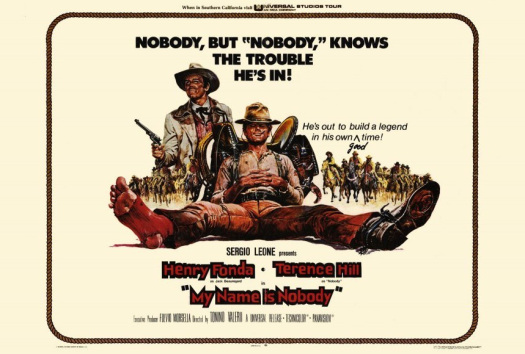
Sergio Leone wasn’t quite done with the Western genre after DUCK, YOU SUCKER. MY NAME IS NOBODY is based on “an idea by Sergio Leone”, and though Leone’s former Assistant Director Tonino Valerii is given full credit, the Maestro reportedly directed a couple of scenes as well as some second-unit action in the film. Whatever the case, the film puts a comic spin on Spaghetti Westerns in general and Leone’s movies in particular, with the comedic talents of star Terence Hill standing in sharp contrast to the old school Hollywood hero Henry Fonda .
Hill was the brightest star on the Italian horizon, having starred in Giuseppe Colizzi’s GOD FORGIVES… I DON’T, ACE HIGH, and BOOT HILL alongside burly Bud Spencer, adding elements of humor as they went along . But with 1970’S THEY CALL ME TRINITY, the duo went full-bore into comedy territory, giving the Spaghetti genre a…







 Through the Shattered Lens