Icarus File No. 18: Brewster McCloud (dir by Robert Altman)


First released in 1970, Brewster McCloud takes place in Houston.

A series of murders have occurred in the city.  The victims have all been older authority figures, like decrepit landlord Abraham Wright (Stacy Keach, under a ton of old age makeup) or demanding society matron Daphne Heap (Margaret Hamilton, who decades earlier had played The Wicked Witch in The Wizard Of Oz).  The victims all appear to have been killed by strangulation and all of them are covered in bird droppings.  Perplexed, the Houston authorities call in Detective Frank Shaft (Michael Murphy) from San Francisco.  Shaft only wears turtlenecks and he has piercing blue eyes.  He looks like the type of guy you would call to solve a mystery like this one.  It’s only later in the film that we discover his blue eyes are due to the contact lenses that he’s wearing.  Frank Shaft is someone who very much understands the importance of appearance.  As one detective puts it, when it comes to Shaft’s reputation, “The Santa Barbara Strangler turned himself in to him.  He must have really trusted him.”

Perhaps the murders are connected to Brewster McCloud (Bud Cort), who lives in a bunker underneath the Astrodome and who seems to be fascinated with birds.  Brewster dreams of being able to fly just like a bird and he’s spent quite some time building himself a set of artificial wings.  A mysterious woman (Sally Kellerman) who wears only a trenchcoat and who has scars on her shoulder blades that would seem to indicate that she once had wings continually visits Brewster and encourages him to pursue his dream.  However, she warns him that he will only be able to fly as long as he remains a virgin.  If he ever has sex, he will crash to the ground.

Brewster thinks that he can handle that.  Then he meets a tour guide named Suzanne Davis (Shelley Duvall, in her film debut) and things start to change….

Brewster McCloud is a curious film.  The story is regularly interrupted by a disheveled lecturer (Rene Auberjonois) who is very much into birds and who, over the course of the film, starts to more and more resemble a bird himself.  The film is full of bird-related puns and there are moments when the characters seem to understand that they’re in a movie.  Frank Shaft dresses like Steve McQueen in Bullitt and his blue contact lenses feel like his attempt to conform to the typical image of a movie hero.  (A lengthy car chase also feels like a parody of Bullitt’s famous chase scene.)  When the old woman played by Margaret Hamilton dies, the camera reveals that she’s wearing ruby slippers and a snippet of Somewhere Over The Rainbow is heard.  As played by Bud Cort, Brewster is the perfect stand-in for the lost youth of middle class America.  He knows that he’s rebelling against something but he doesn’t seem to be quite sure what.  Brewster, like many idealists, is eventually distracted by his own desires and his once earnest plans come cashing down.  Brewster becomes an Icarus figure in perhaps the most literal way possible, even if he doesn’t come anywhere close to reaching the sun.  As with many of Altman’s films, Brewster McCloud is occasionally a bit too esoteric for its own good but it’s always watchable and it always engages with the mind of the viewer.  One gets the feeling that many of the film’s mysteries are not necessarily meant to be solved.  (Altman often said his best films were based on dreams and, as such, used dream logic.)  With its mix of plain-spoken establishmentarians and quirky misfits, Brewster McCloud is not only a classic counterculture film but it’s also a portrait of Texas on the crossroads between the cultures of the past and the future.

Though it baffled critics when it was released, Brewster McCloud has gone on to become a cult film.  It’s a bit of a like-it-or-hate-it type of film.  I like it, even if I find it to be a bit too self-indulgent to truly love.  Quentin Tarantino, for his part, hates it.  Brewster McCloud was released in 1970, the same year as Altman’s Oscar-nominated M*A*S*H.  (Both films have quite a few cast members in common.)  Needless to say, the cheerfully and almost defiantly odd Brewster McCloud was pretty much ignored by the Academy.

Previous Icarus Files:

  1. Cloud Atlas
  2. Maximum Overdrive
  3. Glass
  4. Captive State
  5. Mother!
  6. The Man Who Killed Don Quixote
  7. Last Days
  8. Plan 9 From Outer Space
  9. The Last Movie
  10. 88
  11. The Bonfire of the Vanities
  12. Birdemic
  13. Birdemic 2: The Resurrection 
  14. Last Exit To Brooklyn
  15. Glen or Glenda
  16. The Assassination of Trotsky
  17. Che!

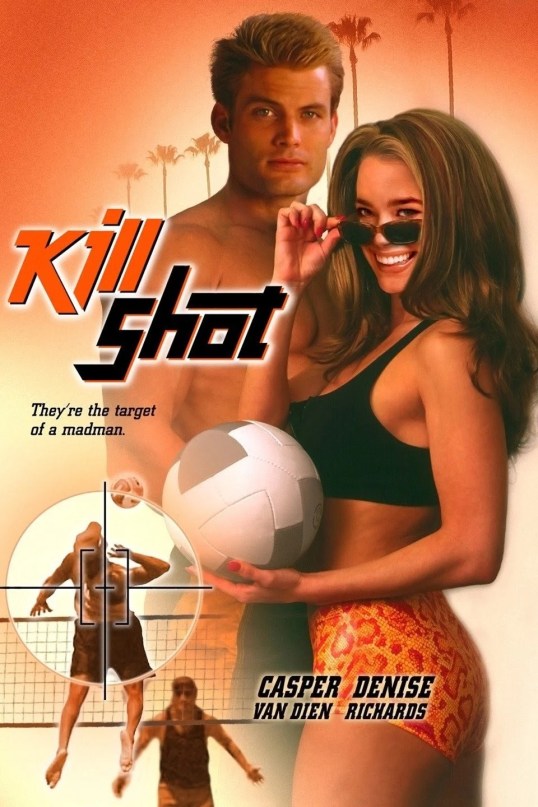
So, I Watched Kill Shot (1995, Dir. by Nelson McCormick)


A group of college students all live in a California apartment complex that’s owned by Jake Mondello (Gianni Russo), who also owns a restaurant and sponsors a beach volleyball team.  From the description that I read of the movie’s plot, I thought there would be a lot more beach volleyball and, from the title, I thought there would be a lot more thrills.  Turns out I was wrong on both counts.

It’s pretty obvious that this was a pilot for a tv show that was inspired by Melrose Place.  A lot of characters are introduced and they’re all shallow but pretty.  Just like with Melrose Place, everyone has a drama and everyone has someone that they like but who they can’t tell about their feelings.  Casper Van Dein is the most recognizable person in the cast.  He plays a rich boy who likes to play volleyball and who falls for a poor girl.  Other characters include Jacqueline Collen as a former volleyball star who is going back to college and who is being stalked by her ex (Jack Scalia), Catherine Lazo as the med student who loses her scholarship, and Ria Pavia as an abrasive science student who falls in love with her new roommate (Mushond Lee), even though he’s gay.  Ernie Reyes, Jr. plays Koji, who is a computer nerd who says stuff like, “I just got a new CD-rom game.”  He’s so good with computers that the police turn to him to help track phone calls and match finger prints.  Denise Richards appears for two seconds and smiles at Casper.  Gianni Russo is the worst actor in the movie but everyone loves Jake because Russo also wrote the script.

This was largely plotless and pointless.  Casper was nice to look at but I didn’t care about any of the characters.  There is a big beach volleyball game at the end but it only lasts for a few minutes and it was impossible to tell who was winning.  One important character is taken out by a kill shot but no one notices.  Watching the movie made me hate both the beach and volleyball.


Retro Television Review: Dr. Paradise 1.1 “The Pilot”


Welcome to Retro Television Reviews, a feature where we review some of our favorite and least favorite shows of the past!  On Thursdays, I will be reviewing Dr. Paradise, which aired on CBS in 1988.  The entire show is currently streaming on YouTube!

This week, Frank Langella sets himself up as the ruler of a tropical island!

Episode 1.1 “The Pilot”

(Dir by Peter Baldwin, originally aired on July 12th, 1988)

Who is Dr. Paradise?

Why, he’s Frank Langella!

Langella plays Dr. Paradise, a haughty and sarcastic man who owns a health clinic that is located on a small tropical island.  Dr. Paradise also owns the local casino so visitors at the island will often lose all of their money at night and then come to the clinic during the day.  As this episode is only 22 minutes long and there’s a whole host of other characters to introduce, we don’t learn as much about Dr. Paradise as we might want to.  We know that he’s rich.  We know that doors magically swoosh open whenever he approaches.  During the opening credits, we watch the staff throw darts at his portrait, just for Dr. Paradise to reveal that he always has an extra portrait with him.  He’s arrogant and egocentric and I get the feeling that we’re supposed to dislike his lavish lifestyle but he’s Frank Langella so it feels churlish to take away his joy.

As for the rest of the staff at the hospital …. well, none of them are as interesting as Dr. Paradise and I found myself resenting them for that fact.

Dr. Noah Fredericks (Xander  Berkeley) is the psychiatrist who is clearly meant to be a stoner, even if the show couldn’t actually come right out and say it.  But with his deadpan way of speaking and his red eyes, there’s not much doubt that Dr. Fredericks was high for the entire episode.  I don’t blame him.

Dr. Philip Moore (Hiram Kasten) is desperately looking for someone to play golf with him.

Dr. Amy Hunter (Sally Kellerman) is the ethical doctor who disagrees with Dr. Paradise’s methods but who seems to secretly kind of like him as well.

Dr. Casey Hunter (Tommy Hinkley) is Amy’s whiney son who appears to have a gambling problem.  At one point, it is mentioned that he dropped out of a top medical school so that he could become a chiropractor.  As someone who has recently had to deal with neck and back pain, I support his choice.

Hilary (Beverly Brown) is a native of the island and works as the office manager.  She has no personality beyond saying, “Dr. Paradise” in an exaggerated island accent.

The pilot centers around the character of Newton Hobbs (played by future Congressional candidate Barry Gordon), a wealthy but neurotic man who spends a lot of money at Dr. Paradise’s casino.  Newton comes to the clinic for his weekly session with Dr. Fredericks but, when Dr. Paradise insults him, Newton snaps and draws a gun.  He holds everyone hostage for a few minutes, until another patient has a heart attack from the stress.  Dr. Paradise saves the man from dying, establishing that he’s a jerk who is good at his job.  As for Newton …. NOTHING HAPPENS TO HIM!  It turns out that it was all apart of his therapy plan with Dr. Fredericks and the gun was not even loaded.

Hey, that’s all good and well.  WHAT IF THE MAN WHO HAD A HEART ATTACK DIED, YOU IDIOTS!?

Meanwhile, Casey’s parrot talks to a cat while Casey’s at the office.  That should have been cute but …. eh.

Only one episode of Dr. Paradise aired.  This pilot did not become a series and it’s easy to see why.  For all the talent — Sally Kellerman, Barry Gordon, Xander Berkeley, the great Frank Langella — the dialogue isn’t funny and the situations aren’t that interesting.  It’s a shame because Frank Langella’s performance indicates that he could have been an enjoyably over-the-top sitcom actor.  But even the best actors need a decent script.


Late Night Retro Television Reviews: Gun 1.4 “All The President’s Women”


Welcome to Late Night Retro Television Reviews, a feature where we review some of our favorite and least favorite shows of the past!  On Tuesdays, I will be reviewing Gun, an anthology series that ran on ABC for six week in 1997.  The entire show is currently streaming on Tubi!

This week, Robert Altman!  This will be good …. right?

Episode 1.4 “All The President’s Women”

(Dir by Robert Altman, originally aired on May 10th, 1997)

When it comes to the fourth episode of Gun, I have to admit that my expectation were high because this episode was the only one in the series to be directed by Gun’s producer, Robert Altman.  The story, about the womanizing president of a golf club, sound like it would be right up Altman’s alley and allow him to engage in the social satire for which he was best-known.

Unfortunately, the episode itself just isn’t that good.  In fact, it’s the worst episode of Gun that I’ve seen so far.  Watching the show, it’s easy to see that Altman directed it.  There’s several very Altman-like moments.  The show’s plot and its characters all tend to mirror Altman’s trademark obsessions.  That said, for all of Altman’s strengths as a filmmaker and a satirist, he was also a bit self-indulgent and this episode is basically 50 minutes of Altman patting himself on the back and bragging about how clever he is.

The film takes place at a golf club in Texas.  After the club’s president is bitten by a rattlesnake and then accidentally shoots himself in the foot while trying to kill the snake, Bill Johnson (Randy Quaid) is elected as his replacement.  Bill is friendly but shallow, a businessman who is all about prestige and showing off his wealth.  While his wife (Daryl Hannah) spends her time researching real-life presidents, Bill is having an affair with the former’s president’s widow (Jennifer Tilly) while also flirting with his new secretary (Dina Spybey).  Meanwhile, another former lover (Sean Young) is now his attorney while Sally Kellerman plays Jennifer Tilly’s mother and continually warns Bill to stay away from her daughter.

Bill is shocked to discover that someone is sending packages to the women in his life.  Jennifer Tilly receives the gun that was used to shoot the rattlesnake.  Darryl Hannah receives the magazine.  Sean Young receives the bullets.  If you can’t already guess that this is going to end up with Bill in his underwear on the 18th hole, being menaced by a woman carrying a gun, I don’t know what to tell you.

This episode just falls flat and it’s largely the fault of the cast.  Randy Quaid, at the very least, has a Texas accent but he’s not a convincing lothario.  The women all butcher their accents, with the majority of them sounding more like they’re from Georgia than Texas.  Most the cast goes overboard with their quirkiness while Altman directs in a meandering fashion that robs the episode of whatever satirical impact that it might have had.  It’s just a boring episode, regardless on the nails-on-a-chalkboard accents and all the overacting.  Watching this episode, I was reminded of why I usually can’t stand anthology shows.  They just seem to bring out the worst in everyone.

Next week, Kirsten Dunst guest stars.  Did Gun bring out the worst in her?  We’ll find out!

Lisa Reviews A Palme d’Or Winner: M*A*S*H (dir by Robert Altman)


With the Cannes Film Festival underway, I have been watching some of the past winners of the prestigious Palme d’Or.  On Thursday night, Jeff and I watched the winner of the 1970 winner of the Grand Prix (as the Palme was known at the time), Robert Altman’s M*A*S*H.

There are, of course, three versions of M*A*S*H.  All three of them deal with the same basic story of Dr. Hawkeye Pierce and his attempts to maintain his sanity while serving as a combat surgeon at the 4077th Mobile Army Surgical Hospital during the Korean war.  All three of them mix comedy with the tragedy of war.  However, each one of them takes their own unique approach to the material.

The one that everyone immediately thinks of is the old television series, which ran for 11 seasons and which can be found on Hulu and on several of the retro stations.  The television series starred Alan Alda as Hawkeye.  I’ve watched a handful of episodes and, while the episodes that I’ve seen were undeniably well-acted and well-written and they all had their heart in the right place, the show’s deification of Hawkeye can get to be a bit much.  Not only is Hawkeye the best surgeon at the 4077th, he’s apparently the best surgeon in all of Korea.  In fact, he may be the best surgeon on the entire planet.  Not a single thing happens in the camp unless Hawkeye is somehow involved.  When a nurse is killed by a landmine in one episode, the focus is not on the other nurses but instead on how Hawkeye feels about it.  When bombs are falling too close to the camp, the focus is again only on Hawkeye and how much he hates the war.  If you didn’t already know that he hated the war, Hawkeye will let you know.  Wish Hawkeye a good morning and he’ll yell at you about how many people are going to be wounder by the end of the day.  Even when one agrees with Hawkeye, the character’s self-righteousness can be a bit much.

Less well-known is the first version of M*A*S*H, a short and episodic novel that was published in 1968.  The novel was written by Dr. Richard Hornberger, who actually had served in Korea at a M*A*S*H unit and who reportedly based Hawkeye on himself.  The book is a rather breezy affair.  Reading it, one can definitely tell that it was inspired by someone telling Hornberger, “Your stories about Korea are so funny and interesting, you should write them down!”  The book avoids politics, reserving most of its ire for military red tape.  Hornberger was a Republican who so disliked Alan Alda’s interpretation of Hawkeye that, when he wrote a sequel to M*A*S*H, he included a scene in which Hawkeye talked about how much he enjoyed beating up hippies.

And then there’s the version that came in between the book and the television series, the 1970 film from Robert Altman.  The film retains the book’s episodic structure while also throwing in the anti-war politics that would define the television series.  (Though the film was set in the 50s, Altman purposefully made no attempt to be historically accurate because he wanted it to be clear that this film was more about Vietnam than Korea.)  From its opening, the film announces its outlook, with shots of helicopters carrying severely wounded (possibly dead) soldiers to the camp while a song called Suicide is Painless plays on the soundtrack.  The song was written by director Robert Altman’s fourteen year-old son, Mike.  Reportedly, it took Mike five minutes to come up with the lyrics.  When the instrumental version of the song was later used as the theme song for the television series, Mike Altman made over a million dollars in royalties.

The film opens with Hawkeye Pierce (Donald Sutherland) and Duke Forrest (Tom Skerritt) arriving at the 4077th MASH in a stolen jeep and it ends with them getting sent home in the same jeep.  Though Duke is set up to be a major character, he soon takes a backseat to another surgeon, the unfortunately nicknamed Trapper John (Elliott Gould).  Much as with the television series, the movie centers around Hawkeye and Trapper John’s antics.  When they’re not in the operating room, they’re drinking, carousing, and playing pranks that are far more mean-spirited than anything the television versions of the characters would have ever done.  (Indeed, the book and movie versions of Hawkeye probably would have hated Alan Alda’s Hawkeye.)  Unlike the television version of Hawkeye, the film’s Hawkeye is not the best surgeon in Korea.  In fact, he’s not even the best surgeon at the 4077th.  (That honor goes to Trapper.)  Instead, he’s just one of many doctors on staff.  They’re rotated in and then, at the end of their tour, they’re rotated out.  Hawkeye loses as many patients as he saves.  The film’s doctors are not miracle workers, nor are they crusaders.  Instead, they are overworked, neurotic, often exhausted, and frequently bored whenever there aren’t any wounded to deal with.  The film emphasizes that the doctors are as professional inside the Operating Room as they’re rambunctious outside of it.  Unlike the television series, Hawkeye doesn’t joke while working.  He’s usually too busy trying to stop his patients from bleeding to death to tell jokes or to complain about the war that brought them to the OR.

Indeed, the film version of M*A*S*H communicates its anti-war message not through indignant speeches but instead through bloody imagery.  The operating room scenes don’t shy away from showing the ugliness of war and they are occasionally so visceral that they almost seem to shame the audience for have laughed just a few minutes earlier.  One of the film’s more famous (and controversial) sequences features Hawkeye driving Frank Burns (Robert Duvall) to insanity by crudely taunting him about his affair with head nurse Margaret Houlihan (Sally Kellerman).  Burns attacks Hawkeye, a response that actually seems rather justified even if it is played for laughs.  A scene of Burns being driven out of the camp in straitjacket is followed by a close-up of a geyser of blood erupting from a wounded soldier’s throat.  It’s a jarring transition but one that makes a stronger anti-war statement than any self-righteous monologue would have.  While Hawkeye and Trapper are taunting Burns and Margaret, soldiers are still being sent off to die.

The humor in M*A*S*H is often brutally misogynistic.  Margaret is described as being “a damn good nurse” but is continually humiliated because she believes in maintaining military discipline.  One can disagree with her emphasis on following all of the proper regulations while also realizing the Hawkeye and Trapper’s treatment of her is unreasonably cruel.  The scene where Trapper and Hawkeye expose her while she’s taking a shower is especially difficult to watch and there’s no way to justify their actions.  It’s frat boy humor, the type of stuff that you would expect from a bunch of former college football players, which is what we’re told Hawkeye and Trapper are.  (That, of course, is another huge difference between the film and television versions of the characters.)  That said, it’s debatable whether or not were supposed to find either Hawkeye or Trapper to be heroic or even likable.  As a director, Robert Altman shied away from making films with unambiguous heroes or villains.  Just as Margaret could be a “damn good nurse” and a “regular army clown” at the same time, Hawkeye can be both a dedicated doctor and a bit of a jerk.

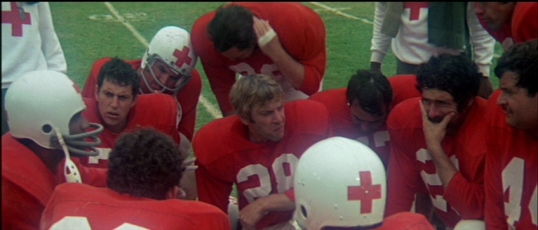
After 90 minutes of bloody operating room scenes and Trapper and Hawkeye making crude jokes, M*A*S*H suddenly becomes a sports film as the the 4077th plays a football game against their rivals, the 325th Evac Hospital.  The change of tone can be a bit jarring but it’s perhaps the most important sequence in the film.  For a few hours, the doctors bring “the American way of life” to Korea and the end result is a game that’s played for money and which is only won through cheating and deception.  (Future blaxploitation star Fred Williamson made his film debut as the ringer who the 4077th recruits for the game.)  For all of the broad comedy of the game, it’s followed by a shot of the doctors playing poker while a dead soldier is transported out of the camp, wrapped in a white sheet.  Football may provided a distraction.  The money may have provided an incentive.  But the war continued and people still died.

Much of M*A*S*H‘s humor has aged terribly but the performances still hold up and the anti-war message is potent today.  Though Sutherland and Gould are undeniably the stars of the film, M*A*S*H is a true ensemble film, full of the overlapping dialogue and the small character performances that Robert Altman’s films were known for.  One reason why the film works is because it is an immersive experience, the viewer truly does feel as if they’ve been dropped in the middle of an operating field hospital.  Though Hawkeye and Trapper may be at the center of the action, every character, from the camp’s colonel to the lowliest private, seems to have their own story playing out.  This a film where paying attention to the little things happening in the background is often more rewarding than paying attention to the main action.  I particularly liked the performances of David Arkin as the obsequies Staff Sergeant Vollmer and Bud Cort as Pvt. Warren Boone.  Boone, especially, seems to have an interesting story going on in the background.  The viewer just has to keep an eye out for him.  Also be sure to keep an eye out for Rene Auberjonois, who reportedly improvised one of the film’s best-known lines when, after Margaret demands to know how Hawkeye reached a position of authority in the army medical corps, he deadpanned, “He was drafted.”

One of the first major studio films to be openly critical of the military and the war in Vietnam, M*A*S*H won the Palme d’Or, defeating films like Investigation of a Citizen Above Suspicion and The Strawberry Statement.  Unlike many Palme winners, it was also a box office success in the United States.  Though controversial, it received an Oscar nomination for Best Picture.  However, unlike the Cannes jury, the Academy decided to honor a different film about war, Patton.

Film Review: Lost Horizon (dir by Charles Jarrott)


“Friends forever.  It’s a nice idea.”

With those words, the late Casey Kasem closed out the infamous “Rockumentary” episode of Saved By The Bell.  In this episode, Zack Morris fell asleep in his garage while waiting for his high school friends to arrive for band rehearsal.  While he was asleep, he dreamt about becoming a superstar as the result of Zack Attack’s hit song, Friends Forever.  Later, of course, Zack was led astray by a publicist who tried to sell him as being a “male Madonna.”  Zack didn’t care about the fame.  He was more concerned that the music and the lights at his concert were so excessive that the audience couldn’t even hear his lyrics.  Because, seriously, when you’re coming up with banger lyrics like “We’ll be friends forever/yes we will,” you want to make sure that they can clearly be heard.

It’s easy to make fun of the band and the show but that doesn’t make Casey Kasem’s words any less true.  Friends forever.  It is a nice idea.  It’s also a totally unrealistic and implausible idea.  People grow apart.  People develop new interests.  People move to different towns.  Sometimes, people just decided that they need to take a little break from the same old thing.  Instead of demanding that people remain friends forever, it would perhaps be more realistic to encourage people to enjoy and treasure the time that they have in the present.  But, to be honest, entertainment is not about that type of reality.  No one wants to hear, “Be friends until you get bored.”  Instead, they want to hear “Friends forever!”  It’s a simple idea and the simple ideas are the ones that usually bring us the most comfort.

Take the idea behind Shangri-La, for instance.  Shangri-La was a utopia that was hidden away in the Himalayas.  It was a place where there was no war, no greed, and everyone was in nearly perfect health.  It was a place where it was common for people to live to be well over a hundred years old.  It’s a place where people literally can be friends forever.  And while the place does have one very big drawback — i.e., once you decide to stay there, you can’t return to the outside world for even so much as a brief visit — it’s still easy to see why this idealized existence would appeal to many people.

The lamasery of Shangri-La was first introduced in a 1933 novel called Lost Horizon.  Written by James Hilton, Lost Horizon told the story of a group of westerners who, fleeing from a political uprising in India, find themselves in Shangri-La.  That the novel’s portrayal of a peaceful utopia hidden away from the “modern world” proved to be popular should not come as a surprise.  In 1933, the world was still recovering from the Great War.  Much of Europe was still in ruins, both economically and physically.  The combination of the First World War and the Spanish Flu pandemic had shaken everyone’s faith in the future.  Even as a group of idealistic activists, industrialists, and politicians tried to make war illegal, Mussolini seized power in Italy.  Spain was on the verge of civil war.  In Germany, a fanatical anti-Semite named Adolf Hitler had managed to move from being a fringe politician to being named chancellor.  The U.S. was suffering from the Great Depression.  Even the UK was so mired in political turmoil that it was no longer a reliable bulwark against chaos.  To the readers who were having to deal with all of that on a daily basis, the idea of Shangri-La was an inviting one.

(One of those readers was Franklin D. Roosevelt, who named his presidential retreat Shangri-La.  Years later, Dwight Eisenhower would rename Shangri-La after his son and it’s remained Camp David ever since.)

Not surprisingly, the book’s success led to it being adapted for the movies.  Frank Capra took the first crack at it, release his film version in 1937.  At the time, Capra’s adaptation was the most expensive film to have ever come out of Hollywood.  (It cost $1.6 million dollars!)  It also underperformed at the box office, nearly bankrupting Colombia Pictures.  Even though the film itself was nominated for Best Picture of the year, it still took five years for the film to earn back its cost.  Because Colombia edited the film to shorten its lengthy running time, Capra sued the studio and the end result was that everyone involved lost a good deal of money.  Considering all of the bad luck that befell the first production, one might wonder why Hollywood would even risk making a second version of the film.  And indeed, it would be several decades before any major studio attempted to bring Hilton’s novel back to the screen, despite the fact that the idea behind Shangri-La was probably looking more attractive with each crisis-filled day.

Ross Hunter

In 1973, producer Ross Hunter was sleeping on a mountain of cash.  Well, perhaps he wasn’t but a look at some of the films that he had produced would definitely suggest that he could have if he had so chosen.  Hunter started his career producing melodramas that starred Rock Hudson and were often directed by Douglas Sirk.  He was the type of producer who understood that importance of glitz and glamour, especially with the film industry facing a new competitor named television.  In the 60s, he made films that were totally out-of-touch with the turmoil of the decade but which still appealed to middle-aged viewers who wanted an escape from the hippies and the assassins.  In 1970, he scored his biggest hit of all time when he produced Airport.  As dull as that film seems to us today, it was the biggest hit of 1970 and it also gave birth to the disaster genre.  (It was also the only Ross Hunter production to be nominated for Best Picture.)

It was after the success of Airport that Ross Hunter decided to produce a remake of Lost Horizon.  Following the approach that he used in Airport he gathered an all-star cast.  In fact, George Kennedy appeared in both Airport and Lost Horizon!  Joining Kennedy were Oscar nominees Sally Kellerman, John Gielgud, Charles Boyer, Peter Finch, and Liv Ullmann.  Michael York, fresh off of Cabaret, and Olivia Hussey, who was best-known for playing Juliet in the wildly successful 1968 version of Romeo and Juliet, were cast as rebellious lovers who tried to escape the paradise of Shangri-La.  Larry Kramer, the future playwright and political activist, was hired to write the script.  Charles Jarrott, who specialized in big, glossy films and who had been nominated for Best Director for his work on Anne of a Thousand Days, was brought in to direct.  And Burt Bacharach was enlisted to write the song because, on top of being a literary adaptation with an all-star cast, Lost Horizon was also going to be a musical.

What could go wrong?

What indeed.

The 1973 version of Lost Horizon opens with an endless aerial view of the Himalayas.  In the background, singers sing about peace and love.  “There’s a lost horizon/waiting to be found/where the sound of guns/don’t pound in your ears/anymore,” the singers repeat several times, as if to hammer home the fact that the audience is not about to get Burt Bacharach at his best.

When the opening credits finally end, we find ourselves at an airport.  A very non-musical protest has broken out.  The characters in the film describe it as a revolution but instead, it just looks like a bunch of confused extras standing on a landing strip.  When it comes to an epic film like this, it’s always a good idea to see what the extras are doing.  In a good film, the extras will actually be a part of the world onscreen and you won’t even think of them as being a crowd of paid performers.  In a bad film, like this one, they’ll all stand around in a perfectly organized group and they’ll all do the exact the same thing at the same time, like shaking their fists at a plane.

Despite all of the “drama” at the airport, one airplane does manage to take off.  On the plane are the Conways, diplomat Richard (Peter Finch) and his younger brother, George (Michael York, whose blond prettiness suggests that there’s not a chance he could share any DNA with the much more rough-hewn Peter Finch).  There’s also a Newsweek photographer named Sally Hughes (Sally Kellerman), who pops pills and who suffers from a pronounced case of ennui.  She describes her job as “taking pictures of the headless so that people with heads can look at them in magazines while getting their hair done.”  (Damn, Newsweek apparently used to be  really messed up publication!)  Sam Cornelius (George Kennedy) is an engineer and an embezzler.  And finally, there’s Harry Lovett (Bobby Van), who introduces himself to everyone as being “Harry Lovett, the comedian.”  Harry was playing an USO show when the revolution broke out and apparently, he was abandoned in the country because his act was so bad.  Is the film suggesting that, in 1973, the United States would actually abandon a citizen in a dangerous, war-torn country?  I hope someone impeaches that President Nixon!

Our heroes may think that they’re escaping to freedom but it turns out that the plane is actually being hijacked!  One thing leads to another and eventually, as happens in all good musicals, the plane cashes in a remote area of the Himalayas.  At first, it seems like our heroes are done for but, fortunately, they’re discovered by Chang (the very British John Gielgud) and a group of Shangri-La monks.  Chang leads the party through the snowy mountains and eventually, they arrive at what appears to be a Disney resort but what we’re told is actually Shangri-La, a tropical paradise that sits in the middle of one of the most dangerous places on Earth!

Shangri-La has something for everyone:

Sally gets off drugs and discovers a library that, oddly enough, has every book ever written even though no one knows where Shangri-La is, none of the inhabitants can leave the area without running the risk of rapidly again, and Amazon wasn’t a thing in 1973.

Sam discovers a gold mine but, realizing that money doesn’t matter, he instead uses his engineering skills to help out the farmers of Shangri-La.  It really didn’t appear that the farmers of Shangri-La needed any help but whatever, I guess.  As long as Sam is happy.

Harry Lovett becomes a big star as the children of Shangri-La love his comedy.  Children are well-known for their lack of taste when it comes to comedy.

Richard not only falls in love with the local teacher (Ingmar Bergman’s muse, Liv Ullman) but he also meets the High Lama (the very French Charles Boyer).  It turns out that the High Lama is finally going to die and that he’s determined that Richard is the man who is destined to take over Shangri-Law, despite the fact that Richard has only recently arrived and isn’t even a Buddhist.

In fact, almost everyone is so happy that they start to sing and dance!  It takes 50 minutes for the film to reach its first big musical number.  Unfortunately, there’s a reason why most successful film musicals open with a big number instead of holding off on it.  It’s important to, early on, get the audience used to the idea that they’re watching a film set in a world where it’s perfectly common for people to break out into song.  From West Side Story to La La Land, good musicals have understood the importance of bringing the audience in early.  Lost Horizon waits until everyone has gotten used to the film being a somewhat rudimentary adventure/disaster film before suddenly springing the singing and the dancing on everyone.  It’s a bit jarring.  It wouldn’t matter, of course, if the songs were any good but again, this was not Burt Bacharach’s finest moment.

Unfortunately, one member of the group doesn’t want to stay in Shangri-La and dance and sing.  George Conway does not want to be friends forever.  Instead, he’s fallen in love with the local librarian, Maria (Olivia Hussey).  Maria dreams of seeing New York and London.  George is determined to grant her wish, despite being told that Maria is nearly as old as John Gielgud and will start to age as soon as she leaves Shangri-La.  Richard feels an obligation to accompany his brother.  Needless to say, things don’t go well.  (As Michael York would later put it himself, “There is noooo sanctuary….”)  Will Richard be able to find his way back to Shangri-La?

“Let’s not go to Camelot, ’tis a silly place,” King Arthur famously declared in Monty Python and the Holy Grail.  Lost Horizon suffers the opposite problem.  While Lost Horizon’s Shangri-La is occasionally a silly place, it’s usually just an incredibly boring place.  One can’t help but feel that Maria has a point, regardless how much time Sally spends singing about her hatred of the New York night life.  The film’s downfall is that it argues for Shangri-La being viewed an ideal without making Shangri-La into any place that you would want to visit.  Add in the anemic songs and the confused performances and Charles Jarrot’s inability to maintain any sort of compelling pace and you have a film that’s too dull to really even qualify as a fun bad film.  It’s just bad.

That said, much like friends forever, Shangri-La is a nice idea.

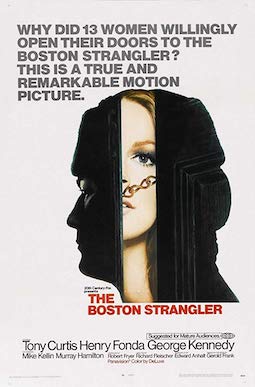
Film Review: The Boston Strangler (dir by Richard Fleischer)


Between June 14, 1962 and January 4, 1964, 13 women between the ages of 19 and 85 were murdered in the Boston area.  It was felt that they had all been killed by the same man, a monster known as The Boston Strangler.  Though the police investigated many suspects, they never made an arrest.  (One should remember that this was before the time of DNA testing or criminal profiling.  The term “serial killer” had not even been coined.  Today, sad to say, we take the existence of serial killers for granted.  In the 60s, it was still an exotic concept.)

In October of 1964, a man named Albert DeSalvo was arrested and charged with being “the Green Man,” a serial rapist who pretended to be a maintenance man in order to gain access to single women’s apartments.  After he was charged with rape, detectives were surprised when DeSalvo confessed to being the Boston Strangler.  When confessing to the murders, DeSalvo got a few minor details wrong but he also consistently included other details that the police hadn’t released to the general public.  Even when put under hypnosis, DeSalvo’s recalled those previously unreleased details.  Because DeSalvo was already going to get a life sentence on the rape charges and because there wasn’t any physical evidence that, in those pre-DNA, could have conclusively linked DeSalvo to the crimes, he was never actually charged with any of the murders.  Still, with his confessions, the cases were considered to be closed.

In 1966, before DeSalvo was even sentenced for the Green Man rapes, Gerold Frank wrote The Boston Strangler, a book about the murders, the investigations, and DeSalvo’s confessions.  It was one of the first true crime books and, in 1968, it was adapted into one of the first true crime films.

Directed by Richard Fleischer (whose filmography somehow includes not only this film but also Dr. Dolittle, Fantastic Voyage, 20,000 Leagues Under the Sea, Conan The Destroyer, and Red Sonja), The Boston Strangler is really two films in one.  The first half deals with the crimes and the police (represented by Henry Fonda, George Kennedy, Murray Hamilton, and James Brolin) investigation.  This half of the film is pulpy and crudely effective, full of scenes of the cops rounding up every sex offender who they can find.  There’s a scene where Henry Fonda talks to a prominent man in a gay bar that’s handled with about as much sensitivity as you could expect from a 1960s studio film.  (On the one hand, the man is portrayed with respect and dignity and he’s even allowed to call out the patron saint of 1960s mainstream liberal piety, Henry Fonda, for being close-minded.  On the other hand, everyone else in the bar is a stereotype and we’re meant to laugh at the idea that anyone could think that Henry Fonda could be gay.)  Director Richard Fleischer makes good use of split screens, creating an effective atmosphere of paranoia.  The scene where a woman tries to keep an obscene caller on the phone long enough for the police to trace his location made my skin crawl and served as a reminder that perverts predate social media.  Another scene where a flamboyant psychic tries to help the police goes on for a bit too long but, at the same time, you’re happy for a little relief from crime scenes and terrified, elderly women discovering that their neighbors have been murdered.

The second half of the film features Tony Curtis as Albert DeSalvo.  Curtis is effective as DeSalvo, playing him as being a self-loathing brute who is incapable of controlling his impulses.  (Before committing one of his crimes, DeSalvo watches the funeral of John Kennedy, his face wracked with pain.  Is the film suggesting that DeSalvo murdered to deal with the stress of life in America or is it suggesting that the hate that killed Kennedy was a symptom of the same sickness that drove DeSalvo?  Or is the film just tossing in a then-recent event to get an easy emotional reaction from the audience?)  As one might expect from a mainstream film made in 1968, The Boston Strangler takes something of a wishy washy approach to the question of whether DeSalvo’s crimes were due to sickness or evil.  Yes, the film says, DeSalvo was bad but it’s still society’s fault for not realizing that he was bad.  It’s the type of approach designed to keep both the law-and-order types and the criminal justice reformers happy but it ultimately feels a bit like a cop out.  Still, the shots of DeSalvo isolated in his padding cell have an undeniable power and Curtis is both pathetic and frightening in the role.  In its more effective moments, the second half of the film works as a profile of a man imprisoned both physically and mentally.

Watching the film today, it’s hard not to consider how different The Boston Strangler is from the serial killer films that would follow it.  DeSalvo is not portrayed as being some sort of charming or interesting Hannibal Lecter or Dexter-type of killer.  Instead, he’s a loser, a barely literate idiot who struggled to articulate even the simplest of thoughts.  The cops aren’t rule-breakers or renegades.  Instead, they’re doing their jobs the best that they can.  Though the film ends with a title card saying that it’s important for society to make more of an effort to spot people like DeSalvo before they kill, The Boston Strangler has a surprising amount of faith in both the police and the law and it assumes that you feel the same way.  It’s a film that takes it for granted the audience respects and trusts authority.  It’s portrayal of the police is quite a contrast to the rebel cops who dominate pop culture today.

After the film came out, DeSalvo recanted his confessions and said that he had never killed anyone.  He was subsequently murdered in prison in 1971, not due to his crimes but instead because he was independently selling drugs for prices cheaper than what had been agreed upon by the prison’s syndicate.  After his death, many books were written proclaiming that DeSalvo was innocent and that the real Boston Strangler was still on the streets.  Others theorized that the actual Strangler was DeSalvo’s cellmate and DeSalvo, knowing he was going to prison for life regardless, confessed in return for money being sent to his family.  That said, in 2013, DNA evidence did appear to conclusively link DeSalvo to the murder of 19 year-old Mary Sullivan.  Of course, that doesn’t mean that DeSalvo necessarily committed the other 12 murders.  In fact, from what we’ve since learned about the pathology of serial killers, it would actually make more sense for the murders to have been committed by multiple killers as opposed to just one man.

Regardless of whether DeSalvo was guilty or not, The Boston Strangler is an uneven but ultimately effective journey into the heart of darkness.

Horror on the Lens: Hands of a Stranger (dir by Newt Arnold)


After concert pianist Vernon Paris (James Stapleton) loses his hands in an auto accident, he is the recipient of a double hand transplant.  Unfortunately, Vernon isn’t happy with having a stranger’s hands and he fears that he’ll never be able to play the piano again.  Even worse, he soon becomes convinced that the hands are evil and are trying to force him to commit murders.

But is it the hands or Vernon’s own unstable mind that’s responsible his actions?

This 1962 horror film was the fourth adaptation of the Maurice Renard’s The Hands of Orlac.  As opposed to other film adaptations of Renard’s novel, Hands of Stranger plays up the ambiguity of whether the recipient of the hands is truly possessed or if he’s just using the hands as an excuse to indulge in his dark side.

Enjoy!


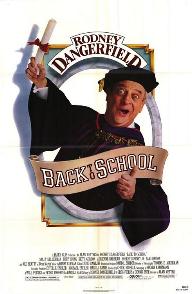
A Movie A Day #150: Back to School (1986, directed by Alan Metter)


Thornton Melon (Rodney Dangerfield) started with nothing but through a combination of hard work and chutzpah, he started a chain of “Tall and Fat” clothing stores and made a fortune.  Everyone has seen his commercials, the one where he asks his potential customers, “Do you look at the menu and say, ‘Okay?'”  He has a new trophy wife named Vanessa (Adrienne Barbeau) and a chauffeur named Lou (Burt Young).  Thornton never even graduated from high school but he gets respect.
However, his son, Jason (Keith Gordon), doesn’t get no respect.  No respect at all.  Jason is a student at a pricey university, where he is bullied by Chas Osborne (William Zabka) and can’t get a date to save his life.  Jason’s only friend is campus weirdo Derek Lutz (Robert Downey, Jr.).  When Thornton sees that his son isn’t having any fun, he decides to go back to school!

Back to School is a predictable but good-natured comedy.  It is like almost every other 80s college comedy except, this time, it’s a 65 year-old man throwing raging parties and making the frat boys look stupid instead of Robert Carradine or Curtis Armstrong.  On the stand-up stage, Dangerfield always played the (sometimes) lovable loser but in the movies, Dangerfield was always a winner.  In both Caddyshack and Back to School, Dangerfield played a self-made man who forced his way into high society and showed up all of the snobs.  While Back to School is no Caddyshack, it does feature Rodney at his best.

Rodney may be the funniest thing about Back to School but a close second is Sam Kinison, who owed much of his early success to Rodney Dangerfield’s support.  Kinison plays a history professor, who has some very strongly held views about the Vietnam War and who punctuates his points with a primal screen.

Also, keep an eye out Kurt Vonnegut, playing himself.  Rodney hires him to write a paper about Kurt Vonnegut for one of his classes.  The paper gets an F because Rodney’s literature professor (Sally Kellerman) can tell that not only did Rodney not write it but whoever did knows absolutely nothing about the work of Kurt Vonnegut.

So it goes.

Hallmark Review: The Wishing Well (2009, dir. David Jackson)


IMG_7594

It’s not often that I review two movies from two relatively different sources that are both by the same director, but that’s the case this time. David Jackson is also the director who brought the Halloweentown series to an end with Return To Halloweentown. This time he took on something much easier than ripping off Harry Potter with a miscast lead. It’s about a wishing well! Sort of.

IMG_7593

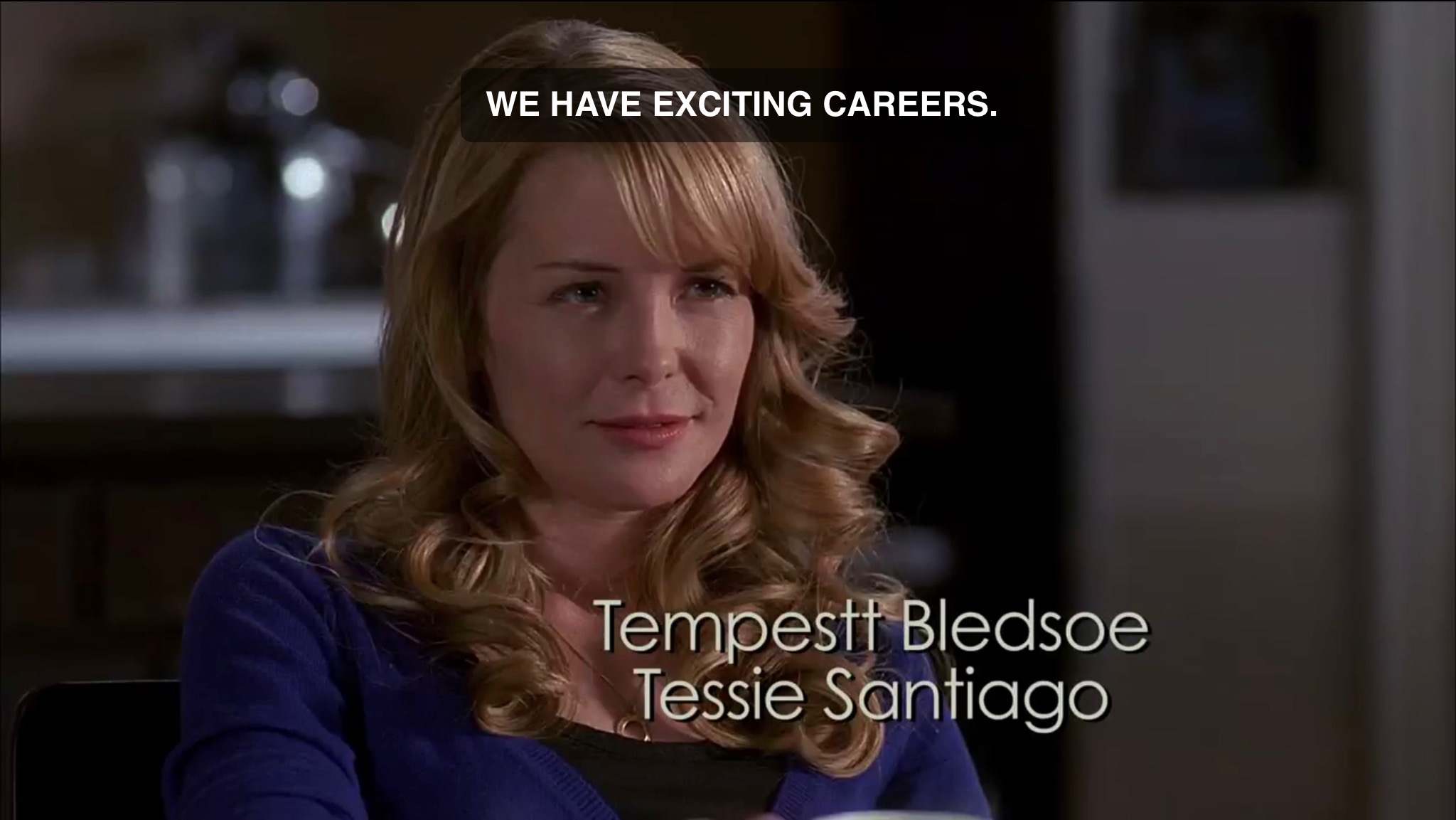
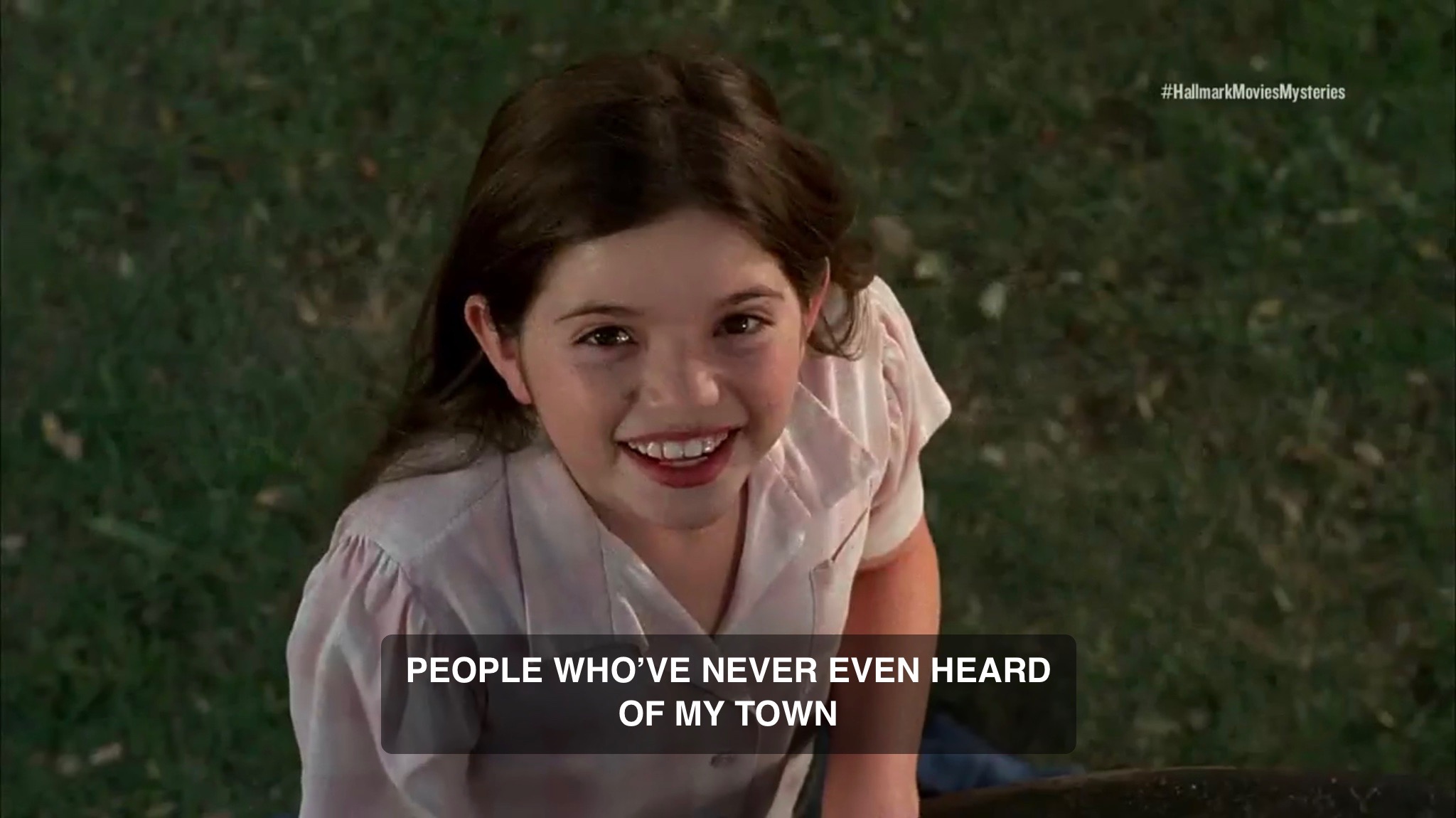
The movie begins before the title card appears, and we meet Abby Jansen played by Jadin Gould. She will be your smiling one-dimensional little girl for the movie. I mean your Hallmark Bailee Madison stand-in for the movie. Then we cut to stock footage of New York City before we meet our leading lady named Cynthia Tamerline played by Jordan Ladd.

IMG_7601

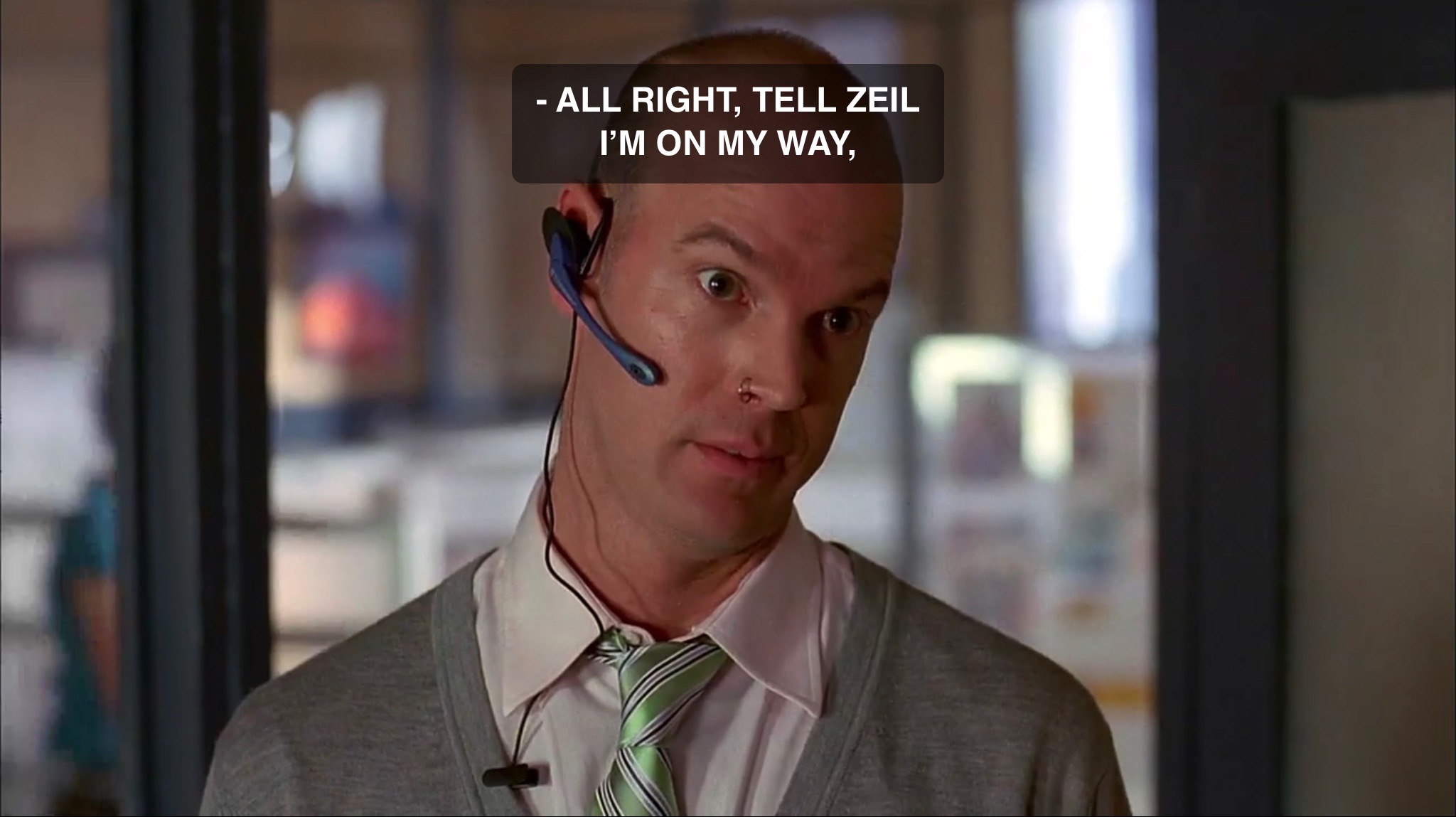
She works for Celeb magazine where not only is Charles Shaughnessy her boss, but her secretary is Lurch with a nose ring.

IMG_7610

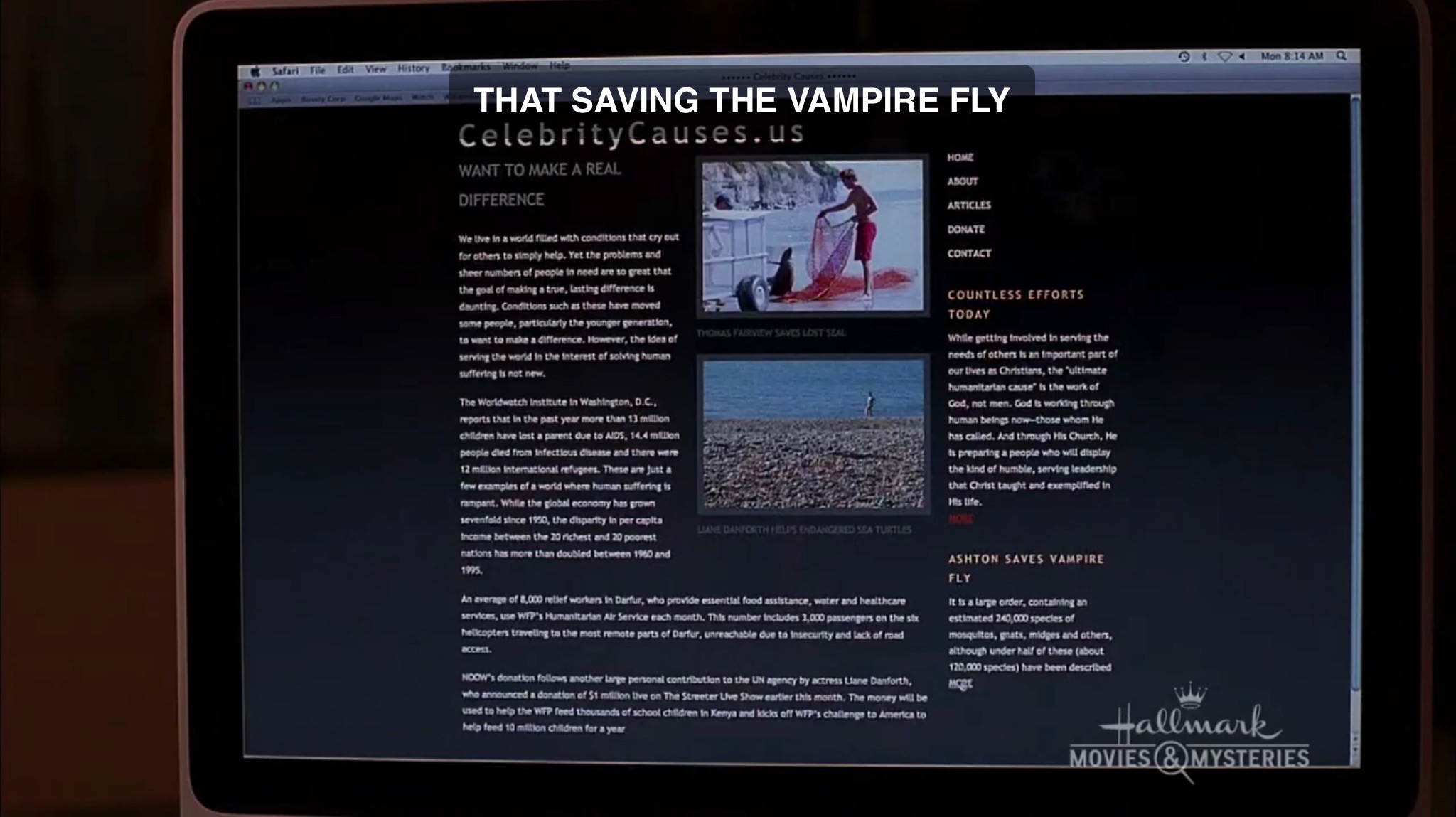
Obviously this movie needs to find an excuse to get Cynthia out with the country folk now. That’s why Shaughnessy calls her in and tells her either publish, perish, or become a nanny for my kids. He suggests that she write a story for one of his other magazines called Great Housekeeping. It’s for people who think Good Housekeeping just isn’t good enough. I thought she chose to write about a woman named Angela and her charity to save the vampire flies, but somehow that will cause her to end up in Slow Creek, Illinois to find a celebrity who may have visited their wishing well. But before that, she looks up Angela’s push to save the vampire fly on CelebrityCauses.us. No affiliation with CelebrityCauses.org. This one has Darcy from A Gift Of Miracles writing for it too.

IMG_7641

IMG_7642

This time she ripped off numerous encyclopedia entries about flies, but it is a little odd that she copied from the United Church Of God’s magazine Vertical Thought.

IMG_7644

Anyways, she’s off to Slow Creek, Illinois, which is the “Home of the Wishing Well.” Not just any wishing well, but the Wishing Well. That is till the 2011 Canadian film Wishing Well came out to give them some stiff competition for that title.

She arrives at the hotel where she is going to stay and finds that Ernest Borgnine runs the place. Cynthia is in town for a story that she can take back to Celeb magazine…I thought. Regardless, this is where I am obligated to say that these townsfolk are probably hiding a terrible secret about a Muslim American solider who died overseas and whose father was murdered in the town. I mean the movie has Borgnine, it’s a small town, and Cynthia’s last name is Tamerline which is close enough to Cass Timberlane played by Spencer Tracy in the movie of the same name. That meant while watching this movie, I immediately thought of the film Bad Day At Black Rock (1955) which had Tracy and Borgnine in it. Great movie by the way that I simply updated to a modern context. Here’s the trailer.

But onward with this movie now.

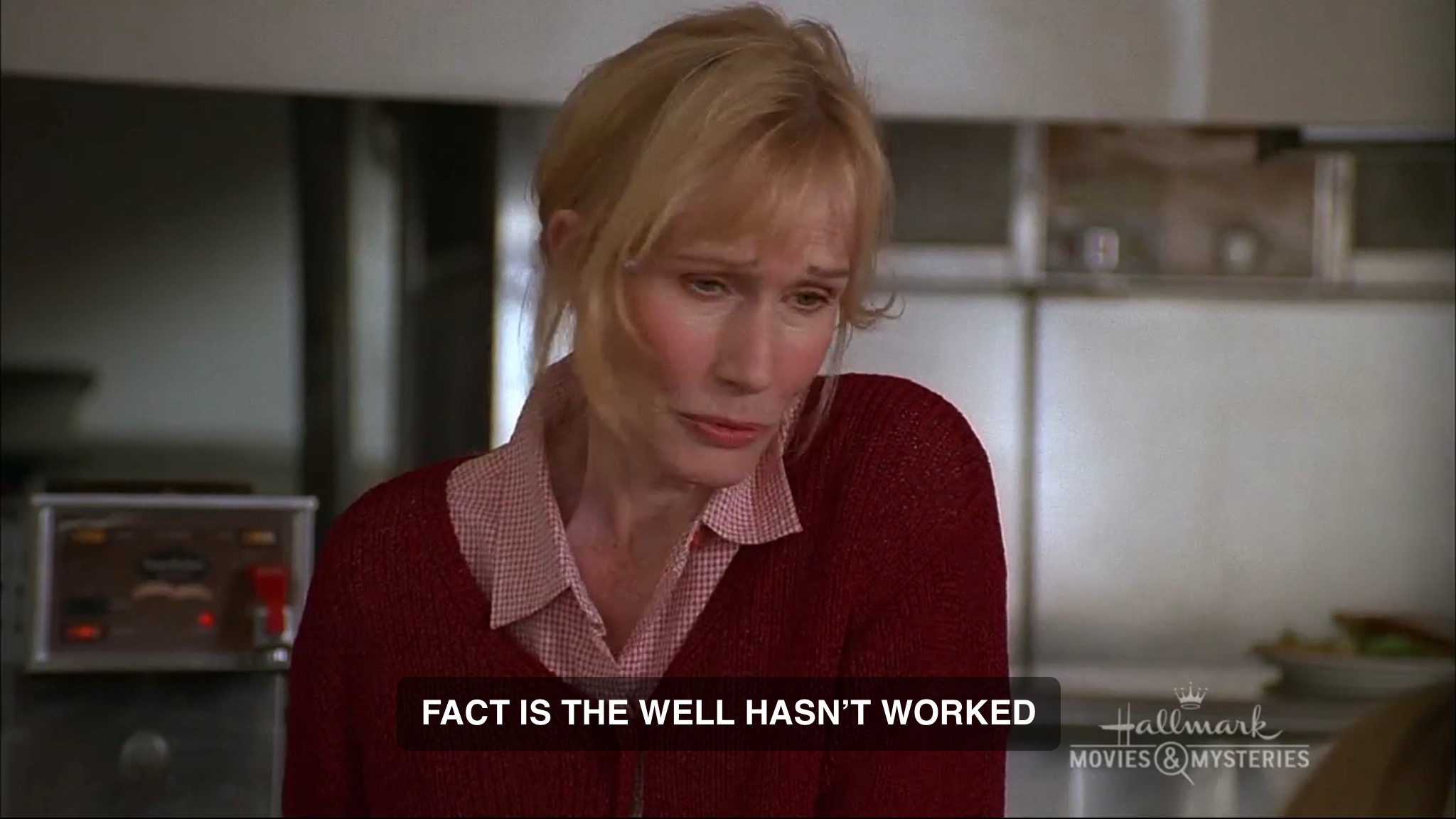
Annoying little girl tells us that wishes come true if you believe and make the right wish. Then we find out that not only is the hotel run by someone Retired and Extremely Dangerous, but that the diner is run by ‘Hot Lips’ O’Houlihan (Sally Kellerman).

IMG_7704

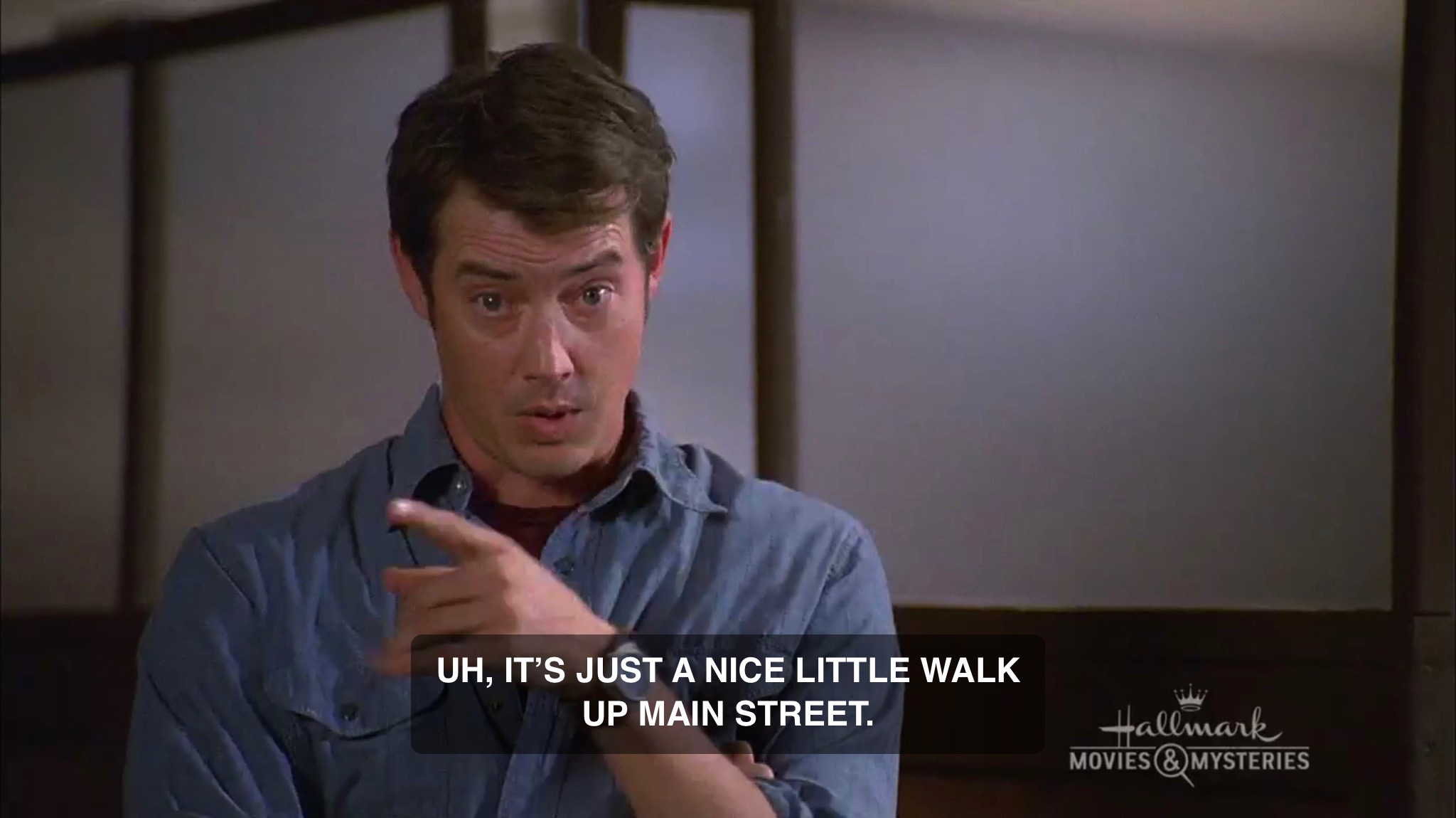
Now Cynthia visits the local paper and finds out that it’s run by the little girl’s dad played by Jason London.

IMG_7730

So this is what happened to Eric Camden’s associate pastor’s twin brother.

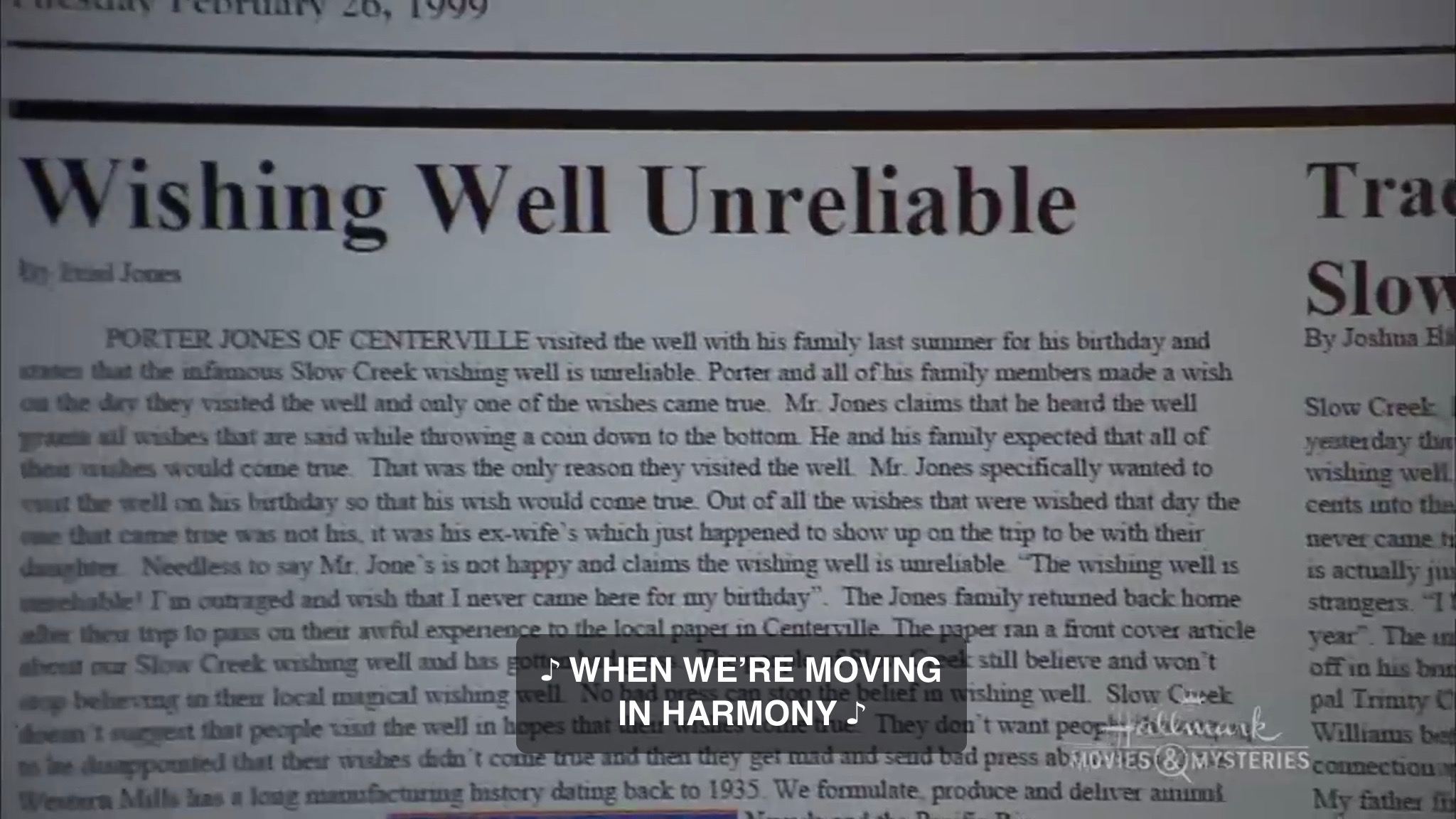
Cynthia starts to look into this wishing well of theirs. Turns out it was once a hot attraction, but then this happened.

IMG_7736

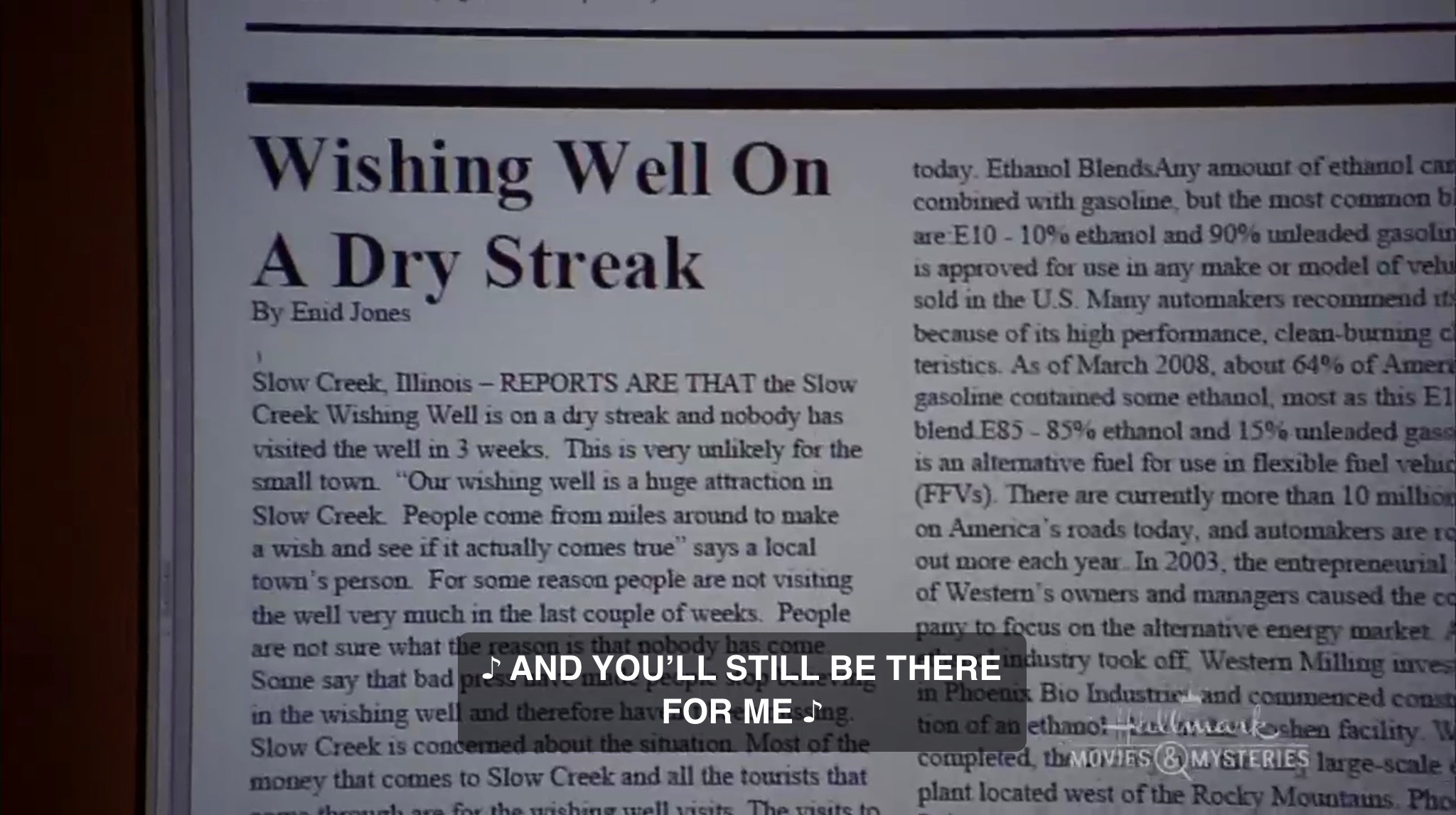
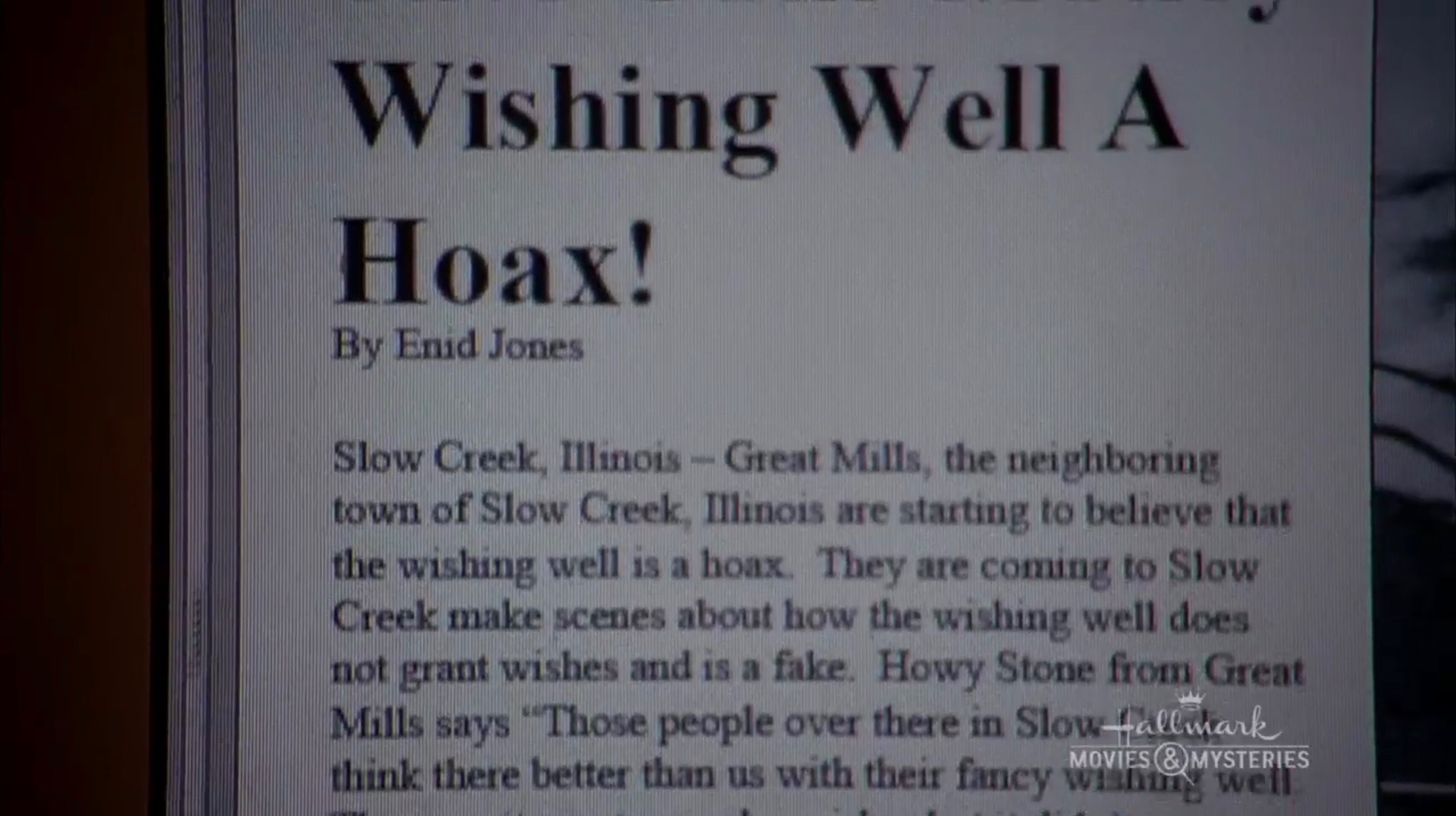
Don’t you just hate it when your ex shows up and your wish doesn’t come true, but your ex’s does. Now writer Enid Jones had it out for the well.

IMG_7738

IMG_7739

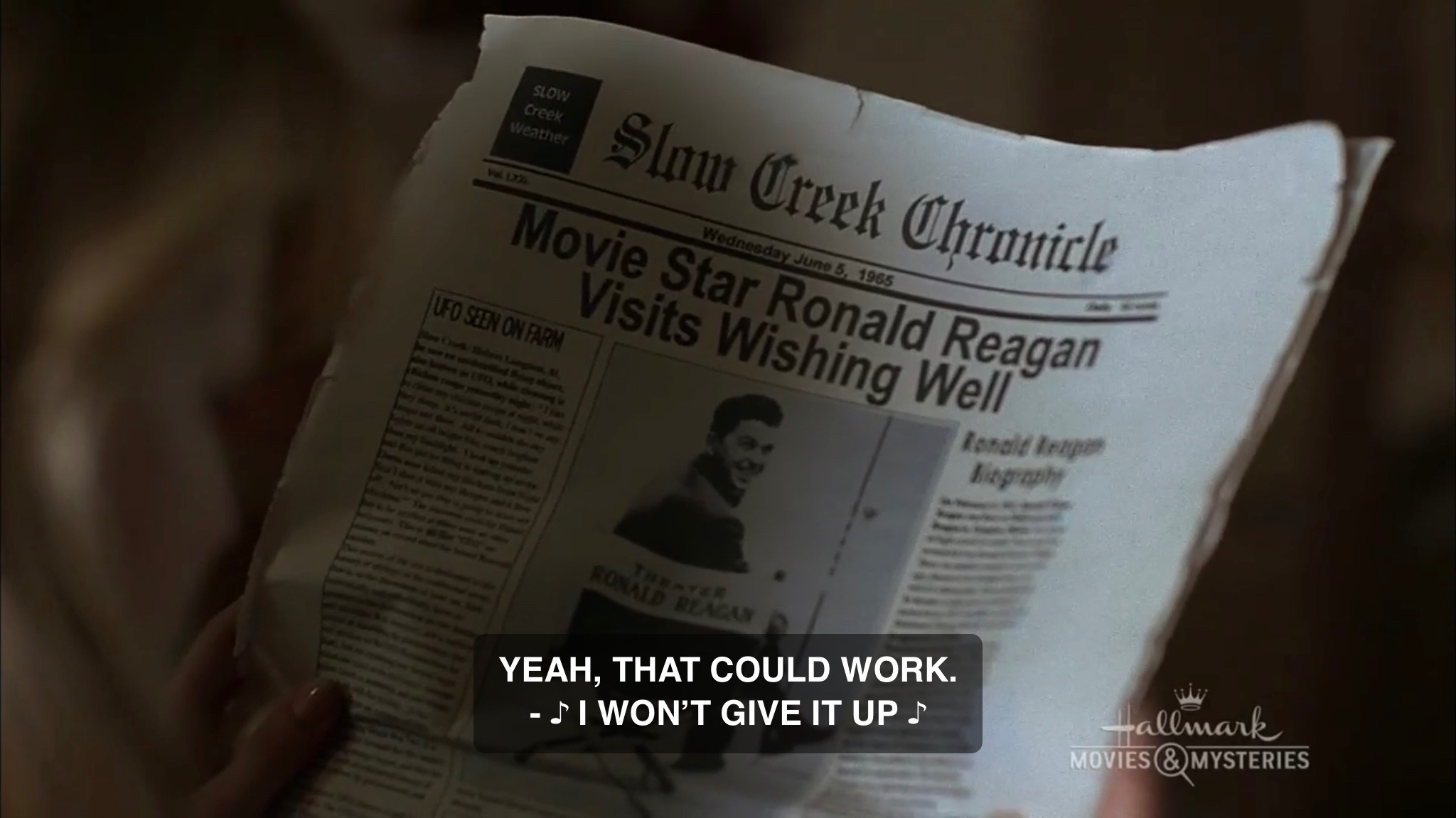
But this isn’t enough for her so she goes to dig in the archives. Long story short, Ronald Reagan once visited their well back in the 1960’s.

IMG_7789

That and a UFO was seen on a farm in Slow Creek. Interesting! What else is interesting is that they didn’t pull this Reagan and a wishing well thing completely out of their ass. Reagan actually did visit a wishing well in Dublin, Ireland back in the 1980s. Hmmm…I guess that means I need to listen to some Irish music while I finish writing this review. Well, Dropkick Murphys (Flannigan’s Ball) is Irish enough for someone who is a quarter Irish and from the Bay Area.

Oh, and since Reagan was mentioned. I guess I need to break out Genesis’ Land Of Confusion as well.

More annoying girl, and then Cynthia wakes up the next day to find out that she is now in the Twilight Zone. She is just somebody who has been hired as a local reporter. She calls up people back in New York City, but they don’t know who she is. She doesn’t try to tell them anything personal that only she would know, but just keeps calling.

This is when you can say the film goes on autopilot. Cynthia becomes more of a fixture in the town and discovers just how important this paper is to its residents. The paper is in trouble and might be bought out soon. The little girl is still annoying. A guy dies and she writes his obituary. Another guy sets his house on fire trying to beat his record for how many of his collectible lighters he can have going at once. I’m not making that up. During the scene where he explains his little game and current record I said to my dad that he didn’t mention this is the third house he’s gone through playing this game. Then she is waking up in bed to a phone call telling her his place is burning down. Of course! She writes an article that moves people about the fire. Finally, the townsfolk watch a meteor storm.

IMG_8227

Then this big city guy’s mustache shows up to buy the paper. It’s okay though because it turns out the guy who died left a huge amount of money to the paper in his will. I guess that’s better than the huge wad of cash in a can from Christmas Land.

Now just in case you thought you were finally getting this Twilight Zone like story, she wakes up on a plane back to New York City to receive praise for the story she wrote for the magazine. Yep, makes as much sense as you think it does. By that, I mean very little. She leaves her job at Celeb magazine and goes back to Slow Creek where smiley and her dad know who she is. Then it just ends abruptly.

IMG_8317

That’s it! It’s quite lousy. Even my Dad said this was a stinker and he’s usually easy to please with these movies. No reason to waste your time with this. Go watch Bad Day At Black Rock instead.

Since I happened to catch her this way. I’m really sorry Jordan.

IMG_7794

Now if you’ll excuse me, I need to throw a coin in a wishing well because I’m shipping up to Boston to find my wooden leg and I can use all the luck I can get.