Late Night Retro Television Reviews: CHiPs 1.2 “Undertow”


Welcome to Late Night Retro Television Reviews, a feature where we review some of our favorite and least favorite shows of the past!  On Mondays, I will be reviewing CHiPs, which ran on NBC from 1977 to 1983.  The entire show is currently streaming on Freevee!

This week, Ponch takes a deep breath and he gets real high.

Episode 1.2 “Undertow”

(Dir by Christian I. Nyby II, originally aired on September 22nd, 1977)

On tonight’s episode of CHiPs, a true crisis breaks out.

The California Highway Patrol’s basketball team loses a game!

Now, they would have won the game if Ponch had been playing.  I’m only two episodes into this series and it’s already pretty obvious that there’s apparently nothing that Ponch can’t do.  However, while at the scene of an accident on the highway, Ponch stood right in front of a leaky cannister of nitrous oxide!  He ended up getting so high that he started seeing double, dancing in the halls of the station, and basically just acting like a total jackass.  Of course, he smiled the whole time.  Baker was less amused.

Because of his temporary high, Ponch was sent home and ordered to stay in bed for a day.  He missed the game and the CHiPs lost to some other off-duty branch of California law enforcement.  Fortunately, Sgt. Getraer is able to set up a rematch and, with Ponch now able to play, the CHiPs win by two points!  And, of course, the winning shot is taken by Ponch because there’s nothing that Ponch can’t do.  This episode ends with a series of freeze frames of Ponch winning the game and proving that California has the best highway patrol in the country.

Of course, the basketball game is only the B-plot of this episode of CHiPs.  The main storyline deals with fake tow truck driver (Angelo de Meo) who is listening to the police radio for calls from women who have broken down on the highway.  The driver goes to wherever the women are calling from but, instead of towing their car, he instead steals their money!  The first time that Ponch and Baker chase him, the crooked tow truck driver gets away.  The second time, they catch him.  Of course, both of the chases lead to multi-car wrecks on the highway.  This episode features the first instance of a car flipping over in slow motion on this show.  Apparently, that would go on to become a CHiPs trademark.

Of course, there are other little things that Ponch and Baker have to deal with.  They pull over a drunk driver (Jim Backus) and Ponch, who is high from the nitrous oxide, struggles to give him a sobriety test.  They also pull over an old surfer (Paul Brinegar), who has a talking myna bird in his truck.  The bird was cute.  These scenes did not add up too much but I imagine they were included to drive home the idea that Ponch and Baker are professionals, even if they do spend a lot of time talking about basketball.

This episode was actually kind of fun.  Erik Estrada is not a particularly subtle actor to begin with and this episode actually gives him an excuse to overact even more than usual.  As much fun as it is to watch Estrada bounce off the walls, it’s even more interesting to glance over at Larry Wilcox and see just how much he appears to resent having to work with someone who always has to be the center of every scene.  Neither Wilcox nor Baker seem particularly unhappy about Ponch being sidelined for a good deal of the episode.  Just as in the pilot, the chase scenes were genuinely well-filmed and it was impossible not to enjoy the shots of the motorcycles weaving in and out of traffic.

Next week, Ponch will probably save someone’s life while Baker seethes in the background.  We’ll see!
Late Night Retro Television Reviews: CHiPs 1.1 “Pilot”


Welcome to Late Night Retro Television Reviews, a feature where we review some of our favorite and least favorite shows of the past!  On Mondays, I will be reviewing CHiPs, which ran on NBC from 1977 to 1983.  The entire show is currently streaming on Freevee!

When I was trying to pick a show to review after finishing up Nightmare Café, Jeff suggested that I go with CHiPs, a very 70s show about the adventures of the California Highway Patrol.  I agreed after he showed me two episodes that involved a roller disco.  I mean, how could I resist?

Of course, we won’t get to the roller disco for a while.  That happened at the start of season 3.  Instead, we’re starting at the beginning, with the pilot.  The year was 1977.  Jimmy Carter was president.  Jerry Brown was the governor of California.  And two cops on motorcycles were about to roll into history….

Episode 1.1 “Pilot”

(Dir by Paul Krasny, originally aired on September 15th, 1977)

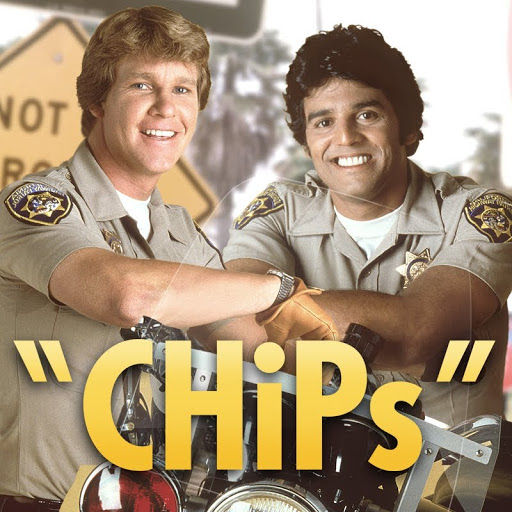
The pilot for CHiPs doesn’t waste any time in introducing us to our two main characters.  When we first see officers Jon Baker (Larry Wilcox) and Frank “Ponch” Poncharello (Erik Estrada), they’re on their police motorcycles and chasing after a stolen sportscar.  The chase being on the freeway and then eventually leads into Los Angeles.  Unlike the live police pursuits that we regularly see on television, this chase is unique in that there aren’t any other police officers involved, other than Baker and Ponch.  Maybe that’s the way that cops did things in the 70s but it does seem like Baker and Ponch would have had an easier time of it if they had some backup.  As it is, they don’t catch the thief but Ponch does crash his motorcycle.

Sgt. Joseph Getraer (played by Robert “father of Chris” Pine) is not amused to learn that Ponch has damaged another motorcycle.  The pilot wastes no time in establishing that Baker is the responsible, good cop while Ponch is the wild cop who takes risks and is always in trouble with the brass.  In fact, Ponch is on probation because of all the disciplinary reports that have been written against him.  Baker insists that Ponch is a good cop but it does seem like Ponch does manage to frequently crash his motorcycle.

Apparently, Larry Wilcox and Erik Estrada did not get long while they were co-starring on CHiPs.  That’s not surprising.  That tends to happen on a lot shows.  What is interesting is that, even in the pilot, neither one of the actors seems to be making much of an effort to even pretend to like the other.  Whenever Estrada flashes his big smile or dramatically looks up to the heavens, Wilcox looks like he’s having to use every bit of his willpower not to roll his eyes.  I always point out when two performers don’t have any romantic chemistry.  CHiPs is an interesting case where there isn’t even any friendship chemistry.  At no point, during the pilot, do you get the feeling that either Baker or Ponch would really be that upset if the other was reassigned to some other part of the highway patrol.  Even in the scenes where Baker defends Ponch as being a good cop, Larry Wilcox seems to be delivering the lines through gritted teeth. 

As for the episode itself, it really is standard 70s cop show stuff.  The stolen cars are being smuggled in a moving truck and, eventually, Baker and Ponch spot the bad guys on the highway and, after a chase, they catch them.  Of course, before they do that, they deal with two accidents (one involving a glue truck and another featuring a woman trapped in an overturned car and yes, Ponch does get her number) and Baker orders a kid on a bike to pull over so he can give him some advice about riding in traffic.

As I said, it’s all pretty standard.  But that doesn’t matter because, from the first minute we see them, the motorcycles are extremely cool and so are the scenes of Ponch and Baker weaving in and out of traffic while pursuing the car thieves.  Baker may be dull and Ponch might come across as being more than a little flaky but no one is really watching for them.  The pilot is all about celebrating the idea of driving fast on the highway and basically reminding the world that you don’t have to follow the rules, even if you are the one who enforces them!  If you don’t want to join a car theft ring, you can always just get a badge and a motorcycle.  Either way, it’s ton of fun!

For all of the episode’s obvious flaws, it was still easy for me to understand why this pilot led to a series.  Motorcycles are cool!  Will they still be a cool after 100+ episodes of CHiPs?  That’s what we’re about to find out.

Horror Film Review: Empire of the Ants (dir by Bert I. Gordon)


Ants are interesting creatures.  On the one hand, they work hard and they can design and build a complex home in just a matter of hours.  They’re loyal to the other members of their tribe and they all happily do whatever needs to be done to keep their community healthy and moving forward.  They’re family-orientated.  They take care of their children.  They eat earth worms.  They fight other ants.  They can carry several pounds over their own weight.  They like to move in a single-file line.  These are all things that people, in general, admire.  If you had to hire someone to do some yardwork, you would want someone who had the attitude of an ant.

At the same time, ants also have no respect for privacy, they tend to get everywhere, and they bite you and leave behind those ugly red marks that take forever to go away and that can itch like heck.  I was once outside barefoot, helping someone wash his car, when I suddenly felt a really intense pain in my foot.  I looked down and saw that I had stepped straight into an ant hill.  It was not only an ant hill but it was a FIRE ANT HILL!  I grabbed a hose and I washed all of the ants off my foot but it was still one of the most painful experiences of my life.  Ants are hard-working and industrious but they’re also kind of mean and they really don’t like humans.  (Maybe they would like us more if people stopped kicking ant hills and using magnifying glasses to set them on fire.)  Ants will break into your house and then bite you when you tell them to go away.  My point is that you might like ants but ants do not like you and you better remember that!

The 1977 film, Empire of the Ants, is all about humanity’s mixed feelings towards ants.  Joan Collins plays a shady real estate agent who leads a group of potential home buyers into the bayou because she wants to trick them into buying some worthless property on a nearby island.   What Collins and her clients don’t know is that a barrel of radioactive waste was recently dumped off of a nearby boat and when the waste washed on shore, a bunch of ants got into it and it caused them to become giant ants!  The giant ants are industriously creating their own sugar-based society but they’re also attacking and brainwashing humans!

Needless to say, this is a Bert I. Gordon film.  Gordon took his “Mr. Big” nickname quite literally and, as a result, he spent almost his entire career making movies about animals and occasionally humans who were turned into giants by radiation.  Apparently, radiation can do anything!  Empire of the Ants is a typical Gordon film, in that the special effects are just bad enough to be kind of charming.  The ants are either awkwardly super-imposed into the scene or they are clearly made out of plastic.  There’s a scene where an ant grabs a man by his neck and it would be really terrifying if not for the fact that the ant’s head appears to have been made from Styrofoam.  Unfortunately, even though the special effects are bad in an amusing way, Empire of the Ants is still a pretty boring film.  Gordon devotes way too much time to the people heading out to look at Joan Collins’s beachfront property.  No one is watching a film like this for human drama.

This movie is based on a short story by H.G. Wells.  Wells, reportedly, considered it to be the worst thing he had ever written.

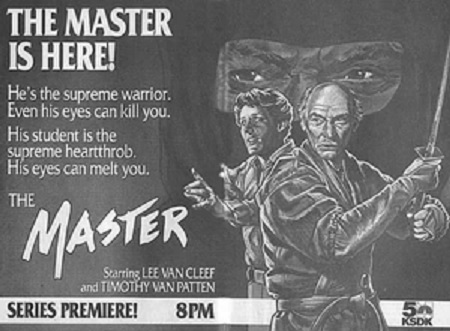
Retro Television Reviews: The Master 1.6 “Fat Tuesday”


Welcome to Retro Television Reviews, a new feature where we review some of our favorite and least favorite shows of the past! On Fridays, I will be reviewing The Master, which ran on NBC from January to August of 1984.  The show can be found on Tubi!

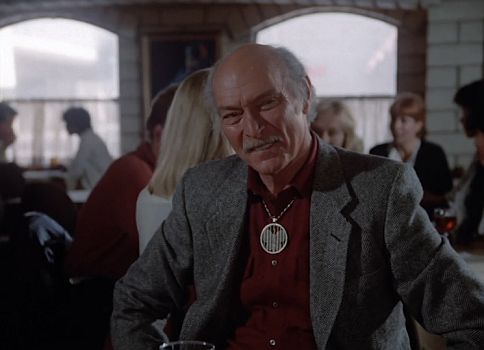
After spending last week in Las Vegas, John Peter McAllister (Lee Van Cleef) and Max Keller (Tim Van Patten) drive Max’s van across the country in search of McAllister’s daughter.

Episode 1.6 “Fat Tuesday”

(Dir by Sidney Hayes, originally aired on March 9th, 1984)

This episode opens not with a scene of Max Keller in training but instead with Okasa (Sho Kosugi) visiting a dojo in Las Vegas.  The master of the dojo explains that he does know where John Peter McAllister is but that he will not tell Okasa because he is not sure that Okasa is actually a former student of McAllister’s.  Okasa responds by 1) fighting every student at the dojo and 2) proving that, unlike Lee Van Cleef, Sho Kosugi didn’t need a stunt double for his scenes.  Having proven that he trained under the legendary McAllister, Okasa is informed that McAllister and Max Keller are in New Orleans.

That’s right!  This week, we’re in the Big Easy!

Of course, any show that takes place in New Orleans has to take place during Mardi Gras.  This episode is full of stock footage of the Mardi Gras celebrations but, at the same time, we never see McAllister or Max taking part in any of them.  In fact, other than a trip to a jazz club and a fight on a dock, McAllister and Max do very little that one would normally expect to see a visitor doing in New Orleans.  New Orleans is one of the most distinctive city in the U.S. but, in this episode of The Master, it might as well be Houston.

McAllister and Max are in New Orleans because a reporter named Eve Michaels (Susan Kase) has been writing a series of stories about how a wealthy businessman named Beaumont (Robert Pine) has been smuggling drugs into the city and selling weapons to Middle Eastern terror groups.  In her stories, Eve claims that her source is named Terri McAllister.  Could Eve’s source also be John Peter McAllister’s daughter?

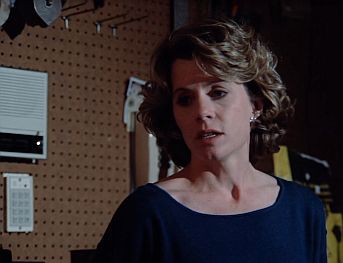
Eve, The Reporter

No, she’s not.  However, it’s not just a case of mistaken identity.  As Eve eventually confesses to Max, Terri McAllister is a name that she assigned to a source that she made up.  It turns out that Eve never had a source for her stories about Beaumont but apparently, Beaumont is such a shady character that it was easy for Eve to imagine what Beaumont was probably doing.  Because Eve’s made-up story was too close to the truth, Beaumont kidnapped and killed Eve’s friend.  That just made Eve even more determined to make up additional lies, all of which turned out to be true.  As crazy as that sounds, what’s even crazier is that neither McAllister nor Max are particularly upset to discover that they’re no closer to finding the real Terri.  Indeed, McAllister seems to find the whole thing rather amusing which makes me wonder if he really cares about Terri or not.

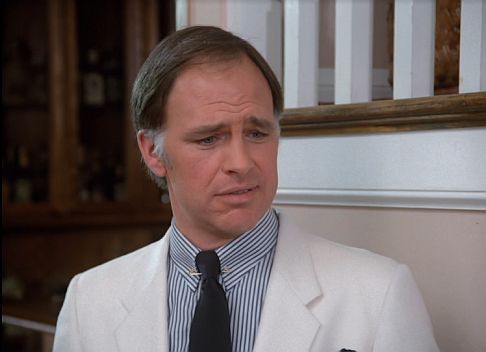
Beaumont, the bad guy

Of course, Max and McAllister are also busy proving the Beaumont is a criminal.  They crash Beaumont’s Mardi Gras party.  McAllister wears his ninja costume.  Max dresses up like a …. well, I guess he’s supposed to be a pirate.

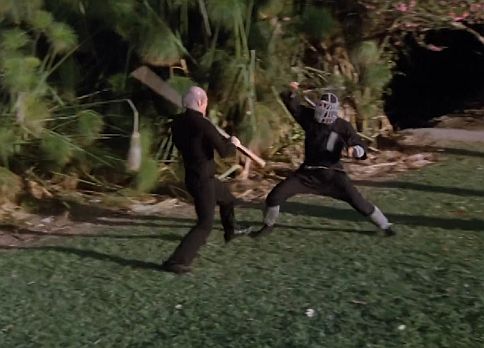
Okasa also shows up at the party, also dressed as a ninja.  In fact, this episode’s saving grace is that it features more of Okasa (and Sho Kosugi’s determined performance in the role) than any episode so far.  Not only do McAllister and Okasa fight at the party but they have a later confrontation at a park.  What’s interesting about this scene is that McAllister isn’t in his ninja uniform so Lee Van Cleef’s stunt double was required to put on a really phony looking bald cap for the fight scenes.  Needless to say, the fight scenes are filmed in long shot and McAllister never faces the camera.

Along with fighting Okasa, McAllister also faces off against two of Beaumont’s men.  In this fight scene, Van Cleef is actually shown throwing a punch and kick but he does so in slow motion and we don’t really see him making contact with anyone.

Oh, Lee!

This was a fairly generic episode.  The most disappointing thing about it is that it didn’t really have any New Orleans flair to it.  As well, the plot depended on a huge amount of coincidence and character stupidity.  (Just imagine if Beaumont had just threatened to sue Eve for libel, as opposed to sending his hired goons to kidnap her.)  Lee Van Cleef came across as being a bit tired and cranky in this episode.  To his credit, Tim Van Patten tried to inject some energy and some humor with his pirate disguise.  It didn’t work but at least he tried.

Next week: Max and McAllister take on an evil trucking company!

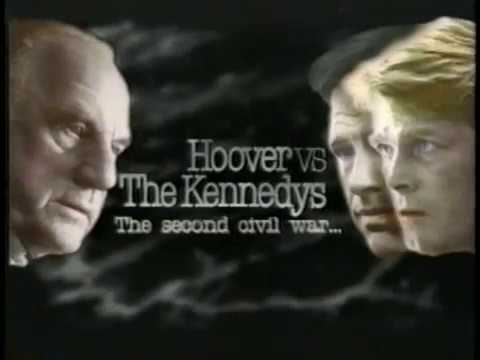
Hoover vs. The Kennedys: The Second Civil War (1987, directed by Michael O’Herlihy)


The year is 1961 and the young and dynamic John F. Kennedy (Robert Pine) has been elected president.  While the rest of the nation waits to see how Kennedy will lead, FBI director J. Edgar Hoover (Jack Warden) is convinced that he will continue to do what he’s always done.  As he explains it to his aide and only friend, Clyde Tolson, Hoover is a longtime friend of President Kennedy’s father, Joseph (Barry Morse).  Hoover knows how the Kennedys made their money and he also knows that the Kennedys probably stole the election.

Hoover quickly discovers that John F. Kennedy isn’t going to be like the other presidents under which he has served.  Kennedy appoints his self-righteous brother, Robert (Nicholas Campbell), as attorney general and Robert immediately sets out to make Hoover’s life unbearable.  When Hoover brings the brothers evidence that civil rights leader Martin Luther King (Leland Gantt) is not only associating with known radicals but that he also cheats on his wife, John and Bobby just laugh at him.  While John pursues an affair with Marilyn Monroe (Heather Thomas) and Bobby tries to reign in the FBI’s excesses, Hoover continues to collect information for his files and schemes to outlast both Kennedys.

Hoover vs. The Kennedys was a made-for-TV movie, one of the many films that have been made about the conflicts between the Kennedys and J. Edgar Hoover.  Since a good deal of the film is made up of Hoover and the Kennedy Brothers snapping at each other on the phone and then telling their closest aides about how much they dislike each other, it seems hyperbolic to call their relationship the “second civil war.”  Though the film does go as far as to suggest that Hoover didn’t make much of an effort to investigate the background of Lee Harvey Oswald, it doesn’t go any further when it comes to the theories surrounding John Kennedy’s assassination.  As well, the film is one of the rare ones to not speculate that Hoover and Clyde Tolson were more than just friends.  Instead, Hoover vs. The Kennedys concentrates more on all of the scandalous stories surrounding the Kennedy brothers.  The mob connections.  The womanizing.  The arrogance.  It’s all recreated here.  Perhaps because this was a Canadian production, Hoover vs The Kennedys doesn’t portray anyone positively.

The acting is a mixed bag.  Nicholas Campbell is believably abrasive as Bobby while Robert Pine was several years too old to be a convincing JFK.  Heather Thomas is an adequate Marilyn Monroe while Leland Gantt comes across as too emotional to be a believable Martin Luther King.  (In Gantt’s defense, the movie does not seem to know what to do with the character of King, treating the civil rights icon like a prop to be trotted out whenever some Hoover/Kennedy conflict is needed.)  The film’s best performance comes from Jack Warden, who plays Hoover as being a puritanical hypocrite who knows that, no matter who tries to push him out, he’s not going anywhere unless he wants to.  Hoover outlasted several presidents and Warden portrays him as being the ultimate political survivor.

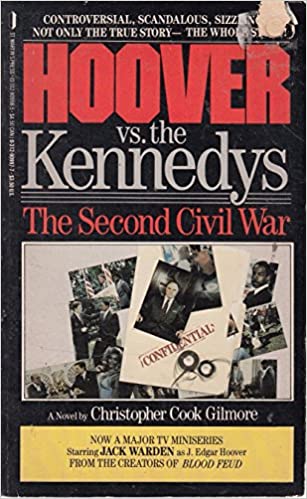
As far as Kennedy films are concerned, Hoover vs. The Kennedys is okay but it doesn’t offer up anything new.  Some of the most important roles are miscast and the movie never goes into much depth, beyond repeating all of the usual rumors.  Jack Warden’s a good J. Edgar Hoover, though.  The movie is not easy to find but it has been uploaded on to YouTube.  And, if you can’t find the movie, you can always order the novelization off of Amazon.


Playing Catch-Up With The Films of 2016: Alice Through The Looking Glass, Gods of Egypt, The Huntsman: Winter’s War, Me Before You, Mother’s Day, Risen


Here are six mini-reviews of six films that I saw in 2016!

Alice Through The Looking Glass (dir by James Bobin)

In a word — BORING!

Personally, I’ve always thought that, as a work of literature, Through The Looking Glass is actually superior to Alice’s Adventures in Wonderland.  That’s largely because Through The Looking Glass is a lot darker than Wonderland and the satire is a lot more fierce.  You wouldn’t know that from watching the latest film adaptation, though.  Alice Through The Looking Glass doesn’t really seem to care much about the source material.  Instead, it’s all about making money and if that means ignoring everything that made the story a classic and instead turning it into a rip-off of every other recent blockbuster, so be it.  At times, I wondered if I was watching a film based on Lewis Carroll or a film based on Suicide Squad.  Well, regardless, the whole enterprise is way too cynical to really enjoy.

(On the plus side, the CGI is fairly well-done.  If you listen, you’ll hear the voice of Alan Rickman.)

Gods of Egypt (dir by Alex Proyas)

I don’t even know where to begin when it comes to describing the plot of Gods of Egypt.  This was one of the most confusing films that I’ve ever seen but then again, I’m also not exactly an expert when it comes to Egyptian mythology.  As far as I could tell, it was about Egyptian Gods fighting some sort of war with each other but I was never quite sure who was who or why they were fighting or anything else.  My ADHD went crazy while I was watching Gods of Egypt.  There were so much plot and so many superfluous distractions that I couldn’t really concentrate on what the Hell was actually going on.

But you know what?  With all that in mind, Gods of Egypt is still not as bad as you’ve heard.  It’s a big and ludicrous film but ultimately, it’s so big and so ludicrous that it becomes oddly charming.  Director Alex Proyas had a definite vision in mind when he made this film and that alone makes Gods of Egypt better than some of the other films that I’m reviewing in this post.

Is Gods of Egypt so bad that its good?  I wouldn’t necessarily say that.  Instead, I would say that it’s so ludicrous that it’s unexpectedly watchable.

The Huntsman: Winter’s War (dir by Cedric Nicolas-Troyan)

Bleh.  Who cares?  I mean, I hate to put it like that but The Huntsman: Winter’s War felt pretty much like every other wannabe blockbuster that was released in April of last year.  Big battles, big cast, big visuals, big production but the movie itself was way too predictable to be interesting.

Did we really need a follow-up to Snow White and The Huntsman?  Judging by this film, we did not.

Me Before You (dir by Thea Sharrock)

Me Before You was assisted suicide propaganda, disguised as a Nicolas Sparks-style love story.  Emilia Clarke is hired to serve as a caregiver to a paralyzed and bitter former banker played by Sam Claflin.  At first they hate each other but then they love each other but it may be too late because Claflin is determined to end his life in Switzerland.  Trying to change his mind, Clarke tries to prove to him that it’s a big beautiful world out there.  Claflin appreciates the effort but it turns out that he really, really wants to die.  It helps, of course, that Switzerland is a really beautiful and romantic country.  I mean, if you’re going to end your life, Switzerland is the place to do it.  Take that, Sea of Trees.

Anyway, Me Before You makes its points with all the subtlety and nuance of a sledge-hammer that’s been borrowed from the Final Exit Network.  It doesn’t help that Clarke and Claflin have next to no chemistry.  Even without all the propaganda, Me Before You would have been forgettable.  The propaganda just pushes the movie over the line that separates mediocre from terrible.

Mother’s Day (dir by Garry Marshall)

Y’know, the only reason that I’ve put off writing about how much I hated this film is because Garry Marshall died shortly after it was released and I read so many tweets and interviews from people talking about what a nice and sincere guy he was that I actually started to feel guilty for hating his final movie.

But seriously, Mother’s Day was really bad.  This was the third of Marshall’s holiday films.  All three of them were ensemble pieces that ascribed a ludicrous amount of importance to one particular holiday.  None of them were any good, largely because they all felt like cynical cash-ins.  If you didn’t see Valentine’s Day, you hated love.  If you didn’t see New Year’s Eve, you didn’t care about the future of the world.  And if you didn’t see Mother’s Day … well, let’s just not go there, okay?

Mother’s Day takes place in Atlanta and it deals with a group of people who are all either mothers or dealing with a mother.  The ensemble is made up of familiar faces — Jennifer Aniston, Julia Roberts, Kate Hudson, and others! — but nobody really seems to be making much of an effort to act.  Instead, they simple show up, recite a few lines in whatever their trademark style may be, and then cash their paycheck.  The whole thing feels so incredibly manipulative and shallow and fake that it leaves you wondering if maybe all future holidays should be canceled.

I know Garry Marshall was a great guy but seriously, Mother’s Day is just the worst.

(For a far better movie about Mother’s Day, check out the 2010 film starring Rebecca De Mornay.)

Risen (dir by Kevin Reynolds)

As far as recent Biblical films go, Risen is not that bad.  It takes place shortly after the Crucifixion and stars Joseph Fiennes as a Roman centurion who is assigned to discover why the body of Jesus has disappeared from its tomb.  You can probably guess what happens next.  The film may be a little bit heavy-handed but the Roman Empire is convincingly recreated, Joseph Fiennes gives a pretty good performance, and Kevin Reynolds keeps the action moving quickly.  As a faith-based film that never becomes preachy, Risen is far superior to something like God’s Not Dead 2.