Today’s scene of the day comes from 1995’s Casino. In this scene, Martin Scorsese shows us and Joe Pesci and Robert De Niro tell us about what happened when Nicky Santoro (played by Pesci, in one of his best performances) moved out to Las Vegas.
Today’s scene of the day comes from 1995’s Casino. In this scene, Martin Scorsese shows us and Joe Pesci and Robert De Niro tell us about what happened when Nicky Santoro (played by Pesci, in one of his best performances) moved out to Las Vegas.
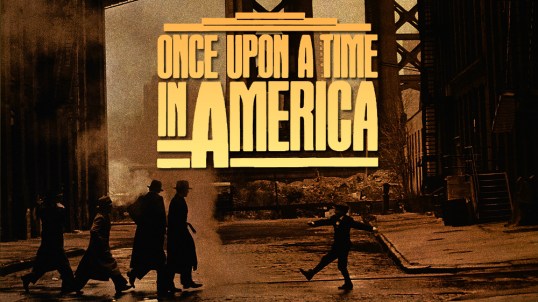
(SPOILERS BELOW)
The final moments of Sergio Leone’s epic 1984 gangster film, Once Upon A Time in America, are filled with questions and mysteries.
The final moments of Sergio Leone’s epic 1984 gangster film, Once Upon A Time in America, are filed with questions and mysteries.
In 1968, who did Noodles (played by Robert De Niro) see standing outside of Max’s mansion? When the garbage truck pulled up, did the mysterious man get in the truck or was he thrown in by some unseen force?
Why, in 1968, did Noodles see a car from the 1920s, one that was full of people who appeared to be celebrating the end of prohibition? Was the car really there, in 1968, or was it an element of Noodles’s past as a gangster suddenly popping into his mind?
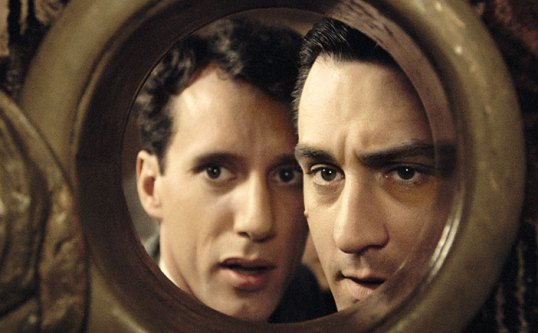
Once Upon A Time In America (1984, dir by Sergio Leone, DP: Tonino Delli Colli)
When we then see a young Noodles in an opium den, are we flashing back to the 1920s? Is Noodles remembering the past or is it possible that we’ve been in the 20s the whole time and all of the scenes set in 1968 were actually only a drug-induced dream?
Why, with men looking to kill him and all of his friends apparently dead, does Noodles suddenly smile at the end of the film? Is that sudden smile a result of the drugs or is there something else going on?
Once Upon A Time In America was Sergio Leone’s final film. It’s one that he spent decades trying to get made and, once it was finally produced, it was butchered and re-edited by a studio hacks who demanded that the film tell its story in a linear style. Leone was reportedly heart-broken by how his film was treated. Some have speculated that his disappointment may have even contributed to the heart attack that eventually killed him. It was only after Leone passed that his version of Once Upon A Time In America became widely available in the U.S. This enigmatic epic continues to spark debate. One thing that can’t be denied is that it’s a brilliant film.
As today is Leone’s birthday, it only seems appropriate to share a pair of scenes that I love, from the ending of Once Upon A Time In America.
Goodfellas is totally a Christmas movie!
Taxi Driver is nearly 50 years old but it’s still one of cinema’s most definitive portraits of urban paranoia and societal detachment. Travis (played by Robert De Niro) obsesses on the city that he harshly judges even though he’s as much a part of New York as those who he wishes will be washed away.
This scene features Robert De Niro, Martin Scorsese, and Paul Schrader at their definite best. I imagine that, for a lot of people, this is one of those scenes that solidified their opinions on New York City. For the record, the last time I was in New York, everyone was fairly pleasant. They weren’t exactly friendly but I also didn’t get my bag stolen. (Those of us who don’t live in New York tend to assume that we’ll get mugged as soon as we leave JFK.)
I do worry about the future of New York, especially with the election that is being held today. To say I’m not a fan of either of the two front runners would be an understatement but, at the same time, it’s not my place to tell people in New York City how to vote. (I’m a big believer in not telling people in other cities and states how to vote. Whenever anyone from up north asks me why Beto didn’t win in 2018, I tell them the truth. A bunch of pro-Beto yankees came down here and got on everyone’s nerves right before they voted.) Instead of telling people what to do, I’ll just say that I sincerely hope that whatever happens will work out as well as it possibly can.
(That’s another reason I don’t endorsements. “Vote for the candidate who will work as well as he possibly can,” probably isn’t going to gets the cheers that some other slogans would.)
In The Alto Knights, I’m pretty sure that Robert De Niro sets the record for saying “What’s the mater with you!?” the most times in one movie.
I don’t know for sure, of course. While I was watching the movie last night, I didn’t keep an exact count and, for that, shame on me. That said, when you consider that The Alto Knights features Robert De Niro playing not just one but two old school Italian gangsters, you can be sure that there were a lot of scenes of either Vito Genovese (Robert De Niro) or Frank Costello (De Niro, again) demanding to know what was the matter. When Genovese watches Costello testifying in front of a Congressional hearing, the “What’s the matter with you!?” count truly goes haywire.
The Alto Knights was directed by Barry Levinson, who has directed some great films. It tells the relatively true story of the rivalry between Costello and Genovese. Both Costello and Genovese were present when the modern Mafia was first created. The diplomatic and negotiation-minded Costello was known as the “Prime Minister of the Underworld.” Genovese was a much more violent gangster and he became one of the most powerful members of the New York Mafia by basically killing anyone who stood in his way. Costello and Genovese started out as weary friends before coming mortal enemies. Costello retired from the rackets after Genovese ordered one of his men to shoot Costello in the head. Meanwhile, Genovese ended up involving the Mafia in the drug trade and died in prison. In the film, Costello narrates their story. There’s a lot of shots of an elderly Costello sitting in what appears to be a park as he speaks directly to the camera. Interestingly enough, Gotti tried to do the same thing, with Travolta’s John Gotti speaking directly to the audience while standing in front of the Brooklyn Bridge.
The Alto Knights pretty much features all of the usual Mafia tropes. All the usual points are hit. Albert Anastasia (played by Michael Rispoli) is assassinated while getting a haircut and some viewers will remember that, before De Niro played the man who ordered Anastasia’s assassination, he also played the man who claimed to have shot Anastasia in The Irishman. Personally, I love Mafia films but The Alto Knights felt a bit too recycled to be truly effective. Barry Levison does the usual thing of dropping real-life newspaper headlines and photographs into the middle of the film and it doesn’t so much add verisimilitude as much as it just reminds one of David DeCoteau’s film about Bonnie and Clyde.
The film’s main selling point is that it features Robert De Niro playing two gangsters but there’s really not much gained from casting De Niro in both roles. We get a few scenes of De Niro acting opposite of himself and it’s hard not to notice that Genovese’s reactions often don’t seem to match whatever it is that Costello’s saying. As an actor, De Niro has the ability to be believable as both the cerebral Costello and the hot-headed Genovese but ultimately, the double casting just feels like a distraction. Watching De Niro acting opposite himself, I found myself thinking how much more entertaining it would have been if Joe Pesci, Al Pacino, Harvey Keitel, or even John Travolta had played Genovese. To be honest, if Levinson really had any courage, he would have given the role to James Woods and given us the Once Upon A Time In America/Casino reunion that we all deserve.
The film did win me over a bit towards the end with a recreation of the Apalachin meeting. That was when Genovese invited every mob boss in the country to come to a meeting in upstate New York, just for the feds to suddenly show up and send everyone scattering. For most of the film, it was hard not to feel that Barry Levinson was past his prime as a director but he actually did a good job with the Apalachin scenes. I genuinely laughed when Genovese got into a pointless argument with his driver. I loved the way the film captured the real-life absurdity of a bunch of mob bosses fleeing into the woods, all of their bravado suddenly dissipating as they scrambled into the wilderness. If the entire film had just been about the Apalachin meeting, this review would probably be a lot of different. As it is, one good sequence can’t save the film as a whole.
This is an offer you can refuse.
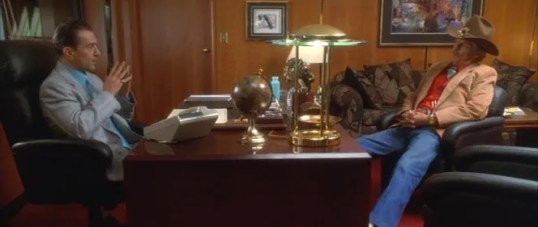
Today would have been the birthday of the great character actor L.Q. Jones.
Though he was probably best known for the films that he did with Sam Peckinpah and for directing the darkly humorous sci-fi film, A Boy And His Dog, Jones also appeared in Martin Scorsese’s 1995 film, Casino. Playing the role of county commissioner Pat Webb, Jones went toe-to-toe with Robert De Niro and more than held his own. Reportedly, Scorsese asked Jones to rewrite much of his dialogue, in order to give it a western authenticity,
From Casino, here is a scene that I love:
4 Or More Shots From 4 Or More Films is just what it says it is, 4 shots from 4 of our favorite films. As opposed to the reviews and recaps that we usually post, 4 Shots From 4 Films lets the visuals do the talking!
Today, the Shattered Lens wishes a happy birthday to actor Robert De Niro. It’s time for….
4 Shots From 4 Robert De Niro Films
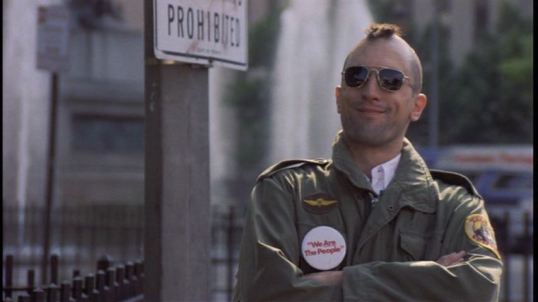
Taxi Driver (1976, dir. Martin Scorsese, DP: Michael Chapman)
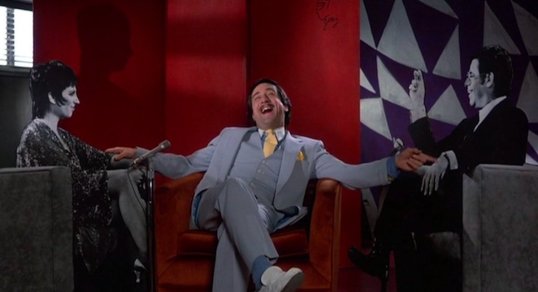
The King of Comedy (1982, dir by Martin Scorsese, DP; Fred Schuler)
Once Upon A Time In America (1984, dir by Sergio Leone, DP: Tonino Delli Colli)

Casino (1995, dir by Martin Scorsese, DP: Robert Richardson)
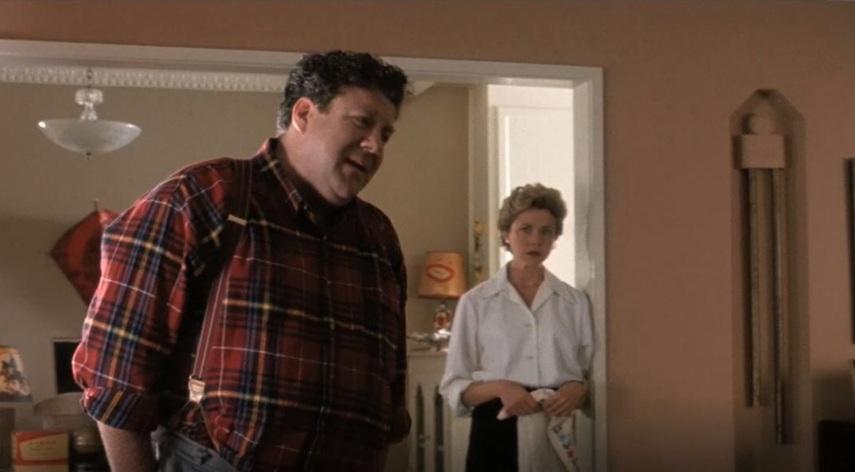
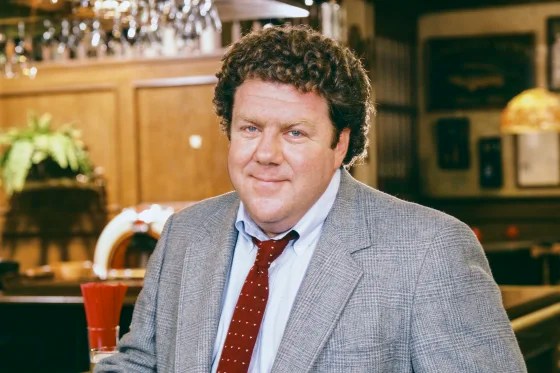
George Wendt passed away in his sleep earlier today. He was 76 years old.
If you’re old enough to have watched Cheers when it originally aired or to have caught it in reruns, George Wendt will always be Norm Peterson, the beer-drinking accountant who spent all of his time at the show’s titular bar. One of the show’s trademarks was that, whenever he entered the bar, everyone greeted him by shouting, “Norm!” “How’s the world treating you?” a bartender would ask. “It’s a dog eat world and I’m wearing milkbone underwear,” Norm once replied.
(One of my favorite joke from the series was when Norm went into a steakhouse and everyone inside was heard to yell, “Norm!” as the door closed behind him.)
If we’re going to be really honest, Norm was probably a high-functioning alcoholic and terrible husband. (Wife Vera was often-mentioned but never seen.) Wendt was so likable in the role and was so good at delivering those one-liners that it didn’t matter. Watching the show, you never wondered why Norm was in the bar. You were just glad he was.
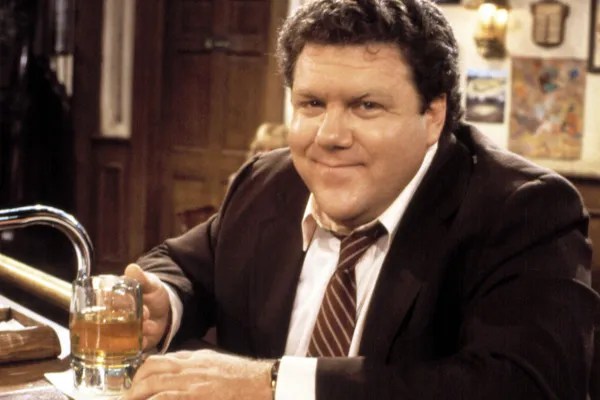
George Wendt was also an accomplished stage actor. (I saw him on stage when he was co-starring with Richard Thomas in 12 Angry Men.) He appeared in several movies, usually playing the comedic sidekick or the hero’s best friend. His film roles often didn’t ask him to do much other than be likable but one exception was his performance in 1991’s Guilty By Suspicion.

Guilty By Suspicion is a film about the McCarthy era, starring Robert De Niro as film director David Merrill, who is threatened with being blacklisted unless he names four of his colleagues as being communists. George Wendt plays screenwriter Bunny Baxter, a childhood friend of David’s who attended a few communist rallies when he was younger, failed to mention it to the FBI, and who is now being investigated as a subversive. The studio argues that David should name Baxter because his name is already out there. When David refuses, he finds himself blacklisted and unable to make a living. Bunny Baxter, meanwhile, is offered a similar deal. Baxter can save his own career but only if he names David as a communist. Unlike David, Baxter considers betraying his friend because it’s the only way that he can ever hope to work again. “Your dead anyway,” Baxter says to David.
Guilty By Suspicion suffers from Irwin Winkler’s plodding direction but De Niro gives a good performance, as does Martin Scorsese who is cast as a director based on Joseph Losey. The film is full of actors who would later become better-known, like Chris Cooper, Tom Sizemore, and Annette Bening. Wendt, however, gives the film’s best performance as the screenwriter who is torn between protecting his career and maintaining his integrity. The scene where he asks permission to name Merrill as a communist is powerful and it shows how good an actor George Wendt could be. Bunny Baxter is asking his best friend to allow himself to be stabbed in the back. Baxter is that desperate. That he’s played by George Wendt, an actor who was everyone’s favorite likable barfly in the 80s, makes the scene all the more powerful.
George Wendt, RIP. Thanks for the memories.
Today’s scene comes from 2019’s The Irishman. In this scene, Jimmy Hoffa (Al Pacino) asks a former rival for an endorsement to once again be president of the Teamsters union. Needless to say, things don’t get well. I’m on Hoffa’s side here. Showing up 12 and a half minutes late? Wearing shorts to meeting? Someone is definitely owed an apology.
Once you get over the admittedly jarring de-aging effect, this scene reminds us of what a great actor Al Pacino truly is.
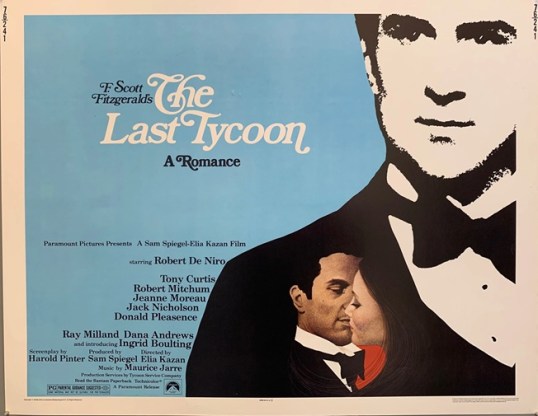
Based on the final (and unfinished) novel by F. Scott Fitzgerald, 1976’s The Last Tycoon tells the story of Monroe Stahr (Robert De Niro).
Monroe Stahr is the head of production at a film studio during the early days of Hollywood. Stahr is an unemotional and seemingly repressed man who only shows enthusiasm when he’s talking about movies. He may not be able to deal with real people but he instinctively knows what they want to see on the big screen. Stahr is a genius but he’s working himself to death, ignoring his health concerns while trying to create the perfect world through film. He’s haunted by a lost love and when he meets Kathleen Moore (Ingrid Boulting, giving a remarkably dull performance), he tries to find love with her but, naturally, he doesn’t succeed. Meanwhile, he has to deal with his boss (Robert Mitchum), his boss’s daughter (Theresa Russell), a neurotic screenwriter (Donald Pleasence), an impotent actor (Tony Curtis), and a lowdown dirty communist labor organizer (Jack Nicholson)! Sadly, for Stahr, McCarthyism is still a few decades away.
There’s a lot of talented people in The Last Tycoon and it’s undeniably interesting to see old school stars — like Mitchum, Curtis, Dana Andrews, Ray Milland — acting opposite a Method-driven, 30-something Robert De Niro. This is one of those films where even the minor roles are filled with name actors. John Carradine plays a tour guide. Jeff Corey plays a doctor. This is a film about Golden Age Hollywood that is full of Golden Age survivors. It’s a shame that most of them don’t get much to do. The Last Tycoon is a very episodic film as Stahr goes from one crisis to another. Characters show up and then just kind of disappear and we’re never quite sure how Stahr feels about any of them or how their existence really shapes Stahr’s worldview. Robert De Niro may be a great actor but, as portrayed in this film, Monroe Stahr is a boring character and De Niro’s trademark tight-lipped intensity just makes Stahr seem like someone who doesn’t have much to offer beyond employment. This is one of De Niro’s least interesting performances, mostly because he’s playing a not-particularly interesting person. Mitchum, Pleasence, and the old guard all make an impression because they’re willing to coast by on their bigger-than-life personalities. De Niro is trapped by the Method and a total lack of chemistry with co-star Ingrid Boulting.
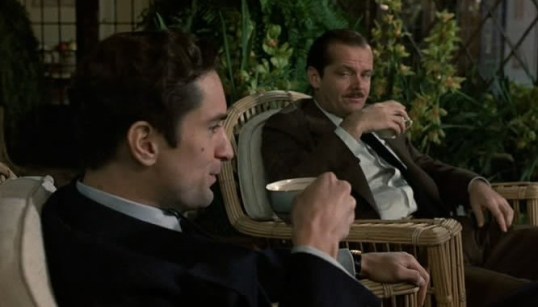
Still, this is the only film to feature both De Niro and Jack Nicholson. (The Departed was originally conceived as a chance to bring De Niro and Nicholson together, with De Niro being the original choice for the role eventually played by Martin Sheen.) Nicholson’s role is small and he doesn’t show up until the film is nearly over. He and De Niro have an intense table tennis match. Nicholson doesn’t really dig deep into Brimmer’s character. Instead, he flashes his grin and let’s the natural sarcasm of his voice carry the scene. It’s nowhere close to being as emotionally satisfying as the De Niro/Pacino meeting in Heat. That said, Jack Nicholson at least appears to be enjoying himself. His natural charisma makes his role seem bigger than it actually is.
Why was The Last Tycoon such a disappointment? Though unfinished, the book still featured some of Fitzgerald’s best work and there’s a huge amount of talent involved in this film. The blame mostly falls on Elia Kazan, who came out of retirement to direct the film after original director Mike Nichols left the project. (Nichols reportedly objected to casting De Niro as Stahr. While it’s tempting to think that Nichols realized that De Niro’s intense style wouldn’t be right for the role, it actually appears that Nichols and De Niro sincerely disliked each other as Nichols also abandoned the next film he was hired to direct when he was told that De Niro wanted the lead role. Nichols choice for Monroe Stahr was Dustin Hoffman, which actually would have worked. If nothing else, it would have provided a Graduate reunion.) Kazan later said that he did the film solely for the money and it’s obvious that he didn’t really care much about the film’s story. The film has some good scenes but, overall, it feels disjointed and uneven. Kazan doesn’t really seem to care about Monroe Stahr and, as a result, the entire film falls flat.
Previous Icarus Files:
 Through the Shattered Lens