In the late 90’s, I was all in on actor Chow Yun-Fat. Having only discovered his excellent Hong Kong film work a couple of years earlier, I was so excited to see what kind of splash he would make in American films. I loved his first American film THE REPLACEMENT KILLERS (1998), but I will admit it was an exercise in style over substance, and it really didn’t show off his acting abilities. Chow was working hard to improve his English language skills during this time, but that limited his performance the first time around. As I settled into my seat on the film’s opening weekend at the box office in March of 1999, I was hoping to see the Chow Yun-Fat I loved from his Hong Kong movies. But more on that later…
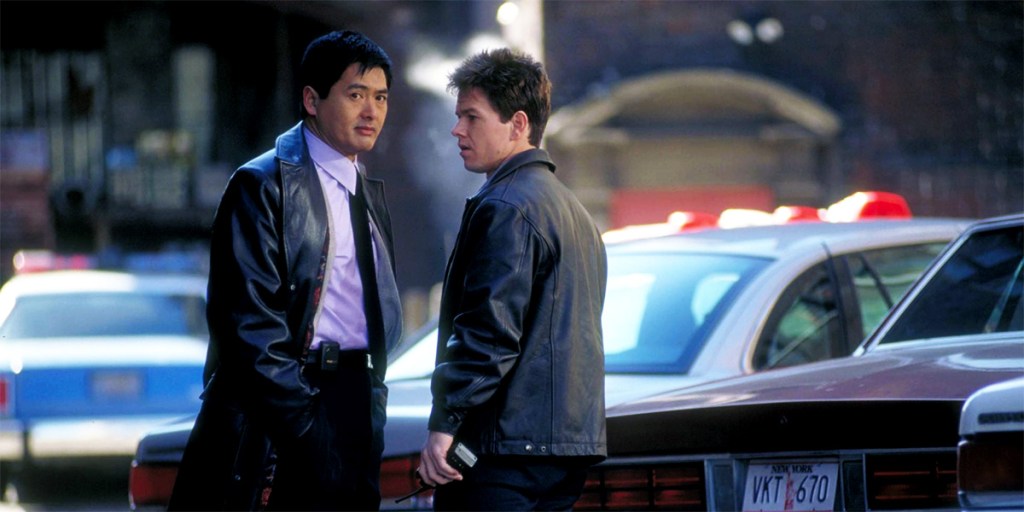
THE CORRUPTOR opens with a bomb going off in Chinatown, followed by a sidewalk assassination in broad daylight. It seems there’s a turf war being fought between a street gang called the Fukienese Dragons, led by Bobby Vu (Byron Mann), and a Chinese criminal organization called the Tung Fung Benevolence Association, led by Uncle Benny Wong (Kim Chan) and Henry Lee (Ric Young). We then meet Nicholas Chen (Chow Yun-Fat), a heroic, highly decorated NYPD cop who runs the Asian Gang Unit. His unit is tasked with trying to keep the peace in Chinatown, but with all the recent violence, they’re clearly failing. Knowing he needs more help, Chen requests additional manpower and gets the young and eager Danny Wallace (Mark Wahlberg). The two men don’t hit it off immediately as Chen had wanted a more experienced, Asian cop. Over time, however, Chen begins to trust Wallace and begins to let him into the inner workings of the unit.
We soon find out that things are much more complicated in Chinatown police work than they might have appeared at first. Chen is not quite as heroic as initially presented. He’s a morally conflicted man who wants to do good work for the people of Chinatown, but in the process, he’s compromised himself by taking sides and forming a delicate alliance with Uncle Benny and Henry Lee. And Danny isn’t quite the young, green cop he was presented as either. In fact, he’s been secretly tasked by Internal Affairs to monitor Chen and his unit. As Wallace sees what’s really going on in Chinatown, and after Chen saves his ass on multiple occasions, it becomes harder and harder for him to do his job and build a case against Chen. As the film reaches its conclusion in this world of grey, we will see if Chen and Wallace can work together and take down Henry Lee and Bobby Vu, who have formed an alliance to take over Chinatown’s criminal activities. And we will find out what Wallace will do with the information he has on Chen.
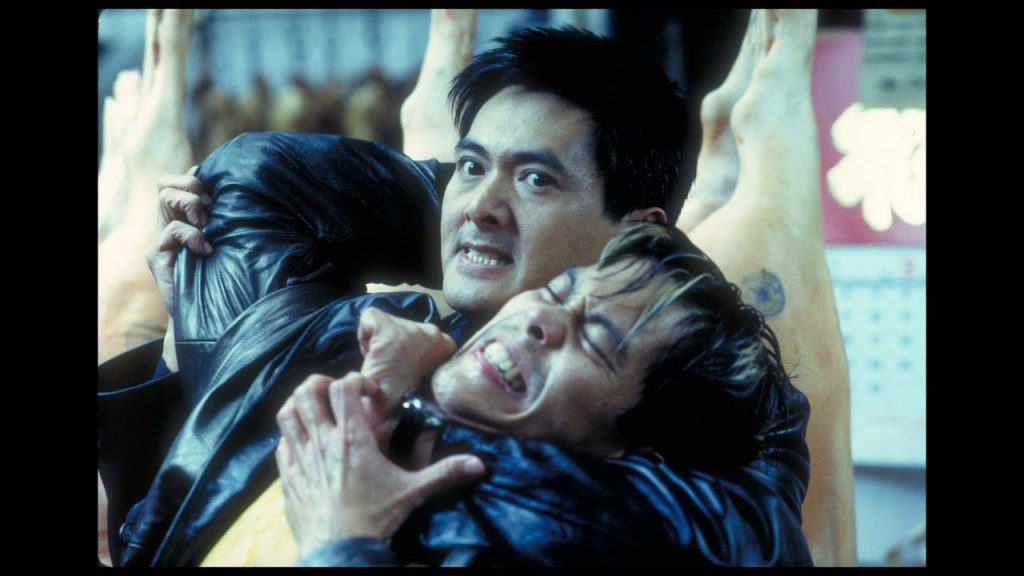
I’m a big fan of THE CORRUPTOR, and the primary reason is the excellent performance of Chow Yun-Fat. No other American made action film showed off the extraordinary charisma that made him a superstar in Asia in the 1980’s. In this film, Chow is able to play both sides of the law and still remain incredibly likable. He pulls this balancing act off in a way that appears effortless, and yet there are very few actors in the world who are capable of doing it. Mark Wahlberg had emerged as a major film star a couple of years earlier with the runaway success of BOOGIE NIGHTS (1997). I think he’s very good in this film as well, as his character must reconcile his ideals against the reality of fighting crime in such a dangerous environment. There’s a scene near the end where Chen has been informed that Wallace is internal affairs and confronts him about it. Wahlberg is incredible in the scene, setting the stage for the exciting resolution of the film.
THE CORRUPTOR has several excellent action set-pieces, beginning with a shootout at a lamp shop. This is when I knew this movie was going to present the Chow Yun-Fat I know and love. His personality is displayed in the scene, along with his two guns blazing in slow motion. There’s also an intense car chase through crowded streets and a final showdown on a cargo ship that really stood out to me. Director James Foley was probably hired based on his prior work that showed an ability to deal with moral ambiguity in films like AT CLOSE RANGE (1986) and GLENGARRY GLEN ROSS (1992). While he wouldn’t be my first directorial choice for an action film, he does a fine job in my opinion.
Overall, I recommend THE CORRUPTOR to any person who likes Chow Yun-Fat, Mark Wahlberg, or an entertaining action film. It’s not in the league of Chow’s best Hong Kong films, but it is his best American action film, because it actually gives him a strong character to play. That went a long way with me.
I’ve included the trailer for the film below:
 Through the Shattered Lens