This is from the Brady Bunch Variety Hour!
Meow!
This is from the Brady Bunch Variety Hour!
Meow!
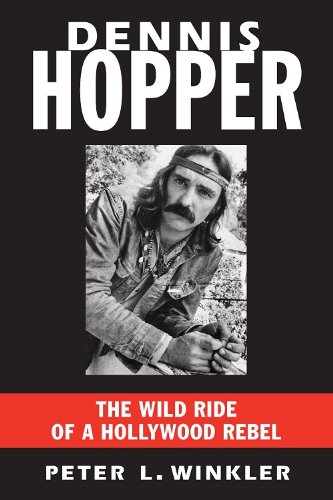
Sometimes, I have to remind myself that Dennis Hopper is no longer with us.
Seriously, he’s one of those iconic screen figures who remains as much of a pop cultural presence in death as he was in life. For an actor who spent a good deal of his career under an unofficial blacklist, Hopper appeared in a number of classic films. Rebel Without A Cause, Giant, Night Tide, Easy Rider, Apocalypse Now, Blue Velvet, Speed, True Romance, The Trip, The Other Side of the Wind, Queen of Blood, Land of the Dead, Hoosiers, Out of The Blue …. one of the things that they all share in common is the eccentric presence of Dennis Hopper. Even Hopper’s bad films, like Waterworld, are more popular than the bad films of other actors. And while Hopper will probably always be best-known as an actor, he’s received some posthumous recognition for his work as a director. It’s been 12 years since Dennis Hopper passed but he’s still very much a part of the American cultural landscape.
How did this happen? How did Dennis Hopper go from being a kid from Kansas to being a disciple of James Dean? How did Hopper go from appearing in big budget films like Giant to working as a member of Roger Corman’s stock company? How did Hopper come to revolutionize American film with Easy Rider, just to lose the next few years of his life to his legendary addictions? Remarkably, Dennis Hopper not only inspired the “New Hollywood” with Easy Rider but he nearly destroyed it with The Last Movie. In the 70s and the first half of the 80s, he was still capable of giving a good performance but the key was to find him when he wasn’t dealing with a fit of drug-induced paranoia. And yet, even with his addictions and demons, he still directed one of the most important films of the 80s, Out of the Blue.
Remarkably, Hopper did eventually conquer his addictions. Starting with David Lynch’s Blue Velvet, Hopper remade himself as one of Hollywood’s busiest character actors and, to many, he became an almost lovable relic of the 60s. The former self-described communist became a Republican. And, even if he never could quite restart his directing career, Hopper stayed busy for the rest of his life. It was a remarkable transformation. The rebel who once ran a cult-like commune in New Mexico became a beloved member of the establishment that he once swore he would destroy.
Peter L. Winkler’s 2011 biography, Dennis Hopper: The Wild Ride of a Hollywood Rebel, takes a look at how this happened. The Dennis Hopper that emerges from this detailed biography is a natural born rebel who was also canny enough to keep one foot in the system that he was trying to destroy. As such, Hopper could shares James Dean’s dismissive attitude towards Hollywood while also remaining a favorite of John Wayne’s. Hopper could make the ultimate hippie film without actually becoming a hippie himself. Hopper had the talent necessary to keep getting roles even when he had a reputation for not being quite sane. Indeed, the book argues that Hopper’s best performances were given when he had something to prove and that Hopper’s work and his films became significantly less interesting once he was fully welcome back into the establishment.
And while I do think that Winkler is a bit too dismissive of some of Hopper’s later work, he does have a point. Dennis Hopper thrived on being a rebel, which is one reason why he came to define the late 60s and the early 70s. One reason why Hopper’s performance as Frank Booth in Blue Velvet remains so powerful is because he’s rage is so palpable. Booth is trying to destroy the world, just as surely as Hopper once tried to destroy Hollywood. But, eventually, Hopper’s style of rebellion fell out of fashion and then resurfaced as the subject of nostalgia. The rebels always eventually become the establishment.
Winkler’s biography not only takes a look at some of Hopper’s best films but it also puts him and his work in a proper historical and cultural context. The book is as much about what Hopper represented to a generation as how Hopper lived his life. And while Hopper himself is not always a sympathetic figure (like many actors, he could be more than a little self-absorbed), he does come across as being a fascinating talent. Hopper often referred to himself as being the epitome of the “American Dreamer” and this biography leaves no doubt that he was correct.

Emmy voting has officially closed but I’m still catching up on this year’s contenders. I should be able to finish up over the upcoming week.
The Beatles: Get Back (Disney Plus)
This documentary, which was produced and put together by Peter Jackson, is about the recording of Let It Be and the final days of the Beatles. Featuring actual footage of the Beatles joking, arguing, and acting like a dysfunctional family, this is a fascinating but extremely long documentary. I watched the first episode on Saturday and I was exhausted by the time that it ended but I’m still looking forward to watching the remaining two episodes next week.
As far as the Beatles are concerned, I like George.
Better Things (Hulu)
I watched two episodes of the latest season of this sitcom on Tuesday. Pamela Adlon’s great but the show was a bit depressing, in the way that so many sitcoms tend to be nowadays. I guess the best way to put it is that the show has its moment but sometimes, it seemed to be trying too hard.
Bridgerton (Netflix)
I watched a bit of the second season on Thursday. I liked the costumes.
Flack (Amazon Prime)
Ann Paquin plays a self-destructive, London PR agent. I watched two episodes from the show’s second season. Paquin was great and Sam Neill appears in a few episodes but the show itself was a bit predictable. Even it’s cynicism felt a bit trendy.
The Flight Attendant (HBOMax)
Oh my God, I love this show! Kaley Cuoco gives a brilliant performance as a flight attendant who is both a recovering alcoholic and an asset for the CIA. I watched the second season this week and it wonderfully balanced comedy with action.
The Gilded Age (HBO)
This HBO series takes place in New York City in 1882 and it’s basically an American version of Downton Abbey, which is not surprising considering that it was created by Julian Fellowes. The first season followed a host of characters as they navigated their way through New York’s demanding social world. It was good but occasionally a bit uneven, largely because of the presence of Marian Brook (Louise Jacobson), who comes to New York to stay with her wealthy aunts (Christine Baranski and Cynthia Nixon). Marian is supposed to be the audience surrogate but she’s such a dull and self-righteous character and Jacobson gave such a blah performance that I soon found myself dreading any scene that involved her.
Far more interesting were the characters of robber baron George Russell (Morgan Spector) and his ambitious wife, Bertha (Carrie Coon). As long as the show focused on them and on the servants (all of whom has their own opinions on the wealthy people they served), The Gilded Age was compelling and entertaining. It’s also a gorgeous show to look at. I am looking forward to the the second season, though I hope there will be a bit less Marian drama to deal with.
Hacks (HBOMax)
I watched two episodes of the second season of this comedy. Jean Smart plays an egocentric comedian. Hannah Embinder plays her writer. Embinder and especially Smart give good performances. The rest of the show’s ensemble isn’t as interesting.
iCarly (Peacock)
Yay! Carly’s back! I binged the second season on Wednesday and this is a good example of how a show can be updated for the times without losing its charm.
Inspector Lewis (YouTube)
The Inspector and Hathaway had to solve another series of murders in Oxford. Hathaway was trying to quit smoking and he was so miserable about it that I actually cheered a little when he lit up at the end. Good for you, Hathaway! I don’t smoke and I do think that people should be happy.
The Lincoln Lawyer (Netflix)
Eh. I watched the first episode of this new legal series. I enjoyed the movie with Matthew McConaughey but the show was boring. It was David E. Kelley on autopilot.
MacGruber (Peacock)
It’s been a while since I’ve cared about SNL but I definitely remember MacGruber and I enjoyed his show on Peacock. Will Forte is so underrated.
The Marvelous Mrs. Maisel (Amazon Prime)
I finally watched the latest season of The Marvelous Mrs. Maisel. It’s a good show, I just hope no one’s getting too attached to Lenny Bruce.
The Squid Game (Netflix)
In this South Korean show, a group of financially destitute people are recruited to play deadly games for the amusement of the wealthy. I finally watched this show on Wednesday and Thursday and I was a bit surprised to learn that it lived up to its considerable hype. I know that some people, including the show’s creator, say that its a critique of capitalism. Myself, I feel that its a critique of authoritarianism but then again, I’m a capitalist. The most important thing is that the imagery was memorably surreal and the cast did a good job of making things feel real.
Ted Lasso (Apple TV+)
I finally watched the first two episodes of this second season of this series on Wednesday. I will probably never join the cult of Ted Lasso but I do agree with those who have praised Jason Sudeikis’s performance in the title role. If there was ever a Ted Lasso/Barry/MacGruber cross-over event, I probably wouldn’t mind.
What We Do In The Shadows (Hulu)
What We Do In The Shadows actually airs on FX but I watched the 3rd season on Hulu. It’s a funny show, sort of like The Office but with exceptionally crude vampires. The third season was both funny and surprisingly poignant, as Colin Robinson actually died. (Maybe he faked his death but then Nandor crushed his head while trying to revive him….) This season also featured the brilliant Kristine Schaal as The Guide.
Yellowstone (Peacock)
I finally watched this show, binging the entire fourth season on Monday and Tuesday and, to my surprise, I really enjoyed it. Kevin Costner plays a politically powerful rancher who has a lot of enemies. The great Kelly Reilly plays his daughter. The show was undeniably melodramatic but it was also a lot of fun, with great performances from Costner, Reilly, Wes Bentley, and Cole Hauser. I’ve never been a huge fan of Costner in the past but this show makes the best use of his somewhat flinty screen presence.
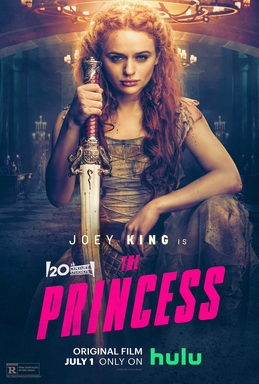
An unnamed Princess (Joey King) has been taken prisoner by the evil Julius (Dominic Cooper). Julius wants to take control of the kingdom and the best way to do that is to force the Princess to marry him. The morning of what is planned to be her forced wedding, the Princess wakes up handcuffed and trapped in one of those huge towers that always seem to turn up in movies like this. The Princess takes one look out the window and is confronted by some cartoonish CGI that lets the viewer know that she’s really up high.
Fortunately, this Princess has spent most of her life training to be a warrior. Under the tutelage of Linh (Veronica Ngo) and Khai (Kristofer Kamiyasu), the Princess has learned how to fight and defeat almost any enemy. (“Fight from you heart,” Linh tells her.) As such, the Princess has no fear of breaking her wrist so that she can remove the handcuffs. Soon, she is running through the tower, fighting every man that she comes across.
The first few fight scenes are cool and I appreciated the scene where the Princess shot a man with a crossbow just as he started to yell the C-word because, seriously, you boys have been going overboard with that word lately. Ultimately, though, there’s so many fight scenes that eventually, the viewer can’t help but notice that the fight choreography itself is rather simplistic. The Princess spends a lot of time jumping and spinning around in slow motion. She’s good at sliding across the floor while ducking her head to avoid swinging swords and flying arrows. It’s enjoyable the first few times but, as the film progresses, it all gets a bit repetitive. A huge part of the problem is that none of Julius’s henchmen appear to be particularly competent. They keep making the same stupid mistakes over and over again and, as such, it’s not really empowering to watch The Princess defeat them because they’re all so clumsy that it seems anyone could defeat them. Even Julius commits the cardinal sin of talking when he should be fighting. A great hero needs a great villain and unfortunately, The Princess doesn’t provide that. Still, the fight scenes are preferable to any scene that involves dialogue as the script sometimes seems to have been written by an AI programmed to include every cliché possible. On the one hand, the Princess is smashing the patriarchy. On the other hand, good intentions do not make up for clunky dialogue.
To be honest, there’s a certain cynicism at the heart of The Princess that’s a bit off-putting. Written by two men and directed by another, The Princess is so proud of itself for featuring a young woman kicking ass that one has to wonder if the people responsible are seriously not aware that the action girl is one of the leading pop culture clichés of the past 20 years. The main complaint about the action girl trope is that the character is often not given any personality or motivation beyond the fact that she can beat people up and look good while doing it. The Princess doesn’t even bother to give its main character a name. For all the talk about the fate of the kingdom, we never learn how the Princess feels about any of it.
As for the cast, neither Joey King nor Dominic Cooper are well-served by a script that doesn’t offer any sort of real depth to the characters. Both deserve better.
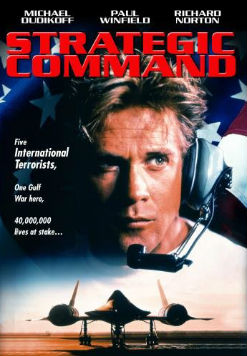
In the 1997 film, Strategic Command, Richard Norton plays a terrorist named Carlos …. wait for it …. Gruber. If that last name sounds familiar, that’s because the villain of Die Hard was named Hans Gruber and the bad guy from Die Hard With A Vengeance was named Simon Gruber. Gruber — the number one name in hostage situations!
Anyway, Carlos Gruber and his fellow terrorists steal a chemical called Bromax from the FBI. Bromax is a chemical weapon, one that can be used to kill thousands of people. It’s probably not a good idea for anyone to have Bromax, regardless of whether they are terrorists or the FBI. What’s the point of Bromax, really? It only has evil purposes. Plus, it has a stupid name.
Gruber proceeds to hijack Air Force Two, holding the Vice President (Michael Cavanaugh) and several journalists hostage. Gruber wants his fellow terrorists to be released from prison and he’s prepared to kill the Vice President if he doesn’t get what he wants. Perhaps because Gruber realizes how little the Vice President actually does, Gruber is also willing to spray Bromax over America.
Not wanting to see America get Bromaxed, the President sends an elite force of special op. soldiers after Air Force Two. Captain Rattner (Jsu Garcia, back when he was still using the name Nick Corri) is in charge of the mission and he doesn’t expect there to be any slip-ups. Accompanying Rattner’s men is Rick Harding (Michael Dudikoff!), the inventor of Bromax! Along with not wanting to see Bromax sprayed over America, Harding also wants to save the life of his wife, Michelle (Amanda Wyss, who co-starred with Jsu Garcia in the original Nightmare on Elm Street). Michelle is one of the journalists on the plane.
Strategic Command is stupid, yet strangely likable. It’s impossible not to admire the film’s attempt to be a huge action epic without actually spending any money. As a result, Air Force 2 is a commercial airliner. There’s a surprisingly small number of people involved on both sides of the plot. The viewer might expect the hostage situation to be one of those big, “all hands on deck” emergencies but, instead, the President is content to send 6 people to get the job done. Fortunately, there aren’t that many terrorists either. This is action on a budget.
Adding to the film’s overall strangeness is the miscasting of Michael Dudikoff as a quiet and somewhat nerdy scientist. This is one of those films where the viewer is meant to assume that a character is smart just because he’s wearing glasses. Dudikoff is so miscast that, again, it all becomes strangely likable. He and Richard Norton are so enthusiastic about chewing up the scenery that it’s kind of fun to watch. Also fun to watch is the legitimate great actor Bryan Cranston, cast here as a vain and cowardly anchorman. One gets the feeling that this is probably not a film that Cranston brags about but his performance isn’t bad at all. Every film like this needs to have a self-important reporter who can get humiliated in some fashion and Cranston handles the role like a pro.
Strategic Command is dumb but kind of fun, in the way that many 90s direct-to-video action films tend to be. It’s a good film for when you want to watch something that won’t necessarily require your full attention. In fact, the less thought one gives to what happens in Strategic Command, the better. Watch it for Dudikoff, Norton, and especially the one and only Bryan Cranston!
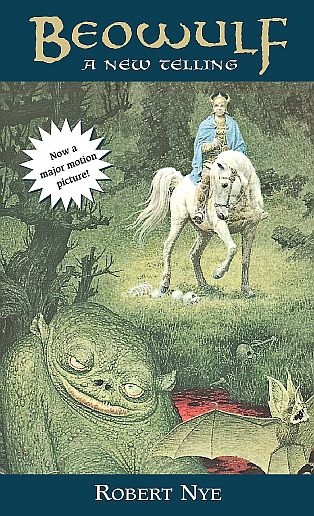
Wow, what an annoying book!
First published in 975, Beowulf tells the story of a Danish king named Hrothgar who can’t be bothered to be a good neighbor. The loud parties at his mead hall ends up annoying both Grendel and his mother so Grendel takes it open himself to start killing Hrothgar’s men. Hrothgar and his men are forced to abandon their mead hall …. which, well, that would be the solution right there, wouldn’t it? I mean, they could just go somewhere where there isn’t a monster living nearby and build a new mead hall. And maybe they could establish some new mead hall rules, like “Keep it down after 10 pm” and “You Don’t Have To Go Home But You Can’t Stay Here.” But instead, Hrothgar decides to cry about it. Seriously, dude, it’s just a mead hall!
Anyway, this jerk named Beowulf sails over to help out Hrothgar. But before Beowulf can help out Hrothgar, he has to spend a lot of time bragging on himself and telling everyone that he’s the greatest warrior that has ever lived. I mean, he goes on for so long that I was wondering if maybe he was just planning on boring everyone to death. Beowulf goes on to kill Grendel with his bare hands and then, when Grendel’s mother complains, Beowulf kills her too. Uhmmm …. yay, I guess.
Many years later, Beowulf is the king and one of his slaves steals a gold cup from a dragon. Needless to say, the dragon is not happy about this and really, who can blame it? I imagine that dragons spend a lot of time collecting their gold and it’s always struck me as odd that humans seem to think that they have the right to just steal from the dragons whenever they feel like it. With the dragon threatening his kingdom, Beowulf has to come out of retirement to fight one final beast….
The main problem with Beowulf is that the main character is kind of a jerk and he has a really bad habit of bragging on himself. If I was one of his subjects, I would dread having to ask him for help because Beowulf is apparently incapable of just doing something without using it as an excuse to puff himself up. Instead, he has to brag about how he’s the only person in the world who could possibly do it and, to top it all off, he has to make everyone else feel bad about the fact that they’re having to ask Beowulf for a favor. Beowulf is such a long-winded jerk that he makes Grendel and the Dragon seem sympathetic by comparison.
I’m not surprised that the author of Beowulf is anonymous. Who would want to take credit for this? For a far better look at life in the 8th Century, check out John Gardner’s Grendel. Or go watch the Robert Zemeckis-directed 2007 film adaptation, which has its flaws but also features Angelina Jolie, Crispin Glover, Anthony Hopkins, and John Malkovich! How can you wrong with a cast like that?

Happy Canada Day!
Today, in honor of Canada, I’ve decided to share my picks for the 20 best episode of my favorite Canadian television show, Degrassi!
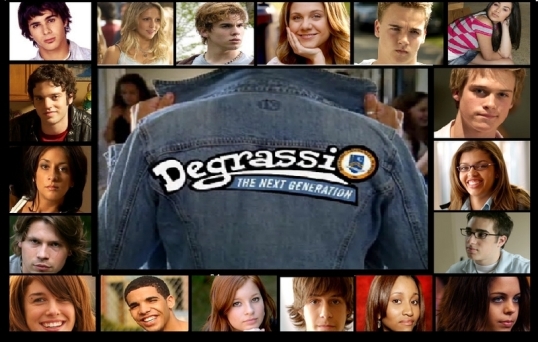
Degrassi does The Breakfast Club! In fact, this episode so closely follows the plot of The Breakfast Club, one has to wonder how John Hughes would have felt about it. This episode is classic Degrassi in that it shouldn’t work but it does. Plus, it’s the start of the Ellie (Stacey Farber) and Sean (Daniel Cameron) romance! Ellie and Sean were one of the best couples in Degrassi history, I don’t care what Emma says.
This is probably best-remembered for the scene where Jimmy (Drake) gets shot in the back but the entire episode is actually a sensitive look at the school shooting phenomenon. Ephraim Ellis deserves a lot of credit for making school shooter Rick Murray both deeply creepy and, occasionally, pathetically sympathetic. Still, one has to wonder why Alex (Deanna Casaluce) was never punished for her part in the prank that drove Rick over the edge. Our beloved Spinner (Shane Kippel) and Jay (Mike Lobel) were expelled and treated like pariahs. Alex not only remained class Vice President and somehow became far more popular with all of Jimmy’s friends.
Two years after being raped by Dean, Paige (Lauren Collins, giving one of her best performances) learns that the case is finally coming to trial. At first, Paige doesn’t want to testify, saying that she doesn’t want to relive the ordeal and that it won’t make any difference anyways. With Spinner’s support, Paige finally does testify but, despite her testimony, Dean is still acquitted. Paige spirals into self-destructive behavior before finally destroying Dean’s car in one of the show’s most cathartic moments. The first time I watched this episode, I was stunned and horrified by Dean’s acquittal. Even though Paige eventually took responsibility for destroying Dean’s car, I still cheered when she did it. If only Dean had been inside of it at the time.
Ellie deals with the stress of having an alcoholic mother and a media internship by cutting herself. Degrassi was one of the first shows to deal with self-harm and it did so with a commendable sensitivity.
Due to his cancer treatments, Spinner is given medicinal marijuana and is soon wandering around the entire school stoned out of his mind. Not only did this episode feature one of Shane Kimmel’s best performances but it also featured the classic line, “I’m going to fail English! What type of idiot fails his own language!”
Emma (Miriam McDonald), who was previously the show’s token good, liberal activist, grows increasingly self-destructive in the wake of the school shooting and eventually heads into “the Ravine.” The end result is that she gets a STD from Jay but she also gets the lead role in Degrassi’s production of Dracula. This one of those Degrassi episodes that was so controversial, it almost didn’t air in the United States.
Craig Manning (Jake Epstein) asks Ashley Kerwin (Melissa McIntyre) to marry him, beats up his stepfather, trashes a hotel room, and eventually learns he’s bipolar. This was a powerful episode, one that wasn’t even harmed by a subplot about Liberty (Sarah Barrable-Tishauer) and J.T. (Ryan Cooley) working together to write the spring musical.
Also known as Degrassi Goes Hollywood!
Since the start of the series, J.T. Yorke (played by Ryan Cooley) had been one of the show’s most popular characters, a former joker who got serious. However, when Cooley decided to leave the show to go to college, Degrassi killed J.T. off in a scene that was so violent that it’s still shocking to watch to this day. Making the scene all the more powerful is that J.T. was, more or less, a random victim. He just happened to walk out to his car at the wrong time. Degrassi was a dangerous place.
Darcy (Shenae Grimes) starts posting racy pictures on her “MyRoom” page. A fat, middle-aged guy shows up at her house and introduces himself as the dude who has been sending her all of the complimentary comments and money. Along with introducing the character of Clare Edwards (Aislinn Paul), who would eventually became the show’s main character, this episode was also the start of a series of episodes in which Darcy transformed from being the somewhat boring, token Christian to being the most interesting person on the show.
Tired of being called “cute” and “adorable” and wanting to be known as “sexy,”, Manny Santos (Cassie Steele) changes her look and her attitude. In the process, she alienates her best friend Emma, picks up a host of new admirers, and causes JT to repeatedly walk into walls. This is one of the best-remembered episodes of Degrassi, largely because Manny never went back to her “old” self but instead embraced her new persona.
In the very first episode of Degrassi, Emma makes a creepy friend online and nearly gets kidnapped. Fortunately, Snake (Stefan Brogren) is there to toss the guy against the wall and threaten to snap his neck. Along with introducing almost all of the main characters of the show’s first 6 seasons, this episode also started the spark that would lead to Snake eventually becoming Emma’s stepfather.
After being diagnosed with cancer, Spinner gets a mohawk and gets out his aggression by accepting random fights. Who knew that Degrassi had a fight club?
Still being rejected by his old friends because of his role in Jimmy’s shooting, Spinner spends the weekend at the beach with the ultra-religious Friendship Club. Jay complicates things by showing up. Darcy and Spinner were an underrated couple and this is one of their key episodes.
Oh my God, JT’s selling drugs! Well, Liberty is pregnant and JT does need the money but still! This episode is remembered for the final freeze frame of JT sitting in a hospital bed and sobbing. Degrassi could be a dark show.
Craig’s back in town. Ellie and Manny are both excited but …. oh my God! Craig’s picked up an addiction to cocaine! This is best-remembered for the scene in which Craig gets a sudden nosebleed while performing during the intermission of a Taking Back Sunday show.
Manny discovers that she’s pregnant. This is the episode that was considered to be so controversial that it didn’t even air in the United States until two years after it was originally broadcast in Canada.
The later seasons were never quite as good as the first few but still, we got a few good episodes out of them. Like this episode, in which Alli (Melinda Shankar) starts the “I Hate Holly J” Facerange group. Yes, Facerange. Degrassi wasn’t going to get sued.
Ashley Kerwin’s the most popular girl in school until she takes ecstasy and ends up telling everyone what she really thinks about them. Fortunately, Ashley became a much more interesting character afterwards.
In a last hurrah for the original Degrassi gang, everyone goes on a road trip to Smithdale College. With Jay’s “help,” Manny gets into acting school. Meanwhile, Ashley reunites with Craig. Craig sings “My Window” and it was a fitting send-off to what was left of the show’s original cast.
Honorable Mentions:
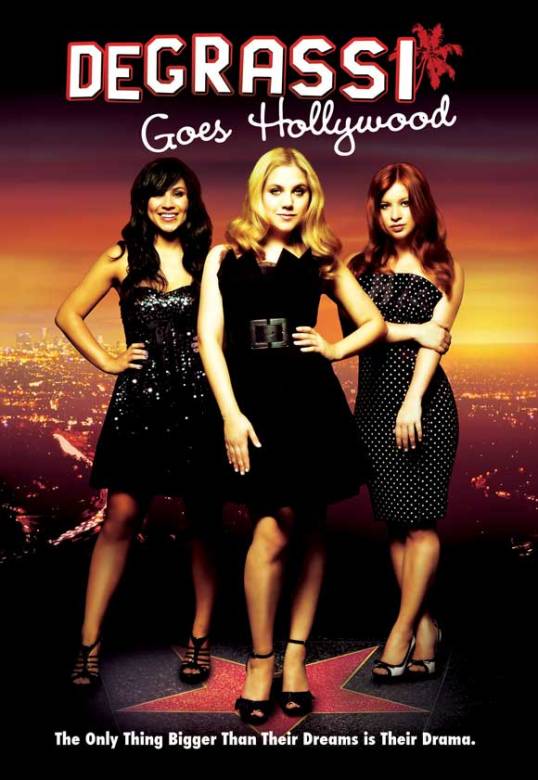
Happy Canada Day!
Meow!
Meow!
Meow!

