Film Review: Spirit Riders (dir by Brian T. Jaynes)


One of the main reasons why I love living where I do is because, any time I get in my car, I have a choice to make. I can drive for 20 minutes in one direction and soon find myself in downtown Dallas. Or, I can drive 20 minutes in the opposite direction and find myself out in the country, driving past horse ranches. I’ve always had a weakness for horses, which are not only majestic in appearance but also very loyal in personality.

Considering that, it probably shouldn’t come as a surprise that I’ve always had a weakness for movie about people who learn about responsibility by taking care of a horse. Apparently, I’m not alone in that because there are like hundreds of movies that feature that exact plot. These films always seem to tell the same basics story, i.e. out-of-control teen is sent to a horse ranch and spends the first half of the movie trying to run away and the second half of the movie learning how to ride. And I have to admit that, despite how predictable they may be, I end up enjoying just about everyone of these films that I see.

For example, consider the 2015 film, Spirit Riders. 17 year-old Kacie (Alexandria DeBerry) is a rebellious teen who gets in trouble with the law and who is sentenced to a work-release program at Spirit Riders, an equine therapy camp for disabled and physically challenged young people. At first, she struggle with all of the rules. She wants to smoke. She wants to fight. She wants to sneak off with her boyfriend, who is a total loser despite bearing a slight resemblance to Eric Balfour. She doesn’t want to make friends. She certainly doesn’t want to take care of a horse.

However, she soon meets Rex (Lance Henriksen), who is the owner of the ranch. Rex is tough but compassionate. He’s been around for a while and he’s heard all of the excuses. Rex tells her to stop feeling sorry for herself and to take care of her horse. Rex is stern but it’s obvious that he cares. Rex, in short, is the type of character that Lance Henriksen was born to play. A lesser actor would have just played Rex as being a serious-minded hardass but Henriksen does a good job of projecting the compassion that lurks underneath Rex’s no-nonsense exterior. Henriksen is one of those actors who sometimes seems as if he’ll appear in any film that’s offered to him. I mean, there aren’t many actors who can brag about appearing in everything from Pumpkinhead to Dog Day Afternoon to Near Dark to Spirit Riders to countless direct-to-video actions films. And yet, no matter what the role or the film, Henriksen always gives a good performance. Along with his undeniable physical presence, he just projects a certain integrity, the type that we usually associate with actors from Hollywood’s Golden Age of westerns and war films. Even when he’s playing a villain, you respect him. In Spirit Riders, he’s playing a good man and he makes that compelling.

I don’t want to oversale Spirit Riders, of course. It’s a fairly predictable film, one that will play best with people who already like horses and who can tolerate some occasionally heavy-handed plotting. But Alexandra DeBerry gives a good performance as Kacie and Lance Henriksen turns Rex into a monument to decency. The ranch itself is lovely to look at and so are the horses. It’s a pleasant film, one that’s won’t change the world but which I still enjoyed watching.

Film Review: Mahler (dir by Ken Russell)


The 1974 film, Mahler, opens with a stunning shot on a beautiful little hut sitting at the end of a pier that overlooks an idyllic lake.  Suddenly, the hut bursts into flames.  Two children watch, both with oddly happy expressions on their face.  A nude woman breaks free from a white cocoon while a rock that looks oddly like a face appears to watch her.

Suddenly, the scene changes to a train that’s traveling through Europe in the early 20th century.  Traveling on the train is Gustav Mahler (Robert Powell) and his wife, Alma (Georgina Hale).  Every time the train stops, a crowd of people gathers and tries to get Mahler’s attention.  Mahler, however, is obviously ill.  Obsessing on death, he has Alma draw the shades.

The film switches back and forth, from the conventional train setting to extremely stylized views of what one can only presume is taking place in Mahler’s head.  When Mahler has a heart attack, he envisions himself in a glass coffin, screaming as he watches Alma with her lover, Max (Richard Morant).  Every word that he hears on the train prompts him to think about the past but the past, as Mahler remembers it, is full of anachronistic details and references to events that took place long after Mahler’s death.  Mahler either remembers or imagines a trip to an insane asylum, where he meets a crazed man who claims to be the Emperor.  When Mahler thinks about how he converted to Catholicism to further his career, he imagines himself jumping through rings of fire while Richard Wagner’s widow, Cosima Wagner (Antonia Wilson), dressed like a Nazi dominatrix, taunts him.  The hut at the lake appears again, an apparent paradise where Mahler works on a composition about the death of his child.  Alma, meanwhile, surrenders her own musical ambitions, burning her compositions in a nearby forest.

Hmmm …. so, what we have here is a biopic of a renowned composer of classic music, one that is extremely stylized and features a good deal of religious symbolism.  With that in mind, it should come as no surprise that this is a Ken Russell film.  Especially early on in his career, the British director took an obvious joy in taking conventional genres and shaking them up with his own flamboyant style.  In fact, by Russell standards, Mahler is almost a conventional film.  For all of the shocking images to be found in Mahler, the film is still easier to follow than either Tommy or Lisztomania.  (There’s no scene in Mahler that’s quite as in-your-face as the scene in Lisztomania involving the giant phallus.)  If anything, one looks at Mahler in that glass coffin and Cosima Wagner with that swastika on her backside and thinks, “Well, Ken Russell was a bit subdued this time out.”  (Indeed, even the scenes of Mahler tied to a cross aren’t that shocking if you’ve seen other Russell crucifixion scenes.)

That said, Ken Russell’s relatively subdued approach works well with Mahler.  By keeping one half of the film conventional and one half of the film flamboyant, Russell comments on how we always tends to remember the events of our past as being more extreme than they actually were.  We internalize our fears and our prejudices and we make them into reality in our memories.  Mahler’s memories may be over-the-top but then again, the same can be said for everyone’s memories.  When Mahler imagines his family as being almost cartoonish stereotypes, Russell is showing how Mahler has internalized the anti-Semitism of German society.  When he pictures Cosima goose-stepping as he converts to Catholicism, Russell shows that Mahler was aware that he rejecting his heritage for his career.  (Some might find some of the images to be sacrilegious but Russell himself was a practicing Catholic.  Only the truly faithful could be as sincerely critical of the Church as Russell often was in his movies.)  Meanwhile, that the far more conventional scenes on the train work is largely due to the perfect casting of Robert Powell and Georgina Hale.  They’re believably in love but, even more importantly, they’re both believably brilliant.  You look at both Powell as Mahler and Hale as Alma and you instantly accept that they could both compose beautiful music.  The film portrays Mahler as being an early 20th century rock star and Powell plays the role with a mix of charisma and frailty.  As played by Powell, Mahler is someone who knows that he destined to be remembered as a great composer but who also struggles with the price that he’s paid to achieve his dream.

Ken Russell was a truly unique talent and, while Mahler may be a bit more conventional than some of his later films, it’s still a good example of what made him such an important (if underrated) filmmaker.

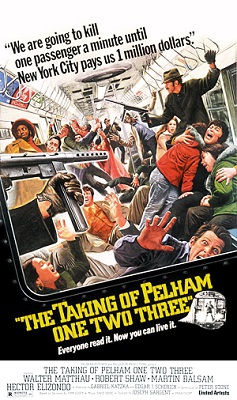
Film Review: The Taking of Pelham One Two Three (dir by Joseph Sargent)


Welcome to New York in the 1970s!  While the intellectuals flock to the latest Woody Allen movie and the wealthy throw radical chic parties in Manhattan and disturbed young men drive taxis at night and pray for a real flood to clear away all the vermin, most of the city’s citizens are just trying to make it through the day.  For many of them, that means spending an hour or two riding the subway.  In some ways, the subway is the great equalizer.  The minute that you sit down on a filthy train car, it doesn’t matter how old you are or how you vote or the color of your skin.  All that matter is finding a way to avoid making eye contact with anyone else.

Four men, all wearing obvious disguised, board the downtown Pelham 1-2-3 train.  They all look suspicious but, this being New York, no one wants to make eye contact.  Everyone just wants to reach their next stop.  The men — who are known as Mr. Blue (Robert Shaw), Mr. Green (Martin Balsam), Mr. Grey (Hector Elizondo), and Mr. Brown (Earl Hindman) — have other plans.  Revealing that they’re armed, they take the 18 passengers of the first car hostage.  Their leader, Mr. Blue, has a simple demand.  He wants a million dollars to be delivered to the car within an hour.  If the money’s late, he will kill one hostage every minute, until he receives what he wants.

While the cold-stricken mayor (Lee Wallace) tries to figure out how to 1) raise a million dollars and 2) handle the situation without losing any potential votes in his reelection campaign, Lt. Zach Garber (Walter Matthau) communicates with Mr. Blue via radio.  With Mr. Blue underground and Zach above ground, the two of them establish a cautious rapport.  Robert Shaw plays Blue as being efficient, polite, but ruthless while Walter Matthau plays Garber with his usual rumpled but intelligent style.  As embodied by Matthau, Garber is New York City in human form while Shaw is perfectly cast as the outsider who, for at least an hour or two, has managed to bring the city to its knees.

Even though the original The Taking of Pelham One Two Three is often described as being a Walter Matthau film or a Robert Shaw film, the film’s main character actually is the city of New York City.  The film portrays the city as being chaotic, angry, and unpredictable but, at the same time, also resilient and strong.  Yes, Garber may spend a lot of time bickering with his co-workers but, in the end, he and Lt. Rico Patrone (Jerry Stiller, another great New York figure) work together to do what has to be done to resolve the situation.  For all the time that’s spent on how Mr. Blue and his compatriots take that train hostage, just as much time is spent focusing on how the police, the politicians, and the Transit Authority react to what’s happened.  Not having any firsthand knowledge of the New York subway system (beyond being told not to use it when I was in NYC a few years ago), I can’t say whether or not the film is realistic but what’s important is that it feels realistic.  Even though the film is full of familiar character actors, it still seems as if you’re just watching a bunch of New Yorkers having a very long day.  Though guns are fired and there is a runway train, The Taking of Pelham One Two Three takes a refreshingly low-key approach to its story.  There’s no huge action set pieces.  The film’s classic final shot hinges not on Garber’s marksmanship but instead on his ability to remember the small details.

The Taking of Pelham One Two Three is one of my favorite heist movies.  It’s well-acted.  It’s got an interesting plot.  It’s got a few moments of unexpected humor.  Robert Shaw is a great (and, at times, almost compelling) villain while Walter Matthau and Jerry Stiller make for a great detective team.  The great Martin Balsam also turns in a wonderful turn and, even though he’s playing a bad guy, it’s hard not to sympathize him.  You need only see his apartment to understand why exactly he felt the city of New York owed him more than it had given him.  Best of all, The Taking of Pelham One Two Tree is a tribute to a great American city.  The Taking of Pelham One Two Three celebrates New York City in all of its rude, messy, and brilliant glory.

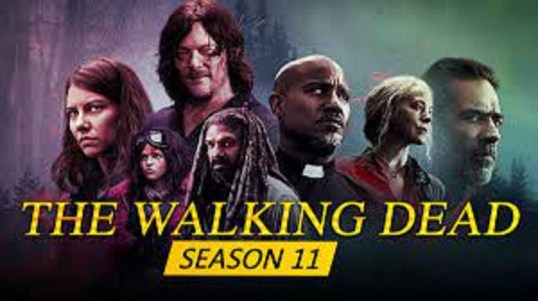
TV Review: The Walking Dead 11.5 “Out of the Ashes” (dir by Greg Nicotero)


As opposed to what we’ve previously seen since the start of the 11th season, this week’s episode of The Walking Dead focused on multiple storylines.

At the Satellite Outpost, Negan and Maggie continued to argue about whether or not anyone else in their party would be smart, lucky, or brave enough to join them.  At this point, Maggie and Negan pretty much sound like an old married couple and, considering the chemistry between Lauren Cohan and Jeffrey Dean Morgan, that could very well be what they end up becoming by the time the show ends.  Sorry, Glenn!  Anyway, this time Maggie won the argument because Gabriel and Elijah eventually showed up and proved that people could be depended upon.  Yay, Maggie!  Unfortunately, if Gabriel’s the best you go, you probably have bigger problems to deal with than just a philosophical disagreement.

At Alexandria, Judith tried to keep the other kids from taunting the Walkers and potentially getting everyone killed.  Judith had a point but seriously, no one likes a snitch.

Aaron, Carol, Lydia, and Jerry returned to the ruins of Hilltop on a supply run.  It turned out that Hilltop was also being used as a home by the last surviving Whisperers!  Their leader, Keith, insisted that the Whisperers were no longer a threat.  Aaron didn’t quite buy that and he wanted to torture and then kill Keith.  Fortunately, Carol talked him out of it.  Keith lost an arm but he got to keep his life.  And he also told them where Connie’s hiding!  Now, of course, is where I should remind our readers that, until the start of this season, I hadn’t really watched the show since Carl died so I’m not exactly sure who Connie is.  But I guess I’ll soon find out.

Meanwhile, at the Commonwealth, Eugene and the crew got to watch a really neat presentation on VHS tape that welcomed them into the community.  Eugene then went for a walk with Stephanie and nearly screwed everything up when he broke into the radio room and tried to contact Alexandria!  Or did he?  See, my theory is that the Commonwealth is still setting Eugene up.  They’re manipulating him to reveal everything that he knows about Alexandria but they’re doing it in a way that makes it seem as if they actually don’t want to know anything about Alexandria.  They’re manipulating him into contacting Alexandria by pretending like it’s something they don’t want him to do.  It’s all very clever and it’s the type of thing that Eugene always seems to fall for, despite the fact that he’s the smartest guy on the show.

This week’s episode, which was directed by Greg Nicotero, was a definite improvement over the past few episodes.  I liked the fact that it focused on several different groups, as opposed to getting bogged down with one repetitive storyline.  I liked that it revisited the Whisperers and showed that, as far as they were concerned, they were the heroes and the Alexandrians were the villains.  (The show has always been at its best when it has acknowledged that even the bad guys are just scared, lonely, and trying to survive the end of the world.)  The Judith subplot was handled well and showed that some things — like obnoxious children –are never going to change.

Mostly, though, I just liked the Commonwealth stuff.  From the minute I saw that introduction on the VHS tape, I was all about the Commonwealth.  The intro may have looked cheap and all the happy scenes were obviously staged but, seriously, it’s easy to see why some people would find it appealing after spending years fighting other humans and trying to avoid Walkers.  I loved the way the tape went from celebrating community to celebrating “security.”  It felt very relevant to our current times, a true libertarian’s nightmare.  You want to have ice cream and watch your kids play?  Then you’ve got to accept the legion of armored men watching everything that you do.  And, as always, I loved the oddball intensity of Josh McDermitt in the role of Eugene.  I would seriously watch a spin-off that was just Eugene going to different communities and voicing his disappointment with their life choices.

This was a good episode, one that took a look at how different communities are trying to find some sort of normalcy in the face of the zombie apocalypse.  The remains of the Whisperers are just scrounging to survive.  Alexandria is trying to balance the needs of the collective with the need of every human being to be an individual.  And the Commonwealth is living in denial, embracing the myth that random chaos can be controlled by strictly enforced order.  

I’m looking forward to seeing where things to go.  After a few weak episodes, The Walking Dead might be able to reclaim some of its lost narrative momentum.  Here’s hoping!

Lisa Marie’s Week In Television: 9/12/21 — 9/18/21


Again, this was another week where I didn’t watch much.  But I have a good reason.  Number one, I was up at Lake Texoma for the first part of the week and I forgot to set the DVR to record a few shows.  Number two, I accidentally DVRed a reshowing of the first episode of Impeachment and I missed the second episode and, since I didn’t care much for the first episode, I didn’t bother to rewatch.  Number three, I somehow totally forget abut the Brooklyn Nine Nine finale.  That was such a good show but I always had a hard time figuring out when it was actually airing.  Finally, I watched quite a few movies this week as I continued to prepare for October!

So, here’s a few notes on what little television did I watch:

Allo Allo (Sunday Night, PBS)

Having avoided (through a convoluted set of circumstances) marrying the head of the community resistance, Rene found himself being targeted for death by that same resistance.  Rene was forced to once again fake his own death and then wander around the village disguised as his father, which meant putting on a fake beard.  Rene even resorted to asking Herr Flick to “lock me up in one of your dungeons for a few days,” but Flick refused because they couldn’t just have people wandering in from off the street.  Rene even asked Office Crabtree to arrest him.  “Are you confessing to a cream?” Crabtree responded, in his broken French.  It was all a bit complicated and, in the end, nothing really worked out.  But it made me laugh and that’s the important thing.

Bachelor in Paradise (Tuesday Night, ABC)

Because I forgot to set the DVR, I only saw one of this week’s episodes of Bachelor in Paradise.  Lil Jon was the new host because eventually, every reality show will be hosted by Lil Jon for a week.  I didn’t really pay too much attention to the show, to be honest.  I had just gotten back from the lake and I was tired.

Big Brother (All the Time, CBS and Paramount Plus)

It’s almost over and I’m happy about that.  I like Big Brother but I always get a bit bored with it towards the end.  I’m still writing about the show over at the Big Brother Blog.

Hell’s Kitchen (Monday Night, FOX)

I was happy that Trenton won, even though he did occasionally act like a bit of a jerk.  Still, he obviously earned his victory and I’m sure that Megan will find success as well, even if she didn’t ultimately win Hell’s Kitchen.  I really liked this season.  The kinder, gentler Chef Ramsay was fun to watch and, for once, he really seemed to actually enjoy working with the younger chefs.  Who would have thought that Hell’s Kitchen would end up becoming the most positive and feel-good reality show of 2021?

Moone Boy (Sunday Night, PBS)

Two episodes of Moone Boy aired on Sunday.  I recorded both.  The first featured the Moones trying to fool granddad into giving up his house so that Fidelma, Dessie, and the baby would have some place to live other than with them.  Meanwhile, Martin wandered about with a video camera, hoping to capture something that could be sent to Ireland’s version of America’s Funniest Home Videos.  Fortunately, it turned out that Grandad’s home was full of bats and when they attacked Dessie, Martin had his video!  The second episode featured Martin and Padraic all excited about the idea of aliens having landed in Boyle.  Can you blame them?

Open All Hours (Sunday Night, PBS)

After overordering, Arkwright desperately tried to get his customers to buy extra apples.  Meanwhile, Granville continued to wonder how his once promising life had descended into the living Hell of being a 40 year-old stockboy.

The Ultimate Surfer (Tuesday Night, ABC)

Though two episodes aired this week, I only watched the 2nd episode.  I still have no idea what’s happening on the show, beyond that it features a lot of attractive people getting wet.  But, sometimes that’s all a show needs.

The Walking Dead (Sunday Night, AMC)

I wrote about the latest episode of The Walking Dead here.

Yes, Minister (Sunday Night, PBS)

PBS aired two episodes of Yes, Minister and I recorded both of them, despite having seem both of them before.  That’s just how good this show is!  The first episode featured Jim unsuccessfully trying to reduce the power and size of the civil service.  The second episode featured a lively debate about whether or not the government should allow citizens to have any privacy.  Even though this show is over 40 years old, both episodes continue to feel extremely relevant to our current situation.  That’s the mark of a good show.

TV Review: The Walking Dead 11.4 “Rendition” (dir by Frederick E. O. Toye)


I was up at Lake Texoma this weekend so I missed the latest episode of The Walking Dead when it originally aired.  I did, however, set the DVR for it.  I came back from the lake on Tuesday of this week and while I was eager to watch most of the shows that I had recorded, I really couldn’t summon up much enthusiasm for The Walking Dead.  For the show’s first four or five seasons, The Walking Dead is what I would have immediately watched but, eleven seasons in, the show no longer holds the promise of the unexpected.  Instead, it has settled down into a comfortable pattern.

Earlier today, when I finally did get around to watching Rendition, it all felt very, very familiar.  Once again, Darryl ended up wandering off on his own  Once again, Darryl ended up getting captured and tortured by the latest group of evil humans, The Reapers.  We learned a little about Reaper culture but, despite the whole religion angle, it turns out that the Reapers are just like every other group of evil humans who have shown up in the show.  At this point, even Darryl should be wondering how the exact same thing can keep happing to the exact same guy.

(At first, I was going to say that this episode did change things up a bit by having one of Darryl’s ex-lovers turn out to be a Reaper.  But then I remembered that Darryl’s brother turned up at the Governor’s prison and that was actually a lot more impressive because Darryl’s brother actually had a definable personality of sorts.  He came across as being something more than just a plot point.)

The gimmick with The Reapers is that, before the zombie apocalypse, they served in Afghanistan and they’re now ultra-religious.  That does explain why the Reaper from last week was so happy to see Gabriel and so insistent that Gabriel pray for him.  It also explain why the leader of the Reapers is named Pope, even though that seems more than a bit heavy-handed on the part of the writers.  But who knows?  Maybe this story arc will actually give Gabriel something to do other than glare at everyone with his one good eye.  One can only hope.  Watching this episode, it was hard not to contrast Gabriel’s cry of, “There is no God here!” to Pope’s request (or was it a demand) that Daryl believe in the Reapers’ version of God.

That said, this episode felt way too familiar.  It was well-acted and competently directed and all of that but it still felt a bit too safe for an episode during the final season of a show that, regardless of what it may be now, was once a pop cultural juggernaut.  If you’re like me and you’re hoping things will go out with not just a bang but with a few hundred bangs, it’s impossible not to be disappointed with this season so far.  Let’s hope things pick up and we actually do get the type of finale that The Walking Dead deserves!

Film Review: Worth (dir by Sara Colangelo)


How much is one life worth?

That’s the question that is asked in a film that’s appropriately titled Worth.

Based on a true story, Worth centers around Kenneth D. Feinberg.  Played by Michael Keaton, Fienberg was the Washington lawyer who, in the days after 9/11, was appointed the Special Master of the September 11th Victims Compensation Fund.  In that role, Feinberg was in charge of determining how much money should be given to the families who lost someone in the 9/11 attacks.  At first, Feinberg tries to reduce his job to just numbers.  He resists the efforts of his law partner, Camille Biros (Amy Ryan), to convince him to meet with any of the families one-on-one.  Instead, he tries to make it all about how much the victims would have earned if they had lived.  When Camille tries to get him to listen to a recording of the final phone call of a man trapped in the Pentagon, Feinberg refuses to do it.

Not surprisingly, Feinberg gets a reputation for being insensitive and many of the families signal that, rather than accepting the government’s compensation, they would rather sue the airlines and the city of New York, a move that we’re told could crash the U.S. economy or bankrupt the families or both.  It’s only after the workaholic Feinberg makes the mistake of staying in the office after everyone else has left that he actually meets one of the families.  With the help of activist Charles Wolf (Stanley Tucci), Feinberg finally starts to care about the people behind the numbers.

Worth is a bit of an old-fashioned film, a throw-back to the type of well-meaning, competently produced films that used to come out every December so that they could compete for the Academy Awards.  Even the film’s rather stolid, middle-of-the road liberalism feels like an artifact of another age.  (I had to laugh a little when the film assured us that, despite sometimes coming across like a jackass, Feinberg was a good guy because he had been a senior aide to Ted Kennedy, the senator who left a woman to drown in a car while he went back to his hotel and got some sleep.)  At a time when Adam McKay is being treated as a serious thought leader and Aaron Sorkin has somehow been recast as a sensible moderate, Worth’s fairly even-handed and nonjudgmental approach feels like almost an act of rebellion.  That said, Worth’s approach works for the story that it’s telling.  9/11 was such a huge tragedy that it doesn’t need to be talked to death, as it would be in a Sorkin film.  Nor do we need the heavy hand of Adam McKay to tell us that there’s something inherently disturbing about reducing the value of someone’s life to a mere number.  Unlike the films of McKay, Sorkin, or Jay Roach (Hell, why not throw him in there, too?), Worth trusts the audience to be able to figure out certain truths on its own.  After a decade of heavy-handed political agitprop, Worth’s nonshowy approach is actually a bit refreshing.

As a character, Kenneth Feinberg is not always easy to like.  That’s especially true during the first half of the film, when Feinberg seems to be more interested in the challenge of running the compensation fund as opposed to the people that he’s supposed to be helping.  When the film begins, Feinberg is the epitome of the technocrat who can figure out the numbers but who has no idea how to actually deal with human beings.  Fortunately, Feinberg is also played by Michael Keaton, who is one of the few actors to be capable of projecting the natural authority necessary to make Feinberg compelling without also resorting to begging us to like the character.  Keaton does a good job portraying both Feinberg’s quick mind but also his social awkwardness.  When we first meet him, he’s someone who has been an insider for so long that he can’t even imagine that an outside exists.  Keaton plays him as a man who does not mean to be callous but who is so work-obsessed that he doesn’t understand how his job comes across to other people.  Even more importantly, though, Keaton does a good job of portraying Feinberg’s transformation from being a detached bureaucrat to being someone who actually cares about the people who will effected by his decisions.  A lesser actor would have overplayed these scenes and the film would have felt mawkish.  Keaton underplays and it saves the film.

As I said before, Worth is an old-fashioned film.  Visually, it sometimes resembles the type of movie that HBO used to win Emmys with in the mid-aughts.  Keaton so dominates the film that, only afterwards, do you realize that the talented supporting cast was often underused.  Worth is not a perfect film but it is a good film and a thought-provoking one.  It’s currently showing on Netflix.

Two From Cirio H. Santiago: Silk and Silk 2


When is an Andy Sidaris film not an Andy Sidaris film?

When it’s directed by Cirio H. Santiago, of course!

Santiago, the Roger Corman of the Phillippines, is credited with directing 100 films over the course of his 60-year career and the 1986 film Silk is definitely one of them! And the sequel, 1989’s Silk 2, is definitely another one. That may sound like faint phrase and I guess it is. Let’s just face it — not everyone is going to be a Cirio H. Santiago fan. Some people are going to want movies that make sense and maintain some sort of continuity from scene to scene. To those people, I will say that Silk and Silk 2 are probably not for you. However, if you just enjoy watching people fire guns and blow things up, the Silk films might be for you.

In the first film, Cec Verrell plays Jenny Sleighton, also known as Silk. Silk is the toughest cop in what we’re told is Honolulu but which is obviously Manila in real life. Early on Jenny informs us that she’s known as Silk because, “I’m so fucking smooth.” Silk may be smooth but she’s also deadly. The film establishes early on that Silk will basically shoot anyone. Normally, that might be a problem but, fortunately, Silk only seems to meet criminals. Over the course of the film, Silk investigates a smuggling operation. She starts out busting heroin dealers and then eventually comes across an identity theft ring …. at least, I think that’s what happens. Trying to follow the plot isn’t always easy but then again, why would you want to follow the plot of a film like Silk? The plot’s not the point. The action is the point and Cec Verrell is such a convincing action star that I’m surprised that she didn’t have a bigger career. Seriously, Cec Verell kicks ass!

Unfortuantely, Cec Verell did not return for Silk 2. In Silk 2, Monique Gabrielle steps into the lead role. Technically, Gabrielle is better at convincingly delivering her dialogue that Verell was but Gabrielle is never believable as an action star. As opposed to the first Silk, which emphasized action, Silk 2 emphasizes nudity and it even features a strangely blurred sex scene. (It’s like soft focus times twenty.) The plot of Silk 2, however, is a bit more fun than the plot of the first film, as it deals with the search for some ancient scrolls and it features Silk’s partner continually getting captured and tortured by the bad guys. After a while, you start to wonder if maybe Silk should stop rescuing him every time that he kidnaps because, seriously, the guy needs to learn to make more of an effort not to kidnapped every time he leaves his house. Eventually, Silk teams up with an ancient scroll expert, who looks like a reject from the brat pack. He and Silk fall for each other, of course. As with the first film, it’s not always easy to follow what’s going on but it’s a short movie and it’s quickly paced, making it ideal for when you want to watch a movie but you don’t necessarily want to have to pay too much attention to it.

Technically, neither Silk nor Silk 2 are that good but they’re both entertaining when taken on their own admittedly special terms. For all of his flaws as a filmmaker, it’s hard not to appreciate the fact that Cirio H. Santiago, like Andy Sidaris and Roger Corman, never let a lack of budget or ability stand in his way. Between 1955 and 2014, Cirio H, Santiago directed 100 films and every single one of them is uniquely his. There’s something to be said for that.

Lisa Marie’s Week In Television: 9/5/21 — 9/11/21


Jeff and I have been up at Lake Texoma since Wednesday so I haven’t watched much television.  There’s nothing wrong with that, of course.  Sometimes, it’s important to take some time off.

Here’s a few thoughts on what I did watch this week:

Allo Allo (Sunday Night, PBS)

After being absent for a few weeks, Allo Allo is back on PBS!  Having won his freedom from the Communist Resistance, Rene finds himself still expected to marry the head of the Communists.  Meanwhile, Herr Flick continues to search for the missing painting, Edith somehow does not realize that Rene is cheating on her with literally everyone on the show, and Crabtree continues to speak very bad French.  It was a strange but entertaining episode.

Bachelor in Paradise (Monday and Tuesday Night, ABC)

This week, temporary host Lance Bass was replaced by Tituss Burgess.  Unlike the sarcastic David Spade and the overly earnest Bass, Burgess was just kind of boring, though it was fun to watch the Bachelors and the Bachelorettes all pretend to be huge Unbreakable Kimmy Schmidt fans.  Anyway, though I watched them, I didn’t really pay much attention to either one of this week’s episodes.  It’s a show about attractive people hanging out on the beach.  You really don’t have to pay that much attention to what’s actually going on.  Just enjoy the scenery.
Big Brother (All The Time, CBS and Paramount Plus)

It’ll be over by the end of this month!  Until then, I’m writing about it over at the Big Brother Blog.
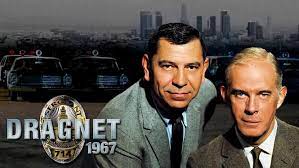
Dragnet (Weekday Mornings, MeTV)

I finished binging Dragnet this week, watching the final three episodes of the show’s fourth season on Monday and Tuesday.  In a minute, the results of that binge.

Monday got started with an episode in which Joe and Gannon were investigating a string of robberies.  A woman called them and claimed that her ex-husband was responsible.  However, it turned out that he wasn’t responsible and that his ex was just trying to get him in trouble because she was still angry over the end of their marriage!  However, it then turned out that, even though he wasn’t responsible for the crimes his wife accused him of, he was still holding up other stores!  It was actually kind of an interesting story though, Dragnet being Dragnet, all of the action did stop for a lengthy explanation of how fingerprinting works.  This was followed by another episode in which Joe and Gannon tracked down a thief, this time a safecracker.  The safecracker was well-played by G.D. Spradlin, who later played Sen. Pat Geary in The Godfather Part II and Col. Corman in Apocalypse Now.  This episode was also memorable for featuring a crime victim named Mr. Letterman.  Needless to say, whenever his name was mentioned, I immediately pictured David Letterman looking annoyed.

On Tuesday, I set the DVR to record the final episode of the 60s revival of Dragnet.  This episode, called “The Victims,” followed Joe and Gannon over the course of one night, as they investigated a series of crimes.  They investigated a few robberies and yet another murder at a boarding house.  Throughout it all, the emphasis was placed less on the detectives and more on the traumatized victims of the crimes that they were investigating.  Throughout the show’s run, even during the campy third season, Dragnet centered around the idea that that the job of the police was to protect and serve the public and this episode emphasized that point.  With the exception of a scene where Joe (rightly) reprimanded a patrolman who didn’t show enough compassion for a robbery victim, there was no moralizing.  Instead, Joe and Gannon did their jobs as best they could and tried to help out the innocent victims of terrible crimes.  It was the perfect final episode for this series.

Now that my binge of Dragnet is over, I can say that it wasn’t a bad show at all.  Yes, it’s dated, as any show that ran from 1967 to 1970 would be.  And yes, the drug-and-hippie shows were frequently campy.  But there really weren’t as many episodes about drugs and hippies as I imagined.  Instead, for the most part, this was just a show about two men trying to do the right thing and protect their community.  Some of the episodes were undeniably silly and it’s easy to laugh at any episode in which Friday and Gannon went undercover but quite a few of the episodes hold up well as police procedurals.  If nothing else, the show is an interesting time capsule of when it was made.  As a history nerd, I enjoyed it.

Hell’s Kitchen (Monday Night, FOX)

On Monday night, there were two episodes of Hell’s Kitchen, meaning that two chefs were eliminated ahead of next week’s finale.  Steve was the first to go, with Chef Ramsay saying that Steve had talent and a good attitude but that he wasn’t vocal enough in the kitchen.  Second to go was Brynn, who Rasmsay said had the makings of a great chef but who still needed to learn how to control her emotions.  I don’t think anyone who has watched this season was surprised to see those two chefs eliminated but I did appreciate that Ramsay emphasized their positive traits and encouraged them, even as he sent them out the door.  I like the kinder, gentler Ramsay.

Three chefs remain and the finale is next week!  Personally, I’m rooting for Trenton.
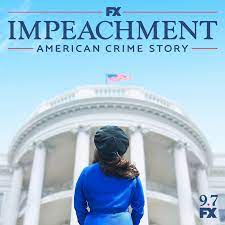
Impeachment: American Crime Story (Monday Night, FX)

This is the third installment of Ryan Murphy’s American Crime Story series and it deals with the impeachment of President Bill Clinton.

The first installment of American Crime Story dealt with the O.J. Simpson trial and it worked largely because the involvement of Scott Alexander and Larry Karaszewski worked as a buffer against producer Ryan Murphy’s worst instincts.  The second installment, about Andrew Cunanan and Gianni Versace, started out strong but ended up getting so bogged down in its reverse chronology gimmick that it lost whatever narrative momentum it had going.  It’s too early to pass judgment on the third installment but I’ve had my doubts about it from the beginning.  In what world, I wondered, could an Arkansas hillbilly like Bill Clinton, a living caricature of everything that is wrong with American politics, somehow be played by the handsome and charming Clive Owen?  Even with Monica Lewinsky reportedly signing on as a co-producer, it was hard to imagine Ryan Murphy ever producing a show that would truly be critical of a Democrat, even one as terrible as Bill Clinton.

The first episode was uneven.  It dragged a bit, lacking a dramatic set piece like O.J. Simpson getting arrested or Versace getting shot, in broad daylight, outside of his mansion.  Instead, this episode built up to Bill Clinton calling Monica Lewisnky for phone sex but the effect was ruined by the sight of Clive Owen wearing a prosthetic nose.  The majority of the episode was taken up with Sarah Paulson, acting up a storm as yet another obnoxious character with no social skills and while Paulson did her usual good job, it all felt rather familiar.  The episode worked best during the few scenes that focused on Paula Jones, well-played by Annaleigh Ashford.  Jones was the first woman to accuse Clinton of sexual harassment and, in the days before Me Too, she was ridiculed and caricatured as being “trailer trash” by the rabidly pro-Clinton national media.  In the scenes in which Jones faced a barrage of ridicule and outrageously sexist questions from the press, Impeachment showed why this decades-old political scandal matters.

Mom (Weekday Afternoons, Paramount Plus)

On Tuesday afternoon, as I was packing to go up to the lake for the week, I had Mom playing in the background.  I think I went through about four episodes.  I didn’t pay much attention but, from what I saw, each one seemed to be more depressing than the last.  This show always reminds me of why I could never be an alcoholic because there’s no way I’d ever be able to bring myself to sit through those AA meeting with all of their rules.
Moone Boy (Sunday Night, PBS)

After being gone for a few weeks, Moone Boy is once again airing on PBS on Sunday Night.  This week’s episode featured Padraic running away from home and Debra trying to launch a new career as a marriage counselor.  Needless to say, things didn’t go as planned for either one of them.  It was a funny episode, as they tend to be.  I especially enjoyed it when Martin and Padraic attempted to take up shoplifting.

Open All Hours (Sunday Night, PBS)

Open All Hours is back on PBS.  This week, Arkwright went to a funeral and left Granville alone at the store.  Though Granville seemed to enjoy having some time to himself, I’m going to guess that he probably spent most of the time wondering how he had ever ended up trapped in a go-nowhere existence, living in a run-down shop as an indentured servant to a greedy old man who cared not whether his employee lived or died.  It was a pretty dark episode.
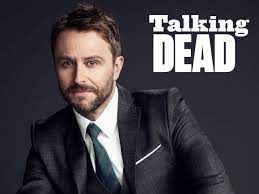
Talking Dead (Sunday Night, AMC)

It was fairly dull Talking Dead this week.  Sometimes, Talking Dead is the perfect way to recover from an intense viewing experience.  Other times, it just reminds you that it’s essentially a one-hour infomercial for The Walking Dead.  This week was a case of the latter.

The Ultimate Surfer (Monday and Tuesday Night, ABC)

Much as with Bachelor in Paradise, I have no idea what’s actually happening on this show.  I just know that it features attractive people surfing and that’s really all that matters.

Upstart Crow (Sunday Night, PBS)

On Sunday, I rewatched the first episode of Upstart Crow, with Will working on Romeo and Juliet, Kate lobbying for a chance to play the lead role despite the law against allowing women on stage, and Will’s family wondering why his poems don’t make much sense.  I had seen it before but it all held up very well.

The Walking Dead (Sunday Night, AMC)

I (finally) reviewed this week’s episode earlier today.  You can read my thoughts by clicking here.

Yes, Minister (Monday Morning, PBS)

Yay!  Yes, Minister is back on PBS!  They’re reshowing the show from the beginning so I rewatched the first two episodes on Monday morning.  The first dealt with Jim Hacker learning about his new ministry and getting expertly manipulated by Sir Humphrey for the first time.  This was followed by the episode in which Jim discovered that the world’s newest dictator was an old college classmate.  Both episodes held up well to repeat viewing.  In fact, having to deal with the daily reality of a Biden presidency has led me to have a greater appreciation for this show’s satirical portrayal of shallow politicians and devious civil servants.

TV Review: The Walking Dead 11.3 “Hunted” (dir by Frederick E. O. Toye)


Seeing as how it’s been nearly a week since it aired, I guess I should go ahead and review the latest episode of The Waking Dead. No doubt about it, we’re all about timely reviews here at the Shattered Lens!

The latest episode of The Walking Dead was …. well, it was okay. Actually, it was better than okay. It was actually pretty good. It was well-directed. It was well-acted. There was plenty of gore, if that’s what you’re into. There were a lot of walkers. The Reapers continued to do villainous things for vague reasons. Duncan and Agatha died, so we won’t have to keep track of them anymore. After being absent for the previous two episodes, Carol showed up long enough to do her whole “compassionate but ruthless” thing. Gabriel announced, “God isn’t here anymore” before stabbing a guy in the head. It was all well-done and effective but, and I say this a lot when it comes to The Walking Dead, it was also pretty familiar. That’s the problem when a show like this goes on for 11 seasons. By this point, almost any show is going start to repeating itself and that’s been the case with The Walking Dead for a while now.

The repetitive nature of the show always leaves me with mixed feelings. Yes, the Reapers are frightening and evil but how are they any different from any of the other frightening and evil groups that have showed up over the course of this show? Yes, being eaten by a walker is not a pleasant thought but, by this point, we know that, unless it’s a season finale, only minor characters have to really worry about getting eaten by a walker. Maggie is not going to get eaten by a walker, at least not this early in the season. Neither is Negan, if just because it’s fairly obvious that show’s writers enjoy coming up with sarcastic dialogue for him. That said, I do think The Walking Dead deserves some credit for remaining consistent in its portrayal of a world without hope. The world of The Walking Dead has always been dark and dangerous and the worst thing that the show could do, at this point, would be to pretend like things will ever get better. Even Gabriel has lost his faith, accepting that the world is now ruled by chaos and random destruction.

The stuff with Carol and the horses felt like it was mostly just tacked on to give Carol and Rosita something to do but I enjoyed the interplay between Negan and Maggie. Jeffrey Dean Morgan and Lauren Cohan had an interesting …. well, I guess you’d have to call it chemistry …. in their scenes together. The first three episodes of the season have devoted a lot of time to comparing and contrasting Maggie and Negan’s leadership styles and, interestingly enough, it seems like Maggie has more in common with Negan than she wants to admit. One gets the feeling that her refusal to abandon Alden was as motivated by Maggie’s need to not turn into Negan as it was by any humanitarian impulse. Still, one can see that Maggie is starting to see that Negan might be right. Survival in world ruled by chaos often means abandoning compassion.

Overall, this was a good episode. At this point, The Walking Dead has lost its power to shock but it’s nice to see that it can still occasionally tell an effective story.