This has been an exhausting week. Getting sick with the flu during the last week of September set me behind as far as my Horrorthon plans were concerned and this week has been extra busy as a result. I’ve been working very hard and it’s been very emotionally rewarding but still, I’ve been pretty busy over the past eight days or so. So, I didn’t want much television this week but still, here are some thoughts on what I did watch!
The Amazing Race (Wednesday Night, CBS)
My favorite reality show has been back for two weeks now and I have yet to get to really sit down and focus on it. The first week, I was sick with the flu and I could barely focus on what was going on. Then, this week, a huge storm came up while the show was airing and, as a result, the local weather people interrupted the show and then refused to leave. It was very frustrating! I know the show is on Paramount Plus. Hopefully, I’ll get a chance to rewatch both episodes on Sunday.
I came across this old Canadian sitcom about a supermarket on Tubi. I watched the first episode earlier today and my review will be dropping here in about two hours.
Dr. Phil (YouTube)
I watched an episode on Monday that featured a former high school guidance counselor who, after having emergency surgery to remove her gall bladder, fell into paranoia and drug addiction and ended up living in her RV. At the end of the episode, she agreed to get some help but, to be honest, she seemed kind of beyond saving.
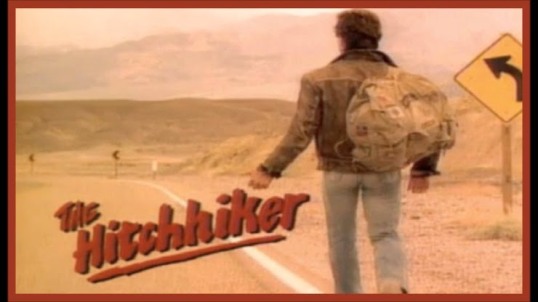
I continued to watch and pick episodes of The Hitchhiker for this year’s horrorthon. You can find the episodes that I selected on this site, under “Horror on TV.” My favorite thing about this show is, without a doubt, the extremely melodramatic monologues of Page Fletcher’s hitchhiker.
On Friday night, I watched an episode of Night Flight that was about music videos with science fiction themes. I followed this with another episode that dealt with the top “new music of 1985.”
This week, the Prime Minister had to make serious budget cuts, which worried Sir Humphrey as it could have possibly led to the Civil Service not getting their usual pay raise. Fortunately, Sir Humphrey was able to trick Jim into giving him what he wanted. As always, the episodes where Sir Humphrey is the one doing the tricking and the manipulating are the best.
On tonight’s episode of The Hitchhiker, Michael Woods plays a cocky gigolo who spends the weekend at a cabin with an alcoholic director (Jerry Orbach) and his sultry wife (Season Hubley). When Hubley suggests that Woods murder her husband, it seems like a standard noir-situation but it become obvious that Orbach is not quite as clueless as Woods assumed. Who is playing which game?
This is an enjoyable episode, largely due to the performance of the wonderful Jerry Orbach. This episode originally aired on May 12th, 1987.
An all-women motorcycle gang called the Cycle Sluts roars through the desert. Why are they called the Cycle Sluts? As their leader puts it, they know what people are going to call them so they’re reclaiming the term for themselves. Nobody tells the Cycle Sluts what to do and nobody but the Cycle Sluts decides or defines who the Cycle Sluts are. They’re rebels and they’re singers, making music and fighting the patriarchy as they make their way through the dusty corners of America. Go, Cycle Sluts, go!
When the Cycle Sluts drive into the small desert town of Zariah, the residents are not happy to see them. Zariah is a peaceful and boring town and the citizens would like to keep it that way. The citizens are happy having a town where there’s only a few buildings, next to no businesses, and only a few residents. It’s a town where not much happens and everyone can live in peace, far away from all the evil temptations of the big city and corrupt civilization. However, the town becomes a lot less peaceful when the local mortician starts to bring the dead back to life. Soon, zombies are wandering through the desert on their way back to their former home and only the Cycle Sluts and a bus full of stranded blind kids can save the town!
That slight plot description probably tells you all you really need to know to get a feel for what type of film 1989’s Chopper Chicks in Zombietown is. It was released by Troma, which means that the humor is crude, the zombie attacks are bloody, and the film’s aesthetic is undeniably cheap. That said, the film itself is enjoyable when taken on its own dumb terms. The action moves quickly, the members of the cast perform their silly roles with an admirable amount of dedication, and the whole thing ends with a message of peace and equality. The townspeople learn how to be tolerant and the Cycle Sluts learn how to trust other people. It’s about as dumb as a movie about about bikers fighting zombies can be but it’s a surprisingly fun movie. It’s hard not to cheer a little when the Cycle Sluts and the towns people and the blind kids finally set aside their differences and do what has to be done. They even manage to save the life of a baby and anyone who has seen any other Troma films knows how rare that can be. In its way, Chopper Chicks in Zombietown serves as a reminded that not every Troma film is as bleak as Combat Shock or Beware! Children at Play. The Cycle Sluts do a good job and so does the film.
Speaking of doing a good job, keep an eye out for Billy Bob Thornton, making an early appearance as the unfortunate boyfriend of one of the residents of Zariah. Billy Bob seems to be having fun with this early job and his appearance here serves as a reminder that everyone started somewhere.
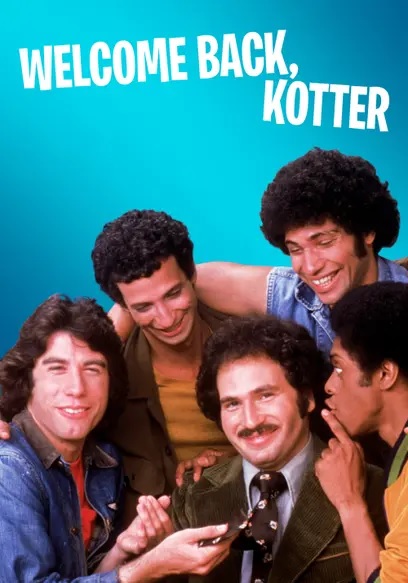
Welcome to Retro Television Reviews, a feature where we review some of our favorite and least favorite shows of the past! On Saturdays, I will be reviewing Welcome Back Kotter, which ran on ABC from 1975 to 1979. The entire show is currently streaming on Tubi!
This week is all about love and punishment!
Episode 2.13 “A Love Story”
(Dir by James Komack & Gary Shimokawa, originally aired on December 30th, 1976)
Gabe tells Julie about his Uncle Pete and Aunt Priscilla and how they won “a lot of money in the sweepstakes.”
In class, Gabe is teaching about the Spanish-American War when Freddie comes in doing the “She Loves Me/She Loves Me Not” routine with a daisy. Freddie is followed by a new student named Carmen (Lisa Mordente), who hands Gabe a note.
“Dear Mr. Kotter,” it reads, “please excuse my daughter’s violent temper. Don’t get her mad and she won’t have to deck you. Signed, Epstein’s Sister’s Mother.”
That’s right, Carmen is Epstein’s sister! When Epstein says, “What’s my baby sister doing in this class!?,” Carmen attacks him and throws him on top of Gabe’s desk.
After Gabe seperates the siblings, he introduces her to the class. Epstein can only watch in horror as Barbarino says, “You really filled out,” and Horshack says, “I want you have your children.”
Fortunately, the bell rings and school ends. Horshack stays after class to tell Kotter that he’s now in love with Carmen Epstein. Gabe encorages him to have confidence and ask out anyone that he wants to ask out.
Meanwhile, Epstein goes to the principal’s office with Carmen so that he can ask his best friend, Principal Lazarus, to transfer Carmen out of the Sweathogs. While Epstein talks to Lazarus, Horshack enters the office and approaches Carmen. When Horshack sees that Carmen is carrying a trumpet, Horshack says that he love the trumpet. Carmen plays a terrible version of Three Blind Mice for him. Horshack asks Carmen to go out with him but Barbarino walks into the office and asks Carmen to come with him. As anyone would, Carmen abandons Horshack for Barbarino. “I might even let you ask me out on Saturday,” Barbarino tells Carmen. Awwwwwww! Barbrino!
Gabe steps into the office and, as Horshack tells Gabe about what happened, Freddie steps into the room and reads a poem that he’s written for his new love. Epstein comes out of Lazarus’s office at the same time that Woodman is coming out of his office. Epstein warns Woodman that Lazarus doesn’t like him. This leads to a vintage Woodman meltdown as he points out that not only is his office smaller than Lazarus’s but his American flag only has 13 stars. “I’m plotting a mutiny,” Woodman says, “You can join, Kotter!” As Woodman plots to take over the school, Freddie mentions that he saw Barbarino heading down to the boardwalk with Carmen. Epstein announces that he’s going to kill Barbarino.
In the very next scene, Epstein has been chained to a locker and Horshack is still talking about how he just wants to devote his life to Carmen. Freddie suggests that maybe Epstein should give Horshack his blessings to date Carmen to keep Carmen away from Barbarino. Epstein agrees because he figures that Horshack won’t “try anything” with his sister. However, as soon as Horshack starts to rehearse what he’s going to say to Carmen, Epstein starts to shout, “STAY AWAY FROM MY SISTER! STAY AWAY FROM MY SISTER!”
The next day, in class, Gabe announces that they’re going to use the last few minutes of class to talk about love. He asks Vinny to explain what love means to him.
“Love,” Barbarino says, “mean never having to hear I’m pregnant.”
Epstein flies into a rage telling Barbarino to stop hitting on Carmen. Barbarino replies, “I’ve got a disease!” No, not that type of disease. It’s a disaease that Barbarino calls “Girlitis” and it requires him to hit on every girl he sees. Horshack then starts yelling at Barbarino, saying that Barbarino that he has no idea what it’s like to be alone. Carmen announces that Horshack has guts and “I like a man with guts!” Carmen then shows that she can take care of herself by beating up her brother.
Horshack literally picks up Carmen in his arms and announces that he wants to show her his shell collection under the boardwalk.
“YOU’RE GOING TO DIE, ARNOLD!” Epstein yells.
Back at the apartment, Gabe tells Julie that Carmen Epstein has transferred out of his class. Oh, okay. I guess that takes care of that plotline. Gabe tells Julie a joke about the time his sister Eileen lost a tooth and figured out that Gabe was the tooth fairy.
This is another one of those episodes that worked because it largely focused on how the four main Sweathogs related to each other. Robert Hegyes, Lawrence Hilton-Jacobs, and John Travolta all had a tremendous amount of chemistry and it’s always fun to watch them play off of each other. Ron Palillo occasionally went bit overboard but, with a character like Horshack, I imagine it was probably impossible not to. That said, Palillo more than held his own in this episode and his awkward flirting with Carmen was actually rather sweet. I still would have gone for Barbarino.
Episode 2.14 “Caruso’s Way”
(Dir by Bob LaHendro, originally aired on January 6th, 1977)
Gabe tells Julie about his uncle who was an inventor and who invented a deodorant called Invisible because, when it was worn, no one would want to acknowledge you. This leads to usual pity laughs from Julie.
At school, Gabe tries to teach about the War of 1812. (“When did it start?” Horshack asks.) Gabe notices that Barbarino is not in class and asks if anyone has seen him. Epstein says that Barbarino was fooling around in gym class and doing his “Ba-Baa-Baaa-Barbarino” dance and Coach Caruso ordered him to stay after class.
When Barbarino finally arrives at Gabe’s class, everyone wants to know what happened but a visibly shaken Barbarino insists that nothing happened and asks Gabe to resume teaching about the War of 1812. (Even Gabe is shocked.) When Epstein says he’d rather here about the “war between Vinny and Caruso,” Gabe announces that it’s Barbarino’s business and they’re not going to discuss what happened between Barbarino and Caruso.
On cue, Woodman enters the classroom and he says that he needs to discuss what happened between Barbarino and Caruso. Woodman says that he’s hearing rumors that Caruso hit Barbarino in front of the Girls Gym Class. “There are rules againt hitting students, even Sweathogs,” Woodman says, “I don’t know why.” Barbarino denies that Caruso hit him and Woodman leaves.
However, after the bell rings, Barbarino tells Gabe, Freddie, Epstein, and Horshack that Caruso did hit him but that he’s got a plan to get revenge but he can’t reveal it. Gabe suggests that Barbarino “cool down about it” before doing anything foolish.
Later, Barbarino drops in on Gabe and Julie at their apartment and you can literally see Julie (or maybe just Marcia Strassman) light up at the idea of sharing a scene with John Travolta as opposed to just with Gabe Kaplan.
Barbarino asks them if they watched the news and if they saw any reports on what happened between him and Caruso. Gabe jokes that they broke into “Bowling for Dentures” to report on it. “Really?” Barbarino asks. Awwwwwwww! Poor Barbarino!
Gabe and Julie try to dissuade Barbarino from hitting Caruso back. Barbarino says that he’s thinking of borrowing his uncle’s cement truck and using it to drive over Caruso. Gabe tells Barbarino a story about what happened when Gabe’s friend Bonzo Moretti was slapped by Caruso. Bonzo went to his parents but Barbarino says that telling his parents would just lead to his mother praying for something bad to happen to Caruso. After suggesting that Julie stock the kitchen with Danish and root beer for anyone who might drop by, Barbarino leaves.
The next day, Gabe talks to Woodman and asks Woodman would he would do if “two of your teachers had a confrontation.”
“Fire you,” Woodman replies.
Coach Caruso (played by veteran tough guy actor, Scott Brady) steps into Gabe’s classroom and, after Woodman leaves, they discuss the Barbarino situation. In a very well-acted scene (seriously, this episode features Gabe Kaplan at his most sincere), Gabe tells Caruso that, when he was a student, it bothered him when he heard about Caruso hitting kids. “Now that I’m a teacher, it bothers me even more.” Gabe explains that Caruso took away Barbarino’s pride and asks Caruso to apologize to him. Caruso refuses, saying that he his own pride to think of. Gabe convinces Caruso to come back to the classroom in the afternoon, so that Barbarino can apologize to him and Caruso can apologize back and they can both retain their pride.
However, when Caruso shows up in class and Barbarino apologizes, Caruso refuses to return the apology. (What a jerk!) Instead, Caruso challenges Barbarino to an arm wrestling contest.
“How macho!” Horshack exclaims.
Barbarino wins the arm wrestling contest! Yay! Caruso warmly congratulates Barbarino and leaves. In the hallways, Caruso confesses to letting Barbarino beat him. “When you went to school here,” Caruso says, “I taught you. Today, you taught me.” Awwwwwwww!
Back at the apartment, Gabe tells Julie about the time his Uncle Moe went to Miami Beach and jumped into a pool that he had been told was lukewarm, just to discover it was freezing. “How could you say that water was lukewarm!?” Moe demanded of another vacatinor. “I don’t know, look warm to me .”
This was a great episode, featuring the young John Travolta at his sensitive best and also giving Gabe Kaplan a chance to show off that he actually could act. Barbarino regained his pride, Coach Caruso learned how to be a better teacher, and Woodman continued to be Woodman.
In 1983, a one-eyed, illiterate drifter named Henry Lee Lucas was arrested by the Texas Rangers. Lucas was arrested for unlawful possession of a firearm but, once in custody, he confessed to murdering 82 year-old Kate Rich and his 15 year-old girlfriend, Becky Powell. Upon being transferred to the Williamson County Jail, Henry Lee Lucas confessed to one murder and then another and then another and then …. well, soon, ol’ Henry Lee Lucas had confessed to over 300 murders. According to Lucas, he had spent the past decade traveling the country with his friend and lover, Ottis Toole, and killing just about everyone they met. (Ottis, who was already in prison in Florida, was Becky’s uncle.) He claimed that he was a member of a nationwide Satanic Cult. At one point, he even confessed to killing Jimmy Hoffa.
Soon, cops from across the county were traveling down to Texas and asking Lucas if he had killed anyone in their state. Lucas’s confessed to almost every murder that he was asked about and often times, he provided details that were considered to be close enough to what happened that his confessions were considered to be credible. The police were happy because they got to take a lot of unsolved murders off the books. Lucas was happy because he was getting to travel the country, he was getting a lot of media attention, and he was being kept out of the general prison population. Indeed, many of the Texas Rangers who escorted Lucas from crime scene to crime scene would testify that, the murders aside, Henry Lee Lucas was usually polite, soft-spoken, and genial company. They would buy him a milkshake. He would confess to a murder.
It was only after Lucas had confessed to so many murderers that he had gained a reputation for being the most prolific serial killer in history that people started to take a good look at all of Lucas’s confessions. What quickly became apparent was that it would have been next to impossible for Lucas to have been everywhere that he claimed to be when he claimed to be there. Many of Lucas’s confessions fell apart under closer investigation. Lucas may have dropped out of the sixth grade but he was very good at picking up on details and manipulating people. He told the police what they wanted to hear. Even worse, it soon turned out that some of the cops were letting him look at their case files before getting his formal confession, allowing Lucas to learn details that only the killer would know. When confronted with this, Lucas recanted all of his confessions.
How many people did Lucas kill? It’s know that he killed his abusive mother when he was a teenager. And, even after he recanted, most legal observers agreed that he killed Kate Rich and Becky Powell. While some continue to insist that Lucas killed hundreds, it’s actually more probable that Lucas, as sick as he was, only killed three people. That didn’t stop Henry Lee Lucas and his confessions from serving as the basis of John McNaughton’s terrifying classic, Henry: Portrait of a Serial Killer.
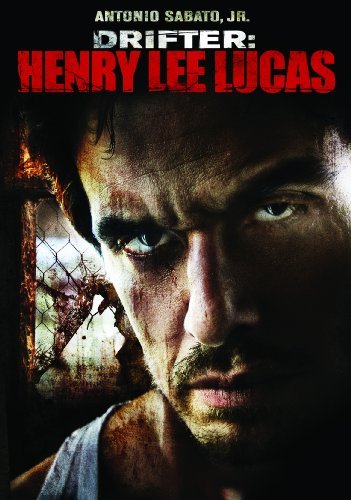
2009 saw the release of another film loosely based on the confessions of Henry Lee Lucas. Drifter: HenryLee Lucas opens with Lucas (played by Antonio Sabato, Jr.) being interrogated as to why he confessed to so many murders that he didn’t commit. The movie then flashes back to Lucas killing Becky Powell (Kelly Curran) before then flashing forward to Lucas confessing to a murder and asking for a milkshake in return and then, once again, it flashes back to Lucas’s Hellish childhood in West Virginia. That’s a lot of time jumps for just the start of the movie and it’s an early indication of just how jumbled the narrative of Drifter turns out to be. To a certain extent, the jumbled narrative is appropriate. It captures the feeling that, in many ways, Lucas is simply making up his life story as he goes along.
Physically, Henry Lee Lucas and Ottis Toole were two incredibly ugly people. Drifter casts Antonio Sabato as Henry and Kostas Sommer as Ottis, both of whom are notably better-looking than the two men that they’re playing. Sommer, in particular, is a hundred-time more handsome that Ottis Toole. (The real Toole looked like one of the toothless hillbillies from Deliverance.) Even if one overlooks their looks, both Sabato and Sommer are a bit too articulate to be believable as two backwoods murderers. Sabato does a good job of capturing Lucas’s one-eyed squint but never once do you buy that he’s someone who grew up in the backwoods of West Virginia. Meanwhile, as Becky, Kelly Curran is shrill and a bit annoying. A lot of that is due to how Becky is written but still, it doesn’t make any easier to deal with her character.
Narratively, the film avoids taking a firm position on whether or not Lucas was lying. We do see Lucas commit a few murders but they’re all told as a part of his narration, leaving open the possibility that Lucas could be lying. Unfortunately, Henry’s stories aren’t that interesting. What was interesting was that so many people chose to believe his stories, despite the fact that the majority of them fell apart under even the slightest amount of scrutiny.
In the end, Drifter reminded me that Henry Lee Lucas is far less interesting than how people reacted to Henry Lee Lucas and his willingness to confess to every crime that he was asked about. There’s a great film to be made about the people who enabled Henry Lee Lucas’s lies. Henry, himself, was far less interesting.
If I had to guess, I’d say that there is probably nothing more dangerous than being the descendant of a witch hunter. Even though your ancestors may have found some success hunting witches back in 1622, the witch’s spirit always seems to stick around and wait for its chance to possess someone close to you and get revenge. Apparently, it’s impossible to get rid of the spirit of a witch once it’s sworn a curse upon you and your family. In fact, it would probably be better to save everyone the trouble and just leave the witches alone. At least, that’s what I’ve gathered from watching movies with the word “witch” in title.
Take for example 1970’s Mark of the Witch. The film opens with a bunch of witch hunter’s sacrificing The Witch (Marie Santell). The Witch announces that she will have her vengeance, right before she’s hanged. Jump forward a few centuries and The Witch possesses Jill (Anitra Walsh), a college student who made the mistake of accepting her professor’s invitation to a séance.
Now that Jill’s possessed, it’s time to go after the descendants of the main witch hunter. To help her out with this, she blackmails the professor (Robert Elston) and demands that he explain to her how modern life works. There are a few scenes that feel like they could have been lifted from one of those sci-fi shows where the robot or the alien requests to know why humans laugh when they’re happy. I mean, I don’t know what this witch has been doing in the spirit world but apparently, she hasn’t been keeping up with the times on planet Earth. Jill’s boyfriend (Darryl Wells) suspects that there’s something wrong with Jill. Can he save her from the Witch?
Mark of the Witch was an early indie film. It was shot in Dallas in the 60s and sat on the shelf for a while. The cast was made up of local actors and to call the acting inconsistent would be an understatement. That said, Marie Santell gives an enjoyably over the top performance as the Witch and Anitra Walsh is likeable as Jill. Both of them are required to give lengthy monologues about spells and revenge and magic and all the rest and they both do their best to bring some conviction to the occasionally florid dialogue. The film itself is a bit too talky to be scary but, visually, there are a few artfully composed shots. The opening scene, in which the Witch is executed, plays out with a certain dream-like intensity. It’s not a great film but it has its moments.
For the most part, Mark of the Witch is primarily interesting as an early example of outsider cinema. The budget was low and the cast and crew may have been amateurs but they still managed to get their movie made and it’s hard not to admire their dedication. When first released, the film apparently played in a handful of Dallas drive-in but now it can be seen by anybody who is willing to search for it on YouTube. Mark of the Witch lives on.
In the 1940 film, The Devil Bat, the owners of a company in the small town of Heathville are super-excited because they’re going to be given their head chemist, Dr. Paul Carruthers (Bela Lugosi), a bonus check of $5,000. However, since Carruthers’s inventions have made millions for the company, he is offended by the small check and decides that the best way to handle this would be to sue in court and demand fair compensation …. just kidding! Instead, Dr. Carruthers sends his army of giant bats to kill the families of his employers.
The Devil Bat was produced by Production Releasing Corporation, a poverty row studio that specialized in shooting quickly and cheaply. Going from Universal to PRC was technically a step down for Lugosi but The Devil Bat is actually an excellent showcase for Lugosi and he gives one of his better non-Dracula performances as the embittered Dr. Carruthers. Indeed, one can imagine that Lugosi, who played such a big role in putting Universal on the map, could relate to Carruthers and his bitterness over not being fairly rewarded for the work he did to make others wealthy.
Enjoy The Devil Bat, starring the great Bela Lugosi!
In the 2003 film, Day of Defense, two Mormon missionaries show up in a small town. Elder Burke (John Foss) is an experienced missionary who always tries to be positive. Elder Davis (Allan Groves) is a younger, less experienced missionary who always seems to be in a bad mood and who spends a lot of time whining. Burke and Davis do not have a particularly good working relationship. One gets the feeling that Burke would rather work alone and that Davis would rather work in a big city.
However, it turns out that it really doesn’t matter whether or not David and Burke can get along because they’ve entered a town that is run by the Christian Town Council. Made up of five other members of the clergy, the CTC runs the town and has passed a law that states that you have to get a license if you’re going to preach. And they refuse to give issue a license to anyone who they consider to be non-Christian and that includes the Mormons. Elder Burke and Elder Davis are tossed in jail.
Now, at this point, the path forward seems clear enough. What the CTC is doing is clearly a violation of the first amendment of the U.S. Constitution. So, really, the Mormons should just take the CTC to court because there’s no way the law is going to survive a legal challenge.
Instead, Judge Nielson (Joan Peterson) decides that Burke and Davis should get a chance to make their case that Mormons are Christians before a jury of the town’s anti-Mormon citizenry. She assigns the town’s one public defender, Thomas (Andrew Lenz), to argue in favor of the Mormons. The town’s district attorney, James (Brooks Utley), and the head of the CTC, Rev. Williams (James Westwood), is assigned to make the case that Mormons are not Christian. The jury will decide whether Burke and Davis can stay in the town.
Uhmm….yeah. Basically, what we have here is the Mormon version of something like God’s Not Dead 2. In that film, instead of just arguing that the law states that a teacher (Melissa Joan Hart) is not allowed to promote religion in a classroom, the evil prosecutor (Ray Wise) decides that the entire case needed to be about proving that God was dead. In Day of Defense, instead of arguing that the CTC’s actions are a violation of the Constitution, the attorneys decide to prove once and for all whether or not Mormons are Christians.
The entire town shows up for the trial, heckling the Mormons. As well, a group of rednecks get it into their heads that the Mormon missionaries are going to try to steal their girlfriends. Thomas’s family demands to know why he’s defending the Mormons, despite being a Catholic. I imagine it has something to do with the fact that he appears to be the only defense attorney in the town. Rev. Williams and the other members of the CTC are all portrayed a mustache-twirling villains. There’s nothing subtle about this film.
In the end, the main thing that sticks out about this film is just how unlikable every single character in the film turns out to be. I mean, even the two Elders comes across as being jerks. Where I live, we have a sizable Mormon community and it’s not uncommon to see Elders riding their bicycles around. They’re always very polite and friendly and I always appreciate the fact that none of them smell like cigarette smoke. They’re all quite a bit nicer than the two Elders at the center of this film. Day of Defense was made to appeal to a Mormon audience but I think most Mormons would object to being portrayed as being so smug and angry.
There is a bit of tragedy towards the end of the film. It feels a bit contrived as does the film’s ending. In the end, this film wasn’t a victory for free speech as much as it was a defeat for good filmmaking.
Welcome to Late Night Retro Television Reviews, a new feature where we review some of our favorite and least favorite shows of the past! On Fridays, I will be reviewing Friday the 13th, a show which ran in syndication from 1988 to 1990. The show can be found on YouTube!
Despite the name of the series and the fact that producer Frank Mancuso was responsible for both the films and the show, Friday the 13th: The Series did not involve Camp Crystal Lake or Jason Voorhees. Instead, it was a supernatural-themed show about two cousins, Micki (Robey, who has red hair like me!) and Ryan (John D. LeMay), who inherited a cursed antique shop from their uncle, Lewis. When they discovered that Lewis spent the last few years of his mortal life selling cursed antiques, they realized that it was up to them to track down the evil items before they could cause too much harm to the world. Working with them was Lewis’s former partner, Jack Marshak (Chris Wiggins).
Episode 1.1 “The Inheritance”
(Dir by William Fruet, originally aired on October 3rd, 1987)
On a rainy night, antique store owner Lewis Vandredi (R.G. Armstrong) is literally dragged into the depths of Hell, the result of a long-ago deal that he made with the devil. The store is inherited by Lewis’s niece and nephew, Micki Foster (Robey) and Ryan Dallion (John D. LeMay).
Micki and Ryan, at first, don’t seem to have much in common. Ryan is a practical joker whose first reaction upon entering the store is to put on a rubber mask and wait for his cousin to show up so that he can startle her. The much more responsible Micki just wants to sell off whatever is in the store so that she can return home to her fiancé, an attorney who really doesn’t understand why she has to waste her time with any family stuff at all. The only thing that Micki and Ryan have in common is that neither one of them knows that their uncle made a deal with the devil to sell cursed antiques. That changes when Lewis’s former business partner, Jack Marshak (Chris Wiggins), shows up and not only tells them about Lewis’s supernatural activities but also finds the ledger where Lewis recorded all of his sales.
Uh-oh, it turns out that Micki herself has sold something from the shop. She sold an extremely ugly doll to Mr. Simms (Michael Fletcher), who in turn gave it to his bratty daughter, Mary (played by a 7 year-old Sarah Polley). Yes, the doll is cursed and yes, Mary is already using it to get revenge on anyone who annoys her. First, she uses the doll to kill her stepmother. Then, she uses the doll to kill the sweet babysitter who asked Mary to be polite about asking for snacks. When Micki and Ryan show up to retrieve the doll, Micki chases Mary to playground, where Mary uses the doll to make a statue breathe fire and a merry-go-round to spin dangerously fast. Fortunately, while Mary is tormenting Micki, Ryan walks up and snatches the doll away from her….
…. and that’s it!
Seriously, it’s kind of an anti-climatic ending but I get it. This was the first episode and, obviously, it was more important to establish why Micki and Ryan were the new owners of an antique store than to really offer up a complicated story of the supernatural. This was a pilot and it got the important part of the job done, introducing the premise and the characters. Robey and John D. LeMay were instantly likable as Micki and Ryan and the antique store was an intriguing location. The story with the doll may not have been anything special but the pilot did leave me looking forward to next week’s episode. And personally, I kind of liked how simple the solution was this week. Mary was an awful brat so there was something really satisfying about Ryan just snatching that doll away from her. Take that!
On tonight’s episode of The Hitchhiker, Dean Paul Martin (son of Dean) plays a vitamin salesman who discovers that competition can be deadly! This episode features a wonderfully sleazy turn from Dean Paul Martin and enjoyably macabre ending. Sadly, this would be one of Dean Paul Martin’s final appearances before his death in a 1987 aviation accident.




 Through the Shattered Lens