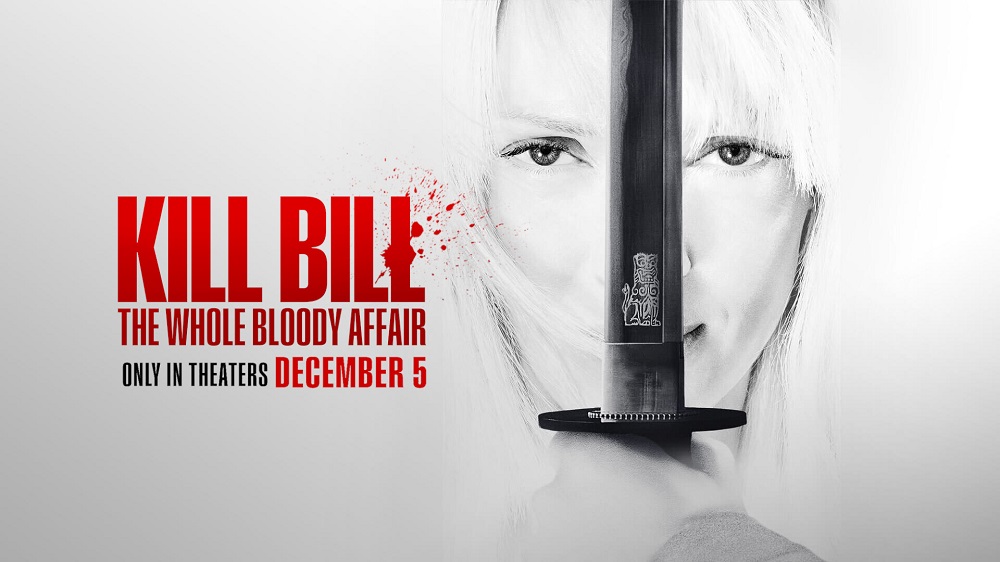
Brad’s thoughts on KILL BILL: THE WHOLE BLOODY AFFAIR!


Anything new from Quentin Tarantino is a big deal at my house. When you consider that it’s been over six years since the auteur released his most recent film, ONCE UPON A TIME IN HOLLYWOOD (2019), I was understandably excited when I saw that the full “extended cut” version of the KILL BILL films, dubbed “The Whole Bloody Affair” was being released to theaters. Then, after seeing the trailer, I became really curious about the new scenes that were added, as well as the different presentations of the previous material. When I originally watched the separate volumes at the movie theater in 2003 and 2004, I enjoyed the first movie slightly more than the second based on the fact that it had more action. Now, I wanted to see how the two volumes flowed as one single film. My wife was working this weekend, so I had some time on my hands and decided to spend about four hours of that time watching KILL BILL: THE WHOLE BLOODY AFFAIR.

First, a quick summary of the film… on the eve of her wedding, a pregnant bride-to-be (Uma Thurman) and her entire wedding party is gunned down by the Deadly Viper Assassination Squad, commanded by her former lover, Bill (David Carradine). Somehow surviving the rehearsal massacre, the Bride, who was once a member of the same assassination squad, sets her sights for revenge on each of the members, beginning with O’Ren Ishii (Lucy Liu), and then moving on to Vernita Green (Vivica A. Fox), Budd (Michael Madsen), Elle Driver (Daryl Hannah), and finally Bill himself. It’s a simple premise, but Tarantino uses that premise as a springboard to share his love of kung fu movies, samurai cinema, spaghetti westerns and grind house fare and create something truly special. I loved the KILL BILL films when they were originally released, and the four hours seemed to go by very quickly today as I had a blast watching this definitive version with a relatively full theater of fans.

After watching KILL BILL: THE WHOLE BLOODY AFFAIR, my first thought is that it wouldn’t be that different if the theater just showed Volume One, had a 15-minute intermission, and then showed Volume Two. This isn’t putting down the new version in any way, but there are not a large number of changes that enhance the overall quality of the film itself, and screening the original volumes back-to-back would provide the context for the “big picture” of the story that was lacking when the movies were released in the separate years of 2003 and 2004. With that said, watching the film in this new version was a lot of fun for me, and it should become the norm moving forward as it is truly Tarantino’s vision. It does flow better, mainly by eliminating the unnecessary, late cliffhanger reveal of the daughter in Volume One, as well as the Bride’s “direct to the camera” update at the beginning of Volume Two.

For those who want to go see this new version, I did want to point out the significant differences I noticed while viewing KILL BILL: THE WHOLE BLOODY AFFAIR. The first sequence where I noticed obvious additions to the film occurred in the anime sequence that introduces the background of O’Ren Ishii. This extended version adds additional footage of the Yakuza assassin Pretty Riki to the sequence, and once O’Ren is a slightly older schoolgirl, we get to see her execute a plan of vengeance against him. I would guess somewhere between five and ten minutes of action was added to the sequence. I enjoyed it in Volume One, and I also enjoyed the extended anime sequence in this new version. Does the sequence really add to the overall quality of the film, though? Even though I enjoyed the new material and am glad it was added, I would say no. The next significant difference I noticed with this version concerns the addition of color to the fight sequence between the Bride and the crazy 88’s in the House of Blue Leaves, as compared to the sequence in Volume One that was shown largely in black and white. As a person who doesn’t enjoy a lot of gore in my movies, it never bothered me that the scene switched from color to black and white once the limbs and heads started getting lopped off. With that said, it was kind of fun watching all those limbs hacked off in glorious color this time around. Finally, there is a post-credits animated sequence called “The Lost Chapter: Yuki’s Revenge” where Gogo Yubari’s twin sister tries to get revenge on the Bride. It lasts about ten minutes or so, but honestly, it didn’t add much to the overall experience for me, and I doubt I’ll ever watch it again. As a completist though, I am glad that I stuck around and watched it. These are the only big changes I noticed while watching THE WHOLE BLOODY AFFAIR. I’m sure there had to be some more changes, but I don’t think they were significant. 

I did want to share some final thoughts I had while watching KILL BILL: THE WHOLE BLOODY AFFAIR this afternoon. I noticed on the opening title card that the movie is dedicated to the great Japanese director Kinji Fukasaku, and you can definitely see his influence all over this film. It also affected me more watching Michael Madsen’s excellent performance as Bill’s brother Budd. Tarantino just knows how to get the best out of Madsen, and considering that he passed away a few months ago, I just really appreciated his work while watching the film. I also enjoyed the multiple shoutouts to my movie hero Charles Bronson in the film. First, there’s a MR. MAJESTYK poster hanging on the wall in Budd’s trailer that is featured often throughout the various shenanigans and fights that take place in the trailer. Second, Charles Bronson passed away in 2003, the year that Volume One of KILL BILL was released. In the final credits of the film, Bronson receives an RIP credit. I’ve always loved the fact that Tarantino loves Charles Bronson, and that’s on full display in KILL BILL: THE WHOLE BLOODY AFFAIR. I would have given anything if Bronson had been in better health as Tarantino was coming into his own as a filmmaker. I have no doubt that he would have been offered a chance to appear in one of the director’s films.

At the end of the day, I had a great time watching KILL BILL: THE WHOLE BLOODY AFFAIR. The four hours flew by, and I truly appreciated seeing Tarantino’s full vision realized on screen. While I do think this should be the definitive version moving forward, I loved the KILL BILL films before today. THE WHOLE BLOODY AFFAIR improves the overall flow of the film and adds some fun new stuff, but my love for the film didn’t really change that much today… it just runs a tad bit deeper.
Holidays on the Lens: Christmas Reservations (dir by Deanne Foley)


Melissa Joan Hart — Sabrina! — plays the events coordinator at a ski lodge in this 2019 Christmas movie.  It’s the holiday season and the everyone wants to go skiing …. including her ex-boyfriend!

I like this film.  It has nice scenery, it has holiday cheer, it has Ted McGinley, and it has Melissa Joan Hart.  It has all the necessary ingredients for a fun Lifetime holiday film.

Retro Television Review: Homicide: Life On The Street 4.16 “Stakeout”


Welcome to Retro Television Reviews, a feature where we review some of our favorite and least favorite shows of the past!  On Sundays, I will be reviewing Homicide: Life On The Street, which aired from 1993 to 1999, on NBC!  It  can be viewed on Peacock.

This week, the detectives take over someone else’s house.

Episode 4.16 “Stakeout”

(Dir by John McNaughton, originally aired on March 15th, 1996)

When a young man confesses to helping an older man carry out a series of murders, the Homicide Squad stakes out the older man’s house.  Jim True-Frost and Kate Walsh play the owners of the home that the squad takes over.  The husband is out of work.  The wife has a habit of oversharing.  While they try to adjust to having cops hanging out in their living room, the detectives adjust to the idea that Bayliss may be leaving them.

Once again, Bayliss is thinking about leaving Homicide.  This has been a recurring theme with Bayliss, ever since he failed to close the Adena Watson case.  (In this episode, he mentions that his number one suspect — Risley Tucker — has recently died.)  Bayliss’s complaint is that he still feels like he barely knows the other detectives.  He mentions that he’s never even been to Pembleton’s house.  Pembleton asks if Bayliss is really that surprised that Pembleton might want time to himself when he’s not on the clock.  Bayliss talks about how the Vice Squad regularly has barbecues.  He talks about the comradery that he felt when he was on the Governor’s security detail.  But Homicide tends to attract the misanthropes and the eccentrics.

Of course, Bayliss doesn’t leave Homicide.  At the end of the episode, he takes one look at the board and sees that he still has one open case.  “I can’t leave until the Lambert case is closed,” Bayliss says while Pembleton smiles.

Giardello, meanwhile, is struggling with the knowledge that his daughter is getting married to a man that he’s never even met.  Giardello has been invited to the wedding in San Francisco but he keeps finding excuses not to go.  Pembleton finally convinces Giardello that he needs to go to his daughter’s wedding.  Unfortunately, when Giardello arrives at the airport, he’s told that all flights have been grounded due to the weather.  So, Giardello misses the wedding regardless.

Eventually, the killer returns to his home.  He’s a stout man who looks like he should be selling insurance.  Bayliss and Pembleton arrest him and the stakeout ends.  The husband, who has been out looking for a job, pulls up just as Bayliss and Pembleton are leaving.  Life goes on for everyone but the dead.

This episode was okay.  I appreciated that it was a return to the character-driven drama of the earlier seasons.  The snowy imagery brought a lot of atmosphere to the episode and director John McNaughton (of Henry: Portrait of a Serial Killer fame) did a good job framing scenes that could have come across as being excessively talky in lesser hands.  That said, the husband and the wife were not that interesting and I never really bought the idea that they would pour out all of their marital woes to a bunch of strangers in their living room.

This is my final Homicide review for 2025.  Retro Television Reviews is taking a break for the holidays!  Homicide will return on January 11th, 2026.

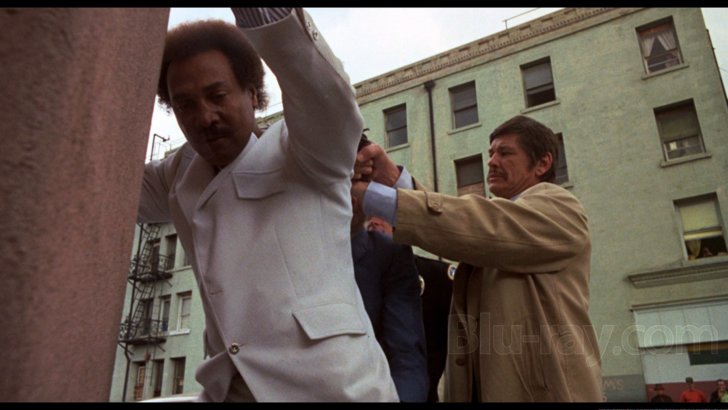
Brad reviews THE STONE KILLER (1973), starring Charles Bronson!


THE STONE KILLER opens in Spanish Harlem with detective Lou Torrey (Charles Bronson) following a young man, who had just shot a cop, into an abandoned building. When the young man refuses to turn himself in, and even tries to shoot Torrey, he gets blown away. In trouble with his superiors on the force, and being dragged in the press for the shooting, Torrey decides to change locations and continue his law enforcement career under his friend Les Daniels (Norman Fell) in Los Angeles. Soon after he arrives in Los Angeles, Torrey and his partner Mathews (Ralph Waite) are working a case against a drug dealer, when they arrest “Bootlace” Armitage (Eddie Firestone), a drug addict, but also a well-known hitman from New York. Torrey is delivering the “mechanic” back to New York for outstanding warrants when Armitage says that he is willing to give up some big information on “Wexton” in exchange for a reduced sentence. When Armitage is gunned down in what is obviously a professional hit, it’s clear that there is something going on that involves the name Wexton. We soon learn more as we meet mafia leader Al Vescari (Martin Balsam). As Vescari walks through a cemetery, he tells the leader of his operation, Lawrence (Stuart Margolin), of his plans to get revenge for a string of mafia killings that occurred 42 years earlier by using “stone killers,” in this case, former military men with no connection to the mob. As the film moves forward, Detective Lou Torrey and his fellow cops will eventually put the pieces together and find themselves taking on these “stone killers” and the mob! 

I’ll just go ahead and say up front that I’m a big fan of THE STONE KILLER these days, but that’s because the movie has grown on me over the years with repeat viewings. When I first watched the film as a teenager in the 1980’s, I enjoyed it as a tough cop film, but it wasn’t one of my favorites. I think that part of the reason I didn’t appreciate it as much back then is the more convoluted plot of the film. Most Bronson films have simple and easy to follow plot lines, but THE STONE KILLER includes a somewhat complicated mafia assassination plan, and it also sends the cops on wild goose chases that have nothing to do with the actual story. Watching the film as an adult, I appreciate Director Michael Winner taking us with him on some of those 1970’s flavored tangents that include getting to hang out with some hippies at an ashram, as well as some unjustly accused black militants. 

Even though the plot is more complicated than the average Charles Bronson film, director Michael Winner gives us some of the best action sequences of Charles Bronson’s career. There are two sequences in particular that stand out to me. After the impressive opening scenes where Torrey blows away the gun wielding young man in Spanish Harlem, it takes a while to get to the next extended action sequence, but it’s definitely worth the wait. The scene involves Detective Torrey in a car chase where he’s after one of the stone killers, Albert Langley (Paul Koslo), who’s on a motorcycle. In an era of great car chases, this is a doozy that features many amazing and dangerous stunts. The late 60’s and early 70’s are an embarrassment of riches for cinematic car chases and this one stands the test of time. The next great action sequence occurs later in the film when Detective Torrey and the cops bust the home and facility where the killers have trained for the planned massacre. Bronson is still in his physical prime in 1973, and his athletic prowess is clearly on display as he slides across floors, jumps on tables, and does anything else that is required to take down the bad guys. The film is not wall to wall action, but what’s here is as badass as it gets. 

Detective Lou Torrey is a really good role for Charles Bronson. In his best roles, Bronson is tough, but you can also tell that he cares about other people. That’s definitely the case here as he consistently shows empathy for some of the people he’s after. For example, at the beginning of the film, he has to shoot the young man in Spanish Harlem in self-defense, but he later explains to his sister that he didn’t want to do it, even expressing some understanding of how the young man may have found himself in that situation. A little later while arresting a drug dealer with his partner Mathews, Torrey is clearly disgusted when his partner uses racial slurs during the arrest. Torrey then talks to the man with respect and gets the needed information to arrest the man buying the drugs. There are further examples later in the film as he deals with other drug addicts and militants. I say none of this to insinuate that Bronson’s character is weak in any way. Rather, he seems to want to do his job and arrest criminals in a professional manner. He’s also a complex character in some ways as he will bend the rules to get what he needs if he has to. He does end up punching the car thief, Jumper (Jack Colvin), a couple of times during an interview. While this is definitely not legal, in the context of this film, it’s required in order to get to the facts of the case. Bronson is actually quite great in the film. 

Besides international superstar Charles Bronson, Michael Winner put together an amazing cast for THE STONE KILLER. Martin Balsam had won an Oscar a few years earlier, and he’s good here as the mafia boss with four decades worth of patience for revenge. Ralph Waite is also excellent as Bronson’s incompetent, racist partner Mathews. It’s hard to believe the guy would go on to play Papa Walton based on the ignorance he shows in both this film and in the Bronson/Winner collaboration CHATO’S LAND from the prior year. It’s fun watching both Norman Fell and John Ritter work together in this film, especially knowing that they would be making television history a few years later on the classic TV sitcom “Three’s Company.” The last two actors I want to mention are Stuart Margolin as the leader of the stone killers, Lawrence, and Paul Koslo as the bi-sexual badass musician Albert Langley. Both actors, especially Koslo, are good here and would have important roles with Bronson the next year as well. Margolin was an important character in DEATH WISH, and Koslo may have even outdone his work here the next year as a particularly slimy weasel in MR. MAJESTYK. Oh yeah, be sure to look for a short, uncredited cameo from B-movie queen Roberta Collins! I also want to shout out the musical score from Roy Budd, who also did the score for GET CARTER (1971). Thanks to Budd’s work, the opening credits are very cool and memorable. 

THE STONE KILLER was marketed as Charles Bronson’s “Dirty Harry” and meant to be his breakout hit in America. Unfortunately, while the film was an international hit, the actual grosses in the United States were respectable but not as much as the filmmakers had hoped for. As such, we didn’t get any more entries in the case log of Detective Lou Torrey and Bronson would have to wait another year for his American box office breakout with DEATH WISH. But that’s okay because THE STONE KILLER has stood the test of time as an excellent 1970’s cop film, emerging in my personal rankings as a major feather in the cap of Charles Bronson’s career. 

Holidays On The Lens: Christmas In Palm Springs (dir by Fred Olen Ray)


Today, we have another cute little Christmas film from the insanely prolific director, Fred Olen Ray.

In 2014’s Christmas In Palm Springs, Dina Meyer is a divorced workaholic who is due to give a presentation in Palm Springs.  Patrick Muldoon is her ex-husband, who would like to get back together with her.  Fortunately, their children want them to get back together as well and will do anything to make it happen….

It’s cute and Christmas-y and Ian Ziering and David Chokachi in small roles.   (You may remember Chokachi as the speedo-wearing Baywatch lifeguard that my friend Evelyn nicknamed “The Bulge.”)  And it’s also a Starship Troopers reunion.  Personally, I just like it when Patrick Muldoon shows up in these movies!

Late Night Retro Television Review: Saved By The Bell 1.6 “Aloha Slater”


Welcome to Late Night Retro Television Reviews, a feature where we review some of our favorite and least favorite shows of the past!  On Saturdays, I will be reviewing Saved By The Bell, which ran on NBC from 1989 to 1993.  The entire show is currently streaming on Prime and Tubi!

This week, Zack has a chance to get ride of his main frenemy!

Episode 1.6 “Aloha Slater”

(Dir by Don Barnhart, originally aired on September 23rd, 1989)

Zack Morris used to be the “top dog” at Bayside but now that Slater has arrived, no one cares about Zack’s pathetic little third place ribbon that he got at a track meet.  Instead, they care about the giant trophy that Slater won at his latest wrestling match.

However, there may be hope on the horizon!  Slater’s father, Major Martin Slater (Gerald Castillo), has been offered a transfer to Hawaii.  When Major Slater tells Belding that he will be removing AC from school, Screech listens from inside a filing cabinet.  Major Slater can’t wait to go to Hawaii but AC isn’t so sure.  He’s finally got friends and he’s winning trophies!  Major Slater leaves it up to his son.  If AC Slater wants to go to Hawaii, the family will transfer.  If AC wants to stay in California, they will.

Zack decides that AC has to go to Hawaii.  He convinces Lisa, Kelly, and Jessie that AC is dying of a mysterious disease and that his only hope for survival is moving to Hawaii.  Zack sprinkles fire ants on AC’s back to make AC herk and jerk, as if he’s having a spasm.  “This is study hall, not soul train!” the teacher announces.  That teacher, by the way, was played by Dustin Diamond’s father.

Zack convinces everyone to treat AC like crap.  He also steals AC’s wrestling trophy.  AC announces that he’s going to Hawaii.  Kelly replies, “And I’m going with him!”

Zack is stunned.  I’m stunned, as well.  How exactly is Kelly going to go with him?  Are her poor, salt-of-the-Earth parents okay with moving to one of the most expensive states to live in?  At least the Slaters have a home and a good job waiting for them in the Aloha State.

(Actually, now that I think about it and I remember Saved By The Hell Hawaiian Style, Kelly did have that uncle who lived in Hawaii so I guess it’s not as out-there a development as I initially though.)

Kelly tells Slater that she knows he’s dying.  Slater realizes that he’s been set up.  It’s time for another prank!  AC’s father turns out to be remarkably okay with staying in California.  He’s also okay with pretending to be insane and throwing a grenade at Zack.

Watching this episode, it occurred to me that, during the first season at least, Mario Lopez was clearly the star of the show.  While Mark-Paul Gosselaar was still trying a little bit too hard (and he wasn’t helped by some overwritten dialogue) and Dustin Diamond looked like he was about 10 years old, Mario Lopez gave a believable performance as a teenager who had finally found a home and didn’t want to leave it.  Slater’s the compelling character, the one who actually gets to grow and deal with real problems.  (Gosselaar, of course, has grown tremendously as an actor since the first season of SBTB.)

Fortunately, Slater stays in California.  Yay!  It’s hard to imagine Bayside without him.

This is my final Saved By The Bell review of 2025.  Retro Television Reviews is taken a break for the holidays so that I can focus on Awards Season and Christmas movies!  Saved By The Bell will return on January 10th, 2026.


Lisa Marie’s Week In Television: 11/30/25 — 12/6/25


Frosty the Snowman (Thursday, NBC)

This holiday special makes me cry.  Everytime.

How The Grinch Stole Christmas (Thursday, NBC)

Oh, I love this one!  Seriously, Boris Karloff and Christmas are a great combination!

Rudolph the Red-Nosed Reindeer (Friday, NBC)

Why is Santa Claus so mean in this one?  This special has always been my least favorite of the classic Christmas specials because it makes the North Pole look like a terrible place to work.

Saved By The Bell: The New Class (Prime)

I’ve been struggling with insomnia this week but I discovered that, if I put SBTB: The New Class on as background noise, it actually eases me into sleep.  This week, I slept through seasons 6 and 7.  I had totally forgotten that, after Richard Lee Jackson left, they brought in yet another blonde transfer student from Valley to step into the Zack role.  As I said last week, this show was the version of Saved By The Bell that I grew up with and I have a certain nostalgia for it.  It’s not good but it’s oddly comforting in its terrible way.

Sean Combs: The Reckoning (Netflix)

I watched this docuseries on Friday and Saturday.  It’s always so weird to me how people just kind of shrug off rap feuds turning violent, as if all the death is just a part of the entertainment.  As for the series itself, it obviously had an agenda but that doesn’t make Sean Combs any less sleazy.

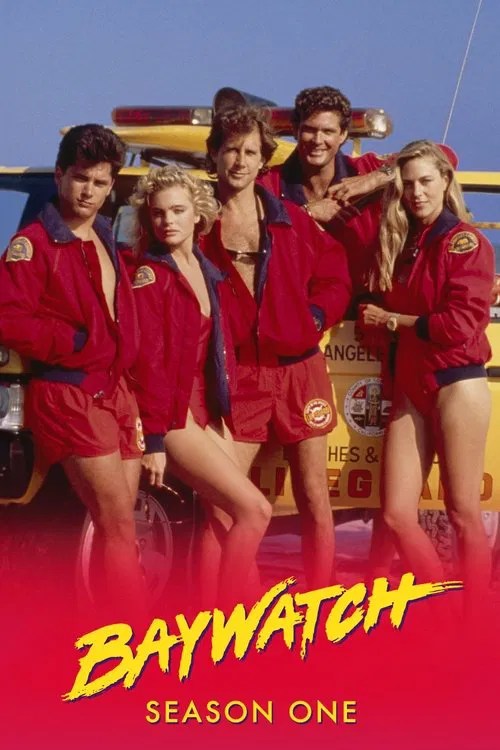
Retro Television Review: Baywatch 1.7 “The Cretin of the Shallows”


Welcome to Retro Television Reviews, a feature where we review some of our favorite and least favorite shows of the past!  On Saturdays, I will be reviewing Baywatch, which ran on NBC and then in syndication from 1989 to 2001.  The entire show can be viewed on Tubi.

This week, there’s a lot happening on the beach!

Baywatch 1.7 “The Cretin of the Shallows”

(Dir by Vern Gillum, originally aired on December 1st, 1989)

Eddie gets his wisdom teeth taken out.  Feverish and on pain-killers, he has a hallucination in which Gina Pomeroy (Holly Gagnier) kisses him.  Eddie spends the entire episode nervous that Craig is going to discover that he’s having an affair with his wife but actually, Eddie isn’t having an affair.  It’s not until the end of the episode that Gina tells Eddie that they never kissed and Eddie finally starts to relax.  Gina promises not to tell Craig because “I think it’s sweet.”  Myself, I’m just curious as to how stupid Eddie actually is.

Shauni and Jill deal with a teenage boy who has made a bet with his friends that he’ll be able to get a kiss from both of them.

And a horrifying serial killer (Robert Trebor) is stalking the night, brutally murdering people on the beach.

One of these storylines is not like the other!

The first season of Baywatch was seriously weird.  Light-hearted lifeguard hi-jinx would be mixed in with scenes of people being murdered.  Mitch and Craig weren’t just lifeguards.  They were also cops who solved mysteries (Kind of like Baywatch Nights!) and they put their lives at risk to do so.  Remember how I mentioned that Gina told Eddie that they never kissed?  She told him that after she had been rescued from the serial killer.  Gina nearly died!  Neither Gina nor Craig seemed to be too upset about that, though.  I would be a little bit traumatized but that’s just me.

This episode really didn’t work for me.  Personally, I like the light-hearted stuff.  It’s dumb but, at heart, Baywatch’s appeal is that it’s a dumb show with nice scenery.  Tossing a serial killer into the mix just made things unpleasant.  It didn’t feel like it belonged on a show about people running on the beach in red bathing suits.

This is my last Baywatch review of 2025.  Retro Television Reviews will be taking a break for the holidays so that I can focus on Awards Season and Christmas movies!  Baywatch will return on January 10, 2026.

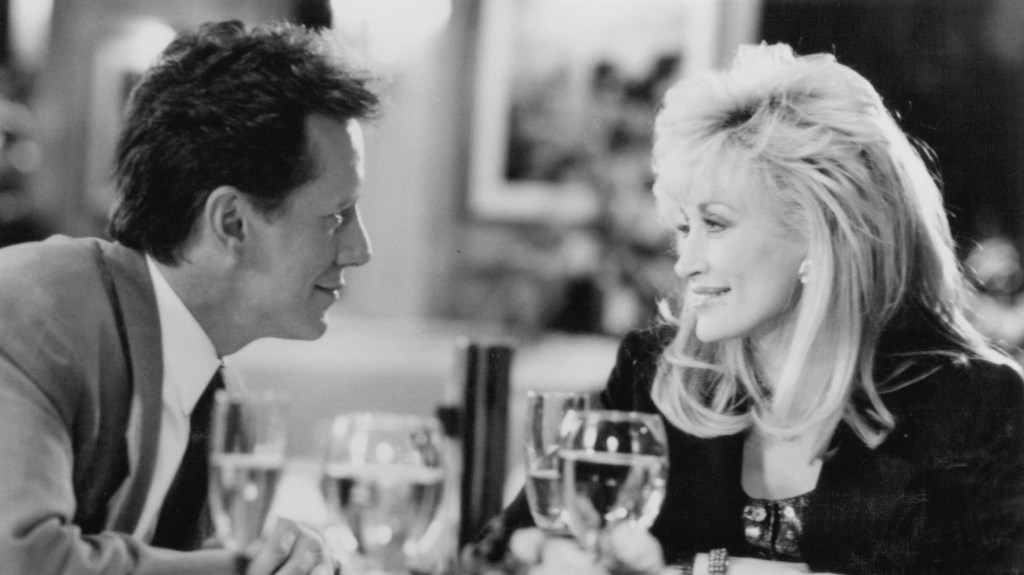
Brad reviews STRAIGHT TALK (1992), starring Dolly Parton and James Woods! 


STRAIGHT TALK opens with Shirlee Kenyon (Dolly Parton) having a bad day in the town of Flat River, Arkansas. First, she gets fired from her job at a dance studio because she likes to talk to the customers more about their problems than she does teaching them to dance. Then she goes home to her lazy, unemployed boyfriend Steve (Michael Madsen), who’s more interested in drinking beer and bowling than talking to her. She tells him she wants to leave town and go to Chicago for a fresh start. He heads to the bar, so she packs her bags and heads to the Windy City. Upon arriving, she finds a job as a receptionist at a local radio station. Through a case of mistaken identity that can only happen in the movies, Shirlee finds herself on air as “Dr. Shirlee,” where she begins fielding calls from people with all kinds of problems. With her homespun wisdom, Dr. Shirlee soon finds herself to be the toast of Chicago. Feeling guilty that the station is advertising her as a “Doctor” when she’s not, Shirlee reluctantly continues on when her boss Alan (Griffin Dunne) convinces her she’s a “doctor of the heart.” Alan takes that simple lie and creates an entire fake public identity for Shirlee. When reporter Jack Russell (James Woods), in serious need of a story, senses that something’s not adding up with Dr. Shirlee, he convinces his editor Milo Jacoby (Jerry Orbach) to let him try to get close to the city’s new star to see if he can dig up some dirt. As he gets to know her, however, he’s charmed just like the rest of city and the two begin to fall in love. With Shirlee feeling guilty about being marketed as someone she’s not, and with Jack feeling bad about deceiving her for a scoop, is there any chance that their love can survive when the truth finally comes out?

STRAIGHT TALK is one of those movies that lives or dies based on whether or not you like its stars. This early 90’s romantic comedy was made for Dolly Parton’s fans, of which there are many. She looks beautiful, she has a great wardrobe, she sings the catchy soundtrack tunes, and she dispenses down-home country wisdom in a way that only Dolly can. And then there’s James Woods as the cynical reporter / love interest. Not traditionally handsome or known for his performances in romantic comedies, he brings his unique style to the role, and somehow it really works. As a huge fan of Woods, I may be a little biased, but I think that he has a great chemistry with Dolly. There does seem to be some basis for my claim as the two seemed to really enjoy each other on the set. Dolly has been quoted as saying that he’s “a great kisser” and a “thrill to be around.” Woods recently posted on social media that “Dolly Parton is the nicest person I’ve ever worked with…. She’s everything you imagine and so much more. Anybody who’s ever spent any time with her absolutely adores her.” I think these genuine feelings show through on the screen and provide levels of entertainment that transcend what’s on the pages of the script.

Aside from the excellent chemistry of its leads, STRAIGHT TALK does lean hard into romantic comedy cliches, and honestly that’s okay with me. I enjoyed the familiar plot lines… Will Shirlee become a star in the big city? Will reporter Jack expose her past? Will the two fall in love? Will her old boyfriend Steve show up? Will her “on-air” advice cause some unexpected problems? Well, of course, on all accounts! As these well worn stories play out against the backdrop of an early 90’s movie version of Chicago, I enjoy the movie for what it is, an entertaining fluff piece. The interesting supporting cast (Griffin Dunne, Michael Madsen, Jerry Orbach, John Sayles, Spalding Gray, etc.) do their jobs well, further enhancing my appreciation of the movie. 

With all that said, I do recognize that the joy of movies is purely a subjective experience, and if you’re not a fan of Dolly Parton, you probably won’t enjoy STRAIGHT TALK. It’s not a great movie in traditional terms, but it is a great “Dolly Parton” movie. I like Dolly, and I especially enjoy her relationship with James Woods within the film, so this is another one of those movies from my youth that I like to watch every few years. I enjoy it every single time. 

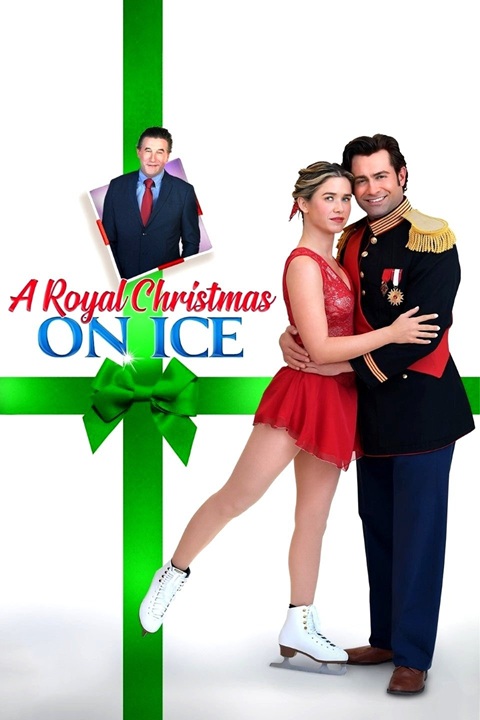
Holidays On The Lens: A Royal Christmas On Ice (dir by Fred Olen Ray)


Consider the plot of 2022’s A Royal Christmas On Ice.

He’s a prince.

She’s a former Olympic skater turned hard-as-nails coach.

They meet in a small town.

They fall in love….

AT CHRISTMAS!

Seriously, has there ever been a film more obviously made for me?  This is a cute movie and a reminder that you can find just about anything in Fred Olen Ray’s filmography.