Who isn’t?
Enjoy!
Who isn’t?
Enjoy!
Welcome to Late Night Retro Television Reviews, a feature where we review some of our favorite and least favorite shows of the past! On Tuesdays, I will be reviewing Pacific Blue, a cop show that aired from 1996 to 2000 on the USA Network! It’s currently streaming everywhere, though I’m watching it on Tubi.
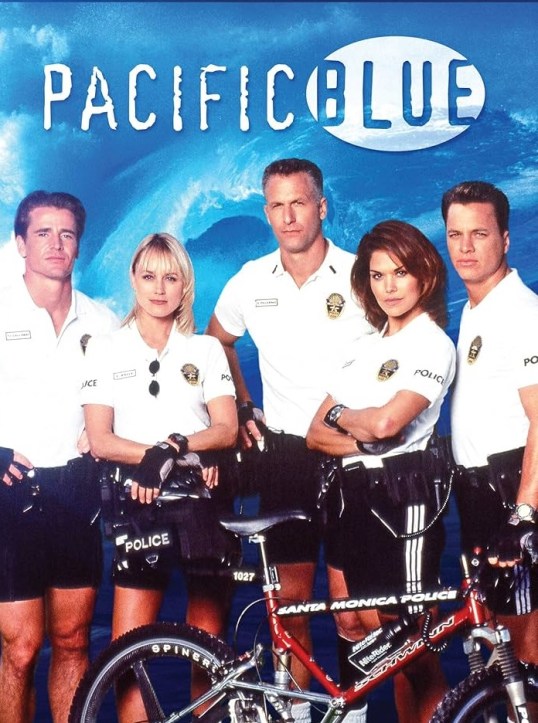
Okay, we’re doing this again.
Episode 3.9 “Cop In A Box”
(Dir by Scott Lautanen, originally aired on November 2nd, 1997)
Oh, Pacific Blue. How I have not missed you.
This episode features TC getting abducted by Harland Groves (Jeremy Roberts), a criminal who TC previously busted. Harland traps TC in an underground beach bunker. How Harland got his hands on an underground beach bunker is never explained. Harland demands that TC’s rich family pay him 4 million dollars. At the same time, he plans to use a chlorine gas bomb to kill TC. Why he didn’t kill TC to begin with and then demand the money is never really explained. It’s almost as if Harland secretly wanted his plan to fail.
I really didn’t have a problem with the idea of TC getting killed off. Pacific Blue is one of the more boring of the shows that I review and killing TC would have livened things up. At the very least, without TC around, I would no longer be forced to try to keep straight which member of Pacific Blue was TC and which member was Victor. Unfortunately, TC manages to disarm the chlorine bomb. When Harland attacks him in the bunker, it leads to a bunch of sand pouring in. Harland is suffocated while TC escapes.
Oh well.
The cool thing about this episode is that Andy Buckley — who later played David Wallace on The Office — returned as TC’s brother. The funny thing about this episode was the sight of grim-faced Palermo barking out orders while wearing his stupid bicycle shorts. And the unfortunate thing is that TC survived so Pacific Blue will not be changing any time soon.
Welcome to Retro Television Reviews, a feature where we review some of our favorite and least favorite shows of the past! On Tuesdays, I will be reviewing the original Fantasy Island, which ran on ABC from 1977 to 1984. The show is once again on Tubi!
It’s time for our second-to-last trip to the Island.
Episode 7.21 “Bojangles And The Dancer/Deuces Wild”
(Dir by Bob Sweeney, originally aired on May 12th, 1984)
Sisters Audrey and Judy Jennings (played, of course, by Audrey and Judy Landers) come to the Island because they’re sick of men only appreciating their bodies as opposed to their other talents. They end up meeting a hotelier named Rex Reinhardt (Stuart Whitman) who, after some poorly-defined drama involving his duplicitous chief of security (John Ericson), ends up opening a resort with the two of them. Fans of the James Bond franchise will be happy to see Walter Gotell, who played the head of the KGB opposite Roger Moore in several films, cast as a writer who romances one of the sisters.
It’s kind of a sad fantasy when you consider that this is the second-to-last episode of the original Fantasy Island and the best they could do for this story were the Landers sisters and Stuart Whitman. Not only were the guest stars not particularly inspiring but the fantasy itself didn’t really make much sense.
As for the other fantasy, it does feature a big-name guest star. Sammy Davis, Jr. plays the legendary dancer, Bojangles! Now, admittedly, Sammy doesn’t look particularly healthy in this particular episode. Reportedly, by the time the 80s rolled around, all of the smoking, drinking, and drug-taking had finally started to catch up with him. But, even while obviously ill, Sammy Davis Jr. still had the undeniable charisma of a natural-born star. The fantasy is nothing special. Joe Wilson (Glynn Turman) goes into the past so that he can dance with Bojangles. However, Sammy Davis Jr. lights up the story. He shares a wonderfully-acted scene with Ricardo Montalban, two old showbiz pros sharing what may have been a final moment together.
So, this trip to the Island was a mixed bag. Neither fantasy was particularly compelling and Tattoo’s absence was very much felt. (Lawrence, I’ve noticed, tends to be rather judgmental of the guests which is something Tattoo never was.) But at least Sammy Davis Jr. was there to add some life to the proceedings.
Only one more episode to go.
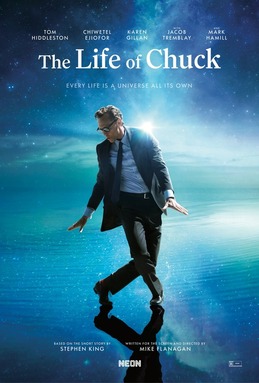
The Life of Chuck is a story told in reverse.
The world is ending and teacher Marty Anderson (Chiwetel Ejiofor) wonders why he keeps seeing signs that announce, “Charles Krantz: 39 Great Years! Thanks, Chuck!” Marty’s ex-wife (Karen Gillan) calls him and tells him that, at the hospital where she works, she and her co-workers have taken to calling themselves “the suicide squad.” It would be an effective moment if not for the fact that the film’s narration (somewhat predictably voiced by Nick Offerman) had already informed us of that fact. Everyone wonders why the world is falling apart. Why has the internet gone off-line? Why has California finally sunk into the ocean? Why are people rioting? Several characters say that it’s the end times before then adding that it’s not the same end time that the “religious fanatics” and “right-wing nuts” always talk about. Thanks for clarifying that! It’s nice to know that, at the end of the world, people will still talk like an aging Maine boomer.
Nine months earlier, a straight-laced banked named Chuck Krantz (Tom Hiddleston) comes across a busker playing her drums on a street corner and feels inspired to start dancing.
Years earlier, a young boy named Chuck Krantz is raised by his grandmother (Mia Sara) and his grandfather (Mark Hamill). Young Chuck (Jacob Tremblay) inherits a love of dance from his grandmother but, after she dies in a supermarket, his grandfather turns to drinking. His grandfather keeps one room in their house locked. (There’s even an absurdly huge lock on the door because The Life of Chuck is not a subtle one.) Eventually, Chuck discovers what is hidden away in the room and it shapes the rest of his life.
Occasionally, solid genre craftsmen will fill the need to prove that they’re actually deeper than people give them credit for. In 2020, Stephen King published a novella called The Life of Chuck. In October of 2023, director Mike Flanagan announced that he had begun filming on his adaptation of The Life of Chuck. Both King and Flanagan are better-known for their contributions to the horror gerne, though, around 2017, King apparently decided that he was also meant to be a political pundit. (No writer, with the possible exception of Joyce Carol Oates, has done more damage to their reputation by joining twitter than Stephen King.) There are elements of horror to be found in The Life of Chuck. There’s the world ending during Act One. There’s the locked rom in Act Three. There’s the terrible acting of the woman playing the drummer in Act Two. But this definitely is not a horror film. Instead, it’s King and Flanagan at their most sentimental, heartfelt, and ultimately simplistic.
It’s ultimately a bit too self-consciously quirky for its own good. Flanagan seems to be really concerned that we’ll miss the point of the film so he directs with a heavy-hand and, at times, he overexplains. Sometimes, you have to have some faith in your audience and their ability to figure out things on their own. The scenes of Chuck’s childhood are so shot through a haze of nostalgia that they feel as overly stylized as the scenes that don’t necessarily take place in our reality. For the most part, the narration could have been ditched without weakening the film. That said, the film is hardly a disaster. There are moments that work, like the joyous scene of Tom Hiddleston dancing. The film tries a bit too hard to be profound but there’s joy to be found in the performances of Hiddleston and Jacob Tremblay. Chucks seems like a nice guy.
Thanks, Chuck!
Everyday is Halloween if you want it to be.
Enjoy!
Welcome to Late Night Retro Television Reviews, a feature where we review some of our favorite and least favorite shows of the past! On Mondays, I will be reviewing CHiPs, which ran on NBC from 1977 to 1983. The entire show is currently streaming on Prime!
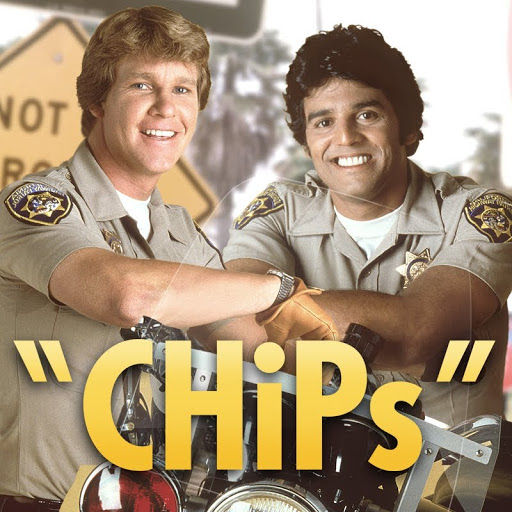
This week, it’s Ponch and Jon’s anniverary!
Episode 5.3 “Moonlight”
(Dir by Earl Bellamy, originally aired on October 18th, 1981)
A highway accident leads to a bunch of cars flying through the air in slow motion!
Ponch works off-duty as a security guard for an action film. Ponch being Ponch, he ends up flirting with the two female stars. He also ends up accidentally flirting with their stunt doubles, both of whom turn out to be men wearing blonde wigs. Oh, Ponch!
Someone is dumping toxic waste and ruining the beautiful California country side. Ponch and Jon turn to their old friend, trucker Robbie Davis (Katherine Cannon), for help. However, it turns out that the waste is being transported and dumped by someone close to Robbie!
There’s a lot going on in this episode but the majority of the screentime is taken up with Getraer, Grossman, Baricza, Turner, and Bonnie thinking about how to celebrate Ponch and Jon’s 4th anniversary as partners. At one point, Getraer does point out that it’s unusual for an entire department to celebrate the anniversary of a partnership. I’m glad that someone said that because, seriously, don’t these people have a job to do? I mean, aren’t they supposed to be out there, issuing tickets and preventing crashes like the one that opened this episode? You’re not getting paid to be party planners, people!
Knowing just how much Larry Wilcox and Erik Estrada disliked each other when the cameras weren’t rolling, it’s hard not to feel as if there’s a bit of wish-fulfillment going on with the anniversary storyline. Watching everyone talk about how Jon and Ponch are the perfect team, one gets the feeling that the show itself is telling its stars, “Can you two just get along? Everyone loves you two together!”
Reportedly, by the time the fifth season rolled around, Wilcox was frustrated with always having to play second fiddle to Estrada. Having binged the show, I can understand the source of his frustration. During the first two seasons, Wilcox and Estrada were given roughly the same amount of screen time in each episode. In fact, Estrada often provided the comic relief while Wilcox did the serious police work. But, as the series progressed, the balance changed and it soon became The Ponch Show. If there was a beautiful guest star, her character would fall for Ponch. If there was a rescue to be conducted, Ponch would be the one who pulled it off. When it came time to do something exciting to show off the California lifestyle, one can b sure that Ponch would be the one who got to do it. Baker got pushed to the side. This episode, however, allows Baker to rescue someone while Ponch watches from the background. “See, Larry?” the show seems to be saying, “We let you do things!”
As for the episode itself, it’s okay. There’s enough stunts and car accidents to keep the viewers happy. That said, the toxic dump storyline plays out way too slowly. At one point, Baricza finds a bunch of barrels off the side of the road and he looks like he’s about to start crying. It’s an odd moment.
The episode ends with Baker and Ponch happy. It wouldn’t last. This would be Larry Wilcox’s final season as a member of the Highway Patrol.

1970’s The Revolutionary tells the story of a young man named A (Jon Voight).
When we first meet him, A is a college student who lives in the industrial town of Axton. A comes from a wealthy family but he chooses to live in a tiny and quite frankly repellent apartment. He has a girlfriend named Ann (Collin Wilcox). A and Ann don’t really seem to have much of a relationship. “We should make love,” A says in a flat tone of voice. Ann is willing to show her emotions while the self-serious A goes through life with everything under wraps. Ann and A are both members of a radical political group. The group spends a lot of time talking and discussing theory but they don’t really do much else.
A grows frustrated with the group. He gets a job at a factory, where he falls under the sway of a communist named Despard (Robert Duvall). Despard is a bit more active than A’s former comrades. Despard, for instance, is willing to call a general strike but, when that strike still fails, A, along with Despard and everyone else involved, goes underground. Suspended from the university, he soon finds himself being drafted into the Army. His father asks A if he wants to be drafted. A questions why only the poor should be drafted. His father looks at A as if he’s hopelessly naive and his father might be right.
A continues to wander around Axton in an idealistic daze, trying to get people to read the flyers that he spends his time passing out. Things change when A meets Leonard II (Seymour Cassel), a radical who recruits A into an apparent suicide mission….
The Revolutionary took me by surprise. On the one hand, it’s definitely very much a political film. The movie agrees with A’s politics. But, at the same time, the film is also willing to be critical of A and his self-righteous view of the world. One gets the feeling that A’s politics have less to do with sincere belief and more to do with his own need to be a part of something. Up until the film’s final few minute, A is something of a passive character, following orders until he’s finally forced to decide for himself what his next move is going to be. A’s father thinks he’s a fool. Despard views him as being an interloper. Even Leonard II seems to largely view A as being a pawn. A wanders through Axton, trying to find his place in the chaos of the times.
It’s not a perfect film, of course. The pace is way too slow. Referring to the lead character only as “A” is one of those 70s things that feels embarrassingly cutesy today. As was the case with many counterculture films of the early 70s, the film’s visuals often mistake graininess with authenticity. Seriously, this film features some of the ugliest production design that I’ve ever seen. But for every scene that doesn’t work or that plays out too slow, there’s one that’s surprisingly powerful, like when an army of heavily armored policemen break up a demonstration. The film itself is full of talented actors. Seymour Cassel is both charismatic and kind of frightening as the unstable Leonard II. Jon Voight and Robert Duvall are both totally convincing as the leftist revolutionary and his communist mentor. (In real life, of course, Voight and Duvall would become two of Hollywood’s most prominent Republicans.) In The Revolutionary, Duvall brings a certain working class machismo to the role of Despard and Voight does a good job of capturing both A’s intelligence and his growing detachment. A can be a frustrating and passive character but Voight holds the viewer’s interest.
The film works because it doesn’t try to turn A into some sort of hero. In the end, A is just a confused soul trying to figure out what his place is in a rapidly changing world. Thanks to the performance of Voight, Duvall, and Cassel, it’s a far more effective film than it perhaps has any right to be.
1969’s The Rain People tells the story of Natalie Ravenna (Shirley Knight), a Long Island housewife who, one morning, sneaks out of her house, gets in her station wagon, and leaves. She later calls her husband Vinny from a pay phone and she tells him that she’s pregnant. Vinny is overjoyed. Natalie, however, says that she needs time on her own.
Natalie keeps driving. In West Virginia, she comes upon a young man named Jimmy Kligannon (James Caan). She picks him up looking for a one-night stand but she changes her mind when she discover that Jimmy is a former college football player who, due to an injury on the field, has been left with severe brain damage. The college paid Jimmy off with a thousand dollars. The job that Jimmy had waiting for him disappears. Jimmy’s ex-girlfriend (Laura Crews) cruelly says that she wants nothing more to do with him. Natalie finds herself traveling with the child-like Jimmy, always trying to find a safe place to leave him but never quite being able to bring herself to do so.
Jimmy is not the only man that Natalie meets as she drives across the country. Eventually, she is stopped by Gordon (Robert Duvall), a highway motorcycle cop who gives her a speeding ticket and then invites her back to the trailer that he shares with his young daughter. (Gordon’s house previously burned down.) Natalie follows Gordon back to his trailer, where the film’s final tragic act plays out.
The Rain People was the fourth film to be directed Francis Ford Coppola. Stung by the critical and commercial failure of the big-budget musical Finian’s Rainbow, Coppola made a much more personal and low-key film with The Rain People. While the critics appreciated The Rain People, audiences stayed away from the rather downbeat film. Legendary producer Robert Evans often claimed that, when Coppola was first mentioned as a director for The Godfather, he replied, “His last movie was The Rain People, which got rained one.” Whether that’s true or not, it is generally acknowledged that the commercial failure of The Rain People set back Coppola’s directing career. (Indeed, at the time that The Godfather went into production, Coppola was better-known as a screenwriter than a director.) Of course, it was also on The Rain People that Coppola first worked with James Caan and Robert Duvall. (Duvall, who was Caan’s roommate, was a last-second replacement for Rip Torn.) Both Caan and Duvall would appear in The Godfather, as Sonny Corleone and Tom Hagen respectively. Both would be Oscar-nominated for their performances. (It would be Caan’s only Oscar nomination, which is amazing when you consider how many good performances James Caan gave over the course of his career.)
As for The Rain People, it may have been “rained on” but it’s still an excellent film. Shirley Knight, Robert Duvall, and James Caan all give excellent performances and, despite a few arty flashbacks, Coppola’s direction gives them room to gradually reveal their characters to us. The film sympathizes with Knight’s search for identity without ever idealizing her journey. (She’s not always nice to Jimmy and Jimmy isn’t always easy to travel with.) As for Caan and Duvall, they both epitomize two different types of men. Caan is needy but innocent, a former jock transformed into a lost giant. As for Duvall, he makes Gordon into a character who, at first, charms us and that later terrifies us. Gordon could have been a one-dimensional villain but Duvall makes him into someone who, in his way, is just as lost as Natalie and Jimmy.
The Rain People is a good film. It’s also a very sad film. It made my cry but that’s okay. It earned the tears.
Welcome to Retro Television Reviews, a feature where we review some of our favorite and least favorite shows of the past! On Mondays, I will be reviewing Miami Vice, which ran on NBC from 1984 to 1989. The entire show can be purchased on Prime!

Retro television reviews returns with Miami Vice!
Episode 5.9 “Fruit of the Poisoned Tree”
(Dir by Michelle Manning, originally aired on February 3rd, 1989)
Crockett and Tubbs are trying to take down a drug dealer named Enriquez (Jeffrey Meek) but every time that they think they’ve got the guy, his shady lawyer, Sam Boyle (Stephen McHattie), is able to use a technicality to get the case tossed. Even sending Gina in undercover backfires as Gina’s cover gets blown and a bomb meant for her kills an innocent 13 year-old instead.
Crockett thinks that Sam and his associate, Lisa Madsen (Amanda Plummer), have evidence that could put Enriquez away. Crockett puts pressure on Lisa to become a confidential informant but Lisa is devoted to Sam. Lisa’s father was a crusading anti-drug prosecutor who was stabbed to death and Sam has promised that he will do everything within his power to prove that her father was actually assassinated by a drug cartel.
Of course, there’s some things that Lisa doesn’t know. Sam is heavily involved in the drug trade himself and he’s currently in debt to gangster Frank Romano (Tony Sirico, bringing some nicely realistic menace to his role). Sam plots to double cross Enriquez to get the drugs necessary to pay off Frank. Plus, it also turns out that Sam is the one who had Lisa’s father killed.
When Lisa (and hey, that’s my name!) finds out the truth, she uses her legal training to seek her own revenge. Enriquez has been arrested due to evidence that Lisa gave Crockett. But when Lisa reveals herself to have been Crockett’s informant, the case is tossed because Lisa violated attorney/client privilege. This frees up Enriquez to kill Sam right before Sam gets onto a private plane that would have taken him to freedom. The episode ends with Enriquez getting arrested yet again and Lisa staring down at Sam’s dead body.
This was a pretty good episode, especially considering that it aired during the final season. It feels like a throwback to the first two seasons, where the morality was always ambiguous and pretty much no one got a happy ending. Lisa may have gotten revenge for the killing of her father but she did it by arranging the murder of a man who she had spent years worshipping. The Vice Squad takes down a drug dealer but not before an innocent boy is murdered. The only reason that they’re going to a conviction this time is because they actually witnesses Enriquez killing Sam Boyle. Otherwise, the case probably would have gotten thrown out again.
Miami Vice was always at its strongest when it examined futility of the war on drugs. There’s a lot of money to found in the drug trade and there’s always someone willing to step up and replace anyone who the Vice Squad actually manages to take down. This episode may end with Enriquez defeated but there’s no doubt that someone else will step into his shoes.
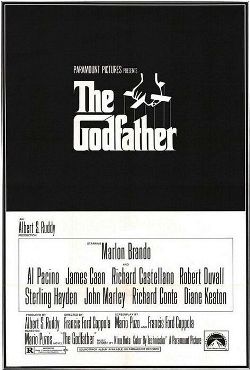
Today, the Shattered Lens observes the birthdays of two great actors, Robert Duvall and the much-missed Diane Keaton.
Along with being two of America’s best actors, Duvall and Keaton also co-starred in the first two Godfather films. They didn’t share many scenes in the second film (though there was at least one Duvall/Keaton scene that was filmed but not included in the final film) but, in the first film, they have a memorable moment in which Keaton (as Kay) visits the Corleone compound while the Corleones are in the middle of a gang war, and asks Duvall’s Tom Hagen to send a letter to Michael in Sicily. Hagen explains that he can’t do that because that would serve as evidence that he knew where Michael was. When Kay notices a car that has obviously been bombed, Tom blandly replies, “Oh, that was an accident. Luckily, no one was hurt!”
In honor of these two amazing performers and my favorite movie of all time, today’s song of the day is Nino Rota’s theme from The Godfather.
 Through the Shattered Lens