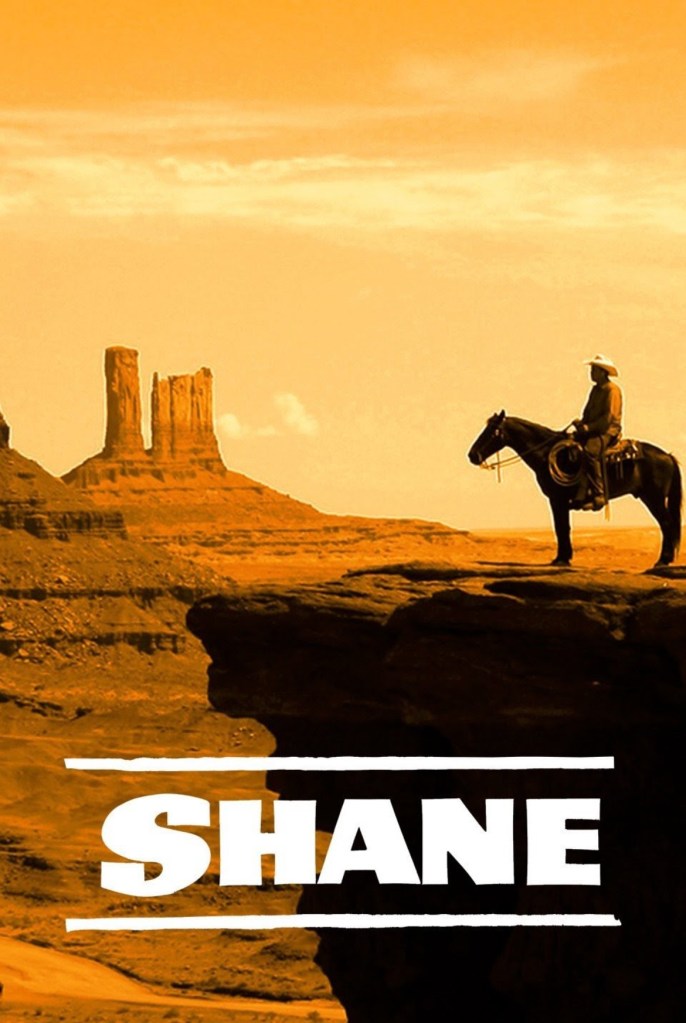
SHANE (The TV Series) – Episode 5: The Bitter, the Lonely (originally aired October 8th, 1966)


Episode 5 opens with a man riding his horse down the hill towards a sweaty Shane (David Carradine) who’s plowing a field on the Starett ranch. The man gets off his horse, walks up to Shane and punches him right in the face. He then turns around and heads back towards his horse. Not putting up with strangers punching him in the face on this day, Shane gets up and punches the guy back in the face. The guy then surprisingly proceeds to knock Shane on his ass again, this time telling him his name in the most Bond-ian of ways, “It’s Posey…RG Posey” (Steve Ihnat). Through a variety of circumstances, we learn that Posey hates “sodbusters” who put up fences and work the ground. He hates sodbusters so much that when he rode up on a person he thought was a sodbuster, he just decided to knock the crap out of him.

Hanging out at Sam Grafton’s saloon, Posey tells the local cowhands about kicking Shane’s ass, so local cattle rancher Rufe Ryker (Bert Freed) hires him on the spot. He thinks that any man who has gotten the best of Shane is someone he wants on his side. Over time though, Posey’s hateful and bullying actions towards Tom Starett (Tom Starett), his daughter Marian Starett (Jill Ireland), and Shane are too much, even for Ryker. Posey’s one of those guys who refer to farmers as “apple knockers,” “nesters” and “stump jumpers.” On multiple occasions, he even says they’re not human. Ryker makes it clear to Posey that while he’s working with the Ryker outfit, the Starett’s will be treated respectfully. Not content to leave well enough alone, Posey decides to dam up the stream that flows onto the Starett’s ranch just because he can. When Shane finds out, he rides out to confront Posey, and the two men fight it out with shovels. Ryker rides up on the two men and fires Posey on the spot, and even helps Shane break up the dam. Unable to accept that his own bitterness and hate cost him his job, Posey decides to blame Shane and sets out to kill him. 

Episode 5 is an enjoyable episode. First, it has a couple of exciting action sequences. The scene where Shane and Posey fight with shovels is the best action scene in the series so far. Grown men swinging shovels at each other is extremely dangerous and this episode certainly captures that feeling. I also enjoyed the scene at the very end where young Joey Starett (Christopher Shea) is running through the field with Shane’s gun, trying to warn him that Posey’s on his way to kill him. It’s a well executed scene that had me on the edge of my seat. Second, this episode tackles an important social issue. Posey hates sodbusters “just because they’re different.” As mentioned earlier, in his own mind he’s reduced them to being less than human. This is beaten into our heads in a pretty heavy handed approach, but that’s perfectly fine. The episode aired over 58 years ago and has a strong “message” that illustrates how Posey’s hate has turned him into an angry, bitter man who blames others for his own bad decisions and problems. For a good example of this these days, just open up any social media app and scroll for a bit, and you’ll see how anger and bitterness continue to steal our joy. Finally, I think Steve Ihnat is good as Posey, a man so full of hate that he doesn’t have the first clue about how to actually be happy. Ihnat had a solid television career, appearing in almost every good TV show in the 1960’s. He would even direct the James Coburn rodeo movie from 1972 called THE HONKERS. Sadly, Ihnat would pass away in 1972 at just 37 years of age. 

Overall, I found episode 5 to be very good. It tells an exciting story, while teaching an important lesson about how a person who allows hate to fester in their heart will ultimately end up as a bitter and lonely loser. Shane’s relationship with Marian Starett doesn’t advance much in Episode 5 but they do look at each other longingly at one point. Now that I think about it, with all the hate shown by Posey, it would have been nice to see a little more love in this episode. Oh well, there’s always episode 6 to look forward to! 
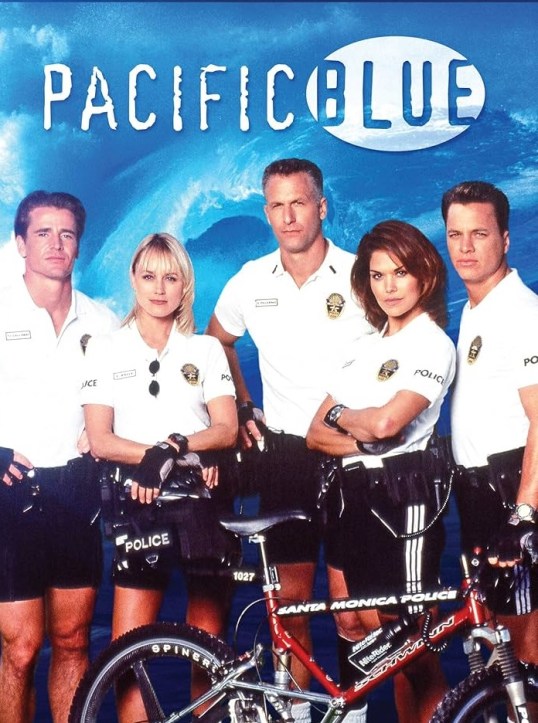
Late Night Retro Television Review: Pacific Blue 1.4 “Over The Edge”


Welcome to Late Night Retro Television Reviews, a feature where we review some of our favorite and least favorite shows of the past! On Tuesdays, I will be reviewing Pacific Blue, a cop show that aired from 1996 to 2000 on the USA Network!  It’s currently streaming everywhere, though I’m watching it on Tubi.

There’s been a murder but don’t worry.  The bike patrol is here.

Episode 1.4 “Over the Edge”

(Dir by Cory Michael Eubanks, originally aired on March 23rd, 1996)

“I need some personal time!” TC announces to Lt. Palermo after TC’s childhood friend, Todd (Dave Oliver), washes up dead on the beach.  It turns out that Todd was killed in a skydiving incident and TC doesn’t think it was an accident.  Todd jumped out of 700 planes without dying so obviously something is up.

(Really?  700?  Did he just spend a year jumping out of plane after plane?  700 is a HUGE number, especially when it comes to risking your life.)

TC’s partner, Chris, is shocked to discover that TC had a friend because apparently, he never mentioned Todd in the past.  Well, Chris, this is only the fourth episode so it’s not like you two have been partners for that long.  This is a weird episode because it assume that the audience has an emotional investment in TC despite the fact that we know next to nothing about him.  We know that TC rides a bicycle.  We know that he comes from a rich family.  And we know he hardly ever smiles because being on the bicycle patrol is suuuuuuuuch an important responsibility.  Otherwise, TC is just kind of a boring guy.  I’m sorry his friend died because I’m sorry when anyone dies but other than that, I don’t really have any emotional connection to any of this.

Anyway, it turns out that Todd fell in with a bunch of Australian extreme athlete types and they shoved him out of an airplane without a properly working parachute.  I’m sure there was a reason why but, for the most part, this episode is just an excuse for TC to look grim while doing the whole extreme sports thing.  I remember that, when I was growing up, you’d always hear all this breathless talk about how someone was doing “extreme sports” but then it would just turn out they were riding a unicycle or rolling down a hill.  Remember bike jousting, where people would joust while slowly riding bicycles and it looked totally stupid but everyone would still go, “Whoa!” while watching?  That was dumb.

Speaking of dumb, I’m still having a hard time taking the idea of cops on bicycles seriously.  Did the people who made this show not realize how stupid the cast looks rolling up and down the boardwalk in their crisp white shirts and blue shorts?  Seriously, it’s hard to take them seriously.  Baywatch was a dumb show but at least those red swimsuits were visually effective.  The bicycle cops on Pacific Blue just look like idiots, no matter how fast they try to peddle.

This show just seems silly right now.  I’ve got over a 100 episodes left to review so I hope things will get better.

Ghosts of Sundance Past: Minari (dir by Lee Isaac Chung)


The Sundance Film Festival is currently underway in Utah.  For the next few days, I’ll be taking a look at some of the films that have previously won awards at Sundance.

First released in 2000, Minari is a classic story of the pursuit of the American dream.

Taking place in the early 80s, the movie follows Jacob Yi (Steven Yeun), a South Korean immigrant who relocates his family from California to Arkansas.  Jacob has purchased a farm and he plans to make a fortune selling Korean produce to restaurants in Dallas.  (Dallas, I should mention, does have a very large Korean population so Jacob’s plan is not a bad one.)  Jacob is enthusiastic and confident that his plan will succeed.  His wife Monica (Han Ye-ri) is a bit less confident.  She doesn’t want to live in a mobile home and she worries about the health of her young son David (Alan Kim), who has a heart murmur.  Monica feels that her husband has dragged them out to the middle of nowhere and that he has no idea what he’s doing.  Jacob is determined to become a success and he even hires his first employee, Paul (Will Patton), a local eccentric who often walks up and down the highway with a cross on his back.

I have to admit that I was initially a bit cautious about watching Minari.  I have family from Arkansas.  When I was growing up, my family sometimes lived in Arkansas.  (When I was growing up, we moved around so much that I used to just think of Arkansas, Oklahoma, New Mexico, Louisiana, Colorado, and Texas as just being one big state that I called home.)  Arkansas is one of those states that is usually not treated particularly kindly in the movies.  For that reason, I was pleasantly surprised by Minari.  Jacob may be an outsider, as both an immigrant and a former Californian, but, for the most part, the people that he meets are kind and willing to help.  Paul is especially an interesting character.  Many movies would have treated Paul as a redneck joke but, in Minari, he’s given a certain dignity.  The cinematography is wonderful, capturing the humid beauty of not just Arkansas but the midwest in general.  Jacob and his family are 20th century pioneers, exploring what for them is a new and untouched land.

Eventually, Monica’s mother, Soon-ja (Youn Yuh-jung), comes to stay with the family.  She shares a room with David and it takes a while for David to get used to his grandmother.  (David complains that she doesn’t act like a grandmother.)  It also takes Soon-ja a while to get used to life in Arkansas.  Youn Yuh-jung won a deserved Oscar for her performance here, playing a stranger in a strange land who ultimately inspires David to find his own inner strength.  The scenes between Youn and Alan Kim are some of the strongest in the film.  Towards the end of the film, Youn has a scene that truly left me in tears.

Minari is about the pursuit of the American dream but it’s also about the strength of family.  Jacob is not always a sympathetic character but he proves himself in the end.  The film ends on an ambiguous note but I choose to believe that Jacob eventually found his fortune.

Minari won the Dramatic Grand Jury Prize and, like many so many Sundance hits in the past, it went on to be nominated for Best Picture.  It lost to Nomadland, despite Minari being a far superior film.  That’s the Academy for you.

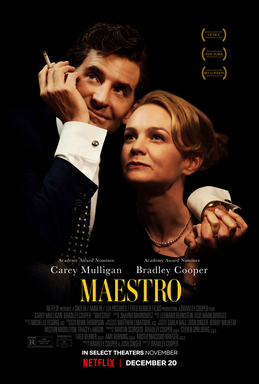
Lisa Marie Reviews An Oscar Nominee: Maestro (dir by Bradley Cooper)


I hope that Bradley Cooper  will win an Oscar soon.

It’s obvious that Cooper wants that Oscar and really, who can blame him?  After spending years being dismissed as a lightweight comedy actor, Cooper has really come into his own over the past thirteen years.  2012 was the year that he starred in Silver Linings Playbook and received his first Best Actor nomination.  In the years that followed, he was nominated for American Sniper, American Hustle, A Star Is Born and Maestro.  He deserved to be nominated for both Nightmare Alley and Licorice Pizza.  Cooper has shown himself to be both a talented actor and director.  He may not have been nominated for his direction of A Star Is Born but everyone knows that he should have been.  He’s come a long way from being the star of The Hangover films and it makes sense that he would want an Oscar to make it official.

(The Oscar itself may not carry the cultural cachet that it once did but seriously, an award is an award.)

That desire for an Oscar is probably the best way to explain 2023’s Maestro, a film that really might as well have just been called Oscar Bait.  Not only did Cooper direct and co-write Maestro but he also donned a prosthetic nose (and was briefly the center of some online controversy) to play the role of composer Leonard Bernstein.  Filmed in both black-and-white and color, the film follows Leonard Bernstein from his young debut as a conductor through his marriage to Felecia (Carey Mulligan).  Throughout the film, Felecia remains Leonard’s strongest supporter and his muse, even when she’s embarrassed by the rumors of his own impulsive behavior and his habit of cheating on her with men.  The film is a portrait of the struggle to be a genius, the struggle to support a genius, and the love that can hold two people together even during the most difficult of times.  And it’s all very Oscar bait-y, giving both Bradley Cooper and Carey Mulligan several scenes that, while well-executed, still feel as if they were designed specifically to appeal to the voters.

I had mixed feelings about Maestro when I watched it.  On the one hand, I definitely admired the craft and the skill that went into the production.  I admired the performances of both Bradley Cooper and Carey Mulligan.  The movie’s soundtrack is full of the best of Bernstein’s compositions, all performed by the London Symphony Orchestra.  The movie looked wonderful and it sounded wonderful but it also felt strangely hollow.  Watching it, I realized that the movie really didn’t know what it wanted to say about Bernstein and Felecia.  The movie was so consumed with technical perfection that the emotions of the story sometimes felt rather remote.  It was a film about Leonard Bernstein that, despite Cooper’s strong performance, failed to really give us a reason to care about Bernstein.  Maestro is a film that you admire while you watch it but it doesn’t really stick with you afterwards.  It’s the epitome of Oscar bait.

Maestro did not win Cooper any Oscars, though it did bring some nominations.  The film was also nominated for Best Picture but it lost to Oppenheimer.  That said, I’m looking forward to the year when Bradley Cooper does finally win his Oscar and hopefully, he’ll win it for a film that’s more like the emotion-filled A Star Is Born than the rather detached Maestro.  He’s one of my favorite actors and he’s due.

Retro Television Review: Fantasy Island 6.3 “The Perfect Gentleman/Legend”


Welcome to Retro Television Reviews, a feature where we review some of our favorite and least favorite shows of the past!  On Tuesdays, I will be reviewing the original Fantasy Island, which ran on ABC from 1977 to 1984.  Unfortunately, the show has been removed from most streaming sites.  Fortunately, I’ve got nearly every episode on my DVR.

Smiles, everyone!

Episode 6.3 “The Perfect Gentleman/Legend”

(Dir by Philip Leacock, originally aired on October 30th, 1982)

Jimmy Jordan (Paul Williams, who appeared on a lot of these type of shows) is a rock star who witnessed a mob hit at one of his concerts.  Jimmy did what anyone would do.  He called the police.  They offered to protect him if he testified but then they told him that they probably wouldn’t be able to continue to protect him afterwards.  (Uhmm …. hello?  Witness Protection Program?)  Jimmy decided to fake his own death and then go to Fantasy Island.  His fantasy?  To not get caught by the two mobsters who have been sent to make sure that he’s actually dead.

Uhmmm …. that’s weird.  Like all of that was going on Jimmy just decided to go to Fantasy Island?  And then he shows up on Fantasy Island wearing a trenchcoat over his rock star jump suit?  Weird.

Fortunately, Michelle (Leslie Easterbrook) is on the island and her fantasy is apparently to have a new butler!  Soon, Jimmy is calling himself Godfrey and helping Michelle and her family save their business while Tracer (John Davis Chandler) and Killer (Joseph Ruskin) search for him.  Needless to say, Jimmy and Michelle fall in love and leave the island together and, unless I missed something, it appears that Jimmy is planning on just being Godfrey for the rest of his life.  He even drives Michelle and her daughter to the docks so that they can all fly off to the mainland.  I guess the world is going to go on believing that Jimmy’s dead and….

This fantasy raised way too many unanswered questions and Paul Williams was convincing neither as a rock star or a butler.  This is a fantasy that called out for someone like …. oh, I don’t know.  Sonny Bono, maybe.

The other fantasy was a bit of an improvement, just because it featured the unlikely but surprisingly likable pairing of Michelle Phillips and Andy Griffith.  Phillips plays Andrea Barclay, who has a beautiful singing voice but who suffers from crippling stage fright.  Her fantasy is to successfully perform in front of the toughest crowd ever.

Really?  Roarke says, The toughest crowd?

By now, guests should realize that whenever Roarke says something like that, it means your fantasy is going to be interpreted in a bizarre way that you never expected.  Considering that, the last time that Michelle Phillips was on the show, her fantasy to be the most famous woman in the world somehow led to her becoming Lady Godiva, Andrea really should have known better.  Instead, Andrea is shocked when she finds herself in the Old West, where Judge Roy Bean (Andy Griffith) has promised the citizens of Langtry, Texas that his favorite actress and singer, Lillie Langtry (Madlyn Rhue), will be performing for them.  When Lillie leaves without singing, it’s time for Andrea to put on a mask and pretend to be Lillie as she performs in Judge Bean’s saloon.  Yeah, it’s a silly fantasy but Andy Griffith and Michelle Phillips both put their heart into their performances.  Andy Griffith does his folksy-but-intelligent routine while Michelle Phillips especially deserves a lot of credit for taking things seriously.

This episode had the same problem as last week’s.  Everything felt very familiar.  Last week, we had what seemed like the show’s hundredth boxing and dancing fantasy.  This week, we have what feels like the hundredth singing fantasy.  After five seasons, it’s obvious that the show’s writers had started to run out of ideas.

Next week …. Roddy McDowall returns to Fantasy Island!  Yay!


Song of the Day: I Believe by Lou Reed & John Cale


In today’s song of the day, Lou Reed sings about Andy Warhol and discusses his personal feelings toward Valerie Solanas, the woman who shot and nearly killed him.

Judging from the lyrics, this song was written after Warhol’s death in 1987 but before Solanas’s death in 1988.  Needless to say, Reed did not have much use or sympathy for those who attempted to turn Solanas into a revolutionary icon or who claimed that her action could be explained by her mental illness.  Reed demanded retribution and, with this brilliantly angry song, he got a little.

This song comes from Songs For Drella, a 15-song cycle about the life and art of Andy Warhol.

Valerie Solanas took the elevator
got off at the 4th floor
Valerie Solanas took the elevator
got off at the 4th floor
She pointed the gun at Andy saying
you cannot control me anymore

I believe there’s got to be some retribution
I believe an eye for an eye is elemental
I believe that something’s wrong if she’s alive right now

Valerie Solanas took three steps
pointing at the floor
Valerie Solanas waved her gun
pointing at the floor
From inside her idiot madness spoke and bang
Andy fell onto the floor

I believe life’s serious enough for retribution
I believe being sick is no excuse and –
I believe I would’ve pulled the switch on her myself

When they got him to the hospital
his pulse was gone they thought that he was dead
His guts were pouring from his wounds
onto the floor they thought that he was dead
Not until years later would
the hospital do to him what she could not
what she could not

Where were you, you didn’t come to see me
Andy said, I think I died, why didn’t you come to see me
Andy said, It hurt so much, they took blood from my hand

I believe there’s got to be some retribution
I believe we are all the poorer for it now

Visit me, visit me
Visit me, visit me
Visit me, why didn’t you visit me
visit me, why didn’t you visit me
Visit me, visit me
visit me, why didn’t you visit me

Songwriters: John Cale/Lou Reed

Film Review: Poor Little Rich Girl (dir by Andy Warhol)


Poor Little Rich Girl (1965, dir by Andy Warhol)

In March of 1965, Andy Warhol, Gerard Malanga, and Chuck Wein went to the New York City apartment of Edie Sedgwick and made a movie.  Edie Sedgwick, at that time, was a 22 year-old model who had been christened a “youthquaker” by Vogue.  She was also, for a year or so, the best-known member of Andy Warhol’s ensemble.  Of all the so-called superstars that spent time with Warhol and appeared in his films, Edie was the one who actually was a star.

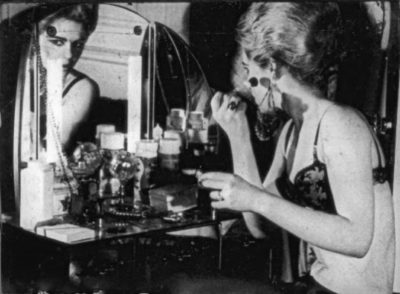
The film opens with Edie waking up, walking around her bedroom, smoking a cigarette, popping pills, exercising, and lounging in bed.  (That’s pretty much my morning routine too, except for the cigarettes.)  She doesn’t speak.  The only sound that we hear is a record being played in the background and the whirring of Warhol’s camera.  Because of a faulty lens, the first 30 minutes of Poor Little Rich Girl are out-of-focus.  We can see Sedgwick’s form as she moves and we can, for the most part, tell what she’s doing but we can’t see any exact details.  Her face is a blur and sometimes, her body seems to disappear into the walls of the room itself.  It’s a genuinely disconcerting effect, even if it was an accident on Warhol’s part.  Edie is there but she’s not there.  The blurry image seems to reflect an unfocused life.  Edie is the poor little rich girl of the title and indeed, she was known as a socialite before she even became a part of Warhol’s circle.  The blurriness indicates that she has everything but it can’t be seen.

After 30 minutes, the film comes into focus.  Clad in black underwear, Edie answers questions from Chuck Wein, who remains off-camera.  Sometimes, we can hear Chuck’s questions and sometimes, we can’t.  Our focus is on Edie’s often amused reaction to the questions, even more so than her actual answers.  Edie smokes a pipe and looks at herself in her mirror and she talks about how she blew her entire inheritance in just a manner of days.  She raids her closet and tries on clothes while Wein offers up his opinions.  Edie is living the ultimate fantasy of trying on different outfits while your gay best friend makes you laugh with his snarky comments.  Edie comes across as someone who is living in the present and not worrying about what’s going to happen in the future.  It’s only when she nervously smiles that we get hints of the inner turmoil that came to define her final years.  The camera loves Edie and, even appearing in what is basically a home movie, Edie has the screen presence of a star.  There was nothing false about Edie Sedgwick.

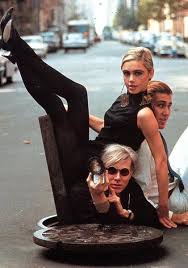
Edie Sedgwick, Chuck Wein, and Andy Warhol

Watching the film today, of course, it’s hard not to feel a bit sad at the sight of a happy Edie Sedgwick.  While Edie would become an underground star as a result of her association with Andy Warhol and his films, their friendship ended when Edie tried to establish a career outside of Warhol’s films.  Edie’s own struggle with drugs and her mental health sabotaged her career and she died at the age of 28.  I first read George Plimpton’s biography of Edie Sedgwick when I was sixteen and I immediately felt a strong connection to her and her tragic story, so much so that I was actually relieved when I made it to my 29th birthday.  Though most people ultimately see Edie Sedgwick as being a tragic figure, I prefer to remember Edie as she appeared in the second half of Poor Little Rich Girl, happy and in focus.

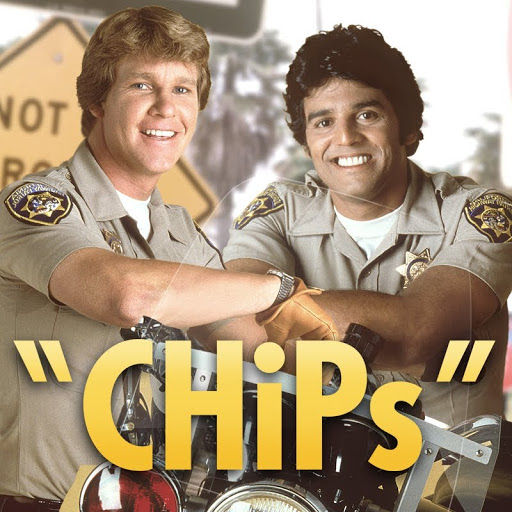
Late Night Retro Television Review: CHiPs 3.6 “Counterfeit”


Welcome to Late Night Retro Television Reviews, a feature where we review some of our favorite and least favorite shows of the past!  On Mondays, I will be reviewing CHiPs, which ran on NBC from 1977 to 1983.  The entire show is currently streaming on Prime!

Tonight’s episode is weird.

Episode 3.6 “Counterfeit”

(Dir by John Florea, originally aired on October 20th, 1979)

Ponch is shocked to discover that he’s carrying several counterfeit twenties.  He turns the money into the Treasure Department, hoping that it will mean receiving an monetary award.  Instead, he’s told that his reward is helping the government crack down  on the bad guys.  Ha!  Take that, Ponch!

That said, you better believe that Ponch is there to help arrest the counterfeiters, who turn out to be a bunch of phony preachers working out of a church.  I know that sounds like the sort of thing that could be interesting.  But, for the most part, these guys are still just generic CHiPs bad guys, even if one of them is played by veteran screen tough guy Ralph Meeker.

Meanwhile, Ponch goes on a date with a woman and is upset when it appears that she’s shallow and doesn’t want to talk about anything that is the least bit intellectual.  That’s our, Ponch!  He’s never shallow!  Fortunately, it turns out that his date isn’t shallow either.  She was just pretending to be shallow to test whether or not Ponch was shallow.  And now, it’s time to dance!  Wait, what?  That doesn’t make any sense.  Ponch — when are you going to settle down?  Disco isn’t going to last forever.

While that’s going on, architect James O’Hara (played by veteran dwarf actor Billy Barty) becomes frustrated with people assuming that he can’t drive because of his size.  He gets tired of all the dumb jokes and the condescending remarks.  As a result, he keeps getting into minor accident whenever he drives on the highway.  This was a strange storyline, largely because O’Hara’s scenes made up over half the episode despite the fact that he had never appeared on the show before and he barely interacted with the members of the Highway Patrol.  A part of me wonders if maybe this episode was meant to be a backdoor pilot for a series about James O’Hara.  The other weird thing about this episode is that O’Hara’s frustration over people making fun of his height was often played for laughs.  The whole thing just felt well-intentioned but oddly tone deaf.

If you’re keeping track, this episode had two Ponch storylines and a storyline about a guy we had never seen before.  Sorry, Baker!  If we had any doubts about who was the favored partner as far as this show goes, this episode erased them.

This whole episode just felt weird.  On the plus side, there was a lot of nice California scenery and there were quite a few accidents, which is the main reason why most people would have been watching the show in the first place.  But this episode really is an example of how a show can get bogged down with a character that we’ve never seen before and that we’ll probably never see again.  The episode just never comes together.