Tonight, I’m starting my summer job of writing about Big Brother for the Big Brother Blog. In honor of that, today’s song of the day is the little-remembered theme song from the first season of Big Brother!
After listening to this, you’ll understand why they’ve gone with an instrumental theme song from season two on.
Welcome to Retro Television Reviews, a feature where we review some of our favorite and least favorite shows of the past! On Thursdays, I will be reviewing Malibu CA, which aired in Syndication in 1998 and 1999. Almost the entire show is currently streaming on YouTube!
Yes, this is from the first season. I don’t care. I refuse to waste my time looking for a second season advertisement.
Soon, I will be finished with this show. I’m just trying to keep my spirits up.
Episode 2.21 “Parent Trap”
(Dir by Gary Shimokawa, originally aired on April 15th, 2000)
Peter is having a midlife crisis so Scott, Jason, and Traycee introduce him to Traycee’s mom, Candee (Wendi Winburn). Peter falls for Candee and decides to ask her to marry him. Traycee warns Scott and Jason that Candee has been proposed to by a lot of men — including Donald Trump! — and she always turns them down. But, for some reason, Candee accepts Peter’s proposal. But then, at the celebration dinner, Candee mentions that she wants to travel and Peter mentions that he wants to stay in Malibu and manage his restaurant (even though he tried to retire just a few episodes ago) and Candee and Peter decide not to get married. They both share a laugh over the whole thing which struck me as odd.
Meanwhile, Lisa gets upset when Murray paints a naked picture of her. She goes to Murray’s art showing and attempts to paint clothes on her body and seriously, I just wanted the police to arrest her and drag her away. What a stupid storyline. Lisa (the character, not me) is the worst.
This episode …. hey, it fit the running time and stuff happened. Apparently, by this point in the second season, that’s all anyone was demanding from MalibuCA. There’s an odd lack of conflict in this episode. Candee wants to go on safari. Peter doesn’t. They laugh and call the whole thing off. Uhmm, okay. Most engagements end on a bit more of a dramatic (or, at the very least, an emotional) note. When I was 18, I was briefly engaged until I found out that my fiancé’s family didn’t actually own all of those oil wells in South Texas, despite the fact that he claimed otherwise. That was not a happy breakup. Everyone in this episode is so agreeable that it’s boring. For someone who was totally in love, Peter certainly seem to be cheerful about never seeing Candee again. Seriously, he picked his tacky restaurant over the supposed love of his life. What an idiot.
Welcome to Late Night Retro Television Reviews, a feature where we review some of our favorite and least favorite shows of the past! On Wednesdays, I will be reviewing Monsters, which aired in syndication from 1988 to 1991. The entire series is streaming on YouTube.
This week, Monsters comes to its conclusion.
Episode 3.24 “The Moving Finger”
(Dir by Kenny Myers, originally aired on April 26th, 1991)
Monsters comes to a close with an adaptation of a Stephen King short story.
Nerdy Howard (Tom Noonan) is shocked to discover that, every time he goes to any of the various drains in his house, a bony finger pokes out. Howard’s wife can’t see the finger but Howard becomes obsessed with it, attacking it with a corrosive liquid and eventually a hedge trimmer. No matter how much damage Howard does to it, the finger comes back, longer and stronger….
Despite the Stephen King pedigree and the presence of the usually reliable Tom Noonan, TheMovingFinger makes for a disappointing conclusion to Monsters. King’s style, and this is especially true of his short stories, often doesn’t translate well into visual adaptations. The signature inner monologues and the building sense of dread can be difficult to recreate visually. (One reason why TheShining is the best King adaptation is because Stanley Kubrick made the material his own and didn’t worry about trying to recreate all of King’s trademark bullshit literary flourishes.) Tom Noonan doesn’t have much of a character to play and the finger itself becomes less effective as the episode drags on.
Oh well! Monsters was a generally uneven show so it’s perhaps appropriate that it ended on an unsteady note. It’s the curse of the anthology format. When Monsters was good, it was really, really good. When it was bad, it was kind of boring. There were a lot of good episodes that aired during the final season but, sadly, there were a few bad ones as well. That said, the good Monsters episodes to outweigh the bad and forgettable ones.
That’s it for Monsters! Next week, something new will premiere in this time slot. What will it be? I have no idea but I look forward to finding my next show!
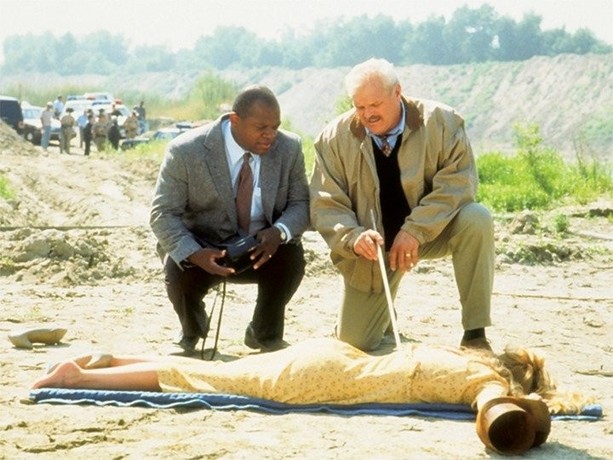
Brian Dennehy directed, co-wrote and starred in this made-for-TV movie about Chicago homicide detective Jack Reed. This is the third TV movie based on Reed’s exploits, following 1992’s DEADLY MATRIMONY, and 1993’s BADGE OF HONOR. In A SEARCH FOR JUSTICE, Jack Reed (Brian Dennehy) investigates the murder of pregnant stripper Lorelei Bradley (Marjorie Monaghan), who also happens to love children, even running a daycare center in the trailer park she lives in. Reed’s investigation quickly identifies the politically connected businessman and strip club owner, Win Carter (Miguel Ferrer), as the prime suspect. As if trying to solve the murder isn’t tough enough, Reed must also deal with corrupt superiors within his own department and train his new boss Charles Silvera (Charles S. Dutton), the latest in a long line of men to be promoted over him. No matter what obstacles Reed encounters, he remains determined to bring the killer to justice!
JACK REED: A SEARCH FOR JUSTICE, is my first “Jack Reed” film, and I enjoyed it. The character of Jack Reed is based on real life Cook County, Illinois Sheriff John “Jack” Reed, with each of the different movies loosely based on cases that Reed investigated throughout his career. As you might imagine, Brian Dennehy is excellent in the lead role as the tough, principled cop who will stop at nothing to catch criminals. The Chicago backdrop adds a nice wrinkle to the proceedings with its strong reputation for corruption, something that plays strongly into this installment and makes Reed’s job that much harder. I also really like Charles S. Dutton’s character, Lieutenant Charles Silvera. Initially promoted due to the color of his skin, and as a way to stick it to Reed, Silvera turns out to be an incorruptible lawman who develops a great working relationship with Reed. I’ve always been a fan of Dutton as an actor, mainly because of his ability to project decency and integrity on screen, and I’m looking forward to seeing them work together in future installments. Miguel Ferrer is also a good villain. He doesn’t go over the top here, rather he plays the part as low key, politically connected, amoral, and ultimately, very dangerous. It’s a good choice.
The fact that JACK REED: A SEARCH FOR JUSTICE is based on real life cases helps bring a little more realism than you might get in most TV movie cop movies of the time. As an example, our cops are more concerned about putting together solid evidence and getting a conviction over anything else. There is some action, but after watching this installment, I realize that these movies are just as likely to end with lawyers cutting a deal than with a big shootout. On the flip side, there are elements of the story that don’t seem realistic at all, such as Reed’s wife Arlene (Susan Ruttan) doing her own undercover work at one point, and our victim’s unlikely dual life as a stripper and daycare operator. What can I say, it’s not a perfect movie, but if you enjoy 90’s TV cop dramas like I do, you should enjoy this film and this series. The cast is good, and the characters are men of integrity trying to bring justice to a corrupt world. That’s a recipe for enjoyment as far as I’m concerned, and I’m looking forward to watching the rest of the film series!
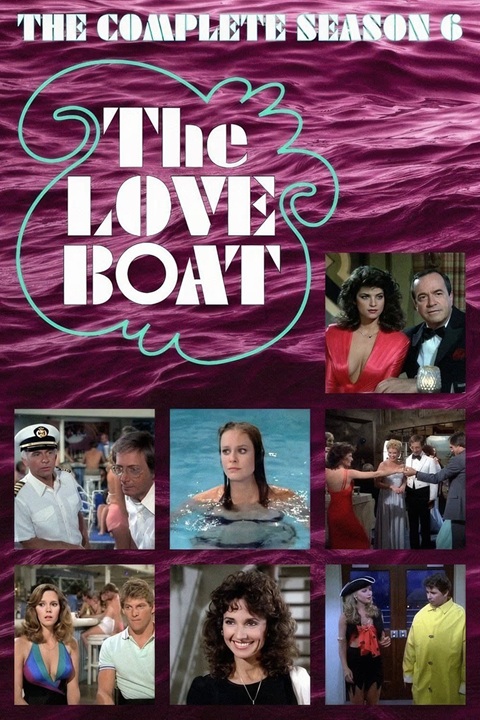
Welcome to Retro Television Reviews, a feature where we review some of our favorite and least favorite shows of the past! On Wednesdays, I will be reviewing the original Love Boat, which aired on ABC from 1977 to 1986! The series can be streamed on Paramount Plus!
This week, Doc starts to feel his age.
Episode 6.6 “The Groupies/The Audition/Doc’s Nephew”
(Dir by Don Weis, originally aired on November 6th, 1982)
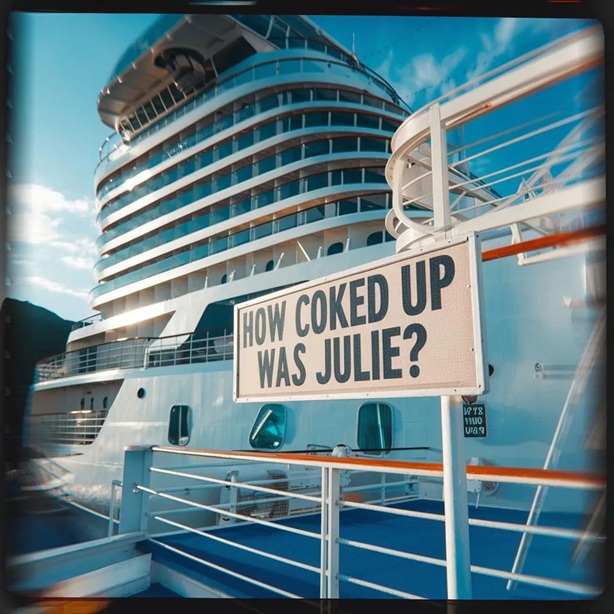
When it comes to TheLoveBoat, there’s one question that always has to be asked.
In this episode, Julie appears to be moderately coked up. She’s definitely not as coked up as she was in some of the earlier episodes of this season but there’s still that glint in her eye and the rapidness of his speech that leaves little doubt that there was probably some sniffing going on in the cruise director’s office. On the How Coked Up With Julie Scale, I would give this one a solid 7 out of 10.
Of course, Julie had some competition on this cruise. A pre-born again Willie Aames was on the cruise, playing Doc’s nephew Danny, and sporting the puffy eyes of someone who had been up all night on a date with the Devil’s Dandruff. Danny and Doc both develop a crush on the same woman and Linda (Michelle Phillips) decides that she would prefer to spend her romantic time with a teenage Danny than with Doc, who has a medical degree and probably a lot more money than Danny. This leads to Doc have yet another midlife crisis. Danny, meanwhile, falls hard for Linda but, at the end of the cruise, Linda explains that she’s not looking to get tied down with a relationship. She just wanted to bang someone who was ten years younger than her. Okay, that’s not quite what she said but that was the general idea. Doc learned that it was okay to be middle-aged and Danny was too high to learn much of anything.
Soap opera writer Paula Hastings (Susan Lucci!) boarded the cruise and was shocked to discover that one of the passengers was Barry Weldon (Tristan Rogers!), an actor who she turned down for a role on her soap. Barry romanced Paula and convinced her that he was falling in love with her and then announced it was all just an act to prove that he deserved the role on her show. Damn, Barry, that’s not nice at all! But then it turned out that Barry actually had fallen in love with her so they decided to get married. “Congratulations!” Julie said, her eyes shining with a manic edge.
Finally, a therapist (Richard Deacon) boarded the ship, just to discover that his patients (Jerry Van Dyke, Elaine Joyce, Morey Amsterdam, and Rose Marie) had all decided to take the cruise with him. Why, that’s enough stress to make the idea of a little flakey relief seem appealing! That said, the therapist and his patients were played by some old school sitcom mainstays and none of them seemed to be coked up. They were definitely a whiskey and cigarettes crowd.
This was a pleasant cruise. Bernie Kopell is always likable as Doc Bricker and I always enjoy his midlife crisis episodes. The therapist storyline was pretty hokey but, on the other hand, Susan Lucci and Tristan Rogers! That’s daytime drama royalty, babe! I enjoyed this episode.
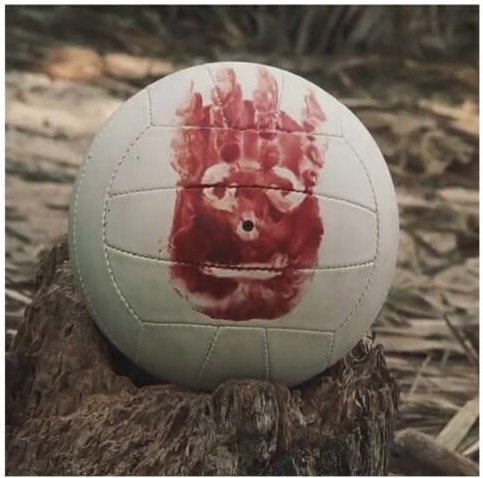
Seriously, I’m usually pretty well-behaved when I watch a movie but every time I see the 2000 film Cast Away, I find myself thinking, “Protect Wilson! You must protect Wilson!” And then, every time, I feel the sting of tears in my eyes as Wilson, with that red-face and that understanding attitude, goes floating away.
Wilson is a volleyball. When a FedEx executive named Chuck Noland (played by Tom Hanks) finds himself stranded on a desert island, Wilson becomes his only companion. A stain from Chuck’s bloody palm creates something that resembles a face on Wilson’s rubber surface and Chuck spends a lot of time talking to Wilson. It’s how Chuck maintains his sanity, even as he loses weight, sheds most of his clothes, and grows a beard.
Chuck learns how to make fire. He learns how to catch fish. He is able to survive due to the supplies that he gathers from the FedEx packages that were being carried on the plane that crashed into the island. But Chuck never stops dreaming of returning home to his girlfriend (Helen Hunt). Eventually, Chuck finds the courage to try to make the journey back to civilization. He brings Wilson with him but ultimately, this is something that Chuck is going to have to do on his own. Of course, Chuck has failed to consider that he’s been gone for years. He is presumed dead. On the Island, time seemed like it was frozen. For the rest of the world, life has continued.
CastAway is a film that a lot of people, especially online film commentators, tend to criticize. The complaint is usually that the film is essentially a commercial for FedEx, that it’s not believable that Tom Hanks could survive on that island for as long as he did, and that the film itself has a weak ending. I’ll concede that the film does make FedEx look like the nicest corporation on Earth. (FedEx’s CEO appears as himself, which should tell you something about how the company is presented.) And I will admit that the film’s time-advancing jump cut, which abruptly takes Hanks from being clean-shaven and husky to being thin and bearded, does leave a lot of unanswered questions. But I will always defend the film’s ending. The film ends on a note of ambiguity but how else could it have ended? Everyone thought Chuck Noland was dead. His girlfriend had every right to get on with her life and, in fact, it would have been psychologically unhealthy for her if she hadn’t. As for that final shot, it’s an acknowledgment that Chuck doesn’t know what lies ahead of him in the future. All he knows is that he life isn’t over yet. It’s a melancholy ending. It’s a frustrating ending. But it’s also the only way the film could have ended and therefore, it’s a perfect ending.
CastAway is a film that I will always defend and it’s also a film that really only could have worked with Tom Hanks in the lead role. He plays Chuck as being the ultimate everyman, an affable guy who was just trying to do his job and whose survival of the initial plane crash was largely due to luck. Hanks is one of those actors who is instantly sympathetic and CastAway uses his screen persona to good effect. You want him to survive because he’s Tom Hanks. He may be playing a character named Chuck Noland but ultimately, he’s Tom Hanks. He survived being trapped in space. Surely, he can survive being stranded on an island. The majority of the film is just Hanks talking to himself. This would have brought out the worst in so many actors but Tom Hanks makes it work. And yes, he’ll bring tears to your eyes as he watches Wilson float away. That’s the power of a good actor.
As for Wilson, I like to think that he washed up in Pensecola. Recently, I played a little volleyball on a beautiful Florida beach. Was that you, Wilson?
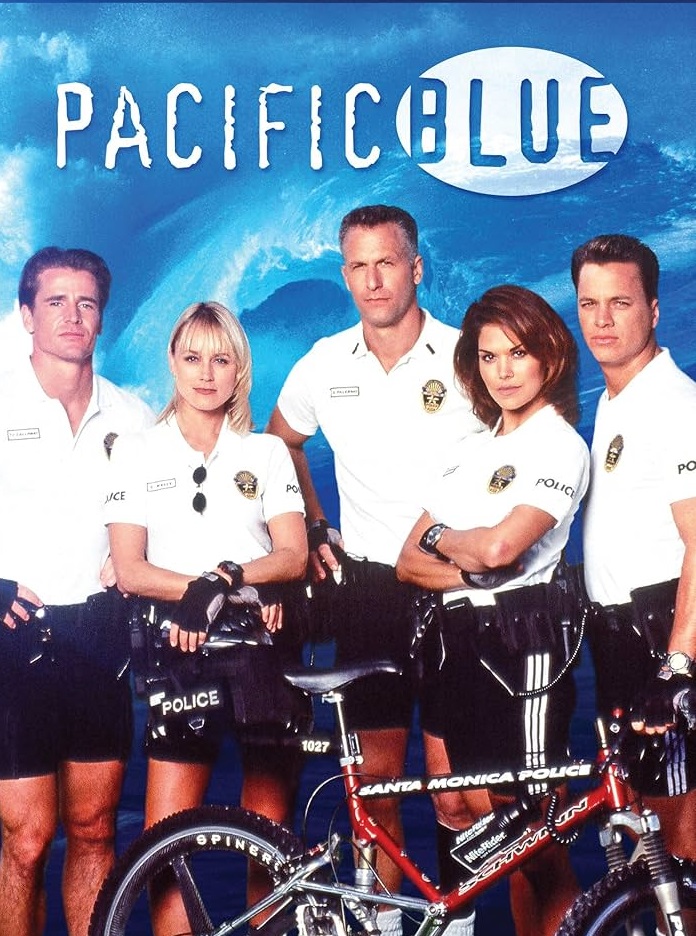
Welcome to Late Night Retro Television Reviews, a feature where we review some of our favorite and least favorite shows of the past! On Tuesdays, I will be reviewing Pacific Blue, a cop show that aired from 1996 to 2000 on the USA Network! It’s currently streaming everywhere, though I’m watching it on Tubi.
This week, Chris nearly gets everyone killed …. again!
Episode 2.10 “Cranked Up”
(Dir by Corey Michael Eubanks, originally aired on November 3rd, 1996)
The bike cops are taking part in an “eco-relay,” (which I guess is a bicycle race) through the mountains surrounding Santa Monica. Upon arriving at the park, Chris and Corey spot two rednecks on ATVs.
“Those are illegal in state parks!” Chris says.
And you’re off-duty, Chris. Seriously, Chris is the most annoying character on this show and that’s kind of amazing when you consider the competition.
Anyway, during the race, Chris spots a meth lab that is being run by those ATV-riding rednecks. Even though she’s off-duty, doesn’t have a radio, and doesn’t have any way to bring in any backup, she still decides to take down the meth lab herself. Instead, she gets captured by the rednecks and their girlfriend, Mary Lou (Maddie Corman). Mary Lou lights a cigarette and Chris yells at her about it. I’m surprised that they didn’t just give Chris back after having to spend ten minutes with her.
The other bike cops go to search for Chris. Chris manages to escape on her own but, when she reaches the other bike cops, she explains that the meth lab could have “crank” out on the street by nightfall. The cops — who are ALL off-duty — decide to take down the lab without bothering to call for back-up. (Seriously, they could have just called the real police from the finish line.) The end result is that Cory gets shot (but, luckily, doesn’t die) and all the other cops get captured, including Chris for a second time. Luckily, Lt. Palermo shows up and rescues everyone. They don’t win the race but they do take out a meth lab. Of course, they could have easily won the race and then called the real cop to take out the meth lab afterwards and, as an extra bonus, Cory wouldn’t have gotten shot.
This was a Chris-centric episode, which means that the majority of the episode was divided between Chris bragging about being a badass and Chris complaining about situations that wouldn’t have happened if she wasn’t so freaking incompetent. This would have been a fun episode CHiPs but, with Pacific Blue, it’s just another reminder that bicyclists are worthless.
One final note: Maddie Corman is the wife of former actor and director Jace Alexander who, in 2015, was arrested for possession and distribution of child pornography. Corman did not divorce her husband but instead turned the experience of being married to pedophile into a one-woman off-Broadway play and even did a tour of all the morning shows promoting it. I don’t blame her for her husband’s crimes and I can totally buy her claim that she didn’t know anything about what was on his computer until the police showed up but, still, to then use those crimes to promote herself …. that’s always struck me as being more than a little icky.
Since I just reviewed the final Tattoo episode of Fantasy Island, let’s say goodbye with today’s song of the day.
In 1981, at the height of Fantasy Island’s popularity, Villechaize released a song called “Why?” It’s all about trying to understand why people have to fight and why people cannot just accept the wisdom of peace-loving children. The video at the top of this post was recorded for a TV show on which Villechaize appeared. Unfortunately, I don’t know which show it was for and the video upload itself is not the best quality. Apparently, the split-screen visual effect that gives us two Herves singing at once was a part of the show.

 Through the Shattered Lens