Horror Film Review: Love At First Bite (dir by Stan Dargoti)


Disco Dracula!

In 1979’s Love At First Bite, George Hamilton plays Dracula, who goes from living in Transylvania to trying to make it in New York City.  Even when you’re the King of the Vampires, it turns out that New York can be a difficult place to live.  No one has much respect for the tanned man in the cape, even after he shows off his powers.  He falls in love with a model, Cindy Sondheim (Susan Saint James), but she doesn’t buy into the idea that he’s a vampire.  She’s a New Yorker and she’s in therapy.  Her therapist, Dr. Jeffrey Rosenberg (Richard Benjamin), is a direct descendant of Prof. Van Helsing and he does believes that “Vladimir” is a vampire but he can’t get anyone to believe him.  When he takes his concerns to the NYPD, Lt. Ferguson (Dick Shawn) dismisses him as being insane.  Which, to an extent, he is but only because no one will believe him….

Meanwhile, Dracula’s faithful servant, Renfield (Arte Johnson), starts every morning by leaning out of his apartment window and pretending to be a rooster.  It’s his signal to let Dracula know that it’s time to come home.  Dracula is so in love with Cindy that he sometimes forgets to keep track of time.  It’s a New York love story….

Love At First Sight is a comedy that essentially gets a lot of mileage out of a handful of jokes.  The main joke is the idea of George Hamilton, with his perpetual tan, playing Dracula and speaking with a Bela Lugosi-style accent.  Hamilton plays Dracula as being very confident and very smooth but also rather befuddled by 1979.  He’s a gentleman of the “old world” after all.  The other big joke is that Dracula is in New York, a city where no one is impressed by anything.  This is very much a “New Yorkers Will Be Rude To Anyone” movie, a genre that was very popular in the 70s.  Some films, like Taxi Driver, used the rudeness of New York as a metaphor for paranoia and detachment.  Love At First Bite uses it for laughs.

(For the record, my favorite “New Yorkers Will Be Rude To Anyone” movie is the original The Taking of Pelham One Two Three.  Also, the last time I briefly visited New York, everyone was very nice and polite to me.  Only once did someone yell, “Look out, lady!” and I’m still not really sure what I was supposed to be looking out for.)

There’s a lot to like about Love At First Sight.  Susan Saint James and George Hamilton don’t exactly have a ton of chemistry but Hamilton himself is fun to watch.  “Children of the night — shut up!” he yells at the wolves and it’s hard not to smile.  It’s just so goofy.  Hamilton and Arte Johnson are a good comedic team and, for that matter, so are Richard Benjamin and Dick Shawn.  It’s a film of set pieces.  Dracula and Renfield rob a blood bank.  Jeffrey confronts Dracula at dinner.  Dracula pops out of his coffin at a church.  Some of the set pieces work better than others and this is very much a film of its time but overall, it’s a genial and amusing send-up of the vampire genre.

And it features Dracula at a disco!  It’s a 70s movie and it stars George Hamilton so it’s not really surprising that the action moves to a disco.  Still, if you can’t appreciate the sight of a caped Dracula showing off his best moves, I don’t know what to tell you.

Love At First Sight is a reminder that not every Halloween movie has to be terrifying.  Some of them can just make you laugh.
Retro Television Review: Fantasy Island 6.14 “Revenge of the Forgotten/Charo”


Welcome to Retro Television Reviews, a feature where we review some of our favorite and least favorite shows of the past!  On Tuesdays, I will be reviewing the original Fantasy Island, which ran on ABC from 1977 to 1984.  Unfortunately, the show has been removed from most streaming sites.  Fortunately, I’ve got nearly every episode on my DVR.

This week epitomizes an era!

Episode 6.14 “Revenge of the Forgotten/Charo”

(Dir by Phillip Leacock, originally aired on February 19th, 1983)

Just the fact that one of this week’s fantasies is actually entitled “Charo” should tell you all you need to know about it.  Charo plays Maria Diaz (her full name is much longer), who has come to Fantasy Island to meet her father.  Charles Woodruff (Van Johnson) didn’t even know that he had a daughter but he takes the news surprisingly well.

The interesting thing about this fantasy is that Charles Woodruff is an American diplomat, who has a home in both New York City and Fantasy Island.  As Fantasy Island has previously been established as being its own nation, you do have to wonder if perhaps Charles Woodruff is America’s ambassador to Fantasy Island.  A large part of the fantasy involves him hosting a dinner for several other diplomats so I guess it’s possible that every country sends an ambassador to Fantasy Island.  Perhaps Fantasy Island even sends a delegate to the United Nations.  Maybe that would explain where Tattoo was during all of those season 5 episodes where Julie was suddenly Roarke’s sidekick.  For that matter, maybe that’s where Julie is now.  The show never has really explained what happened to her.

Anyway, how much you like this fantasy will depend on how much you like Charo.  She is someone who definitely epitomizes an era and, of course, the same can be said of both The Love Boat and Fantasy Island.  It’s interesting that, over the years, there have been multiple attempts to reboot both of those series and they’ve never really worked, largely because a good deal of the appeal of Love Boat and Fantasy Island is how much they really are a product of the 70s and 80s.  Attempting to update them for the modern era tends to negate everything that make both of the shows so entertaining to watch today.

(The latest Fox update of Fantasy Island had a lot of gorgeous scenery but it got bogged down in all of its attempts to world build.  It’s fun to speculate about how the Island works.  It’s less fun to actually have the show explain it to us.)

As for the other fantasy, it involves Marjoe Gortner!  As usual, Marjoe’s playing a villain.  He’s cast as Loren Robertson, who framed Alan Daly (Steve Kanaly) for a crime that he didn’t commit and then tricked Alan’s girlfriend, Marion (Christine Belford), into marrying him.  Recently released from prison, Alan comes to Fantasy Island to track down a fabled treasure that Alan believes he can use to restart his life.  With the help of Tattoo (who dresses up like Indiana Jones), Alan finds the treasure but, when he sees Loren and Marion on the Island, Alan gets distracted by his desire for revenge.

This story was a bit of an odd one.  Alan’s fantasy was to find the treasure and, after he found it, Roarke was like, “So, I guess you’ll be leaving now.”  Instead, Alan decides to spend a full weekend on the Island to try to get revenge.  I’ve never seen Roarke try to get a guest to leave early before but it’s even more strange to be reminded that somehow all of these fantasies occur over the course of one weekend.  Some episodes have seemed like a bit much for just two or three days.

Despite the fact that this episode originally aired in 1983, it doesn’t get more 70s than Charo and Marjoe!  Charo was her usual self.  Marjoe was a great villain as always.  This was an enjoyable trip to the Island.

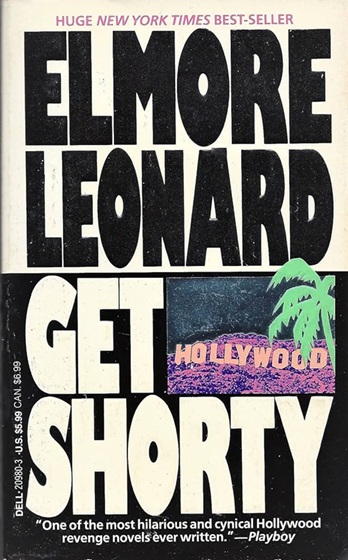
Book and Film Review: Get Shorty (by Elmore Leonard and dir by Barry Sonnenfeld)


In 1995’s Get Shorty, John Travolta stars as Chili Palmer.

Chili is a loan shark for the mob, an effortlessly cool guy who lives in Miami and who loves to watch old movies.  Chili may work for the Mafia and he may make his living by intimidating people but he doesn’t seem like such a bad guy, especially when compared to someone like Ray “Bones” Barboni (Dennis Farina).  Bones is an uncouth and rather stupid gangster who steals Chili’s leather jacket from a restaurant.  Chili reacts by breaking Bones’s nose with just one punch.  Bones reacts by trying to shoot Chili but instead, he gets shot by Chili himself.  (The bullet only grazes his forehead.)  Chili can do all this because he’s protected by Momo (Ron Karasbatsos) but, after Momo drops dead after having to walk up several flights of stairs just to then be given a surprise birthday party, Chili suddenly finds himself working for Bones.  (This all happens in the first few minutes of this perfectly paced film.)

Bones, eager to humiliate Chili, sends him to Vegas to collect on a debt owed by a dry cleaner named Leo (David Paymer).  Leo is thought to be dead but Bones wants to collect the money from Leo’s widow.  It’s not the sort of thing that Chili likes to do so instead, he ends up going to Hollywood to collect a debt from B-movie director Harry Zimm (Gene Hackman).  Chili  happens to like Harry’s movies.  He also likes Harry’s current girlfriend and frequent co-star, actress Karen Flores (Rene Russo).

Chili ends up in Hollywood, a town where everyone has some sort of hustle going.  Chili finds himself dealing with drug dealers (Delroy Lindo), egocentric film stars (Danny DeVito), stuntmen-turned-criminals (James Gandolfini), and the widow (Bette Midler) of a screenwriter.  Chili also finds himself looking to escape from the debt collection business by becoming a film producer.  Harry has a script that he wants to make.  Chili proposes a film based on the story of Leo the dry cleaner.  Danny DeVito’s Martin Weir wants to be a “shylock” in a movie just so he can show off his intimidating stare.  (“Is this where I do the look?” he asks while listening to the pitch.)  Get Shorty is a whip-smart satire of Hollywood, one in which the gangsters want to be film people and all of the film people want to be gangsters.  It features wonderful performances from the entire cast, with Travolta epitomizing cool confidence as Chili Palmer.  Hackman, Russo, DeVito, Gandolfini, and Lindo are all excellent in their supporting roles but I have to admit my favorite performance in the film is probably given by Dennis Farina, who turns Bones Barnobi into a very believable (and a believably dangerous) buffoon.

Get Shorty is based on a book by Elmore Leonard.  First published in 1990, the book is a quick and entertaining read, one that reminds us that Leonard was one of the best “genre” writers of his time.  When I read that book, I was surprised to see how closely the movie stuck to the book’s plot.  Much of the film’s dialogue is right there in the book.  It’s a book that practically shouts, “Turn me into a movie!” and fortunately, director Barry Sonnenfeld did just that.

GANG WAR (1958) – a young Charles Bronson testifies against the mob!


Charles Bronson starred in four movies and one TV show in 1958. Two of those movies were produced by Harold Knox, written by Louis Vittes, and directed by Gene Fowler, Jr. The first of the two films was SHOWDOWN AT BOOT HILL, an excellent low budget western that featured Bronson as a bounty hunter with a chip on his shoulder and love in his heart. The second film was GANG WAR. 

In GANG WAR, Charles Bronson plays Alan Avery, a high school teacher in Los Angeles who’s walking home one night and happens to witness a gangland killing. He calls the police to report the murder, but he doesn’t want to get any further involved so he doesn’t give them his name. Avery was on his way home from a trip to the pharmacy where he had picked up a prescription for his pregnant wife (Gloria Henry) who is suffering from migraines. In the stress of the moment, he left the pharmacy sack in the phone booth and the police are able to track him down to his home. After being pressed by the police, Avery reluctantly agrees to testify. He’s a great witness as he’s able to give the police a description of the car and its license plate number. His information leads to the arrest of Joe Reno, the second in command to mobster Maxie Meadows (John Doucette). Maxie sends his attorney Bryce Barker (Kent Taylor) over to the police station to see Captain Finch. Finch happens to be on Maxie’s payroll, and he immediately tells Barker about the witness. He even leaks it to the press so they can run a story revealing Avery’s name and address. Maxie would prefer to buy Avery’s silence, but he also wants a little insurance, so he sends his punch drunk henchman Chester over to slap around Avery’s wife. This order is akin to asking Lennie Small from OF MICE AND MEN to go play with some puppies. Simple-minded Chester proceeds to kill Mrs. Avery. When Avery comes home and finds his wife dead, he heads directly to Maxie’s house to kill him. The cab driver who took Avery to Maxie’s place just happened to see his gun, so he called the cops. Just before Avery can squeeze off a kill shot, the police show up and arrest him. Pissed that Avery was able to get so close to killing him, Meadows puts an actual hit out on him this time. Will the high school teacher be able to survive his battle against the mob?!!

(Note: The analysis below ventures into spoiler territory for both GANG WAR and SHOWDOWN AT BOOT HILL. You may want to watch these films prior to reading the rest of the review.)

As a lifelong fan of Charles Bronson, I really appreciate his work with director Gene Fowler, Jr. in 1958. Fowler recognized Bronson’s charismatic screen presence, but he also recognized something deeper in the legendary icon… his heart. SHOWDOWN AT BOOT HILL seemed to be giving us Bronson as a typical western hero, only to reverse course and turn Bronson into a romantic lead who would choose to throw down his guns so he could establish roots in a community and spend his life with the woman he loves. In a similar way, GANG WAR seems to be setting Bronson up to be a vigilante, not much different than the type of character he would be portraying throughout the 70’s and 80’s. But when 70’s and 80’s Bronson would be pulling his trigger, Fowler presents a more thoughtful Bronson who recognizes that the best revenge can sometimes be in letting someone live with the consequences of their own decisions. This allows him to lower his gun, walk away and continue his life free of the guilt and the legal consequences that would undoubtedly come with taking another person’s life. This decision honors his wife’s legacy much more than murder and a lifetime in jail ever would. 

There are many good performances in this little gem. Bronson may not have been a “star” when this film was made, but there is no doubt that he was ready. He simply commands every frame that he appears in from the beginning to the end. John Doucette and Kent Taylor are also memorable as the gangster and his paid off lawyer, respectively. Doucette’s Maxie Meadows is certainly a stereotype of the gangsters in TV’s and movies at the time, but he plays the part well, saving his very best for his last moments of the film. Kent Taylor has the movie’s best story arc. When we meet him, he’s an alcoholic who can’t stand what he’s allowed himself to become, yet he continues to run every time Maxie calls. It’s a strong moment when he decides he won’t do it anymore. And Jennifer Holden is simply gorgeous as Marie, Maxie’s woman. Speaking of nice scenery, it was also fun seeing a Los Angeles that included landmarks like the Capitol Records Building and the old Nickodell Restaurant. So much of the action in GANG WAR takes place against these iconic backdrops, and for a guy who’s never been to LA, seeing these places again almost makes me feel like a resident.

Overall, while GANG WAR does feel like an old fashioned 50’s movie, it has plenty of things to recommend it, not the least of which is an excellent performance from a young Charles Bronson. At a 75 minute run time, it’s definitely worth a viewing.

The trailer for GANG WAR is presented below:

Late Night Retro Television Review: Highway to Heaven 3.13 “Basinger’s New York”


Welcome to Late Night Retro Television Reviews, a feature where we review some of our favorite and least favorite shows of the past!  On Thursdays, I will be reviewing Highway to Heaven, which aired on NBC from 1984 to 1989.  The entire show is currently streaming on Tubi and several other services!

New York, New York, it’s a heckuva town….

Episode 3.13 “Basinger’s New York”

(Dir by Michael Landon, originally aired on December 17th, 1986)

It’s Christmas in New York and veteran news columnist Jed Basinger (Richard Mulligan) has no idea what to write about.  Basinger has been recording the lives of the people of New York City for decades and he’s finally reached the point where he fears that there may not be anything good left to write about.  In short, Jed Basinger is a cynic and we know what this show thinks of cynicism!

While Basinger walks down a cold city sidewalk, he suddenly discovers Jonathan and Mark walking beside him.  Basinger worries that they’re fans, looking to harass him or tell him a long story that they think he should write about.  Instead, Jonathan introduces himself as an angel and explains that he’s here to show Basinger all the good things happening in the city.

I have to admit that I always groan a little whenever an episode of this show starts with Jonathan admitting that he’s angel.  The episodes where Jonathan makes no effort to hide his identity are usually the weakest, if just because they tend to be a bit more preachy than the typical episode of Highway to Heaven.  (Despite its reputation, Highway to Heaven was usually more earnest than preachy.)  Once Jonathan says those three words — “I’m an angel,” — the viewer is immediately aware that this episode has a message and it’s not going to be a subtle one either.

Jonathan, Mark, and Basinger make their way through New York.  They meet a cab driver who just wants to be reunited with his son.  They meet the saintly homeless people who live on the streets and take care of each other in their own quirky way.  They meet a nice cop.  They meet not one but two women who are in labor and who end up at the same hospital.  One woman is poor and turned away because she doesn’t have insurance (which, technically, I think is illegal under federal law but whatever).  The other woman is the wife of a U.S. Senator who announces that she refuses to give birth in a hospital that turns away the poor.  Luckily, Basinger is there and threatens to write about it.  The scene in the hospital is typical of this episode.  It’s well-meaning but so heavy-handed that it’s nowhere near as effective as it should have been.  If I was in labor, would I take the time to demand that the hospital treat all of its patients fairly?  I’d like to think so but, realistically, my mind would probably be on other things.  Luckily, Basinger gets to write his column, despite showing up late at the newspaper.  It turns out that the presses went down while Basinger learned a lesson about New York and kindness.

I can’t really be too critical of this episode because its heart was in the right place.  That was this show’s biggest strength.  Michael Landon really did seem to believe he could make the world a better place, one episode at a time.  That said, this episode was a bit too heavy-handed for my tastes.  But again, how can I be too critical of a show about Christmas miracles?


Horror Film Review: Godzilla (dir by Roland Emmerich)


There’s a giant lizard rampaging through New York, the result of a mutation that happened as a result of being exposed to radiation.  The military tries to stop the lizard but it turns out that stopping a giant lizard is not that easy.  Scientists try to understand the lizard and how it came to be a destructive giant.  The media breathlessly reports from the scene as two wisecracking cameramen do their best to record every second of the mayhem.  The reporters call this lizard …. GODZILLA!

But is it Godzilla?

No, it’s not.  Oh, it may be called Godzilla.  And the movie itself may be called Godzilla.  But the creature at the center of the 1998 American film Godzilla is definitely not Godzilla.

Godzilla was released with a great deal of fanfare in 1998, with commercials and toys and a lot of hype.  Diddy, back when he was still calling himself Puff Daddy, recorded a song for the soundtrack and upset thousands of Led Zeppelin fans like my Dad who found themselves having to deal with kids who thought Kashmir was called Follow Me.  (Diddy singing, “Follow me?”  AGCK!  How cringey is that!?)  But, like many of the film of Roland Emmerich, it’s been almost totally forgotten in the years since.

And why not?  It’s a forgettable film.  It’s the epitome of an assembly-line action blockbuster, the type of thing that Roland Emmerich is known for.  There’s comic relief, in the form of Hank Azaria.  There’s a nerdy scientist hero in the form of Matthew Broderick.  Broderick’s scientist has an ex-wife and yes, Godzilla’s invasion of New York gives them a chance to get back together.  There’s a mysterious Frenchman who is played, somewhat inevitably, by Jean Reno.  The Mayor of New York is a fat guy named Ebert (Michael Lerner) and he has an assistant named Gene (Lorry Goldman) and they get a lot of screentime because Emmerich wanted to make fun of two films critics who didn’t care much for his work.  In fact, the Mayor and his assistant get so much screentime that it distracts from the rest of the film.  Emmerich was directing a multi-million dollar reboot of a beloved franchise and he was more concerned with a petty feud.

He certainly wasn’t concerned with Godzilla.  Personally, I like the giant lizard and one of the only effective moments in the film is when the lizard discovers that its children have been killed by the military.  But that lizard is not Godzilla and the fact that Emmerich made a Godzilla film without Godzilla indicates that he didn’t really care about the monster or its fans.  This film has no love for its source material and that’s a shame.  The Godzilla films are fun!  And the fact that the majority of the ones made up until the release of this film looked kind of cheap and featured a Godzilla who was obviously a man in a rubber suit only added to the fun.  There’s not much fun to be found in this version of Godzilla.  The movie looks great without ever making much of an impression.

And you know what?  Having gotten this review out of the way, I’m ready to get back to reviewing the true Godzilla films.  They may not have cost as much as Emmerich’s film but they’ve got heart.

Previous Godzilla Reviews:

  1. Godzilla, King of the Monsters (1958)
  2. Godzilla Raids Again (1958)
  3. King Kong vs Godzilla (1962)
  4. Mothra vs. Godzilla (1964)
  5. Ghidorah: The Three-Headed Monster (1964)
  6. Invasion of the Astro-Monster (1965)
  7. Godzilla vs. The Sea Monster (1966)
  8. Son of Godzilla (1967)
  9. Destroy All Monsters (1968)
  10. All Monsters Attack (1969)
  11. Godzilla vs Hedorah (1971)
  12. Godzilla vs Gigan (1972)
  13. Godzilla vs Megalon (1973)
  14. Godzilla vs Mechagodzilla (1974)
  15. The Terror of Mechagodzilla (1975)
  16. Cozilla (1977)
  17. Godzilla 1985 (1985)
  18. Godzilla vs. Biollante (1989)
  19. Godzilla vs King Ghidorah (1992)
  20. Godzilla vs. Mothra (1992)
  21. Godzilla vs Mechagodzilla 2 (1994)
  22. Godzilla vs SpaceGodzilla (1994)
  23. Godzilla vs. Destoroyah (1995)
  24. Godzilla, Mothra, and King Ghidorah: Giant Monsters All-Out Attack (2001)
  25. Godzilla (2014)
  26. Godzilla: Planet of the Monsters (2017)
  27. Godzilla, King of the Monsters (2019)
  28. Godzilla vs Kong (2021)
  29. Godzilla Minus One (2023)

Horror On TV: Twilight Zone 3.33 — “The Dummy”


TheTwilightZoneLogo

In this episode of The Twilight Zone (which was originally aired on May 4th, 1962), a neurotic ventriloquist named Jerry (Cliff Robertson) has a bizarre relationship with his dummy. Not only does Jerry seem to hate his inanimate partner but the dummy doesn’t seem to be too fond of Jerry either.

You’ll probably already figured out The Dummy‘s twist but it’s still extremely well-done, featuring a great performance from Cliff Robertson and expressionistic direction from Abner Biberman.

Shattered Politics #54: Dave (dir by Ivan Reitman)


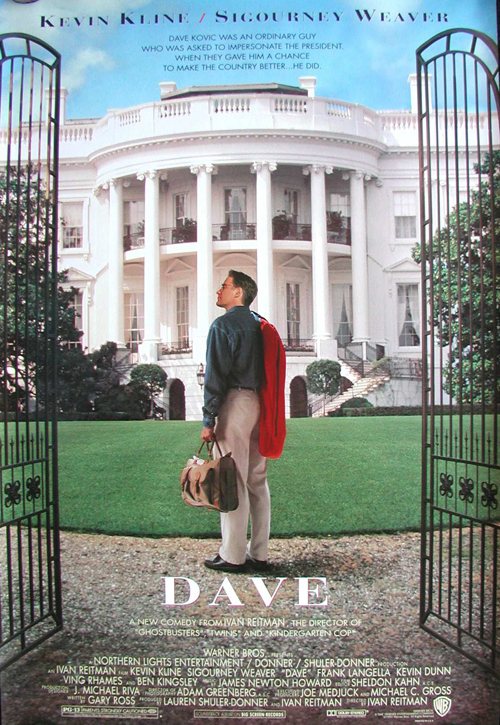
Dave Poster

Way back in 1919, the terrible U.S. President and tyrannical dictator Woodrow Wilson* suffered a stroke that left him semi-paralyzed and unable to perform his duties.  By all standards, Wilson should have been removed from office, if just temporarily.  However, in those pre-Internet days, it was a lot easier to hide the truth about Wilson’s physical and mental condition.  While Wilson spent his days locked away in his bedroom, his wife Edith would forge his signature on bills.  Whenever anyone asked for the President’s opinion, Edith would give her opinion and then assure everyone that it was actually the President’s.

(And really, as long as you were promoting eugenics and white supremacy, it probably was not difficult to imitate Wilson’s opinions.)

Of course, back then, people were used to the idea of never seeing their President in public.  Hence, it was very easy for Wilson to remain sequestered in the White House.  If a similar situation happened today, it’s doubtful that anyone could successfully keep the public from finding out.  When we don’t see the President every day, we wonder why.  How, in this day and age, could a Presidential incapacitation be covered up?

The 1993 film Dave offers up one possible solution.

Dave is the story of two men who happen to look exactly like Kevin Kline.  One of them is named Bill Mitchell and he’s the arrogant and corrupt President of the United States.  The other is named Dave Kovic.  He’s a nice guy who runs a temp agency and who has a nice side job going as a professional Bill Mitchell imitator.

So, when Bill has a stroke while having sex with a white house staffer (Laura Linney), it only makes sense to recruit Dave Kovic to pretend to the President.  White House Chief of Staff Bob Alexander (played by Frank Langella, so you know he’s evil) tells Dave that Vice President Nance (Ben Kingsley) is insane and corrupt.  Dave agrees to imitate the President.  Of course, Alexander’s main plan is to convince Nance to resign and then get Dave to appoint him as Vice President.  Once Alexander is Vice President, it will be announced that Mitchell has had another stroke and then Alexander will move into the Oval Office.

However, what Alexander did not take into account was just how much Dave would enjoy being President.  From the moment that he joyfully shouts, “God Bless, America!,” Dave’s enthusiasm starts to win the public over.  Suddenly, people are realizing that President Mitchell isn’t such a bad President after all.  Even more importantly, Dave wins over the first lady (Sigourney Weaver) who, previously, had little use for her philandering husband.  When Alexander claims that there’s no money in the budget to continue funding a program for the homeless, Dave calls in his best friend, an accountant named Murray (Charles Grodin), and has him rewrite the budget…

And you know what?

Dave is one of those films that tempts me to be all cynical and snarky but, ultimately, the film itself is so likable and earnest that I can even accept the idea that one accountant could balance the budget through common sense alone.  I’ll even accept the idea that Dave could come up with a program that would guarantee everyone employment without, at the same time, bankrupting the country.  Kevin Kline is so enthusiastic in the lead role and the film itself is so good-natured that it almost feels wrong to criticize it for being totally implausible.

Sometimes, you just have to appreciate a film for being likable.

Dave—–

* For those of you keeping count, that’s the third time in two weeks that I’ve referred to Woodrow Wilson as being  a dictator.  Before anyone points out that some historians rank Wilson as being in the top ten of President, allow me to say that I don’t care.  I DO WHAT I WANT!