Horror Film Review: The She-Creature (dir by Edward L. Cahn)


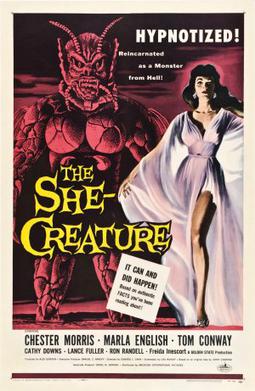
In the 1956 film, The She-Creature, bodies are being discovered on the beach.  The murderer appears to be a bizarre, humanoid creature with gills and scaly skin.  It commits its dastardly crimes and then it disappears back into the ocean!  What could it be?  Is it a genuine monster?  Is it a psycho diver in a rubber suit?  Is it just some random murderer that hides in the shadows and stalks the night like a cat searching for mouse?

While bodies are showing up on the beach, Dr. Carlo Lombardi (Chester Morris), is trying to convince the world that his theories about reincarnation and the occult are correct.  Usually clad in a tuxedo and accompanied by his assistant, Andrea (Marla English), Dr. Lombardi swears that everyone has lived a past life and that, when under hypnosis, people are capable of reliving all of their past lives.  Dr. Lombardi theorizes that reincarnation has been going on since the beginning of time and, as a result, a hypnotized person could even relive their past life as a cave dweller or, presumably, a single-celled creature floating around in a lake.  Actually, under Lomradi’s theory, I guess it’s possible that someone could have been a dinosaur in a past life.

(It’s probably best not to give that too much thought because most people would probably be disappointed to discover that they weren’t one of the cool dinosaurs but instead, they were one of those goofy green lizards that was always running out of the way of the cool dinosaurs.  No matter how many times someone bangs a gong, not everyone can be a T-rex, sorry.  Everyone wants to be the dinosaur that eats but no one wants to be the one that got eaten.)

The scientific community scoffs at Dr. Lombardi but when he puts Andrea under hypnosis, it’s enough for Timothy Chappell (Tom Conway) to want to go into business with him.  The scientific community may scoff at Lombardi and his theories but Chappell sees him as the key to a fortune.  Who cares if his powers are real or not?  Well, Lombardi cares and he’s discovered that he can use hypnosis to cause Andrea to turn into a prehistoric monster who will kill his enemies!

(Actually, Dr. Lombardi is such a good hpynotist that he’s even able to convince a dog to kill his owner.  Then again, maybe he just offered the dog a treat for being a good boy.  Who knows how the canine mind works?)

An entertaining B-movie, The She-Creature benefits from the committed performance of veteran tough guy Chester Morris, the other-worldly beauty of Marla English (who was cast because it was correctly felt she resembled Elizabeth Taylor), and the noir-influence direction of Edward L. Cahn.  The plot makes no sense but it hold your interest and the monster is a genuinely impressive creation.

On a personal note, I’ve never bought into reincarnation but if I was anyone in a past life, I was probably either Edie Sedgwick or Alice Roosevelt.
 

Horror Film Review: Day The World Ended (dir by Roger Corman)


“You finally did it!  You blew it up! …. Goddamn you to Hell!”

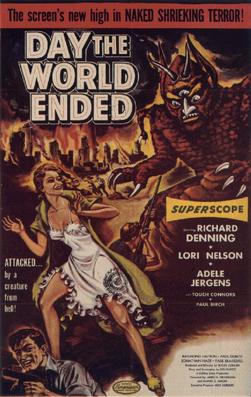
That’s right.  Just as how the original Planet of the Apes showed us what the world would look like centuries after a nuclear war, 1957’s Day The World Ended shows us what things would be like in  the weeks afterwards.  And guess what?  It wouldn’t be a lot of fun.

Day The World Ended starts with the bombs dropping and mushroom clouds forming in all of their fearsome glory.  (Oppenheimer may have hated his greatest achievement but aesthetically, the atomic bomb is still an impressive invention.)  Jim Maddison (Paul Birch) and his daughter, Louise (Lori Nelson), manage to survive by camping out in a steel bunker that Maddison built especially for the moment.  As a former Navy commander, Maddison understood that the world was on the verge of nuclear war and he also understood that only those with discipline would survive.  He’s filled with bomb shelter with supplies and he’s told Louise that only the two of them can use the shelter.  Anyone else is out of luck.

Unfortunately, people keep showing up at the shelter and asking to come in.  And while Maddison is prepared to leave them outside with the fallout and the mutants that have started to roam the desert, Louise just can’t stand the thought of leaving anyone to die.  Reluctantly, Maddison starts to allow people to join him and his daughter.  Some of them, like geologist Rick (Richard Denning), are a good addition to the group,  Rick is actually an expert in uranium mining and a potential husband for Louise.  (Louise has a fiancé but he’s missing.  She keeps his picture by her bed.  The picture, of course, is actually a photo of director Roger Corman.)  Unfortunately, not everyone is as likable and well-intentioned as Rick.  Lowlife hood Tony (Mike Connors) and his girlfriend, Ruby (Adele Jergens) show up and continue to act as if they’ve got the police after them even though the police were probably atomized with the rest of civilization.  And finally, there’s a man (Jonathan Haze) who is transforming into a mutant and who develops a strange mental connection to Louise.

No one said the end of the world would be easy!

Day The World Ended was Corman’s fourth film as a director and it was also his first film in the horror genre.  (It’s actually a mix of science fiction and horror but whatever.)  The film was enough of a box office success that it inspired Corman to do more films in the genre.  Seen today, it’s obviously an early directorial effort.  It lacks the humor that distinguished Corman’s later films.  In fact, the film is actually a little bit boring.  Watching a film like this really drives home just how important Vincent Price and his energy were to Corman’s later films.  This film doesn’t have an actor like Vincent Price or Boris Karloff or even Dick Miller, someone who could energize a film just through the power of their own eccentricities.  Instead, Mike Connors, Paul Birch, and Richard Denning all give dull performances as the survivors.  This is a historically important film because, without its box office success, Corman probably would have stuck with doing B-westerns and gangster films.  Filmgoers should be happy that audiences in the 50s were drawn in by the film’s title and their own paranoia about nuclear war.  It’s a film that one appreciates as a piece of history, even if it doesn’t quite stand up to the test of time.

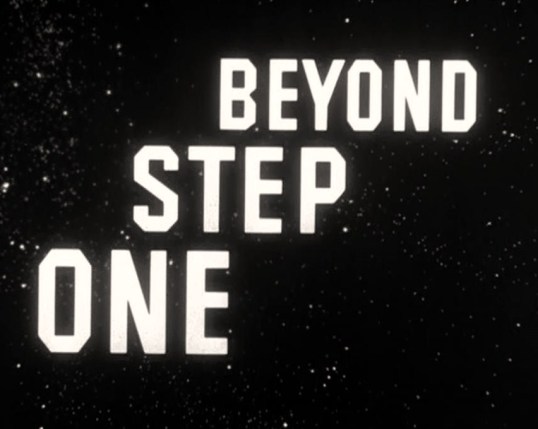
Horror On TV: One Step Beyond Episode 1.4 “The Dark Room” (dir by John Newland)


On tonight’s episode of One Step Beyond, Cloris Leachman plays Rita Wallace, an American photographer in France.  She’s looking for a model whose face will serve as the ultimate symbol of the country.  One day, a haunted-looking man (Marel Dalio) shows up at her apartment.  She thinks he’s a model.  The truth, needless to say, is something quite different….

This episode features good performances from both Leachman and Dalio.  In real life, Dalio was an icon of French cinema and a favorite of Jean Renoir’s.  When the Nazis invaded France, the Jewish Dalio fled Paris and, after a harrowing journey, eventually made it to America.  In America, he played the croupier in Casablanca and appeared in several other films.  Tragically, the rest of his family did not escape and were murdered by the Nazis.  Dalio returned to France after the end of the war and remained an in-demand character actor for several more decades, making his final film appearance in 1980.

The Darkroom originally aired on February 10th, 1959.

Horror On TV: One Step Beyond Episode 1.4 “The Dark Room” (dir by John Newland)


On tonight’s episode of One Step Beyond, Cloris Leachman plays Rita Wallace, an American photographer in France.  She’s looking for a model whose face will serve as the ultimate symbol of the country.  One day, a haunted-looking man (Marel Dalio) shows up at her apartment.  She thinks he’s a model.  The truth, needless to say, is something quite different….

This episode features good performances from both Leachman and Dalio.  In real life, Dalio was an icon of French cinema and a favorite of Jean Renoir’s.  When the Nazis invaded France, the Jewish Dalio fled Paris and, after a harrowing journey, eventually made it to America.  In America, he played the croupier in Casablanca and appeared in several other films.  Tragically, the rest of his family did not escape and were murdered by the Nazis.  Dalio returned to France after the end of the war and remained an in-demand character actor for several more decades, making his final film appearance in 1980.

The Darkroom originally aired on February 10th, 1959.

Lisa Cleans Out Her DVR: High Noon (dir by Fred Zinnemann)


(I am currently in the process of cleaning out my DVR!  I recorded the 1952 best picture nominee, High Noon, off of Retroplex on January 28th.  This review is scheduled to posted at 12 noon, central time.  Clever, no?)

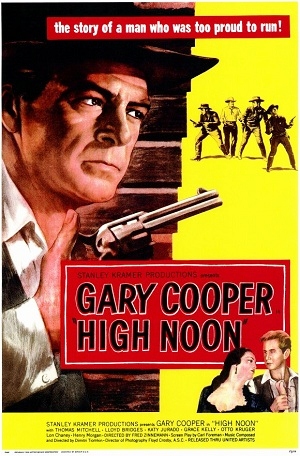
High Noon is a testament to the power of simplicity.

It’s a famous film, one that continues to be influential and which is still studied today.  It’s known for being one of the greatest westerns ever made but it’s also a powerful political allegory.  Even people who haven’t seen the film know that High Noon is the moment of the day when someone shows their true character.  Just as everyone knows the plot of Star Wars, regardless of whether they’ve actually watched the film, everyone knows that High Noon is about a town marshal who, after the entire town deserts him, is forced to face down a gang of gunmen on his own.

And yet, it really is a surprisingly simple movie.  It’s the quintessential western, filmed in black-and-white and taking place in the type of frontier town that you would expect to find hiding on the back lot of an old movie studio.  Though wonderfully brought to life by a talented cast, the majority of the characters are familiar western archetypes.

There’s the aging town marshal, a simple man of integrity.  Gary Cooper won an Oscar for playing the role of Will Kane.  When we first see Will, he’s getting married in a frontier courtroom.  All of the town leaders have come to his wedding and all of them wish him luck in the future.  Will is retiring and everyone agrees that the town would never have survived and prospered if not for Will Kane.  After all, Will is the one who captured the notorious outlaw, Frank Miller.  When the news comes that Miller has been pardoned and will be arriving back in town on the noon train, everyone tells Will that he should just leave town and go on his honeymoon.  However, the new marshal will not be arriving for another day and Will is not willing to abandon the town.  However, the town is more than willing to abandon him.

Will’s new wife is Amy Fowler (Grace Kelly).  Amy is a Quaker and a pacifist.  Amy begs Kane to leave town but Kane says that he’s never run from a fight.  Amy tells him that she’ll be leaving on that noon train, with or without him.  Helen Ramirez (Katy Jurado) is the former girlfriend of both Kane and Miller.  She is one of the few people in town to call out everyone else’s cowardice but she is still planning to leave before Miller arrives.  As she explains it to Amy, she would never abandon Kane if he were her man but he’s not her man anymore.

The townspeople, who first appear to be so friendly and honest, soon prove themselves to be cowards.  None of them are willing to stand behind Will.  The Mayor (Thomas Mitchell) publicly castigates Will for staying in town and putting everyone else in danger.  Deputy Harvey Pell (Lloyd Bridges) says that he’ll only help Will if Will recommends him as his replacement.  The town minister (Morgan Farley) is more concerned with why Will was married by the justice of the peace, instead of in the church.  The town judge (Otto Kruger) leaves early, saying he can be a judge in some other town.  One of the few people to show Will any sympathy is the former marshal (Lon Chaney, Jr.) but, unfortunately, he is too old and crippled by arthritis to provide any help.

Though it all, Frank’s gang sits at the train station and waits for Frank to arrive.  One gang member is played be Lee Van Cleef.  He looks really mean!

With a brisk running time of 84 minutes, High Noon unfolds in real time.  Throughout the film, as Kane grows increasingly desperate in his attempt to find anyone brave enough to stand with him, we see clocks in the background of nearly every scene.  We hear the ticking.  We know that both noon and Frank Miller are getting closer and closer.  We know that, soon, Will will have no other option but to stand on the street by himself and defend a town that doesn’t deserve him.

It’s simple but it’s undeniably powerful.

It’s been said that High Noon was meant to be a metaphor for the blacklist.  Frank Miller and his gang were the fascists that, having been defeated in World War II, were now coming back to power.  Will Kane was a stand-in for all the men and women of integrity who found themselves blacklisted.  The townspeople represented the studio execs who refused to challenge the blacklist.  That’s the theory and it’s probably true.  But, honestly, the political metaphor of High Noon works because it can be applied to any situation.  Will Kane is anyone who has ever had to face down the forces of totalitarianism.  He is anyone who has ever had the courage to take a lonely stand while everyone else cowered in the corner.

It’s a powerful metaphor and it’s also a genuinely entertaining movie.  The gunfight is thrilling.  The romance between Will and Amy feels real.  Even the town feels like an actual place, one that has its own history and culture.  It’s a simple film but it’s a great film.

Like a lot of great films, High Noon was nominated for best picture.  And, like a lot of great films, it lost.  In High Noon‘s case, it lost to a film that is almost its exact opposite, The Greatest Show on Earth.  However, Gary Cooper did win an Oscar for his unforgettable performance as Will Kane.

I think we tend to take classic films for granted.  Don’t do that with High Noon.  See it the next chance you get.