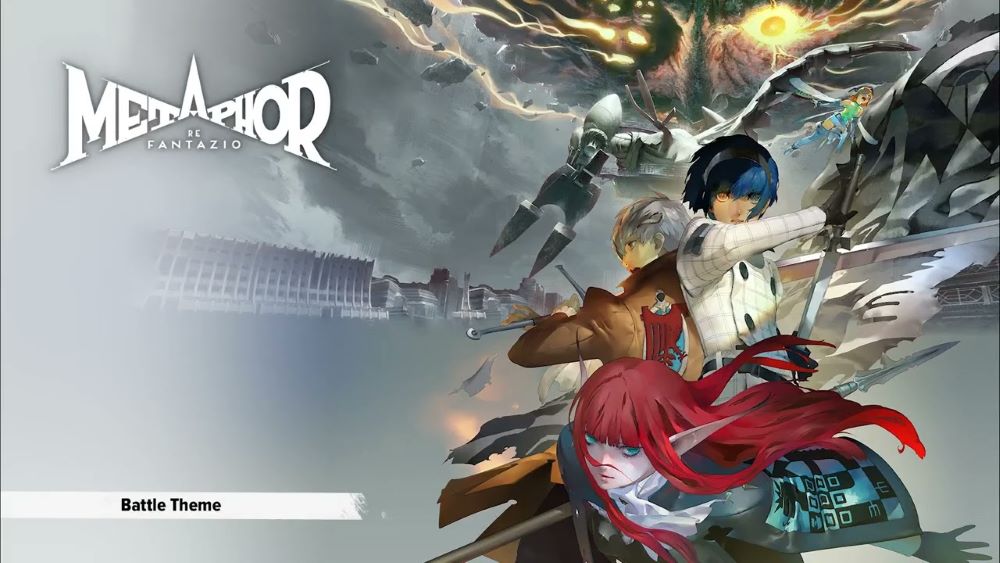
Metaphor: ReFantazio‘s “Battle Theme” erupts with thunderous brass and pounding drums, turning routine turn-based scraps into pulse-racing spectacles that pull you right into the fray. Shoji Meguro amps the drama by weaving in rhythmic chanting from Myōhō–ji temple’s chief priest, Keisuke Honryo, sung in the international language of Esperanto for that timeless, cross-cultural resonance which makes every Archetype clash feel profoundly ritualistic.
The rhythmic Esperanto vocals loop hypnotically over surging strings and synth pulses, cresting with victorious horns that time perfectly to weakness chains and squad synthesis attacks, mirroring the combat’s strategic highs. This primal chant roots the fantasy battles in spiritual depth, evolving Atlus’s sound beyond synth-pop into something hauntingly primal that lingers post-fight.
It anchors the award-lauded OST’s standout moments, those monk-delivered Esperanto lines lending legendary weight to even basic encounters—though their fervor can overshadow subtler scenes.
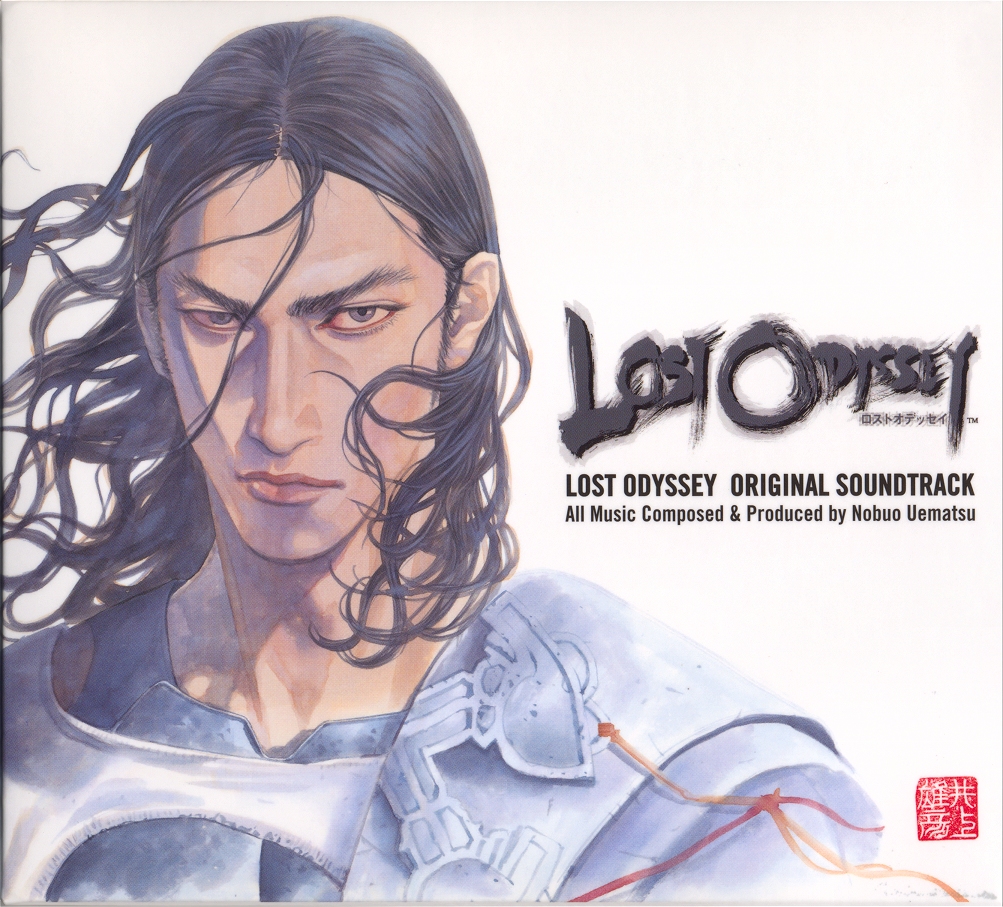
“Neverending Journey” by Nobuo Uematsu from Lost Odyssey is one of those tracks that just pulls you right into the game’s vibe without trying too hard. It kicks off super chill with soft strings and light woodwinds, creating this mellow, reflective mood like you’re wandering through old memories that won’t fade. The orchestral start feels patient and open, giving every note space to settle in before things pick up.
Then comes that smooth shift where the electric guitar riffs crash in — bold, distorted, and full of grit, but it flows naturally from the gentle opening. It’s like Uematsu’s flipping the switch from quiet nostalgia to raw determination, blending classical swells with rock edge in a way that screams the game’s themes of endless struggle. The guitar doesn’t steal the show; it amps up the emotion, turning introspection into something with real forward drive.
That mix is why the track sticks with you — Uematsu nails the immortal wanderer’s paradox, weary but unbreakable. From serene strings to guitar-fueled resolve, it captures Kaim’s story perfectly, making you feel the weight and hope of a journey with no end. It’s a standout that proves game music can hit as deep as any epic soundtrack.
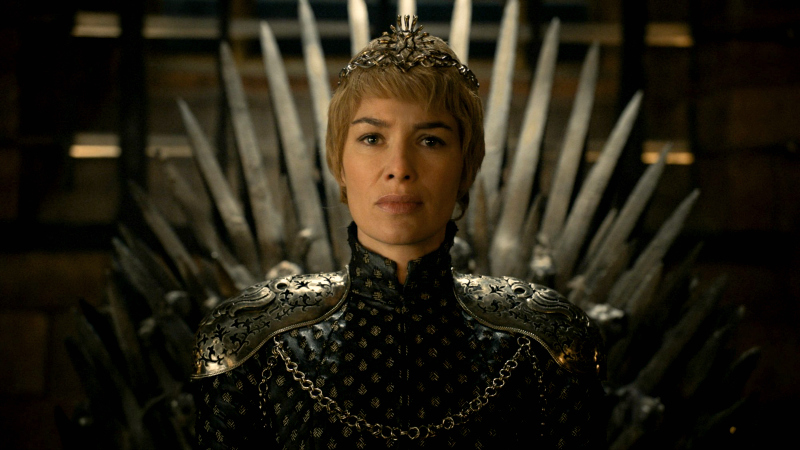
“Cersei of the House Lannister, the First of Her Name, Queen of the Andals and the First Men, Protector of the Seven Kingdoms….Long may she reign.” — Qyburn
To all of those who watch each new episode of Game of Thrones, last night’s episode was a classic in the making. It was the sort of episode that convinced millions 6 years ago to take a chance and watch an HBO series about a medieval fantasy series about royal politics, dragons, living dead, royal incest and lots and lots of sex and violence.
The series is based on the ongoing epic fantasy novel series by novelist George R.R. Martin. A series called A Song of Ice and Fire, tonight’s episode delivered on both the fire and ice. As we see the players on the Great Game cut down violently by the machinations of one Dowager Queen (and now Queen and first of her name), the fantasy realm of Westeros is now down to three Great Houses as the show finishes it’s sixth season with just two more to go.
One thing the series has always had to complement the outstanding performances of the ensemble cast, the epic work of directors in the singularly classic episodes 9’s (names such as Neil Marshall and Miguel Sapochnik come to mind) and the very good to great writing, it would be the series composer Ramin Djawadi and the work he has brought onto the show.
The show’s main theme is as recognizable nowadays as any John Williams, Howard Shore and James Horner piece. It’s a theme that’s become part of pop culture lexicon. There’s been other themes in the show that has been just as good. Yet, with the season finale of season 6 a new theme comes to the forefront that will be put on repeat as loyal viewers young and old watch and re-watch this season finale.
It’s a subtle theme of a single piano playing a solemn, melancholy lullaby. It’s soon to be joined by a single cello before another transition that adds the singular voice of a choirboy (the better to accentuate that this theme is one of the Seven Gods of Westeros). The song goes from that solemn lullaby and into a climactic dirge as the organ joins in to almost drown the piano and cello.
For those who saw that opening sequence of the season finale should appreciate just how well “Light of the Seven” made everything so much better once the dust settled and the world of Game of Thrones was changed forever once again.
In what’s become an annual tradition in the Sandoc household since it first aired, Band of Brothers will be marathoned (and of late it’s companion series The Pacific)
The series was produced by both Steven Spielberg and Tom Hanks who years before made the equally powerful film Saving Private Ryan. That film introduced the younger generation of today about the true details of heroism and horror that was World War II. What was becoming a dry and academic exercise in schools was suddenly given life in the vivid and heartbreaking imagery as seen through the eyes of Spielberg and the personal accounts of the men of the “Greatest Generation” who went to war and survived to tell their tales.
Band of Brothers would take the accounts of Easy Company of the 501st Parachute Regiment of the 101st Airborne Division from their time at boot camp at Camp Toccoa, Georgia through training in England and then the war zones of France, the Netherlands, Belgium and, finally, Germany itself. This series wasn’t about made up soldiers and heroes, but the real ones who survived over a year of constant battle that saw some acquit themselves bravely while others failing to measure up.
The series was a production that had everyone at the top of their game. One such person was Michael Kamen who would compose the series’ orchestral score. It would be one of the last compositions he would create before his death in 2003. Nothing helped set the tone for the series more than the opening theme which accompanied the opening credits for each of the ten episodes.
In honor of Memorial Day, it is this opening theme from Band of Brothers which is the “Song of the Day.”
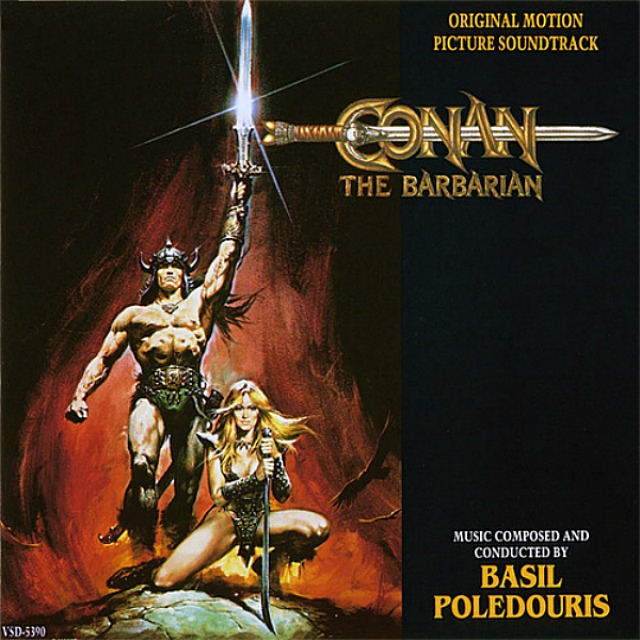
If there’s been one constant in this site right from the beginning it’s been my love for the film Conan the Barbarian and it’s equally great orchestral score that was composed by the very underappreciated film composer Basil Poledouris. Sure, everyone loves John Williams and rightly so. Then there’s the inexplicable love and worship of Hans Zimmer. Zimmer does some good, and sometimes, great work, but his overall work all tends to sound the same.
Basil Poledouris, on the other hand, seem to have been pushed to the sidelines despite creating some very iconic pieces of film scores in his lifetime. The peak of which will always be the orchestral score he composed for John Milius’ Conan the Barbarian.
I’ve chosen some key pieces from this soundtrack throughout the years. From the Carmina Burana inspired “Riddle of Steel/Riders of Doom”to the rousing “Anvil of Crom” intro all the way to the melancholy and introspective “Orphans of Doom/Awakening”. I think in time every piece of music from this score will make it onto this site. That is just how great this soundtrack from start to finish really has become. Even it’s weakest moments have elements of to them that make them stand out from the latest Zimmer.
Today, it shall be the section of the score for the film that accentuates Conan’s decision to take on a quest that will finally bring him to the very warlord who destroyed his people and killed his family: “The Leaving/The Search”.
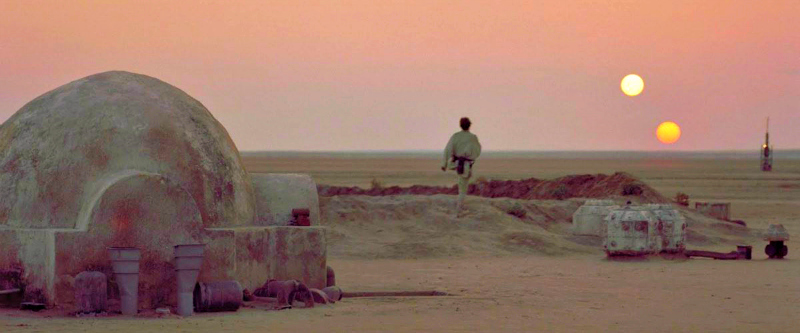
2015 will see the return of Star Wars to the big-screen. Will it erase the underwhelming memories left behind by the prequels which came out at the start of the new millenium? Will it return the franchise to it’s rightful place as a pop culture juggernaut that began many decades ago?
We shall soon find out this coming Christmas when Star Wars: The Force Awakens premieres around the world. Until then here’s the latest “Song of the Day” from John Williams.
I think it appropriate to end today with one of the most beautiful and haunting piece of cinematic music in recent years.
Cloud Atlas might have been like Icarus as it flew too high to the sun but only to crash into the sea. The same couldn’t be said about the orchestral score composed by Tom Tykwer, Johnny Klimek & Reinhold Heil. It’s a great piece of film score composing that managed to lend true emotions with every note without a hint of cynicism.
The “End Title” part of the score completely encompasses every piece character motif the three composers came up for each and every vital character in the film. What we get is a song that’s a pure distillation of everything that came before it.
Just like the film, this song marks the ending of one journey and the beginning of a new one for one of us. Fair winds and following seas.
We’re closing out another year and it’s always time to reflect back on the events the we all experienced.
Here in Through the Shattered Lens we saw a new writer join the ranks with the arrival and addition of Alexandre Rothier. We also saw more and more of our writers grow in confidence with their writing. This didn’t just translate into more writing from them, but better as well. There’s Dazzling Erin with her constant surprise of finding new artists to share. Then leonth3duke who finally made the jump to truly appreciating horror. Leonard Wilson continued to find his voice with each new review he wrote.
I can’t forget necromoonyeti who continues to be my source of all things music and with each new band written I pick up something new to experience. Semtex Skittle showed the world his appreciation not just for the franchise of Final Fantasy but Sailor Moon as well and to that otaku are grateful. Speaking of otaku there’s the site’s own big bear of one with pantsukudasai56 who always brings in his choice recommendations in anime.
Then there’s Dork Geekus giving us his thoughts on things comic book. We also have trashfilmguru gracious enough to take time to share his unique take on horror, comic books both high and low-brow who also keeps the rest of us from drinking the Marvel Kool-Aid wholesale which makes for a better site.
Finally there’s my co-founder and partner-in-crime Lisa Marie Bowman who upped her game as she literally propped up the site at times with her voluminous, insightful and unique brand of writing. I will be forever grateful for her continued support and for becoming one of my closest friends.
I’ve chosen the latest “Song of the Day” as an analogue to what I saw myself and this site go through this year of 2014. I had just lost my father at the tail end of 2013 (it is a loss still felt even today) and then had fallen deathly ill around the holidays. Through it all I was thankful and proud of the work my fellow writers were able to do in my absence through my grief and sickness.
Basil Poledouris remains an artist I’ve admired from the moment I heard his music transform John Milius’ screen adaptation of Robert E. Howard’s Cimmerian barbarian from just your standard violent sword-and-sorcery matinee piece to something close to a perfect blend of epic fantasy and primal storytelling. Poledouris would go on to make other memorable film scores, but it’s his work in Conan the Barbarian that always remains his most iconic piece of work.
With the final denouement that follows the climax of the film we have a somber piece titled “Orphans of Doom/The Awakening” closing off the film. I chose this piece to symbolize the year Through the Shattered Lens went through. The piece begins on a somber note with the use of a choir adding a layer of the ethereal, but as the piece continues to it’s conclusion it gradually segues into something triumphant with hope for the future.
This song perfectly encapsulates Through the Shattered Lens circa 2014 and it’s my hope that brighter future awaits me and mine as the new year dawns.
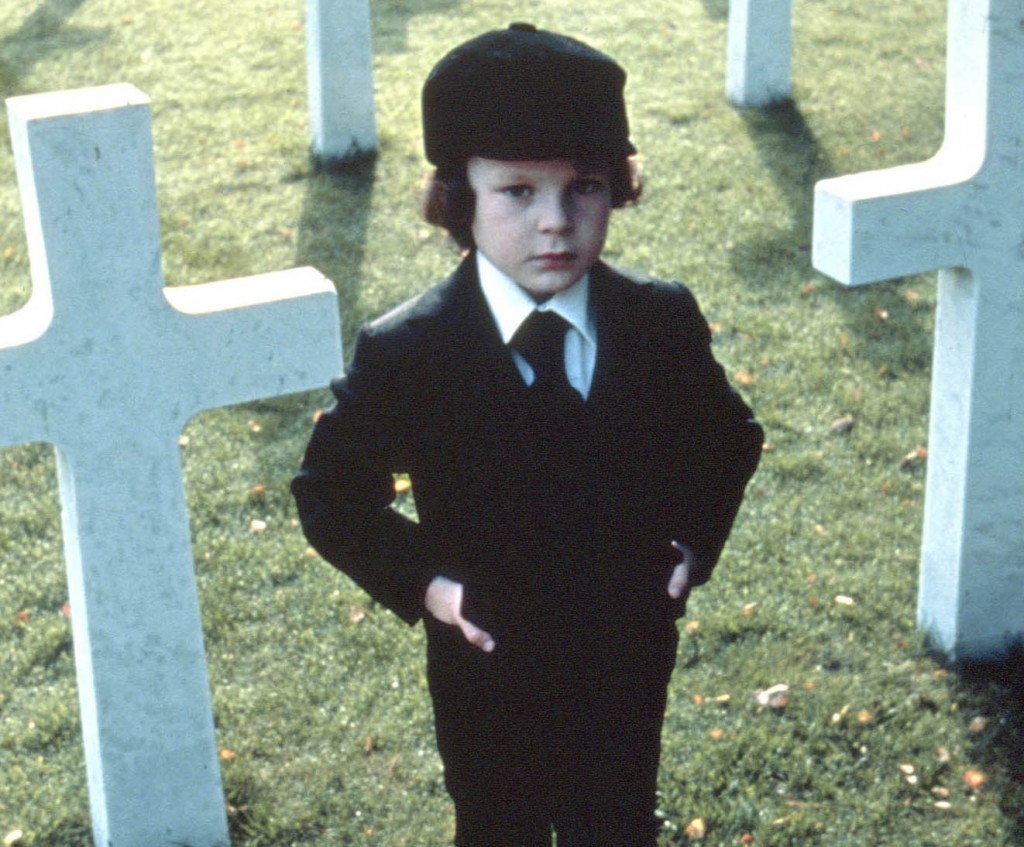
One cannot think of horror and not bring up Richard Donner’s The Omen. A film made during the turbulent late 1970’s when the world was literally on the brink of ripping itself apart. The Omen was a film that told the tale of the birth of the Anti-Christ which would herald the coming of the Apocalypse. Outside of William Friedkin’s The Exorcist there wasn’t a film during this era which put the fear of God’s Judgment on the faithful than The Omen.
It helped that it’s own film score was determined to hammer the point of it’s blasphemous subject matter by taking one of the most holy rituals in Roman Catholicism and inverting it to praise Satan instead of the Virgin Mary. Jerry Goldsmith took the rite of consecration and came up with what one could call the rite of desecration for a purported Black Mass.
One must say that “Ave Satani” was all the creation of Jerry Goldsmith and a fellow choir-master in London. This was a work of art created to accompany a film that some would label art as well, but for some whose own faith has superseded all thoughts of art appreciation “Ave Satani” was very real and was a real danger to one’s eternal soul.
I will say that it’s an effective use of the Gregorian chant and more than just a tad hair-raising.
Ave Satani
Sanguis bibimus Corpus edibus Sanguis bibimus Corpus edibus Sanguis bibimus Corpus edibus Rolle corpus Satani, ave Sanguis bibimus Corpus edibus Rolle corpus Satani, ave
Ave, ave, versus Christus Ave, ave, versus Christus Ave, ave, versus Christus
Ave Satani Sanguis bibimus Corpus edibus Rolle corpus Satani, Satani, Satani
It’s now been three or more weeks since I began playing halo 4 and to say that it has surpassed my very high expectations for this title would be an understatement. Even the soundtrack has been such a wonderful surprise that I’ve been listening to it almost nonstop. I already profiled one of my favorite tracks from Neil Davidge’s work on the score with the song Green and Blue and now I pick another track from the soundtrack for the next “Song of the Day”.
This one wasn’t composed by Neil Davidge but from another composer brought in to create the final end credits song. The game could easily have settled for using music that played during the game to score the lengthy end credits, but everyone involved went for broke and decided really remind gamers that what they’ve just gone through was epic both in gaming terms but also in cinematic. It’s hard not to listen to Kazuma Jinnouchi’s contribution to this title’s score, simply titled “117”, and not imagine some sci-fi blockbuster film rolling up it’s credits with this type of song being played alongside.
From just listening to “117” one could hear some early James Horner influences in Jinnouchi’s composition in the track’s beginning and middle before it transitions in it’s last third to something that resembles one of Basil Poledouris’ epic martial scores. For fans of Martin O’Donnell’s own work in the previous Halo titles this song reaches a crescendo around 6:05 mark with a very familar musical cue. For those who complained that the Halo 4 soundtrack abandoned the iconic sound of the Bungie Studio produced Halo soundtracks should listen to this song around that mark much more closely.
While Neil Davidge deserves all the praise he has been getting for his work on the soundtrack for Halo some of it should also be heaped Jinnouchi-san’s way for the very epic (yes it bears repeating that word) musical composition he created to end the Halo 4 title and leave fans wanting the sequels to arrive now rather than later.


 Through the Shattered Lens