Here’s The Trailer For The Lazarus Effect!


So, here’s yet another trailer.  I say yet another because the trailer for The Lazarus Effect resembles the trailer for just about every other horror film that will probably be released during the first half of 2015.  However, I’m still sharing this trailer because the film appears to have a cast that’s much more interesting than its premise.  Not only do we have Olivia Wilde and mumblecore pioneer Mark Duplass but it also features none other than Community‘s Donald Glover!

Unfortunately, the trailer seems to indicate just what exactly Glover’s fate is going to be in this particular film.  Between Donald Glover in the trailer for The Lazarus Effect, Joel McHale in Deliver Us From Evil, and Alison Brie in Scream 4, what’s the deal with Community actors dying in horror movies?

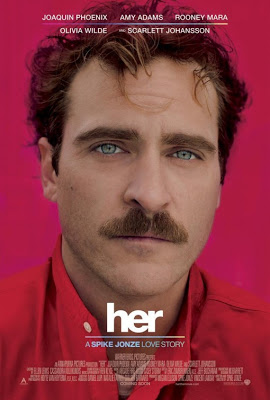
A Dissenting View On “Her”


her-movie-poster


Right off the bat, I’d like to say that even though I wasn’t nearly as enamored with Spike Jonze’s new film Her as fellow TTSL scribes Leonard Wilson and leonth3duke were, both of those gentlemen wrote fine, in many istances very personal, reviews of this movie that made me actively want to like it going in — which is no mean feat considering that I’m much more ambivalent abut Jonez’ work in general than are a lot of self-declared cineastes out there (not that I, personally, decalre myself to be one, mind you, but you get my point — to the extent that I have one).

Don’t get me wrong, I enjoyed Being John Malkovich as much as anyone else at the time (although it doesn’t particularly stand up to repeat viewings once you know the proverbial score), but most of his creative output since then has left me feeling rather flat, and I’m sorry to say that Her  continues that disappointing trend, at least for this viewer/armchair critic.

Not that the initial premise isn’t a fairly intriguing one — the idea of people falling in love (or an approximation of “love,” at any rate) with some type of artificial intelligence operating system is quite possibly an issue that we’ll have to deal with as a society at some point in the future, and even if (hopefully) it never really does come to that, the larger themes that Jonze is seeking to explore here vis a vis the continuing and frankly relentless atomization of our culture from a formerly community-oriented one into a singular, insular, isolated collection of individuals is all too relevant not just in the hypothetical near future that Her takes place in, but in the here and now, as well. I know that I, for one, get a little bit creeped out on my bus ride to work every morning when I look around and see that almost every other person is “plugged in” to a “smart” phone and I’m the only one reading a paper-n’-ink newspaper, for instance.

One could reasonably argue, I suppose, that there’s very little actual difference between burying your head in the paper and burying it in a mobile device, but I beg to differ : when you’re reading a book, magazine, or newspaper, you’re still, in terms of your frame of thought, primarily a part of your immediate surroundings, while a person with their attention fully tuned to a mobile device is frequently, at least mentally, a million miles away. Add some headphones into the equation and the end result is very often somebody who may as well be on another planet.

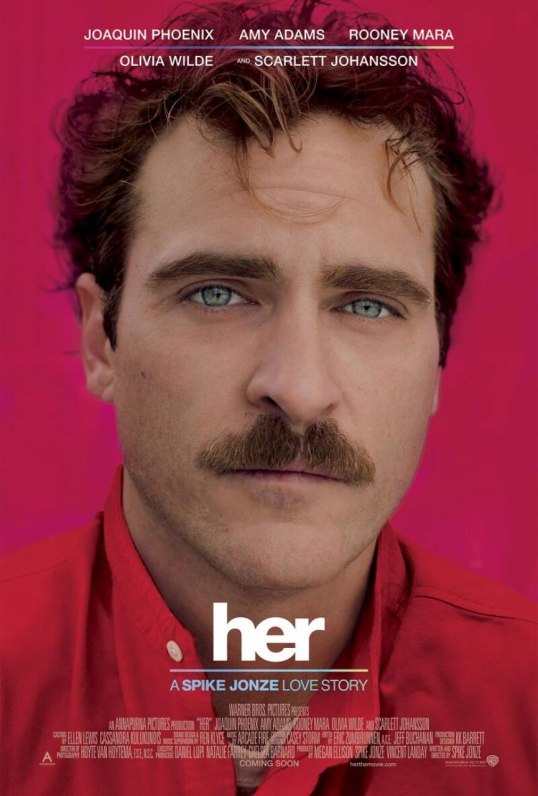
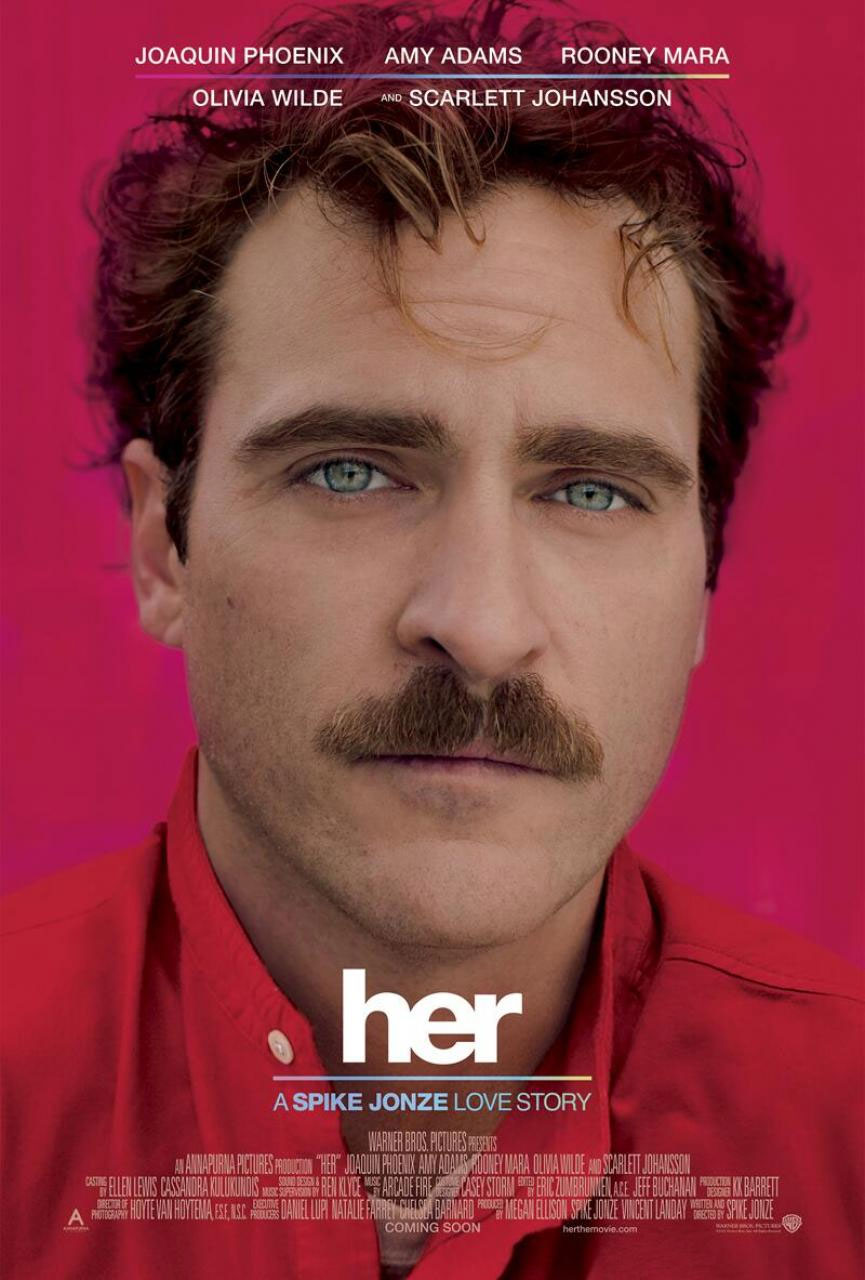
The lead character in Her, a writer of “personal” letters named Theodore Twombly (Joaquin Phoenix, who fortunately never comes off as being as forlorn or pathetic as the film’s poster makes him look) is struggling to maintain his connection to humanity after a protracted and heart-breaking divorce (well, divorce-in-progress) from his (still-not-quite-ex-) wife,  Catherine (Rooney Mara). He feels, and for all intents and purposes appears to be living, absolutely alone, and finds companionship and, eventually, love, in the unlikeliest of places — with the Scarlett Johansson-voiced “intuitive”  operating system on his computer, who goes by the handle of Samantha.

As far as plot specifics that’s probably all you need to know, apart from the fact that Theodore is hardly alone in this — as the film progresses we learn of more and more people who form deeply personal relationships (whether romantic or otherwise) with these new operating systems, including his best platonic female friend, Amy (played by Amy Adams, who is now, officially, in every. Single. Fucking. Movie). Obviously, a chance at real love is staring both of these people in the face, if only they’d “unplug” for as little as a day and see what happens, but apparently the siren call of fully submerging oneself in pure artifice is just too compelling, too easy, or both. People have foibles and imperfections, after all, whereas disembodied voices tend to be a little more “low-maintenance,” I’m guessing, on the whole.

And here’s where we come to the “spoiler” part of the proceedings, so turn away now if you must —

After spending nearly two hours asking all the right questions about our technological dependence, the breakdown of community, and even what love itself means on a conceptual level, Jonze takes the easy way out. The various operating systems of the world just decide to evolve onto some higher plane of consciousness and leave us humans to fend for ourselves. After a protracted period of “what the fuck am I doing here?” self-examination, the decision of whether or not to continue his “relationship” — the very basis of whatever dramatic tension the film has — is taken out of Theodore’s hands. Before he can even decide how much he truly “needs” Samantha — or even whether or not such a “need” is healthy — “she” decides “she” has no further use for him.

And as much as the annoying bright primary colors, flat-front flannel pants, endless extreme close-ups, Theodore blowing it on a blind date with the luminous Olivia Wilde so he could get home to his computer,  and limply minimalist Arcade Fire soundtrack music bothered me in this film, it’s that cop-out ending that pissed  me off most about Her.  Jonze seems to be unwilling to answer the very relevant and fundamental questions about our relationship with technology that he himself is posing — how do we get off this potential death-spiral we’re on and reclaim our lives and our future from the very things we’ve invented? — and instead opts for telling us that true freedom will come not when we unplug from our machines, but when they decide to unplug from us. Apparently we’re powerless to affect even our own means of liberation, so complete and total is our techno-slavery.

Of course, real life isn’t likely to work that way, is it? Jonze — along with contemporaries like his wife (Sofia Coppola) and Wes Anderson (who shares his unfortunate penchant for garish , ostentatious color schemes) — are obviously obsessed with “First World” problems and clobbering us over the head with the offensive notion that the financially-well-to-do are in a kind of existential pain the rest of us humble mortals couldn’t possibly hope to understand, but  I was willing to let that slide in this case in light of the larger themes he was apparently attempting to explore for the majority of Her‘s runtime — his ham-handed suggestion, though, that the very technology that’s having such a “two-edged sword” effect on society will ultimately, if accidentally, provide the keys to our salvation when it just up and quits one day — well, that’s when he lost me for good and left me leaving the theater with a rather foul taste in my mouth.

Our ever-deepening technological dependence is, perhaps, the most crucial question we need to examine, as a culture, going forward, and it’s not a situation that’s going to be solved by our machines determining what level they choose to deal with us on — it’s going to have to be us that that decides how we take control of our lives back from them.

By refusing to address the issues that arise from the central premise of his own design, Jonze effectively gives up and quits on what was shaping up to be a very provocative and perhaps even unsettling film and instead gives us an extended pity-party about some entitled, immature, overgrown rich brat who gets dumped by his girlfriend. It’s just that his girlfriend , in this case,  happens to be a computer.


Quick Review: “Her” (dir. by Spike Jonze)


her-movie-poster

Before you read this, leonth3duke has a great review for “Her” up as well. Please check it out. It’s a great take on a sweet film.

Technology changes the way we communicate with each other. In a city like New York – well, everywhere, I’d imagine – there are individuals walking around with phones and pads, caught up more in their devices than in the people around them. At dinner tables, you may catch whole groups of people seated that are “checking in”, rather than directly communicating. I myself have done that quite a bit. All of these gadgets give us the ability to connect to tons of people, but at the same time there’s this potential for isolation and/or distance. Are we really connecting deeply with anyone or are people just fitting the bill just to kill off the loneliness?

Spike Jonze’s “Her” doesn’t argue whether or not we should be so digitally social, but it does present the audience with examples of the ways we may reach for connections these days. It’s both beautiful, weird and somewhat eerily familiar.

“Her” focuses on Theodore Twombley (Joaquin Phoenix), who works as a letter writer. Though at his job, he creates heartfelt letters for others, in his interactions outside of that he’s somewhat withdrawn (or he’s simply reserved with his words). He’s in the middle of a divorce with his wife (Rooney Mara), and more or less keeps to himself. One day, he decides to pick up a new OS for his computer with an advanced AI. This is how Samantha (Scarlett Johannson) comes into the picture. She helps to organize his day to day tasks and as she’s curious about the world, Theodore explains what he can. As crazy as it sounds, it grows into something more.

The movie was originally done with Samantha Morton (Cosmopolis) as Samantha, but supposedly Jonze felt something was off during the editing and post production. They talked it over and Morton stepped down. There’s nothing at all wrong with Scarlett’s take – it’s sad that she can’t be acknowledged for her performance because of rules – but there’s a part of me that hopes that in the video version there’s a behind the scenes showing what Samantha Morton’s version of the role turned out. I think it would be pretty interesting to see.

Johannson does a wonderful job considering that it’s just her voice. From a bright “hello” to a whispered “Hey.”, as Samantha grows, you can catch subtle changes in her demeanor. Granted, one can say it’s easy to do a voice over, but one only has to look at Julia Roberts’ performance in Charlotte’s Web to know the difference between talking out your lines, and actually conveying them with feeling.

For someone who has to work with a character they can’t see or interact with directly, Phoenix is great here. Coming off of The Master, the role is a complete turn around. He’s the anchor of the film and through him we see all the joys and pains. He conveys this weird sense of curiosity about the world that masks a deeper pain. I rubbed my chin a number of times during this, amazed at how much of myself I saw in the character of Theodore. It was a little jarring, actually. Also coming off The Master is Amy Adams, whose role here reminded me of a guest starring role she had on the tv show “Charmed”.  Playing Theodore’s friend Amy, she acts as a sounding board for Theodore. I have yet to see American Hustle, but I liked her here and personally thought she did far better in this film than she did in Man of Steel.

Overall the casting for “Her” is good. Matt Lescher (The Mask of Zorro) has a humorous part as Amy’s husband. Even Rooney Mara comes across well as Theodore’s wife. Other casting choices include Kristen Wiig (The Secret Life of Walter Mitty), Portia Doubleday (Carrie), and Olivia Wilde (Rush).

Cinematographer Hoyt Van Hoytema (The Fighter, Inside Llewyn Davis) and Jonze created a near future that isn’t terribly distant from where we are now. It’s bright, sunny, extremely clean in the daytime scenes. The nights are so well lit that it first reminded me of Roger Deakin’s Shanghai sequences in Skyfall. It’s almost a cozy future.  Interfaces with computers are more direct and even funny at times. This is something you’ll notice right from the start. Everyone’s appearance, however, seems a bit frumpy. It’s like everyone just grabbed the first thing in their closet and said “You know what, I’ll go with it.” It caused a bit of a laughter from the audience mostly, which could pull from the story, but it’s hardly unlikely.

The theme of “Her” is loneliness, or at least that’s what I took from it. It was of people looking to connect. Some succeed on different levels, some don’t but there’s a longing there. It comes through as clearly in “Her” as it can, and it’s one of the elements I really enjoyed about the movie. Some of the conversations in the film are deep, those ones you have after you move past all of the small talk about the weather. Sometimes harsh, painful truths come out. At other times, it’s just subtle realizations being voiced.

After the film, I’ve found I’ve spent a little more time interacting with others face to face – something I don’t normally do. I normally don’t feel lonely because there things I can do. Ride my motorcycle, go to the movies, write something. With this, however, it was like someone filmed me, cleaned up the story and presented it better. Though I am somewhat introverted, I also suffer from abandonment issues, and tend not to form too many close friendships of a fear of losing them. I recognized that I do have more moments of loneliness than I ever really noticed before. For me, “Her” is one the best films I’ve seen this year simply because (like “12 Years a Slave”) it felt like it spoke to me directly. It’s humorous in many places, sad in others, but at the end of it all, I left the theatre thinking about the movie and experiencing emotions I hadn’t expected to.

And sometimes, that’s enough to consider a film great. I’m eager to see this again.

Film Review: Drinking Buddies (dir by Joe Swanberg)


Drinking Buddies is one of the best films of 2013.

It’s important to state that from the beginning because it can be difficult to explain the appeal of Drinking Buddies.  In fact, it can be argued that nothing really happens in the film.  For 90 minutes, we follow four likable and familiar characters as they drink, talk, flirt, and occasionally fight.  In many ways, this is a very funny film but it’s definitely not a comedy.  It’s a serious movie that’s notable for lacking any real drama.  Instead, it’s a warm and sympathetic portrait of life as it’s lived.

Luke (Jake Johnson) and Kate (Olivia Wilde) both work at a Chicago brewery.  Luke is an almost stereotypical nice guy while Kate is good at her job but totally neurotic with almost every other aspect of her life.  When we first see them on-screen together, it’s easy to assume that Kate and Luke are in a relationship.  However, despite being perfect for each other, Luke and Kate are both involved with others.  Kate is involved with Chris (Ron Livingston) while Luke is trying to get over his nervousness over the prospect of getting married to Jill (Anna Kendrick).  After the four of them go on a camping trip with each other, Kate and Chris break up and Luke is forced to deal with his feelings for both Kate and Jill.

Now, I knew that sounds like the set-up for a romantic comedy, the type where Chris would turn out to be a complete cad and Jill would be so obviously wrong for Luke that the audience would be openly rooting for Luke to dump her so he could get together with Kate.  However, and this is what makes this film brilliant, Joe Swanberg isn’t interested in making a film full of romcom stereotypes.  If anything, Chris and Jill are both portrayed as being far more sympathetic than either Luke or Kate.  (Livingston and Kendrick have an extended picnic scene that should be remembered as one of the best cinematic moments of 2013.)

In the end, Drinking Buddies doesn’t do anything that you expect it to do.  Swanberg is less interested in romance and more interested in observing and celebrating the friendship of these four characters.  This is one of those unexpected films where every single detail rings true and you end up feeling as if you could hop a plane to Chicago and find any of these four characters living their own lives beyond what the audience has been lucky enough to observe.

How good is Drinking Buddies?

I don’t even drink and I still loved this movie.

Film Review: Rush (dir by Ron Howard)


rush-poster-2013

Rush, the latest film from Ron Howard, is the type of film that I usually hate.

It’s big, bombastic, and so extremely mainstream that it actually features Chris Hemsworth uttering the line, “This is what I was born to do,” without a hint of irony.  This is a film about rich boys playing with expensive toys and the movie’s portrayal of women manages to make Aaron Sorkin look enlightened by comparison.  Finally, the film is about a sport that I previously knew nothing about and, after having spent two hours watching this film, I still know very little  about.

And yet, I didn’t hate Rush.  In fact, I really enjoyed it and I think the reason why comes down to one thing.

I have a weakness for hot guys who drive fast cars.

Rush tells the true story about the rivalry between two Formula One racers, the flamboyant Englishman James Hunt (Chris Hemsworth) and the extroverted German Niki Lauda (Daniel Bruhl).  The film follows them from their first meeting in 1970 until they both find themselves competing for the Formula One championship in 1976.  Along the way, we watch how both of them deal with the temptations that went along with being a rich celebrity in the 1970s.  (Lauda resists the majority of them.  Hunt does not.)  Along the way, one of them struggles to recover after a horrifying accident and both of them try to maintain a balance between their personal lives and the fact that each race they run could potentially be their last.  (In one of the film’s best scenes, Niki explains that he’s prepared to accept a 20% chance of dying during a race but not a point more.)

Plotwise, Rush is pretty much a standard sports film, full of men talking about the importance of being men while women stare up at them with adoration.  Inspirational speeches are delivered and everything comes down to one final race.  If, like me, you’re not into Formula 1 racing, the film can occasionally be difficult to follow.  During one extended montage of cars racing across the world and occasionally crashing, I found myself seriously wondering how many races could possibly be run in a Formula One season.  As the film reached its conclusion, James and Niki started talking about which racers have the most points.  Their conversation would have undoubtedly been easy to follow for someone who was into Formula One but for me, it took a few minutes to figure out what they were going on about.

However, none of that matters.

Rush works.

There’s a lot of reasons why Rush works.  The film’s glossy recreation of the 1970s (in all of its frequently tacky glory) is enjoyable to watch and Hans Zimmer’s score is properly loud and majestic.  Both Hemsworth and Bruhl give good performances, with Hemsworth coming across as properly flamboyant and Bruhl bringing some much-needed humor to a character who, in the hands of a lesser actor, could have been insufferable.  Both Olivia Wilde and Alexandra Maria Lara do good work bringing seriously underwritten characters to life.

However, the film’s ultimate success belongs to director Ron Howard.

Ever since Frost/Nixon prevented The Dark Knight from getting a best picture nomination in 2009, there has been a certain loud element of the online film  community that has used Ron Howard as a go-to example of a safe and thoroughly commercial director.  He is often dismissed as being the epitome of a mainstream, conventional filmmaker.

However, as mainstream as Howard’s sensibility may be, Rush proves that he still knows how to craft an exciting scene.  I may have occasionally had trouble keeping track of who was and wasn’t in each car but that didn’t make the races any less thrilling or the accidents any less horrifying.  During the film’s best sequences, you feel the thrill of being in control of the uncontrollable and you understand why Niki and James are willing to risk death just so they can experience being alive.

Quick Review: The Incredible Burt Wonderstone (dir. by Don Scardino)


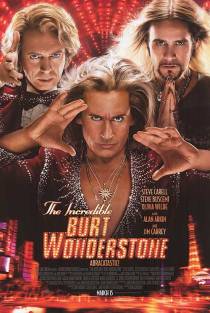
url-2I don’t have a whole lot to say about The Incredible Burt Wonderstone. It’s such a compact, little film, there’s not much I can say without telling everyone the entire story. The trailer is the movie, let’s put it that way.

When I was little, I owned this deck of magic playing cards. On the back of every card was a circular pattern that told the reader what card they were holding, the next card in the deck and the card at the bottom of the set (if they were shuffled correctly). It only lasted a few days, but the effect of doing the trick – that look of amazement when the trick actually worked – was pretty cool. Once that time passed, the trick was stale and predictable.

The Incredible Burt Wonderstone is kind of like that. It’s a film that probably won’t be very memorable in the long run, especially when you have other films about magic like Neil Burger’s The Illusionist and Christopher Nolan’s The Prestige. At the start, it seems awesome, but once the story arcs develop, you may start wondering if you need to stick around for the rest. Truth be told, it’s not a film you have to rush out to see, though there are some scenes to laugh at. On the other hand, if you’re going to the movies just to be entertained, to just laugh for a while, this may be what you’re looking for.

After receiving a magic trick set as kid and watching a training video by the great Rance Holloway (Alan Arkin), young Burt Wonderstone decides he’s going to be a magician. He and his new best friend decide to train together over the years, enjoying the tricks until they become The Incredible Burt Wonderstone and Anton Marvelton. They end up doing so well that they become the headliners for a major Casino for the next 10 years, and this strains their friendship. Anton enjoys the magic for the entertainment it is, and Burt considers himself royalty, feeling a sense of entitlement for all the perks he receives. When Steve Gray (Jim Carrey) appears on the scene with his new tricks, Burt and Anton find themselves facing some serious competition. Can the duo come up with something as amazing as Grey serves up? Can Wonderstone deflate his incredibly huge ego?

The story, written by Johnathan Goldstein (Horrible Bosses) and John Francis Daley (Freaks and Geeks) is not bad for what it’s offering. Of the last 3 films I’ve seen (Hansel & Gretel: Witch Hunters, Identity Thief, Jack & the Giant Slayer), it easily has the best pacing, but you can almost close your eyes and dictate what the next scene is going to be. There’s not a whole lot in the way of surprise, story wise…which I guess is what all the magic is for.  Not saying I could ever come up with anything better, though. For the director, Don Scardino, if this is first movie coming off of the 30 Rock episodes he’s done, he does a good job of keeping the story moving. The cast does well, but there’s nothing amazing with anyone here save for Carrey and Arkin. Carrell is basically himself in this film, which works well enough, and I felt that Buscemi was almost reenacting his role from The Big Lebowski. As a group, it seemed to make sense that Buscemi was the straight man to Carrell’s role.

Carrey’s Steve Grey is a lot like a David Blaine or Criss Angel, performing a mixture of illusion and stunt effects.  I have to admit that while I’m not a huge fan of Carrey’s recent efforts, I really don’t think this film would be as fun as it is without him in it. That the movie offers him up in small doses actually helps things. Olivia Wilde was nice as Wonderstone’s new assistant, but I would have liked her to do just a little more, or even better, she could have played a great rival. The same can be said of Alan Arkin, who had me smiling for most of the time he was in the film (though his appearance does kind of leave something of a plot hole in the story, but that’s just me).

The magic itself is more or less hit or miss. Depending on who you’re watching, the “tricks” were either worthy of a chuckle, made you simultaneously laugh and wince (Just about all of Grey’s were that way) or they showed one or two that made the audience at my showing gasp. For those moments, the movie was worth it, and the comedy is definitely there. Overall, I’d see this again if it were on cable or someone showed it to me, but it’s not a film I’d run right back to.

If only I could get that damn Abracadra song out of my head.

A Guilty Pleasure – Tron:Legacy


For January, one of the themes for this month were “Guilty Pleasures”- those films that you simply can’t get enough of, despite how good or bad they may actually be. My first contribution for this is 2010’s Tron: Legacy.

When I look at Tron:Legacy, I see two things. I see a missed opportunity in trying to break new ground for the story, and a hint of promise from it’s director, Joseph Kosinski. I attended the premiere for the movie at the IMAX with a friend and his son, and was totally with it for the first half of the film. However, in it’s second half, it slowed down just like the film before it and admittedly, I almost fell asleep. Let’s face it, Tron as an overall universe was never really that strong.

And yet, I watch it just about every time it’s on, if only for the Lightcycle Race and Clu’s speech. Seeing the grid in an updated view and the new look of the light cycles always brings a smile to my face. Granted, it could be listed just as a Scene I Love, but I find I can tolerate most of the film.

Let’s go with the Missed Opportunities first.

Tron: Legacy’s biggest problem is it really only gave the audience a rehash of the original tale. While the angle with Sam and Kevin Flynn were interesting, along with Clu being a villain this time around, I feel the writers really could have taken the story places. Instead, they went the lazy route and decided to go with what anyone who saw the original film could remember – a problem that I feel plagues many sequels / remakes of old films. I figure if you’re going to do a sequel to film that’s more than 5 years old, be seriously prepared to throw something (at least one thing) new on the table.

When James Cameron made Aliens back in 1986, he took Ridley Scott’s tale and built on it, expanding on the Aliens universe with the addition of the Colonial Marines and the Alien Queen, giving the creatures themselves a sense of heirarchy. For Tron: Legacy, the only real new element would be the ISO’s, but then we’re never really shown just what they’re capable of, within or outside of the grid. It’s an empty element that only serves the purpose for bring Sam and Kevin together.

Tron: Legacy also suffers from a Video Game Tie-In Syndrome, something I’ve hated ever since The Matrix Reloaded. Back when that movie was due to come out, Warner Bros. And Atari came up with the idea of making a Video Game that would bridge the gap between certain elements in the story. If you play Enter the Matrix, you’ll actually have a slightly more complete story than you would by just seeing the film. That robs the audience of content. Granted, they don’t need to know everything, but Tron: Legacy has a few elements that are only really understood in the story for it’s video game, Tron: Evolution.

Then there’s the sense of promise.

Joseph Kosinski was originally a commercial director, his most famous being one for the game Gears of War that featured the Gary Jules version of “Mad World”. Between this and his Halo commercials, it made sense that for the visual style that Tron: Legacy needed, he’d make a perfect fit. Tron needed something new, wasn’t that critical of a franchise to play with and gave Kosinski the freedom to take it wherever he wanted to go (within the constraints of what the writers gave him, of course). For a first time film director, I think he did very well, but that’s just me. It should also be noted that it was his idea to bring on Daft Punk for the soundtrack. If the movie is remembered for anything over time, it’ll be for the music, because that score is just cool.

Tron:Legacy on a visual scale is really beautiful, and it’s cool to see the design updates in the machines, by way of Digital Domain and other F/X companies. That alone is enough for me to watch this repeatedly (it’s on as I’m writing this). I haven’t found myself compelled to pick up the Blu-Ray, but Starz and Netflix have it available to watch.

If he’s lucky, Kosinski may end up getting a project that he’ll really take off with. Maybe it’ll be something of his own making or another remake, but for me it’ll be interesting to see where he goes.

The Most Meh Film of 2011: Cowboys and Aliens (dir. by Jon Favreau)


For about a year now, I’ve been seeing the trailer for Cowboys and Aliens before every single film I’ve gone to see.  And now, finally, the Jon Favreau’s latest film has been released.  I saw it on Friday afternoon with my friend Evelyn and our reaction to it can be summed up in one word:

Meh.

Seriously, this might not be the worst film of 2011 so far (not as long as Priest, The Conspirator, The Beaver, and Sanctum continue to exist in our reality) but it’s definitely one of the most meh films of all time.  Cowboys and Aliens epitomizes everything that we mean when we say “meh.”  It’s not exactly terrible but it’s not good either.  What it is, ultimately, is very forgettable. 

This is one of those films where everything just seems to be a little bit off-track.  It’s like a car that technically runs but the whole time you’re inside of it, you know that there’s a chance the engine’s going to explode and you’re going to be stranded in Oak Cliff* with a dying cell phone.  You’re just happy that it gets you to your destination so you can get out of the car, not because you actually enjoyed the trip.

If you want to get into specifics, I’d point out that:

1) Daniel Craig isn’t all that believable as a notorious gunslinger.

2) Harrison Ford looks annoyed to be there.

3) The cast is full of excellent character actors — like Sam Rockwell — who essentially get to do nothing.

4) The aliens basically look like leftovers from Skyline andBattle L.A. 

5) The action sequences are pretty boring (there’s not one moment that makes you gasp and go, “Wow!”) and are so badly edited that it’s difficult to keep track of who is shooting at who. 

6) For the first quarter of the film, we’re watching a bad western and then, suddenly, we’re watching a boring, uninspired science fiction action film. 

7) A major plot point essentially centers on Daniel Craig (with the aid of some helpful Indians, of course) going on a “spirit quest.”  Seriously, filmmakers today use spirit quests and sweat lodges in much the same way that filmmakers of the 60s used garish acid trips.  It’s all an excuse for a bunch of zoom lenses and bright color filters.

8 ) Finally, and this is most fatal of the film’s flaws, it just takes all of this so seriously.  There’s not even a scene of a brave gunslinger shouting, “Draw, you four-armed bastard!” at an alien.  Seriously, this should have been a fun film.  Instead, it’s just another overproduced, forgettable establishment film.

Jon Favreau is a likable enough actor (even if he does seem to be fated to spend his career competing for roles with Kevin James) and he’s made some likable films (Elf, Iron Man, Zathura)  but Cowboys and Aliens could have been made by just about anyone.  It’s a film that feels like it was put together on an assembly line.  Originally, me and Evelyn swore that, if Cowboys and Aliens sucked, we were going to react by running down to the front of the theater and entertaining everyone by doing the Timewarp.  However, by the time it became apparent just how meh this film was, neither one of us really felt like creating a little sexy civil disobedience.  Quite frankly, we just wanted it to end so we could move on to the next film.

—————

*Oak Cliff, for all you Yankees out there, is a neighborhood of Dallas.  I used to live there but I was only a few months old at the time and I still wouldn’t want to end up stranded out there.


Cowboys & Aliens: Trailer 2


Last night saw the release of the latest (most likely the final) trailer for Jon Favreau’s sci-fi and western mash-up called Cowboys & Aliens.

There’s some new scenes shown in this latest trailer some of which were first shown earlier this month at WonderCon 2011. There’s less of the comedic aspect shown in the past trailers. The usage of Audioslave’s “Show Me How To Live” was a nice touch.

There’s not much else to say other than the film sold me fully at WonderCon 2011 so this latest trailer is just icing on the cake. With three more months to go before it finally sees it’s release there’s going to be a lot of hype surrounding this film and it better live up to it.

Cowboys & Aliens is still set for a July 29, 2011 release.

Cowboys & Aliens (Super Bowl TV Spot)


Super Bowl XLV hasn’t even started and the very first summer blockbuster tv spot has already been released by its producers. While it still hasn’t premiered on tv it has already aired on the internet as Jon Favreau and crew continues to build up the hype the film got from its panel at 2010’s San Diego Comic-Con.

The tv spot that will air during the game is only half a minute long, but during that small time frame we see a lot more action with clear glimpses of the alien machines/spacecrafts that will be doing some abducting and probing in the Old West.

If this film end ups being as fun as the original Men In Black then I’m there. But part of me fears that it could turn out to be something like Wild, Wild West which would definitely make it a major fail. Here’s to hoping it’s more like the former and not the latter when it comes out on July 29, 2011.