To Boldly Go Where No Man Has Gone Before: Re-Watching The Star Trek Films


59 years ago today, the first episode of Star Trek aired in America.

There’s been a lot of different Star Trek shows and crews over the decades.  I have to admit that I’ve always preferred the Original Series, with Kirk sleeping with every alien he met, McCoy and Spock bickering about logic, and Scotty warning that the engines can’t take much more.  The Next Generation was strong as well, especially in the later seasons.  The subsequent series have been hit-and-miss for me.

I was born long after the Original Series went off the air so, like a lot of people, my real introduction to Star Trek came through watching the films.  This weekend, I sat down and watched all fourteen of the Star Trek films in order, from The Motion Picture to Section 31.  Here are my thoughts.

Star Trek: The Motion Picture (1979, directed by Robert Wise)

In the first Star Trek film, Voyager returns to Earth, now known as V’ger.  James T. Kirk (William Shatner) returns to the Enterprise with his old crew and takes command from Decker (Stephen Collins).  Spock (Leonard Nimoy) returns from Vulcan is not happy about it.

Directed by Robert Wise, the first Star Trek film feels out-of-place amongst the films that followed it.  It’s long and slowly paced and it doesn’t have the sense of humor that runs through the best of the films featuring the original cast.  The film favors Kirk and Spock, with the rest of the original cast being largely used as bit players.  Even the costumes are different from the uniforms worn in the later films, making Star Trek: The Motion Picture feel like an entry from an alternate universe.

Despite mixed review, Star Trek: The Motion Picture made the most money of any of the pre-reboot films at the box office.  Because the film itself was so expensive, it was still judged to be a box office disappointment.  The Star Trek films would continue but in a new direction.

Star Trek II: The Wrath of Khan (1982, directed by Nicholas Meyer)

Featuring a character-driven script, exciting action, the best villain in the history of the franchise, and an ending that will bring tears to the eyes of the most cynical viewer, The Wrath of Khan is the film that set the standard for the Star Trek films that would follow.

Ricardo Montalban, recreating a character that he originally played in the television series, is a compelling villain as the vengeance-driven Khan.  Montalban and William Shatner make for perfect rivals, two sides of the same coin.  At the same time, the other members of the original cast all get their moments to shine, especially Walter Koenig as Chekhov.  Kirstie Alley is the sexist Vulcan to ever appear in the franchise and even the revelation that Kirk has a son is handled effectively.  Kirstie Alley, Bibi Besch, and Merritt Butrick all fit in with the original crew.

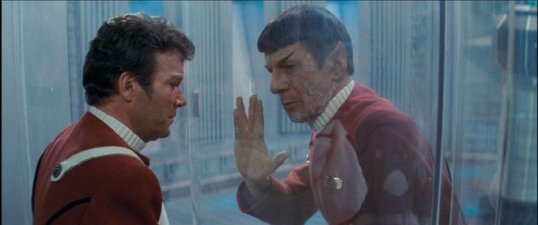
But the thing everyone remembers about The Wrath of Khan is the death of Spock.  Even though the movie features plenty of hints that Spock will return (including his command of “Remember” to McCoy), it’s impossible not to get emotional when Spock sacrifices himself for the crew.  “I have always been your friend.”  To quote George Costanza, that was hell of a thing when Spock died.  In that scene, Leonard Nimoy shows that he was the (logical) heart of the franchise.  Just as Spock brought out the best in the rest of the crew, Nimoy brought out the best in his co-stars.  Shatner was never better than when he was mourning Spock.

Star Trek III: The Search For Spock (1984, directed by Leonard Nimoy)

Spock’s back!  It’s not a surprise.  I think everyone knew, at the end of Wrath of Khan, that the Genesis Project would bring back Spock.  Star Trek III isn’t bad.  Christopher Lloyd reminds us of how brutal the Klingons were before their Next Generation makeover.  The self-destruction of the Enterprise is a powerful moment.  I just wish that a film about Spock being given a new life hadn’t featured so much death.  Both the revelation that David Marcus tampered with the Genesis Project and his subsequent death feel like missteps.  Robin Curtis takes over the role of Saavik and Kirstie Alley is very much missed.  DeForest Kelley playing McCoy possessed by Spock was, for me, the highlight of the film.

Star Trek IV: The Voyage Home (1986, directed by Leonard Nimoy)

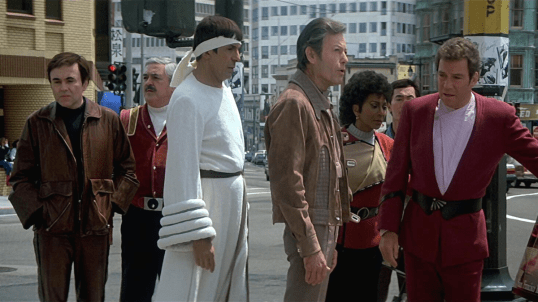
Returning home after rescuing Spock from the Genesis Planet, the Enterprise crew is instead sent back into the past so that they can bring two whales into the future.  The Voyage Home might not be the best Star Trek film (that honor belongs to Wrath of Khan) but it is the most likable and the most entertaining.  Every member of the cast gets something to do in 20th Century San Francisco.  The film is full of classic moments, from Chekhov looking for the “nuclear wessels” to Scotty trying to speak to the computer.  The moment with the punk on the bus is a crowd-pleaser.  I always laugh at Spock’s “One damn minute, Admiral.”  After the violence in The Search for Spock, The Voyage Home‘s humor, gentle sincerity, and emphasis on the efforts of the entire ensemble is a welcome development.

Star Trek V: The Final Frontier (1989, directed by William Shatner)

Leonard Nimoy got his chance to shine as the director of the previous two Star Trek films so William Shatner was allowed to direct The Final Frontier.  The Enterprise crew is brainwashed by a religious fanatic (Laurence Luckinbill) who is also, improbably, Spock’s brother.  Only Kirk is able to resist and confront the entity claiming to be God.  “What does God need with a starship!?”  Kirk demands.  It’s such an obvious question that I can’t believe the entity didn’t already have an answer worked out.

The Final Frontier gets no respect and it was probably doomed as soon as Shatner was announced as director.  Shatner also developed the story and it’s probably not surprising that the main theme is that Kirk was the only person on the Enterprise strong enough to not be brainwashed by the film’s fake God.  Laurence Luckinbill gave a good performance as Sybok but this film really does feel like an unfortunate episode of the original television series.

Star Trek VI: The Undiscovered Country (1991, directed by Nicholas Meyer)

Star Trek VI featured the final appearance of the Original Series cast as a group and they get a send-off worthy of their legacy.  Having been previously established as the Federation’s greatest enemies, the Klingons finally pursue peace.  Just as only Nixon could go to China, only Kirk and the original Enterprise crew can go to the Klingons.  This movie is what Star Trek was all about, with enough world-building and continuity for the hardcore fans and a story that was interesting enough to hold the attention of the casual viewers.  By featuring the start of the era of peace between the Federation and the Klingons, this film also filled in some of the Next Generation‘s backstory.  The Final Frontier was meant to be the final Star Trek film featuring any of the original cast and it would have been the perfect entry for Captain Kirk to go out on.  Unfortunately, that didn’t happen.

Star Trek Generations (1994, directed by David Cason)

William Shatner meets Patrick Stewart as one Star Trek crew passes the torch to the new Star Trek crew.  Malcolm McDowell is the latest villain with an ill-defined plan.  Picard and Kirk team up to stop McDowell’s villain.  They succeed but at the cost of Kirk’s life.  As opposed to Spock’s death in Wrath of Khan, Kirk’s death feels pointless and tacked on for no reason other than to signify the arrival of The Next Generation to the films.  Seeing Shatner and Stewart together is interesting.  Stewart may have been the better actor but Shatner still dominates their scenes together.  Not giving Kirk a better send-off was one of the franchise’s biggest sins.

Star Trek: First Contact (1996, directed by Jonathan Frakes)

After the disappointing Generations, Picard and his crew finally got a film worthy of them with First Contact.  Not only do the Borg return but the crew goes back into their past and experience a key date in the history of the Federation.  After being outshone by Shatner in Generations, Patrick Stewart takes control in this film, giving a multi-layered and commanding performance that still gives the rest of the cast room to shine.  Director Jonathan Frakes not only handles the action well but he also shows that he understands what makes the characters click.  This was, without a doubt, the best of the Next Generation films and one the best of the Star Trek films overall.

Star Trek: Insurrection (1998, directed by Jonathan Frakes)

Entertaining but forgettable, Insurrection features Picard pulling a Kirk and defying orders from from a superior officer (played by Anthony Zerbe) and going out of his way to save Data from being decommissioned.  Insurrection feels like an extended episodes of the Next Generation television series and lacks the epic scale of First Contact.  Under the direction of Jonathan Frakes, the ensemble is strong and watching them interact feels like spending time with a group of old friends.  F. Murray Abraham and Anthony Zerbe make for effective villains.

Star Trek: Nemesis (2002, directed by Stuart Baird)

Just as the Original Series crew sought peace with the Klingons in The Undiscovered Country, the final Next Generation film finds Picard, Riker, and the rest seeking peace with the Romulan Empire.  Tom Hardy plays a clone of Picard who is now the leader of the Romulans.  Data sacrifices himself in a move that tries too hard to duplicate the death of Spock.  Picard retires.  Director Stuart Baird emphasizes action over the chemistry of the Next Generation cast and the end result is a disappointing finale that left critics and audiences underwhelmed.

Star Trek (2009, directed by J.J. Abrams)

I think people forget about what a big deal this Star Trek reboot was when it first came out.  Today, people focus on things like Kirk being a Beastie Boys fan and they forget how exciting it was to see Chris Pine, Zachary Quinto, Karl Urban, Simon Pegg, Anton Yelchin, John Cho, and Zoe Saldana all effortlessly stepping into the roles of the younger versions of the original cast.  The storyline is predictable and Eric Bana’s a bland villain but the scenes between Leonard Nimoy and Zachary Quinto were a reminder of how important Spock was and is to Star Trek.

Star Trek wasn’t perfect, of course.  In retrospect, I think creating an alternate timeline was a mistake because it created a situation where, even if someone died, it was just an alternate version dying and not the version that audiences knew and cared about.  The alternate timeline would also lead to one of the biggest missteps in the history of the franchise.

Star Trek Into The Darkness (2013, directed by J.J. Abrams)

After the surprising success, both critically and commercially, of his Star Trek reboot, J.J. Abrams. Robert Orci, Alex Kurtzman, and Damon Lindelof wasted most of that good will by messing around with one of the franchise’s most memorable characters.

There are some good things to be said about Star Trek Into The Darkness.  I like the action sequences and the climatic battle in the film’s futuristic version of San Francisco.  But casting Benedict Cumberbatch, of all people, as Khan is a misstep that can’t be overcome.  That the movie brought back Khan instead of exploring “strange new worlds” exposed the weakness of Abrams entire reboot.  For all the hype, did the Star Trek reboot actually have anything new or original to offer?  The answer here seemed to be no.

Star Trek Beyond (2016, directed by Justin Linn)

The final (for now) Star Trek theatrical film featured a memorable villain in the form of Idris Elba and a plot that felt like it could have just as easily been an episode of the original series.  In retrospect, the film is mostly memorable for featuring the announcement of the death of Ambassador Spock.  (The film was released a year after the death of Leonard Nimoy.)  The death of Spock, this time with no Genesis Project around to bring him back, makes this installment feel like right place to end the films.  For many of us, Nimoy was Star Trek.

Stark Trek: Section 31 (2025, directed by Olatunde Osunsanmi)

Though there have been many subsequent televisions shows, there hasn’t been a Star Trek theatrical release since 2016.  The next installment has been in pre-production limbo for nearly ten years.  (Quentin Tarantino was supposedly attached at one time.)  Instead of coming to theaters, the latest Star Trek movie came to Paramount Plus.

I debated whether or not to include Section 31 in this list, both because it was a “made-for-TV” movie and also because it was so bad that I think most Star Trek fans would rather forget about it.  A mediocre heist film that wastes star Michelle Yeoh and which doesn’t feel like it belongs in the Star Trek universe, Section 31 may still represent the way forward for the franchise.  With theaters having never recovered from the COVID shut-downs and more and more people preferring to stream their entertainment at home, the future of the Star Trek films could very well be a collection of assembly line Paramount Plus movies.

Finally, Case turned me onto this short film:

765874: Unification (2024, directed by Carlos Baena)

A collaboration between Otoy, a VFX company, and The Roddenberry Archive, with support from Paramount, 765874: Unification is a 10-minute short film that imagines Kirk meeting Spock in the afterlife.  Shatner returns as Kirk, de-aged with CGI.  Just as Kirk and Spock were friends in the film, the same was true of Shatner and Nimoy in real life.  (You only have to compare Nimoy’s comments about Shatner with George Takei’s endlessly bitter takes to see what true class actually is.)  This short film gives both characters the finale that they deserved.

It’s possible that we may never see another true Star Trek film.  Most of the original cast is gone now.  Patrick Stewart will always be Picard but even he is now approaching 90.  But whatever the future may hold, I’m happy for the films that Star Trek gave us.

Scenes That I Love: Star Trek II: The Wrath of Khan


To quote George Costanza, “That was a hell of a thing when Spock died.”

That we all know that Spock was restored to life by the Genesis Project does not make this scene from Star Trek II: The Wrath of Khan any less effective.  Spock, who was ruled by logic and often accused of not having any feelings, made the ultimate sacrifice for his ship and, even more importantly, for his friends.

He’s not really dead, as long as we remember him.

4 Shots From 4 Films: It’s Star Trek Day!


4 Shots From 4 Films is just what it says it is, 4 shots from 4 of our favorite films. As opposed to the reviews and recaps that we usually post, 4 Shots From 4 Films lets the visuals do the talking!

59 years ago, Star Trek had its American television premiere.  (It had premiered a few days earlier in Canada.)  Today, we celebrate Star Trek Day!

4 Shots From 4 Films

Star Trek: The Motion Picture (1979, directed by Robert Wise)

Star Trek II: The Wrath of Khan (1982, directed by Nicholas Meyer)

Star Trek IV: The Voyage Home (1986, directed by Nicholas Meyer)

Star Trek (2009, directed by JJ Abrams)

Film Review: The Day After (dir by Nicholas Meyer)


“This is Lawrence. This is Lawrence, Kansas. Is anybody there? Anybody at all?”

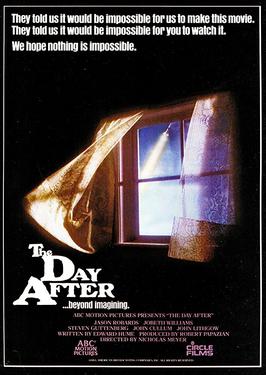
The words of Joe Huxley (John Lithgow) hang over the ending of The Day After, a 1983 film that imagines what the aftermath of a nuclear war would be like not on the East or the West Coasts but instead in the rural heartland of America.  Huxley is a professor at the University of Kansas and, as he explains early on in the film, Kansas would be an automatic target in any nuclear war because it houses a number of missile silos.  When he explains that, it’s in an almost joking tone, largely because the missiles haven’t been launched yet.  Instead, the only thing we’ve heard are a few barely noticed news stories about growing tensions between America and Russia.  About halfway through The Day After, the bombs go off and there are suddenly no more jokes to be made.

When the bombs drop over Kansas, we watch as cities and field and people burst into flames.  In a matter of minutes, several thousands are killed.  I’m almost ashamed to admit that I was probably more upset by the image of a horse being vaporized than I was by the death of poor Bruce Gallatin (Jeff East), the college student who was planning on marrying Denise Dahlberg (Lori Lethin).  I guess it’s because horses — really, all animals — have nothing to do with the conflicts between nations.  Humans are the ones who take the time to build bigger and better weapons and The Day After is one of the few films about war that’s willing to acknowledge that, when humans fight, it’s not just humans that die.

The bombing sequence is lengthy and I have to admit that I was a bit distracted by the fact that I recognized some of the footage from other movies.  A scene of panicked people running through a building was taken from Two-Minute Warning.  A scene of a building exploding and a construction worker being consumed by flames was lifted from Meteor.  As well, there’s some stock footage which should be familiar to anyone who has ever seen a documentary about the early days of the Cold War.  Still, despite that, it’s an effective sequence simply because it’s so relentless.  Some of the film’s most likable characters are vaporized before our eyes.  Steve Guttenberg, of all people, is seen ducking into a store.

Guttenberg plays Stephen Klein, a pre-med student who manages to survive the initial attack and takes shelter with the Dahlberg family at their ranch.  At first, it’s a bit distracting to see Steve Guttenberg in a very serious and very grim film about the nuclear apocalypse but he does a good job.  The sight of him losing both his teeth and his hair carries a punch precisely because he is reliably goofy Steve Guttenberg.

If the film has a star, it’s probably Jason Robards, the doctor who witnesses the initial blast from the safety of his car and then treats the dying in Lawrence, Kansas.  He does so, despite the fact that he doesn’t know if his wife, son, and daughter are even still alive.  He continues to do so until he also falls ill with radiation poisoning.  Knowing that he’s dying, he heads home just to discover that there is no home to return to.

Home is reccuring theme throughout The Day After.  Everyone wants to return to their home but everyone’s home has been wiped out.  “This is my home,” Jim Dahlberg (John Cullum) tries to explain before he’s attacked by a group of feral nomads.  Home no longer exists and trying to pretend like life can go back to the way it once was is an often fatal mistake.

Real happy film, right?  Yeah, this isn’t exactly a film that you watch for fun.  I have to admit that I made a joke about how I wouldn’t want to die while wearing the unfortunate blue jumpsuit that Jason Robards’s daughter chooses to wear on the day of the nuclear attack and I felt guilty immediately.  (Well, not that guilty.  Seriously, it was a terrible fashion choice.)  The Day After is a film that gives audiences zero hope by design.  It was made at a time when it was generally assumed that nuclear was inevitable and it was designed to scare the Hell out of everyone watching.  And while I can’t attest to how audience may have reacted in 1983, I can say that, in 2020, it’s still a powerful and disturbing film.

“Is anybody there? Anybody at all?” Joe Huxley asks and by the end of the film, the answer doesn’t matter.  The damage has already been done.

The Game’s Afoot: THE SEVEN-PER-CENT SOLUTION (Universal 1976)


gary loggins's avatarcracked rear viewer

71

Sherlock Holmes has long been a favorite literary character of mine. As a youth, I devoured the Sir Arthur Conan Doyle stories, marveling at the sleuth’s powers of observation and deduction. I reveled in the classic Universal film series starring Basil Rathbone and Nigel Bruce as Holmes and Watson, and still enjoy them today. I read Nicholas Meyer’s 1974 novel “The Seven-Per-Cent Solution” as a teen, where a coked-out Holmes is lured by Watson to Vienna to have the famed Sigmund Freud cure the detective of his addiction, getting enmeshed in mystery along the way. I’d never viewed the film version until recently, and while Meyer’s screenplay isn’t completely faithful to his book, THE SEVEN-PER-CENT SOLUTION is one of those rare instances where the movie is better than the novel.

72

This is due in large part to a pitch-perfect cast, led by Nicol Williamson’s superb performance as Sherlock. We see Holmes at his worst…

View original post 393 more words

Embracing the Melodrama Part II #62: Time After Time (dir by Nicholas Meyer)


TimeAfterTime79So, I just gave the 1979 film Home Before Midnight a fairly negative review but I simply cannot end the 70s section of Embracing the Melodrama on such a negative note!  So, before we move on to the 80s, allow me to suggest another film from 1979 that you could watch while you’re not watching Home Before Midnight!

Time After Time opens in London.  The year is 1893.  Writer H.G. Wells (Malcolm McDowell) is having a dinner party so that he can show off his latest invention, a time machine.  Among his guests is a surgeon named John Stevenson (David Warner).  What nobody at the party suspects is that Stevenson also goes by the name Jack the Ripper and that he enjoys killing prostitutes.  When a detective from Scotland Yard shows up at Wells’s home, Stevenson jumps into the time machine and escapes into the future.  Since Stevenson does not have the “non-return key,” the machine returns back to 1893 but Stevenson has apparently escaped.

Wells uses the machine to pursue Stevenson and soon finds himself in 1979 San Francisco.  Wells had expected to find that the future would be a utopia but instead, he discovers the world of 1979 is loud, polluted, violent, angry, and dangerous.  (Kinda like the world of 2015…)  As Wells pursues Stevenson, he struggles to adjust to the world of the “future,” and he also meets a bank clerk, Amy Robbins (Mary Steenburgen).

Time After Time is probably the sweetest movie ever made about Jack the Ripper and that’s largely because of the romance between both Wells and Amy and the two actors who played them.  After watching Time After Time, I was not surprised to learn that McDowell and Steenburgen got married shortly after appearing in this film.  They were so incredibly sweet together!

Add to that, considering the he’s best known for playing villains and other menacing types, it’s interesting to see Malcolm McDowell plays such a gentle and nice character.  Wells’ befuddlement is charming to watch.  There’s a great scene where Amy calls Wells on a landline phone and Wells stares down at the receiver in frightened amazement.

Time After Time is a really good and likable movie.  It’s sweet and it proves that even hunting for Jack the Ripper can be a romantic experience if it’s done with the right person.  Watch it and enjoy!

9 Favorite Revenge Films


Having recently seen Michael Caine’s revenge film Harry Brown I got to thinking about other revenge-themed films I’ve watched through the years and I realized that there were quite a bit of them. There’s something just primal and Old Testament about revenge flicks. It doesn’t matter whether they’re high-brow art-house films or the cheapest grindhouse flicks in the end it all boils down to one individual raining down their own version of Divine Wrath on those who wronged them.

Who hasn’t fantasized or thought about going all medieval on someone who just screwed them over. Maybe it was an infraction that was minor that one didn’t need to get overly upset over or something so heinous that only violence at its most basest was the only response. Going through with such thoughts usually stayed there: in one’s thoughts and imaginings. Revenge films seems to be quite popular because they allow even the meekest and most pacifist to secretly live vicariously through the revenge-minded leads in the film.

The list below is not the best revenge films out there but they definitely are my favorites…

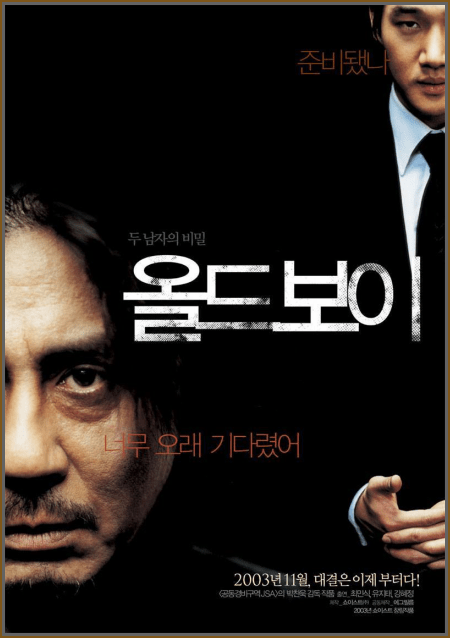
Oldboy – This revenge film by South Korean auteur Park Chan-wook wasn’t just a blast to watch but also happens to be one of the best films of the past decade. It takes a simple plot of a man imprisoned against his will for 15 years with no explanation whatsoever that he literally goes insane and back to sane during his captivity. Revenge being the one thing which keeps him going and revenge he gets to inflict on all those he discovers were responsible. The mind-twisting last act in the film takes the revenge-theme right on it’s head as we find out that the main lead wasn’t the only one on a revenge train of thought.

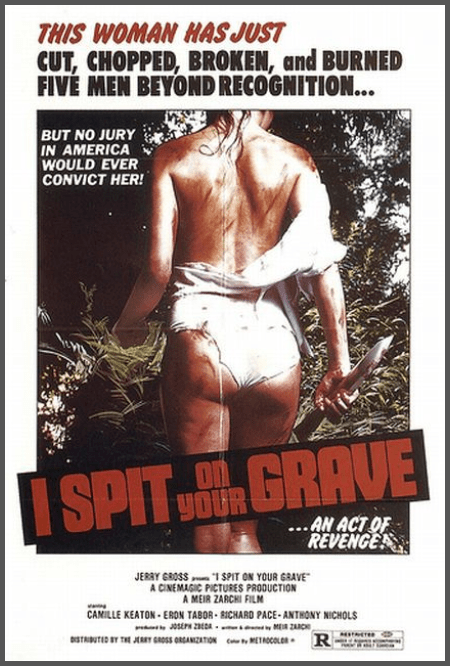
I Spit On Your Grave aka Day of the Woman – This grindhouse classic from Meir Zarchi is the epitome of the rape victim turned revenge valkyrie. The film is not very easy to sit through since there’s nothing subtle about how filmmaker Meir Zarchi filmed every exploitative scene. From the prolonged gang rape sequence to each subsequent revenge act by Camille Keaton’s Jennifer character. Some critics have blasted the film as pandering to the lowest common denominator while others have hailed it as a post-modern feminist film. I like to think that both sides are correct and that the film lies somewhere in the middle. It definitely will put a scare on any group of men who are having thoughts of shenanigans.

Death Wish – When people hear revenge flick they almost always say this iconic film by Charles Bronson from the 70’s. The film was adapted from Brian Garfield’s 1072 novel of the same name and directed by Michael Winner. While critics had mixed reactions to the film with some calling it irresponsible filmmaking, the nation as a whole embraced the film. Here was a film which screamed to the nation that the rising crime-rate in the U.S. during the 1970’s wasn’t going to go unanswered. While some people may have seen the film as a blank check to actually commit vigilantism in the end it just helped a country sick and tired of the crime they see day in and day out. Again here was art becoming a driving force in changing a nation’s collective malaise into something more positive. It didn’t hurt that Bronson was badass as Paul Kersey.

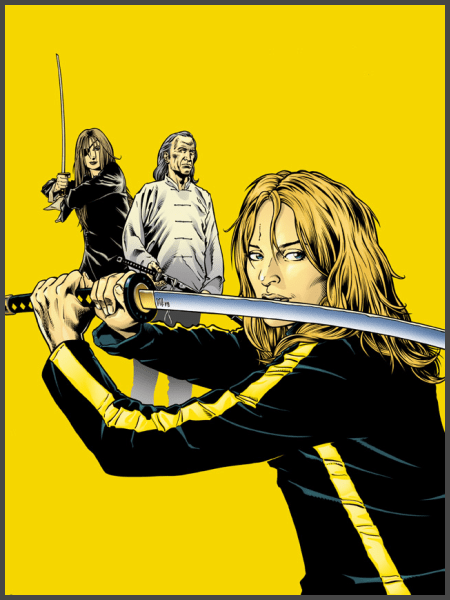
Kill Bill: Volume 1-2 – Who else but the video clerk made good would make what I would consider the greatest genre mash-up film ever made. Quentin Tarantino’s ode to kung fu, spaghetti westerns and revenge flicks became so massive that he had to split the film into two volumes. I am talking about Kill Bill. Not his greatest film ever but I definitely consider it his most geek-friendly and most entertaining. Uma Thurman as The Bride tearing a bloody and witty path of revenge on those who failed to kill her created some of the most iconic fight sequences of the generation this film came out in. Every scene almost seemed to be inspired by other films of a similar theme and genre that film geeks everywhere must’ve exploded in their pants from all the awesomeness they were witnessing. Each volume had two great action sequences that were both fantastical and brutal.

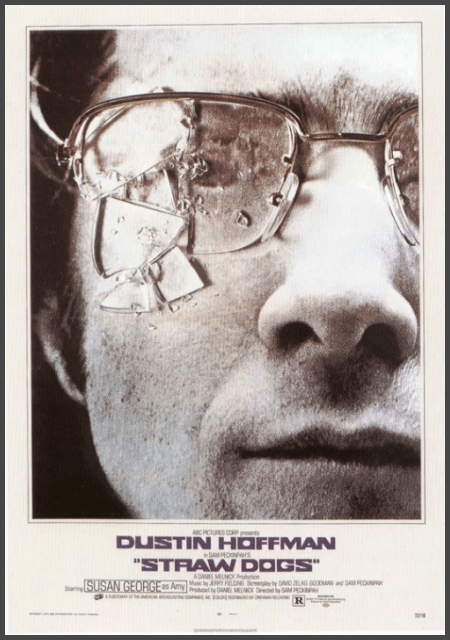
Straw Dogs – One of the most controversial films in Sam Peckinpah’s controversy-filled directing career. Released in 1971 it told the story of how even the meekest person could be pushed into dealing out extreme violent justice on those who have wrong them and those they love. Seen by critics as quite misogynistic due to the nature of the rape scene of Susan George’s Amy character the film was banned for two decades in the UK for it’s unflinching look at violence. Being a huge fan of Sam Peckinpah I had to see it and when I did it automatically became one of my favorite films ever and not just a favorite revenge film. If there was ever a modern retelling of a Biblical-level fable it is this classic from Sam Peckinpah. Every revenge-fueled act by Dustin Hoffman literally oozes Old Testament justice. Just the way I like my revenge. 🙂

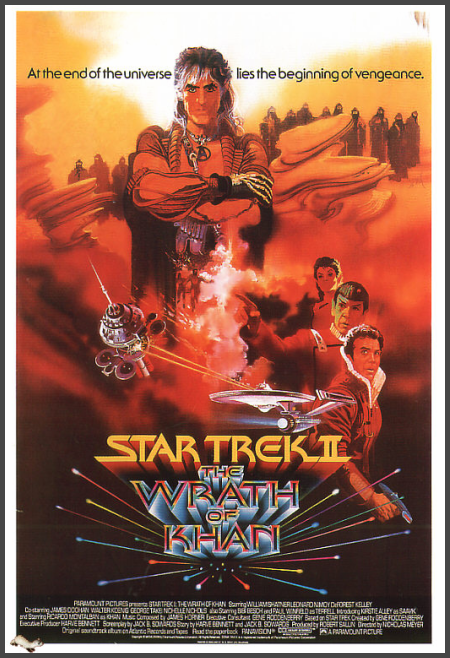
Star Trek II: The Wrath of Khan – Speaking of Biblical this first sequel in the Star Trek film franchise still considered by fans and non-fans alike as the best in the series. Hard to argue with them since it’s also an opinion I share. The sequel takes a popular episode from the original series and follows it up with all the cast of characters older and more seasoned. In the case of Ricardo Montalban’s Khan Noonian Singh quite seasoned and classy as smooth Corinthian leather. It’s a film with Shatner’s Kirk and Montalban’s Khan in an everending cycle of revenge which would culminate in what would be one of film’s most heartbreaking scenes. One could taste the revenge emanating from the two characters as age-won wisdom and genetically-engineered intellect fell by the wayside to feed the vengeance sought by Kirk and Khan. This revenge flick also has one of the most awesome death speeches by a character on film.

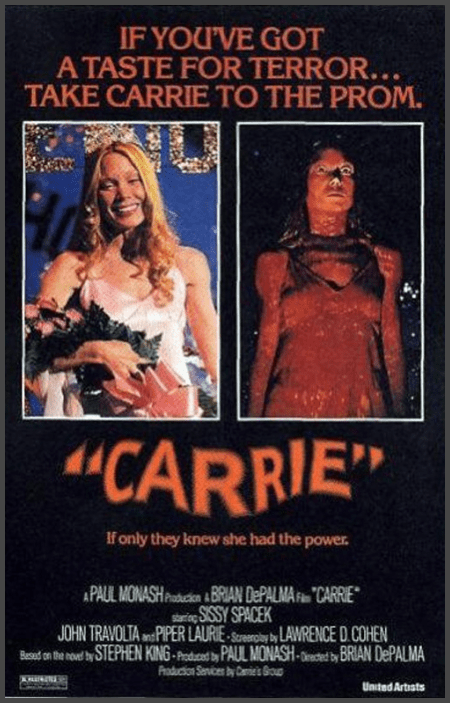
Carrie – Brian De Palma’s film adaptation of one of Stephen King’s better horror novels still seen by many as the best film adapt of a King novel. It combines the existential horror of being a girl and her body maturing in the dog-eat-dog world of high school and the horror said girl can inflict on those tormenting her. It’s high school bullying and revenge with a healthy dose of Stephen King shenanigans mixed in. Sissy Spacek was great as the titular character. One doesn’t have to be a high school girl to feel for Carrie and what she goes through. Her snapping in the last act and inflicting her psychokinetic-brand of revenge on her tormentors must’ve gotten more than a few “Hell yeah!” from some of the teens and adults who went through high school hell. It also has a classic line uttered by Carrie’s mother played by Piper Laurie: “I can see your dirty pillows. Everyone will.”

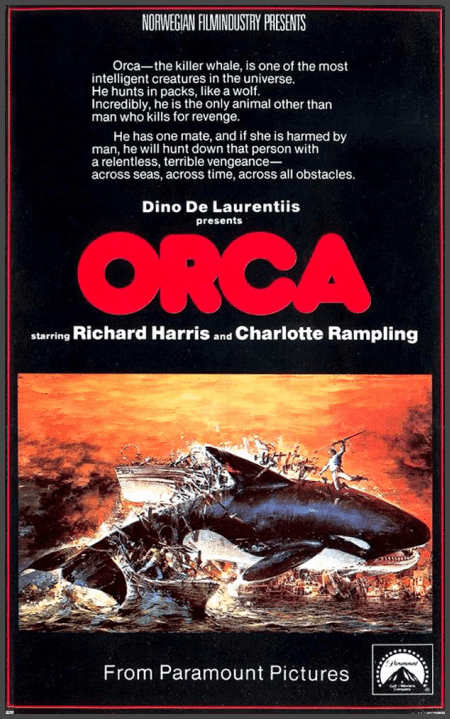
Orca – This film was to be producer Dino De Laurentiis’ attempt to capitalize on the success of Steven Spielberg’s classic man-versus-nature thriller, Jaws. Starring Richard Harris, Charlotte Rampling and Bo Derek the film wasn’t a success when it first came out. While Spielberg’s film was a modern retelling of Moby Dick this killer whale version by director Michael Anderson was Death Wish on water with Paul Kersey as the killer whale. This was one of the first films where I realized none of the people on the screen were worth rooting for to survive. I was all for the killer whale who was on a warpath to avenge his mate and unborn wee killer whale who were killed by Harris and his crew. Shamu this killer whale was not and it always brought a smile to my face whenever the killer whale outsmarted the humans and killed each and everyone in inventive ways. I’m wondering if all the killer whales in all the aquatic parks are just biding their time before they too go all Orca on their handlers and the audience. I’d pay to see that!

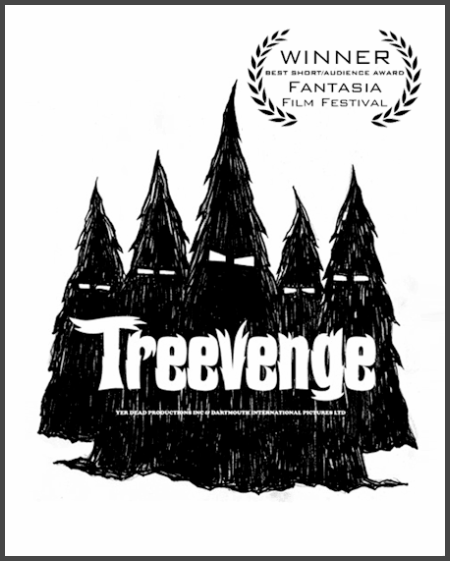
Treevenge – Last but not least the greatest film ever made!