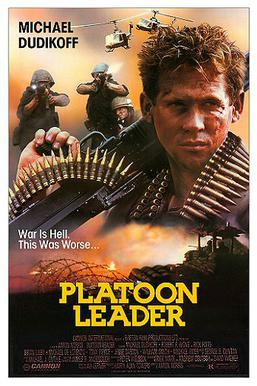
 Having just graduated from West Point, Lt. Jeff Knight (Michael Dudikoff, the American Ninja himself) is sent to Vietnam and takes over a battle-weary platoon. Lt. Knight has got his work cut out for him. The VC is all around, drug use is rampant, and the cynical members of the platoon have no respect for him. When Lt. Knight is injured during one of his first patrols, everyone is so convinced that he’ll go back to the U.S. that they loot his quarters. However, Knight does return, determined to earn the respect of his men and become a true platoon leader!
Though Cannon was best known for making B action movies (many of which starred either Chuck Norris or Charles Bronson), they occasionally tried to improve their image by releasing a prestige film. Platoon Leader is somewhere in the middle between Cannon’s usual output and their “respectable” films. It is based on a highly acclaimed memoir and, though the film was made in South Africa, it does a good job of recreating the look of Vietnam. For instance, Platoon Leader‘s version of Vietnam is more convincing than what Cannon later presented in P.O.W.: The Escape. Platoon Leader also spends some time developing its characters. Lt. Knight is more than just a stoic action hero, which already distinguishes it from 90% of Cannon’s usual output. At the same time, Platoon Leader was directed by Chuck Norris’s brother, Aaron, and he doesn’t hold back on the explosions and the gunfire that everyone had come to expect from a Cannon war film. The end result is an enjoyably hokey film that has a few more layers than the typical Cannon production but not too many.
This film was originally titled Nam but, after the success of Platoon, the title was changed to Platoon Leader. In typical Cannon fashion, Platoon Leader plays like a more jingoistic and even less subtle version of Stone’s film. The main difference is that Platoon‘s Lt. Wolfe never won the respect of his men and ended up getting killed with almost everyone else while Lt. Knight beats back the VC and shares a celebratory embrace with his sergeant.
One final note: keep an eye out for genre vet William Smith, who starred in The Losers (a film about a group of bikers who are recruited by the CIA and sent to Vietnam), in the role of Dudikoff’s superior officer. If Platoon Leader had been made in the 70s, Smith would have played Dudikoff’s role so his appearance here is almost a passing of the B-movie torch.
 One of the best films ever made about Vietnam is also one of the least known.
 It’s life and death in the Windy City. It’s got Chuck Norris, Henry Silva, Dens Farina, and a robot, too. It’s Code of Silence.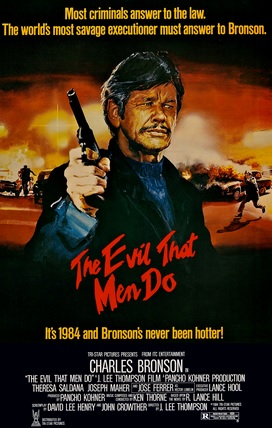
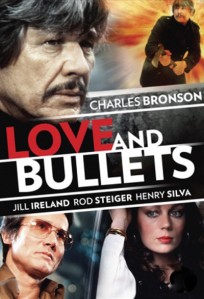 Joe Bomposa (Rod Steiger) may wear oversized glasses, speak with a stutter, and spend his time watching old romantic movies but don’t mistake him for being one of the good guys. Bomposa is a ruthless mobster who has destroyed communities by pumping them full of drugs. Charlie Congers (Charles Bronson) is a tough cop who is determined to take Bomposa down. When the FBI learns that Bomposa has sent his girlfriend, Jackie Pruit (Jill Ireland), to Switzerland, they assume that Jackie must have information that Bomposa doesn’t want them to discover. They send Congers over to Europe to bring her back. Congers discovers that Jackie does not have any useful information but Bomposa decides that he wants her dead anyway.
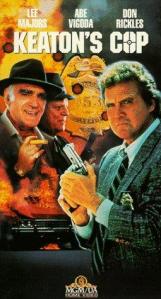 Mike Gable (Lee Majors) is the angriest cop in Galveston, famous for tossing people out of windows. Jake (Don Rickles!) is Gable’s partner, who seems to be too old to still be on the force. Gable’s best friend is Keaton (Abe Vigoda), a retired mobster who now lives in a nursery home. When it becomes apparent that someone has put a hit out on Keaton, Gable and Jake are sent to investigate. A shoot out at the nursery home leads to Jake’s death. Another shoot out at a hotel leads to the death of several other cops. Gable can either toss Keaton out a window or he can team up with him to solve the murders. Imagine 48 Hours with Lee Majors replacing Nick Nolte and Eddie Murphy stepping aside for Abe Vigoda.

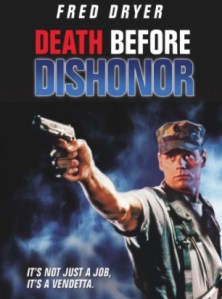 In a fictional Middle Eastern country, tough-as-nails Col. Halloran (Brian Keith) has been kidnapped by terrorists. The leader of the terrorists is named Jihad and he is played by the No Mercy Man himself, Rockne Tarkington. The American ambassador (Paul Winfield) is a weak-willed Carter appointee who says, “We have to go through proper channels.” Gunnery Sgt. Burns (Fred Dryer) ain’t got no time for the proper channels. All of his men have been killed. His mentor has been kidnapped and is being tortured with a power drill. Even if it means breaking all the rules, Sgt. Burns is going to rescue Halloran, defeat Jihad, and kill anyone who has ever chanted “Death to the U.S.A.”
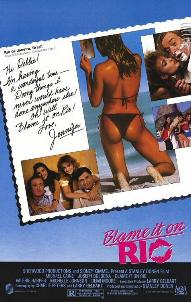 When I was growing up in Baltimore, I used to go down to this independent video story every weekend and check out movies. Every time that I stepped into the store, the first thing I saw was the poster for Blame It On Rio hanging over the front register. The store did not actually have any copies of Blame It On Rio in stock and I don’t think anyone working there had ever seen it but it only takes one look at the poster to guess what they were thinking when they hung it at the front of the store.
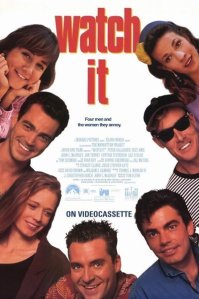 In Chicago, three men all live in the same house and try to avoid growing up. Rick (John C. McGinley) and Mike (Jon C. Tenney) are old friends while Danny (Tom Sizemore) works on stolen cars. When Mike’s estranged cousin, John (Peter Gallagher), moves in with them, John is drawn into a steadily escalating game of pranks. The game is called “Watch It” and the rules are simple. No one can take anything personally and each prank must be followed by another, bigger prank. While the four men takes turns trying to one up each other, they also deal with women who wish that they would all just grow up. When John starts to date Mike’s ex-girlfriend, Anne (Suzy Amis), the men are forced to come to terms with their extended adolescence.
 Tommy Morrison. He came from Oklahoma and he was briefly one of the best-known heavyweights in the country. He may be best remembered for playing Tommy “Machine” Gunn in Rocky V but he also fought everyone from Lennox Lewis to Ray Mercer to George Foreman. He had the raw talent to be a contender but lacked the discipline to win his biggest fights. They called him “The Duke” because Tommy claimed to be related to John Wayne.
 Through the Shattered Lens