Music Review: Pink Floyd — The Wall (dir by Alan Parker)


1982’s Pink Floyd — The Wall is a film that I have mixed feelings about.

Some of that is due to my feelings about Pink Floyd.  On the one hand, I can’t deny their talent and I do like quite a few of their songs, if they do all tend to be a bit on the portentous side. On the other hand …. Roger Waters!  Bleh, Roger Waters. Waters was one of the founders of Pink Floyd and, for a while, the band’s de facto leader.  He’s also a rabid anti-Semite and a defender of Vladimir Putin’s.  That said, I’ve discovered that I can justify listening to Pink Floyd by remembering that the rest of the band hates Roger Waters as well and that Waters himself eventually left Pink Floyd.  Waters’s bandmate, David Gilmour, has flat-out called Roger Waters an anti-Semite.  Last year, when we had a total eclipse of the sun, I was happy to be able to play the last two tracks of Dark Side of the Moon while enjoying the early and temporary evening.  It just felt appropriate.

Outside of Dark Side of the Moon, The Wall is probably Pink Floyd’s best-known work.  (When I was younger, I can remember my Dad playing it whenever he was driving across the country.)  A concept album about how much it sucks to be a wealthy Englishman, The Wall is one of those albums and films that are beloved by people who consider themselves to be alienated.  Even more so than the average Pink Floyd album, The Wall was the brainchild of Roger Waters and, when the movie version was made in 1982, Waters wrote the screenplay.  That said, I think you can argue that, much as with Tommy, The Wall was ultimately more about the vision of the film’s director than that of the man who wrote the songs.

The Wall is definitely an Alan Parker production.  It’s big.  It embraces the sordid.  It’s stylish almost to the point of parody.  Every image has been carefully constructed by a director who got his start doing commercials and whose main goal was to get an immediate audience reaction.  Much like Parker’s Midnight Express or Evita, it’s a film that grabs your attention while you’re watching it and only afterwards do you stop consider that there really wasn’t much going on underneath the surface.

Pink (Bob Geldof) is a self-loathing rockstar who is haunted by his childhood in post-WWII Britain and whose marriage is failing.  He’s building a wall, brick-by-brick, to keep himself separated from pain but the price of becoming comfortably numb is to be so alienated that you imagine becoming a neo-Nazi who orders his followers to follow the Worm.  The imagery is powerful.  The animated sequences by Gerald Scarfe still make quite an impression, especially the marching hammers.  The score features songs like Another Brick In The Wall, Comfortably Numb, and Run Like Hell.  The film is relentless, full of downbeat imagery that is often excessive but which Parker understood would appeal to the film’s target audience.  Indeed, it’s such an overwhelming film that it’s easy to overlook the fact that, even before he transformed into a fascist, Pink is a drab character and his main problem seems to be that he can’t seem to find anything good to watch on television.

That said, I have to admit that, despite myself, I do like The Wall.  It’s just so shameless that it’s hard not to enjoy the silliness of it all.  Add to that, Comfortably Numb is a great song.  (Another Brick In The Wall is also a great song though perhaps not for the reasons that Waters thought it was.)  The Wall is a monument to the joys of cinematic excess.
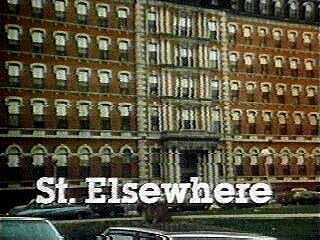
Retro Television Review: St. Elsewhere 2.20 “Cramming”


Welcome to Retro Television Reviews, a feature where we review some of our favorite and least favorite shows of the past! On Fridays, I will be reviewing St. Elsewhere, a medical show which ran on NBC from 1982 to 1988.  The show can be found on Hulu and, for purchase, on Prime!

This week, Peter White goes on trial.

Episode 2.20 “Cramming”

(Dir by Tim Matheson, originally aired on May 2nd, 1984)

Dr. Peter White finally goes on trial, charged with raping Kathy Martin and assaulting Wendy Armstrong.  For his attorney, he hires the same lawyer (Conrad Janis) who previously made the case against him at his disciplinary hearing.  The lawyer asks Kathy Martin about her own reputation at St. Eligius.  (“How many times have you had sex in the morgue?”)  Peter himself manages to pass a lie detector test.  (Sociopaths don’t have the same physical reactions to telling a lie as normal people.)  In the end, Peter is acquitted.

Shirley Daniels blames Kathy for the acquittal, saying that she should have come forward earlier.  As for Wendy, she deals with the trauma by binging and then purging.  When one of her patients miscarries after being admitted to the hospital, it’s determined that Wendy carelessly missed a heart murmur.  When Wendy argues that she’s been under pressure due to the trial, Dr. Craig points out that Wendy missed the heart murmur before the trial even started.  Wendy breaks down into tears.

I have to admit that Wendy Armstrong has never been one of my favorite characters on this show.  She’s the type of doctor who most people would dread having to deal with.  She knows all of the technical stuff but she has absolutely no idea how to relate to patients and she gets defensive whenever anyone disagrees with her.  Even if she hadn’t been attacked by Peter White, it seems like it was inevitable that she would eventually end up overlooking something with one of her patients.  That said, my heart still broke for her in this episode.  One gets the feeling that she’s one bad day away from breaking.

This episode ends with all of the residents taking their National Board exams.  The residents know that five of them will be cut from the program.  Having been acquitted, Dr. White approaches Westphall and Auschlander and announces that he doesn’t have any hard feelings towards them and he hopes that they’ll give him a fair shot.  “I’m innocent,” he lies.

Dr. Ehrlich is also nervous about his exams, cramming everything he can into his last minute study sessions.  His Aunt Cherise (Louise Lasser) comes to visit and help him deal with the end of his marraige to Roberta but Ehrlich is able to dump her off on Dr. Westphall.  After having an awkward dinner with the eccentric Cherise, Westphall realizes that he’s not ready to start dating again.

This episode left me reeling, to be honest.  The acquittal of Peter White was a gut punch.  I know he’s guilty.  Everyone in the hospital knows that he’s guilty.  But he’s acquitted.  Kathy Martin’s name is drugged through the mud.  Wendy Armstrong has gone from being determined to self-destructive.  But Peter White has not only gotten away with his crimes but he’s now apparently convinced that he can go back to being a doctor at St. Eligius.  And who knows?  He probably can.  It’s a messed up world.  It was messed up in 1984 and it’s messed up today.

Next week, we’ll find out which residents made the cut!

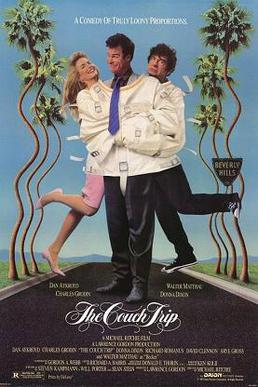
The Couch Trip (1988, directed by Michael Ritchie)


When renowned radio psychiatrist George Matlin (Charles Grodin) has a nervous breakdown, he takes a trip to Europe with his wife (Mary Gross) to both recover and also work on his marriage.  (Matlin’s breakdown was the result of an extramarital affair.)  Needing someone to host Dr. Matlin’s radio show, his producers call Dr. Lawrence Baird (David Clennon), who oversees a mental facility in Chicago.  They assume that Dr. Baird is just dumb enough that they won’t have to worry about him overshadowing Dr. Matlin while he’s guest-hosting.  However, when they call, Dr. Baird is out of his office and the phone is answered by John Burns (Dan Aykroyd), a con artist who has been pretending to be insane so that he can avoid serving time in prison.  Pretending to be Baird, Burns accepts their offer and then escapes from the asylum and heads to Beverly Hills.  The real Dr. Baird, not knowing about the offer, goes on vacation in Europe.  Though Burns had originally only been planning on doing the radio job long enough to get paid enough money to head to Mexico, he soon becomes a celebrity with his non-nonsense, blunt advice.

There’s a lot of talented people in The Couch Trip, including Walter Matthau as a former priest-turned-kleptomaniac and Aykryod’s wife, Donna Dixon, as Matlin’s colleague and Burns’s eventual love interest.  Director Michael Ritchie was responsible for some of the best films of the 70s and radio psychiatry is certainly a ripe subject for satire.  Why, then does, The Couch Trip fall flat?  Some of it is because the movie never seems to know if it wants to be wacky farce or a dramedy about a criminal who finds a new life helping people.  The other big problem is that the talented Dan Aykroyd is miscast as the type of unapologetic smartass that Bill Murray could play in his sleep.  (In a version where Murray played John Burns, Aykroyd would have been perfect casting as George Matlin.)

Aykroyd was one of the most talented members of the original Not Ready For Prime Time Players.  (His impersonations of Nixon and Jimmy Carter were second-to-none.)  Sadly, Hollywood has never figured out what to do with his off-center talent.  The Couch Trip is a prime example of that.


Life Stinks (1991, directed by Mel Brooks)


Goddard Bolt (Mel Brooks), the massively wealthy CEO of Bolt Enterprises, wants to buy up a huge area of Los Angeles’s slums and tear them down, transforming the area into a chic neighborhood and moving all of the poor residents and street people out.  Rival businessman Vaughn Craswell (Jeffrey Tambor), who grew up in the slum and dreams of destroying it himself, has the same plan.  He and Bolt make a bet.  If Bolt can survive for 30 days on the streets, Craswell will allow Bolt to have the property.  Bolt agrees and soon, he is penniless and sleeping in alleys.  While Bolt befriends Sailor (Howard Morris) and Fumes (Theodore Wilson) and falls in love with a former dancer named Molly (Lesley Ann Warren), Craswell schemes to take over Bolt’s company and keep Bolt on the streets permanently.

Life Stinks was one of Mel Brooks’s attempts to make a straight comedy that wasn’t a parody and which had a serious message underneath the laughs.  The mix of comedy and drama doesn’t really gel,  because the drama is too dark and the comedy is too cartoonish.  Life Stinks is often guilty of romanticizing living on the streets.  With the exception of two muggers, everyone whom Bolt meets is a saint.  It is still interesting to see Brooks creatively at his most heartfelt and humanistic.

Life Stinks does feature some of Mel Brooks’s best work as an actor and it’s also features an excellent turn from Lesley Anne Warren.  At first, I thought Warren would be miscast as a woman who spent her days in a soup kitchen and her nights sleeping in an alley.  But she actually gives a very sweet and believable performance.

No matter what else, Mel Brooks is a true mensch.


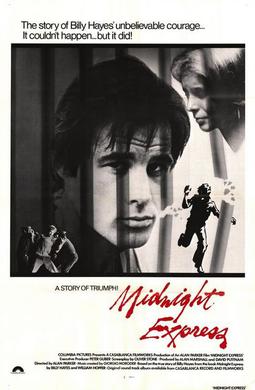
Spring Breakdown #1: Midnight Express (dir by Alan Parker)


Since it’s currently Spring Break, I figured that I would spend the next two weeks reviewing films about people on vacation.  Some of the films will be about good vacations.  Some of the films will be about bad vacations.  But, in the end, they’ll all be about celebrating those moments that make us yearn for the chance to get away from it all.

Take Midnight Express, for instance.  This 1978 film (which was nominated for six Oscars and won two) tells the story of what happens when a carefree college student named Billy Hayes decides to spend his holiday in Turkey.

When the film begins, Billy Hayes (played by Brad Davis), is at an airport in Turkey.  He’s preparing to return home to the United States.  His girlfriend, Susan (Irene Miracle), informs him that Janis Joplin has just died.  When Billy responds by making a joke, Susan accuses him of not taking anything seriously.  What Susan doesn’t realize is that Billy actually has a lot on his mind.  For one thing, he’s got several bricks of hashish taped around his waist.  He purchased it from a cab driver and he’s planning on selling it to his friends back in the United States.  Unfortunately, Billy’s not quite as clever as he thinks he is.  Because of recent terrorist bombings, the Turkish police are searching everyone before they board their plane.  Billy finds himself standing out in the middle of the runway with his hands up in the air, surrounded by gun-wielding Turkish policemen.

Billy finds himself stranded in a country that he doesn’t understand, being interrogated by men whose language he cannot speak.  An enigmatic American (Bo Hopkins) shows up and assures Billy that he’ll be safe, as long as he identifies the taxi driver who sold him to the drugs.  Billy does so but then makes the mistake of trying to flee from the police.  In the end, it’s the American who captures him and, holding a gun to Billy’s head, tells him not to make another move.

Soon, Billy is an inmate at Sağmalcılar Prison.  He’s beaten when he first arrives and it’s only days later that he’s able to walk and think clearly.  He befriends some of the other prisoners, including a heroin addict named Max (John Hurt) and an idiot named Jimmy (Randy Quaid).  Billy watches as the prisoners are tortured by the fearsome head guard (Paul L. Smith) and listens to the screams of inmates being raped behind closed doors.  After being told that his original four-year sentence has been lengthened to a 30-year sentence, Billy starts to degenerate.  When Susan visits, Billy end up pathetically masturbating in front of her.  When another prisoner taunts Billy, Billy bites out the man’s tongue, an act that we see in both close up and slow motion.  If Billy has any hope of regaining his humanity, he has to escape.  He has to catch what Jimmy calls the “midnight express…..”

Midnight Express is a brutal and rather crude film.  Though it may have been directed by a mainstream director (Alan Parker) and written by a future Oscar-winner (Oliver Stone), Midnight Express is a pure grindhouse film at heart.  There’s not a subtle moment to be found in the film.  The camera lingers over every act of sadism while Giorgio Moroder’s synth-based score pulsates in the background.  When Billy grows more and more feral and brutal in his behavior, it’s hard not to be reminded of Lon Chaney, Jr. turning into The Wolf Man.  The film may be incredibly heavy-handed but it’s nightmarishly effective, playing out with the intensity of a fever dream.

As for the cast, Brad Davis wasn’t particularly likable or sympathetic as Billy.  On the one hand, he’s a victim of an unjust system, betrayed by his own country and tortured by another.  On the other hand, Billy was an idiot who apparently thought no one would notice all that hash wrapped around his chest.  That said, Davis’s unlikable screen presence actually worked to the film’s advantage.  If you actually liked Billy, the film would be unbearable to watch.  Before Davis was cast, Dennis Quaid and Mark Hamill were both considered for the role.  If either of those actors has been cast, Midnight Express would be too intense and disturbing to watch.  For instance, it would be depressing to watch Dennis Quaid rip a man’s tongue out of his mouth.  You would be like, “No, Mr. Quaid, you’ll never recover your humanity!”  But when Brad Davis does it, you’re just like, “Eh.  It was bound to happen sometime.”

For more effective are John Hurt and Bo Hopkins.  Hurt and Hopkins both have small roles but they both make a big impression, if just because they’re the only two characters in the film who aren’t either yelling or crying all of the time.  While everyone else is constantly cursing their imprisonment, Hurt is quietly sardonic.  As for Hopkins, we’re supposed to dislike him because he’s with the CIA and he sold out Billy.  But honestly, no one made Billy tape all that hash to his chest.  Finally, you’ve got Randy Quaid and Paul L. Smith, who both glower their way through the film.  Smith is wonderfully evil while Randy Quaid is …. well, he’s Randy Quaid, the loudest American in Turkey.

Midnight Express was such a success at the box office that it caused an international incident.  There’s not a single positive Turkish character to be found in the entire film and it’s impossible not to feel that the film is not only condemning Turkey’s drug policies but that it’s also condemning the entire country as well.  The Turkish prisoners are portrayed as being just as bad as the guards and even Billy’s defense attorney comes across as being greedy and untrustworthy.  Watching the film today can be an awkward experience.  It’s undeniably effective but it’s impossible not to cringe at the way anyone who isn’t from the west is portrayed.  In recent years, everyone from director Alan Parker to screenwriter Oliver Stone to the real-life Billy Hayes has apologized for the way that the Turkish people were portrayed in the film.

Despite the controversy, Midnight Express was a huge box office success and it was nominated for best picture.  It lost to another controversial film about people imprisoned in Asia, The Deer Hunter.


Cleaning Out The DVR: The Star Chamber (dir by Peter Hyams)


Here’s a good example of why I need to clean out my DVR more regularly:

I recorded the 1983 legal thriller, The Star Chamber, off of Starz on March 14th.  I know what you’re saying.  “Big deal!  That wasn’t that long ago.”  Well, did I mention that it was March 14th, 2017?

That’s right!  The Star Chamber sat on my DVR for over a year before I finally got around to watching it last night.  You’d be justified in asking why it took me so long and I’m afraid that I really couldn’t give you a definite answer.  I can, however, tell you the four main reasons why I recorded it in the first place:

  1. I’m always intrigued whenever I come across a movie of which I haven’t previously heard.
  2. The movie was described as being about a conflicted judge and I just happen to love legal films.
  3. I really, really liked the title.  The Star Chamber?  Did that mean it took place in a room full of stars?
  4. Before I recorded The Star Chamber, I only had 55 films on the DVR.  Since I don’t like odd numbers, recording The Star Chamber took care of that problem.

As for the film itself, The Star Chamber is another one of those movies where a group of vigilantes end up getting pissed off because liberal California judges are letting too many murderers go free because of pesky, constitutional technicalities.  The twist here is that the vigilantes are the same judges who keep tossing out evidence and ruling that confessions are inadmissible in court.  After spending their day setting free the dregs of society, the judges all gather in a nearby house and review the evidence before voting on whether or not they believe the accused was actually guilty.  If the verdict is guilty, the judges promptly hire a hit man who proceeds to clean up the streets.

The newest member of this tribunal is Judge Steven R. Hardin (Michael Douglas).  Hardin is haunted by the technicalities that forced him to toss out a case against two accused of child murderers.  (Making things even worse, the child’s father commits suicide afterward.)  Despite his initial reservations, Judge Hardin signs off on hiring an assassin to take the two men out.  But, when it becomes apparent that the two men actually were innocent, Judge Hardin is horrified to discover that there’s no way to call off the hit…

The Star Chamber is an oddly constructed movie.  When the movie starts, it feels like a typical police procedural.  From there, the movie turns into a rather talky examination of the U.S. legal system, with Judge Hardin trying to balance his idealism with the often frustrating reality of what it takes to uphold the law.  The movie then briefly turns into a conspiracy film, featuring middle-aged men in suits holding secret meetings and debating whether or not they’re serving the greater good.  And then, towards the end of the movie, it turns into an action film, with Judge Hardin being chased by two drug dealers, a contract killer, and a suspicious police detective (Yaphet Kotto).  Judge Hardin may start the movie as a conflicted liberal but he ends at someone who can blow up the entire second floor of a drug lab.  In many ways, The Star Chamber is a deeply silly film but, as directed and co-written by Peter Hyams, it’s also just pulpy enough to be entertaining.  The dialogue may be over-the-top but so is Michael Douglas’s performance so it all evens out in the end.

It may have taken me a while to get around to watching The Star Chamber but I’m glad that I finally did.  It’s a ludicrous film and all the more entertaining as a result.