In this scene, Flash earns the title of savior of the universe. Or, at least he does until Zarkov accidentally knocks him out. Between the Queen soundterack, Melody Anderson chanting, Ornella Muti vamping, Brian Blessed mugging, and Max Von Sydow doing his thing, this is a true scene that I love!
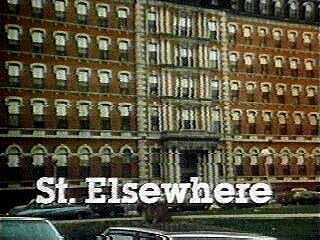
Welcome to Retro Television Reviews, a feature where we review some of our favorite and least favorite shows of the past! On Fridays, I will be reviewing St. Elsewhere, a medical show which ran on NBC from 1982 to 1988. The show can be found on Hulu and, for purchase, on Prime!
This week, the first season comes to a close.
Episode 1.22 “Addiction”
(Dir by Mark Tinker, originally aired on May 3rd, 1983)
“To life,” Dr. Auschlander toasts towards the end of the finale of St. Elsewhere’s first season and the sentiment could not be more called for.
While Auschlander has spent the episode hanging out with a friend of his and getting into fights with disrespectful street punks, Dr. Morrison’s wife has been giving birth to their son. While someone breaks into the supply room and takes off with a huge supply of drugs, Dr. White is sobbing and telling his estranged wife that he knows he has to get help for his addictions. While one drug addict (Ralph Seymour) commits suicide by injecting an air bubble into his veins, Dr. Craig’s cocky son, Stephen (Scott Paulin), visits from medical school and turns out to be quite a weed-smoking, pill-popping drug user himself. Ehrlich, assigned to show Stephen around the hospital and teach him what it’s like being a resident, considers telling Dr. Craig that his son has a drug problem but apparently decides not to. Dr. Craig is very proud that his son is going to follow the family tradition of becoming a surgeon. Meanwhile, Dr. Fiscus cheats on Shirley Daniels with Kathy Martin. Fiscus, you idiot.
Life goes on at St. Eligius. That’s was the theme of the finale and it’s also been the theme of the first season. For all the bad things that happen, there are also good things. Some patients die. Some doctors are incompetent. But babies are born and doctors like Morrison and Ehrlich and Chandler haven’t given up and are still trying to make the world a better place. Dr. Auschlander may be terminally ill with cancer but he embraces life and we should all do the same.
It’s a good ending for an overall good first season. There were a few weak episodes. Dr. Samuels was a pretty annoying character and I’m a bit relieved to see that David Birney left the show after this season. Ed Flanders can be a bit overly somber as Dr. Westphall and Howie Mandel is still one of the least convincing doctors that I’ve ever seen. That said, Morrison, Ehrlich, Chandler, Nurse Daniels, and even Dr. White are interesting characters and I look forward to seeing what happens with them during season 2. The season’s stand-out was definitely William Daniels as the pompous yet still likable Dr. Craig. Other than the terrible storyline where he cheated on his wife (and I still claim that was a dream episode, like almost all of the stuff with Dr. Samuels), Dr. Craig was this season’s standout character.
Welcome to Retro Television Reviews, a feature where we review some of our favorite and least favorite shows of the past! On Fridays, I will be reviewing St. Elsewhere, a medical show which ran on NBC from 1982 to 1988. The show can be found on Hulu and, for purchase, on Prime!
This week, someone’s getting sued!
Episode 1.19 “Working”
(Dir by Bruce Paltrow, originally aired on April 5th, 1983)
Dr. Morrison becomes upset when he deduces that a patient (Ed Lauter) is trying to drink himself to death so that his family can collect his life insurance. Dr. Chandler becomes upset when one of his patients dies while being admitted to the hospital and the family ends up suing for malpractice. For once, Dr. Craig is not upset because he’s been charmed by a visiting surgeon (Rita Zohar) from Hungary. And, finally, Dr. White continues to be Dr. White as he obsesses over his separation, pops pills, and screws up even the simplest of medical tasks.
It’s just another day at St. Eligius!
This was a pretty good episode. Dr. Craig’s storyline was probably the weakest but William Daniels is such a good actor and Dr. Craig was such an interesting character that even a weak Craig storyline is still better than average. (That said, the visiting surgeon’s amazement at visiting at actual McDonald’s was a bit heavy handed.)
What really made this episode stand out is that Denzel Washington finally got to do something more than just stand in the background and nod. For most of the first season, Dr. Chandler has been portrayed as being perhaps the most perfect and ultra-competent resident in the history of medical residences so it was interesting to see him not having all the answers for once. Washington did a wonderful job portraying Chandler’s transformation from being almost cocky to being worried that he actually was, in some way, responsible for his patient’s death. (The fact that the other doctors just shrugged off the man’s death made Chandler even more determined to figure things out.) In the past, Chandler has always been quick to call out other people’s errors and this episode actually features him nearly coming to blows with White over White’s terrible job performance. Seeing Chandler having to critically examine his own job performance brought a bit more depth to the character.
Speaking of Dr. White …. WHAT A JERK! The first season is nearly over and it seems like the show is building up to something terrible happening to Dr. White. Whatever it may be, it’s hard not to feel that he brought it on himself. In a hospital full of dedicated doctors, Dr. White is the guy you never want to see come in your room. I have no idea what’s going to happen with this doctor but I can’t imagine it will be a good thing.
Finally, Morrison’s storyline left me wondering why Morrison always ends up with the most melodramatic patients. That said, Ed Lauter was one of the best and his scenes with Norman Lloyd’s Dr. Auschlander were wonderfully acted by both men.
This was a good episode. We’re approaching the end of season one and I can’t wait to see how things are going to wrap up with the doctors at Boston’s most underrated hospital.
Welcome to Retro Television Reviews, a feature where we review some of our favorite and least favorite shows of the past! On Fridays, I will be reviewing St. Elsewhere, a medical show which ran on NBC from 1982 to 1988. The show can be found on Hulu and, for purchase, on Prime!
Another day, another death in Boston.
Episode 1.17 “Brothers”
(Dir by Mark Tinker, originally aired on March 15th, 1983)
I swear, St. Eligius must have the worst security guards in Boston.
In this episode, Walter Schaefer (Pat Hingle), a blue collar fisherman, manages to smuggle a freaking hunting rifle into the hospital so that he can use it to kill his brother, Arthur (Richard Hamilton). Arthur was dying of cancer and didn’t have much time left. Walter had previously begged Dr. Westphall to cease giving Arthur chemotherapy and to just let his misery come to an end. Westphall declined to do so so Walter killed his brother. The episode was designed to make the viewer feel that Walter had no choice but …. eh, I don’t know. I’m not a fan of euthanasia and I find the enthusiasm for it in television and film to be a bit icky. This episode’s treatment of the issue was about as heavy-handed as they come. And seriously, couldn’t Walter have just smothered Arthur with a pillow or something? Shooting a man is dramatic but now I’m wondering about who had to clean up the room afterwards. Plus. Arthur was hooked up to a bunch of medical equipment that was probably ruined as well.
(I don’t know, it’s hard for me to judge this storyline. My Dad died in hospice care and I had to sign a DNR order before he could start it. The aggressiveness that those people showed in demanding that I sign the order still haunts me.)
On a lighter note, Ehrlich managed to get another date with Shirley, despite the fact that their previous date ended with Ehrlich drunk and making a fool of himself. Fiscus recommended a nice romantic restaurant. Of course, when Ehrlich couldn’t make the date due to his work as a doctor, Fiscus took Shirley to the restaurant. The end result is that Shirley has a crush on Fiscus and Fiscus needs to find a new place to stay because Ehrlich responded by kicking him out of the apartment.
Speaking of relationships, Dr. White is such a sleaze! He’s separated from his wife so he’s now involved with a nurse. While talking to that nurse on the phone, White was flirting with another nurse. But then, Dr. White happened to see his wife out with another man and decided he had the right to get all jealous. Ugh! What a jerk!
Finally, the episode ended with Nurse Rosenthal on the operating table, about to undergo a mastectomy. This was the subplot that actually got to me, not all of the stuff about Walter murdering his brother. Christina Pickles, who has been such a steady presence during the first season, gave a wonderful performance as Rosenthal tried to keep it together as the day of her surgery approached. This storyline brought tears to my eyes and that’s really all I have to say about it.
This was an uneven episode. The stuff with the brothers didn’t do much for me but, when the episode just focused on the doctors and the nurses, it shined.
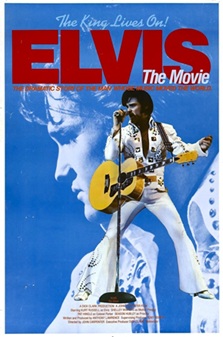
Made for television, it was the first of many biopics to be made about the King of Rock and Roll. Seeing as how it went into production just a year after Elvis’s death and that its script was vetted and approved by Priscilla Presley herself, it’s not surprising that Elvis doesn’t really delve into the darker aspects of his life. Elvis shoots a television, gets frustrated with his bad movies, and wonders who he can trust but we don’t see him get fat nor do we see him popping pills. The movie ends with Elvis making his comeback in 1969, allowing a happy ending for the title character.
The film was directed by John Carpenter. It was his first film to be released after the monster success of Halloween, though Carpenter actually started work on Elvis before Halloween was released. Though the film’s television origins means there aren’t many examples of Carpenter’s signature style in Elvis, Carpenter does a good job recreating Elvis’s performances and, most importantly, he comes up with a film that holds your interest for three hours.
Finally, the role of Elvis is played by Kurt Russell, who was at the time still struggling to prove himself as being something more than just a Disney star. Russell, who made his film debut kicking Elvis in the shins, throws himself into playing the role and captures the look, the swagger, and the voice of Elvis without ever descending into caricature. His singing voice is dubbed for the performances but Russell is still convincing as the King. It takes skill to wear that white jumpsuit without looking like you’re wearing a bad Halloween costume. While this film showed that Russell was capable of more than just Disney films, it even more importantly launched his friendship with John Carpenter. Escape From New York, The Thing, and Big Trouble In Little China all began with Elvis.
The movie doesn’t really tell us anything that we didn’t already know about Elvis but its entertaining and it has a big, colorful cast that include Pat Hingle as Tom Parker, Shelley Winters as Elvis’s mother, and Bing Russell (Kurt’s father) as Elvis’s father. Priscilla is played by the beautiful Season Hubley, who married Kurt Russell shortly after filming. (They divorced in 1983.) Joe Mantegna, Ed Begley Jr., Ellen Travolta, and Dennis Christopher all appear in small roles and do their part to bring Elvis’s world to life. Elvis is a fitting tribute to the King of Rock and Roll, one that gave Elvis a happy ending and started a great collaboration between a director and his star.
Welcome to Retro Television Reviews, a feature where we review some of our favorite and least favorite shows of the past! On Fridays, I will be reviewing St. Elsewhere, a medical show which ran on NBC from 1982 to 1988. The show can be found on Hulu and, for purchase, on Prime!
It’s another day in Boston.
Episode 1.16 “Monday, Tuesday, Sven Day”
(Dir by Mark Tinker, originally aired on March 1st, 1983)
It’s a busy day at St. Eligius. Here’s a breakdown:
The racial conflict is continuing. Putting a young white man and a young black man in the same hospital room leads to an all-out brawl. Some poor guy walking down the hall on a broken leg gets trampled in the melee. Agck!
A man in a crude astronaut’s uniform shows up at the ER. He doesn’t get any lines but his name tag identifies him as “J. Masius,” which is a reference to one of the show’s writers.
Oh, hey, it turns out that kid who claimed he was jumped by a bunch of black guys actually wasn’t jumped by a bunch of black guys. Instead, his father (Dick O’Neill) beat him up. Dr. Westphall threatens to beat up the kid’s dad. They may be old but they both grew up on the streets of Boston! What is it with old men from Boston and they’re need to threaten each other with fisticuffs?
Dr, Chandler hears another doctor make a racist remake and gets angry. “I keep forgetting he’s black,’ the doctor says.
Dr. Morrison apologizes on behalf of the racist doctor. Chandler tells Morrison that he’ll never understand what it’s like to be black. Morrison agrees but then points out that he only lives two blocks away from Chandler so he does understand what it’s like to live in a poor neighborhood. Uhmm….see, this is why I was kind of dreading watching this show try to deal with racism. St. Elsewhere has been a good show so far but well-intentioned TV writer liberalism is usually the cringiest liberalism there is.
Peter’s wife is pregnant. Peter is not the father. Peter asks a nurse for a loan so that he can pay his wife’s abortion.
By the way, Peter is sleeping with the nurse who unknowingly paid for his wife’s abortion.
There’s no way any of this is going to end well.
A sex worker comes in to get her appendix removed. “I love my job,” Fiscus says after telling her to undress. Ugh, what a pig. I get that guys say stuff like that when they’re talking to each other and that’s fine but you don’t say that to someone when they’re in terrible pain and in the emergency room.
Finally, the show’s best storyline featured Ehrlich going to party at Dr. Craig’s house for a visiting Scandinavian doctor named Sven. Ehrlich brings Shirley Daniels as his date and proceeds to have way too much to drink. This storyline was fun because it highlight William Daniels’s wonderfully sardonic portrayal of the abrasive Dr. Craig. I love that Ehrlich is both terrified of and desperate to impress him. Drunk Ed Begley, Jr. was definitely this episode’s highlight.
This was an okay episode. It wasn’t the most memorable that I’ve seen but I did enjoy that terrible party at Dr. Craig’s house. Terrible parties are always so much more fun to watch than good ones.
Welcome to Retro Television Reviews, a feature where we review some of our favorite and least favorite shows of the past! On Fridays, I will be reviewing St. Elsewhere, a medical show which ran on NBC from 1982 to 1988. The show can be found on Hulu and, for purchase, on Prime!
It’s another day at the hospital.
Episode 1.14 “Remission”
(Dir by Mark Tinker, originally aired on February 22nd, 1983)
A young Michael Madsen pops up in this episode, playing a hoodlum named Mike O’Connor who brings his severely beaten friend to the hospital. This was Madsen’s first role on television and, in his very first scene and while delivering his very first televised monologue, he drops the N-word as he accuses a group of black men of beating up his friend. Dr. Morrison is worried about whether or not Madsen’s friend is going to lose a kidney. Meanwhile, race relations in Boston are not doing well. What else is new?
(I remember, after the shooting of Michael Brown in Ferguson, there was a commentator who thought he was being clever when he said, “I don’t understand why blacks stay in the South when they could just move to Boston.” The response to his comments served as a reminder that Boston’s history of racism makes some Southern cities seem almost progressive by comparison.)
It’s interesting that Michael Madsen is the second well-known actor to appear on St. Elsewhere as a gang member. Just a few episodes ago, Howie Mandel was chasing Ray Liotta out of the hospital. This particular episode ended with a fight breaking out in the ER between a white gang and a black gang. I assume this will be continued next week so I guess we still have time to see Howie Mandel pull a gun on Michael Madsen. Seriously, it better happen. I’m plotting the upcoming week around it.
Speaking of Dr. Fiscus, he got evicted from his apartment. He was shocked, even though he hadn’t paid his rent in forever. No one wants Fiscus to stay with them but, after Fiscus saved Dr. Ehrlich from getting beaten up in the ER (and no, this was not a part of the gang fight, instead it was a different fight — goldang, Boston’s dangerous! And yes, I gave up cursing for Lent), Ehrlich agrees to let Fiscus stay with him until he gets a new place. I imagine Ehrlich will come to regret that, especially after Fiscus showed up with Dr. Kochar and a homeless guy who had earlier helped them steer a truck out of a traffic jam. What? Don’t ask, it didn’t make much sense on the show either.
Dr. Cavenero has been nominated for a prestigious fellowship by Dr. Auschlander but she’s not sure if she should accept it because the fellowship would be for research and she’s not sure that’s what she wants to focus on. Auschlander has bigger issues to deal with, as he ends up collapsing in the hospital hallway, a result of his liver cancer. The irony that Auschlander, a liver specialist, is dying of liver cancer is not lost on Auschlander and Norman Lloyd did a wonderful job in this episode, portraying not only Auschlander’s frustration but also his gentle humor.
Also, a woman was walking around the hospital and flashing people. She said it was because she wanted to show off that, even in middle age, she still had a good body. That makes sense to me. Played by Janis Page, she was somehow who was fine for a one episode storyline but I’m going to scream if this becomes a multi-episode thing, like it did with Ralph the Birdman.
This was a good episode, even if I get the feeling the whole gang thing is going to be cringey in the way that most 80s television shows tended to be whenever they tried to take on race relations. Norman Lloyd’s heartfelt performance carried the hour. I’m hoping the best for Dr. Auschlander. He’s a character that I would hate to lose.
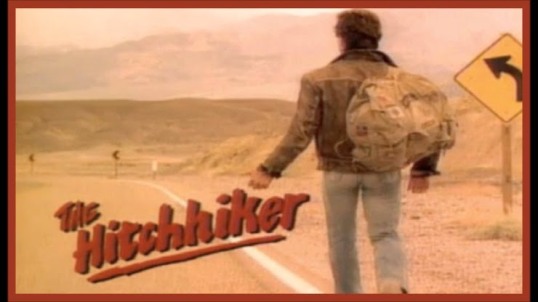
Tonight’s episode of The Hitchhiker features Melody Anderson and David James Elliott as, respectively, a veteran prostitute and a polite young man who seems to be the rare honest person that the guy with the lantern was always looking for. However, someone also happens to be killing men who talk to prostitutes.
This episode originally aired on November 18th, 1989.
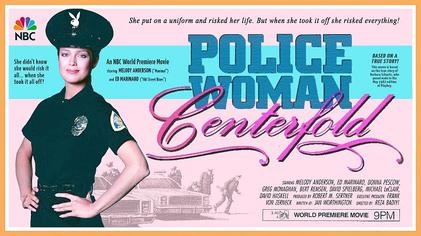
Welcome to Retro Television Reviews, a feature where we review some of our favorite and least favorite shows of the past! On Sundays, I will be reviewing the made-for-television movies that used to be a primetime mainstay. Today’s film is 1983’s Policewoman Centerfold. It can be viewed on Tubi!
Jennifer Oaks (Melody Anderson) is a former wild teen turned cop. While her friends from high school walk the streets, Jennifer rides in a squad car. It’s not always easy. She is one of the only women on the force and the men refuse to take care her seriously, no matter how times she proves herself as a police officer. Recently divorced, she live in a trailer park with her son, Tommy (Jerry Supiran). At the start of the film, her partner informs her that he’s going to be requesting a new partner because apparently, his wife has issues with him working with another woman.
Jennifer’s new partner is Nick Velano (Ed Mariano). “Are you Italian?” she asks him at one point, because I suppose the fact that his name was Nick Velano wasn’t enough of a clue. (For the record, Nick is Italian.) Though Jennifer says that she doesn’t date the people with whom she works, she makes an except for Nick. It turns out that Nick, along with being Italian, is an amateur photographer. After Jennifer says that she’s never felt attractive, Nick snaps a few pictures of her to prove her wrong. Jennifer is so impressed with the pictures that she mails them off to Centerfold Magazine. Nick, of course, is a huge fan of Centerfold, though he insists that he just reads the articles. That said, Nick is not happy when he discovers that Jennifer is going to appear in a pictorial. For that matter, neither is the police department. Neither are Jennifer’s parents. Neither is Tommy, especially after a bunch of older kids beat him up for having an attractive mom. (I’m not really sure what the logic was there.) However, Jennifer finds the experience to be liberating and she refuses to apologize for her decision. When the chief of police attempts to kick her off the force, Jennifer goes to court.
Centerfold Magazine is obviously meant to be a stand-in for Playboy. Of course, when I say that, I mean that it’s a stand-in for the way that Playboy liked to present itself as opposed to the reality. In Police Woman Centerfold, Centerfold is a progressive magazine that only employs the most professional and polite of photographers. In real life, Playboy was a tacky left-over from the late 60s and Hugh Hefner was a creepy old weirdo who lived in a dilapidated mansion and who was notorious for abandoning his models once they had fulfilled their purpose. In Police Woman Centerfold, Centerfold Magazine is so idealized that its portrayal verges on parody. It’s like one of those dreary communist propaganda films, where everyone in the collective can’t stop smiling and singing about how happy they are because there’s someone off camera pointing a gun at their head.
Fortunately, Melody Anderson gave a good performance in the main role, playing Jennifer as someone who had been beaten down by life but who still refused to give up hope for a better future. The film itself may not have always taken Jennifer’s story seriously but Anderson herself did and, as a result, this film a bit better than it has any right to be,
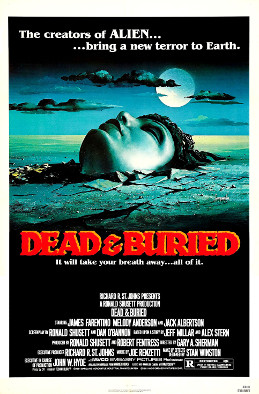
The 1981 horror film, Dead & Buried, takes place in the small town of Potters Bluff. It seems like it should be a nice place to live. The people are friendly. The scenery is lovely. The town is right on the coast of the ocean so the view is great. It’s a bit of an artist’s colony, the type of place where you would expect to find Elizabeth Taylor painting the sunset while Richard Burton battles a hangover in the beach house. It’s the type of small town that used to by very popular on television. It’s just one Gilmore girl away from being an old CW show.
It’s such a nice town. So, why are so many people dying?
That’s the mystery that Sheriff Dan Gillis (James Farentino) has to solve. Actually, it’s one of the many mysteries that Dan has to solve. There’s also the mystery of why his wife, Janet (Melody Anderson), has been acting so strangely. And then there’s the mystery of what happened to the person who, one night, Dan ran into with his car. The person ran away but he left behind his arm. When Dan gets some skin from the arm analyzed, he’s told that the arm belongs to someone who has been dead for at least four months!
Who can explain all of this? How about William G. Dobbs (Jack Albertson), the folksy coroner who seems to enjoy his work just a little bit too much. In fact, Dr. Dobbs seems to be a bit more than just a tad eccentric. One would necessarily expect a coroner to have a somewhat macabre view of life but Dr. Dobbs seems to take things to extreme. Is it possible that Dr. Dobbs knows more than he’s letting on?
Dead & Buried has a reputation for being something of a sleeper, a deliberately-paced and often darky humorous horror film that had the misfortune to be released at a time when most horror audiences were more interested in watching a masked man with a machete kill half-naked teenagers. Because the studio wasn’t sure how exactly to market Dead & Buried, it failed at the box office and it was only years later, after it was released on home video, that people watched the film and realized that it was actually pretty good. And make no mistake about it, Dead & Buried is a fairly clever horror film, one that is full of effective moments and which does a good job of creating a creepy atmosphere. If I’m not quite as enthused about this film as others, that’s because I do think that it’s occasionally a bit too slow and the film’s twist ending, while well-executed, didn’t particularly take me by surprise. This is one of those films that you enjoy despite the fact that you can see the surprise conclusion coming from a mile away.
In the end, Dead & Buried fills like a particularly twisted, extra-long episode of one of those old horror anthology shows, like Night Gallery, Twilight Zone, or maybe even Ghost Story. It’s a nicely done slice of small town horror, featuring a study lead performance from James Farentino and an enjoyably weird one from Jack Albertson. Though the film is not heavy on gore, Stan Winston’s special effects are appropriate macabre. Even if it’s not quite up there with Gary Sherman’s other films (like Vice Squad and Death Line, to name two), Dead & Buried is an entertainingly eccentric offering for Halloween.
 Through the Shattered Lens