14 Days of Paranoia #10: The Brotherhood of the Bell (dir by Paul Wendkos)


First aired on television in 1970, The Brotherhood of the Bell tells the story of Andrew Patterson (Glenn Ford).

Andrew Patterson is a widely respected economics professor.  He is an influential academic, one who has a nice house, a beautiful wife (Rosemary Forsyth), and a father-in-law (Maurice Evans) who owns a very successful business.  Patterson is also a member the Brotherhood of the Bell, a secret society made up of successful men who all graduated from the prestigious College of St. George in San Francisco.  Patterson has been a member of the society for 22 years and he’s never really taken it that seriously.  He thinks of it as just being a collection of influential men who enjoy getting together and discussing their vision for the world.

That all changes when the man who brought Andrew to the Society, Chad Harmon (Dean Jagger), gives Andrew an assignment.  The Society wants him to deliver an envelope to his friend, Dr. Konstantin Horvathy (Eduard Franz).  Horvathy is up for a deanship that another member of the Society desires for himself.  Inside the envelope is damaging information that the Society has gathered about the people who helped Horvathy defect to the United States, information that will be made public unless Horvathy withdraws as a candidate.  Reluctantly, Andrew shows Horvathy the envelope.  Horvathy responds by committing suicide.

Stricken with guilt, Andrew decides to expose the existence of the Society but he discovers that won’t be easy.  Almost overnight, Andrew’s perfect life starts to collapse.  He loses his job.  The IRS launches an investigation of his father (Will Geer).  As Chad explains it, the Society is responsible for everything that Andrew has and, therefore, the Society can take everything away.  When Andrew goes public, he’s dismissed as just being paranoid and soon, Andrew truly is paranoid.  With his marriage in ruins, Andrew goes on a talk show and can only watch helplessly as his claims are dismissed by the host (William Conrad) and as the audience argues about whether or not the Society is a white plot, a communist plot, a Jewish plot, a Catholic plot, or a government plot.  Even the people who believe Andrew are too busy fighting amongst themselves to provide any help for him or to stand up to the unified power of the Brotherhood.  The host repeatedly rings a bell during the show, the better to mock everyone’s fears.  The film makes a good point.  Crazed theorists are often a conspiracy’s best friend.

An intelligently written and well-acted film, The Brotherhood of the Bell‘s main strength is the direction of Paul Wendkos.  The lighting gets darker and the camera angles become increasingly more skewed as Andrew’s paranoia grows.  In fact, Wendkos does such a good job of visualizing Andrew’s deteriorating mental state that it’s easy to wonder if maybe everyone is right and all of this really is just happening in Andrew’s head.  Though the film ends on a slightly triumphant note, it’s hard not to feel that it’s a temporary victory at best.  The Brotherhood of the Bell (which I imagine was based on Yales’s Skull and Crossbones) will always be there.

14 Days of Paranoia:

  1. Fast Money (1996)
  2. Deep Throat II (1974)
  3. The Passover Plot (1976)
  4. The Believers (1987)
  5. Payback (1999)
  6. Lockdown 2025 (2021)
  7. No Way Out (1987)
  8. Reality (2023)
  9. Chappaquiddick (2017)

Retro Television Reviews: The Love Boat 3.28 “No Girls for Doc/Marriage of Convenience/The Caller/The Witness”


Welcome to Retro Television Reviews, a feature where we review some of our favorite and least favorite shows of the past!  On Wednesdays, I will be reviewing the original Love Boat, which aired on ABC from 1977 to 1986!  The series can be streamed on Paramount Plus!
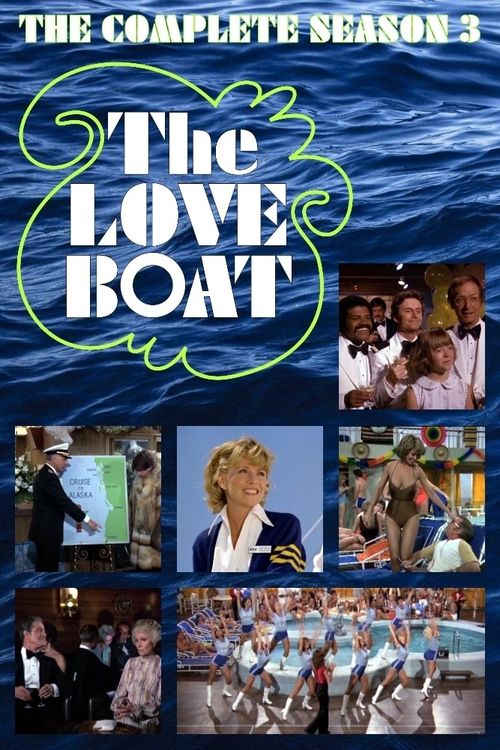
This week, the third season of The Love Boat comes to a conclusion with an extra-long episode!

Episode 3.28 “No Girls for Doc/Marriage of Convenience/The Caller/The Witness”

(Dir by Gordon Farr and Richard Kinon, originally aired on May 3rd, 1980)

The finale of The Love Boat‘s third season features stage legend and two-time Oscar winner, Helen Hayes.  Hayes was considered to be such a big “get” for the show that she receives the zoom lens treatment when she steps onto the ship and all of the action seems to stop for a few minutes, presumably so the audience at home can give her a standing ovation.

Personally, I think Helen Hayes was pretty cool.  Along with being a hell of an actress (one whose career extended for over six decades), she was also the wife of Charles MacArthur, an acquaintance of the Algonquin round table, an outspoken Republican, a strong supporter of many charities, and a major benefactor of the Helen Hayes Hospital, a rehabilitation clinic in New York that has made major strides in treating physical disabilities.  To say that there are people in the world who can walk because of Helen Hayes is not hyperbole.

That said, Helen Hayes’s story is the dullest one on this cruise.  It’s not Hayes’s fault.  She is her usual outspoken and likable self.  It’s just the storyline itself doesn’t offer up much in the way of drama or comedy.  Hayes plays Agatha Winslow, a widow who was married to a friend of Stubing’s.  Stubing asks Julie to set Agatha up with someone but then they see Agatha hugging a younger man and Julie says that it won’t be necessary.

AGCK!  I HOPE NOT!  The younger man is played Helen Hayes’s son, James MacArthur!

No worries.  MacArthur is playing Scott Burgess, who is Agatha’s nephew.  Scott is a member of the protestant clergy who has never married because he feels that he has to take care of Agatha.  Scott and Beatrice Dale (Mildred Natwick) hope that Agatha will fall in love with and marry Beatrice’s brother, a businessman named Hollister (Maurice Evans).  Hollister owns a carpet company and he spends most of the episode look down at and commenting on the quality of the ship’s floor.  Agatha does not marry Hollister but she does realize that it’s time for her to move on and live her own life.  It’s all very pleasant but not very extremely interesting.

Far more interesting is the story of Gail Padgett (Christopher Norris), a woman who is boarding the ship because she needs to get away from her landline phone.  As she explains to Julie, someone has been calling and harassing her for months.  At no point does Julie suggest what I would suggest, which is that Gail should call the cops.  Indeed, when Gail starts to get calls on the boat, Julie never suggests calling the police or going to the captain or anything else.  Instead, Gail tells her stalker that she’ll meet him at the Pirate’s Cove Bar.  She tells Julie that she has a plan to humiliate him.  And again, you would think Julie might say, “How about we just arrest him when he comes in the bar?”  But instead, Julie smiles.  It’s the Love Boat!  No one is murdered on The Love Boat!  (Not yet, anyway.)

Gail’s stalker is a nerdy fellow named Melvin, who is played by a young Martin Short.  Before Melvin can arrive, Gail is approached by Jack Stander (Larry Breeding).  “Hi, I’m Robert Redford,” Jack says before admitting that he’s not Robert Redford and that he spent hours coming up with that opening line.  Thinking that Jack is her stalker, Gail takes Jack to her cabin where she get him to undress and then tosses all of his clothes out the porthole.  So now, Gail has not only flirted with and then stood up her stalker but she’s also committed theft.  WAY TO GO, GAIL!

Anyway, Gail eventually realizes that Jack is not her stalker and they fall in love.  Melvin is eventually revealed to be the caller but everyone laughs it off because he’s so nerdy.  (Because we all know how harmless nerdy stalkers are….)  This was a really weird story but, despite the stupidity of their characters, Christopher Norris and Larry Breeding made for a cute, likably vapid couple.

Maybe Gail should have gone to Wayne Dobson (Larry Wilcox) for help.  Wayne is an uptight assistant D.A. who has spent the last two months in a hotel room with Pat Bigelow (Catherine Bach), a witness to a crime who is in protective custody.  Even when Pat boards the cruise, Wayne has to come with her and stay in an adjoining cabin.  Pat is annoyed but she understand that Wayne is just doing his job. 

However, Wayne has fallen in love with Pat and he is upset to receive a telegram saying that the crooks have decided to plead guilty and that Pat can be released from protective custody.  Isaac, who was perhaps a bit too excited when he earlier thought Wayne was a male gigolo who was being paid to escort Pat, suggests that Wayne just lie and not let Pat know that her life is no longer in danger.  Wayne agrees and Isaac takes Wayne off to give him a makeover that will be so impressive that Pat will fall in love with him and reject notorious Love Boat lothario Mark Bridges (John McCook).

(Of course, any relationship that Wayne and Pat could ever have would be built on lies but whatever….)

Pat does fall for Wayne, though less because of the makeover and more because Wayne finally stops being so uptight.  She’s a bit miffed when she finds out that Wayne has been lying to her but she forgives him easily because this is The Love Boat.

Finally, after a night of skinny dipping leads to him losing his clothes and money, Doc announces that he’s through with women.  (And again, it doesn’t seem to occur to anyone that maybe Doc should call the police.)  That should be a relief to the crew because Doc really is a lawsuit waiting to happen.  Instead, they takes bets on how long it will take Doc to go back on his word.  It doesn’t take long.  Any story that centered around Doc being a Casanova just felt silly.  Bernie Kopell was likable as Doc but he was also a bit too naturally mild-mannered to be believable as a legendary lothario.

And so ends the third season of The Love Boat.  Vicki is now firmly a member of the crew.  Julie has given up on finding love.  Isaac and Gopher are as silly as ever.  And Doc is going to get the cruise line sued.  The 90-minute finale was a bit overextended and had some weak story elements but, overall, the third season was a lot of fun.  

Next week …. SEASON 4!

Retro Television Reviews: Fantasy Island 2.3 “The Beachcomber/The Last Whodunit”


Welcome to Retro Television Reviews, a feature where we review some of our favorite and least favorite shows of the past!  On Tuesdays, I will be reviewing the original Fantasy Island, which ran on ABC from 1977 to 1986.  The entire show is currently streaming on Tubi!

This week …. Tattoo gets a trumpet!

Episode 2.3 “The Beachcomber/The Last Whodunit”

(Dir by George McCowan, originally aired on September 30th, 1978)

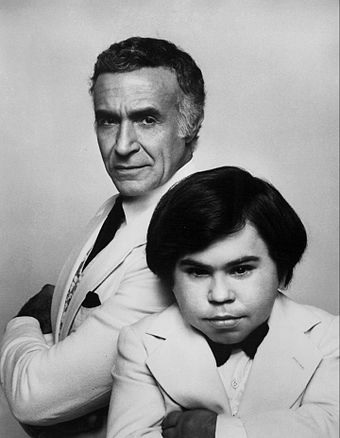
Tattoo is learning how to play the trumpet and Mr. Roarke can barely hide his anger.  That is this week’s Tattoo/Roarke storyline and it rasies a lot of questions about Roarke and Tattoo’s relationship.  Is Roarke upset because Tattoo is a bad trumpet player or does he just dislike Tattoo in general?  Does Tattoo really care about learning how to play the trumpet or is he just looking for an excuse to annoy Mr. Roarke?  I think all of those possibilities may be true at the same time.  If the previous two episodes hinted that Roarke and Tattoo no longer hated each other, this episode seems to confirm that they’re still the frenemies that they’ve always been.  I sympathize with Roarke but it’s hard not to appreciate Tattoo’s determination to be an agent of chaos.

As for the fantasies, Charles Preston (John Astin) is a successful businessman who wants to throw it all ways so that he can spend the rest of his life as a beach bum.  Roarke sets Preston up in a cabin on one of the shabbiest beaches on Fantasy Island.  Seriously, the layout of Fantasy Island is just weird.  A third of the island is a luxury resort.  A third of the island is a magical jungle.  And a third of the island is apparently just a collection of poverty-stricken fishing villages.  Do the people who live on the island know that they could be having a fantasy if they only had the money?  Let’s hope none of them ever pick up a copy of Marx or Piketty. 

Anyway, Preston soon discovers that the life of a beach bum is not as easy as he thought it would be.  For one thing, the chief of the island’s indigenous population demands that Preston marry his daughter.  (The joke is that his daughter is overweight and …. well, it’s all pretty cringey by 2022 standards.)  Meanwhile, a bounty hunter slaps some handcuffs on Preston and threatens to take him back to his family unless Preston pays him $70,000.  “All of you beachcombers have a stash!” the bounty hunter hisses.  Fortunately, Preston’s wife shows up and announces that she’s fine with him being a beach bum, as long as he’s a responsible beach bum who helps to pay the bills.  And that’s the end of that.  What an underwhelming fantasy.

Luckily, the episode’s other fantasy is a bit more entertaining.  Mabel Jarvis (Celeste Holm) loves mystery stories and she wants to spend a weekend as her favorite fictional detective.  Of course, Mabel soon finds herself investigating the real-life murder of Mabel’s favorite writer.  Mr. Roarke explains that the writer was a friend of his and that he hoped Mabel could solve the case.  That seems like a lot of responsibility to put on someone who is just looking for a vacation but, fortunately, Mabel proves to be up to the job.  Anyway, this was a fun little fantasy and, as an avid reader of mysteries, it was one to which I could relate.  Celeste Holm seemed to be having a lot of fun as Mabel and, even more importantly, her cat played a key role in solving the mystery.

This was not a bad episode.  The beach stuff was forgettable but the episode was saved Celeste Holm and Tattoo’s trumpet.

Horror Film Review: Rosemary’s Baby (dir by Roman Polanski)


Rosemarys_baby_poster

“This is no dream!  This is really happening!”

— Rosemary Woodhouse (Mia Farrow) in Rosemary’s Baby (1968)

Yes, Rosemary, it is.

The classic 1968 horror movie Rosemary’s Baby is probably best remembered for a lengthy and wonderfully surreal “dream” sequence in which naive newlywed Rosemary Woodhouse (Mia Farrow) is raped by the Devil while a bunch of naked old people stand around her and chant.  At one point, she sees her husband, Guy (John Cassavetes), saying that she’s awake and that she knows what’s going on.  Their neighbor, Minnie Castevet (Ruth Gordon), tells him that Rosemary can’t hear anything and that it’s like she’s dead and then snaps at him, “Now, sing!”  It’s a great sequence, one of the greatest of Roman Polanski’s career, a perfect blending of horror and dark comedy.

For me, the most interesting part of that dream sequence comes at the start.  Rosemary envisions herself naked on a boat and, as she tries to cover herself, who is sitting next to her?  None other than John F. Kennedy!  Suddenly, Rosemary is wearing a bikini and she’s relaxing out on the deck with a glamorous group of people who I assume were meant to be Kennedy relatives.  As the boat leaves the dock, Rosemary sees that her friend and protector, Hutch (Maurice Evans), is standing on the dock.

“Isn’t Hutch coming with us?” Rosemary asks.

“Catholics only,” John F. Kennedy hisses in that famous accent, “I’m afraid we are bound by these prejudices.”

“I understand,” a dazed Rosemary replies.

And it’s a wonderful little moment, though I have to wonder if I’d react as strong if my own background wasn’t Irish Catholic.  But still, there’s something so wonderfully subversive about a bunch of elderly Satanists pretending to be the Kennedys.

And really, Rosemary’s Baby is a wonderfully subversive film.  I imagine it was even more subversive when it was first released back in 1968.  It’s been ripped off and imitated so many times that it has undoubtedly lost some of its impact.  (That’s one reason why I wish I had a time machine, so I could go back in the past and see it was truly like to see a classic film for the first time.)  But still, 47 years after it was initially released, Rosemary’s Baby is still a surprisingly effective horror film.

The film opens with newlyweds Rosemary and Guy moving into the Bramford, an exclusive New York apartment building.  Guy is an actor who, despite having appeared in two off-Broadway shows (one of which was entitled Nobody Likes An Albatross and really, that is so true) and a few motorcycle commercials, is still waiting for his big break.  There are hints that, before she married Guy, Rosemary had a very active and interesting life (when we briefly meet her old friends, they all seem to be a lot more exciting than boring old Guy) but, when we meet her, Rosemary appears to have happily settled into a life of domesticity.

Life at the Bramford is strange.  For one thing, Guy and Rosemary appear to be the only young people living in the entire building.  (There is a young woman named Terry but she ends up jumping out of a window.)  The Woodhouses befriend elderly Minnie Castevet and her husband, Roman (Sidney Blackmer.)  Roman claims to have traveled all over the world and embarrasses the Catholic Rosemary by criticizing the Pope.  Minnie, meanwhile, is the noisiest person in the world.  Guy makes fun of both of them and, yet, he still decides to spend his free time with Roman.

One day, Guy gets a role that he had previously lost.  Why?  Because another actor is struck by a sudden case of blindness.  Shortly afterward, Rosemary has her “dream.”  She wakes up and discovers that her body is covered with red scratches.  Guy claims that he had sex with her while she was asleep and promises to cut his fingernails.

Soon, Rosemary is pregnant but the Castevets insist that she use their doctor, the firm and sinister Dr. Saperstein (Ralph Bellamy, who just 8 year earlier had played FDR in Sunrise at Campobello).  Rosemary knows that something is wrong with the baby but she can’t get anyone to listen to her.  It all leads to one of the best and most iconic endings in the history of horror cinema.

Rosemary’s Baby is a classic of fear and paranoia and it holds up surprisingly well.  See it this October, whether you’re Catholic or not.

(However, do not see the needless 2014 remake.  Seriously, what the Hell was up with that?)

http://www.youtube.com/watch?v=PewtQsgN5uo

(By the way, is anyone else amazed that I made it through this entire review without making a single joke about either Ronan Farrow or Mia’s lame Sharknado live tweet?  I am shocked.)


A Quickie With Lisa Marie: Planet of the Apes (dir. by Franklin J. Schaffner)


(BEWARE!  SPOILERS!)

With Rise of the Planet of the Apes coming out in August, I figured why not go ahead and review the original Planet of the Apes films.   No, I don’t mean the terrible Tim Burton film.  I’m talking about the old school sci-fi series from the early 70s.  For the next five days, I’ll be reviewing each installment of this landmark series of monkey-centric  Let’s start at the beginning with 1968’s Planet of the Apes.

The plot of Planet of the Apes is pretty well-known.  Arrogant earthman takes off from Earth, goes through some sort of time portal, and crash lands at some point in the far future.  Our “hero” finds himself on a planet where all the humans are mute savages and society is dominated by equally arrogant, talking apes.  (“A planet where apes evolved from man!?”)  Eventually, the Earthman reveals that he can speak, he escapes captivity, and — accompanied by his mute concubine — he enters what the Apes call the forbidden zone.  And, once in the forbidden zone, he discovers “his destiny” as old Dr. Zaius puts it.

It’s difficult to review a film like the original Planet of the Apes because the film itself has become a part of American culture.  Even if you’ve never seen the film, you feel as if you have.  Whether you’ve seen the famous ending or not, you know that it features Taylor (Charlton Heston) on his knees in front of the ruins of the Statue of Liberty, raving and cursing while the mute and confused Nova (Linda Harrison) watches.  Everyone understands the significance of such famous lines as: “Take your stinking paws off of me, you damn, dirty ape!” and “Goddamn you all to Hell!” regardless of whether they’ve actually seen them delivered.

Of course, it can be argued that the fact that the film has become such a part of our culture is proof of the film’s quality.  However, I would argue that the proof of the film’s quality comes from the fact that it remains a watchable and entertaining film despite having become such a part of the culture.  It says a lot that a film can stay enjoyable despite being respectable.

Why does the film still work despite  the film’s main selling point — the surprise ending — being neautralized by the passage of tinme?  A lot of the credit, I think, has to go to the apes themselves.  Even under all that makeup, Roddy McDowall as Cornelius, Kim Hunter as Zira, and especially Maurice Evans as the iconic Dr. Zaius all manage to create interesting and intriguing characters who just happen to be apes.  Before long, you forget about the makeup and instead, you’re more interested in seeing how Zaius is going to handle this latest challenge to his society.

That challenge, of course, comes from Charlton Heston.  Everyone is always quick to make fun of Heston as an actor and it’s true that his range was limited.  Frequently, the men he played came across as the type of chauvinistic, pompous heroes that were never quite aware of the fact that everyone was secretly laughing at him.  And it is true that Heston has several of those moments here in Planet of the Apes.  Even his famous final scene is, to be honest, almost painfully over the top. 

And you know what?

In this film, it works perfectly.  I don’t know if an actor has ever been more perfectly cast than Charlton Heston was in Planet of the Apes.  In the role of Taylor, Heston basically spends the entire movie acting like a complete and total pompous ass.  Whether he’s recording a “fuck you” message for Earth at the beginning of the film or if he’s arrogantly dismissing Zaius before entering the Forbidden Zone, Heston comes to epitomize every single thing that we tend to dislike in our fellow human beings.  As played by Heston, Taylor is the perfect clueless hero and a lot of the film’s perverse pleasure comes from watching this paragon of masculinity and superiority repeatedly humbled.

And that, ultimately, is why Planet of the Apes remains a watchable film so many decades after it was made.  Good satire never goes out of style.