Lisa Marie Reviews The Oscar-Nominated Films: Mutiny on the Bounty (dir. by Lewis Milestone)


Mutiny_On_The_Bounty_1962_1

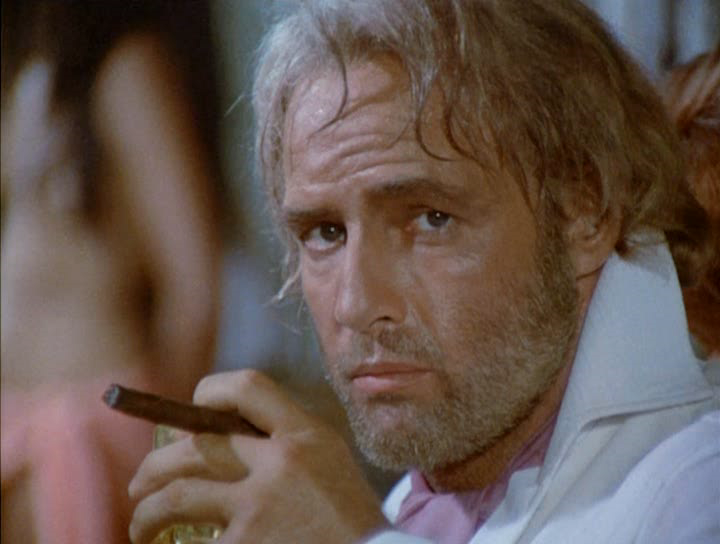
Previously, I reviewed the 1935 Best Picture winner Mutiny on the Bounty, a film that still stands as one of the best adventure films ever made.  However, this was not the only film made about the Bounty to be honored with several Oscar nominations.  In 1962, another version of Mutiny on The Bounty was released and, like its predecessor, received a nomination for Best Picture of the year.  However, while the 1935 Mutiny on the Bounty remains one of the most entertaining films ever made, the 1962 Mutiny on the Bounty is a mess.

As in the 1935 version of the story, we once again follow the HMS Bounty as it sails from England to Tahiti.  Again, the ship’s captain is the tyrannical Capt. Bligh (Trevor Howard) and again, the eventual mutiny is led by Fletcher Christian (Marlon Brando).  While the 1935 version presented Christian as the unquestioned leader of the mutiny, this version features an indecisive Christian who is goaded into leading the mutiny by a seaman named John Mills (Richard Harris).  Whereas the 1935 Fletcher Christian never regretted his decision, the 1962 version seems to regret the mutiny from the moment it occurs and literally spends the rest of the film trying to get the mutineers to agree to return to England with him.

Perhaps the biggest difference between the two versions of Mutiny on the Bounty is that the 1935 version was a 2-hour film that felt shorter while the 1962 remake lasts 3 hours and 15 minutes (including intermission) and feels even longer.  The 1962 version was made at a time when Hollywood was attempting to counteract the influences of European art films and American television by making films that were a thousand times bigger then they needed to be.  Whereas the 1935 Mutiny on The Bounty was all about telling the story as efficiently as possible, the 1962 Mutiny on the Bounty was about telling audiences, at every possible moment, that they couldn’t see anything like this on television or in some French art film.  Audiences in 1962 may very well have been amazed by the endless shots of Tahitians dancing and the Bounty rocking on the ocean but, for modern audiences, the entire film just feels incredibly slow and padded.

Another major difference between the two versions of Mutiny on the Bounty is that Marlon Brando, to be charitable, was no Clark Gable.  Much as Clark Gable could never have been a credible Stanley Kowalski or Vito Corleone, Brando could never have been a convincing Fletcher Christian.  Whereas Gable played Christian as the epitome of masculinity, Brando’s internalized, method approach serves to turn the character into something of a wimp.  It doesn’t help that Brando’s twangy attempt at an English accent sounds like every bad Monty Python impersonation that’s ever been heard in a college dorm room.

The 1962 Mutiny on the Bounty was a notoriously troubled production.  Marlon Brando was reportedly bored with the role of Fletcher Christian (which might explain why he gave such an eccentric performance) and he reportedly used his star status to demand and make constant changes in the script.  The film’s original director, Carol Reed, reportedly quit over frustration with Brando and was replaced by Lewis Milestone.  Milestone, a veteran director who had started his career during the silent era, proved just as ineffectual when it came to controlling Brando.  By the end of the film, Richard Harris was literally refusing to film any scenes opposite Brando.  The end result was that the film went wildly over schedule and over budget.

Despite being reviled by even contemporary critics, Mutiny on the Bounty received seven Oscar nominations, including Best Picture.  The nomination was a triumph for the studio system as MGM reportedly directed all of its employees to vote for the film. That may have been enough to win Mutiny a nomination for best picture but the actual Oscar went to Lawrence of Arabia.

Lisa Marie Does Julius Caesar (dir. by Joseph L. Mankiewicz)


As some of you may know, I’ve spent the past two years on a mission.  It is my goal to eventually see and review every single film that has ever been nominated for best picture.  After taking a few months off, I am now ready to continue that quest.  For that reason, I recently sat down and watched the 1953 best picture nominee Julius Caesar.

Julius Caesar is an adaptation of William Shakespeare’s classic play about political intrigue, assassination, and demagoguery in ancient Rome.  (Technically, what follows is full of spoilers but come on, people — it’s Shakespeare!)  The citizens of Rome love their leader, Julius Caesar (played here by a very imperial Louis Calhern) but a group of senators led by Cassius (John Gielgud) fears that Caesar’s popularity will lead to the collapse of the Roman Republic.  Cassius recruits Caesar’s close friend Brutus (James Mason) into a conspiracy to assassinate Caesar on the Ides of March.  However, once the deed has been done and Brutus has explained the motives behind the assassination to the Roman public, the previously underestimated Mark Antony (Marlon Brando) delivers his famous “Lend me your ears!” speech and soon, the people of Rome turn against the conspirators.  In the end, the conspiracy’s efforts to save the Roman Republic instead leads to the birth of the Roman Empire.

Speaking as someone who loves both Shakespeare and history, it was an interesting experience to watch this particular version of Julius Caesar.  As directed by Joseph L. Mankiewicz (who later revisited the material in the infamous 1963 Best Picture nominee Cleopatra), Julius Caesar present a very traditional (and occasionally stagey) interpretation of Shakespeare’s play.  However, by this point, we’ve become so used to Shakespeare being presented with a gimmick (like modern-day costumes, for instance) that the traditional approach almost feels like something new and unexpected.  That said, Julius Caesar is definitely not the Shakespearean film to show to your friends who stubbornly insist that Shakespeare is boring or impossible to follow.  Julius Caesar was obviously made by people who appreciate Shakespeare and that remains the film’s best audience.  

When Julius Caesar was first released in 1953, it received a lot of attention because of the casting of Marlon Brando as Mark Antony.  An outspoken method actor who had been nicknamed “the mumbler” precisely because of his own internalized style of acting, Brando was considered to be too contemporary of an actor to be an effective Shakespearean.  Once the film was released, critics agreed that Brando had proven that, even while mumbling, he made for an electrifying Mark Antony and that, despite only having a few scenes, his charismatic presence dominated the entire film.  Out of an impressive cast, Brando received the film’s only nomination for acting.

It is true that, even when seen today, Brando does dominate the entire film.  He delivery of Mark Antony’s famous oration over Caesar’s bloody corpse remains one of the best Shakespearean performances to have ever been preserved on film.  It’s odd to watch this young, sexy, and energetic Brando and compare him to the legendary eccentric that we all usually think of whenever we hear the man’s name. 

That said, Brando’s performance would not be half as effective if it wasn’t surrounded by the more traditional (but no less compelling) performances of James Mason and John Gielgud.  Mason brings a brooding intensity to the role of Brutus and Gielgud is the Cassius by which all future Cassiuses must be judged.  Their performances might not be as flamboyant as Brando’s but they’re no less important.  Ultimately, the clash between the acting style of Brando and the styles of Gielgud and Mason nicely parallel the conflict over the future of the Roman Republic.

Julius Caesar won the Oscar for best art design and was nominated for picture, actor, cinematography, and original score.  Brando lost the award for best actor to Stalag 17’s William Holdenwhile the Oscar for best picture of 1953 went to a far more contemporary film, From Here To Eternity.  Brando, however, would win best actor the next year for his performance in On The Waterfront. 

Scenes I Love: Apocalypse Now


It’s been awhile since I put up a scene I love from a film I love. Time to change that and what better way to do it than pick a favorite scene from one of the best films ever made: Apocalypse Now.

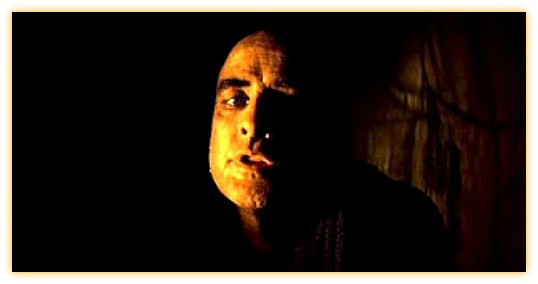
This particular scene occurs in the last act of the film which finally puts Capt. Willard (Martin Sheen) face-to-face with his target in the off-the-reservation Special Forces  commander Col. Kurtz. This is the first time we actually see Marlon Brando in the role of Kurtz in a film that’s been obsessed with his character right from the very beginning. The glimpses we get of Kurtz are fleeting as he remains in the shadows with only his rumble of a voice giving weight to his presence in the scene. I have to admit that even after seeing this film for over a hundred times through the years it’s still pretty difficult to understand some of what he is saying. Yet, when such an occurrence would be a death for a scene it doesn’t for this scene. It only helps highlight just how far down the abyss this former paragon of American military might has put himself in to accomplish a mission given to him by people he dismissively call “grocery clerks”.

There’s no soundtrack to try and manipulate the scene for the audience. It’s just the ambient noises of the jungle and the ancient temple Kurtz and his people have called home. Even the dialogue in the beginning of the scene where Kurtz inquires about where Willard was from was full of menace and hidden dangers. It’s very difficult not to get hypnotized by this scene. There’s not a fake beat to the dialogue between Sheen and Brando. The way the scene unfolds almost acts like a metronome that lulls the viewer until the reveal in the end when we finally see Kurtz’s face in full for the very first time.

Coppola has done great work before this film with hi first two Godfather films but this scene in this film I consider the best he has ever put on celluloid.

Kurtz: Are you an assassin?

Willard: I’m a soldier.

Kurtz: You’re neither, you’re an errand boy, sent by grocery clerks to collect a bill”

Scenes I Love: The Opening of the Godfather


I was recently lucky enough to catch a showing of the classic film The Godfather at the Cinemark West Plano theater down here in DFW and, in honor of that occasion, allow me to present this scene that I love.  This is the opening of The Godfather and it’s one of the best first scenes in cinematic history.  In just a matter of minutes, director Francis Ford Coppola tells us everything that we need to know about Vito Corleone (Marlon Brando) and his business.

Add to that, I love the cat!

What could have been: The Godfather


I don’t know about you but I love to play the game of “What if.”  You know how it works.  What if so-and-so had directed such-and-such movie?  Would we still love that movie as much?  Would so-and-so be a star today?  Or would the movie have failed because the director was right to reject so-and-so during preproduction?

I guess that’s why I love the picture below.  Taken from one of Francis Ford Coppola’s notebooks, it’s a page where he jotted down a few possibilities to play the roles of Don Vito, Michael, Sonny, and Tom Hagen in The Godfather.  It’s a fascinating collection of names, some of which are very familiar and some of which most definitely are not.  As I look at this list, it’s hard not wonder what if someone like Scott Marlowe had played Michael Corleone?  Would he had then become known as one of the great actors of his generation and would Al Pacino then be fated to just be an unknown name sitting on a famous list?

(This page, just in case you happen to be in the neighborhood , is displayed at the Coppola Winery in California.)

The production of the Godfather — from the casting to the final edit — is something of an obsession of mine.  It’s amazing the amount of names — obscure, famous, and infamous — that were mentioned in connection with this film.  Below is a list of everyone that I’ve seen mentioned as either a potential director or a potential cast member of The Godfather.  Consider this my contribution to the game of What If….?

Director: Aram Avankian, Peter Bogdonavich, Richard Brooks, Costa-Gravas, Sidney J. Furie, Norman Jewison, Elia Kazan, Steve Kestin, Sergio Leone, Arthur Penn, Otto Preminger, Franklin J. Schaffner, Peter Yates, Fred Zinnemann

Don Vito Corleone (played by Marlon Brando): Melvin Belli, Ernest Borgnine, Joseph Callelia, Lee. J. Cobb, Richard Conte, Frank De Kova, Burt Lancaster, John Marley, Laurence Olivier, Carlo Ponti, Anthony Quinn, Edward G. Robinson, George C. Scott, Frank Sinatra, Rod Steiger, Danny Thomas, Raf Vallone,  Orson Welles

Michael Corleone (played by Al Pacino): John Aprea, Warren Beatty, Robert Blake, Charles Bronson*, James Caan, David Carradine, Robert De Niro, Alain Delon, Peter Fonda, Art Genovese, Dustin Hoffman, Christopher Jones, Tommy Lee Jones, Tony Lo Bianco, Michael Margotta, Scott Marlowe, Sal Mineo, Jack Nicholson, Ryan O’Neal, Michael Parks, Robert Redford, Burt Reynolds, Richard Romanus, Gianni Russo, Martin Sheen, Rod Steiger**, Dean Stockwell

Sonny Corleone (played by James Caan): Lou Antonio, Paul Banteo, Robert Blake, John Brascia, Carmine Caridi, Robert De Niro, Peter Falk, Harry Guardino, Ben Gazzara, Don Gordon, Al Letteiri, Tony LoBianco, Scott Marlowe, Tony Musante, Anthony Perkins, Burt Reynolds***, Adam Roarke, Gianni Russo, John Saxon, Johnny Sette, Rudy Solari, Robert Viharo, Anthony Zerbe

Tom Hagen (played by Robert Duvall): James Caan, John Cassavettes, Bruce Dern, Peter Donat, Keir Dullea, Peter Falk, Steve McQueen, Richard Mulligan, Paul Newman, Jack Nicholson, Ben Piazza, Barry Primus, Martin Sheen, Dean Stockwell, Roy Thinnes, Rudy Vallee****, Robert Vaughn, Jerry Van Dyke, Anthony Zerbe

Kay Adams (played by Diane Keaton): Anne Archer, Karen Black, Susan Blakeley, Genevieve Bujold, Jill Clayburgh, Blythe Danner, Mia Farrow, Veronica Hamel, Ali MacGraw, Jennifer O’Neill, Michelle Phillips, Jennifer Salt, Cybill Shepherd, Trish Van Devere

Fredo Corleone (played by John Cazale): Robert Blake, Richard Dreyfuss, Sal Mineo, Austin Pendleton

Connie Corleone (played by Talia Shire): Julie Gregg, Penny Marshall, Maria Tucci, Brenda Vaccaro, Kathleen Widdoes

Johnny Fontane (played by Al Martino): Frankie Avalon, Vic Damone*****, Eddie Fisher, Buddy Greco, Bobby Vinton, Frank Sinatra, Jr.

Carlo Rizzi (played by Gianni Russo): Robert De Niro, Alex Karras, John Ryan******, Sylvester Stallone

Virgil “The Turk” Sollozzo (played by Al Letteiri): Franco Nero

Lucas Brasi (played by Lenny Montana): Timothy Carey, Richard Castellano

Moe Greene (played by Alex Rocco): William Devane

Mama Corleone (played by Morgana King): Anne Bancroft, Alida Valli

Appollonia (played by Simonetta Steffanelli): Olivia Hussey

Paulie Gatto (played by John Martino): Robert De Niro*******, Sylvester Stallone

—-

* Charles Bronson, who was in his mid-40s, was suggested for the role of Michael by the then-chairman of Paramount Pictures, Charlie Bluhdorn.

** By all accounts, Rod Steiger – who was then close to 50 – lobbied very hard to be given the role of Michael Corleone.

*** Some sources claim that Burt Reynolds was cast as Sonny but Brando refused to work with him.  However, for a lot of reasons, I think this is just an cinematic urban legend.

**** Despite being in his 60s at the time, singer Rudy Vallee lobbied for the role of the 35 year-old Tom Hagen.  Supposedly, another singer — Elvis Presley — lobbied for the role as well but that just seems so out there that I couldn’t bring myself to include it with the “official” list.

***** Vic Damone was originally cast as Johnny Fontane but dropped out once shooting began and announced that the project was bad for Italian Americans.  He was replaced by Al Martino.

****** John P. Ryan was originally cast as Carlo Rizzi but was fired and replaced with Gianni Russo.  Ryan went on to play the distraught father in Larry Cohen’s It’s Alive.  Russo went on to co-star in Laserblast.

******* Robert De Niro was originally cast in this role but dropped out to replace Al Pacino in The Gang That Couldn’t Shoot Straight.  Pacino, incidentally, had to drop out of that film because he was given the role of Michael in The Godfather.

6 Trailers To Strip Down For


It’s time for another edition of Lisa Marie’s Favorite Grindhouse and Exploitation Trailers.  This week’s edition has no set theme beyond the fact that, in-between typing up the six trailers featured here, I was also trying on different outfits.  Multi-tasking!

1) Performance

From 1970, it’s the debut film of Nicolas Roeg (though technically, he co-directed by Donald Cammell).  Reportedly, acting in this film led to costar James Fox having a nervous breakdown.

2) Twitch of the Death Nerve

This is the trailer for Mario Bava’s infamous, trend-setting giallo.  Bava’s preferred title for this film was Bay of Blood though it was released under several titles, including Carnage and my personal favorite, Twitch of the Death Nerve.

3) The Comeback

This 1978 film is from the criminally underrated director Pete Walker.  The trailer has a similar feel to Lamerto Bava’s A Blade in the Dark.  Who is Jack Jones and was he actually an international singing sensation?  So many questions.

4) The Class Reunion Massacre (a.k.a. The Redeemer)

What an odd little trailer.  It starts out all slasher-like and then suddenly, it decides to go all Omen.

5) The Corpse Grinders

Yup, that’s what it is alright.  From directed Ted V. Mikels.

6) Candy

This trailer is from 1968, which — if you’ve seen the trailer — is kind of one of those “well, duh” facts.  Based on a book by my fellow Texan Terry Southern (hence, the tag line), the film features Walter Matthau, Richard Burton, Ringo Starr, Marlon Brando, and James Coburn all taking advantage of Ewa Aulin (who, much like James Fox in Performance, reportedly had a nervous breakdown as a result of making this film).  The film was directed by Christian Marquand who, years later, would play the main French Plantation Guy in Apocalypse Now Redux.