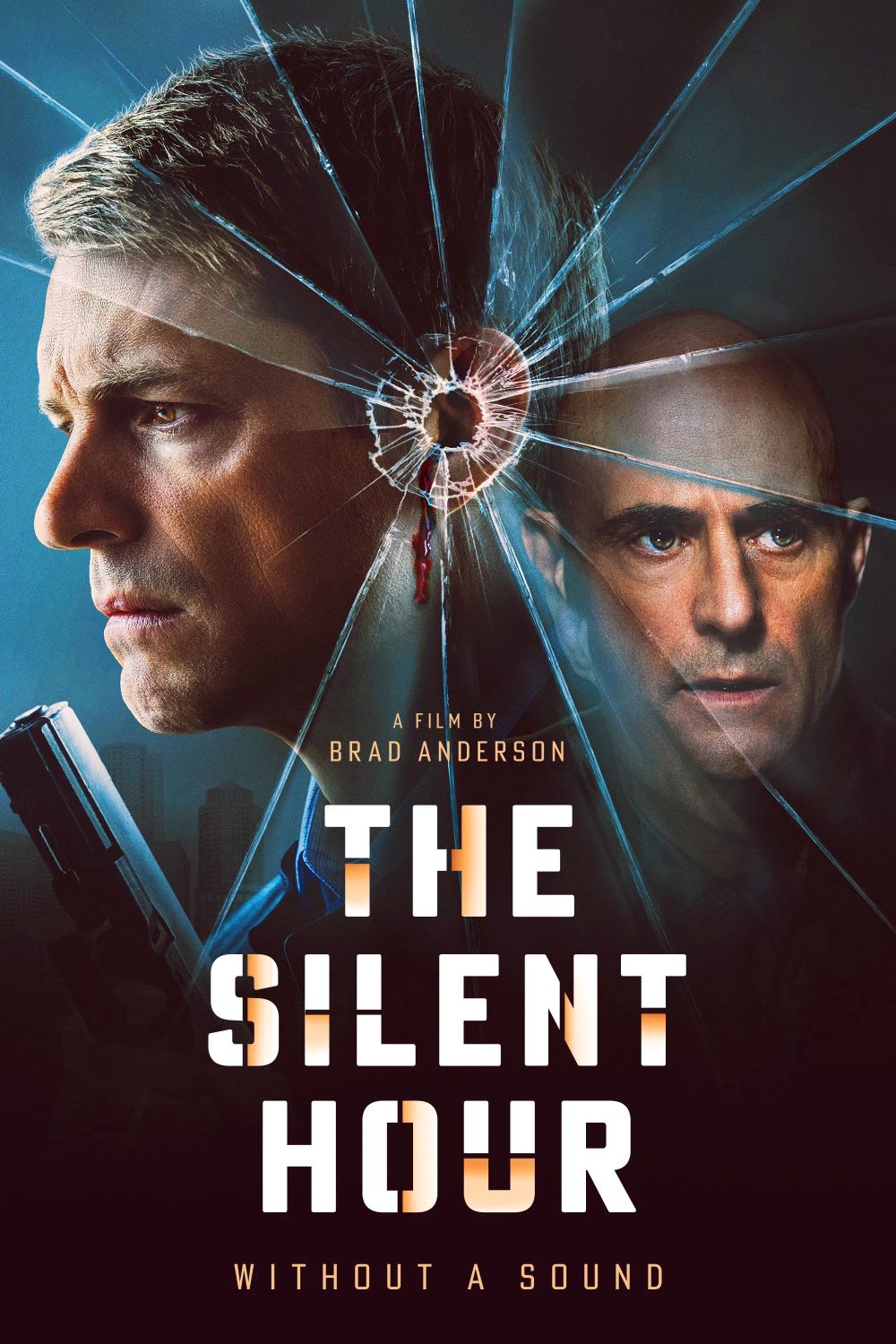
Review: The Silent Hour (dir. by Brad Anderson)


“One missing piece doesn’t make you any less whole.” — Ava Fremont

The Silent Hour is the kind of mid-budget thriller that used to quietly fill up Friday night multiplex lineups, and there’s something refreshing about that. It is not reinventing the genre, but it does just enough with its premise of hearing loss, a deaf witness, and a sealed-off apartment block to feel engaging instead of disposable. When it leans into that sensory angle and the physical geography of the building, it clicks; when it falls back on stock corrupt-cop beats, you can feel the air go out of the room a little.

The setup is straightforward: Boston detective Frank Shaw (Joel Kinnaman) is struggling with permanent hearing loss after an on-the-job accident, trying to find a way back onto the force and into his own life. He is brought in because he knows some sign language and is asked to help take the statement of Ava Fremont (Sandra Mae Frank), a deaf photographer who has video evidence of a brutal gang murder. Once Frank leaves her run-down apartment building, he realizes he forgot his phone, heads back, and walks straight into a hit team sent to silence Ava; the rest of the film traps them inside the almost-condemned complex with a crew of killers who, crucially, they often cannot hear coming.

Director Brad Anderson has always had a knack for tense, contained spaces, and you can feel the same instincts here that powered films like Session 9 and Transsiberian, even if The Silent Hour is more conventional. The apartment block is shot as a grim, half-abandoned maze: flickering lights, long hallways, and just enough remaining tenants to complicate any hope of a clean escape. Anderson stages several sequences as slow, creeping cat-and-mouse instead of wall-to-wall gunfire, which fits the “you can’t hear the danger” concept nicely and gives the movie a more claustrophobic vibe than the plot synopsis might suggest.

Where the film genuinely distinguishes itself is in how it uses sound—or sometimes refuses to use it. Scenes that shift into Frank’s perspective often dampen or distort the audio, letting the score fall away so small vibrations, visual cues, and body language carry the tension, while Ava’s point of view goes further, dropping into near-total silence and forcing the audience to scan frames the way she would. It is not as radical as something like A Quiet Place, but it is effective, and the sound department clearly understands that “absence” can be as expressive as any bombastic action mix.

Kinnaman slides comfortably into this kind of bruised, low-key action role, and here he plays Frank as a guy permanently half a step behind the world around him, frustrated but not wallowing. The script gives him some predictable beats—guilt, self-destructive drinking, a shot at redemption—but Kinnaman sells the physical awkwardness of someone relearning how to move and work while not fully trusting his own body. Sandra Mae Frank is the movie’s secret weapon, though; as Ava, she never reads as a passive victim, and there is a practical, almost sardonic edge to the way she navigates the situation that helps keep the film from turning mawkish about disability.

The dynamic between Frank and Ava is also where the film finds its heart, even if it is pretty lightly sketched. Their communication is messy at first—his sign language is rusty and limited, hers is fast and precise—but that awkwardness becomes part of the tension, because a misread sign or delayed understanding can get people killed in this environment. As they settle into a rough rhythm, the movie quietly nudges Frank toward accepting that his hearing loss is not just a temporary obstacle but a permanent part of who he is now, and Ava is allowed to be more than a symbolic “guide” through that, with her own fears and bad decisions hanging over her.

On the flip side, the actual crime plot is about as standard as they come. The villains are corrupt cops cleaning up a messy murder, and if you have seen more than a couple of thrillers, you will probably guess who is dirty long before the script “reveals” it. There are a few half-hearted attempts at moral compromise and temptation—a hefty bribe, old loyalties—especially around Frank’s former partner Doug Slater (Mark Strong), but the story never digs into systemic rot or moral ambiguity in any meaningful way; it just uses corruption as a convenient engine to keep the bullets and double-crosses coming.

Structurally, the film works best as a series of mini-scenarios inside the building rather than as a twisty conspiracy. You get sequences where Frank and Ava navigate dark stairwells while trying to stay ahead of men they can feel but not hear, tense face-offs in cramped apartments with panicked tenants, and a few well-staged bursts of violence that remind you this is still a pretty nasty situation. The climax leans into fire, chaos, and one last push for survival, and while the resolution lands exactly where you’d expect, the final quieter beats give the characters a bit of closure that feels earned rather than tacked on.

Performance-wise, the supporting cast does its job without stealing the movie. Mekhi Phifer and Mark Strong bring some veteran presence as fellow cops circling around Frank, and even when the writing nudges them toward archetype, they at least feel like people who have known each other for years rather than walking plot devices. The henchmen are more one-note, essentially “the guys with guns” hunting through the building, but the film leans on their physicality and menace instead of trying to give everyone a tragic backstory, which is probably the right call for a lean thriller like this.

If there is a frustration here, it is mostly about missed potential. The core hook—two people with hearing loss trying to survive in a sound-dependent cat-and-mouse game—is strong enough that you can imagine a slightly sharper script pushing much harder on point of view, communication breakdown, and the way the police institution treats disability. Instead, The Silent Hour uses those elements as flavoring around a very familiar skeleton, resulting in a movie that is solid and sometimes gripping but rarely surprising.

Taken on its own terms, though, The Silent Hour is a tight, competently staged thriller that understands how to milk a confined space and an offbeat sensory angle for suspense. The running time is under two hours, the pacing stays brisk, and there are enough well-executed set pieces and committed performances to make it an easy recommendation if you are in the mood for a darker, low-key action night. It will not stick with you the way the very best of Brad Anderson’s work does, but as a late-night watch with the lights down and the volume doing most of the heavy lifting, it gets the job done.
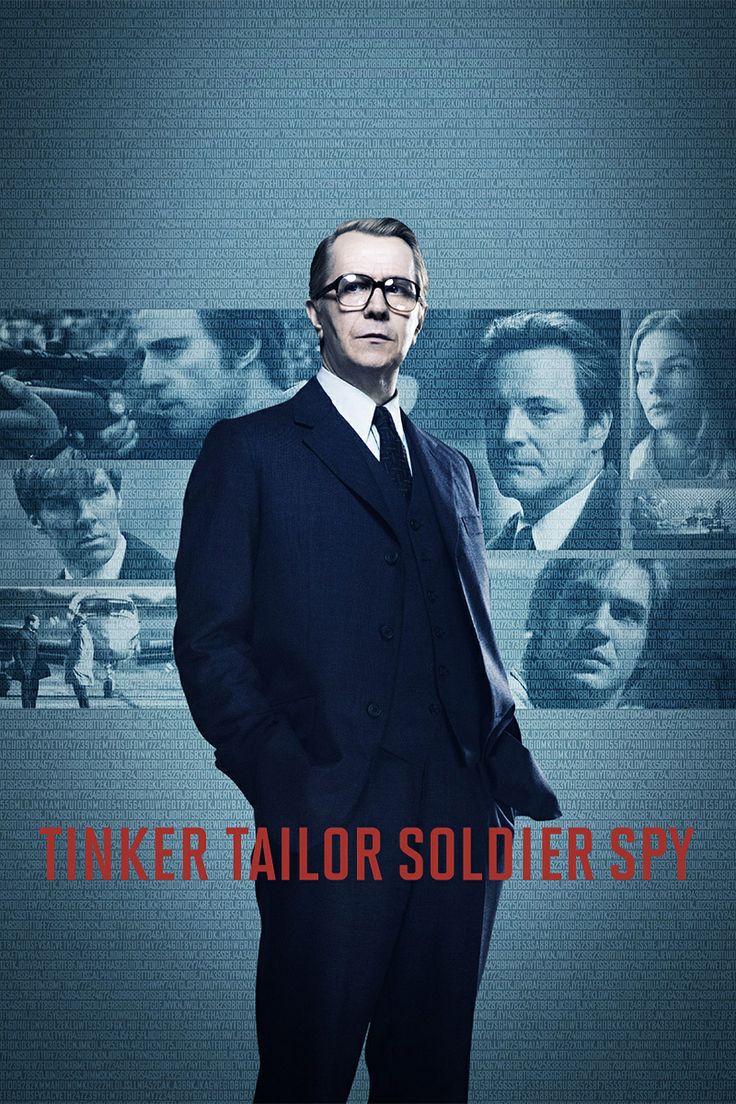
Review: Tinker Tailor Soldier Spy (dir. by Tomas Alfredson)


“We are not so very different, you and I.” — George Smiley

Tomas Alfredson’s Tinker Tailor Soldier Spy (2011) is a cold, coiled, and relentless march into the gray, rain-lashed corridors of British espionage—a film that exchanges Bond’s swagger for bureaucratic unease, where information is traded like poison and every conversation feels weaponized. The film is sheer confidence: so sure of itself, it expects you to keep up, get lost, and piece the puzzle together from the hushed fragments left in close-up reactions and glances across smoke-filled rooms. This is spy cinema not as spectacle, but as slow-burning existential puzzle.

A key element of the film’s mood is its distinctive brutalist aesthetic, which powerfully evokes the Cold War mentality not only behind the Iron Curtain but also in the West. Alfredson and cinematographer Hoyte van Hoytema immerse viewers in a London setting defined by greying, tired walls, bleak drizzle, and decaying interiors that feel as cold and institutional as the very espionage world they depict. This use of brutalism—with its bare concrete textures, utilitarian spaces, and sense of institutional decay—does more than create atmosphere; it visually projects the emotional and material exhaustion of a Britain entrenched in paranoia and internal rot. The characters seem physically and emotionally hemmed in by these spaces, reinforcing the film’s themes of secrecy, alienation, and moral corrosion.

There are no car chases or shootouts to speak of—just a masterclass in stillness where tension arises from precisely what remains unspoken. The film is closer to an autopsy than a thriller, dissecting the social and emotional costs of lives devoted to deception. It begins with a botched operation in Budapest—Jim Prideaux (Mark Strong), one of “the Circus’s” best agents, is captured in a tense, almost wordless scene that sets a tone of brooding unease. The fallout leads to a purge of the leadership, with Control (John Hurt) forced out and George Smiley (Gary Oldman), his quietly watchful confidant, retired—though soon to return for an unofficial mole hunt.

From there, the narrative unfolds elliptically, like a mosaic of recollections and betrayals, requiring viewers to assemble the truth from fractured glimpses. Gary Oldman’s Smiley is the film’s anchor—his performance a masterclass in minimalism and subtext. He’s the ultimate observer, haunted by decades of institutional compromises and personal betrayals.

The supporting cast is nothing short of exceptional, elevating the film through richly textured performances that bring vibrant life to an otherwise reserved script. Colin Firth as Bill Haydon delivers a quietly magnetic portrayal, his charm barely concealing the complexity beneath. Tom Hardy’s Ricki Tarr injects raw energy and restlessness, perfectly contrasting the film’s restrained atmosphere. Benedict Cumberbatch’s Peter Guillam is adept at conveying subtle shifts in allegiance and tension, his nuanced portrayal deepening the intrigue. John Hurt’s brief but potent presence as Control exudes weary gravitas, setting the tone for the murky world of espionage. Mark Strong as Jim Prideaux balances stoicism with vulnerable humanity, particularly in moments laden with pain and regret. Other supporting actors such as Ciarán Hinds, Toby Jones, and Kathy Burke contribute layered, compelling portrayals of individuals trapped within the machinery of the Circus. What binds these performances is a reliance on subtlety—expressing volumes through nuanced gestures and lingering silences, the cast anchors the complex narrative in a palpable human reality.

At its core, Tinker Tailor Soldier Spy is less a whodunnit than an exploration of institutional decay and emotional repression. The brutalist aesthetic mirrors this decline: just as the concrete and ochre walls close in on the agents, so too does the film reveal a Britain worn down by secrets and internal contradiction. Love and loyalty are liabilities in this world where everyone is alienated. The story’s emotional heart revolves around the search for a deeply embedded mole within the Circus—an elusive betrayal that shakes the organization to its core. The film carefully avoids easy reveals, maintaining a deliberate tension and exemplifying the emotional cost that the espionage game of the era had on everyone involved.

The film also explores themes of repressed queerness, class stratification, and misogyny, linking these to the numbing demands of espionage. The gloomy visuals and tightly controlled dialogue echo the emotional constraints on these men, underscoring that beneath the seemingly impenetrable exterior lies a fragile, fragile human cost.

This film is not an easy watch. Its elliptical storytelling, coded conversations, and subtle body language demand patience and multiple viewings. Yet that opacity is part of its power—uncertainty and not-knowing become central to the experience, enhanced by Alberto Iglesias’s restrained score and the claustrophobic mise-en-scène. Unlike many spy films, Tinker Tailor Soldier Spy is about process and detection, not action or glamour. Its cold, meticulous pacing trades on the cerebral seduction of uncovering hidden truths rather than adrenaline-fueled confrontations.

Ultimately, the film refuses easy resolutions. Though Smiley uncovers the mole and the Circus is superficially restored, there’s no real victory—only the acknowledgment of profound damage, both personal and institutional. The brutalist setting, with its unyielding, somber lines, stands as a perfect metaphor for this unresolved tension. Tinker Tailor Soldier Spy is a masterclass in unease and ambiguity, a film that stays with you because it reveals what you’ll never fully know about loyalty, betrayal, and the cost of secrets in a world where the line between friend and enemy is always blurred.

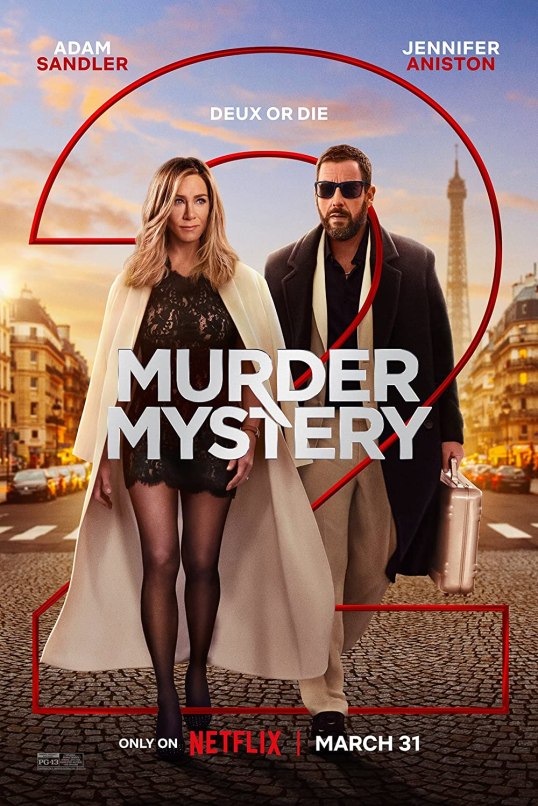
Film Review: Murder Mystery 2 (dir by Jeremy Garelick)


Four years ago, Nick and Audrey Spitz (Adam Sandler and Jennifer Aniston) solved a convoluted murder mystery and became minor celebrities.  Nick quit his job with the NYPD.  Audrey quit her job as a hairdresser.  They opened up their own private detective agency.

Unfortunately, as a narrator explains to us at the start of Murder Mystery 2, things haven’t gone smoothly for Nick and Audrey.  They’ve struggled to establish themselves as detectives.  In fact, Nick doesn’t even have a P.I. license because he has yet to pass the exam and he balks at having to actually study criminology.  While Audrey tries to convince him to, at the very least, read a book on kidnapping, Nick is more concerned with coming up with cute business cards.  His big idea to combine the traditional business card with floss and a razor.  Personally, I wouldn’t want to use a business card to take care of my teeth but maybe that’s just me.

When Nick and Audrey are invited to an exclusive wedding, it’s a chance for them to reacquaint themselves with Vikram (Adeel Akhatar) and Colonel Ulenga (John Kani), both of whom were featured in the first Murder Mystery.  When Vikram is kidnapped and one of his bodyguards is murdered, it’s a chance to Nick and Audrey to once again prove that they’re capable of solving a crime.  When former MI6 agent-turned-security consultant Captain Miller (Mark Strong) literally emerges from the sea and takes over the investigation, it’s a chance to Audrey to meet one of her heroes and for Nick to get a little jealous.  And when the action moves to France, it’s an excuse for the film’s cast and crew to hang out in Paris for a few weeks.

I enjoyed the first Murder Mystery, which was a surprisingly sweet and funny comedy that showcased Sandler and Aniston’s chemistry while also make good use of Sandler in one of his more likable comedic roles.  Like all Sandler characters, Nick may be something of a manchild but he’s not deliberately destructive.  He means well.  The first film’s mystery was enjoyably convoluted and a lot of the humor came from just how out of place Sandler and Aniston were in an Agatha Christie-style whodunit.

Murder Mystery 2, unfortunately, it not quite as much fun as the first film.  A huge part of the problem is that Nick and Audrey are no longer amateur detectives who are both shocked and secretly thrilled to be solving an actual murder.  Now, they’re professional (if somewhat incompetent) detectives.  The first film had a sweet subtext about Sandler trying to prove that he was as good a detective as thought he was.  He had something to prove, to both his wife and to himself.  In the second film, the emphasis is more on action than humor.  Suddenly, Sandler and Aniston are engaging in high-speed car chases and battles atop the Eiffel Tower.  It all feels a bit mechanical and, much as with his direction of The Binge, director Jeremy Garelick often seems to just be going through the motions.

On the plus side, Sandler and Aniston still have their chemistry and both of them still know how to make an otherwise corny joke work.  Jennifer Aniston gets to wear a lot of really pretty outfits and Adam Sandler gets a memorable scene where he tries to convince himself that he can jump over a moat.  There’s a genuinely funny moment towards the end of the film, when a character unrelated to the mystery randomly shows up and interrupts a tense showdown.  Even though I wish the film had done a bit more with character, Mark Strong also seems to be having parodying his own image.  There are moments of Murder Mystery 2 that are actually pretty amusing, though I think chuckled more than I actually laughed out loud.  Ultimately, though, Murder Mystery 2 is rather forgettable.

Cruella steps into the spotlight with a new Trailer


Disney’s had some success with focusing on their villains lately. With Angelina Jolie’s turn as Maleficent having done well, it’s time for another classic enemy to take the stage. Academy Award Winner Emma Stone (La La Land) is Disney’s newest Cruella DeVille, the nemesis to all 101 Dalmatians. This film looks like it’s a prequel, focusing on how Cruella came into power and possibly why she despises spotted dogs so. The cast includes Mark Strong (1917), Emma Thompson (Late Night), Paul Walter Houser (Richard Jewell) and Dev Patel (Lion)

Cruella is directed by Craig Gillespie, who is known for I, Tonya, The Finest Hours and Fright Night.

The release date is set for May 28, 2021, though no statement on how this will play on Disney+ at this time.

Here’s The Trailer for 1917!


Sometimes, you hear about a film and you just know that it’s either going to be brilliant or it’s going to be disaster.

Take 1917, for instance.  The film is World War I epic and right now, a lot of people are predicting that it’s destined for Oscar glory.  I’m one of those people and I’ve said that despite not having seen the film.  What we do know about the film sounds intriguing.  Apparently, much like Hitchcock’s Rope and Birdman, the film is being put together to appear as if it’s just one, long continuous shot, without any breaks, with the idea being that 1917 is going to an immersive film about the horrors of war.  While the film’s two leads are played by unknowns, supporting roles have been taken by Colin Firth, Mark Strong, and Benedict Cumberbatch.

Sounds pretty good, right?

Here’s my concern.  The film is being directed by Sam Mendes, who is one of the most pretentious filmmakers of all time.  Mendes did brilliant work with Skyfall but have you tried to sit through American Beauty or Away We Go recently?

Anyway, I hope that 1917 lives up to the promise of its premise and that we get the Mendes of Skyfall as opposed to the Mendes of SPECTRE.  The trailer looks good and here it is:

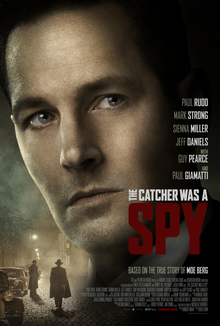
Film Review: The Catcher Was A Spy (dir by Ben Lewin)


I was so impressed with Paul Rudd’s performance in Avengers: Endgame that, last night, I decided to watch another Paul Rudd film, 2018’s The Catcher Was A Spy.

Based on a true story, The Catcher Was A Spy tells the tale of Moe Berg (Paul Rudd).  When we first meet Moe, it’s towards the end of World War II and Moe has been sent behind enemy lines to investigate just how close the Nazis are to building an atomic bomb.  Intelligence suggests that physicist Werner Heisenberg (Mark Strong) is leading the Nazi effort and, if the intelligence turns out to be true, Moe has been ordered to assassinate Heisenberg.  As Moe considers whether or not he’s actually capable of killing a man, we get flashbacks to how Moe eventually ended up working as a spy.

What we learn is that, in the 1930s, Moe Berg was a major league baseball player.  He was a catcher and, though he was never a great player, he was famous for being far more educated than the average professional athlete.  At a time when open anti-Semitism was socially acceptable among America’s upper classes, Moe Berg managed to get an Ivy League education.  Not only does he keep up with current events but he can also speak several languages.  The other players aren’t quite sure what to make of Moe, nor does Moe ever seem to make much of an effort to open up to anyone, including his girlfriend, Estella (Sienna Miller, playing yet another girlfriend in yet another biopic).

Because he can speak Japanese, Moe is selected to be a part of a delegation of players who will be sent to Japan.  While the rest of the players hang out around the hotel, Moe hangs out with an intellectual named Kawabata (Hiroyuki Sanada), discusses inevitably of war, and — for reasons that the film deliberately leaves unclear — decides to shoot a film of Tokyo Harbor.

Five years later, with the United States now at war with the Axis powers, it’s that film that leads to Moe getting a meeting with the head of the Office of Strategic Services, Bill Donovan (Jeff Daniels).  No longer a baseball player and apparently bored with coaching, Moe wants to become a spy.  Donovan notes that Moe has never married and asks him flat out if he’s gay.  Moe smiles slightly and says, “I’m good at keeping secrets.”

And indeed, he is!  Unfortunately, Moe is so good at keeping secrets that we never quite get into his head.  It’s hard not to compare this film to the superficially similar The Imitation Game.  But whereas that film made you feel as if you were seeing the world through Alan Turing’s eyes, The Catcher Was A Spy always seems to be standing outside of Moe Berg.  In the film’s final title cards, it refers to Moe as being an “enigma” and that’s pretty much the way he is throughout the entire film.  We like him because he’s played by Paul Rudd but we never really feel like we know him.  The closest the film comes to suggesting what’s going on inside the head of its main character is when Moe — who has described himself as non-religious — attends a Kol Nidrel service at a Zurich synagogue and, for a few minutes, Moe lets his guard down.  But, for the majority of the film, Moe remains unknowable.

With the exception of one battle scene, it’s also a rather low-key spy film, one that’s more in the style of Tinker, Tailor, Soldier, Spy than SPECTRE.  Again, that may be true to the actual story but, considering that it’s a film about a possibly gay Jew working to take down a homophobic, anti-Semitic war machine, it’s still hard not to regret the film’s lack of big “stand up and cheer” moments.  Clocking in at a rather brisk 97 minutes, it’s hard not to feel that there’s some big pieces missing from the film’s story.

Here’s the good news: Paul Rudd proves himself to be a thoroughly charismatic leading man in this film, showing that he can hold the audience’s attention even without special effects or a punch line.  Rudd does an excellent job playing a character who, to be honest, has very little in common with what we may think of as being a typical Paul Rudd role.  Rudd is always watchable, even while Moe Berg remains an enigma.  Hopefully, Rudd will get more opportunities in the future to show us what he’s truly capable of doing as an actor.

Lisa Reviews An Oscar Nominee: The Imitation Game (dir by Morten Tyldum)


The 2014 film, The Imitation Game, takes place in three very different time periods.

The majority of the film takes place during World War II.  While the Germans are ruthlessly rolling across and conquering huge swaths of Europe, the British are desperately trying to, at the very least, slow them down.  A key to that is decrypting the secret codes that the German forces use to communicate with each other.  Since the Germans change the code every day, the British not only have to break the code but also predict what the next day’s code will be.

Working out of a 19th century mansion called Bletchley Park, a small group of mathematicians, chess players, and spies work to design a machine that will be able to decode the German messages.  Heading up this group is a man named Alan Turing (Benedict Cumberbatch).  Alan is a remote and, at times, rather abrasive figure, a man who appears to be more comfortable dealing with equations than with other human beings.  The people working under him occasionally chafe at Alan’s lack of social skills.  Commander Denniston (Charles Dance) suspects that Alan’s a Russian spy and would just as soon close down the entire operation.  At first, the only person who seems to have any faith in Alan’s abilities appears to be Winston Churchill himself.

It’s only when Joan Clarke (Kiera Knightley) joins Alan’s team that they start to make progress.  Joan brings Alan out of his shell and teaches him how to deal with other human beings.  When Joan’s parents object to her being away from home, Alan even offers to marry her.  Of course, Alan also explains that it would just be a marriage of convenience, one that will last until they get Christopher up and working.

Christopher is the name that Alan has given to his encryption machine.  Why Christopher?  Throughout the film, we get flashbacks to Alan’s time in boarding school and his close friendship to another student, a boy named Christopher.

And finally, serving as a framing device to both the World War II intrigue and Alan’s relationship with Christopher, is a scene that’s set in 1951.  Alan’s home has been broken into and, as the police investigate the matter, they come to realize that Alan is hiding something about both his past and his present.  Their initial assumption is that Alan must be a communist spy.  The truth, however, is that Alan is gay.  And, in 1951 Britain, that is a criminal offense….

The Imitation Game is based on a true story.  During World War II, Alan Turing actually was a codebreaker and he did play a pivotal role in creating the machine that broke the German code.  After World War II, Turing was arrested and charged with “gross indecency.”  Given a choice between imprisonment or probation and chemical castration.  Turing selected the latter and committed suicide in 1954.  Alan Turing’s work as a cryptographer is estimated to have saved 14 million lives during World War II but he died a lonely and obscure figure, a victim of legally sanctioned prejudice.

Admittedly, The Imitation Game does take some liberties with history.  For one thing, most of the people who worked with Turing described him as being eccentric but not anti-social.  Though the film pretty much portrays the decoding machine as solely being Turing’s creation, it was actually a group effort.  Perhaps the biggest liberty that the film takes is that the machine was never called Christopher.  Instead, it was called Victory.

That said, The Imitation Game is still a strong and effective film.  Anchored by a brilliant lead performance from Benedict Cumberbatch, The Imitation Game is a film that manages to be both inspiring and infuriating at the same time.  It’s impossible not to get caught up in the team’s joy as they realize that they actually can beat the Germans at their own encryption game and, after spending 90 minutes listening to everyone doubt Alan’s abilities, you’re more than ready to see him and his unorthodox methods vindicated.  And yet, because of the film’s framing device, you already know that Alan is not going to get the credit that he deserves for his hard work.  Instead, he’s going to be destroyed by the laws of the very country that he worked so hard to save.  Success and tragedy walk hand-in-hand throughout The Imitation Game and the end result is a very powerful and very sad movie.

I have to admit that it was a bit jarring when the opening credits appeared onscreen and the first words that I read were “The Weinstein Company Presents.”  It’s only been a year and a half since Harvey Weinstein was finally exposed and forced out of power but it’s still easy to forget just how much the Wienstein Company used to dominate every Oscar season.  In many ways, with its historical setting and its cast of up-and-coming Brits, The Imitation Game feels like a typical Weinstein Company Oscar contender.  In this case, The Imitation Game was nominated for a total of 8 Oscars, including Best Actor for Benedict Cumberbatch, Best Supporting Actress for Keira Knightley, Best Director for Morten Tyldum, Best Adapted Screenplay for Graham Moore, and Best Picture.  In the end, only Moore won his category.  In a decision that continues to confound me, the Academy named Birdman the best film of the year.

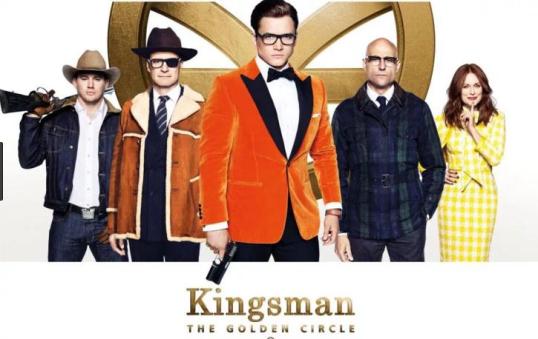
Film Review: Kingsman: The Golden Circle (dir by Matthew Vaughn)


Before I say too much about Kingsman: The Golden Circle, I do want to acknowledge a few good things about the movie.

First off, it doesn’t take long for the film to reveal that Harry (Colin Firth) didn’t actually die when Samuel L. Jackson shot him in the head in the first movie.  Undoubtedly, that diminishes the power of that scene but, at the same time, it also means that Colin Firth gets to come back.

Secondly, Taron Egerton returns as Eggsy.  The script really doesn’t give him too many opportunities to show what he’s capable of as an actor, largely because the character of Eggsy was fully developed by the end of the first movie.  Now that Eggsy is a fully trained and competent Kingsman, there’s not really much for him to do other than trade a few quips and take a few lives.  That said, Egerton is a likable actor and he’s fun to watch.

Third, Julianne Moore has a few fun scenes as the film’s main villain, Poppy Adams.  Poppy is the head of an international drug cartel.  She’s also obsessed with the 1950s and always amazingly cheerful.

Fourth, all of the Kingsmen still wear suits and Michael Caine-style glasses.  Colin Firth gets to use his umbrella as a shield.

Finally, Mark Strong is back as Merlin.

So, that’s five good things about Kingsman: The Golden Circle.  Unfortunately, all five of those things are somewhat obscured by the fact that the movie really, really sucks.

Admittedly, I had really high hopes for the movie.  I loved the first Kingsman film, which was a stylish satire that featured one of the greatest action set pieces of all time.  And I was excited to see that not only was Firth returning but Matthew Vaughn would also be directing the sequel.

But no.  This movie just doesn’t work.

Kingsman: The Golden Circle attempts to do everything on a larger scale than the first Kingsman.  That means more violence, more betrayals, and a longer running time.  This time, the movie not only features the Kingsmen but also the Statesmen, which is the American equivalent of the Kingsmen.  (The Statesmen all dress like cowboys and speak in exaggerated Southern drawls, which I got kind of sick of listening to after about three minutes.)  Along with the returning stars of the first film, Jeff Bridges, Emily Watson, Bruce Greenwood, Halle Berry, and Channing Tatum all have small roles.  Pedro Pascal (best known for playing Oberyn Martell on Game of Thrones) has a much larger role as a Statesman codenamed Whiskey.

Unfortunately, bigger is not always better.  The Golden Circle never comes close to matching the lunatic heights of the first movie.  There are a lot of action scenes but none of them match the church fight from the first film.  There’s a surprise death but it’s nowhere near as shocking or effective as Firth’s “death” in the first film.  Even the required barroom brawl falls flat.  Nowhere does The Golden Circle match the audacity of the first film.  The first film ended with exploding heads.  This film ends with the promise of more sequels.

But really, I think what really doomed The Golden Circle was that extended running time.  There’s really no good reason for The Golden Circle to last for 2 hours and 21 minutes.  Quite a bit of the film, especially during the first hour, felt padded out and, as a result, it seemed like took forever for the film’s story to actually get started.  Probably 40 minutes to an hour could have been cut from The Golden Circle without anyone missing it.

Ultimately, I think the main problem is that the first Kingsman felt like it was made by people who truly did love the material.  This film feels contractually obligated.  The Golden Circle has a lot of action but it’s just not very fun.

Trailer – Kingsman: The Golden Circle


Oh, yes, it’s on!!! Has it been three years already?

Matthew Vaughn’s (Layer Cake, Kick-Ass, X-Men: First Class) MARV Films and 20th Century Fox has released the trailer for Kingsman: The Golden Circle. This time around, it looks like Eggsy (Taron Egerton) is out to solve another global incident with the help of (or is being opposed by) the Statesman. Are they the American version of the Kingsman?

Kingsman: The Golden Circle also stars Julianne Moore, Jeff Bridges (both from The Big Lebowski), Mark Strong (a Vaughn favorite), Halle Berry, Channing Tatum, and Colin Firth.

Enjoy!

Embracing the Melodrama Part II #116: The Young Victoria (dir by Jean-Marc Vallee)


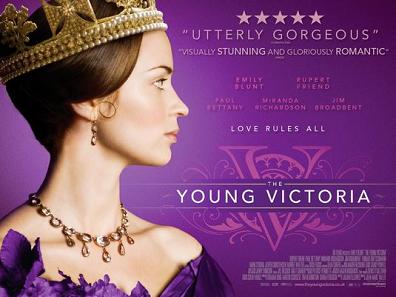
Young_victoria_poster

So, earlier, I was having a conversation with my BFF Evelyn and I discovered that we both have a massive girl crush on Emily Blunt.

And really, can you blame us?

First off, Emily Blunt is incredibly talented.  She’s one of those actresses who can play just about anyone and anything.  I have never heard or seen an interview with her where she seemed to be anything less than intelligent and witty.  She speaks her mind and projects an attitude of not really caring what other people think about her.  Add to that, she’s absolutely gorgeous and she has a body and a face to die for.  If I were to ever get a nose job (and that’s always been a temptation for me), I would definitely tell the surgeon to give me Emily Blunt’s nose.

Evelyn and I also love the fact that Emily Blunt always plays characters who kick ass, often times literally.  Whether it was in Looper or Edge of Tomorrow or the upcoming Sicario, one thing remains consistent.  You simply do not mess with Emily Blunt because she’s a fighter.

Finally, Emily Blunt gets to spend every night with Jon Krasinski!

Seriously, how can you not love Emily Blunt?

Emily Blunt first received attention as the result of supporting turns in The Devil Wears Prada and Charlie Wilson’s War.  Her first starring role — or, at the very least, her first starring role to receive wide distribution here in the states — was in the 2009 film, The Young Victoria.

The Young Victoria attempts to do for Britain’s famous Queen Victoria what Elizabeth did for Queen Elizabeth I.  It attempts to humanize an iconic figure and show that, underneath the popular image of Victorian refinement and emotional repression, Victoria was actually a passionate and headstrong woman.  And the film largely succeeds at doing that because Victoria is played by Emily Blunt.

Unfortunately, The Young Victoria is never quite as interesting as Elizabeth.  Whereas both films feature young queens struggling to prove themselves worthy of leading Britain, Elizabeth benefited from being conceived as a renaissance version of The Godfather.  Elizabeth was full of shadowy conspiracies, ominous whispers, and secrets.  When, at the end of the film, Elizabeth had solidified her hold on the British crown, you felt that she had truly accomplished something and that perhaps her victory was worth living the rest of her life as the Virgin Queen.

Whereas in The Young Victoria, the conspiracies basically amount to smug civil servants assuring themselves that Victoria won’t do something and then being shocked when Victoria does exactly what they weren’t expecting her to do.  And, while it’s undeniably fun to watch Victoria refuse to sign away her power and announce that she can decide for herself what her royal role should be, that’s largely because it’s always fun to watch Emily Blunt stand up for herself.

The majority of the film is taken up with Victoria being courted by Prince Albert (Rupert Friend).  Again, there’s no real conflict in Victoria and Albert’s relationship.  We know that Victoria is eventually going to marry Albert.  And, even when the two have an argument towards the end of the film, you know that they are going to reconcile.  What you may not be prepared for is a scene where Albert is gravely wounded while protecting Victoria from an assassin’s bullet.  That’s because it never happened.  A man did attempt to assassinate Victoria but he failed and Albert was not wounded at all.  But then again, why let history get in the way of a good story?

On the poster at the top of the post, The Young Victoria is described as being “gorgeous.”  And really that’s the main reason to see the film.  The film looks really, really good.  The costumes and the sets are wonderfully ornate.  The cinematography is vibrant and lush.  And Emily Blunt’s performance can rightly be called gorgeous.   By the end of The Young Victoria, you really don’t feel like you’ve learned anything new about Queen Victoria.  But you do appreciate Emily Blunt.