Embracing the Melodrama #48: Coyote Ugly (dir by David McNally)


coyote_ugly

“Never give up on your dreams!” is such a familiar movie cliché that I have to admit that there’s a part of me that really wants to see a mainstream, big budget studio film that proudly declares, “Give up!”  We’ve seen so many films about photogenic people who leave pretty but predictable small towns and end up in big, scary New York City that we pretty much know exactly what’s going to happen as soon as they step off that bus.  They’re going to get robbed.  They’re going to end up at an all-night dinner.  They’re going to meet the lover of their dreams.  They’re going to get quirky friends.  They’re going to become a success.  And, most importantly, they’ll be advised to “never give up on your dreams!”  It’s not that I’m cynical or that I don’t enjoy watching people succeed.  It’s just all so predictable that I found myself yearning for a film that will not slavishly follow the formula.

Unfortunately, 2000’s Coyote Ugly is not that film.  In fact, Coyote Ugly is such a thoroughly predictable film that it’s perhaps not surprising to discover that it’s also a film that’s been embraced by a lot of people.  It never ceases to amaze me how, whenever Coyote Ugly shows up on cable, twitter is full of viewers declaring their love.

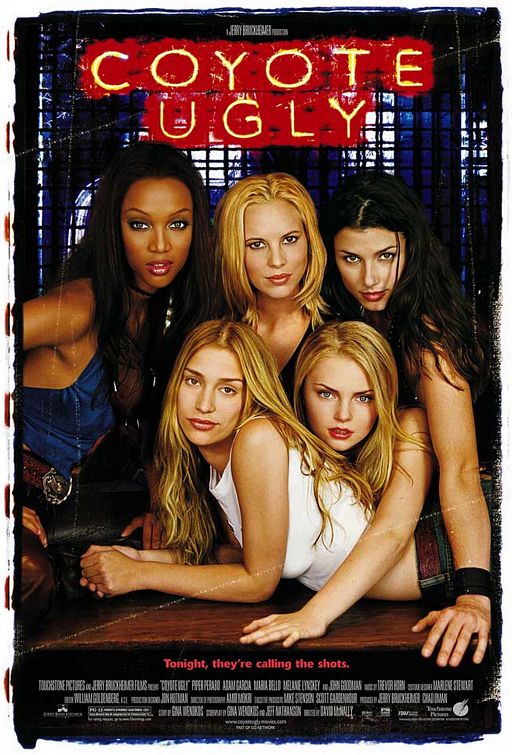
Coyote Ugly tells the story of  Violet (Piper Perabo), who may look like an ordinary waitress from New Jersey but who aspires to be a songwriter in New York City.  As the film begins, she is in the process of leaving her loving but overprotective father (John Goodman) and her best friend (Melanie Lynesky) so that she can move to the big city and never give up on her dream.  Before she leaves, she’s asked to sign a piece of paper so that it can be tacked to the wall of the local pizza place.  It’s a tradition, apparently.  Before anyone leaves town for New York, they’re asked to leave behind an autograph.  The wall is covered with signatures, indicating that apparently every waitress in New Jersey thinks that she’s a songwriter.

Violet moves to New York and, at first, it seems like she might not make it.  Her apartment is a dump and her neighbors get mad whenever she sings.  (Violet responds by setting up a small recording studio on the roof of her building.)  Nobody is willing to listen to her demo.  About the only good thing that happens to Violet is that she meets Kevin (Adam Garcia), an Australian who encourages her to never give up on her dreams.

Eventually, Violet finds herself in one of those all-night diners that always seem to pop up in movies like this.  She notices that the girls seated at a table near her seem both to be happy and to have a lot of money.  It turns out that they work at the Coyote Ugly Saloon and since one of them (played by Tyra Banks, in a cameo) is quitting so she can go to law school, that means that there’s soon going to be an opening at the bar.

After talking to the Coyote’s owner, Lil (Maria Bello), Violet manages to get a job as a bartender.  Along with serving drinks to a combination of hipsters, frat boys, and stock brokers, another part of Violet’s job is to jump up on the bar and dance.  Eventually, she even gets a chance to sing when it’s discovered that the sound of her voice (or, to be technical about it, LeAnn Rimes’s voice since Rimes provided Violet’s singing voice) can somehow inspire drunks to stop fighting and act civilized.  Violet bonds with her fellow bartender Cammie (Izbella Miko) while the other bartender, Rachel (Bridget Moynahan) takes an instant and almost pathological dislike to her.  Lili is tough, Cammie is a flirt, and Rachel likes to set things on fire.  That’s about all we find out about them.

Even when her father disowns her for working at the Coyote and even when she and Kevin have a fight over her extreme stage fight and Kevin’s refusal to talk about his troubled past, Violet never gives up on her dreams!

And, if you can’t guess every single thing that happens in Coyote Ugly before it happens, then you really need to start watching more movies.

Despite the fact that the movie is named after the Coyote Ugly Saloon and it’s full of scenes of Violet and her co-workers dancing on top of that bar, the Coyote Ugly itself is actually pretty superfluous to the overall film.  The film itself is all about Violet pursuing her dream to become a songwriter and the bar itself really doesn’t play that major of a role into her eventual success.  Instead, it’s just a place where she works.  Violet could just as easily have worked at a particularly rowdy Dave and Buster’s and the overall film would have turned out the same.

And that’s a shame because, while watching the film, it’s hard not to feel that a movie about either Lil, Cammie, or Rachel (or, for that matter, a film about Tyra Banks going to law school) would be a thousand times more interesting that any film about boring old Violet.  I mean, here we have a film named after a business that is owned by a woman and that specifically employs and potentially empowers other women and what does the movie do with all of this material?

It tells a story so predictable and so simplistic that it could just as easily been generated by a computer program.

Coyote Ugly is a massive mixed opportunity but, for whatever reason, some people seem to love it.

https://twitter.com/jhali_/status/487998680163561472

And good for them.

ii7t6bbe89ch6tbi

6 Quickies With Lisa Marie: Atlas Shrugged, Beautiful Boy, Crazy Stupid Love, The Devil’s Double, Sarah’s Key, and Water For Elephants


For my first post-birthday review post, I want to take a look at 6 films that I saw earlier this year but, for whatever reason, I haven’t gotten a chance to review yet.  My goal has been to review every single 2011 release that I’ve seen this year.  So far, I’ve only seen 106 2011 films and I still need to review 21 of them.  So, without further ado, let’s “gang bang this baby out” as a former employer of mine used to say. (*Shudder*  Seriously, what a creepy thing to say…)

1) Atlas Shrugged, Part One (dir. by Paul Johansson)

What to say about Atlas Shrugged, Part One?  When I recently rewatched it OnDemand with a friend of mine who had just gotten back from Occupying somewhere, he threw a fit as soon as he heard wealthy 1 percenter Graham Beckel declaring, “I am on strike!”  When I first saw it earlier in the year, in a theater full of strangers, they broke out into applause when they heard the same line.  Atlas Shrugged is a wonderfully divisive film.   If you’re a political person, your enjoyment of this film will probably come down to which news network  you watch. If you enjoy those MSNBC spots where Rachel Maddow won’t shut up about the freakin’ Hoover Dam, you’ll probably hate Atlas Shrugged.  If you truly believe that Fox News is “fair and balanced,” chances are you’ll enjoy it.  But what if you’re like me and the only politics you follow are the politics of film and you only bow at the altar of cinema?  Well, I enjoyed Atlas Shrugged because the film really is a grindhouse film at heart.  It’s an uneven, low-budget film that has a few good performances (Beckel and Taylor Schilling), several bad performances, and ultimately, it goes totally against what establishment films have conditioned us to expect when we go to the movies.  Ultimately, the film is a big middle finger extended at both the film and the political establishments and who can’t get behind that?  Add to that, Roger Ebert hated it and when was the last time he was right about anything?

2) Beautiful Boy (dir. by Shawn Ku)

I’ve read a lot of rapturous reviews of this film online and my aunt Kate loved it when she saw it at the Dallas Angelika earlier this year.  So, admittedly, when I watched this film via OnDemand, I had pretty high hopes and expectations but, unfortunately, none of those expectations came anywhere close to being met.  In the film, two of my favorite performers — Michael Sheen and Maria Bello — play the middle-class parents who have to deal with the consequences (both emotional and physical) of a terrible crime perpetrated by their son.  The film is based on the Virginia Tech massacre and both Sheen and Bello give excellent performances but overall, the film feels like a thoroughly shallow exploration of some various serious issues.  Ultimately, the film’s refusal to provide an explanation for the crime feels less like a brave, artistic choice and more like a cop-out.  The film is less abstract than Gus Van Sant’s Elephant and Denis Villeneuve’s Polytechnique but it’s also a lot less effective.

3)Crazy, Stupid Love (dir. by John Requa and Glenn Ficarra)

I don’t know if I’ll ever forgive Steve Carell for abandoning The Office and forcing upon me the current, almost painful season of the show.  Still, I can’t totally blame him because the guy is totally a film star and he proves it in Crazy, Stupid Love by holding his own with other certifiable film stars like Ryan Gosling, Kevin Bacon, Marisa Tomei, Julianne Moore, and Emma Stone.  In the film, Julianne Moore plays Carell’s wife who leaves him for a coworker (played by Kevin Bacon, doing his charming jerk routine).  The depressed Carell is taken under the wing of womanizer Gosling who teaches Carell how to be more confident and appealing.  Things seem to be working out well until Gosling starts going out with Carell’s daughter (played by Emma Stone).  The movie, itself, isn’t anything special and it’s really kind of a mess but it’s saved by a massively appealing cast.  And, by the way, Ryan Gosling —très beau!  Seriously.

4) The Devil’s Double (dir. by Lee Tamahori)

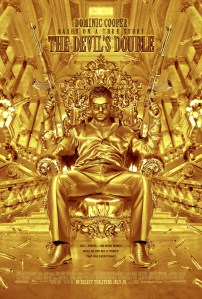
Taking place in pre-Desert Storm Iraq, The Devil’s Double claims to tell the true story of Latif Yahia, an Iraqi who was forced to serve as the double for the sociopathic young dictator-in-training Uday Hussien.  I’ve read that there’s some debate as to how faithful The Devil’s Double is to the facts of the story and it is true that Latif is portrayed as being almost too good to be true but no matter.  The Devil’s Double is a compelling and oddly fascinating little gangster film, one that manages to show the dangerous appeal of the excessive lifestyle of a man like Uday Hussien without ever actually being seduced by it.   The film is dominated by Dominic Cooper, who gives a great performance playing both the tortured Latif and the cheerfully insane Uday. 

5) Sarah’s Key (dir by Gilles Paquet-Brenner)

Sarah’s Key tells two stories at once and, the result, is a film that feels very schizophrenic in quality.  The better part of the film deals with Sarah, a 10 year-old Jewish girl living in Nazi-occupied France.  When Sarah and her parents are sent to a concentration camp, her younger brother is left behind in Paris.  Sarah eventually manages to escape and desperately tries to get back to Paris to rescue her brother.  Meanwhile, in the modern-day, a journalist (Kristen Scott Thomas) researches Sarah’s story and discovers that her French husband’s family has a connection of their own with Sarah’s story.  The film is compelling and heart-breaking as long as it concentrates on Sarah but, unfortunately, the modern-day scenes feel forced and predictable and the end result is a film that’s never quite as good as it obviously could have been.

6) Water For Elephants (dir. by Francis Lawrence)

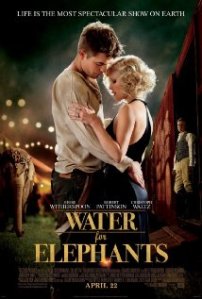
Look, I make no apologies — I freaking loved this movie.  Yes, plotwise, this film feels almost like a parody and yes, so much of this film was over-the-top and kinda silly but I don’t care.  I loved this film for the old-fashioned, melodramatic, and rather campy spectacle that it is.  Robert Pattinson plays a Depression-era Ivy League college student-turned-hobo who ends up joining the circus and falling in love with Reese Whitherspoon, the wife of insane circus owner, Christoph Waltz.  Pattinson isn’t much of an actor but he’s easy on the eyes and he and Whitherspoon have just enough chemistry to remain watchable.  The film, however, is totally dominated by Waltz who is both charming and scary.  The next time your man makes you sit through anything starring Jason Statham, you make him watch Water for Elephants.

Lisa Marie Does The Company Men (dir. by John Wells)


The Company Men is the first film to be directed by veteran television producer and writer John Wells.  Previously, Wells worked on ER, The West Wing, Southland, Third Watch, and a whole host of other shows that I’d rather die than ever have to actually sit through.  With The Company Men, Wells attempts to tell the story of the current economic recession and what its like to go from being a high-paid executive to just another unemployed statistic.  The end result is a deeply uneven film that comes so very close to succeeding but ultimately fails.

The film opens in 2008 and indeed, most of the film takes place in ’08.  It always amuses me how any film that comes out now that deals with either the economy or the wars in the Middle East (the Hurt Locker being an obvious example), the filmmakers always go out of their way to let us know that their movie is taking place during the Bush administration and not the Obama Administration.  Some people would call that “ass kissing” but I just find it to be amusing. 

Anyway, getting back on track here, the films follows three corporate executives who all work for a fictional company called GTX.  There’s a rich, white guy played by Ben Affleck.  And then there’s a richer, white guy played by Chris Cooper.  And then finally, I guess to add some variety to the mix, there’s a white guy who is really, really rich and he’s played by Tommy Lee Jones.  Anyway, Affleck, Cooper, and Jones are all cheerfully doing their thing until one day, the recession hits and boom!  Suddenly, Affleck is told that he has become “redundant.”  He’s given a severance package and sent off on his merry way.  Meanwhile, Cooper worries that he’s about to face the same fate while Jones — who is one of the company’s vice presidents — tries to keep GTX’s satanic CEO from putting anyone else out of work. 

It’s Affleck and his story that commands most of the film’s running time and, to his credit, Affleck actually gives a surprisingly good performance here as he starts out as smug and self-centered before eventually becoming desperate and insecure until finally, by the end of the film, he’s reached a state of acceptance.  A lot of this has to do with the fact that he finally humbles himself into accepting a job with his blue-collar brother-in-law, a homebuilder played by Kevin Costner.

A word about Kevin Costner in this film: I could have done without him.  First off, I understand his character is supposed to be a blue-collar, plain-spoken, salt-of-the-Earth type but honestly, he just comes across like a overlymacho asshole who probably voted for Lyndon LaRouche at some point in the past.  I guess he’s supposed to be John Wells’ version of the noble savage or something.

But with that one glaring exception, The Company Men is a remarkably well-acted film.  Even though Jones and Cooper are saddled playing predictable characters, they both bring a real unexpected poignancy to their portrayals.  Cooper, especially, is strong and always sympathetic even though you know everything that’s going to happen to him from the minute he first shows up on-screen.  Rosemarie DeWitt has the rather thankless role of being Affleck’s wife but she brings a lot of strength to a thinly written character and she and Affleck have a real chemistry.  When they’re on-screen together, you believe in their marriage which is more than you can say for most screen couples.

The cast of The Company Men is such a strong ensemble that you really find yourself hoping (and sometimes even believing) that the overall film will succeed as well.  But, alas, the film fails and it manages to fail for all the obvious reasons.  John Wells is best known for his work in television and The Company Men never really shakes that made-for-TV feeling.  For every scene that offers up an unexpected insight or a subtle piece of characterization, there’s a hundred more that feel glib, smug, and ultimately forced.  For every honest note, there’s a false one waiting right around the corner to pounce on it and beat it into submission.  This is the type of movie where Tommy Lee Jones walks around a deserted shipyard and delivers a monologue about the way things use to be to a character who has absolutely no logical reason for being there beyond the fact that Wells needed to find an excuse for Jones to deliver the whole long speech to begin with.  Don’t get me wrong — Jones delivers the words beautifully but so what?  The scene still feels safe, predictable, and ultimately false.   

And what’s the deal with Maria Bello in this film?  She plays Sally Wilcox who is apparently in charge of “downsizing” at GTX.  She’s also having an adulterous affair with Tommy Lee Jones despite the fact that all Jones ever does is criticize her for even existing.  Never mind the fact, of course, that Jones is a part of the entire corporate culture that’s responsible for the Sally Wilcoxes of the world to begin with.  It’s hard not to feel that her character is there to largely let Jones off the hook.  It’s not Jones’s fault that everyone who works under him ends up unemployed and, in one really obvious plot development, dead.  No, it’s that evil Sally Wilcox with her blonde hair and black lingerie.  And what you can’t blame on Sally, put the blame on Jones’s wife and toss Cooper’s wife in there as well since they’re both portrayed as being heartless wenches (as opposed to DeWitt who is a good wife because she supports Affleck no matter what).  The Company Men is full of sympathy for depressed, self-pitying white guys but it has next to none for the women who have to live with them. 

Wells is obviously trying to say something about the Recession but what?  Obviously, he lays a lot of the blame at the doorstep of greedy CEOs like the one played, in this film, by Craig T. Nelson.  Unfortunately, you get the feeling that Wells seems to think that he’s the only person in the world who has managed to figure out that excessive corporate greed can be a bad thing.  He may think that he’s educating but really all he’s doing is preaching and the only ones listening are the choir.

Review: A History of Violence (dir. by David Cronenberg)


“In this family, we do not solve our problems by hitting people.” — Tom Stall

David Cronenberg’s A History of Violence opens like a familiar American story but soon transforms into something far darker and more complex—a meditation on how violence reshapes identity and reality itself. The film begins in small-town Indiana where Tom Stall, a mild-mannered diner owner, becomes an overnight hero after killing two violent spree killers who attempt to rob his restaurant. These killers—Billy and Leland—serve as the initial violent intrusion that shatters Tom’s peaceful world and propels the narrative forward. Their actions attract the attention of Carl Fogarty, an East Coast mobster whose relentless pursuit gradually forces Tom and his family to confront a buried, violent history. This confrontation unravels the fragile facade of domesticity and sets the stage for the film’s profound exploration of identity, perception, and the primal tensions beneath civilization.

Cronenberg’s direction is a study in restraint and precision. Far from glamorizing violence, the film presents it as brutally efficient and intimately physical. Cronenberg himself described the action sequences as neither choreographed nor aestheticized but raw, unembellished, and quick—realistic portrayals of violence drawn from street-fighting techniques rather than cinematic spectacle. This choice heightens the emotional impact, making every outbreak of violence feel sudden, close, and devastatingly human. The opening extended shot of the spree killers, for example, follows them in a languid, almost eerie calm before revealing their cold-blooded brutality, establishing an unsettling tone early on. Cronenberg’s camera work—often tight and intimate—immerses viewers in moments where violence erupts not as a fantasy but as a harsh reality, forcing the audience to reckon with its consequences rather than its thrill.

Viggo Mortensen anchors the film with a layered performance that seamlessly navigates the duality of Tom Stall—a man striving for peaceful normalcy—and the darker instincts touched by his mysterious past. Mortensen’s portrayal moves fluidly between the affable family man and the capable, restrained force beneath, embodying the film’s exploration of how violence shapes identity and perception. His physicality and subtle shifts in tone reveal a man perpetually caught between two worlds, never fully belonging to either. Maria Bello as Edie complements Mortensen beautifully, delivering a performance rich in emotional complexity. Her character oscillates between nurturer and survivor, revealing a raw, sometimes unsettling vulnerability beneath her composed exterior. Bello’s nuanced acting gives weight to the evolving dynamics of fear, desire, and trust within their marriage, especially evident in scenes that contrast tender intimacy with underlying tension.

The supporting cast enriches the film’s moral landscape. Ed Harris brings a quiet menace to Carl Fogarty, embodying violence as a cold, business-like inevitability rather than a source of pleasure or spectacle. William Hurt’s portrayal of Richie Cusack is especially memorable—his eight-to-ten-minute screen time is electrifying, providing a darkly charismatic figure who embodies familial loyalty intertwined with brutal pragmatism. Hurt’s performance deftly balances charm and cruelty, offering one of the film’s starkest reminders of violence’s cyclical nature within families. These actors contribute to the film’s thematic depth, portraying violence as a heritage passed down and a force that both defines and corrodes.

Cronenberg’s screenplay, coupled with Howard Shore’s minimalist score, emphasizes mood and psychological tension over action set pieces. The film refuses to indulge in excessive gore or prolonged combat; instead, it presents violence as a disruptive force that shatters normalcy and forces internal reckonings. A notable subplot involving Tom’s teenage son and a school bully underscores the generational transmission of violence and fear, reinforcing the idea that violence’s impact extends beyond immediate events to shape social and familial identities.

One of the film’s most powerful effects is the way it forces viewers to reconsider notions of safety, civility, and identity. Tom’s line, “In this family, we do not solve our problems by hitting people,” starkly contrasts with his son’s chilling rejoinder, “No, in this family, we shoot them.” This exchange encapsulates the film’s core tension—the desire to reject violence while simultaneously being shaped by its inescapable presence. Moments of quiet domesticity are undercut throughout by an ever-present undercurrent of menace, illustrating Cronenberg’s thesis that violence is not merely an event but a contagion of perception and reality.

Ultimately, A History of Violence is a film of dualities—between past and present, civility and savagery, love and fear. Cronenberg’s direction delicately balances these tensions, crafting a film that is at once a taut thriller and a profound psychological study. The performances, especially those of Mortensen and Bello, give the film its emotional resonance, while the supporting cast strengthens its examination of violence’s personal and social ramifications. By the film’s haunting conclusion, viewers are left with a haunting question: can anyone truly escape the shadows cast by violence, or are we forever altered by its imprint?