Today saw the release of the red band trailer for the remake of Park Chan-wook’s classic neo-noir Oldboy. This remake by Spike Lee already looks to pay homage (or imitate) the look and feel of Park’s adaptation of the Japanese manga of the same name by Garon Tsuchiya and Nobuaki Mineshigi. We see quick glimpses of the hallway fight scene and a montage of the main character’s 20 years spent locked up in an unknown hotel room.
There’s a great chance for Spike Lee to make this remake his very own by using the Park film as a template but not as gospel. The Park adaptation itself took some liberties with the story told in the manga. Lee and the screenplay by Protosevich could do same to allow this Oldboy a chance to stand on its own instead of becoming another Gus Van Sant Psycho.
Though I wouldn’t mind to see what Lee has in mind as Josh Brolin’s character’s first choice of a meal once getting out.
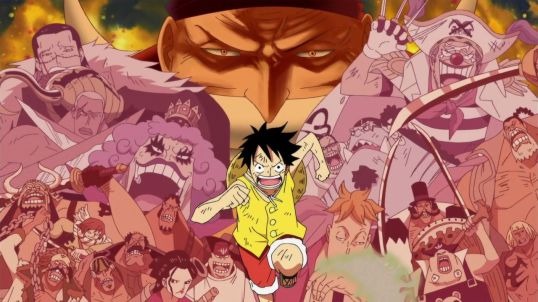
Awhile back site editor pantsukudasai56 wrote that the term “epic” has been overused and lost all its meaning. Everything and everyone has been called epic when most do not truly deserved the label. He did say that if there was anything which truly deserved the label of being “epic” then it would be one of the longest running manga and anime series: Oda Eiichiro’s One Piece.
It’s from One Piece that the latest “AMV of the Day” comes from. To be even more specific it’s from one of the most epic story arcs in the series that the latest chosen AMV originates from: the Marineford Arc (aka Paramount War Arc). It’s a story arc that lasts as long as most anime series (30+ episodes) yet is just a fraction of the current total number of episodes already shown. No other piece of entertainment has had such a long-running success which it continues to this day.
Not much else to say other than watch why this series deserve the title of “epic”.
Anime: One Piece
Song: “Diamond Eyes (Boom-Lay Boom-Lay Boom)” by Shinedown
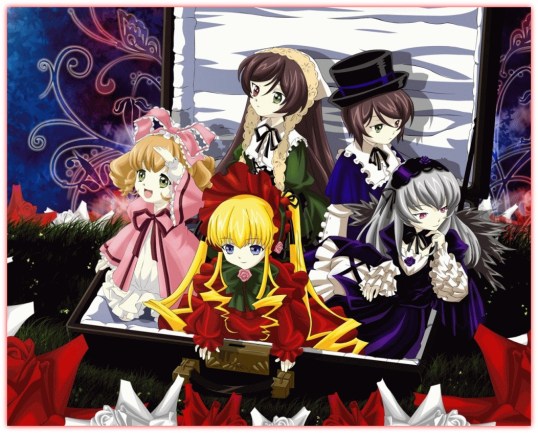
When I first returned to watching anime and reading manga a little over 4 years ago one of the series that I really enjoyed and continue to enjoy since has been the series from the art duo of Peach-Pit. This series about living dolls and one hikikomori boy named Jun Sakurada reminded me that anime wasn’t just cute and disposable entertainment with simple writing. This series wasn’t just cute to look at, but had writing that struck a balance between comedy, drama and, for a series about dolls, it was dark and melancholy.
Rozen Maiden is the name of the series.
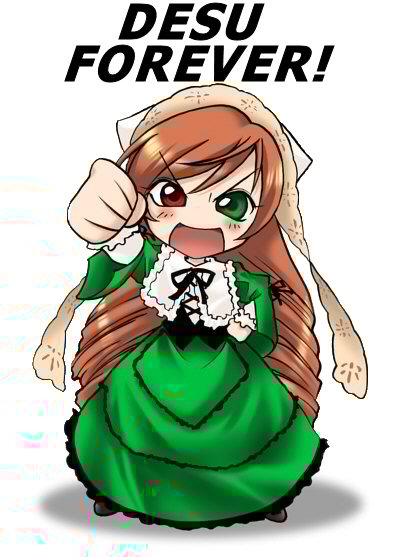
Now comes word that the manga that is still on-going will be receiving a new series (already two seasons and two OVA’s have been released) after almost 6 years of no new anime content. There’s no word of when the new Rozen Maiden series will premiere in Japan and whether it’ll get licensed for a release in North America, but just the news that the project has been green-lit should delight fans of the series. For one thing it’ll mean more desu.
Two posts in one month? What sort of madness is this? Well, I’ve been drinking a lot, so makes sense that I should attempt to ramble here where I have free reign to do so. But never mind that, what’s important here is that in addition to my aforementioned Another, if you’re going to watch another horror anime this month, you should give serious consideration to Hellsing Ultimate.
Now, let’s be clear on one important fact. I’m talking about the OAV series, as opposed to the TV series which came out 3 years prior to the much better OAV series. The main problem with the TV series was that it came out when the manga was proving to be popular, however, Kouta Hirano was a very slow writer. In fact, the manga was only a 10 volume series, yet it ran from 1997 until 2008. For the math challenged among us, that’s 11 years to release 10 volumes of manga. To give you all a very relevant comparison, another series that I’ve wrote about, One Piece, also started in 1997. To date, One Piece has produced 67 volumes. Even if we say that Eiichiro Oda is a freak of nature, most normal mangaka would produce three times what Kouta Hirano did in the same amount of time. The point being that the original TV series came out early on in the run of the manga, so the ending has absolutely nothing like the manga. Now, the OAV series was able to take its time and wait on the source material. Hence, why I’m insisting that if you watch any Hellsing show, you should make it the OAV series. It’s much more faithful to the manga, and while that doesn’t mean the TV series is bad, when compared against the original it just doesn’t hold up.
So, the long and short of Hellsing is that vampires are real. Very real. So what is your average person to do against such a threat? Don’t expect your average army to save you. Oh no, what you need is what the British government has. You need the Hellsing Organization. What makes the Hellsing Organization able to handle these freaks of nature better than your average army? Well, they have themselves a trump card known as Alucard. Anyone that has ever played a Castlevania game should know that name, but if you don’t, well then beware because I”m about to drop a very obvious spoiler on you. See, Alucard is actually Dracula backwards. GASP! So, now do we understand why the Hellsing Organization is badass? But Alucard is not the sort who cares to do all the work himself. Not that he can’t, just he’s not above recruiting those in whom he sees potential. And doesn’t every master want a pupil? That’s largely why he “recruits” Seras Victoria as his student by turning her into a vampire as well. In the TV series, Seras is shown almost as the main protagonist, while in the OAV series she shares the spotlight with Alucard and their boss, Integra Hellsing.
But it’s no fun if the protagonist is unbeatable and has no rival. Well, enter Father Anderson. Not only is he opposed to Alucard, but his group is entirely opposed to the whole Hellsing Organization. See, the Hellsing Organization basically represent the Anglican Church, while Father Anderson represents the Catholic Church. But this isn’t some regular human that miraculously is able to hang with a vampire. Oh no, Father Anderson has a few tricks up his sleeve. I could go on, but I’d say this video best sums up what kind of man he is.
But all that is just a taste of what’s to come. A huge part of the divergence between the TV series and the OAV is that the overall villain is not really described in the TV series. In the OAV, we find out that who the Hellsing Organization is ultimately fighting is not the Catholic Church as was hinted at this that video, but rather remnants from the Nazi party. Yes, if the Nazis had access to this kind of army, World War II might have turned out vastly different. Make no mistake though, this in no way tries to make the Nazi party out to be cool. Every person involved with the Nazis are batshit insane. It’s hard to say that there’s a “good guy” here, but certainly the Nazis are not them. But isn’t that the worst kind of villain? The ones who are fully aware that what they’re doing is pure evil and they just plain don’t care? That’s exactly how the Nazis here are portrayed. They’re not supposed to be misguided idealists, or innocents brainwashed against their will. No, they know what they’re doing, what they represent, yet they don’t care. They love it and embrace it, and they are shown to be completely nuts. And frankly, that’s the only way this could work, because Alucard and the Hellsing Organization themselves are not, nor are they trying to be, paragons of virtue. I mean, they rely on the power of vampires, and while Seras occasionally has some qualms about what she does, Alucard never cares if so called innocents are killed in the pursuit of his enemies. The entire lack of caring for human life makes it very difficult to label any one group as good or evil.
So, I’ll readily admit that as far as “Oh hell, I just wet myself” type of horror goes, this doesn’t really fit the bill. But really, do most people consider Dracula to be a horror movie? Most would. This is in the same vein as that. It’s horror in that “Look at all these people being slaughtered, isn’t that horrible?” sort of way, and not in the freak you out sort. The fact remains that this is a very well written anime. Also, a fun fact is that this shares a link with another manga/anime, High School of the Dead. It may not be readily apparent, but look at the character names in HSotD and then look at the name of the author of Hellsing. See if there are any similarities.
All in all, Hellsing is a very entertaining show, and it could at times be considered gore porn more than a horror anime. But, there’s little doubt that either way it’s definitely an anime worth watching.
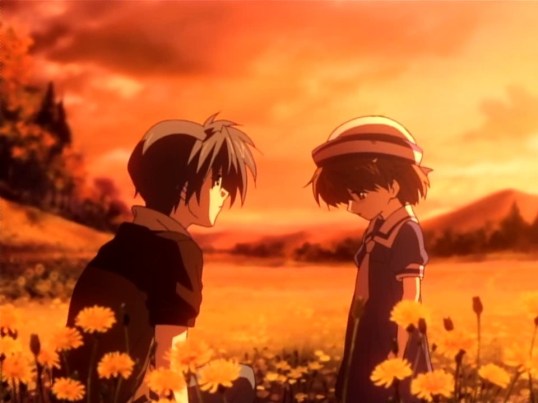
After people see this scene they will think I’m either crazy or a glutton for heartache for loving this scene. It’s hard to disagree with that statement. There’s a reason why I love this scene from the anime series Clannad After Story and it has less to do with the tone of the scene, but a major reason why anime is not just for kids or about boobs, tentacle rape and all the other things adults in the Western media dismiss the art form for.
This scene from Clannad After Story happens between the series’ main lead in Tomoya who has now come to the realization that he must now make amends to the daughter he left behind to be cared for by his wife’s family. It’s a powerful scene that has brought many to tears from young teen girls to grown-ass men who probably bawled more than the former. One doesn’t even have to have seen the previous season to this anime or any episodes leading up to this scene. The moment itself has enough of a backstory that one cannot help but get caught up in the moment. It’s also a scene that does a great job of emphasizing that bond between parent and child even when the former hasn’t lived up to their responsibilities.
I think if more people watched anime like Clannad After Story their opinions of anime would change for the better and see it in a new and positive light.
I never figured out that this little hobby of mine to help pass the time and share my love for writing about films, books, anime, games and other forms of entertainment would last as long as it has. I’ve always thought that when I first began the site that after a couple months I would get tired and bored by it and just let it wither on the vine. But instead of withering it’s actually has grown to include not just myself as a contributor but many others.
I have to say many thanks to some old buddies of mine going as far back as the old FF Gurus stomping ground which turned into the Suikox stomping grounds. I will forever be indebted to necromoonyeti (Shad4K for those who remember him from FFG and Suikox) for not just writing about his love for all things metal, but for the other genres of metal beyond the Metallica, Slayer, Black Sabbath and Megadeth I grew up listening to. Its through his educated and passionate writing about black metal, folk metal and power metal (and many more) that I’ve grown to appreciate the finer points of music.
Sailor Sexy has been a partner-in-crime that I think we may have been twins in a previous life. He’s been the anime and manga dude who may not have been as active but has definitely expanded my own appreciation for Japanese anime and manga. He’s probably helped introduce the artform to many of the site’s readers who have never really experienced anime outside of what’s being shown on Cartoon Network’s Adult Swim. Here’s to hoping he celebrates this milestone with beer and more beer with his pals Tugger and PB at his side.
Other contributors have joined the site in just the past 6 months to help add their unique voices to the growing crew. There’s SemtexSkittle who has become the site’s gaming guru and whose love for gaming surpasses even my own. In addition to his helping write articles and reviews for the site he has also helped me become a better Black Ops player even though I’m probably still the one guy in the team who dies most of the time.
Another contributor who has added his own unique writing style is uberthegeek who shares the same love for all things nerdy and geeky as I do. Then there’s Leonard Wilson who brings his own film reviewing style which shows not just his love for film, but also shows him growing as a writer and hopefully he will continue to write as he finds his true writer’s voice. Another film fan who has joined just recently is leonth3duke who I first met over at a film fan union over on Gamespot. He brings a cineaste‘s appreciation for film that I rarely find when talking with my contemporaries and has been a welcome addition to the site.
The site also has one-time contributors in danceonavolcano and zackthewicked1 whose lone contributions are much appreciated as the ones made by the other writers for the site.
Last, but not least, is the one person who has helped me through the growing pains of the site when it was just months old and who accepted my invitation to write for the site without questions asked on her part: Lisa Marie Bowman. She has been so active in keeping the site always with something new to check out and read that she’s become as much a founder of Through the Shattered Lens as myself. Her love for grindhouse and exploitation cinema surpasses my own. Her unique personal take on films she reviews has made her articles some of the most read one’s on the site and I hope that giving her an outlet to write without restrictions has helped her in whatever small way to open up creatively since she first joined me almost 17 months ago. She’s also the reason for bringing in her sister, Dazzling Erin, to add to the coterie of writers which will only continue to help grow the site beyond what I had first envisioned it to be.
Through the Shattered Lens has been and will continue be a place guided by no rules other than for each contributor to write what they want to write about in regards to entertainment of their choosing. I’ve wanted to keep the site as chaotic and as free of restrictive guidelines as possible. While other sites have succeeded in being more focused on a particular theme or having access to the entertainment industry for news and interviews, I’ve always thought that this site has been a success on its own right because of it’s own chaotic nature. Visitors both new and old will always come in with the expectation that something new, weird and unexpected will greet them as they enter for the first time or the umpteenth time.
Thanks for sticking by us as we reached our first 1000th post milestone. Here’s to hoping you stick around and see us through to the next 1000….
“mahou shoujo” – def. subgenre of Japanese anime and manga involving young girls (usually early to mid teens) with superhuman abilities who either volunteer or forced to fight for good and protect the Earth from destruction.
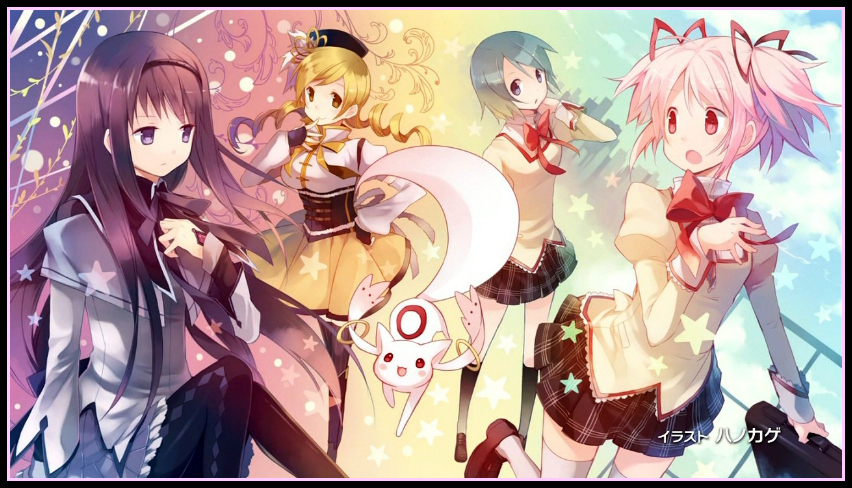
It has been awhile since I’ve profiled an anime series or OVA on the site. The great thing about attending anime/manga conventions is one discovers new anime or manga to obsesse over. This year, after a visit at this past April’s Anime Boston 2011, my latest anime obsession looks to be our latest “Anime of the Day”. My choice happens to be the latest in a long line of mahou shoujo anime series: Puella Magi Madoka Magica.
This series was actually recommended to me by someone on Twitter months ago but I was still hesistant to check it out until recently. It was while doing some last-minute research before heading over to Anime Boston 2011 that I finally latched onto Puella Magi Madoka Magica. This is peculiar since I’m not that much into the mahou shoujo (“magical girl”) subgenre of anime and manga. Fellow site writer pantsukudasai56 is the one who probably knows about this subgenre than I. It didn’t stop me from finally checking it out. Once back from Anime Boston 2011 I went and found all 12-episode of the first season (it’s just been recently announced that there’s to be a second season). I ended up watching all twelve episodes over a week and fell in love with it.
Puella Magi Madoka Magica is about very cute teen high schoolgirls who suddenly get thrust into a world of magic and science. There’s a major character that I always call an anime series’ mascot and this time it’s a creature resembling something crossed between a bunny and a siamese cat. Kyuubei (others spell it’s name Kyubey, Kyubei, QB, etc…) is a very cute creature who will grant a chosen girl any wish they want as long as they enter into a contract with it to become a Puella Magi who is a girl with magical powers to fight evil and witches.
How can you not love this little guy…
The series’ animation and characters actually make it out to be a very cutesy anime. From the playful and gothic lolita-style design of the girls. Even the creature known as Kyuubei was drawn to elicit nothing but “awwwws” and “d’awwwws” from those who first see the initial episodes. But it’s not that which got me to love this series. Unlike most other mahou shoujo series this one actually becomes quite serious after a couple episodes and turns a major corner into becoming quite a dark series. This turn is even more disturbing considering that the animation continues to be cute and lighthearted. The look of the character design might turn some people off, but for this particular series the gosurori (“gothloli” aka “gothic lolita”) style fits the series and should change the minds of even those who hate the look.
The animation by the anime studio SHAFT is exquisite despite a few inconsistencies here and there, but overall it’s one of the more beautiful and inventive looking anime series of late. The writing by Urobuchi Gen is what sells the series as it combines the early cutesy nature of the series with the darker turns it makes until the very end which is heartbreaking and emotional, to say the least. Here’s to hoping that some enterprising and brave licensor in the U.S. like Sentai or FUNimation will take a chance and license the series for a North American release.
Puella Magi Madoka Magica looks to be the anime series of 2011 and has only been seen in Japan. How those outside Japan are able to see the twelve episode is something to be left unsaid. Maybe those still wanting to know the answer can enter into a contract with Kyuubei and find out.
Some of the transformation animations from the series…
The latest entry for Anime of the Day is the romantic comedy from Japanese animation studio J.C. Staff. I am talking about the quite popular anime series which had a 25-episode run in Japan’s TV Tokyo from October 2008 and March 2009. The series is Toradora! and is based on the light novel and manga by Takemiya Yuyuko.
This series is a romantic comedy and also one that is full of well-done drama. It’s an anime about relationships and stars two very atypical leads in Takasu Ryuji and Aisaka Taiga. Ryuji is the misunderstood highschool boy whose squinty eyes has labeled him a thuggish, criminal-type which causes some hilarious reactions from classmates and teachers both. Taiga is the doll-like tsudere-type who manages to scare everyone in her school due to her quick temper and improbable strong attacks. The two end up accidentally bumping into each other in the first day of classes and hilarity ensues from there.
Other characters such as Taiga’s friend Minorin (the weird, ditzy girl) and Ryuji’s best friend Kitamura Yusaku also lend their own personalities and relationship issues to the mix which ends up complication everyone else’s hook-ups. There’s also the kyuugere character in Kawashima Ami who is Yusaku’s very beautiful childhood friend whose attempt to hook-up with Ryuji causes other relationship complications which doesn’t untangle itself until very close to the end of the series.
Toradora! looks like the typical romantic comedy at first glance, but as one gets deeper into the series deeper layers in how the characters behave and their motivations for their earlier behaviors shine through. The comedy in the series actually begins to take a backseat to the complex romances in the show. We know from the beginning who should end up with who, but the journey the characters take to finally get to where they need to be in the end is the high point in the show.
For people new to anime this series is actually a very good starting point in the romantic-comedy genre as it takes the subject matter seriously and doesn’t pander to the usual easy hook of ecchi scenes and over-the-top comedy.
For our latest Anime of the Day I have chosen the very controversial title School Days which aired from July through to September of 2007.
The series was adapted by anime studio TNK from the visual novel and eroge of the same title published by the company Overflow. School Days was your typical “harem” visual novel eroge where the main protagonist (most of the time male though there’s a few where it’s reversed and it’s a female) becomes involved with several of the female characters in the game. The goal of these eroge was to try and navigate through the many relationships between the protagonists and the many female characters around him (usualy in a sexual nature) and get the perfect ending which always ends up being the so-called “good ending”.
With School Days the main protagonist is one Makoto Ito who starts off as being a mild-mannered and polite high school student. This doesn’t last long as he become embroiled with the many female classmates he’s known for years and those he recently met. To say that the character of Makoto becomes addicted to having sex with his female classmates would be an understatement.
While there are several female characters in School Days who become involved with Makoto in one way or another it’s the duo of Kotonoha Katsura and Sekai Saionji who become rivals for Makoto’s affection. Just like the visual novel the anime series was adapted from (the visual novel was also adapted as a manga series) the complex and increasingly malicious attitudes by some of the leads in the series would lead to more than one tragedy for all involved. This is a series which starts off as a light-hearted harem title but as the series progresses towards its climactic finale it somehow takes a huge turn into the darkside that by the time it does make that turn the viewer has become so invested in the characters and the story that it becomes a major shock to the system.
School Days has become controversial since its release due to a real-life killing where a young high school girl kills her father with an axe which some thought as being too similar in tone to a sequence in the series. The controversy from such a real-life event caused the tv station broadcasting the series to replace almost half the running time of the final episode with an image of a nice boat and classical music playing in the background. This became such a major internet meme that saying “Nice Boat” has become the comment of choice when discussing controversial scenes and plot developments of any series that’d be ripe for studio censorship.
The series in all its form also emphasizes the character stereotype of yandere. School Days definitely has its major share of yandere characters and the many different endings to the visual novel shows how some of the yandere characters in the story deal with the callous way Makoto has dealt when dealing with their affections towards him. It gets bloody, violent and more than just a tad crazy-insane.
School Days is definitely one of the more seriously twisted anime offerings out there which doesn’t involved hentai in its description whatsoever. It’s a series that if it was a live-action series would be similar in tone and scope to many of filmmaker Ken Park’s films which deal with teenage highschool relationships, sex and the consequence which can come from it.
Hentai: slang for the Japanese term “hentai seiyoku” which literally means sexual perversion. A word used by Western fans of anime to signify anime/manga as being of the pornographic variety.
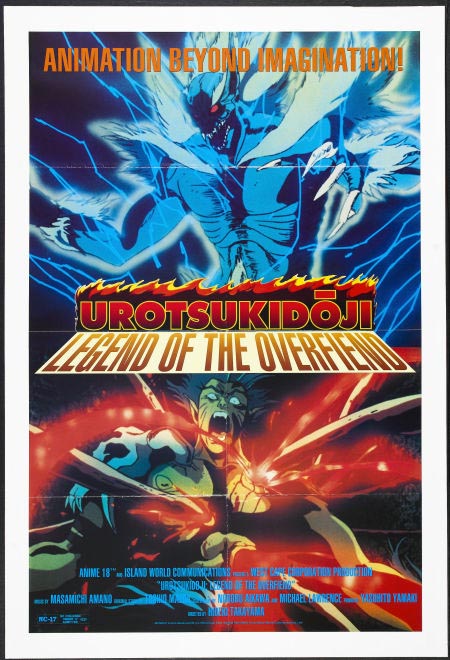
In 1990, during my junior year of high school, I was introduced to a form of animation unlike anything I had known before—the darkly imaginative and transgressive world of hentai. While explicit Japanese media had existed long before, the particular title that marked my first encounter with the genre was Chōjin Densetsu Urotsukidōji. The work did not simply define hentai; it transformed how adult animation would be viewed by audiences in both Japan and the West.
Prior to its release, erotic or explicit manga had long circulated quietly within Japan, often categorized separately from mainstream entertainment. Yet when mangaka Maeda Toshio’s Chōjin Densetsu Urotsukidōji was adapted into animation by director Takayama Hideki in the late 1980s, something shifted. The result was a film that combined the grotesque, the apocalyptic, and the erotic into a single overwhelming experience. Takayama’s adaptation was not content to merely illustrate Maeda’s ideas—it amplified them into a fever dream of violence and desire that pushed the medium into territory rarely explored in animation.
This era in Japanese media was also defined by strict obscenity laws. Direct depictions of genitalia or explicit intercourse were prohibited, both in live-action and animation. To circumvent these limitations, artists employed mosaics or invented visual metaphors. Takayama approached the problem with disturbing creativity: he replaced human anatomy with monstrous, tentacle-like appendages. These served a dual purpose—they satisfied censors while reinforcing the story’s occult and otherworldly atmosphere. Inadvertently, this gave rise to one of the most infamous tropes in hentai culture: “tentacle rape.” What began as a method of evading censorship evolved into a symbol of perversion, horror, and fascination.
Though Maeda initially regarded Takayama’s interpretation as excessively cruel and sadistic, he expressed admiration for the director’s ability to explore the darker undercurrents of his story. In time, Maeda’s own works would adopt similar motifs, blending eroticism with the supernatural. His later projects—including Yōjū Kyōshitsu Gakuen, Adobenchā Kiddo, and the enduring Injuu Gakuen La Blue Girl—refined the sensibilities born from Urotsukidōji, mixing violence, humor, and demonic imagery. These works often shifted in tone but never strayed far from the genre’s defining combination of horror and sexual excess.
Chōjin Densetsu Urotsukidōji can best be described as a collision of disparate influences: the mythic nihilism of H. P. Lovecraft, the explicit confrontational style of Larry Flynt, and the occult transgression of Aleister Crowley, all underscored by the philosophical cruelty associated with the Marquis de Sade. The film’s narrative combines apocalypse with pornography, constructing a universe where gods, demons, and humans become locked in violent and erotic cycles of destruction and rebirth. It is both a nightmare and a spectacle, a work that examines desire as an extension of cosmic chaos.
Watching the OVA as a seventeen-year-old was an experience of shock and bewilderment. Nothing in my understanding of animation prepared me for it. The optimism and adventure of series like Robotech, Starblazers, and Voltron stood in stark contrast to the nihilistic intensity of Urotsukidōji. If such a term had been common at the time, “culture shock” would have described it perfectly. Yet beyond my initial disorientation, I recognized something compelling beneath the shock value—a strange vision that treated eroticism not as mere indulgence but as a reflection of human fear and fascination.
Takayama’s film succeeded because it used obscenity as both spectacle and metaphor. The sexualized violence was horrifying, but it also emphasized the collapse of moral order within its world. The boundaries between sensuality and monstrosity blurred, suggesting that both sprang from the same primal source. In this way, Urotsukidōji transformed its limitations into aesthetic strength. Censorship forced invention, and invention created symbolism: the tentacle became an image of corruption, domination, and inhuman desire.
When Urotsukidōji began circulating in the West through VHS imports in the early 1990s, it acquired immediate notoriety. For many international viewers, the notion that animation could contain such extreme imagery was almost unthinkable. Western audiences, accustomed to animation as a medium for children or adolescent adventure, suddenly encountered a work that combined cinematic brutality with mythology and eroticism. Owning or viewing it became an act of curiosity and defiance. Accessing such media often meant seeking imported tapes or attending small conventions—a process that only heightened its sense of exclusivity and taboo.
Not everyone perceived Urotsukidōji as art. Its reputation became divisive; for some, it represented the most exploitative and grotesque tendencies of Japanese culture, while to others, it was a bold exercise in creative freedom. Regardless of one’s stance, its influence was undeniable. The film inspired countless imitators, establishing a visual and thematic template for subsequent hentai and “erotic horror” animation. Even as later works diversified into comedy, fantasy, and romance, the long shadow of Urotsukidōji remained.
There is also a deeper irony in its legacy. The same adaptation Maeda once criticized expanded the reach and visibility of his creation beyond what any manga publication could have achieved. The collaboration between artist and director—however fraught—produced a convergence of imagination that shaped both the erotic and horror dimensions of modern anime. In a broader sense, it demonstrated that the animated form could explore the same depths of transgression, myth, and existential dread that live-action cinema often reserved for its most daring auteurs.
Seen through this lens, Urotsukidōji becomes more than a piece of pornographic shock cinema. It emerges as a cultural artifact—one that reflects how desire, repression, and fantasy intersect within specific historical and artistic contexts. The work exposes how censorship and creativity can collide to produce unexpected invention, and how audiences, whether through fascination or outrage, help define a genre’s legacy.
For those of my generation, encountering Urotsukidōji was a defining moment that reshaped perception. It suggested that animation could express not only beauty and adventure but also the darker instincts of the human psyche. What began as disbelief evolved into a kind of reluctant respect for its ambition. Beneath the grotesque imagery lay a thematic depth that continues to invite examination—questions about power, violation, and the thin line separating horror from desire.
Today, both Maeda Toshio’s manga and Takayama Hideki’s adaptation occupy a controversial yet essential place in the history of Japanese media. They are remembered not only for their sensational content but for their cultural and aesthetic audacity. The story of Chōjin Densetsu Urotsukidōji endures because it refuses simplification—it is at once abhorrent and visionary, obscene yet strangely philosophical.
From the most ardent anime historian to the casual viewer, its reputation persists. Whether reviled or revered, Urotsukidōji remains the ultimate symbol of hentai’s origins and its infamous reach. It stands as both a warning and a testament: that art, when unfettered by convention and driven by instinct, can explore places society dares not name.





 Through the Shattered Lens