Retro Television Review: Decoy 1.7 “Deadly Corridor”


Welcome to Retro Television Reviews, a feature where we review some of our favorite and least favorite shows of the past!  On Thursdays, I will be reviewing Decoy, which aired in Syndication in 1957 and 1958.  The show can be viewed on Tubi!
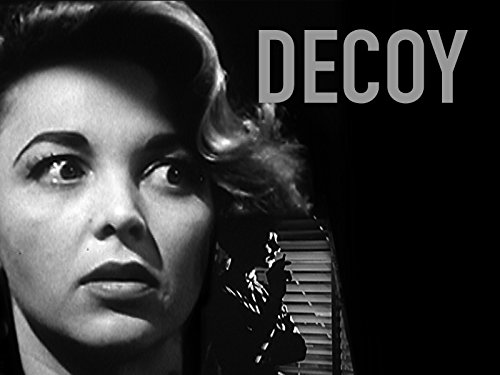
This week, Casey goes to prison!

Episode 1.7 “Deadly Corridor”

(Dir by Teddy Sills, originally aired on November 25th, 1957)

A murder has occurred in the medium security wing of a woman’s prison.  The Warden (Agnes Young) and the District Attorney (John Newton) asks Casey to go in undercover to discover who killed a prisoner.  Casey will pretend to be a prisoner and only the Warden will know that she’s actually a cop.  Casey won’t have her gun, her badge, or her usual backup.  It’s a dangerous assignment but the medium security wing will be shut down if there’s another incident.  The District Attorney starts to explain the importance of rehabilitation.  Casey replies, “I’m a police woman, not a sociologist.”  Casey accepts the assignment because that’s her job.

Casey’s in jail!  She has a really nice cell.  It comes with a dresser, a vanity mirror, a bed, a lamp, and a desk!  She’s even allowed to wear makeup in prison.  Sign me up!  Casey comes to suspect that the murder was committed by the butch Taffy (Colleen Dewhurst) but instead, it turns out the killer was the mentally-fragile Lois (Lois Nettleton).  Lois is a kleptomaniac and killed the other prisoner after she ratted Lois out to the warden and caused Lois’s sentence to be lengthened.  Lois subsequently attacks Casey because she’s worried that Casey is also “a fink” and Lois doesn’t want to end up spending any more time in prison.  She wants to be released in three months so she can finally visit the grave of her baby.  (Awwww!)  Unfortunately, by the end of this episode, it’s looking like Lois will be lucky to escape the electric chair.

This episode has all of the usual women-in-prison cliches but they were all handed in a way so as to not upset the 1950s television viewing audience.  For instance, the episode never came out and said that Taffy was a lesbian but the way she stared at Casey and ordered her to “come and see me,” didn’t really leave much doubt.  When Taffy beats up Casey, she’s establishing her dominance and reminding the viewer that no one can walk away from a fight in prison.  When Casey snitches to the warden, it’s because she wants to get Taffy out of the way for 24 hours so that Casey can investigate the murder.  Casey can get away with that because she’s a cop and she can always just go to the Warden and ask to be released from the prison.  If Casey were an actual prisoner, being labeled a snitch (or a “fink” as they apparently put it back then) would be a fatal error.

This episode had its campy moments but Lois Nettleton and Colleen Dewhurst both gave excellent performances and the final confrontation between Casey and Lois was actually pretty suspenseful.  To my surprise, this turned out to be a good episode.
Film Review: The Man In The Glass Booth (dir by Arthur Hiller)


Who is Arthur Goldman?

That’s the question at the heart of the 1975 film, The Man In The Glass Booth.

When we first meet Arthur Goldman (Maximilian Schell), he is a wealthy businessman who lives in a Manhattan high-rise and who appears to rarely leave the safety of his penthouse.  He is waited on by two assistants, Jack (Henry Brown) and Charlie (Lawrence Pressman), both of whom he talks to and treats as if they are members of his own family.  His most frequent visitor is his psychiatrist, Dr. Weissburger (Robert H. Harris), who frequently stops by and asks Arthur if he’s been taking his medication.

Arthur Goldman is a man who loves to talk.  Indeed, the first hour of the film feels almost like a nonstop monologue on the part of Goldman, with just occasional interjections from the other characters.  Goldman was born in Germany.  He talks about how, when he was young, he and his family were sent to a concentration camp and it was there that he witnessed the murder of his father by the camp’s sadistic commandant, Dorff.  Dorff is one of the many Nazis who disappeared to South America at the end of the war.

When Goldman spots a car that always seems to be parked across the street from his building, he becomes paranoid.  He says that he’s being watched and even suggests that Dorff has come to capture him.  Instead, it turns out that Mossad come for him.  As the agents explain it to Charlie, dental records prove that Arthur Goldman is actually Commandant Dorff.  Goldman/Dorff is taken back to Israel to stand trial for his crimes.

Are Arthur Goldman and Dorff the same man?  Once in Israel, Goldman tells anyone who will listen that he is Dorff and that he feels no guilt for his actions.  He insists on being allowed to wear his SS uniform during the trial.  Because of threats to his safety, a booth made of bullet-proof glass has been placed in the courtroom.  As the trial commences, The Man in the Glass Booth continues to rant and rave and declare his guilt.  However, the prosecutor (Lois Nettleton) comes to doubt that the man is who he says he is.

The Man In The Glass Booth is based on a novel and play by Robert Shaw.  (The same year that The Man In The Glass Booth was released, Shaw played Quint in Jaws.)  The film was produced as a part of an experiment called American Film Theatre, in which well-known plays would be adapted to film and then would be shown at 500 participating movie theaters in America.  Each production would only be shown four times at each theater and subscriptions were sold for an entire “season” of films.  It sounds like an interesting experiment and the type of thing that I would have enjoyed if I had been around back then.  Today, of course, these productions would have just premiered on a streaming service.

The Man In The Glass Booth is a film that very much feels like a filmed play.  There are only three locations — Goldman’s penthouse, his cell, and the courtroom where he is put on trial.  The three act structure is very easy to spot.  Maximilian Schell’s performance is also very theatrical.  In fact, it’s so theatrical that, for the first hour or so, I found myself wishing that he would just stop talking for a few second or two.  He was so dramatic and so flamboyant and so intentionally over-the-top that he became somewhat exhausting.  But, during the second hour, I came to see that all of that “overacting” was actually setting up the film’s final act.  Schell talks so much that, when he finally does find himself unable to explain himself, it’s a shocking moment and one that perfectly captures not just the evil of the Nazis and the Holocaust but also how the legacy of that evil lives on after the fall of the Third Reich and the deaths of the majority of the Holocaust’s perpetrators.  At that moment, I realized that The Man In The Glass Booth never stopped speaking because silence would force him to confront the horrors of the past and the trauma, guilt, and uncertainty lurking in his subconscious.  Maximilian Schell was nominated for an Oscar for his performance here and, by the end of the film, I totally understood why.

The Man In The Glass Booth requires some patience.  Actually, it requires a lot of patience.  However, those who stick with it will discover an intelligent and thought-provoking film about not only the horror of the past but also how those in the present deal with and rationalize those horrors.  Though the film is a bit too stagey for its own good, it’s also one that sticks with you even after the curtain falls and the end credits roll.

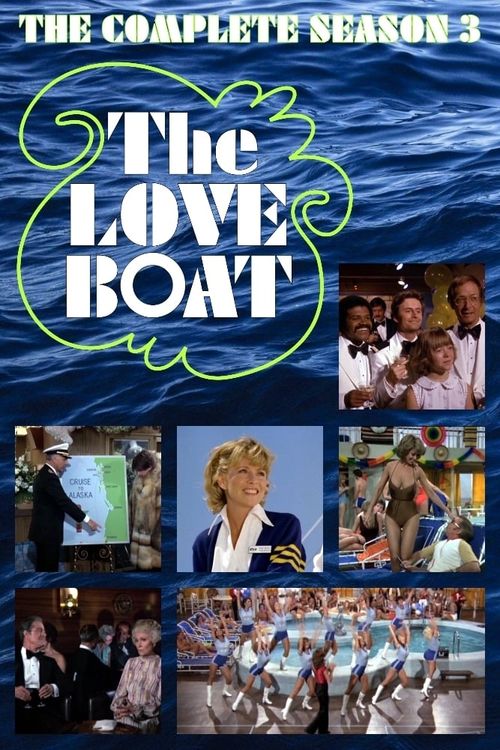
Retro Television Reviews: The Love Boat 3.25 “Celebration/Captain Papa/Honeymoon Pressure”


Welcome to Retro Television Reviews, a feature where we review some of our favorite and least favorite shows of the past!  On Wednesdays, I will be reviewing the original Love Boat, which aired on ABC from 1977 to 1986!  The series can be streamed on Paramount Plus!

This week, an important question is finally answered!

Episode 3.25 “Celebration/Captain Papa/Honeymoon Pressure”

(Dir by Richard Kinon, originally aired on March 29th, 1980)

Ever since Vicki first came aboard the ship, I have been wondering how exactly a 12 year-old can live (and apparently work) on an ocean liner.  One of my main questions has concerned how she is getting an education while sailing back and forth to Mexico.

With this episode, I finally got my answer.  When social worker Susan Stoddard (Lois Nettleton) boards the ship to decide whether or not to recommend that the Captain be given custody of Vicki, one of the first question that she asks is about school.

“Chief Petty Officer Dooley has a master’s in education,” Stubing replies, before saying that this never-before-mentioned character served as Vicki’s tutor.

Well, I’m glad that’s been cleared up.  Still, it is interesting that we’ve never before seen or even heard of this Dooley character.  We don’t even see Dooley in this episode.  You would think the social worker would want to talk to the person who is in charge of Vicki’s education.  Instead, Susan sees the rest of the crew, all of whom try to be on their best behavior in order to convince her that the Love Boat is not the floating HR nightmare that we all know it is.

(Still, at least the crew tried.  I’m surprised Doctor Bricker didn’t just try to sleep with her or something….)

This would be a really depressing episode of the Captain wasn’t awarded custody.  Luckily, Susan is so impressed by the crew that she says she will definitely file a positive report.  As she put it, Vicki not only has one wonderful parent.  She has “Five wonderful parents!”  Let’s see — Stubing, Julie, Gopher, Isaac, Doc …. yep, that’s five.  I’m sure Chief Petty Officer Dooley appreciates being left out of the group.

Isaac has more to worry about than just Captain Stubing’s situation.  Isaac is convinced that an old man named Gordon (Noah Beery, Jr.) is bank robber!  Gordon, who works as a bank guard at the port, is sailing on the Love Boat with his wife of 30 years, Betty (Alice Faye).  Gordon is spending a lot of money.  Isaac worries that Gordon stole the money but actually, it turns out that Gordon is just spending his life savings because his wife is in poor health and he wants to make sure that she has a wonderful vacation.  Unfortunately, Gordon spends too much on a diamond ring.  His wife, realizing what Gordon has done, secretly exchanges the ring for a cheaper one and tells her husband that she doesn’t need a life of luxury.  She just needs him.  Awwwwwww!  What a sweet old couple.

Finally, there are two real criminals on the boat.  Ralph (Norman Alden) and Ben (Richard Bakalyan) are two mob enforces who have been sent to accompany the boss’s daughter (Eve Plumb) on her honeymoon with her un-connected husband, Mark (Sal Viscuso).  Ralph and Ben’s presence makes Mark so uncomfortable that he can’t even consummate his marriage.  Ralph and Ben try to make things romantic for the couple.  Eventually, Doc Bricker tells the gangsters that Mark has a fictional disease, which causes Ralph and Ben to back off.  The married couple finally gets to celebrate their honeymoon.  But Mark still married into a mafia family so he’ll probably be machine-gunned as soon as he steps off the boat.

With the exception of the stupid Mafia story, this was a sweet episode.  I’m glad things worked out for the old couple and for Vicki and the Captain.  The Love Boat is not really a show that you watch for the acting but Gavin MacLeod’s natural sincerity always served him well whenever the show focused on his role as Vicki’s father.  Plus, I no longer have to worry about whether or not Vicki is going to have more than a sixth grade education.  So that’s a good thing.

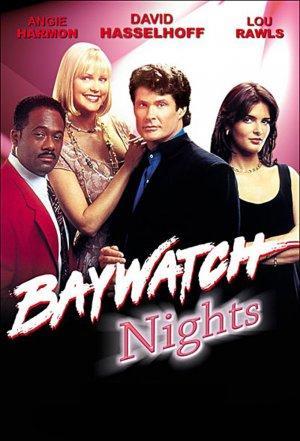
Late Night Retro Television Reviews: Baywatch Nights 1.2 “Bad Blades”


Welcome to Late Night Retro Television Reviews, a feature where we review some of our favorite and least favorite shows of the past!  On Tuesdays, I will be reviewing Baywatch Nights, an detective show that ran in Syndication from 1995 to 1997.  The entire show is currently streaming on Youtube!

This week, David Hasselhoff battles John O’Hurley on Baywatch Nights!

Episode 1.2 “Bad Blades”

(Dir by George Fenady, originally aired on October 7th, 1995)

Cosmetics mogul Frances Sandreen (Lois Nettleton) has hired Mitch, Garner, and Ryan to help her track down her wayward son, Todd (Jason Hervey).  Like a lot of rich and spoiled kids, Todd has had his problems with the law.  He’s a wanderer, someone who has spent most of his short life pursuing extreme sports and who dropped out of college after just a semester or two.  Mitch and Garner think that the kid sounds like a spoiled brat but they need the money so they take the case.

(Why is Mitch so poor?  He never seemed to be struggling financially on Baywatch.)

Unfortunately, Todd has fallen in with an even worse crowd than his old prep school friends.  He’s joined a group of roller-skating burglars who rob apartments and delivery vans and then skate away into the darkness.  One reason why they’re so good at their job is because they spend hours every day practicing.  If you’ve ever wanted to spend 20 minutes of your life watching footage of people skating off of ramps in slow motion, this episode should be right up your alley.

Leading this gang of thieves is the impeccably-dressed Kemp.  Kemp is played by John O’Hurley of Dancing With Stars, Family Feud, and Seinfeld fame.  (O’Hurley also appeared in a few episodes of Baywatch, always playing a different character.)  With his perfect haircut and his resonant voice, O’Hurley makes for an entertaining villain.  There’s nothing about O’Hurley’s performance that suggests that he is in any way taking the role of Kemp particularly seriously.  O’Hurley plays him like a comic book villain and that is definitely to the episode’s benefit.

As entertaining as O’Hurley and the skating scenes are, this episode reveals a huge problem with the first season of Baywatch Nights.  Other than the fact that Hasselhoff is wearing a shirt for the entire runtime, there’s nothing about this episode to really distinguish it from a typical episode of BaywatchBaywatch has its share of episodes about spoiled rich kids and their worried parents.  Baywatch was always looking for an excuse to pad out an episode with some extreme sports footage.  Even the scene where Garner and Mitch chase the thieves across the Los Angeles river felt like it was lifted from Baywatch or any other Los Angeles-based crime show for that matter.

As well, it’s impossible not to notice that, for an a show called Baywatch Nights, most of the action takes place during the day.  I thought being a private eye was only supposed to be Mitch’s night job.  Who is watching the beach while Mitch is investigating crimes?  It really does seem like Mitch is violating some sort of lifeguard code here.

Next week: Mitch searches for the only witness to a murder!

Retro Television Reviews: Terror In The Sky (dir by Bernard L. Kowalski)


Welcome to Retro Television Reviews, a feature where we review some of our favorite and least favorite shows of the past!  On Sundays, I will be reviewing the made-for-television movies that used to be a primetime mainstay.  Today’s film is 1971’s Terror In The Sky!  It  can be viewed on YouTube.

On a flight heading from Minneapolis to Seattle, several passengers suddenly start to get ill.

Luckily, there’s a doctor on the plane.  Sporting sideburns and wearing a turtleneck, Roddy McDowall is quite chic in the role of Dr. Baird, the dedicated medical professional who comes to realize that the passengers are suffering from food poisoning.  As Dr. Baird explains it to head flight attendant Janet Turner (Lois Nettleton), everyone who had the chicken for dinner is about get severely ill.  Uh-oh …. both of the pilots had the chicken!

Is there anyone on the plane who has any flying experience?  George Spencer (Doug McClure) flew a helicopter in Vietnam but, as George explains, it’s an entirely different type of flying all together.  George has no confidence about his ability to land the plane but he’s the only chance the passengers have.

On the ground, gruff Marty Treleavan (Leif Erickson) has been summoned to the airport so that he can help to talk George through the landing.  Marty explains what all of the instruments do to George.  He tells George that he needs to stay in the air for a few hours so that he can get comfortable with the plane.  But the people on the plane are getting more ill and George says that he might be ding things up a little but he’s going to land this plane!

Does this sound familiar to anyone?

As I watched this film last night, I found myself saying, “Oh my God, this is just a serious version of Airplane!”

And actually, it is.  Terror In The Sky was based on Zero Hour, the 1957 film that also served as the basis for Airplane!  (The directors of Airplane! even bought the rights to Zero Hour so that they freely borrow whatever they wanted to from the film.)  Indeed, much of the dialogue in both Zero Hour and Terror In The Sky also shows up in Airplane!  Even the musical cues in Terror In The Sky and Airplane! are similar.

Terror In The Sky is not a bad film.  It’s an efficient made-for-TV film that features several made-for-television veterans, including Keenan Wynn and Kenneth Tobey.  Doug McClure grimaces heroically in the role of George Spencer and Roddy McDowall is as likable as ever as the doctor who hates to fly.  It’s a very earnest movie about a group of people doing everything that they can to save hundreds of lives.  They’re doing the right thing!

But it’s also totally impossible to take the film seriously because you spend the entire movie waiting for Roddy McDowall to say, “Don’t call me Shirley,” or for Leif Erickson to say that he picked the wrong week to stop sniffing glue.  Every moment and every line makes the viewer think of something funny from Airplane!

Personally, I think they bought their tickets.  They knew what they were getting into.  I say …. well, you get the idea.

And yes, I did rewatch Airplane! as soon as I finished up Terror In The Sky.

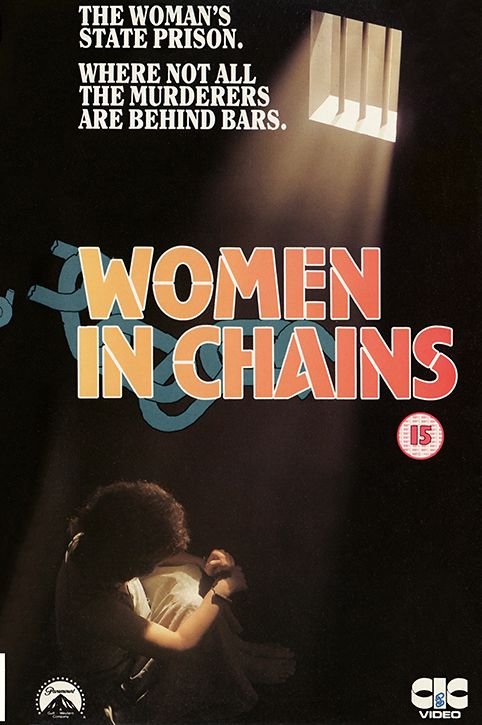
Women In Chains (1972, directed by Bernard L. Kowalksi)


Sandra Parker (Lois Nettleton) is the world’s most dedicated parole officer.  After one of her parolees is sent back to prison and then dies under mysterious circumstances, Sandra decides to investigate on her own.  For Sandra, this means changing her name to Sally Porter and arranging to be sent to prison on a phony charge.  For some reason, Sandra/Sally only tells one other person what she’s doing.  The plan is for Sandra to spend two weeks undercover and then her friend, fellow parole officer Helen (Penny Fuller), will reveal the truth to the proper authorities and get Sandra sprung from prison.  It doesn’t work out that away, as Helen is killed in the line of duty shortly after Sandra finds herself behind bars.

The prison is run by the tyrannical Claire Tyson (Ida Lupino!), a matron who is more interested in exercising power than in rehabilitation.  Claire’s main enforcer is a butch prisoner named Dee Dee (Jessica Walter!!).  As soon as she enters the prison, Sandra gets on Tyson’s bad side.  Sandra asks too many questions and makes the mistake of demanding that her fellow prisoners be treated humanely.  Sandra even demands that a prisoner be given aspirin for a migraine, which is the type insubordination that leads to a stay in solitary.  (What’s strange is that, in solitary, Sandra ends up sharing a cell with another prisoner which I would think would defeat the purpose of being in solitary.)  With Tyson openly plotting to kill her and the only person who knows where she is dead, Sandra has to figure out a way to escape the prison and reveal the truth about what goes on behind bars.

Compared to most women-in-prison films, Women in Chains is pretty tame.  This is a women-in-prison film that you could safely watch with grandma.  This one was made for early 70s television, so there’s no nudity, no strong language, and even the required prison riot is restrained.  The film asks us to believe that Sandra would not only be stupid enough to only let one person know that she was going undercover but also that a parole officer could somehow walk around the prison without running into any prisoners who she previously dealt with. Obviously, the film’s plot is not its strong point but viewers with an appreciation for camp will undoubtedly enjoy the performances of Ida Lupino and Jessica Walter.  They rule that cell block with an iron fist and are entertaining to watch.

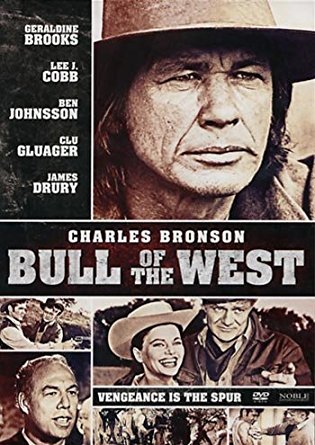
A Movie A Day #143: The Bull of the West (1972, directed by Jerry Hopper and Paul Stanley)


Welcome to the American frontier.  The time is the 1880s and men and women everywhere are heading out west in search of their fortune.  While stowing away on a train, veteran cowboy Johnny Wade (Brian Keith) meets the naive Steve Hill (Gary Clarke) and becomes a mentor to the younger man.  Johnny teaches Steve how to shoot a gun and, when they get off the train at Medicine Bow, Wyoming, they get jobs working on the ranch of Georgia Price (Geraldine Brooks).  When Georgia and Johnny plot to overgraze the land, Steve must decide whether he’s with them or with a rival rancher, Judge Garth (Lee J. Cobb).

At the same time, Ben Justin (Charles Bronson) has arrived in town with his son, Will (Robert Random), and his new wife (Lois Nettleton).  Ben is determined to start his own ranch but, because of his taciturn and stubborn personality, he alienates the Cattleman’s Association, which led by Judge Garth and Bear Suchette (George Kennedy).  Will wants to help his father but Ben keeps pushing him away.  It’s up to Judge Garth’s foreman, the Virginian (James Drury), to bring the family together.

Just like The Meanest Men In The West, The Bull of the West was created by editing together footage from two unrelated episodes of The Virginian.  It works better for the Bull of the West because the two episodes had similar themes and the footage mixes together less awkwardly than it did in The Meanest Men In The West.  But Bull of the West is still just a TV show edited into a movie.  The main reason to see it is because of all the familiar western faces in the cast.  Along with Bronson, Keith, Cobb, and Kennedy, keep an eye out for Ben Johnson, DeForest Kelley, and Clu Gulager.

Horror on TV: Twilight Zone 3.10 “The Midnight Sun”


TheTwilightZoneLogo

In this episode of The Twilight Zone, the Earth has somehow gotten off of orbit is now being drawn closer and closer to the sun. With humanity on the verge of extinction, two women (Lois Nettleton and Betty Garde) struggle to survive as the heat keeps rising.

Full of haunting images of a deserted and sun-baked city, The Midnight Sun is one of the few episodes of The Twilight Zone that has ever given me nightmares. For some reason, the melting painting always gets to me.

This episode was written by Rod Serling and directed by Anton Leader. It was originally broadcast on November 17th, 1961.