Scenes That I Love: Gregory Peck in To Kill A Mockingbird


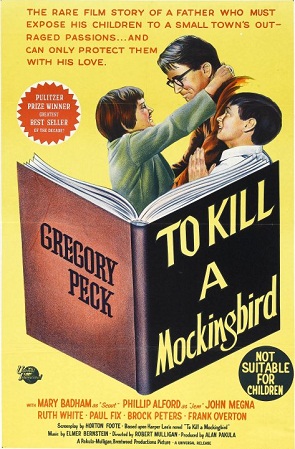
108 years ago today, the actor Gregory Peck was born in San Diego, California.  With his deep voice and his Lincolnesque profile, Peck was always best cast as a man of integrity who was willing to take a stand, even if it meant going against the majority.  That made him ideal for the role of attorney Atticus Finch in 1962’s To Kill A Mockingbird.

Today’s scene that I love comes from that film.  In this scene, Atticus makes his closing statement in the murder trial of Tom Robinson.  While Atticus is speaking to the jury, Gregory Peck is speaking to the audience in the theater (and later, in front of the television).  Reportedly, Peck only needed one take to perfectly deliver his speech.

4 Shots From 4 Films: Special Roger Corman Edition


4 (or more) Shots From 4 (or more) Films is just what it says it is, 4 (or more) shots from 4 (or more) of our favorite films. As opposed to the reviews and recaps that we usually post, 4 (or more) Shots From 4 (or more) Films lets the visuals do the talking.

Today, we wish a happy 98th birthday to the legendary filmmaker, Roger Corman!  And that means that it’s time for….

4 Shots From 4 Roger Corman Films

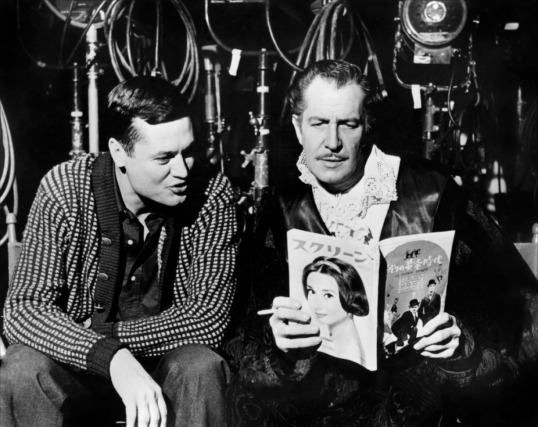
Not Of This Earth (1957, dir by Roger Corman, DP; John J. Mescall)

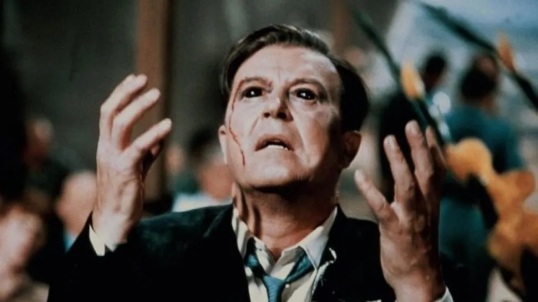
X: The Man With The X-Ray Eyes (1963, dir by Roger Corman, DP: Floyd Crosby)

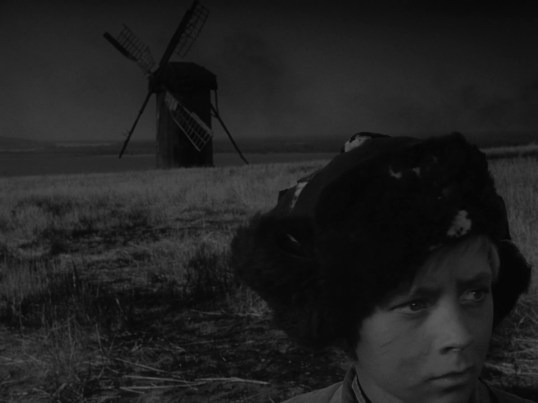
The Masque of the Red Death (1964, dir by Roger Corman, DP: Nicolas Roeg)

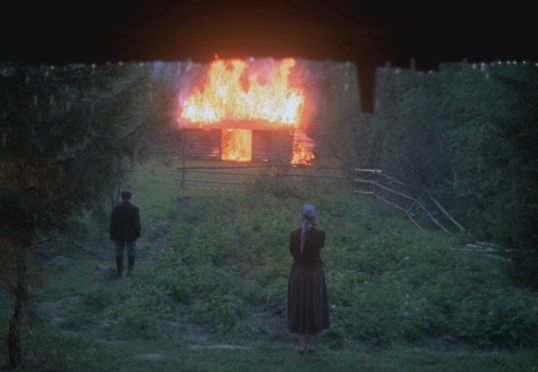
The Trip (1967, dir by Roger Corman, DP: Archie R. Dalzell)

Music Video of the Day: Bette Davis Eyes, covered by Walkman (2020, dir by Franscisco Maestri & Julian Viel)


116 years ago today, the great actress Bette Davis was born.  Today’s music video of the day is for her.

(Bette Davis, incidentally, loved this song and said that when the Kim Carnes version was released in the 80s, it not only made her “culturally relevant” again but it also caused her grandson to look up to her for the first time.)

Enjoy!

Late Night Retro Television Review: Highway to Heaven 2.4 “Cindy”


Welcome to Late Night Retro Television Reviews, a feature where we review some of our favorite and least favorite shows of the past!  On Thursdays, I will be reviewing Highway to Heaven, which aired on NBC from 1984 to 1989.  The entire show is currently streaming on Freevee and several other services!

This week, Jonathan and Mark travel to Hollywood …. again.

Episode 2.4 “Cindy”

(Dir by Michael Landon, originally aired on October 23rd, 1985)

Vincent DeGeralimo (Bill Macy) is a fast-talking, good-hearted talent agent who is still trying to sell acts that were out-of-style during Vaudeville.  He wants to get a booking for a lion tamer but Jonathan appears to him and says that Vincent’s main concern should be helping out his daughter.

Cindy DeGeralimo (Hallie Todd) is an aspiring actress who is currently working as a waitress in a diner.  Her evil boss (Alice Ghostley) has three untalented daughters who all want to be actresses as well.  Cindy’s newest coworker, Mark Gordon, just wants to meet a movie star.

Pretending to work in the mailroom of a major Hollywood studio, Jonathan convinces producer Maxim Prince (Kip Gilman) that the best way to find a star for his new picture would be to hold a ball and invite every aspiring actress in town to attend.

Can you see where this is going?  Yep, it’s a remake of Cinderella, except this time Cinderella has a pushy father who keeps trying to change her before she goes to the ball.  Cindy finally gets fed up and says that she wants to be a star but she also doesn’t want to be some sort of Hollywood phony.  Vincent accepts Cindy’s feelings and everything works out in the end.

Usually, I’m pretty lenient when it comes to reviewing this show but this episode just annoyed me.  Even by the standards of Highway to Heaven, it was overly sentimental and heavy-handed.  Bill Macy gave such a frantic performance as Vincent that it was hard to watch him.  As well, Mark was so excited about being in Hollywood that I found myself wondering if he forgot about all the time he spent in Hollywood during the first season.

Indeed, this is not the first episode of Highway to Heaven to feature Jonathan dealing with the entertainment industry and I imagine it won’t be the last.  Considering how much control Michael Landon had over this show, I always get the feeling that the Hollywood episodes were personal for him, especially as they always seemed to deal with parents regretting the fact that they put work ahead of their families.  That said, the portrayal of Hollywood in this episode was so old-fashioned and idealized that I get the feeling that it was Landon’s way of showing what he wished Hollywood was like as opposed to what it actually was.  Landon’s Hollywood is a town where anyone can be a star and anyone can find a happiness.

As for this episode, it was a bit too corny for its own good.  Next week, though, Jonathan battles the Devil for Mark’s soul!  That should be fun.

Film Review: Against Their Will (dir by Denis Malleval)


The 2012 French film, Against Their Will, tells the story of two Alsatian teenagers during the Nazi occupation of France.

Lisette (Louise Herrero) is blonde and praised, by the Nazis, for her Aryan appearance.  She appears to always have a positive attitude no matter what is going on.  Lisette’s father is a collaborationist with the Nazis and Lisette publicly defends the German occupiers while privately disdaining them and the war.  Her fiancé, Henri, has been conscripted into the army and has been sent to the Russian front.  He writes her letters but, because he is now required to write only in German and not in the French that he and Lisette grew up with, Lisette cannot read them.

Alice (Flore Bonaventura) is dark-haired and therefore considered to be inferior to Lisette.  This is despite the fact that Alice is fiercely intelligent and has been trained as a nurse.  Alice’s father is a doctor who has been sent to a prison camp as punishment for treating a wounded British soldier.  Alice is rebellious and, unlike Lisette, she has no compunctions about telling the Nazis exactly how she feels about them.  When she is ordered to salute the Nazi flag, she lifts on arm in a stiff salute while using her other hand to extend her middle finger.

Lisette and Alice are amongst the many teenagers who are taken from their families and sent to a German indoctrination camp, where the strict and cruel Trudl (Julia Thrunau) tries to brainwash them.  Lisette and Alice become unlikely friends as they are sent from the camp to work in a munitions factory and finally to serve in the Lebensborn, which was Germany’s eugenics program.  While Alice works in the maternity ward, Lisette’s Aryan appearance attracts the attention of a cruel SS officer.

Against Their Will starts out strong, showing how even the most intelligent and independent of people can be forced to do things that go against their beliefs, whether as a result of brainwashing or just plain fear.  The scenes in the indoctrination camp and later in the munitions factory show how the Nazi government treated both people in both Germany and the occupied territories as cannon fodder in their war with the Allies.  Even during an air raid, Alice is ordered to continue working and, even though one mistake could lead to an explosion that would kill both them and several of their co-workers, Alice and Lisette are continually told to speed up when it comes to making the shells that will later be dropped on the Allies.

The film loses its way during the final third, largely because French girls — even ones from the German-influenced Alsace region of France — would never have been sent to the Lebensborn, which was meant to be exclusively for the breeding of “pure” Germans.  By suggesting otherwise, the film unintentionally downplays the nationalism and the racism at the heart of the Nazi ideology.  The film’s framing device — in which one of the women tells her story to her granddaughter — also feels a bit awkward and the film also makes a bit too much use of the stereotype of the good German, the one Nazi who is not quite as cruel as the others.

The first half of the film is a strong portrayal of life under an occupation, with both of the lead actresses giving good performances as two women who deal with their circumstances in very different ways.  It’s just a shame that the film’s conclusion doesn’t live up to what came before it.

Retro Television Review: Beane’s of Boston 1.1 “German Week”


Welcome to Retro Television Reviews, a feature where we review some of our favorite and least favorite shows of the past!  On Thursdays, I will be reviewing Beane’s of Boston, which aired on CBS in 1979.  The entire show is currently streaming on YouTube!
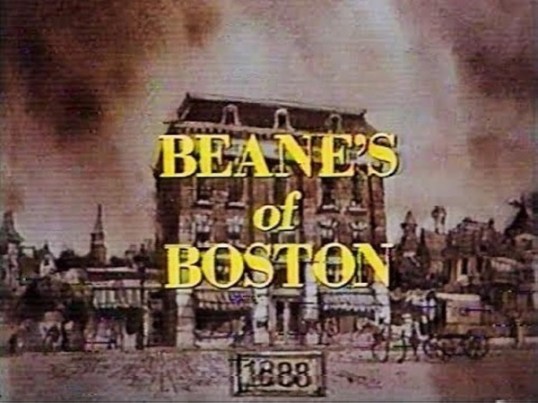
This week, we take a look at an attempt to bring a British show to America.

Episode 1.1 “German Week”

(Dir by Jerry Paris, originally aired on May 5th, 1979)

Beane’s of Boston is a venerable department store, a landmark of Boston.  The store is housed in a multi-story building and it is run by the elderly but still horny Frank Beane (Tom Poston).  Frank takes a break from ogling his secretary and sneaking off to the strip club to demand this his nephew, Franklin Beane (George O’Hanlon, Jr.), explain why the 4th floor — which houses the Men and Ladies’ Wear Department — is losing money.

Franklin admits that sales have been off but he has a plan.  What if the store only sold German products for a week?  And what if the employees dressed in lederhosen and did German dances?

The 4th floor employees are not particularly enthused.  The head of Ladies’ Wear, Mrs. Slocum (Charlotte Rae), served as a WAC during World War II and once found herself with a German soldier on top of her after a landmine went off.  Mr. Peacock (John Hillerman), the stuffy floor manager, feels that he looks like an idiot dressed in a German outfit.  Meanwhile, in the Men’s Department, elderly Mr. Granger (Morgan Farley) sleeps while the flamboyant Mr. Humphries (Alan Sues) answers the phone in his most “masculine” voice and Mr. Lucas (Larry Bishop) hits on the just-hired administrative assistant, Ms. Brahms (Lorna Patterson).

German week is a disaster, bringing in a profit of $12.94.  But, fortunately, old Frank Beane is dating a German woman and she loves the idea.  So, no one loses their job….

If this sounds familiar and if you’re reading this in America, you’ve probably seen an episode of the infamously terrible British sitcom Are You Being Served? on PBS.  Beane’s of Boston was an attempt to do an American version of that sitcom and, just as The Office would do decades later, the pilot essentially took a script from the British series and populated it with American actors.

Setting aside the question of whether or not the world needed more than one version of Are You Being Served?, the idea of transporting that very British sitcom to Boston was not, in itself, a terrible one.  Boston is one of our oldest cities and, while it may be best-known today for its robust blue collar culture, there were still enough stuffy Protestants around to make it believable that a store like Beane’s could survive.  That said, the pilot still falls flat, largely because everyone but John Hillerman seems to be miscast and even Mr. Peacock is considerably less amusing once you take away his title of colonel.  While the British original was known for its broad comedy, it appears like a model of subtlety when compared to the performances of Alan Sues as Mr. Humphries and Larry Bishop as Mr. Lucas.  As well, why would any store do a German week in a city that is best-known for its strong Irish community?  Why not do an Irish Week?  It perhaps made sense in Are You Being Served? but, in Beane’s of Boston, it just makes Franklin seem like such an idiot that you almost feel like he deserves to lose his job.

Beane’s of Boston did not have the same success as Are You Being Served?  German Week would be the only episode aired.
Scenes That I Love: Robert Downey, Jr. and Nicholas Pryor in Less Than Zero


Today, the Shattered Lens wishes a happy birthday to actor and now-Oscar winner Robert Downey, Jr!

Today’s scene that I love comes from 1987’s Less Than Zero.  Long before he played Iron Man, Downey played Julian, a young, self-destructive drug addict in Los Angeles.  In this scene, Julian talks to his father, played by the great character actor, Nicholas Pryor.

Downey has said that playing Julian was not a huge stretch for him as he was dealing with his own growing drug addiction while making Less Than Zero.  (Considering how heavy-handed the film was in its anti-drug message, it’s interesting that both Downey and Andrew McCarthy have talked about first experimenting with cocaine while making the film.)  It’s been quite a turn-around for Downey, who went from being a poster boy for self-destruction to a beloved pop cultural icon.  Just last month, Downey won an Oscar for his performance in Oppenheimer.  He deserved every minute of the applause he received.

4 Shots From 4 Films: Special Andrei Tarkovsky


4 Or More Shots From 4 Or More Films is just what it says it is, 4 shots from 4 of our favorite films. As opposed to the reviews and recaps that we usually post, 4 Shots From 4 Films lets the visuals do the talking!

On this date, 92 years ago, Andrei Tarkovsky was born in Russia.  Before he was murdered by the KGB in 1986, Tarkovsky was responsible for some of the most intriguing and visually stunning films ever made.  Today, we pay tribute to Tarkovsky’s art and his legacy.  It’s time for….

4 Shots From 4 Andrei Tarkovsky Films

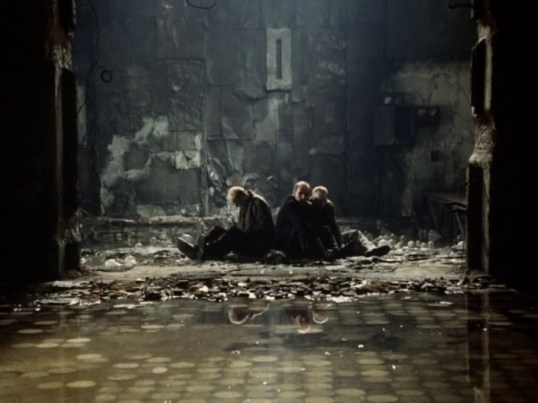
Ivan’s Childhood (1962, dir by Andrei Tarkovsky, DP; Vadim Yusov)

Solaris (1972, dir by Andrei Tarkovsky, DP: Vadim Yusov)

Mirror (1975, dir by Andrei Tarkovsky, DP: Georgy Rerberg)

Stalker (1979, dir by Andrei Tarkovsky, DP: Alexander Knyazhinsky)

Late Night Retro Television Review: Monsters 2.2 “Portrait of the Artist”


Welcome to Late Night Retro Television Reviews, a feature where we review some of our favorite and least favorite shows of the past! On Wednesdays, I will be reviewing Monsters, which aired in syndication from 1988 to 1991. The entire series is streaming on YouTube.

This week, a visit to an art gallery goes terribly wrong.

Episode 2.2 “Portrait of the Artist”

(Dir by Gerald Cotts, originally aired on October 8th, 1989)

Lucille Clay (Lucille Kennedy) visits an isolated art gallery that appears to be sitting in the middle of nowhere.  The studio is full of macabre paintings of women and children who appear to be in some sort of mortal danger.  Watching over the gallery is Hubert (Darren McGavin), who claims to be just an old farmer who was hired to look after things while the actual artist is in Nepal.

Accompanying Lucille is Roger Darcy (Beeson Carroll), a man who walks with a pronounced limp.  Lucille claims that Roger is an art critic but, as soon becomes apparent, that’s a lie.  Roger is actually the father of a missing teenage girl and he is stunned when he sees that one of the paintings looks just like her.  In fact, all of the paintings appear to be of someone who has recently disappeared.  Convinced that the artist is a serial killer, Roger demands to be taken to the artist’s cabin.  What Roger doesn’t know is that the gallery hides an even bigger threat.

This episode ends with a twist.  It’s not a bad twist and it actually took me by surprise.  Unfortunately, the rest of the episode is not as good as the twist ending.  I had high hopes when I saw that this episode was going to take place in a gallery and that it was going to star Darren McGavin.  But, and it pains me to say this, McGavin just isn’t very good in this episode.  McGavin was an actor who always had a tendency to go a little bit over the top.  That wasn’t a problem when he was playing Kolchak or the father in A Christmas Story.  But, in this episode, he’s so blustery that it’s obvious that he’s hiding something from the start and it makes Roger and Lucille seem all the dumber for trusting him.

Indeed, the other big problem with this episode is that Roger and Lucille continually do the stupidest things possible.  None of their actions make sense.  Why, if they believed a serial killer was lurking around the gallery, would they split up?  Why would they be so quick to trust Hubert?  Why, after escaping, would one of them then return without any backup?  Why does neither one of them seem to be particularly upset about the possibility that either Hubert or the artist murdered Roger’s daughter and then used her for his painting?  They both behave so stupidly that it’s hard to really care what happens to them.

This story had some potential but, unfortunately, the execution just didn’t live up to it.

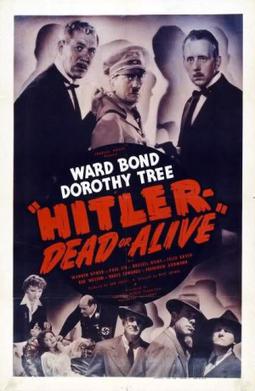
Film Review: Hitler — Dead or Alive (dir by Nick Grinde)


The 1942 film, Hitler — Dead or Alive, opens with two reporters visiting a prominent industrialist named Samuel Thornton (Russell Hicks).  They are curious about a statue of three men that stands outside of Thornton’s mansion.  Thornton proceeds to tell them the story of the three men.

In 1939, shortly after the Nazis invaded Poland and with the United States still pursuing a policy of neutrality, Thornton independently offered a million dollars to anyone who could bring Adolf Hitler to justice, dead or alive.  Accepting the offer were three ex-cons who had just been released from Alcatraz, Steve Maschick (Ward Bond), Hans “The Dutch” Havermann (Warren Hymer), and Joe “The Book” Conway (Paul Fix).  (As you may have guessed “The Book” is the intellectual of the group and yes, he wears glasses.)  After Thornton makes clear to them that they’re going to have to make sure that they either capture or kill the real Hitler and not one of his many doubles, the three men join the Royal Canadian Air Force and, along with ace pilot Johnny Stevens (Bruce Edwards), they head for Germany.

Made for an obviously low-budget, this B-movie is a bit of a curiosity.  It starts out as a comedy, with the three cooks cracking jokes about going straight and a lengthy sequence in which they try to work up the courage to parachute into Germany.  Even after they get caught by the Gestapo and sent to a prison camp, much of the film is played for laughs.  It’s not until they escape from the prison and Johnny sacrifices his life while shooting it out with the Nazis that the film starts to take a more serious turn.  Steve, who starts out the film only caring about the money, comes to realize that there are more important things than just finding a quick payday.

Steve, Hans, and Joe end up at the mansion of Else von Brandt (Dorothy Tree), a secret member of the German resistance who is so trusted by the Nazis that Hitler himself (played by Bobby Watson) will be stopping by for a visit.  By this point, Steve explains that he no longer cares about the money.  As far as he’s concerned, he’s now working for free.  After learning about all of the people who have been killed by Hitler, Steve is determined to stop him, even if it means sacrificing his own life.

There are still moments of humor to the found in the latter half of the film.  When Steve, Hans, and Joe confront Hitler, one of the first things that they do is shave off his mustache.  But the film’s conclusion is ultimately a very serious one and features one particular act of violence that I imagine stunned audiences in 1942.  Having told the story of the three men and their mission to get Hitler, Samuel Thornton ends the film by saying that it doesn’t matter whether Germany is being led by Hitler or Hitler’s double.  What matters is eradicating all of the Nazis from the Earth.  In the end, the message of the film is a simple one.  It’s okay to laugh.  It’s okay to joke.  But, in the end, everyone must do their part.

Hitler — Dead or Alive was made for an obviously low-budget and there are a few scenes, especially in the beginning, where the pace feels a bit off.  Just as with Beast of Berlin, the film’s version of a German prison camp feels like it could have been lifted from a dozen American crime films.  But Ward Bond is a strong hero and he delivers his lines with conviction, especially when he discusses why nothing is more important than stopping Hitler.  He gets good support from both Paul Fix and Warren Hymer.  The film may start out as a comedy but it’s anti-Hitler message comes through loud and clear.  Seriously, how can you not appreciate a film about defeating the Nazis?