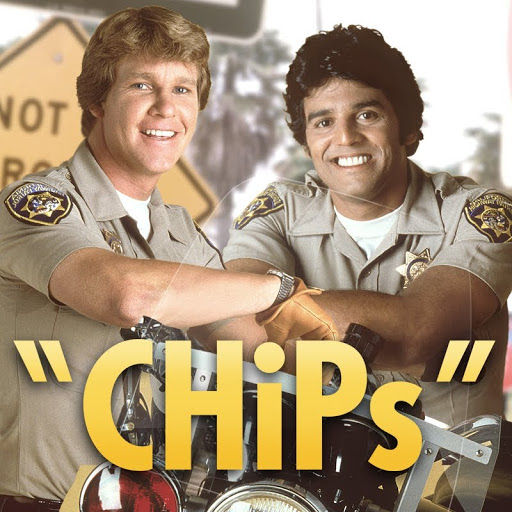
Late Night Retro Television Review: CHiPs 3.1 and 3.2 “Roller Disco”


Welcome to Late Night Retro Television Reviews, a feature where we review some of our favorite and least favorite shows of the past!  On Mondays, I will be reviewing CHiPs, which ran on NBC from 1977 to 1983.  The entire show is currently streaming on Prime!

This week, season three begins with a classic episode!

Episode 3.1 and 3.2 “Roller Disco”

(Dir by Don Weis, originally aired on September 22nd, 1979)

It’s the roller disco episode!

From the moment that I first announced that I would be watching and reviewing CHiPs for this feature, people have been telling me about the legendary roller disco episode.  Having finally reached it, I can say that it lived up to the hype.  You’re not likely to see anything more 70s than the third season premiere of CHiPs.

Now, this was a two-hour episode so there were actually quite a few subplot going on, all of which were typical CHiPs storylines.  In no particular order:

  1. A kid named Mark (Bobby Rolofson) is roller skating around the beach and idolizing three criminals.  Can Baker show him that the good guys always win?
  2. The three criminals are Lita (Helena Kallianiotes), Ty (Fred Williamson), and Romo (Jim Brown).  Lita sets up the targets.  Ty and Romo steal their purses and their wallets and then escape on roller skates.  Ty and Romo are tired of breaking the law.  Lita demands that they continue to steal.  Eventually, it falls to Baker and Ponch to arrest them.
  3. Carlin (Larry Linville) and Franco (Larry Storch) continually cause accidents on the highway.
  4. Rock star Jimmy Tyler (Leif Garrett) is so tired that he sleeps through one of those accidents.  Looking to break free from his well-meaning but overbearing manager (Bill Daily), Jimmy decides to manage his own affairs while staying at Jon Baker’s apartment.

There’s a lot going on but the main plotline is Ponch trying to find celebrities to take part in the annual highway patrol fund raiser.  Even with his big smile, Ponch struggles to charm the celebs.  He pulls over Ed McMahon at one point but fails to recognize him until McMahon drives off.  Gatraer tells Ponch that police work comes first but also tells him that he has to find celebrities.  Gatraer’s been giving Ponch a hard time ever since the first season.  Some things never change.

Fortunately, Jimmy feels guilty for overstaying his welcome at Baker’s apartment and he makes it up to Baker and Ponch by asking his celebrity friends to take part in the fund raiser.  It’s time for a roller disco with the stars!

It all leads to this classic scene:

I recognized a few of the stars, though certainly not all of them.  I recognized Victor French because I’ve been reviewing Highway to Heaven.  I’ve also seen enough old sitcoms that I immediately recognized Robert Mandan, who was apparently the best roller skater in Hollywood.  Melissa Sue Anderson, I knew from Happy Birthday To Me.  Cindy Williams, who got two shout-outs, I knew from American Graffiti.  Is it just me or did Nancy Kulp look kind of lost?  Neither Melissa Sue Anderson nor Cindy Williams seemed to want to talk to her.

The roller disco actually goes on for fifteen minutes, which I appreciated.  The show promised a roller disco and it delivered.  It was like stepping into a time machine and traveling to the 70s.  It was a great way to start season three!

Because of the holidays, this is going to be my final CHiPs review of 2024.  My reviews of this show will return on January 6th!

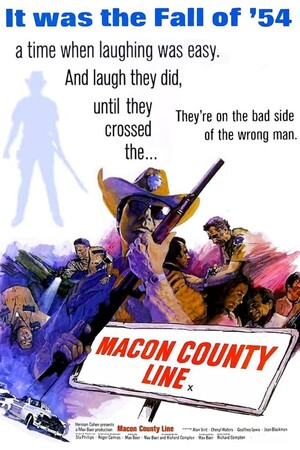
MACON COUNTY LINE – Jethro goes mad!


Max Baer, Jr. co-wrote, co-produced and co-starred in this southern fried thriller about a couple of good ‘ole boys (brothers Alan & Jesse Vint) who break down in the wrong county. The sheriff (Baer), who’s somewhat suspicious of the boys, goes after them with fierce vengeance when his wife is murdered.

I’m a big fan of this classic drive-in film. For one, I think it’s cool that Max Baer Jr., so well known as Jethro Bodine in the classic sitcom THE BEVERLY HILLBILLIES, took on this role of the somewhat racist sheriff who goes mad with rage in this movie. I enjoyed his performance very much. I also like these ‘70’s drive-in films. You get exactly what you expect in this tale, and it’s very entertaining. Finally, I like the Vint Brothers. Alan had an important role a year after this film was made in the Charles Bronson film BREAKOUT.  And what can I say about Jesse. Over the last few years, he’s actually become a friend in real life. He’s such a great guy, and he’s very proud of this movie. He told me one day that Tarantino had said it was one of “the best stories in cinema!” In the first season of his Video Archives podcast, I’ve personally heard Tarantino really brag on Jesse’s performance in the movie THE FORBIDDEN WORLD. I love it when good things happen to good people.

Party Line (1988, directed by William Webb)


“Hot singles are waiting to speak to you!”

Remember those party line commercials that used to air late at night in the 90s?  For just a few dollars a minute, you could call and talk to someone claiming to be a hot woman in your area of town.  (The commercials always featured women because everyone understood that only men would be dumb enough to call the number.)  Even when I was a teenager, I knew that there was no way that a young, hot woman was sitting at home alone and waiting for a stranger to call her.  But obviously, some people thought they were true because those party lines commercials aired for a long time and really only went away once everything moved online.

In Party Line, Greta Blackburn and Leif Garrett plays homicidal siblings who have money to burn so they spend all of their time on the party line, enticing men to sneak away from their wives and come to their mansion so that they can be murdered.  Detectives Richard Hatch and Shawn Weatherly are assigned to find out why so many married men are turning up dead.  The chief of police is played by Richard Roundtree, who is so smooth that his main purpose in the movie is to remind us that not everyone has to use a party line to pick up women.  It’s a standard 80s thriller that has some moments of unexpected humor, largely due to the contrast between the beautiful and rich killers and the people that they target.  Richard Hatch is wooden in the role of the detective but Shawn Weatherly is attractive and likable as his partner,  Greta Blackburn makes for an excellent femme fatale while Leif Garrett is twitchy but convincing as a killer who likes to wear a bridal gown.

Party Line was made when the idea of adult phone lines was still a new one.  Apparently, when those lines first started to advertise, the part about it costing money wasn’t actually mentioned and could only be discovered by reading the small print at the bottom of a television screen.  Since the small print was not only very small but also usually accompanied by a picture of a blonde in lingerie, no one ever bothered to read it.  I was not one of them but I do know more than a few 90s kids who came home from school to discover a parent waiting to talk to them about the phone bill.  The world was a different place back then.  Today, everyone should know that most hot singles have something better to do than to talk to you and if they don’t, they’re probably killers like people in Party Line.  It’s not worth a dollar for each additional minute.


Late Night Retro Television Review: Monsters “Half as Old as Time”


Welcome to Late Night Retro Television Reviews, a feature where we review some of our favorite and least favorite shows of the past! On Wednesdays, I will be reviewing Monsters, which aired in syndication from 1988 to 1991. The entire series is streaming on YouTube.

This week, Monsters asks us, “How far would you go to be immortal?”

Episode 2.11 “Half as Old as Time”

(Dir by Christopher Todd, originally aired on December 17th, 1989)

Dying of a brain tumor, elderly archeologist Dr. Miner (played by Leif Garrett, under a ton of old age makeup) visits his daughter Jacqueline (Valerie Wildman).  Jacqueline, who is also an archeologist, lives in the desert and, from the start, it’s obvious that she and her father have a strained relationship.  However, when Dr. Miner begs her to take him to the secret location of a “fountain of youth,” that she’s spent her career searching for, Jacqueline agrees.

Sitting underneath the statue of an evil-looking serpent and overseen by a Native American named Saspondo (Nick Ramus), the fountain does indeed make Dr. Miner young again.  Unfortunately, it only lasts for a short time.  Saspondo explains that if Dr. Miner wants to be both permanently young and immortal, he has to be prepared to sacrifice a family member and let their blood mix with the water.

Oh, hi, Jacqueline!

Dr. Miner doesn’t waste any time killing his daughter and afterwards, he doesn’t seem to be particularly upset over his crime.  (“She was always a disappointment to me.”)  Saspondo, however, reveals that Dr. Miner should have asked more questions about what immortality meant before killing his daughter and then drinking from the fountain.  Dr. Miner may be forever young but he’s also forever be trapped in front of the fountain….

The main joke here, of course, is the casting of former teen idol Leif Garrett as an old man.  Interestingly enough, he’s more convincing when he’s playing old than when he is later allowed to be his then-young self.  When he’s wearing the makeup and walking with a shuffled gait, Garrett has a character to play.  When he loses all of that, he sleepwalks through the rest of his performance.  Nick Ramus, however, gives an excellent performance all-around as the enigmatic keeper of the fountain.

This episode was uneven but effective.  The pace was occasionally a bit slow but the murder of Jacqueline was shockingly brutal, even by the standards of this show.  If nothing else, it showed who Dr. Miner truly was and it made his eventual comeuppance especially satisfying.  Flaws aside, this episode worked.

Horror on TV: Circle of Fear 1.17 “Doorway to Death” (dir by Daryl Duke)


Tonight, on Circle of Fear, bratty Robert (played by Leif Garrett) discovers that an upstairs door in his family’s new apartment building leads to someplace very unexpected.  His older sister, Peggy (Susan Dey), doesn’t believe him but she soon learns the error of her ways.  

This episode is really creepy and atmospheric and I don’t want to spoil too much of it.  It was written by Jimmy Sangster, who also did several Hammer films, and it was directed by Daryl Duke.  To be honest, this episode reminds me of the episode of Lost where Jack stumbles across the ghosts of Ben’s parents outside of the cabin.  It has a similar, dream-like feel to it.

The episode originally aired on January 26th, 1973.

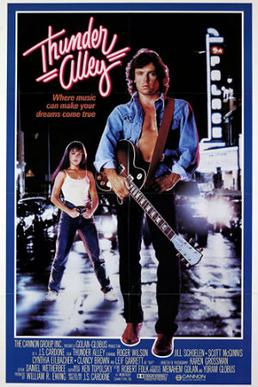
Thunder Alley (1985, directed by J.S. Cardone)


Richie (Roger Wilson) is an Arizona farm boy who can play the guitar like a riot and who, after he joins a band called Magic, discovers that success is a hideous bitch goddess.

Thunder Alley was a Cannon production and it features all of the usual rock movie clichés.  Though Richie is reluctant to join Magic and leave his family behind, he soon emerges as the most talented member of the band and he starts to overshadow the arrogant lead singer, Skip (Leif Garrett).  Donnie (Scott McGinnis), who is Richie’s best friend in the band, gets hooked on cocaine while Richie struggles to resist groupie temptation and remain loyal to his sweet girlfriend, Beth (Jill Schoelen).  The band depends on their road manager, Weasel (Clancy Bown), to get them on stage in time and to protect them from dishonest club owners.

As predictable as it may be, Thunder Alley is one of the better films to be distributed by Cannon Films in the 80s, which is saying something when you consider that Thunder Alley doesn’t feature Michael Dudikoff, Chuck Norris, or Charles Bronson.  The thing that sets Thunder Alley apart from so many other similar films is that, when you actually see Magic perform and hear their music, you actually believe that the band could be a success.  This isn’t one of those films where everyone is feigning enthusiasm for a band that sounds terrible.  Instead, Magic actually sounds like a band that could have gone all the way in 1985.  The scenes of them going from one cheap motel to another while coming together as a band feel as authentic and real as the scenes of Skip angrily realizing that Richie has replaced him as the face of Magic.

Though he was probably cast because he was one of the stars of Porky’s, Roger Wilson was also an actual musician and he’s credible whenever he’s performing on stage.  The same can be said of former teen pop idol Leif Garrett, who plays an actual rock and roller in Thunder Alley and who is surprisingly convincing in the role.  Sporting an impressive beard, Clancy Brown is the ideal road manager while Jill Schoelen brings a lot of life to her small role as Richie’s loyal girlfriend.

For a film that is all about sex, drugs, and rock and roll, Thunder Alley has an innocent side.  Even after he becomes a star and he’s got groupies going crazy every time he steps up to a microphone, Richie’s main concern is making sure that he gets home in time to help his father with the harvest.  Thunder Alley not only asks how far you would go to be a star but also suggests that there’s nothing wrong with choosing, instead, to be a loyal boyfriend or a good son.  Thunder Alley brings it own earnest approach to all of the usual rock and roll clichés and suggests that, with the right combination of talent and hard work, you can have it all, the farm and the stage.

Of course, it helps if you’ve got Clancy Brown looking out for you.


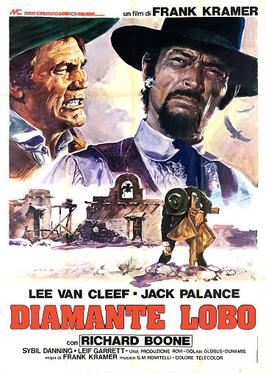
God’s Gun (1976, directed by Gianfranco Parolini)


During the dying days of the old west, outlaw Sam Clayton (Jack Palance) ride into the town of Juno City and try to take things over.  Because the sheriff (Richard Boone, who reportedly walked off the film before shooting was complete) is old and ineffectual, it falls to the town priest, Father John (Lee Van Cleef), to chase them off.  Father John is hardly your typical priest.  He’s a former gunfighter who, even though he no longer carries a weapon, still knows how to throw a punch.  Though he manages to put Sam and the gang behind bars, they are all eventually released.  The first thing they do is gun down Father John in front of his own church.

A mute child, Johnny O’Hara (Leif Garrett), flees town to track down Father John’s twin brother, Lewis (also played by Lee Van Cleef).  What Johnny doesn’t know is that Sam, who years ago raped Johnny’s mother (played by Sybil Danning), might actually be his father.  When Johnny finds Lewis, he finally manages to communicate what’s happened.  Lewis and Johnny head back to town so Lewis can get his vengeance  The only catch is that Lewis promised his brother that he would no longer carry a gun so he’s going to have to use his wits to get his revenge.

God’s Gun is a strange film.  It was one of the last of Spaghetti westerns but, though the director was Italian, it was filmed in Israel and it was produced by none other than Menahem Golan.  Golan brings the same producing aesthetic to God’s Gun that he later brought to many Cannon films — a few recognizable veteran actors (Jack Palance, Lee Van Cleef), an up-and-coming star (Leif Garrett), an international sex symbol (Sybil Danning), and a spin on a popular genre.  Like many of Golan’s films, the plot is occasionally incoherent and the entire production feels cheap and rushed but, at the same time, it’s hard to resist the mix of Van Cleef, Palance, and Danning.

Adding to the film’s strange feel is that every actor is dubbed, even the ones with trademark voices like Jack Palance and Lee Van Cleef.  Palance sneers throughout the entire film and could be giving a good performance but every time he starts to speak, you hear a voice that is clearly not Jack Palance’s and it makes it hard to get into the story.  There’s also an annoying squawking sound effect that explodes on the film’s soundtrack whenever someone is shot or whenever Lewis makes an appearance.

It’s not all a loss, though.  The Israeli desert is an effective Western backdrop and there are a few good camera shots.  When Lee Van Cleef and Jack Palance have their final confrontation, the picture starts to spin around and it’s pretty cool.  Finally, if you’re a Van Cleef fan, this is a rare chance to see him playing a traditional hero.  Because he’s dubbed, it’s hard to judge Van Cleef’s dual performances but this film does show that he could do more than just be a smirking killer.  He’s actually a pretty convincing priest.  Who would have guessed?

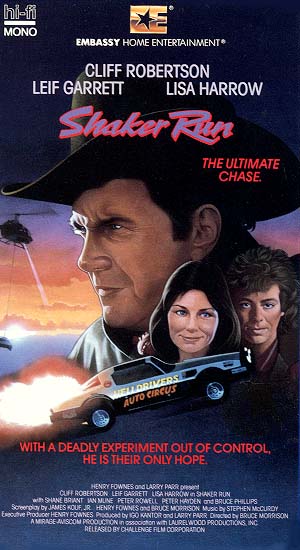
Shaker Run (1985, directed by Bruce Morrison)


Judd (Cliff Robertson) is an aging stunt driver who has been reduced to doing minor car shows in New Zealand.  He’s having trouble paying the bills and his young mechanic, Casey (Leif Garrett, looking like he’s a few days away from checking into rehab), is on him to do something — anything — to bring in some extra cash.  The opportunity presents itself when the duo are hired by an enigmatic woman named Christine (Lisa Harrow) to drive across New Zealand with a mysterious package hidden away in their trunk.  Christine will be accompanying them on their trip.  Sounds simple, right?

The only problem is that Christine is a research scientist who has developed a deadly new virus that she doesn’t want to get into the wrong hands.  She fears that the military might want to use it as bioweapon.  It turns out that she’s right and no sooner has Judd tapped the accelerator than they’re being chased across New Zealand by different factions, all who want the weapon for themselves.

Usually I love car chase scenes but Shaker Run didn’t really do much for me.  Some of the stunts are impressive but there’s also a lot of slow spots, especially at the start of the movie.  As I watched the chase scenes, I wondered why, if Christine is trying to sneak the virus out of the country, she would be stupid enough to hire someone who drives an incredibly conspicuous pink race car.  It’s not as if it’s going to be difficult for anyone to spot them on the road.  As well, one of the biggest chase scenes takes place during the dark of night, making it next to impossible to discern what’s actually going on.  The film also features Leif Garrett, giving a performance that’s obnoxious even for him.  What’s bad is that Garrett’s character probably could have been removed from the film without it making much difference.  If you’re going to put Leif Garrett in your movie, you better have a good reason.

One thing that the movie does have in its favor is Cliff Robertson in the lead role.  Robertson was a good actor whose career as a leading man was pretty much topedoed in 1977 when he discovered that David Begelman, who was the head of Columbia Studios, was using Robertson’s name and forging his signature to embezzle money from the studio.  Though the studios pressured Robertson to keep quiet, he went to the police and later spoke publicly about the incident.  Though Begelman was the one who had committed the crime, Robertson was the one who was subsequently blacklisted.  While Begelman paid a fine, did some community service, and remained a member of the Hollywood community, Robertson was blacklisted for five years.  When he finally did start appearing in movies again, it was almost always in supporting roles.  Shaker Run gave Robertson a rare leading role and, even if the movie isn’t good, Robertson is still good in it.

Unfortunately, even after people finally started to acknowledge that Cliff Robertson was mistreated, it still didn’t do much for his career and he continued to be cast in mostly forgettable movies.  Fortunately, before he died in 2011, he did get offered one iconic role and, as a result, a whole new generation of filmgoers got to know him as Spider-Man’s Uncle Ben.  If anyone could make you believe that “with great power, comes great responsibility,” it was Cliff Robertson.

A Movie A Day #330: The Banker (1989, directed by William Webb)


It’s hard out here for a pimp and even worse for a banker.

Spaulding Osborne (Duncan Regehr) is a successful banker at the height of the 80s but handling all that money can be stressful.  Everyone needs a way to relax.  Osborne unwinds by painting his face like a tiger and murdering prostitutes with a laser sighted crossbow.  A worshipper of the ancient Gods, Osborne believes himself to be immortal and sees his murder spree as a way to collect souls.  Two pimps (Leif Garrett and Jeff Conaway) keep Osborne supplied with victims.  When Osborne suspects that one of the pimps has betrayed him, he demands that the pimp name all of the seven dwarves if he wants to live.  It pays to know your Disney.

What Osborne didn’t count on was that the chief of police (Richard Roundtree) would assign one of his weariest detectives, Dan (Robert Forster), to the case or that the detective’s TV reporter ex-wife (Shanna Reed) would get promoted to the anchor desk and start a crusade to have him captured.  Can Detective Dan capture Osborne before Osborne kills every prostitute in the city?  Will Dan be able to protect his ex-wife from the banker?

A film about a greedy banker who kills poor people on the side?  The Banker was released twenty years too early.  If it had been released in 2009, it probably would have an Oscar.  Instead, it was released straight-to-video in 1989 and exiled to late night Cinemax.  Unfortunately, the idea behind The Banker is more interesting than the execution, with most of the kills happening offscreen and any social commentary being rushed through so that the movie can get to the next nude scene.  Not surprisingly, the best thing about The Banker is Robert Forster, who is at his world-weary best.  Forster went through some tough times before Quentin Tarantino resurrected his career with Jackie Brown but movies like The Banker show that Forster never stopped giving good performances.


The Daily Horror Grindhouse: The Devil Times Five (dir by Sean MacGregor and David Sheldon)


dt5

Initially released in 1974 and also known as Peopletoys, Tantrums, and The Horrible House on the Hill, Devil Times Five is one of a handful of films made about murderous children targeting and killing adults.  In the case of Devil Times Five, the children are five escapees from a mental hospital and the adults are a group of largely unlikable people who have gotten snowed in at a ski lodge.

(In a film like this, it helps that the victims are all too unlikable to really care about.)

When watching Devil Times Five, it helps to know a little something about what went on behind the scenes.  Apparently, original director Sean McGregor was fired when it turned out that, after several weeks of filming, he only had 38 minutes of usable footage.  Several weeks later, a second director, David Sheldon, was brought in to reshoot a good deal of the movie.  Unfortunately, by the time that Sheldon arrived, the majority of the cast had moved onto other projects and the main killer kid (Leif Garrett) had gotten his hair cut for another movie, meaning that he had to wear an ill-fitting wig for the reshoots.

And the end result is a truly weird movie, one that is full of odd continuity errors and strange scenes that were obviously only included to pad out the film’s running time.  Among the most obvious of the continuity errors is the insistence that the characters are snowed in despite the fact that there appears to be hardly any snow on the ground outside.  (This, of course, was largely due to the fact that the reshoots were done in sunny California.)  As for the padding, perhaps the most infamous example is the scene where the five children attack and beat to death their doctor.  This entire scene is shown in slow motion.  It lasts five minutes.

Seriously — and if you doubt me on this, be sure to read Stacie Ponder’s review of the film over on Final Girl — five minutes is a really long time.  It’s certainly a long time to watch someone get beat to death, especially when the scene is underlit and sepia-toned.  It starts out as disturbing but, after the 2nd minute or so, it just gets boring.  And then about 4 minutes in, you start to laugh because you’re just like, “How much longer can this crap go on?”  And then, at the 4:30 mark, you start to get bored again.  Around the 4:55 mark, I realized that I had forgotten who they were killing or why.  And then it was finally over.  Yay!

Incidentally, this is one of those films where, whenever one of the kids is going to kill someone, the kid suddenly starts moving in slow motion.  It was kind of like the music in Jaws.  If the kid picked up an axe but was still moving at normal speed, you knew not to worry.  But the minute that slow-mo started, you knew someone was about to die.

Of course, it takes a while to get around to the killings.  Devil Times Five clocked in at about 88 minutes.  I would guess that roughly 65 of those minutes were pure filler.  We spend a lot of time getting to know the adults at that ski lodge and, for the most part, they’re loathsome.  The oldest and grumpiest of them is even called Papa Doc, perhaps after the infamous Haitian dictator. (And let’s not even start on the film’s nominal hero, Rick, who has a pornstache, a comb over, and an extended nude scene.)  All of the adults spend a lot of time talking about their crumbling marriages and their dying dreams and it’s all very angsty for slasher film about a bunch of killer kids.  There’s even an extended cat fight between Julie (Joan McCall) and Lovely (Carolyn Staller), which involves a lot of rolling around on the floor while the 70s “wah wah” soundtrack plays in the background.

Once the killings do start, however, Devil Times Five actually starts to live up to its potential.  These are some mean little kids!  Once they start their rampage, we get axes in the back, spears to the throat, immolation, death by swing, and one really disturbing scene involving a bunch of bear traps. However, Devil Times Five is probably best known for the piranha scene.  You can legitimately wonder why someone would keep piranhas at a ski lodge but there’s still no denying that you don’t want to take a bath with them.

(Making the piranha scene all the more icky that the victim in the bathtub is played by the mother of two of the actors who played the killers.)

Devil Times Five makes for a strange viewing experience.  It starts out as nothing but filler and then suddenly, almost out of nowhere, the entire film goes batshit crazy.  Devil Times Five has slipped into the public domain, so you can watch it for free on YouTube if you want.  But I suggest tracking down the Code Red DVD, which comes with a fascinating commentary track and an entertaining and candid interview with several members of the cast.

DevilTimesFive3