Icarus File #25: 1941 (dir by Steven Spielberg)


In the year 1979, a young Steven Spielberg attempted to conquer comedy in the same way that he previously conquered horror with Jaws and science fiction with Close Encounters of The Third Kind.  Working from a script written by Robert Zemeckis and Bob Gale, Spielberg made a film about the days immediately following Japan’s attack on Pearl Harbor.  The name of the film was 1941 and it remains Steven Spielberg’s only attempt to direct a full-out comedy.  There’s a reason for that.

The film follows a large group of characters over the course of one day and night in 1941.  It’s been six days since Pearl Harbor was attacked and the streets of Los Angeles are full of young men who are preparing to ship out and older man who are paranoid about when the next attack is going to come.  However, Major General Joseph Stilwell (Robert Stack) just wants to see Dumbo at the local theater.  Meanwhile, his womanizing aide (Tim Matheson, giving the same performance here that he did in National Lampoon’s Animal House) just wants to get Stillwell’s aviation-lusting secretary (Nancy Allen) into an airplane.

Elsewhere, Ward Douglas (Ned Beatty) is happy to allow Sgt. Tree (Dan Aykroyd) and his men (including John Candy) to set up on an anti-aircraft gun in his front yard.  Ward’s daughter, Betty (Dianne Kay), is only concerned about entering a dance contest with her friend, Maxine (Wendie Jo Sperber).  Cpl. Sitarski (Treat Williams) and dishwasher Wally Stephens (Bobby D iCicco) both hope to be Betty’s partner and their rivalry leads to a massive (and seemingly never-ending) brawl.

While Ward deals with the gun in his front yard, another concerned citizen — Claude Crumm (Murray Hamilton) — keeps watch from atop of Ferris wheel, along with amateur ventriloquist Herbie Kazlminsky (Eddie Deezen).

But that’s not all!  Susan Backilinie recreates her role from a previous Spielberg film, skinny dipping while the Jaws theme plays in the background and running straight into a submarine that is commanded by Commander Akiro Mitamura (Toshiro Mifune, trying to maintain his dignity).  Mifune decides to attack Hollywood but no one on the submarine is sure where that is.  Christopher Lee appears as an arrogant German who is along for the ride.  Slim Pickens shows up as a lumberjack who is temporarily captured by the Japanese.  John Belushi plays Wild Bill Kelso, who flies his airplane through Los Angeles.  Warren Oates yells and laughs.  Dick Miller, Elijah Cook Jr. and Lionel Stander show up in small roles.

“Since when is Steven funny?”  According to Peter Biskind’s Easy Riders, Raging Bulls, this was the reaction that most of Spielberg’s friends had when he announced that his next film would be a screwball comedy set during World War II.  Watching the film, one gets their point.  The majority of the film’s humor comes from people looking at the camera and screaming.  There’s a lot physical comedy, which would undoubtedly work in small amounts but which grows rather tiring when it’s dragged out to the extent that Spielberg’s drags it out.  (A brawl at a USO show seems like it should be funny but Spielberg allows it to go on for too long and the careful choreography takes away any element of spontaneity.)  The film attempts to duplicate the style of Animal House (and it’s probably not a coincidence that Matheson, Belushi, and director John Landis all have roles in the film) but Spielberg often seems as if he’s trying too hard.  There’s nothing subversive about the humor.  It’s more antic than funny.

A huge problem is that there really isn’t much of a story here.  Spielberg, who is normally one of Hollywood’s best storytellers, attempts to do a loose, Altman-style ensemble film and the result is that none of the characters feel alive and there’s never any sense of narrative momentum.  There are a few performers who manage to make an impression amongst all the explosions and the yelling.  John Belushi has the advantage of not having to share the majority of his scenes with anyone else.  Warren Oates’s manic energy is more than welcome.  Wendie Jo Sperber deserved more screentime.  Murray Hamilton and Eddie Deezen frequently made me laugh.  There’s a wonderful moment where Robert Stack’s intense general cries while watching Dumbo.  But, for the most part, the film never comes together.

That said, 1941 is definitely a Steven Spielberg film.  It received three Academy Award nominations, for Cinematography, Sound, and Visual Effects.  (All three of those categories, not surprisingly, are more associated with spectacle than with comedy.)  The film looks great!  Spielberg’s attention to detail is there in the production design and the costumes.  Watching 1941, you can see Spielberg’s talent while also seeing why he never directed another comedy.

Previous Icarus Files:

  1. Cloud Atlas
  2. Maximum Overdrive
  3. Glass
  4. Captive State
  5. Mother!
  6. The Man Who Killed Don Quixote
  7. Last Days
  8. Plan 9 From Outer Space
  9. The Last Movie
  10. 88
  11. The Bonfire of the Vanities
  12. Birdemic
  13. Birdemic 2: The Resurrection 
  14. Last Exit To Brooklyn
  15. Glen or Glenda
  16. The Assassination of Trotsky
  17. Che!
  18. Brewster McCloud
  19. American Traitor: The Trial of Axis Sally
  20. Tough Guys Don’t Dance
  21. Reach Me
  22. Revolution
  23. The Last Tycoon

Review: 48 Hrs. (dir. by Walter Hill)


“This ain’t no god damn way to start a partnership.” – Reggie Hammond

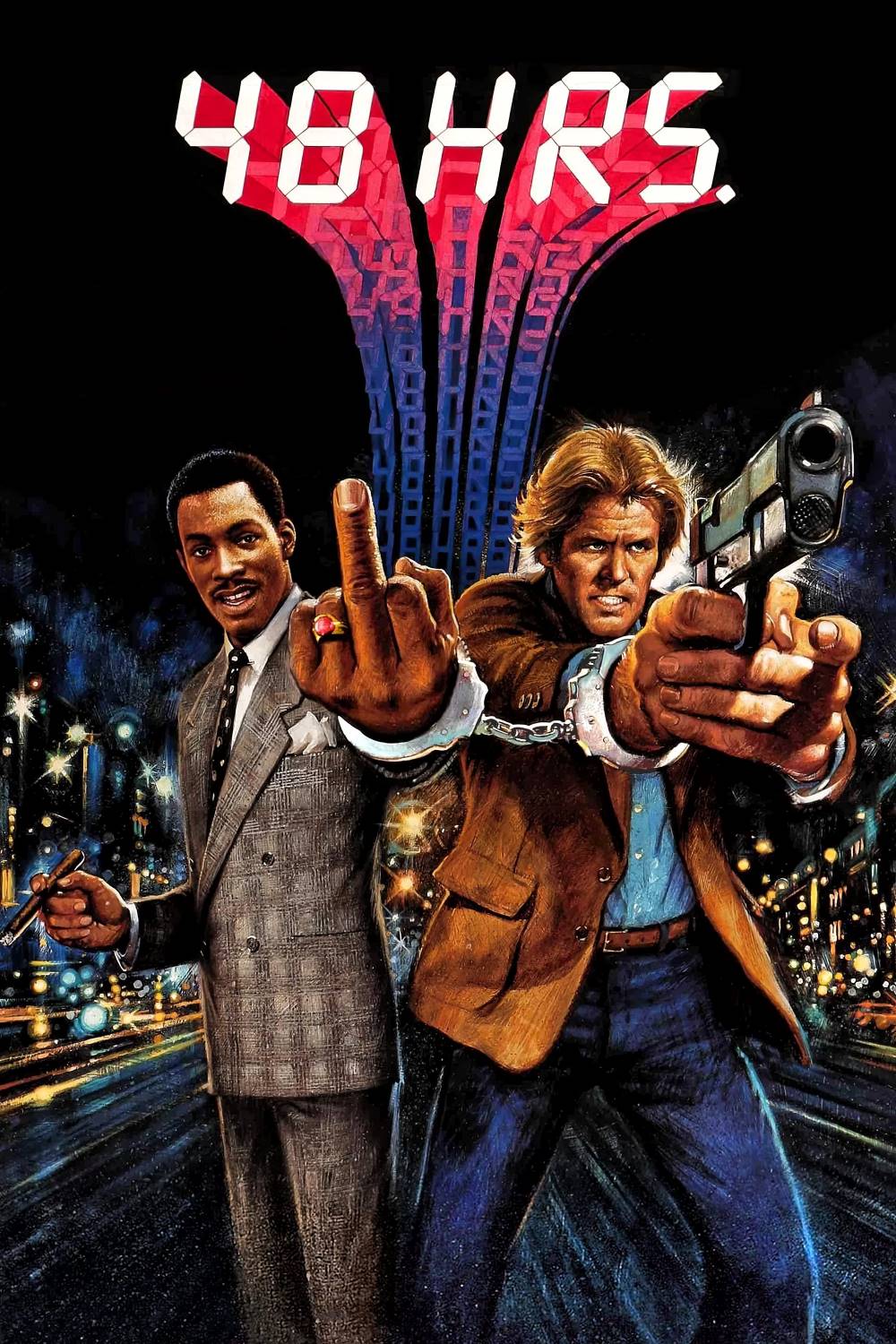
48 Hrs. bursts onto the screen with a gritty prison breakout that sets the stage for chaos in the foggy streets of San Francisco, where a pair of ruthless killers slip away after gunning down a cop’s partner in cold blood. Jack Cates, the surviving detective, is left battered and furious, piecing together a case that points to a slick convict named Reggie Hammond holding the key to the crooks’ whereabouts—and a stash of stolen cash. With time ticking down, Jack pulls strings to get Reggie out on a 48-hour pass, thrusting these two polar opposites into a reluctant alliance that turns the city into their personal battlefield of bullets, banter, and bad blood.

From the jump, Jack comes across as the ultimate rough-around-the-edges cop, nursing a flask under his trench coat, snapping at colleagues, and charging headfirst into danger like a man who’s got nothing left to lose. His apartment is a mess of empty bottles and regret, and his rocky relationship with his girlfriend underscores how the job has chewed him up and spit him out, leaving him more beast than man. Reggie, by contrast, rolls in with street-honed swagger, his prison jumpsuit barely containing the energy of a guy who’s survived by being quicker on his feet and sharper with his mouth than anyone around him. He’s got a girlfriend waiting with that hidden money, and no intention of playing nice with a cop who’s eyeing him like fresh meat.

The beauty of their pairing lies in how the film lets their friction spark from the very first shared car ride, where Jack’s growled commands clash against Reggie’s nonstop ribbing, turning a simple stakeout into a verbal demolition derby. Picture them peeling out after a lead goes south, tires screeching through narrow alleys while Reggie gripes about the beat-up car and Jack slams the dash in frustration—it’s these raw, unscripted-feeling moments that make the movie breathe. As they hit up seedy bars, chase informants through strip joints, and dodge ambushes, the script peels back layers: Jack’s not just a bully, he’s haunted by close calls; Reggie’s bravado masks real fear of ending up dead or broke.

One standout sequence drops them into a hillbilly roadhouse packed with hostile locals, where Reggie grabs the mic for an impromptu takedown that flips the room from menace to mayhem, buying them time while Jack backs him up with sheer firepower. It’s tense, hilarious, and perfectly timed, showing how their skills complement each other—Jack’s brute force meeting Reggie’s silver tongue—in ways neither saw coming. The villains, led by a stone-cold Luther and his trigger-happy sidekick, keep the heat cranked high, popping up for savage hits that leave bodies in the gutter and force the duo to improvise on the fly, like hot-wiring rides or shaking down lowlifes for scraps of intel.

Walter Hill’s direction keeps it all taut and visceral, with handheld cameras capturing the sweat and grime of every punch thrown or shot fired, no glossy filters to soften the blows. The San Francisco backdrop shines through rain-slicked hills, neon-lit dives, and shadowy piers, giving the action a grounded, almost documentary edge that amps up the stakes. Sound design punches too—the roar of engines, the crack of gunfire, the thud of fists—layered over a pulsing ’80s score that shifts from funky grooves during chases to ominous drones in quieter beats, mirroring the push-pull between comedy and threat.

Diving deeper into the characters, Jack’s arc feels earned through small touches: a hesitant phone call to his ex, a flicker of respect when Reggie saves his skin, moments that humanize the hardass without forcing redemption. Reggie evolves too, his initial scam-artist vibe giving way to flashes of loyalty, like when he risks his neck to protect that cash not just for himself, but to build something real outside the walls. Supporting roles flesh out the world—the precinct captain barking orders, the sultry singer tangled with the bad guys, Reggie’s tough-as-nails woman who won’t take guff—but they never overshadow the core duo, serving as sparks for conflict or comic relief.

Pacing-wise, the film rarely pauses for breath, clocking in under two hours yet packing in a full meal of twists, from double-crosses at motels to a frantic foot chase across rooftops that leaves you winded. The 48-hour ticking clock adds urgency without gimmicks, every dead end ramping tension as dawn breaks on their deadline. Humor lands organically too, not from slapstick but from character-driven zingers—Reggie calling out Jack’s outdated tough-guy schtick, Jack grumbling about Reggie’s flashy clothes—keeping the tone light even as blood spills.

Of course, watching through modern eyes, the dialogue packs some era-specific punches, with raw language around race, cops, and crooks that reflects ’80s attitudes head-on, for better or worse. It’s unapologetic, mirroring the film’s macho pulse, but adds texture to the time capsule feel, making replays fascinating for how boldly it leaned into taboos. The women, while fierce in spots, often play second fiddle to the bromance brewing, a hallmark of the genre that 48 Hrs. helped cement before it evolved.

What elevates this beyond standard action fare is how it nails the buddy dynamic’s slow burn: no instant high-fives, just gradual thaw from shared survival, culminating in a dockside finale where alliances solidify amid explosions and last stands. The editing zips between high-octane set pieces and downtime breather scenes, like a roadside diner heart-to-heart that reveals backstories without halting momentum. Cinematography plays with shadows and neon to heighten paranoia, turning everyday spots into pressure cookers.

Influence-wise, you can trace lines straight to later hits—the grizzled vet and smooth-talking newbie formula got refined here, blending Lethal Weapon grit with Beverly Hills Cop wit years ahead of schedule. Performances anchor it all: the leads’ chemistry crackles, carrying weaker beats on sheer charisma, while Hill’s lean style ensures every frame earns its keep. Runtime flies because it’s efficient, no fat, just muscle.

Final stretch ramps to operatic violence on those windswept docks, bullets flying as personal scores settle, leaving our heroes bloodied but bonded in a way that feels hard-won. 48 Hrs. endures as a rowdy blueprint for the genre, blending laughs, thrills, and toughness into a package that’s addictive on first watch and rewarding on revisit. It’s got heart under the bruises, edge in the jokes, and a vibe that’s pure ’80s adrenaline—grab it for a night of no-holds-barred entertainment that still packs a wallop over four decades later.

48 Hrs (1982, directed by Walter Hill)


48 Hrs. begins with a violent and bloody jailbreak.  The fearsome Billy Bear (Sonny Landham) helps his criminal associate, Albert Ganz (James Remar), escape from a chain gang and kills several guards in the process.  Billy and Ganz then head to San Francisco, where they start killing their former associates while searching for Luther (David Patrick Kelly).  Another bloody shootout leaves several detectives dead and SFPD Detective Jack Cates (Nick Nolte) looking for revenge.

That’s not the way you might expect one of the most famous comedies of the 80s to begin.  It’s not until Jack arranges for another associate of of Ganz’s to be released from prison for 48 hours that anything humorous happens in the film.  However, because Reggie Hammond is played by Eddie Murphy, 48 Hrs. quickly becomes very funny.

Murphy was appearing on Saturday Night Live when he was cast in 48 Hrs, in a role that was written with Richard Pryor in mind.  One of the first things that Murphy requested was that the character’s name be changed from Willie Biggs to Reggie Hammond.  Murphy made the role his own and watching him, it’s hard to believe that he was only 21 and also that 48 Hrs was his first film.  Murphy performs with the confidence of a natural movie star.  He’s good in the film’s most famous scene, where he pretends to be a cop and talks down an entire bar full of rednecks.  (I can’t repeat his most famous line but everyone knows it.)  But Murphy is even better in the scenes where he’s just reacting to Nolte’s slovenly cop.

The comedy in 48 Hrs comes from the mismatched partnership and initially hostile chemistry of Jack Cates and Reggie Hammond.  Cates has a job to do while Reggie, understandably, wants to enjoy as much freedom as he can before he gets sent back to prison.  The humor is so effective because it’s almost entirely character-based.  There are no gags but there are two well-written characters with differing ways of looking at the world who have to learn how to work with each other.  The two of them start out disliking and distrusting each other but ultimately become best friends, even if Jack does punch Reggie and Reggie does keep trying to steal Jack’s lighter.  Because this is a Walter Hill movie, there’s still a lot of action.  Nolte and Murphy may make you laugh but there’s nothing funny about full-on psycho performances of James Remar and Sonny Landham.  48 Hrs. not only allows Murphy and Nolte to show off their comedic ability but it also allows them to be true action heroes.

Popular with critics and audiences, 48 Hrs. was the most commercially successful film of 1982.  It set the standard for most buddy-cop movies to this day and it introduced the world to Eddie Murphy.