Horror Review: Bone Tomahawk (dir. by S. Craig Zahler)


“What is sacred to a bunch of goddamned savages ain’t no concern of the civilized man! We got permission!” — Buddy

Bone Tomahawk (2015) begins in quiet dread. A still horizon, the whisper of wind across rock, a hint of bone under the dust—the American frontier looms like an unfinished thought. This silence sets the tone for S. Craig Zahler’s remarkable debut, a film that wears the form of a Western only to strip it down to nerve and marrow. It’s a story of decency under siege, of men pushing past the last borders of civilization and discovering that what lies beyond is not the unknown, but the origin of everything they thought they’d overcome.

At first glance, the premise seems familiar. When several townspeople vanish from the small settlement of Bright Hope, Sheriff Franklin Hunt (Kurt Russell) leads a rescue expedition into the desert. Riding with him are three others: the injured but determined Arthur O’Dwyer (Patrick Wilson), whose wife has been taken; his tender-hearted deputy, Chicory (Richard Jenkins), whose chatter and old-fashioned kindness soften the film’s bleak austerity; and the self-assured gunman John Brooder (Matthew Fox), a man equal parts gallant and cruel. Together, they represent the moral cross-section of a civilization still trying to define itself—duty, love, loyalty, arrogance.

Their journey outward becomes one of inward descent. Zahler’s script unfolds at a deliberate pace, steeped in stillness and exhaustion. The first half moves like ritual—meandering conversations, humor worn thin by weariness, the small comforts of campfire fellowship flickering against the vast emptiness around them. It’s here that Bone Tomahawk begins its slow transformation. What starts as a rescue Western gradually becomes something deeper and older. By stripping away the romance of exploration, Zahler reveals the frontier not as a space of discovery, but as a place of reckoning—a mirror of the instincts civilization pretends to have tamed.

The film’s most haunting element is its portrayal of the so-called “troglodytes,” the mysterious group believed to be responsible for the kidnappings. They are less a tribe than an incarnation of the wilderness itself—nameless, wordless, and utterly beyond cultural translation. Covered in ash, communicating through the eerie hum of bone instruments embedded in their throats, they seem less human than ancestral, as though the land itself had dragged them upward from its own depths. Zahler refuses to frame them anthropologically or politically; instead, they represent the primal truth the American frontier sought to bury under its myths of order and progress.

Western films, for more than a century, have mythologized the wilderness as an external force—something to conquer. But the “troglodytes” in Bone Tomahawk feel like the soil’s memory of what came before conquest: the savage necessity that built the very myths used to conceal it. They are the frontier’s unspoken ancestry—what remains after all the churches, taverns, and codes of decency are stripped away. Civilization needs them to remain hidden in the canyons, out of sight and unspoken, because their existence contradicts everything the polite narrative of the Old West stands for. They are what progress denies but cannot erase.

Zahler’s restraint strengthens this allegory. He shoots the desert not as backdrop but as evidence—a geographical wound extending beyond the horizon. The wilderness looks stunning but predatory, its stillness full of threat. Even when the posse’s odyssey is free of immediate danger, there’s the growing sense of being consumed: by the sun, by exhaustion, by the quiet knowledge that the world they’re riding into has no use for their notions of law and virtue. Civilization, here, is a pocket of light surrounded by something much older and hungrier.

That hunger, the need to conquer and consume, connects Bone Tomahawk to its spiritual predecessor, Antonia Bird’s Ravenous (1999). Bird’s film transformed the Donner Party’s historical ghosts into an allegory of Manifest Destiny, equating cannibalism with American expansion—the act of devouring land, life, and self under the guise of progress. Zahler continues that lineage with deliberate starkness. For him, violence in the frontier isn’t just literal; it’s foundational, the unacknowledged currency of civilization. Where Ravenous expressed its critique with mordant humor, Bone Tomahawk speaks in solemn tones, observing how every civilized act—the enforcement of law, the defense of home—rests upon the refusal to see what was consumed to create it.

The “troglodytes” embody that refusal incarnate. They are not villains in the traditional sense; Zahler grants them no ideology or explanation, only the primal fact of their survival. In doing so, he flips the Western’s moral equation: the barbarians at the edge of civilization are not invaders, but reminders of its origins. They are ghosts of the violence that founded the frontier, the unspoken proof that the West was never as far from savagery as it claimed. To look upon them is to glimpse the beginning—the raw, lawless reality America buried beneath the idea of itself.

Kurt Russell, magnificent in his restraint, anchors this tension. His Sheriff Hunt evokes a fading kind of decency: measured, fair, and unwavering even in futility. Russell plays him not as a Western hero but as a man committed to honor in a world that no longer rewards it. His calm authority softens only around those he loves and hardens in the face of what he doesn’t understand. In that measured decency lies the film’s aching question: what happens when morality meets something that does not recognize it?

Patrick Wilson’s O’Dwyer embodies faith’s physical agony—a man driven by devotion, limping through a landscape that punishes his determination. Richard Jenkins provides heart and subtle tragedy; his rambling, almost comical musings on aging and loneliness become the story’s moral texture, the sound of humanity scraping against extinction. And Matthew Fox, in his most precise performance, gives voice to the arrogance of the civilized killer—a man who fashions violence as virtue, believing his elegance excuses his cruelty.

Together, the four men form a living cross-section of the West’s moral mythos. Their journey exposes how fragile those ideals become once separated from the safety of town limits. They embody the dream of order confronting the truth of chaos—and the cost of looking too long into the void beyond it.

Zahler’s filmmaking is remarkably self-assured for a debut, and what stands out most is his willingness to trust stillness. There is no manipulated rhythm, no swelling score to guide emotion. The soundscape is shaped by wind, hoofbeats, crackling fires, and quiet voices rattled by exhaustion. The silence itself becomes a spiritual presence, pressing down on the travelers until conversation feels like resistance. Each scene builds tension not through action, but through waiting—the dread of what remains unseen, what civilization has pretended not to hear.

The violence, when it erupts, is unforgettable. Zahler does not linger voyeuristically, yet the weight of what happens lands with moral precision. The horror feels earned—an eruption of the primal into the civilized. Its purpose is not to shock, but to remind: the line between the men of Bright Hope and the people they fear is thinner than they want to believe. The frontier, as Zahler presents it, is not an untouched wilderness but the graveyard of an ongoing denial—the myth of progress stacked atop the bones of the devoured.

In that way, Bone Tomahawk moves beyond the idea of genre blending. It is not merely a “horror Western,” but a meditation on how those two sensibilities spring from the same source. Both depend on the confrontation between safety and the unknown, belief and disbelief. Both are rituals of fear, structured to reassure yet always at risk of unveiling the truth. Zahler’s greatest achievement is the way he strips away that reassurance. By the film’s final stretch, the promises of civilization—hope, faith, righteousness—have been exposed as fragile constructions built atop an ancient void.

And yet, through all its darkness, Zahler allows a flicker of grace. The film’s humanity endures in small gestures: a conversation interrupted by laughter, a hand extended in kindness, the stubborn persistence of dignity in impossible circumstances. Bone Tomahawk never preaches or offers catharsis, but it does something harder—it bears witness. It shows men maintaining decency not because it protects them, but because it defines them. In that endurance lies the film’s quiet heartbeat.

Like Ravenous before it, Bone Tomahawk reimagines cannibalism and frontier brutality not as aberrations, but as mirrors reflecting a truth about the American project: that every step westward demanded erasure, and that what was erased refuses to stay buried. The “troglodytes” linger not only in the canyons but within the culture that feared them—proof that civilization’s polish has always covered the rough, enduring shape of appetite.

By the end, what remains is not revelation or redemption, but silence—the kind that comes after myth collapses. Zahler’s film leaves its characters and viewers alike to confront the space where civilization ends and something older begins. The desert remains untouched, vast and timeless, holding the secret at the center of all Western stories: that progress has always been haunted by the primitive, that the world we built never left the wilderness—it merely disguised it.

Measured, brutal, and strangely tender, Bone Tomahawk stands as both a reclamation and an undoing of the Western myth. It listens to the echoes of the Old West and answers them not with triumph, but with reckoning. In its dust and silence lies a truth older than law or legend: civilization may light its fires, but there will always be something in the dark watching, waiting—the part of us it never truly left behind.
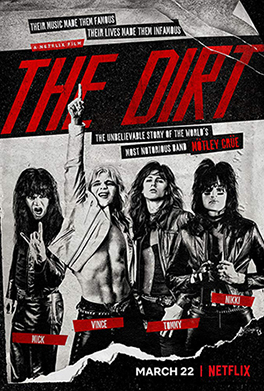
Better Drugs and Bigger Parties: The Dirt (2019, directed by Jeff Tremaine)


If you want to experience the sex, drugs, and rock and roll lifestyle, you could start a band, play some clubs, get signed to a record deal, go on tour, and eventually burn yourself out.  Of course, if that’s too much trouble or if you’re already older than 30, I guess you can just watch The Dirt on Netflix.

The Dirt is the latest band biopic.  This time the band is Mötley Crüe  and the film has all the usual VH1 Behind the Music style anecdotes.  Watch Nikki Sixx (Douglas Booth) nearly die of a heroin overdose!  Ponder how Tommy Lee (Chase “Machine Gun” Kelly) could have been stupid enough to cheat on Heather Locklear (Rebekah Graf)!  Listen as Mick Mars (Iwan Rhoen) refuses to tell how old he is!  Gasp as Vince Neil (Daniel Webber, giving the movie’s best performance) deals with tragedy after tragedy!  When you’re not watching Tommy Lee go down on a groupie or Nikki learning how to shoot dope, you can watch as Ozzy Osbourne (Tony Cavalero) snorts a line of ants and slurps up his own urine.  The movie is based on Mötley Crüe’s autobiography and the actors playing the members of the band take turns breaking the fourth wall and telling their story.  Nikki Sixx says, “We were a gang of fucking idiots!” and the movie seems to agree.  Nikki has always had a reputation for being the smartest member of Mötley Crüe.  Of course, when your main competition is Tommy Lee, that’s not too high of a bar to clear.

Especially when compared to other band biopics like Straight Outta Compton and Bohemian Rhapsody, The Dirt is shallow and overly episodic.  Nikki says that Mötley Crüe’s main concern was finding “better drugs and bigger parties,” and The Dirt is the same way.  It never digs too deep into the band’s music or the reasons why, for a period of time in the 80s, they were so popular.  The story is told by the members of the band so it often switches between being honest about the band’s history and making excuses for some of the members’s worst behavior, like when Tommy punches his first fiancee.  Fans of Mötley Crüe might enjoy seeing all of the stories about the band brought to life.  Meanwhile, those who didn’t care about Mötley Crüe before watching The Dirt will probably care even less after spending nearly two hours watching them act like self-destructive fools.  One thing that the movie gets undeniably correct: After all these years, Dr. Feelgood still rocks.


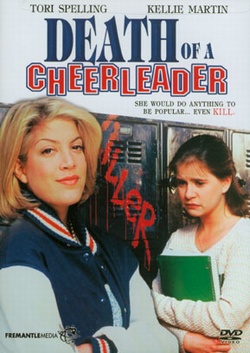
Back to School Part II #29: A Friend To Die For a.k.a. Death of a Cheerleader (dir by William A. Graham)


death_of_a_cheerleader

Over the past couple of year, I’ve had so much fun making fun of Tori Spelling’s performance in the original Mother, May I Sleep With Danger? that I almost feel like I have an obligation to review a movie in which she gave a halfway decent performance.

That film would be another 1994 made-for-TV-movie.  It was apparently originally broadcast as A Friend To Die For but most of us know it better as Death of a Cheerleader.  That’s the title that’s used whenever it shows up on Lifetime.  There actually was a time when Death of a Cheerleader used to show up on almost a monthly basis but that was a while ago.  Lifetime has since moved on to other movies about dead cheerleaders.

Technically, as my sister immediately pointed out when I made her watch the movie, the title isn’t quite correct.  Though Stacy Lockwood (Tori Spelling) does try out for and is named to her school’s cheerleading squad, she never actually gets to cheer.  Instead, shortly after the school assembly in which her selection is announced, Stacy is found stabbed to death.  But really, Death of A Future Cheerleader doesn’t quite have the same ring to it.

As for who killed Stacy … well, it’s no secret.  This is one of those true crime films where the murderer is not only portrayed sympathetically but is the main character as well.  Angela Delvecchio (Kellie Martin) was a high school sophomore who was obsessed with trying to become popular.  She looked up to Stacey and desperately wanted to be her best friend.  (Why she didn’t just offer to bribe Stacey, I don’t know.  Maybe she hadn’t seen Can’t Buy Me Love….)  When Stacey got a job working in the school office, so did Angela.  Of course, the school’s somewhat sleazy principal (Terry O’Quinn, coming across like John Locke’s worst nightmare) only made it a point to talk to Stacey and pretty much ignored Angela.  When Stacey applied to work on the yearbook, so did Angela.  When Stacey tried out for cheerleading, so did Angela.

In fact, the only time that Angela stood up to Stacey was when Angela was taunting the school’s token goth (played by Kathryn Morris).  That turned out to be a mistake because Stacey never forgave her.  When Angela invited Stacey to a party, Stacey was reluctant to go.  When Stacey did finally accept the invitation, Angela stabbed her to death.

A Friend to Die For/Death of a Cheerleader is based on a true story and the film tries to lay the blame for Angela’s crime on the affluent neighborhood she was raised in.  Just in case we missed the message, the film actually features a Priest (played by Eugene Roche) who says that the community put too much pressure on Angela to succeed.

Uhmmm….okay, if you say so.

Seriously, this is a pretty good little true crime film and both Tori Spelling and Kellie Martin give really good performances but this whole “It’s society’s fault” argument is typical, mushy, made-for-TV, bourgeois liberal BS.  Angela picked up the knife, Angela committed the crime, end of story.  That said, A Friend To Die For is pretty good as far as these movies go.  I already mentioned the performances of Spelling and Martin but also keep an eye out for Marley Shelton, who gets a really good scene in which she explains that she never liked Stacey that much while she was alive.

You can watch A Friend To Die For/Death of a Cheerleader below!


Hallmark Review: The Sweeter Side of Life (2013, dir. Michael Damian)


IMG_6722

I remember sitting in a theater back in 1995 watching Clueless for the first time. I really enjoyed it and can still enjoy it today. Cher was certainly pampered, rich, and a bit of ditz, but she never lost her lovability. We could always tell there was a smart and wonderful person just underneath her exterior. We understood and believed her transformation from the superficial to the person we could see from the beginning waiting to spring forth from just under her persona. Even in the poor man’s Clueless that came out last fall on Hallmark called Harvest Moon they created a character that we could find endearing on some level. The Sweeter Side of Life does none of these things.

Just before showing that title card we are introduced to our main character named Desiree Harper (Kathryn Morris). We see her turn off her fancy alarm clock with a fancy watch sitting just next to it. Then we see that she not only sleeps with a sleep mask on but a pillow of sorts that wraps around her neck. Something someone uses for pain problems, but here is supposed to show just how rich she is. Then the typical walk-in closet scene happens while a maid cleans the New York City apartment where she lives. But she’s not unlikable enough yet.

IMG_6747

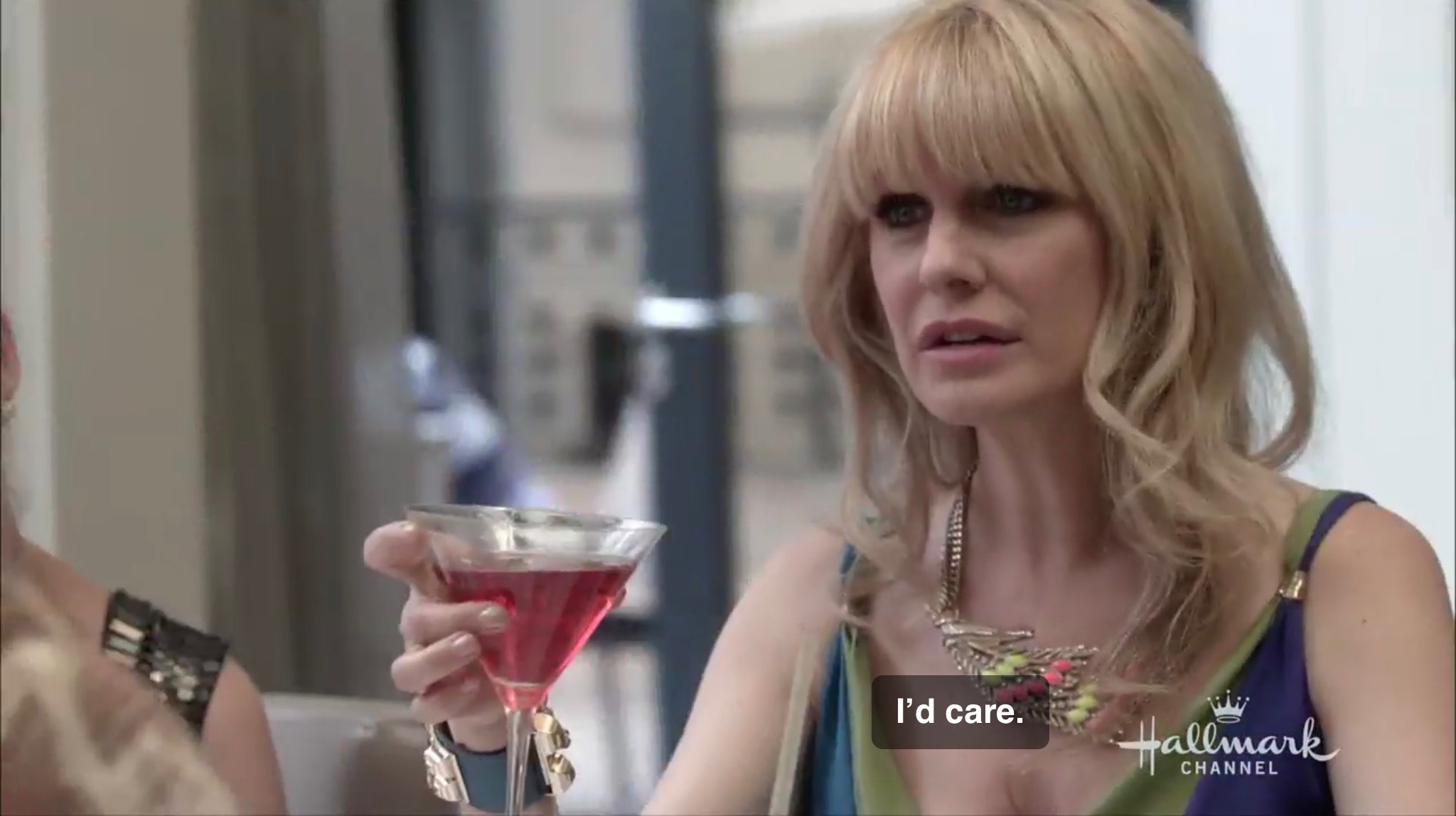
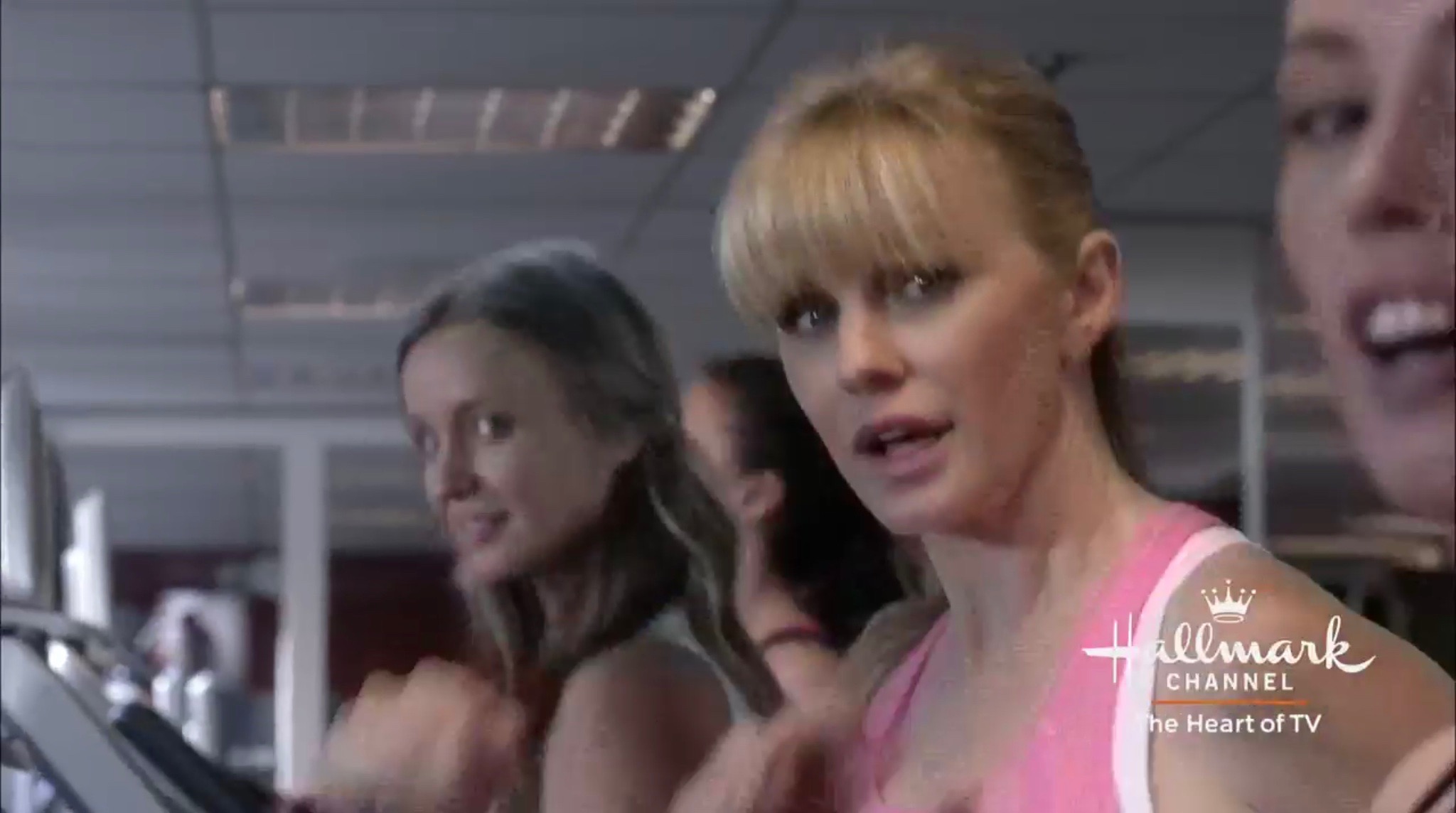
That’s why we get this scene with her friends at the gym looking at an overweight woman while debating the maximum weight allowed for wearing latex. This is followed by the shopping montage before she sits down at a lunch with her friends. One of them is seeing a guy named Renaldo who they just found out has three kids and a wife back in Argentina. Another friend says, “Who cares as long as his family stays over there, right?” Our lead who is already unbearable says she’d care. That’s the one hint at this point that there might be a decent person in there. I know I can’t really get across how she manages to be so darn unpleasant already, but take a look at her.

IMG_6761

Actress Kathryn Morris may be the nicest person in the world in real life, but her appearance combined with the way she acts in only these first few minutes makes it really hard to warm up to her. She goes home and finds her husband missed their anniversary for a last minute surgery so she gets drunk for the night. Couldn’t care less at this point.

IMG_6780

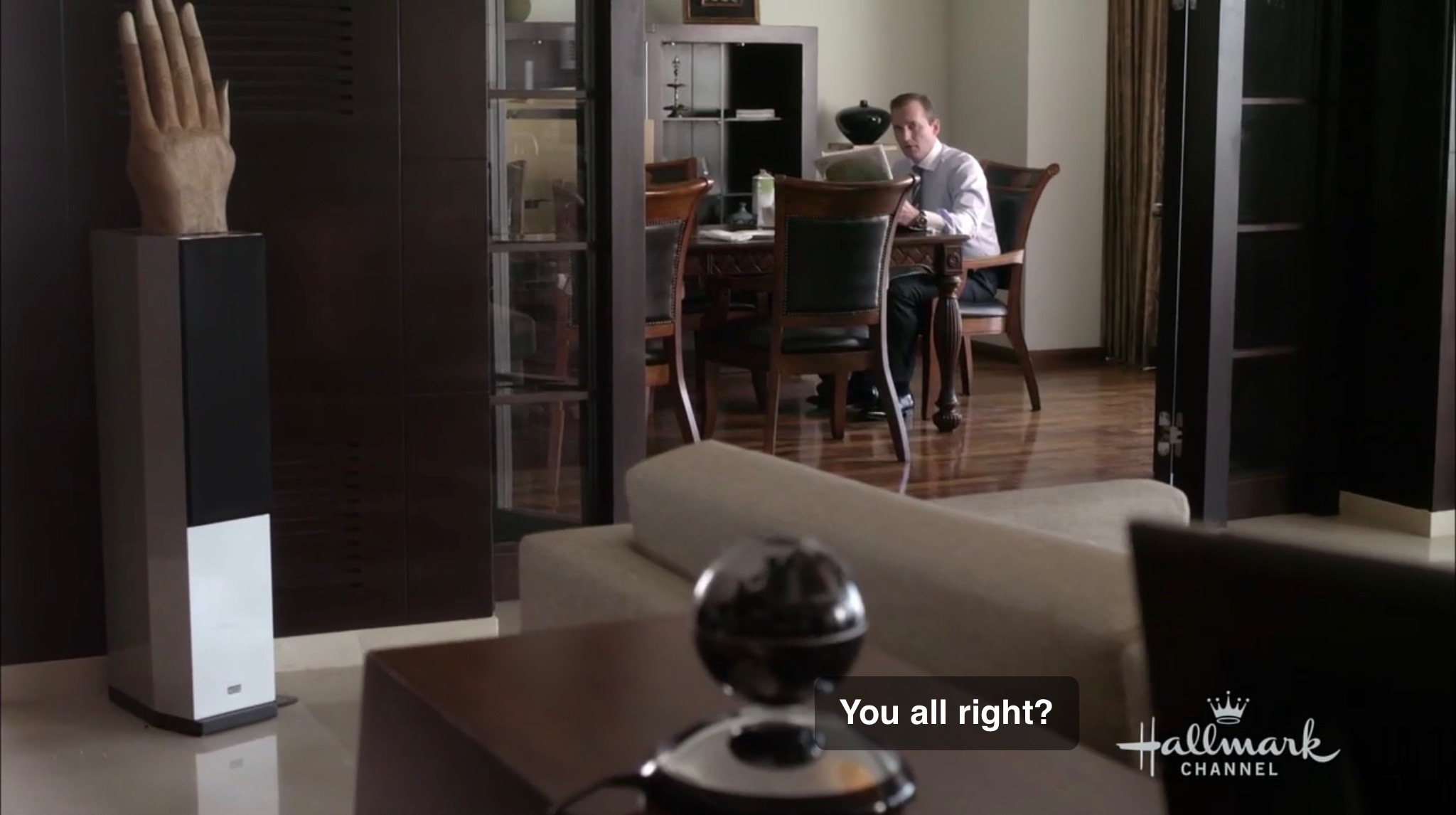
The next morning she finds her husband at the dinner table and we see that they have a giant hand sculpture in the house. That’s interesting. Now we find out that her husband is going to leave her for his 20 year-old acupuncturist Olive. Here’s my requisite joke that he has also been sticking her with a little needle too. Couldn’t let that go. Now we get to the best character of the film.

IMG_6823

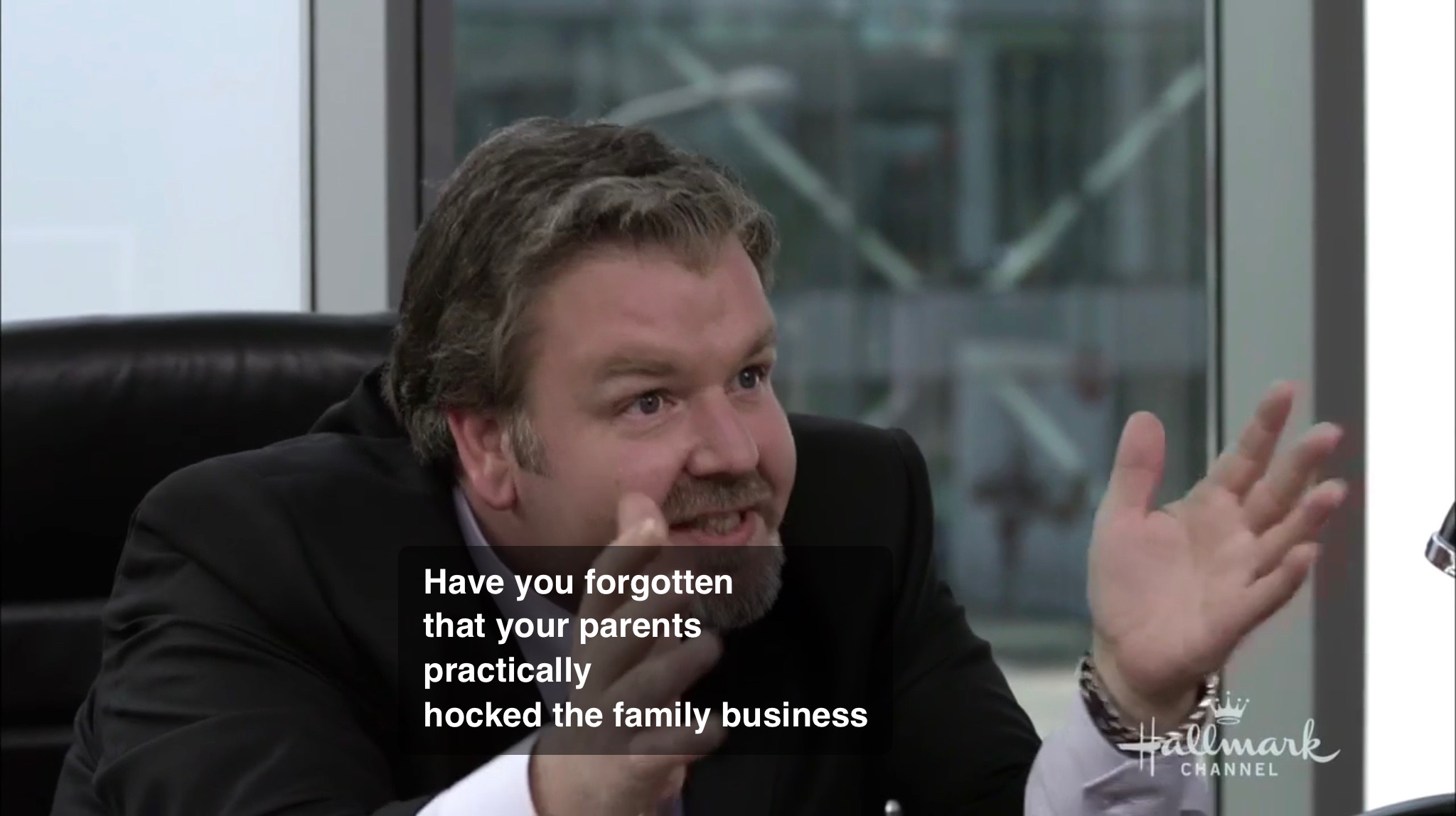
This is her somewhat slimy, comical, and lovable lawyer. If they could make his character this way, then why couldn’t they write her the same way? He’s here to remind her she signed a prenuptial agreement. The movie will never bring up whether the agreement had anything in it about adultery which is weird. He also reminds the audience that her family bent over backwards to send her to Columbia where she obtained an MBA which she never used. She says that the interview would ask her about job experience and that all she has experience in is shopping. There are jobs where that actually is a skill, but they don’t bring that up even though I have seen a Hallmark movie with a personal shopper (12 Gifts of Christmas). He asks her where the girl he knew in elementary school went. However, he doesn’t give us any details which would have been really important so we could see beyond her nasty exterior.

Now of course her credit card is taken away from her, she gets hit by a car, and she wakes up in New Jersey with her dad. Her family hasn’t changed her room since she was little. That’s nice. Her father even has breakfast ready so what are some of those first words out of her mouth?

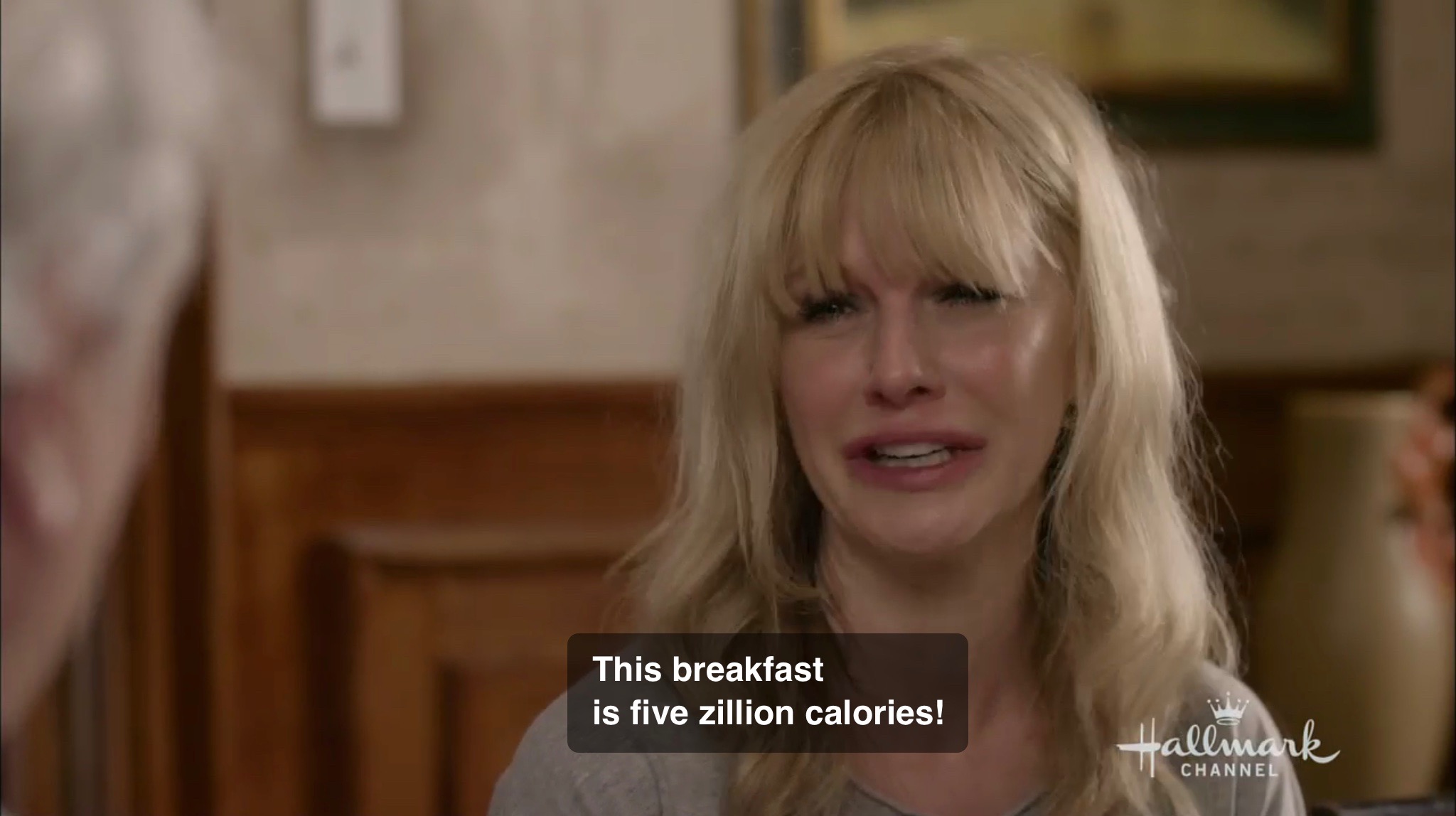
IMG_6906

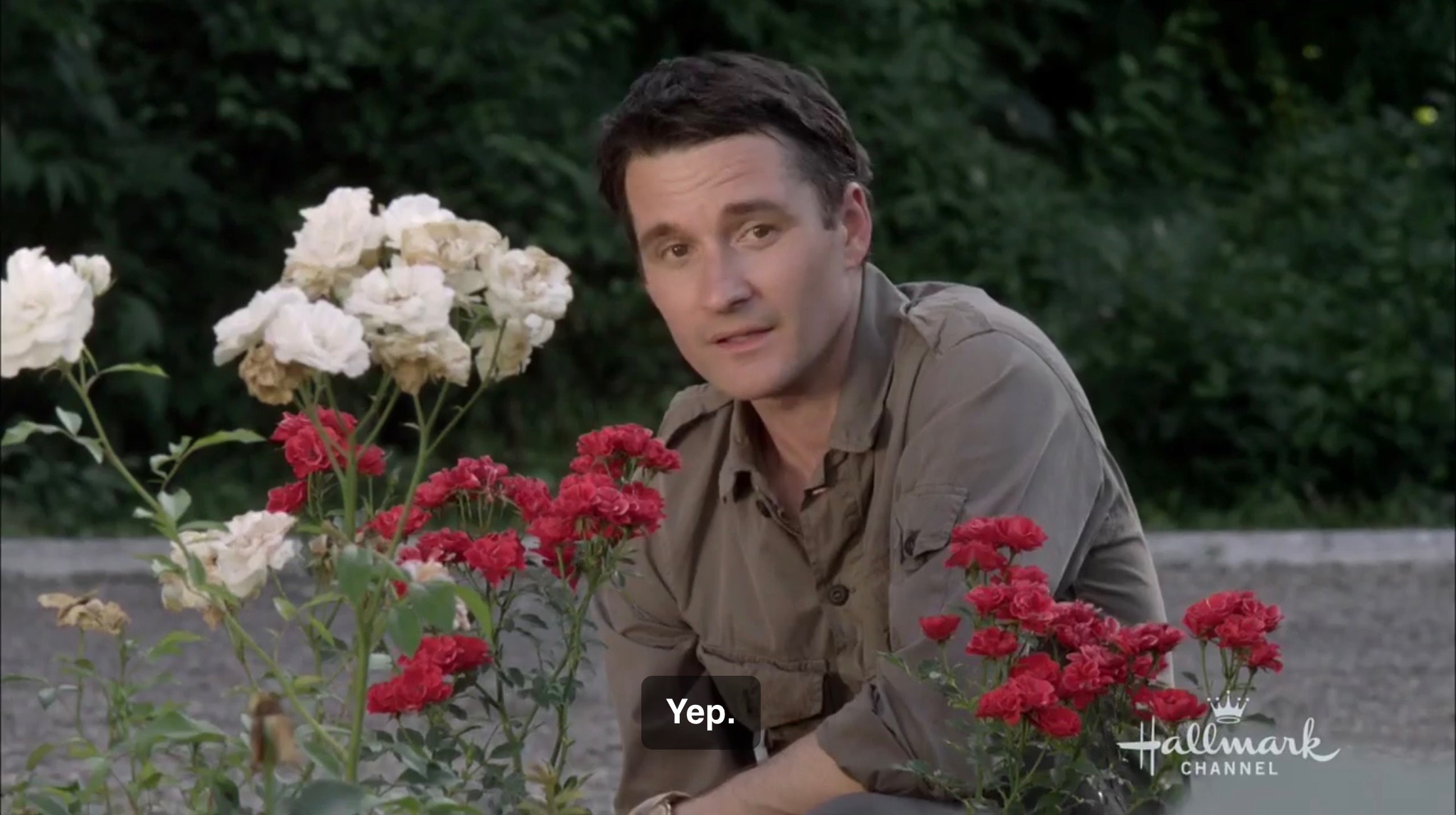
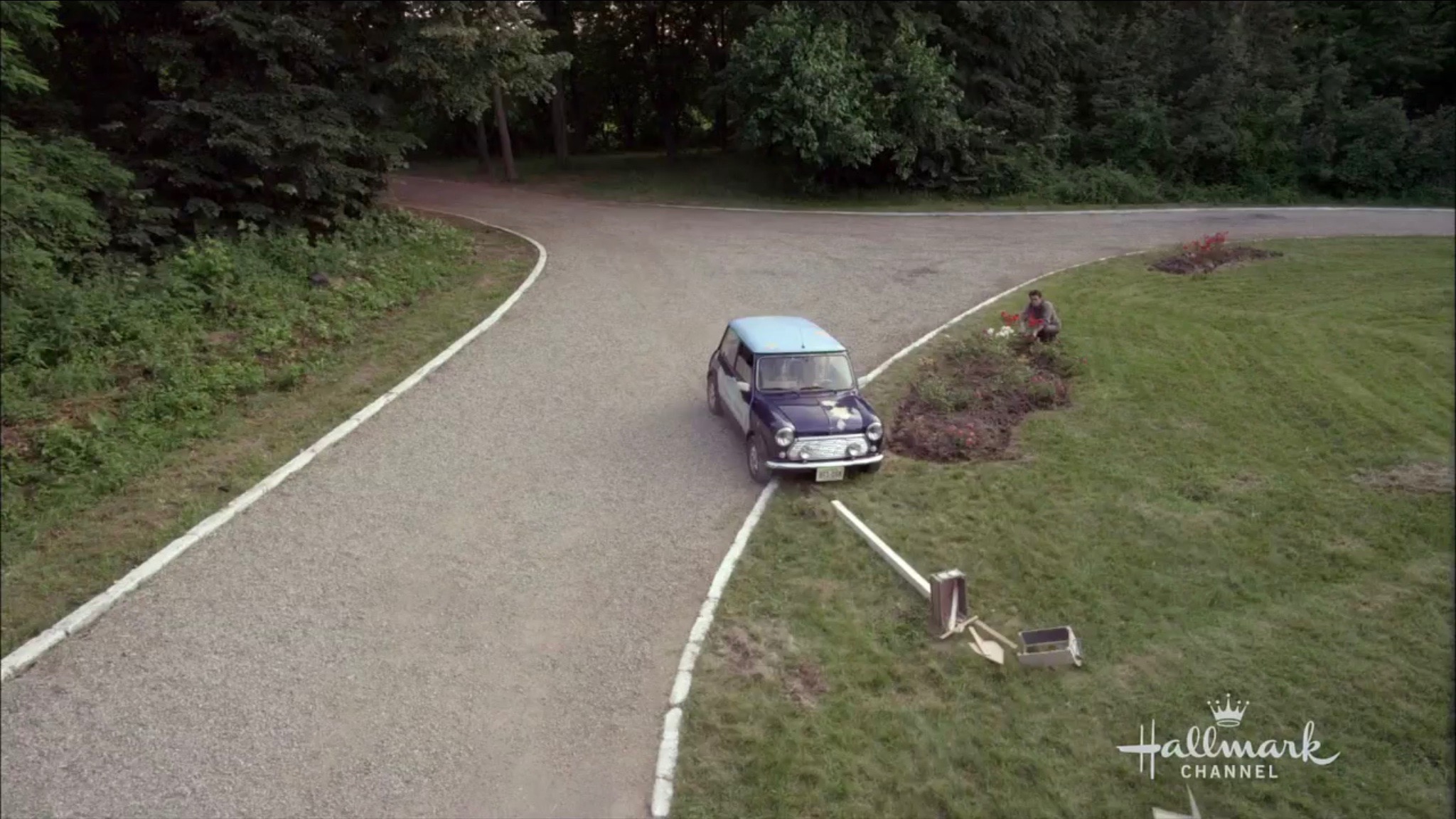
Oh, and the fact that the husband said she shouldn’t drink so much dairy before dumping her doesn’t make this line any more digestible. She moans and groans including that she was a good wife. Could have been helpful for us to see something that hinted at her being a good wife. All I saw was body shaming and shopping. She wonders how she is going to support herself. The father reminds her that she knows how to bake. He runs a bakery. Since she hasn’t been shell shocked enough, we need to have her do some deliveries using the local florist’s car. This really only exists so she can meet a love interest. Yes, this movie will ask us to buy that this guy…

IMG_6984

should have any reason to want to be with her, despite only being in a couple of scenes together. He’s rich too. Of course their first meeting has her hitting and knocking down his bird house.

IMG_6978

I think the screenwriters may have seen Clueless. Here she was looking at someone getting into a chopper and saying she wants the rich life back before hitting the bird’s nest. Love?

She makes it back alive and we get a proper introduction to the florist. She is also a reasonably likable character especially because we find out she’s smart and cultured even when it comes to rap music.

Now we get a weird scene. The movie will never follow this scene up either to really explain it. There’s a black kid who works at the bakery. She catches him presumedly stealing from the register, but covering it up by saying that it has just been popping out on it’s own. This is never followed up on even though he asks if he can take on more duties than just cleaning up and that his family needs the money. Is the film saying he was going to steal and that she is helping him or not? And the fact that someone immediately comes up to the register, the drawer pops open, and he says it’s doing that again and needs to be fixed doesn’t help. Was this supposed to say that Desiree was racist? It doesn’t make sense. Especially when we will see her help a black policewoman by giving her one of her outfits a little later. A character that will come around at the end of the film in a relationship with the lawyer. Honestly, the movie would have made a lot more sense had she ended up with the lawyer who bends over backwards for her and has an affection for her. Also, remember Cher’s father was a lawyer in Clueless. I’m sure it’s just a coincidence.

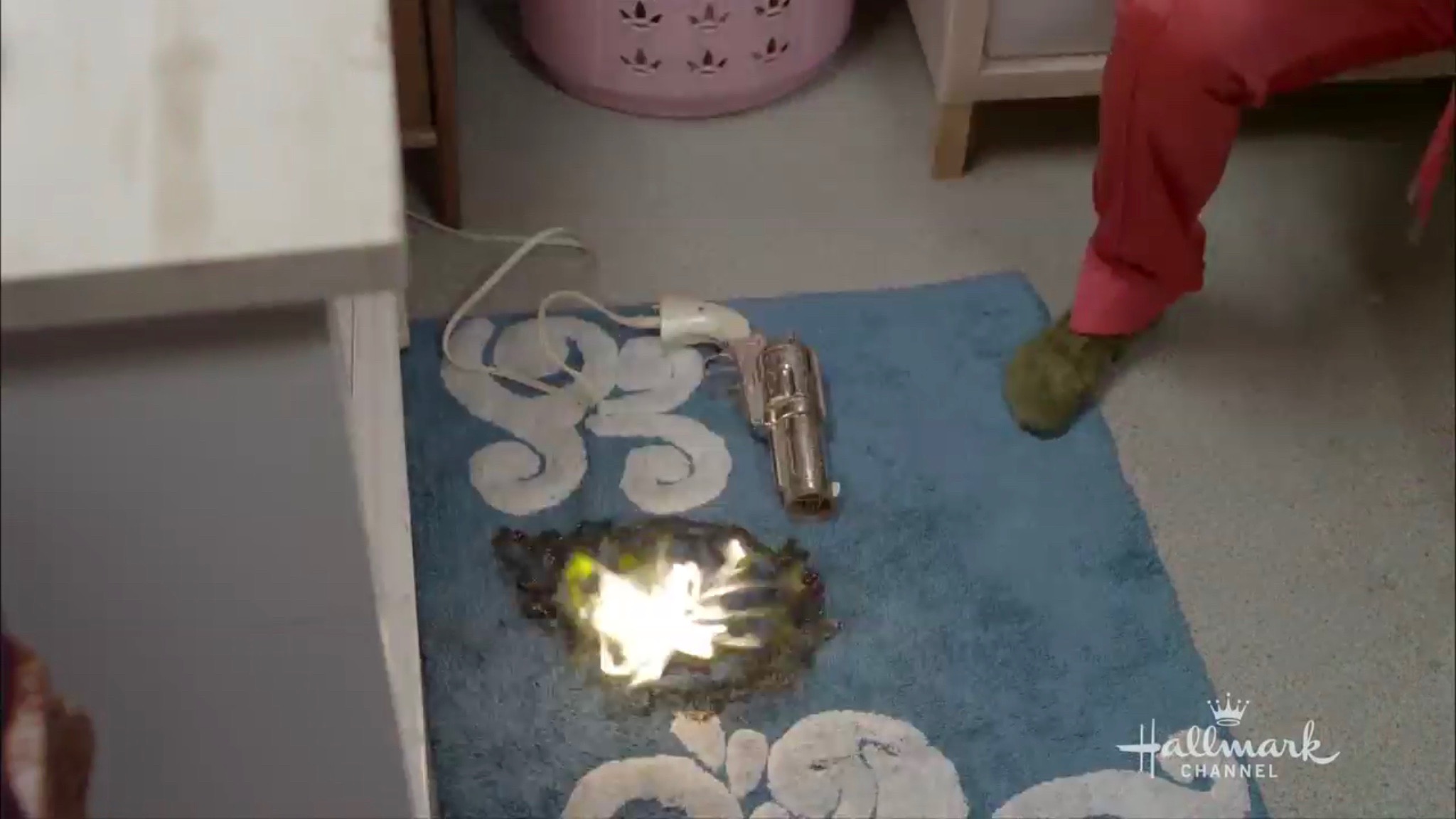
Anyways, it’s time to learn that Desiree is still stuck up because she wants to straighten her hair? I don’t get that at all. But what I really don’t get is why her hair dryer is shaped like a gun.

IMG_7062

Then in case we didn’t know the dad is really supposed to be, dare I say, clueless, he apparently had no idea that some clothes have to be hung to dry and has shrunk one of her dresses. What? He raised her and isn’t gay or anything so he was a married to a woman. Not that there aren’t men’s clothes that aren’t supposed to be put in the dryer as well. It’s just a really stupid scene that just tells us she still hasn’t changed and her dad is supposed to be so different because he is an idiot. Actually, this scene exists just so that the next ridiculous thing can happen on her way to meet with lawyers in the city.

IMG_7097

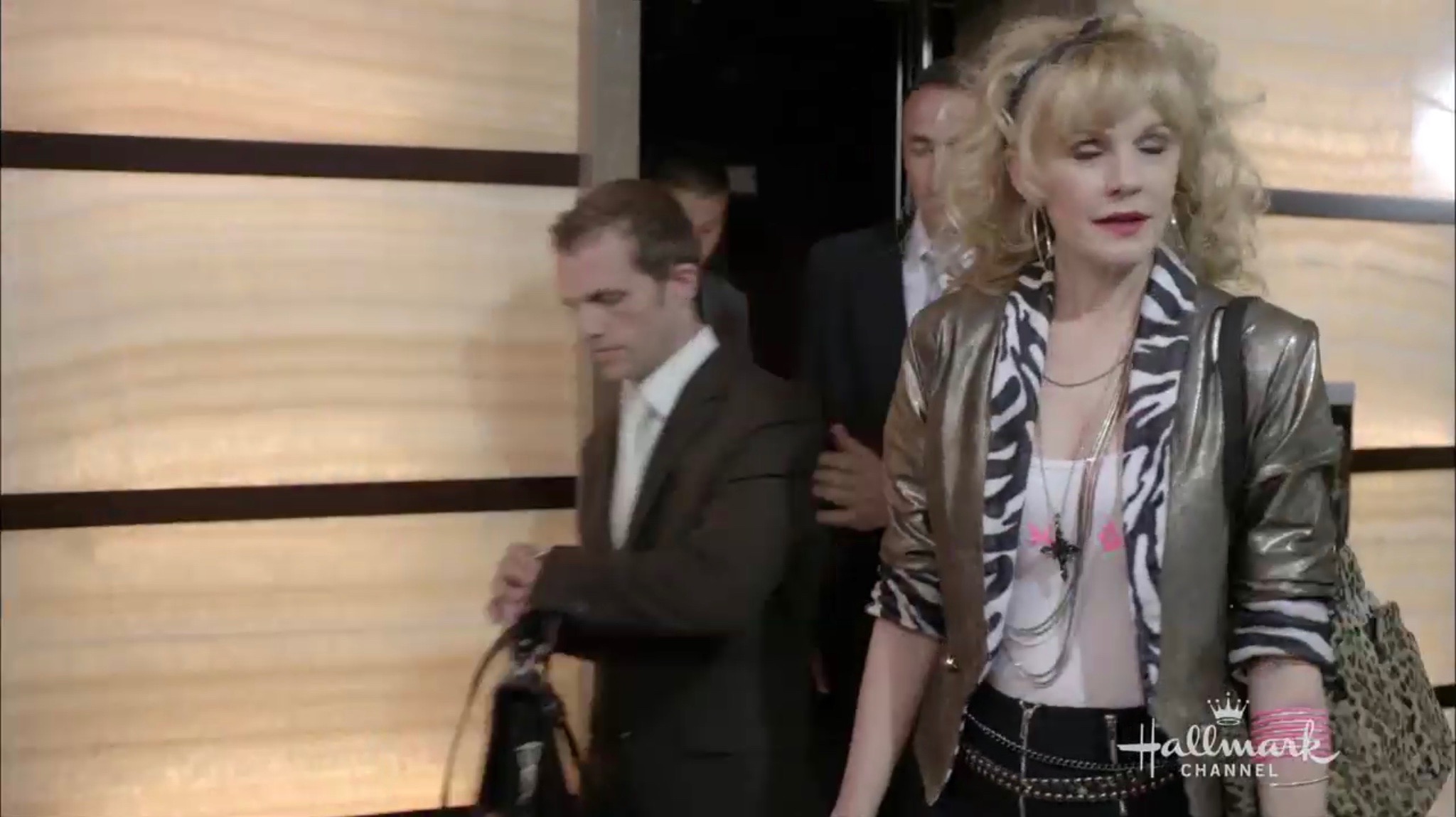
She has to wear the same clothes she wore when she lived with her father back in the 1980s cause she’s wearing the early Madonna clothes. Not funny, and nor did I feel sorry for her when one of her friends brushes her off because of her fall from riches. Oh, and when they have her walking through the crowded sidewalks they do it in slow motion with upbeat I’m going to show them music, but why? She hasn’t changed at all. She shrieked at the reality of having to wear the clothes and just finished complaining about her hair dryer as well as her father’s incompetence. Why use this type of shot that is normally reserved for someone full of confidence? Makes no sense.

Oh, and small complaint, but her former friend tells her the 80’s have come and gone twice after looking at her outfit. Can someone please tell that to all the woman I see with off the one shoulder tops in modern movies? This lady is right. It’s not the 1980s all over again. While we’re here. One of the things that made Clueless so good is that part of Cher’s transformation is to stop seeing and treating her friends as superficial and start to appreciate the good and special things about them. Why is it necessary to lump all her former friends in the trashcan for characters as deep as a puddle who we are supposed to accept as better simply because they live in New Jersey?

She now goes in to meet with her husband’s lawyer and you know why nothing is brought up in her defense? Like the adultery for example. It’s because the lawyer comes in and is stoned after a dental visit. Yep. The only thing of value here is that we find out Olive is pregnant.

IMG_7156

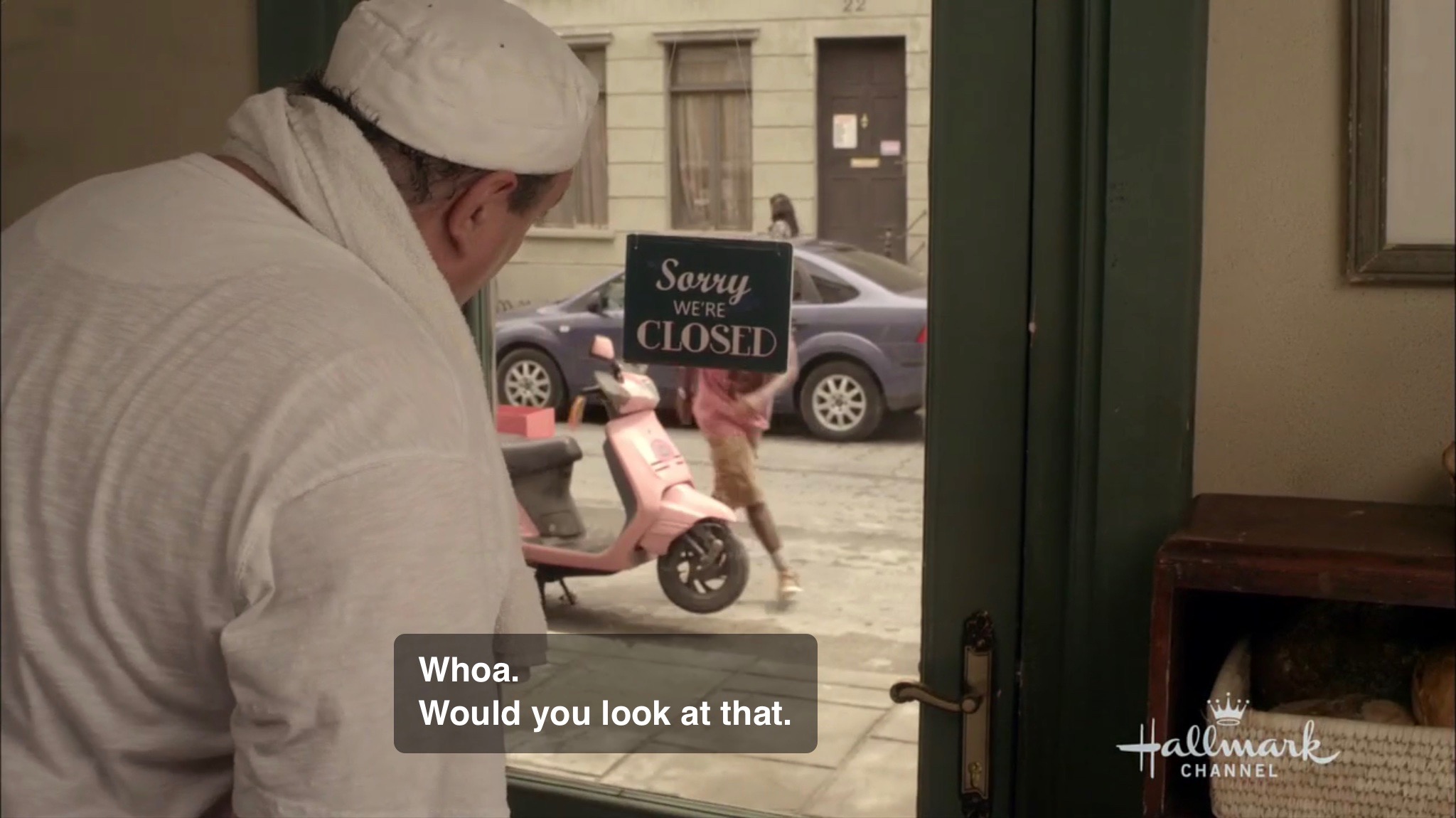
After a kitchen accident which isn’t funny, it’s time to insult the black kid who shows up on a pink scooter. He’s wearing pink too. Just in case we thought this was a meaningless little joke it immediately cuts to two guys at the counter where one says to the other “I want the fruity one” to which the other replies “I pointed to it first.” Yeah, that’s great. They do come across as if they are supposed to be a couple. Wouldn’t have been an issue if they hadn’t just harassed the kid about the pink. In fact, it would have made them seem progressive seeing as they don’t seem to have any reaction to these two guys. If you think I might be reading too much into this, then go watch the Hallmark movies Nearlyweds with it’s really gay stereotype hair dresser or Strawberry Summer where the singer has to assure the country folk that he doesn’t come from “those parts” of New York City but “the good parts.”

After people talk behind Desiree’s back, she gives them a piece of her mind, and a nun pops out of nowhere for comedy, the florist sits down with her to have a heart to heart. And by heart to heart, I mean insult her for standing up for herself. She even says that while they may have deserved it, her father certainly didn’t. Oh, that’s nice except nothing she said was directed at her father, he was there to hear their insults, and he doesn’t defend her after she stormed out, but simply asked who’s next. She then insults her for her supposed lousy work ethic. Really? When? When she did her father’s deliveries even though she knew she was out of practice driving or maybe when she tried baking even though she really has no experience in it. That and covering the counter for him. Yes, lousy work ethic indeed. By the way, Desiree still manages to be unlikable even though she doesn’t deserve this from the florist. We also discover that her father’s business isn’t doing so well. She says she had no idea since why would she. The florist tells her because she didn’t even bother asking. Somewhere during this, when even the audience is given no reason to believe his business is in trouble, she was supposed to ask him about it while also dealing with all these other things. I don’t like her, but cut her a little slack for crying out loud.

Now she seems to take an interest in her father’s business. That’s nice, but now bird house boy named Benny/Benoit stops by. We find out that he’s rich. Yep, she’s going to go from a rich guy in the city to a rich guy in the “suburbs”/”country” of New Jersey. During this scene he hands her a check to settle his account for the month. He’s a major chef and the scene leads us to believe he’s buying his stuff from them seeing as he is giving them a check. Why is the father’s business in trouble? Is this meant as a handout? He asks for her phone number here so is he trying to buy her or lure her to him with his money?

I keep bringing these things up because this movie keeps doing stupid things throughout it. She’s still rather insufferable too.

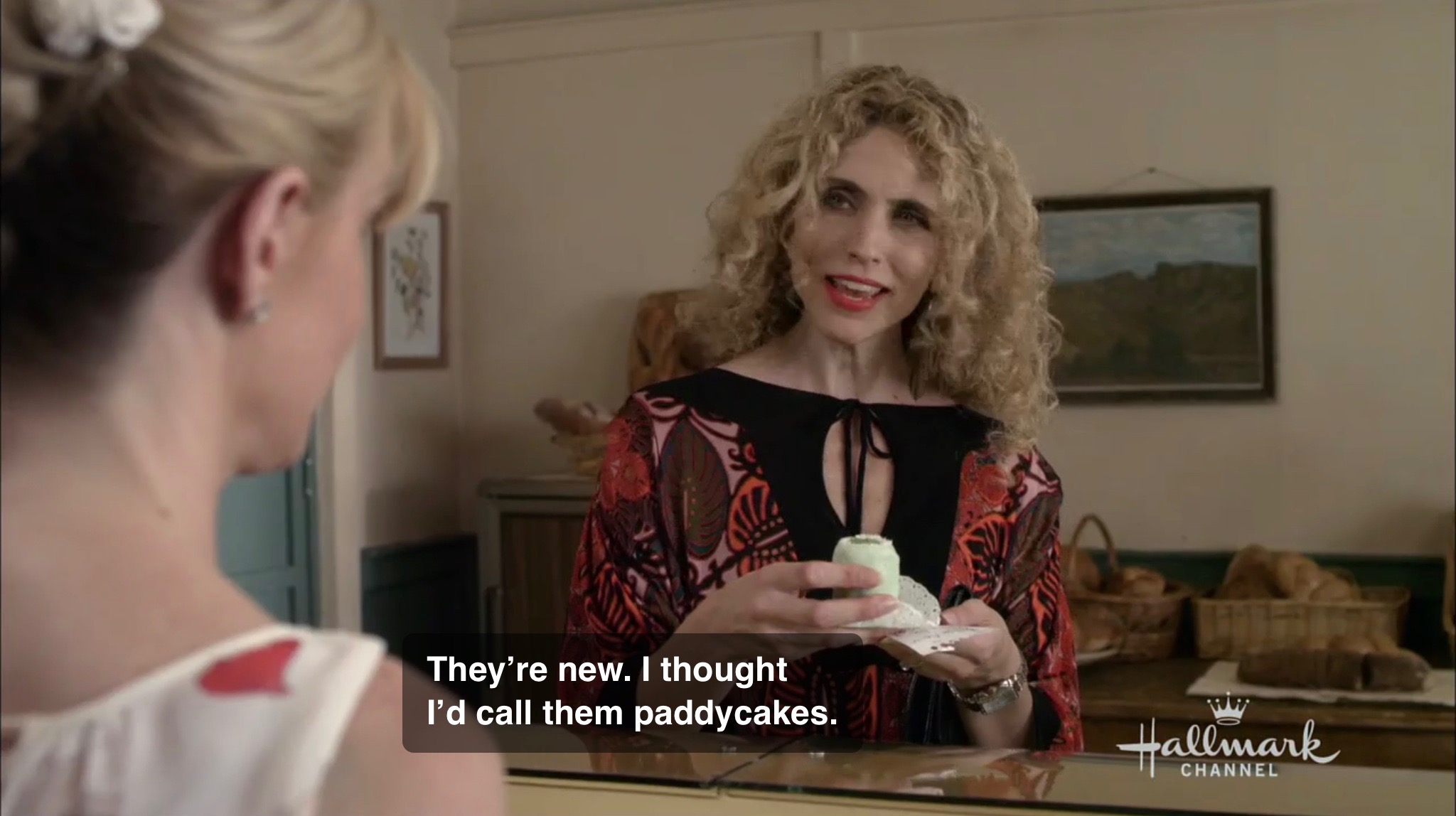
Now out of nowhere she is suddenly making these lovely little pastries that will be called Paddycakes after her father Paddy even though only a few minutes ago she was a disaster in the kitchen. Yes, these paddycakes will be the savior of the bakery. That’s because of this lady.

IMG_7271

She is very impressed, and of course will turn out to be a newspaper writer later on.

After stupid dancing and shtick, the lawyer shows up again to remind us he really is the only character we enjoy in this movie. Oh, but before that we need to get in another homophobic bit.

IMG_7285

At least the guy says he knows but still likes coffee in a cup like that to which the father responds, “good grief”. The rich guy again shows up to get her phone number and the instant she says he still can’t call her, he just walks away.

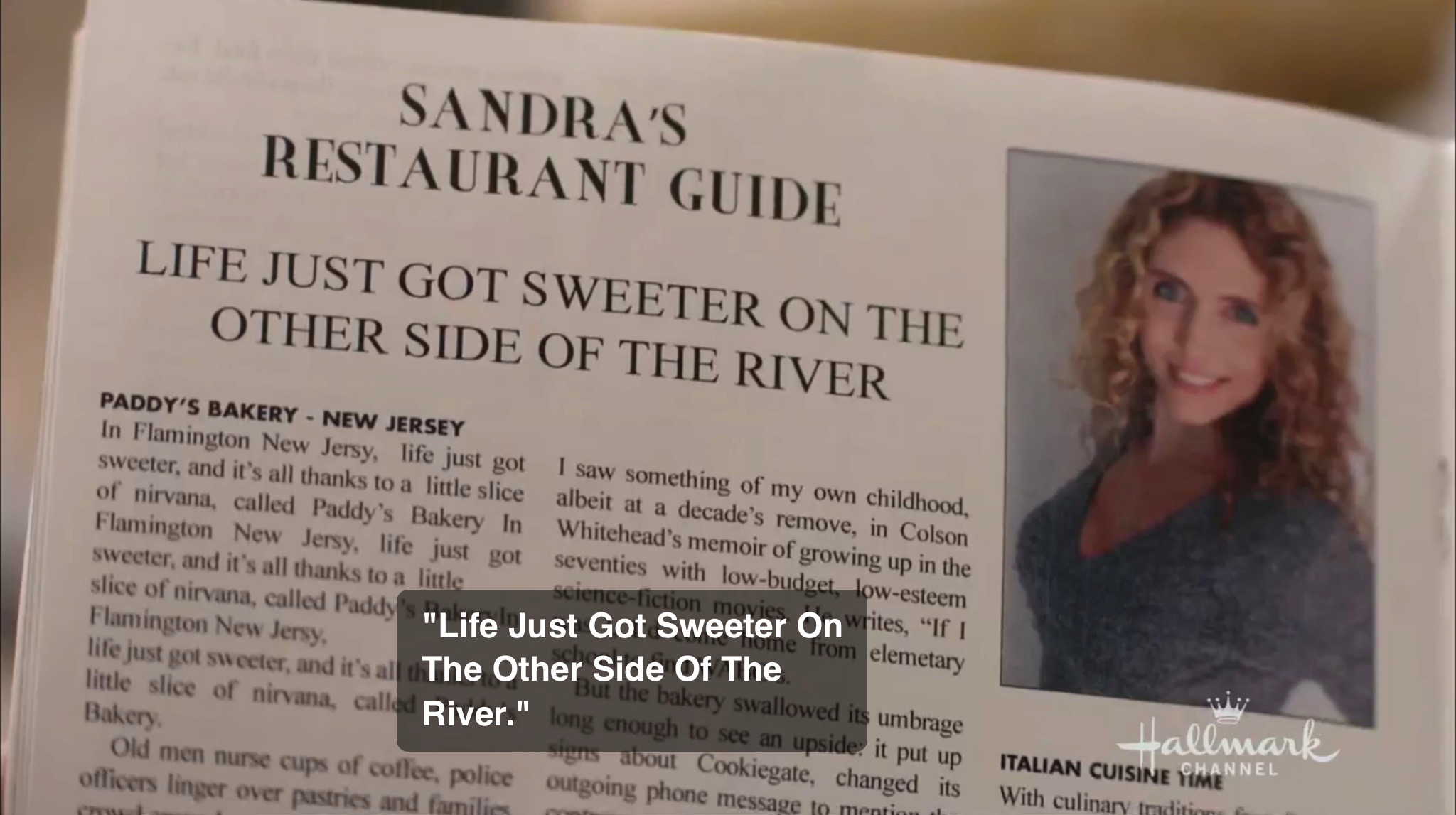
When the lawyer shows up, the joint is apparently doing really well now. Those must be some paddycakes. A few scenes, then the article comes out in the newspaper! Just look!

IMG_7357

The bakery is so great that it had to repeat “In Flamington New Jersy, life just got sweeter, and it’s all thanks to a little slice of nirvana, called Paddy’s Bakery” three times! But what is the rest of the article here? I’m telling you, Darcy from A Gift Of Miracles is everywhere and she can shapeshift into other people too.

-The “Old men nurse cups of coffee, police officers linger over pastries and families…” come from a New York Times article by Rebecca Flint Marx.

-The “I saw something of my own childhood, albeit a decade’s remove, in Colson Whitehead’s memoir of growing up in the seventies with low-budget, low-esteem science-fiction movies. He writes, ‘If I was lucky, I’d come home from elementary school to find WABC’s…” comes from a New Yorker article written by Richard Brody.

-The “But the bakery swallowed its umbrage long enough to see an upside: it put up signs about Cookiegate, changed its outgoing phone message to mention…” comes from a New York Times article by Michael Barbaro.

The second one makes sense…sort of…since the magazine the article is in is supposed to be The New Yorker.

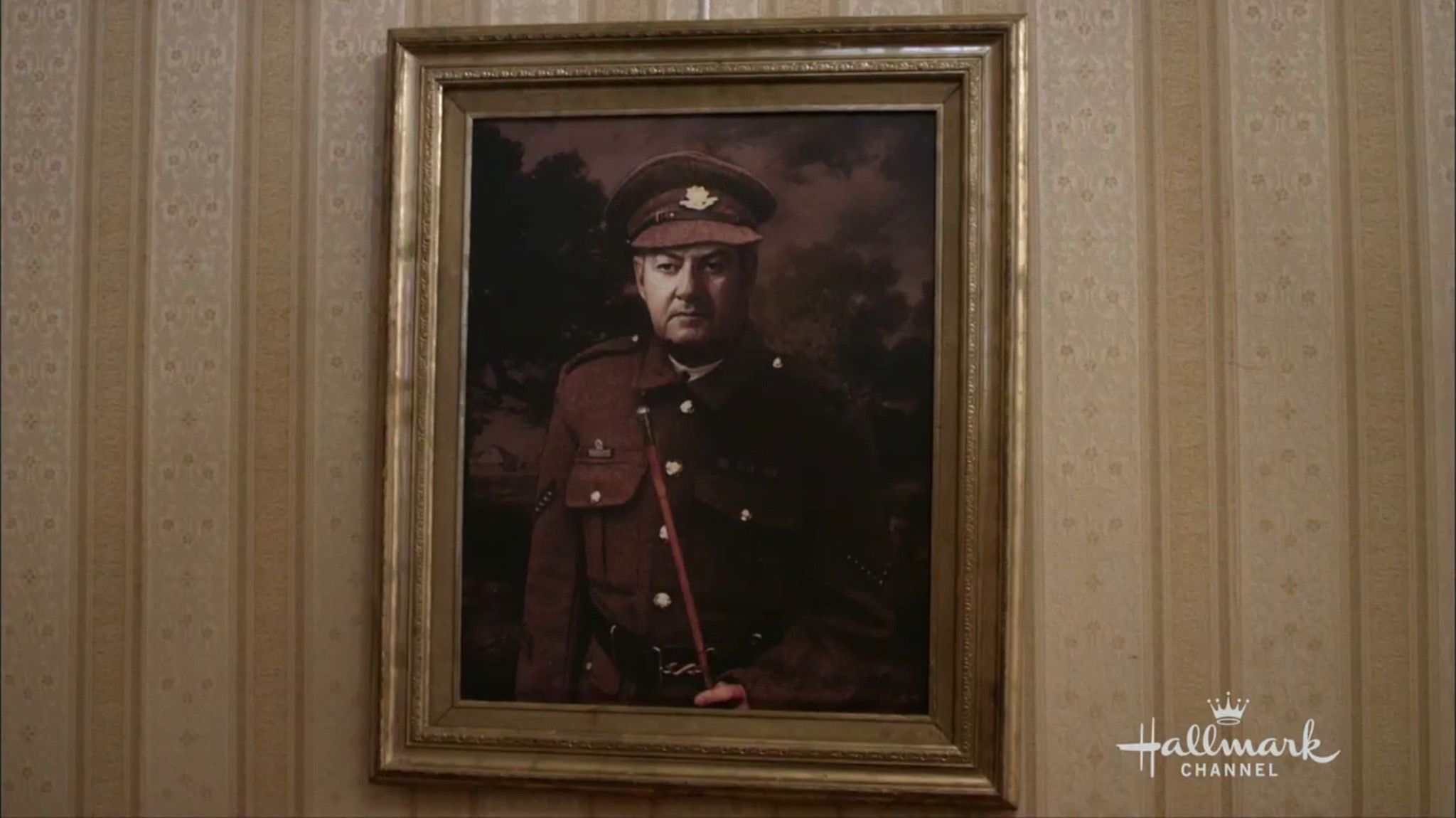
Now it’s off to dinner with Benny. She even fixed his birdhouse. This is when something weird happens yet again. Her and Benny are going down a hallway to have some privacy when she notices an open door with an office inside. He quickly closes it saying she doesn’t want to look at it which she responds with an odd “okay”. Now we find out for sure he’s single. Then they make out. Now she notices this painting as she is pinned against the wall being kissed.

IMG_7402

He says it’s his great uncle. What was all that about? Is this supposed to imply his family was involved with the Nazis via the Vichy regime? I don’t really recognize the uniform. What was the point of the office and painting? It doesn’t make sense and is never brought up again.

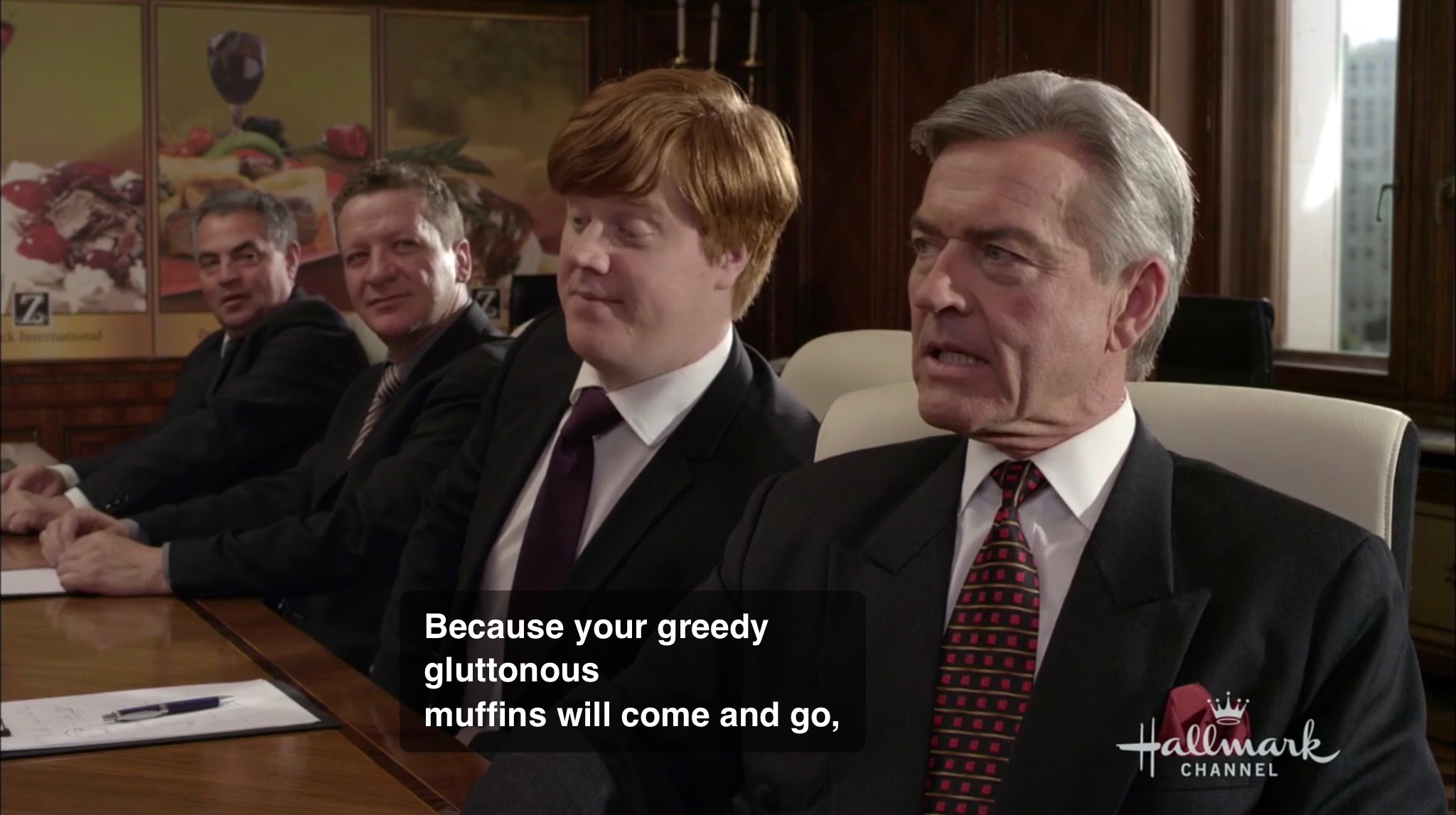
After we have a stupid conversation about waiting three days before calling up Benny, the lawyer calls to tell her he has a deal to “franchise the bakery”. The father just sends her. Doesn’t come along at all. I know I can’t possibly get this across, but the movie really hasn’t given us any reason for this. He even corrects her when she says it’s not his bakery, but their bakery. Then doesn’t that mean he should be there even more? I know it’s supposed to show he trusts his daughter, but we don’t have any real reason too as the audience.

Of course big city folks meddling in small businesses are usually portrayed as evil, so she turns down their deal.

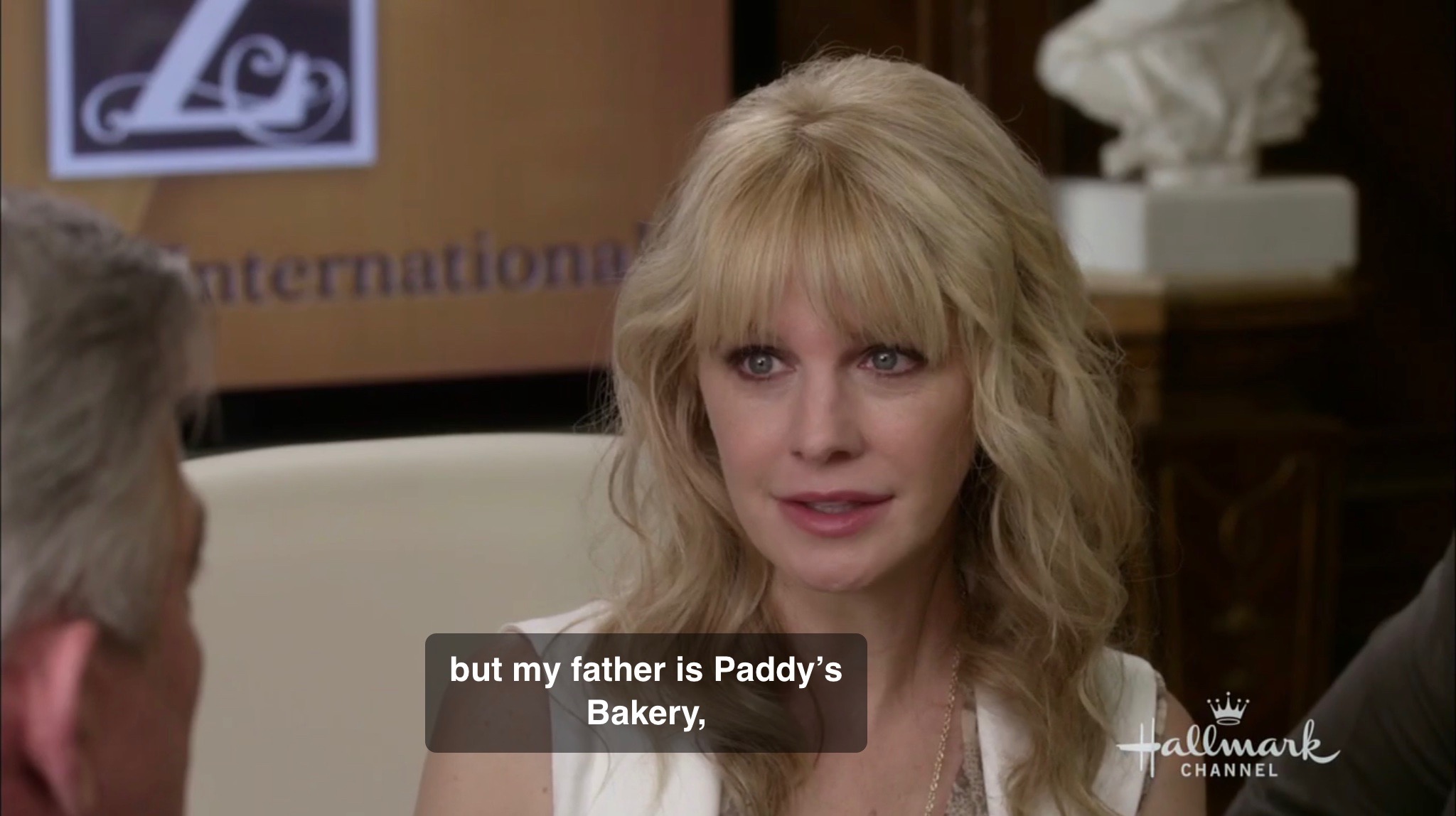
IMG_7482

IMG_7483

You’ll have to take my word for it, but these are the only lines in this that she delivers that are done right. They make sense, we feel that she really believes in what she is saying, and we finally see some believable change in her character. Why couldn’t this have been going on throughout the movie? I don’t get it.

She goes home when the husband shows up. No reason given for why he shows up other than that Olive dumped him and the pregnancy was fake. That’s nice, but the only thing we saw Desiree do prior to being dumped is spend his money in the short time we spent with her prior to the breakup and we could hardly stand her afterwards. Again, it doesn’t make sense. We just are supposed to believe from their really short little exchange that she brought something to the marriage that he would want back. Just a simple scene where we at least see her being used as a trophy wife would have gone a long way.

Obviously she shuts him out, she winds up with Benny, the lawyer shows up with the policewoman from earlier, they dance out the door of the bakery, Desiree and Benny kiss, etc.

This movie sucked. Plain and simple. In the end, she has changed, but it’s too late at that point. Go watch Clueless or Harvest Moon instead.

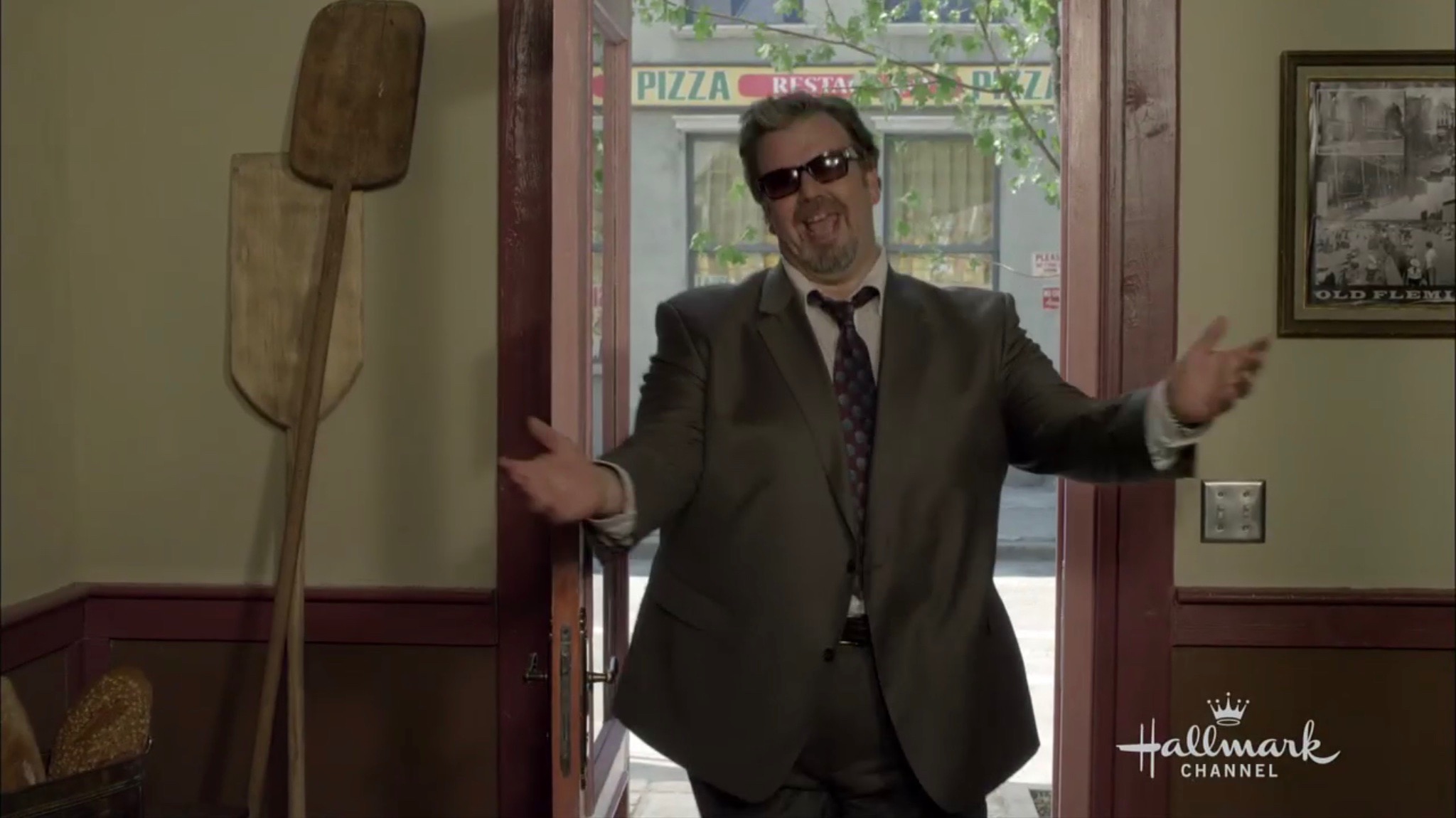
Now a tribute to the best character in the entire film: the lawyer played by Steve Varnom.

IMG_7571

Horror Trailer: Bone Tomahawk


Bone Tomahawk

We never have enough horror set in the Old West. It’s a setting that should be rife with infinite possibilities for some very scary storytelling.

When we do get Old West horror they tend to be direct-to-video and low-budget affairs. Now don’t get me wrong low-budget horror sometimes are some of the most effective. The closer it gets to it’s grindhouse roots the better. Then again some do end up being a pile of turds that end up getting relegated in the dollar bin at supermarkets.

My hope is that the latest Old West horror starring Kurt Russell will be the former and not the latter.

Bone Tomahawk made it’s premiere at this year’s Fantastic Fest and from all intents and purpose had a very positive reception to it’s genre mash-up of cowboys vs cannibals. Now what better way to follow-up The Green Inferno but with another cannibal fare set in the dusty plains and canyons of the Old West.

Shattered Politics #67: The Contender (dir by Rod Lurie)


Contenderposter(Spoilers)

The 2000 political melodrama The Contender is one of the most hypocritical films that I’ve ever seen.

The Contender tells the story of what happens when U.S. Sen. Laine Hanson (played by Joan Allen) is nominated to be vice president by President Jackson Evans (Jeff Bridges).  During Laine’s confirmation hearings, Rep. Shelly Runyon (Gary Oldman) dredges up rumors that, at a college frat party, Laine took part in a threesome in exchange for money.

When Runyon asks Laine about the rumors, she replies that she refuses to answer any questions about what she may or may not have done while she was younger.  She replies that it is “simply beneath my dignity” and you know what?  She’s absolutely right.  First off, if someone could be disqualified just because of what they did in college then nobody would eve be eligible to be President.  Secondly, and far more importantly, nobody would care about Laine’s sexual history if she was a man.

For over two hours, Laine refuses to answer any questions about the allegations and instead, she turns the tables on her attackers.  And while this alone would not have made The Contender a good film (because, after all, The Contender was written and directed by Rod “Straw Dogs” Lurie), it at least would have been a film that I could respect.

But, Rod Lurie being Rod Lurie, he just couldn’t help but fuck it all up.

Towards the end of the film, Laine is attending a White House reception.  She and President Evans sit down on the White House lawn and, as the stars shine above them, Evans says, “Just between us, is it true?”

Now, there’s two things that Laine could have said here that would have kept this film from falling apart.  Laine could have said, “It’s none of your business.”  And that would have been the right thing to say because, quite frankly, it is none of the President’s business.  The whole point of the movie has been that it’s not anyone’s business.

Or, if the film actually had any guts, Laine could have said, “Yes, it’s totally true.  Like most people, I experimented when I was in college.  But that doesn’t have anything to do with whether or not I’m qualified to be your vice president.”

But no.  Instead, Laine smiles and says, “Nothing happened.  Two guys propositioned me, I said no, and they spread rumors.”

So, basically, the film is saying, “It’s nobody’s business if Laine was sexually active in college but don’t worry, Mr. and Mrs. American Audience, she was a virgin until she turned 30.  So, it’s still okay for you to like her…”

And that’s the thing about The Contender.  It’s a film that doesn’t have the courage of its own convictions.  It’s a film that drags on for over two hours and it expects you to forgive it just because it pretends to have good intentions.  As a woman, there’s nothing I hate more than being pandered to and, for all of its attempts to come across as being feminist, The Contender is all about pandering.

What makes The Contender an interesting bad film — as opposed to just your usual bad film — is how even the littlest details feel false.  It’s obvious that Lurie knew all of the legal details that go into confirming a Vice President but he didn’t know how to make any of those details dramatically compelling.  So, the film becomes a bit of a know-it-all lecture.  By the time that Saul Rubinek popped up and said, “Do you know what Nelson Rockefeller said about the vice presidency?,” I found myself snapping back, “No, what did Nelson Rockefeller say about the Vice Presidency?  Please tell because ah am so sure that it is just goin’ to be the most fascinatin’ thang that ah will ever hear in mah entire life!”

(The more annoyed I get, the more pronounced my Texas accent.)

There’s a lot of weird little things about The Contender that just don’t work.  They may not sound like major problems but when combined together, they start to add up.  For instance, there’s a long shot where we see U.S. Rep. Reginald Webster (Christian Slater) and his blonde wife at a White House reception and the shot just lingers on them for no particular reason.  Long after you would expect the shot to end, it’s still going.  This wouldn’t be an issue if there was some narrative reason for that shot.  Instead, it’s just randomly dropped in there.

And then, after Laine is nominated, we see the front page of a newpaper and there, in the middle of the page, is a headshot of Joan Allen.  Underneath it, a small headline reads, “It’s Laine!”  It just feels so fake.  Wouldn’t the nomination of the first female vice present actually rate a bigger headline and a more dynamic picture?

Speaking of fake, towards the end of the film, President Evans picks up a framed magazine cover and stares down at it.  The magazine, itself, looks like one of those joke “Man of the Year” pictures that people pose for at a state fair.  On the cover is a picture of Last Picture Show era Jeff Bridges.  The headline on the magazine reads: “President Jackson Evans.  His ideas have changed the world.”  Not his actions, mind you.  Not his policies.  Instead, his ideas have changed the world.  But the film shows us no evidence of this and, during Laine’s confirmation hearings, everyone spends the whole time debating the same old shit that they always seem to be debating in Washington.

(Of course, if you’re lucky enough to have a name like Jackson Evans, I guess you might as well become President.)

Of course, when it looks like Laine might not be confirmed, President Evans speaks before Congress.  “For the first time, a woman will serve in the executive!” he declares, which seems like a hilariously awkward way to put it.  (People in this film don’t talk like human being as much as they talk like characters in some fucked up Washington D.C. fanfic.)  He then adds, “There are traitors among us!”

So, I guess the message here is yay for demagogues.

And don’t even get me started on Kathryn Morris, as the cheerful FBI agent who investigates Laine’s past and who, at one point, announces, “Laine is hope!”  Would a male FBI agent ever have to deliver a line that stupid?

And also don’t even get me started on the subplot about Gov. Jack Hathaway (William Petersen), who stages an auto accident in an attempt to convince President Evans to nominate him for vice president.

The Contender is not a good film but it could have at least been a respectable film.  But then, Rod Lurie had to have President Evans ask whether it was true or not.

Perhaps being a hypocrite was the idea that changed the world.