by John Vernon
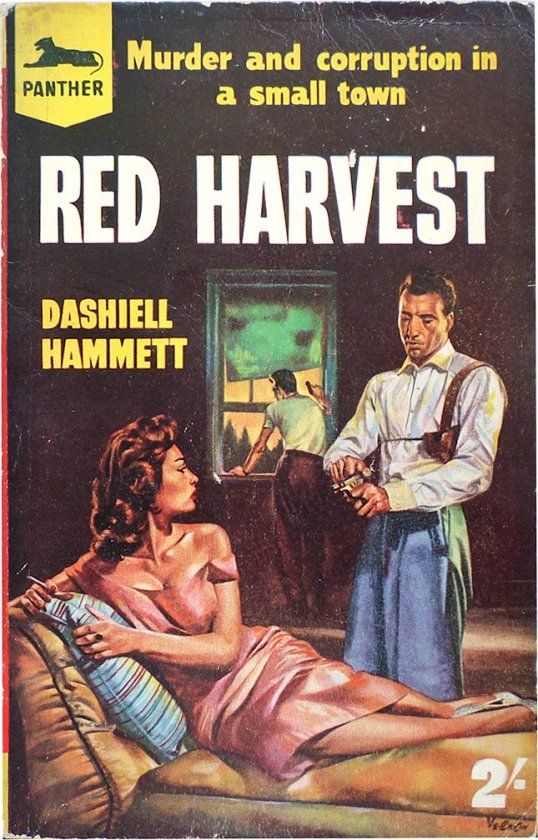
This cover is from 1958.
by John Vernon
This cover is from 1958.
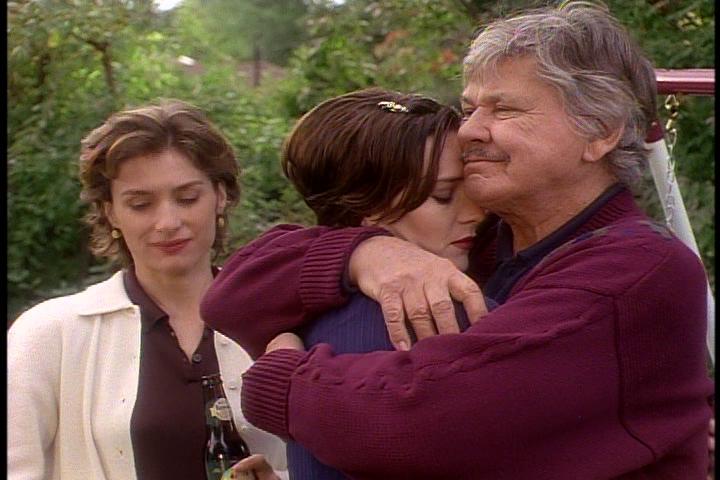
Legendary actor Charles Bronson ended his five-decade career by starring in a series of made-for-TV movies, FAMILY OF COPS (1995), BREACH OF FAITH: A FAMILY OF COPS II (1997), and FAMILY OF COPS III: UNDER SUSPICION (1999). I was in my mid-twenties as this series played out, and I enjoyed each of the installments. Today, I’m going to take a look at the first in the series.
In FAMILY OF COPS, Charles Bronson stars as Police Inspector Paul Fein. Paul, a widower as we enter this story, leads a family who is heavily involved in law enforcement in Milwaukee, Wisconsin. His oldest son Ben (Daniel Baldwin) is a detective on the force. Ben is a family man in a loving marriage with several wild kids. Paul’s younger son Eddie (Sebastian Spence) is a patrol cop. Eddie’s single, has a beautiful girlfriend, and seems to be a nice guy with a well-adjusted life. Paul’s oldest daughter Kate (Barbara Williams) is a local public defender. She seems to be dedicated to her work, not leaving much time for a social life. And then there’s Paul’s youngest daughter Jackie (Angela Featherstone), who has moved out to California and refers to herself as “the family curse.” This story opens with Jackie reluctantly coming back to Milwaukee to attend her dad’s birthday party. All Paul wants for his birthday is for his family to be together. We soon learn that neither Ben or Kate care much for Jackie and her irresponsible life choices. As a matter of fact, the reason she ran off to California in the first place was to get out from under her family’s disapproval. It’s not long after she gets back that the family wishes she would have stayed away. Sneaking out of her sister’s house late at night to drink and party, she meets the prominent local businessman Adam Novacek (Simon MacCorkindale), eventually going to his home and engaging in sexual intercourse. Sadly, the next morning she wakes up to Novacek’s recently deceased corpse, and she’s arrested as the prime suspect in his murder. Convinced of her innocence, Paul, Ben, and Eddie set about trying to clear her name and find the real murderer. Besides Jackie, other suspects begin to emerge, including Novacek’s current wife Anna (Lesley-Anne Down), his former wife Laura (Kate Trotter), who’s now confined to a looney bin, and a local gangster named Frank Rampola (John Vernon), who has a vendetta against Paul for recently busting his grandson. How far will Paul Fein go to protect his family in his search for a killer?!!
FAMILY OF COPS is a perfect example of what I would refer to as entertainment for the “older person crowd,” and I don’t mean this as a put-down in any way as I enjoyed the movie. I just mean that it fits a type of entertainment that was popular in the 80’s and 90’s. These types of shows would depend greatly on the charisma or reputation of a veteran actor or actress, would contain simple production values, and would usually follow formulaic plots. Examples of the types of shows I’m referring to include MURDER, SHE WROTE with Angela Lansbury, MATLOCK with Andy Griffith, DIAGNOSIS MURDER with Dick Van Dyke, and WALKER: TEXAS RANGER with Chuck Norris. A combination of my dad, mom and grandma loved all of these shows. I’m a big fan of MATLOCK myself. In this case, FAMILY OF COPS leans heavily on Charles Bronson’s five decades as a tough guy icon to anchor a somewhat formulaic crime film and family melodrama. The role of Paul Fein fits a 73-year-old Bronson like a glove. He’s still in good physical shape, and the movie gives him a couple of opportunities to punch the shit out of some much younger thugs and henchmen. That was fun for me.
The supporting cast of the film is solid. Daniel Baldwin and Angela Featherstone make the biggest impact. Baldwin is good as the oldest son, a hothead, tough guy on the job who is constantly being humbled at home. Featherstone has the most beautiful eyes, and her rebellious character seems to have a good heart, but she just can’t seem to keep herself out of trouble. Paul Fein’s love for his troubled daughter Jackie is a sweet part of the story and provides something that most of us can relate to. She told me that she “loved Charles,” and I think you can see that in their scenes together. Sebastian Spence and Barbara Williams don’t have a lot to do in this first installment, but their characters will get their own moments to shine in the sequels. I also enjoy seeing John Vernon and Lesley Anne-Down show up in the movie as various persons of interest throughout the story. Bronson and Lesley Anne-Down had recently worked together in DEATH WISH V: THE FACE OF DEATH (1994) and were reportedly good friends in real life. Ted Kotcheff directed FAMILY OF COPS, which I find kind of disappointing. The same guy who directed movies like NORTH DALLAS FORTY (1979) and FIRST BLOOD (1982) didn’t bring anything special to the table in this film. I know it’s a modestly budgeted made-for-TV movie, but the best that can be said for the direction is that it’s workmanlike, and you would never suspect that the director had once helmed the original Rambo movie.
Ultimately, I enjoy FAMILY OF COPS because it stars Charles Bronson. Even as an older man, Bronson still dominates a scene, and the ratings success of the movie proved that Bronson still had an audience who wanted to see him on screen. And even though the story isn’t very unique and the central mystery isn’t very exciting, just the fact that Bronson is leading a solid story that includes action, crime, mystery and family melodrama will always provide some moments of joy for his fans like me. This is far from Bronson’s best work, but the old workhorse still knows how to entertain!
Towards the end of 1976’s The Outlaw Josey Wales, Josey (played by Clint Eastwood) says, “I guess we all died a little in that damned war.”
He’s referring to the American Civil War and the film leaves you with no doubt that Wales knew what he was talking about. A farmer living in Missouri, Josey Wales wasn’t involved in the Civil War until a group of guerillas, the Redlegs, raided his home and killed his family. Seeking vengeance, Wales joined the Bushwackers, a group of Confederate guerillas that were led by the infamous “Bloody Bill” Anderson. After Anderson’s death and the South’s surrender, Senator James H. Lane (Frank Schofield) offers amnesty to any of the Bushwackers willing to surrender and declare their loyalty to the United States. Fletcher (John Vernon), the leader of the surviving Bushwackers, thinks it’s a good idea and his men eventually agree to surrender.
Everyone except for Josey Wales.
Fletcher tells Josey that he’ll be an outlaw and that Lane will send his men to capture and execute him. “I reckon so,” Josey Wales replies. It’s not that Josey was particularly a fan of the Confederate cause. Instead, having lost his family and his home and having seen hundreds of men killed, Josey no longer cares. He’s got a death wish, something that becomes apparent when he later sneaks over to Lane’s camp and discovers that the leader of the Redlegs, Terrill (Bill McKinney), has been made a captain in the Union Army. The surrendering Bushwackers, with the exception of Fletcher and a young man named Jamie (Sam Bottoms), are gunned down as they swear allegiance to the United States. Joey springs into action, hijacking a Gatling gun and mowing down soldiers. It’s a suicidal move and Josey appears to be willing to die, until he sees that Jamie has been wounded. Josey and Jamie go on the run, pursued by soldiers and bounty hunters.
It sounds like the start of typical Clint Eastwood film and, make no mistake about it, The Outlaw Josey Wales features everything that most people have come to expect from Eastwood. Josey Wales is an expert shot, often firing two guns while charging forward on his horse. Josey has a way of words, explaining the purpose of getting “plain man dog mean” and telling a bounty hunter that there are better ways to make a living. The main difference, though, is that Josey is no longer seeking revenge. He’s lost his family and his home and he knows nothing is going to bring them back. He sought revenge during the Civil War and saw so many people killed that, much like Jimmy Stewart in Broken Arrow, he just wants to disappear from civilization.
The problem is that men like Lane and Terrill have no intention of letting Josey Wales disappear. The sociopathic Terrill sees it as almost being his God-given duty to kill Josey Wales and anyone else that he dislikes. The bounty hunters are also after Josey Wales. As Fletcher explains it, bounty hunting is the only way that many former soldiers can make money and feed their families. As Josey moves through the southwest, his legend grows. Every town that Josey stops in, he hears stories about the growing number of men that he has supposedly killed.
Josey also discovers that he can’t do it all alone. He soon finds himself as a part of a new family, a collection of misfits that don’t have a home in Senator Lane’s America. Lone Waite (Chief Dan George) is an elderly Cherokee man who suggests that Josey head for Mexico. Little Moonlight (Geraldine Keams) is a Navajo woman who Josey rescues from two bounty hunters. Sarah Turner (Paula Trueman) and her granddaughter, Laura Lee (Sondra Locke), are rescued from Comancheros. Josey negotiates the release of two of Sarah’s ranch hands and befriends Chief Ten Bears (Will Sampson) while doing so. Slowly, Josey comes out of his shell and starts to embrace life once again. Josey goes from searching for death to searching for peace.
It’s one of Eastwood’s best films, ending on a note of not violence but instead sad regret. It’s not only a portrait of a man learning to embrace life but it’s also a portrait of a country trying to figure out how to come back together after the bloody savagery of the Civil War. Some, like Fletcher and Josey, want to move on. Others, like Terrill, don’t have an identity beyond fighting and killing. Eastwood gives a good performance but, as a director, he gives every member of the cast a chance to shine. If you only know John Vernon as Dean Wormer from Animal House, his sad-eyed performance here will be a revelation.
Originally, The Outlaw Josey Wales was meant to be directed by Phillip L. Kaufman but Eastwood felt that Kaufman was taking too long to set up his shots and worrying about details that really didn’t matter. Reportedly, while Kaufman was away from the set, spending hours searching for a historically-correct beer bottle to be used in a bar scene, Eastwood directed the scene himself and then convinced producer Robert Daley to fire Kaufman and allow Eastwood to direct the film. (Kaufman also objected to the script’s anti-government subtext but seriously, that’s pretty much the subtext of every film that Eastwood has ever been involved with.) The DGA later instituted a rule that, on productions in which the director was fired, the replacement could not be a member of his crew or an actor in the cast but that was too late to help out Kaufman.
(Rumor has it that another reason Kaufman was fired was because he and Eastwood both “liked” Sondra Locke. This was the first of six films that Eastwood and Locke would do together.)
To be honest, I think it worked out in the film’s favor. It’s a little surprising that someone other than Eastwood was ever considered as director to be begin with, so perfectly does the story and the lead character fit with Eastwood’s persona. Eastwood captures both the beauty of the untouched land and also the bloody violence of combat. In many ways, this film almost feels like a prequel to Unforgiven. The Outlaw Josey Wales is Eastwood at his best.
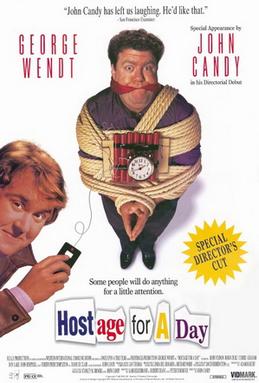 Hostage For A Day is the only film that the much-missed John Candy ever directed. (It premiered on Canadian television, a few months after his death.) It’s also one of the only films to feature George Wendt in a leading role, as opposed to being a supporting player. The film is full of funny people like Don Lake and Robin Duke. John Vernon plays Candy’s father-in-law. A lot of talent went into this movie. It’s too bad that it’s not very good.
Wendt does give a good performance in the lead role. He plays Warren Kooey, who is depressed on his 41st birthday. His wife (Robin Duke) has drained their bank account to remodel their house and apparently shag their interior decorator, Hondo (Currie Graham). No one respects him at work. Warren’s reflection in the mirror tells Warren that he needs to do something with his life. Warren decides to fake a hostage situation so that he can collect the ransom. The problem is that the SWAT team has recently had their budget cut and can’t afford to pay the amount that Warren comes up with. Then some real kidnappers (led by John Candy, making a very brief appearance) hold him hostage for real. While this goes on, Wendt continues to talk to his reflection in the mirror and there are a few sweet but out-of-place scenes featuring him reuniting with his childhood sweetheart, Diane St. Clair (Christopher Templeton).
As a director, Candy never seems to be sure what type of film he’s trying to make. The comedy is broad but Candy also tries to sneak in some sentimental moments and the end results just doesn’t mix well. He gets some good performances for his cast but the film itself never really comes together. This was George Wendt’s only starring role and he does a good enough job that I regret he didn’t get bigger roles once Cheers went off the air because, judging by this film, he could have handled them I just wish this movie was better.
 It isn’t the past. It isn’t the present. It’s the future.
The moon has been colonized and, on Earth, the Mayflower II is preparing for its first international flight. It will be carrying passengers from Houston to the lunar station. Test pilot Ted Striker (Robert Hays) claims that the Mayflower II is not ready to make the trip but he’s been in the Ronald Reagan Hospital For The Mentally Ill ever since he had a nervous breakdown after losing his squadron during “the war.”
Aboard the Mayflower II is Ted’s ex-wife, Elaine (Julie Haggerty), and her new boyfriend, Simon (Chad Everett). Simon says the Mayflower II is in perfect shape but he also turns into jelly whenever things get too rough. Piloting the Mayflower II is Captain Clarence Oveur (Peter Graves) and waiting on the Moon is Commander Buck Murdock (William Shatner). The crew of the Mayflower II is going to have a tough flight ahead of them. Not only is the shipboard computer making plans of its own but one of the passengers (Sonny Bono) has a bomb in his briefcase. Also, Ted has broken out of the hospital and is on the flight, boring people with his long stories.
Every successful film gets a sequel and when Airplane! was a surprise hit in 1980, it was inevitable that there would be an Airplane II. Robert Hays, Julie Haggerty, Lloyd Bridges, Peter Graves, and Stephen Stucker all returned. Unfortunately, Jim Abrahams, the Zucker brothers, Robert Stack, Kareem Abdul-Jabbar, and Leslie Nielsen did not. (The directors and Nielsen were all working on Police Squad and their absence is strong felt.) Airplane II recreates many of the same jokes as the first Airplane! but without the first film’s good nature or genuine affection for the disaster genre. Airplane! was made for the love of comedy. Airplane II was made for the love of money and, while there are more than a few amusing moments, the difference is obvious and there for all to see.
Not surprisingly, Airplane II is at its funniest whenever William Shatner is on screen. In the role of Bud Murdock, Shatner pokes fun at his own image and shows himself to be a good sport. He’s still not as funny as Leslie Nielsen or Robert Stack in the first film but that’s because, unlike Stack and Nielsen in their pre-Airplane! days, there had always been a hint of self-parody to Shatner, even in his most dramatic roles. If Stack and Nielsen shocked people by showing that they could do deadpan comedy, Shatner’s performance just confirmed what most suspected, that he had always been in on the joke. Still, he’s the funniest thing in Airplane II and, whenever I rewatch this movie, I am happy he was there.
Airplane II was a box office failure, which is why the world never got an Airplane III. Fortunately, the world did get Hot Shots and The Naked Gun.
Welcome to Retro Television Reviews, a feature where we review some of our favorite and least favorite shows of the past! On Sundays, I will be reviewing the made-for-television movies that used to be a primetime mainstay. Today’s film is 1977’s Mary Jane Harper Cried Last Night! It can be viewed on YouTube.

Damn.
I mean, seriously! I have seen some depressing films before but nothing could have quite prepared me for Mary Jane Harper Cried Last Night.
Susan Dey stars as Rowena, a young single mother whose 3 year-old daughter, Mary Jane Harper (Natasha Ryan), is taken to the hospital with a broken arm. Dr. Angela Buccieri (Tricia O’Neil) doesn’t believe Rowena’s claim that Mary Jane is just accident prone and when she discovers what appears to be cigarette burns on the little girl, Dr. Buccieri goes to the head of pediatrics (played by veteran screen villain John Vernon) and requests a full set of X-rays to see if there are any previously healed injuries. Buccieri’s request is denied. It turns out that Rowena comes from a wealthy family and her father (Kevin McCarthy) is a trustee of the hospital. Even after Dr. Buccieri opens up about her own experiences as an abused child, she is told to drop the matter.
She doesn’t drop it. Instead, she goes to a social worker named Dave Williams (Bernie Casey). Dave does his own investigation but none of Rowena’s neighbors want to talk about all of the crying and the screaming that they hear coming from Rowena’s apartment. Rowena presents herself as being a stressed but loving mother. Dave suggests a support group that she can attend. When Rowena goes to the group, she opens up a little about how overwhelmed she feels. Unfortunately, she leaves Mary Jane in the apartment alone and, when a fire breaks out, Mary Jane is lucky to survive.
As intense as all of that is, it’s also only the first half of the movie. The second half is even more intense and emotionally draining and it all leads up to one of the most devastating final lines ever uttered in a movie. Throughout the film, the system fails both Rowena and Mary Jane. Mary Jane is failed when all of the evidence of the abuse that she has suffered is either ignored or shrugged away by the same people who are supposed to be looking out for her. Rowena is failed when no one pays attention to her obvious emotional instability. When she finally does have a breakthrough during a therapy session, her psychiatrist (played by James Karen) curtly tells her that they’ll have to talk about it next week because their hour is up.
Rowena is a character who I both hated and pitied. Like many abusers, she herself was a victim of abuse. Even when Rowena tries to get support, no one wants to admit that a mother is capable of abusing their own child. That said, Mary Jane Harper is at the center of the film. She’s a little girl who is desperate to be loved by a woman who often terrifies her. She is continually failed by the people who should be looking after her and it’s just devastating to watch. I’m sure I’m not the only person who was moved to tears by this film.
What a sad film. At the same time, it’s also an important one. If the film takes place at a time when no one wanted to admit to the abuse happening before their eyes, we now live in a time when people toss around allegations of abuse so casually that it’s led to a certain cynicism about the whole thing. Even when seen today, Mary Jane Harper Cried Last Night works as a powerful plea to watch out and care for one another.
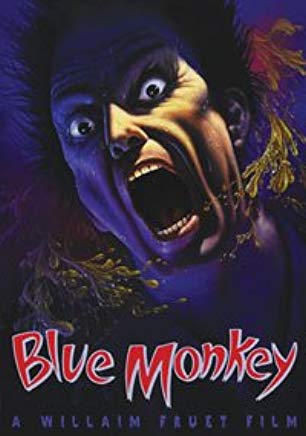
Last night, as I sat down to watch the 1987 Canadian film, Blue Monkey, I found myself singing a song in my head:
How does it feel
When you treat me like you do
And you’ve laid your hands upon me
And told me who you are?
I thought I was mistaken
And I thought I heard your words
Tell me, how do I feel?
Tell me now, how do I feel?
Unfortunately, it turned out that the only thing Blue Monkey had in common with the classic New Order song, Blue Monday, was an enigmatic title. Just as the song never really mentions anything about Monday, Blue Monkey does not feature a single monkey. One minor character does mention having a dream about a monkey but, otherwise, there are no monkeys in the film. Speaking as someone who believes that almost any film can be improved the presence of a monkey, I was disappointed.
(Seriously, Nomadland would have been a hundred times better if Frances McDormand had a pet monkey.)
What Blue Monkey does have is a lot of blue. The characters wear blue shirts and some wear blue uniforms. Another wears a blue hat. The film takes place in a hospital where almost all of the walls are painted blue. Even worse, the majority of the film’s scenes are saturated with blue lighting.
Here’s just two screenshots:

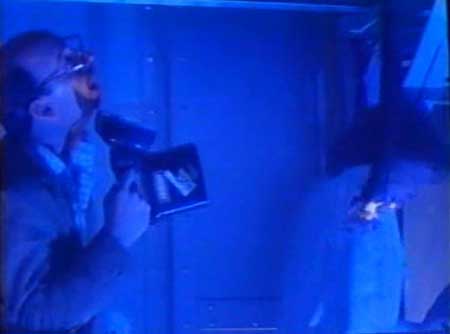
Seriously, some scenes were so blue that I was reminded of John Huston’s decision to suffuse Reflections in a Golden Eye with the color gold. Personally, I think Huston made a mistake when he did that with Reflections but I can still understand the reasoning behind the decision and I can see what Huston was attempting to accomplish. The blue in Blue Monkey feels like a distraction, as if someone realized, on the day before shooting, that the title didn’t make any damn sense. “We’ll just make the whole movie blue!”
The problem, of course, is that the film goes so overboard with the blue lighting that it actually becomes difficult to look at the screen for more than a few minutes. I had to keep looking away, specifically because all of those blue flashing lights were starting to make me nauseous and were on the verge of giving me a migraine. At times, the image is so saturated in blue that you literally can’t make out what’s happening in the scene. Of course, once you do figure out what’s happening, you realize that it doesn’t matter.
Blue Monkey takes place in a hospital. A handyman has been having convulsions after pricking his finger on a plant that came from a mysterious island. Perhaps that’s because a mutant larvae is now using his body for a host. The larvae eventually develops into a giant grasshopper — NOT A MONKEY! — who stalks around the hospital and kills a few people. The Canadian government is threatening to blow up the hospital unless something is done about the blue grasshopper.
It’s a Canadian exploitation film but Michael Ironside isn’t in it so it somehow feels incomplete. That said, John Vernon plays a greedy hospital administrator and it’s fun to watch him get irritated with everyone. A very young Sarah Polley has an early role as an annoying child. There’s actually several children in this film and you’ll want to throw something at the screen whenever they show up, that’s just the type of film this is. (Some of my fellow movie-watching friends were actually upset that the children survived that film. I wouldn’t go that far but I still found myself hoping John Vernon would tell them all to shut up and let the adults handle things.) Susan Anspach plays a doctor, showing that anyone can go from Five Easy Pieces to Canadian exploitation. The film’s nominal star is Steve Railsback, playing a cop who comes to the hospital to check on his wounded partner and who ends up on grasshopper duty. Steve Railsback has apparently said that he’s embarrassed to have appeared in this film. Consider some of the other films that Steve Railsback has appeared in and then reread that sentence.
In the end, Blue Monkey doesn’t add up too much. There’s no Michael Ironside. There’s no monkeys. There’s just a lot of blue.
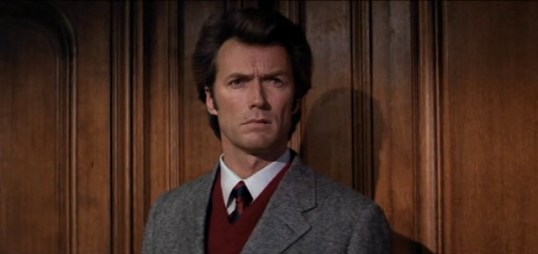
Today, we wish a happy 89th birthday to the one and only Clint Eastwood!
At this point of his career (from which he says he is now semi-retired), Clint Eastwood has become an American icon. In many ways, his persona epitomizes all of the contrasts and extremes of the American experience. A political conservative who specializes in playing taciturn and rather grouchy men, he is also one of our most humanistic directors, specializing in films that often question the traditional view of history and morality. He may have first become a star in Europe but Clint Eastwood is definitely an American original.
In honor of his birthday, I’m sharing a scene that I love from 1971’s Dirty Harry. In this scene, Detective Harry Callahan (Clint Eastwood) meets the Mayor of San Francisco (John Vernon). The mayor is concerned that there’s a psycho on the loose, gunning people down and demanding money. Callahan’s annoyed that he’s spent a lot of time sitting in a waiting room. Things pretty much go downhill from there.
There’s so much that I love about this scene. Both Eastwood and Vernon do a wonderful job playing off of each other. The Mayor may be in charge of the city but Callahan probably didn’t vote for him. One thing that I especially love about this scene is the look of annoyance that crosses Harry’s face whenever he’s interrupted.
And, of course, there’s that final line! Eastwood does a great job explaining Harry’s “policy” but ultimately, it’s Vernon’s “I think he’s got a point,” that provides the perfect closing note.
Happy birthday, Mr. Eastwood!
Tonight’s excursion into televised horror is the 4th episode of the 4th season of HBO’s Tales From The Crypt.
In Seance, two con artists (Cathy Moriarty and Ben Cross) make the mistake of trying to cheat a wealthy man played by John Vernon. Things don’t go as planned and, as so often happens when things get complicated, it all leads to a fake séance that turns out to be not quite as fake as was originally believed.
Seance is a lot of fun. Despite being in color, it’s shot in the style of an old school film noir and nobody played heartless with quite as much panache as John Vernon.
Seance was directed by Gary Fleder and originally aired on July 4th, 1992.
Enjoy!

You know what? I’m going to start this review with the assumption that you’ve already seen the classic 1978 college comedy, National Lampoon’s Animal House. At the very least, I’m going to assume that you’ve heard of it and that you know the general details. Animal House was not only a huge box office success but it’s also one of the most influential films ever made. Almost every comedy released since 1978 owes a debt to the success of Animal House. Just as every subsequent high school film was directly descended from American Graffiti, every college film features at least a little Animal House in its DNA.
So, with that in mind, who is your favorite member of Delta House?
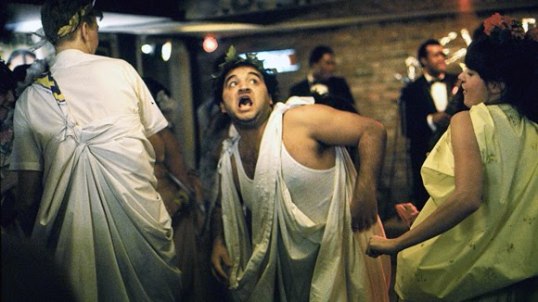
Most people, I think, would automatically say Bluto (played by John Belushi) and certainly, Bluto is the best known and perhaps best-remembered member of the cast. As played by Belushi, Bluto is the film’s rampaging ID and he’s such a force of nature that, whenever I rewatch Animal House, I’m surprised to be reminded of the fact that he’s not really in the film that much. He’s present for the parties, of course. He imitates a zit and starts a food fight. He gives a rousing speech, in which he reminds the members of the Delta House that America didn’t give up after “the Germans bombed Pearl Harbor!” He destroys a folk singer’s guitar and I personally love the scene where he tries to cheer up a despondent pledge by smashing a beer bottle over his head. But really, Bluto is used very sparingly and he’s one of the few members of the ensemble not to get his own subplot. Bluto’s great but he’s not my favorite member of Delta House.

Believe it or not, my favorite member of Delta House is Robert Hoover (James Widdoes). Hoover is the president of Delta House and, when we first meet him, he seems like he’s way too clean-cut to be in charge of the “worst house” on campus. But then, as the film progresses, we discover that Hoover may not be as openly crazy as everyone else but he’s definitely a Delta. Just watch him in the Toga party scene. Just look at him in the picture that shows up during the closing credits. It took me a while to realize that Hoover, the future public defender, was giving the camera the finger. Hoover may look uptight but he’s secretly a wild man!

One of the things that I love about Animal House is that it truly is an ensemble film. There’s not a weak performance to be found in the entire movie. No matter how wild or over-the-top the humor gets, the entire cast commits to their roles and, as a result, they keep this movie grounded. You actually find yourself caring about whether or not they get kicked off campus. You truly believe that the members of Delta House have been friends for years but, even more importantly, you believe the same thing about their rivals at Omega House. For that matter, it may be easy to make fun of Dean Wormer (John Vernon, setting the template for all evil deans to come) but you never doubt that he’s been in charge of Faber College for years and that he’s planning on being in charge for years to come. As played by the deep-voiced and sinister-looking Vernon, Wormer becomes every unreasonable authority figure. When he explains the concept of super secret probation, he does so with a smug pleasure that is practically chilling. When he mentions that the members of Delta House can now be drafted, the smile on his face is terrifying.

You know who else gives a really good performance in Animal House? Donald Sutherland. At the time, Sutherland was the biggest star in the film. He was offered either a percentage of the grosses or a flat fee. Sutherland thought the film would flop, took the flat fee, and missed out on millions as a result. Sutherland plays Prof. Jennings, an English teacher who, in the only scene actually set in a classroom, desperately tries to get his bored students to pay attention to him. There’s something so poignant about the way Jennings begs his students to turn in their papers. “I’m not joking,” he sputters, “this is my job!”
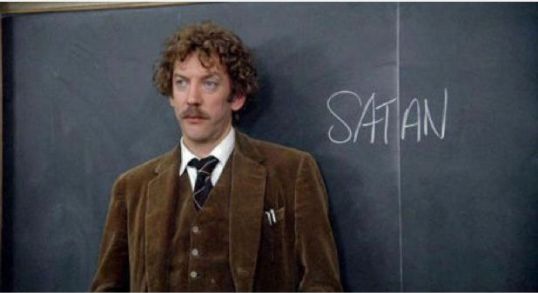
Jennings turns out to be free thinker. He turns Boone (Peter Riefert), Katie (Karen Allen), and Pinto (Tom Hulce) onto marijuana. There’s an anachronistic peace sign hanging in his apartment (Animal House takes place in 1963) but no matter. Far worse is the fact that he temporarily breaks up Boone and Katie! Everyone knows those two belong together!

You know who else doesn’t get enough credit for his performance in Animal House? Stephen Furst. He plays Flounder, a new pledge. Flounder is just so enthusiastic about everything and he doesn’t even seem to be upset when Wormer tells him, “Fat, drunk, and stupid is no way to go through life.” I love the enthusiastic way that Furst delivers simple lines like, “What’s my Delta Chi name?” and “Brother Bluto! Brother D-Day! What are you doing here!?” My favorite Flounder moment comes when he accidentally gives a horse a heart attack. Technically, it shouldn’t be funny but it is because Furst, Belushi, and Bruce McGill (playing the role of D-Day) so thoroughly throw themselves into their roles. For that matter, the horse did a pretty good job too.
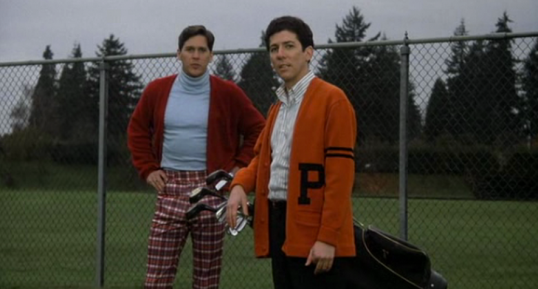
But that’s not all! How can I praise the ensemble of Animal House without mention Tim Matheson, who plays Otter, the future Beverly Hills gynecologist? Or what about Kevin Bacon, playing Omega pledge Chip Diller? This was Bacon’s first role and who can forget him shouting, “Thank you, sir, may I have another!” while being initiated into Omega House? Or how about James Daughton and Mark Metcalf, as the two leaders of Omega House? They were villains truly worth hissing!

And yes, I know that a lot of the humor in Animal House is not politically correct but who cares? It’s a hilarious movie, one that is full of good actors at their absolute best. Yes, they’re all a bunch of privileged sexists blah blah blah, but I’d still party with the Delta House. They know how to have fun and, even if they did wreck the Homecoming Parade, they had a good reason!

And so is the movie. Every time I see Animal House, I feel good about the world. In 1978, The Deer Hunter was named best picture by the Academy. Well, you know what? With all due respect to that long epic about the tragedy of America’s involvement in the Vietnam War, all the Oscars should have gone to Animal House!

In conclusion … SING IT!
Let me t-t-tell you ’bout some friends I know
They’re kinda crazy but you’ll dig the show
They can party ’till the break of dawn
at Delta Chi you can’t go wrong
Otter, he’s the ladies man
Every girl falls into his hands
Boon and Katy playing “Cat and Mouse”
and Mrs. Wormer, she’s the queen of the
ANIMAL HOUSE
ANIMAL HOUSE
ANIMAL HOUSE
That Pinto he’s a real swell guy
Clorette was jailbait but he gave her a try
Chip, Doug, and Greg, they’re second to none
They studied under Attila the Hun
Mr. Jennings has got his wig on tight
Flouder’s left shoe’s always on his right
Babs and Mandy are having a pillow fight
With D-Day, Hoover, Otis Day and the Knights
DO THE BLUTO
Come on baby, dance with me
Maybe if we do the Bluto
We will get an “A” in lobotomy
DO THE BLUTO
DO THE BLUTO
DO THE BLUTO
DO THE BLUTO
Aw, come on!
Let me tell ya
Dean Wormer tried to shut us down
But he fell and he broke his crown
He didn’t know about the Delta spunk
He came in handy when we were short a skunk
At the
ANIMAL HOUSE

 Through the Shattered Lens