Film Review: Paradise City (dir by Chuck Russell)


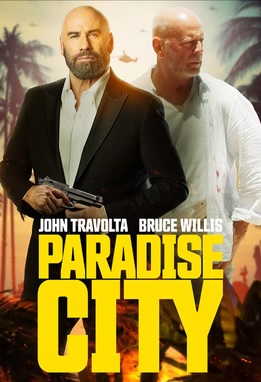
Ian Swan (Bruce Willis) is a famed bounty hunter who has spent the last ten years of his life pursuing an escaped fugitive who is wanted for the cold-blooded murder of four FBI men.  Swan has tracked his prey to Hawaii but, when he’s shot and falls into the ocean, Swan is presumed dead.  Swan’s long-estranged son, Ryan (Blake Jenner), comes to Hawaii to try to track down the man who killed his father.  He meets up with Ian’s former partner, Robbie Cole (Stephen Dorff), and also the only cop on the island who cares about justice, Savannah (Praya Lundberg).  Reluctantly, Cole works with Ryan and discovers that Ian’s shooting is somehow connected to a shady businessman named Arlene Buckley (John Travolta).  A real estate developer, Buckley is working hard to elect a man named Kane (Branscombe Richmond) to the U.S. Senate.  Buckley’s plan also involves taking control of a part of the Island that the natives call Paradise City.  Got all that?

2022’s Paradise City has been advertised as being a John Travolta/Bruce Willis film but make no mistake.  Neither Travolta nor Willis get much screen time, though they both make an impression in the limited time that they do have.  Stephen Dorff manages to steal every scene in which he appears, playing Robbie as a well-meaning guy who can’t help but be kind of a screw-up.  That said, Dorff really isn’t in that much of the film either.  Instead, the main star of the film is Blake Jenner.  Jenner has the blandly affable screen presence of a low-key frat boy.  That worked for him when he was in films like Richard Linklater’s Everybody Wants Some!! but it’s not exactly ideal for an action star.  Whereas the best action stars feel as if they’re always ready for a fight, Jenner comes across as the guy who would be trusted to order the keg for the next party.

Instead of taking charge of the screen, Jenner finds himself overshadowed by the gorgeous Hawaiian scenery.  Hawaii is the true star of Paradise City and, even when the film itself doesn’t make a whole lot of sense, Hawaii itself is always amazing to look at.  In many ways, Paradise City feels like an extra-violent episode of Baywatch Hawaii.  (The film’s Baywatch aesthetic is confirmed when Savannah wears a bikini to a crime scene.)  Just as with that show, the beaches and the jungles and the waterfalls and the oceans are all so stunning that it’s tempting to give the film a pass on the fact that the plot never makes much sense and any genuine emotional stakes are pretty much non-existent.

Unfortunately, it’s impossible to ignore the plot because, for a low-budget B-movie, Paradise City takes itself way too seriously.  It’s one thing for Ryan to be estranged from his father.  It’s another thing for the film to feature flashbacks to Ryan’s childhood, in which we discover firsthand that Ian never understood Ryan.  It’s also one thing to make Buckley a family man.  It’s another thing try to create a clumsy parallel between the way that Buckley is raising his son and the way that Ian raised Ryan.  As opposed to films like Gasoline Alley or the Detective Knight films, Paradise City seems to be trying too hard to be something that it isn’t.  Instead of just embracing its pulpy style and trying to entertain, the film is determined to tug at the audience’s heartstrings and make a statement about evil land developers.  The film forgets that, sometimes, just being entertaining is the best thing that a film can be.

This was one of the last films that Bruce Willis made before it was announced that he would be retiring from acting.  Watching the film, it’s easy to tell that a stand-in was used for most of Willis’s action scenes.  When Willis delivers the majority of his lines, it’s hard not to miss the wiseguy energy that used to be his trademark.  That said, when Willis is acting opposite Travolta and Dorff, he shows a bit of his old spark.  The two scenes in which he confronts John Travolta are the best in the film.  For a few minutes, he seems like the Bruce Willis who we all remember and it’s hard not to get a bit emotional watching two talented (if often underappreciated) actors acting opposite each other for what will probably be the last time.

Paradise City is not a particularly memorable film and the overly complicated plot is next to impossible to follow but I am happy that the cast and the crew got to hang out in Hawaii for a bit.  It’s a lovely place to visit.
Scenes That I Love: The Airport Chase and Shootout From John Woo’s Face/Off


Today, the Shattered Lens wishes a happy 77th birthday to director John Woo, the man who did the most to popularize the idea of the slo mo of doom!

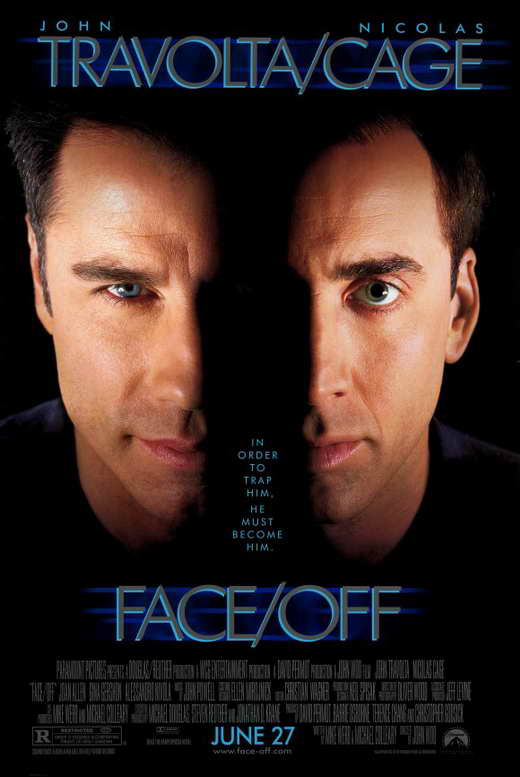
Today’s scene that I love comes from Woo’s 1997 film, Face/Off.  In this scene, John Travolta pursues Nicolas Cage by both car and helicopter.  While Cage’s criminal has the time of his life, Travolta’s no-nonsense federal agent reveals just how obsessed he is with capturing his prey.  No one has switched faces yet but the action is already wonderfully over-the-top.  Cage and Travolta both do what they do best in this scene and so does John Woo.

Music Video of the Day: Let Her In, performed by John Travolta (1976, dir by ????)


Did you know that John Travolta was singer, even before he starred in Grease?

I didn’t, until I came across the video below on YouTube.  Apparently, Travolta released two albums before he played Tony Manero in Saturday Night Fever.  (After Saturday Night Fever was a hit, a third compilation album was released.  It was called — I kid you not — Travolta Fever.)  As a singer, Travolta’s biggest, non-Grease hit was a 1976 cover of a song called Let Her In.  The song spent five months on the U.S. charts and it peaked at number ten.  It was an even bigger hit in Canada, where Travolta’s sensitive song stylings were appreciated by the most polite people to ever knock out each other’s teeth at a hockey game.

From 1976, here is John Travolta performing Let Her In.

Enjoy!

Live Tweet Alert: Join #FridayNightFlix for Saturday Night Fever!


As some of our regular readers undoubtedly know, I am involved in a few weekly live tweets on twitter.  I host #FridayNightFlix every Friday, I co-host #ScarySocial on Saturday, and I am one of the five hosts of #MondayActionMovie!  Every week, we get together.  We watch a movie.  We tweet our way through it.

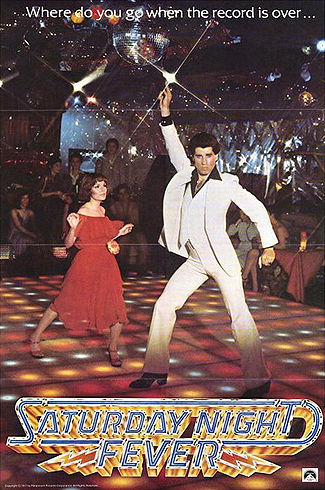
Tonight, at 10 pm et, I will be hosting the final #FridayNightFlix of 2022!  The movie? 1977’s Saturday Night Fever!

If you want to join us this Friday, just hop onto twitter, start the movie at 10 pm et, and use the #FridayNightFlix hashtag!  It’s a friendly group and welcoming of newcomers so don’t be shy.

Saturday Night Fever is available on Prime and Paramount!  See you there!

Monday Live Tweet Alert: Join Us For Heatseeker and Face/Off!


As some of our regular readers undoubtedly know, I am involved in hosting a few weekly live tweets on twitter.  I host #FridayNightFlix every Friday, I co-host #ScarySocial on Saturday, and I am one of the five hosts of #MondayActionMovie!  Every week, we get together.  We watch a movie.  We tweet our way through it.

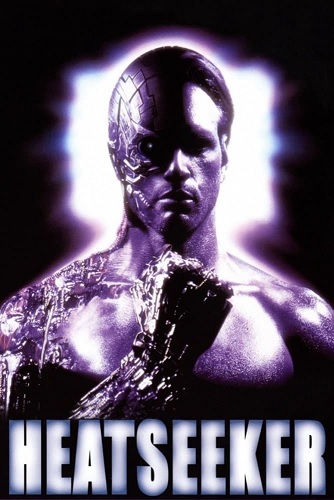
Tonight, for #MondayActionMovie, the film will be 1995’s Heatseeker!  Selected and hosted by @BunnyHero, Heatseeker was directed by the later Albert Pyun and yes, it does feature a cyborg! The movie starts at 8 pm et and it is available on YouTube.


Following #MondayActionMovie, Brad and Sierra will be hosting the #MondayMuggers live tweet.  Tonight’s movie, starting at 10 pm et, will be 1997’s Face/Off, the John Woo classic starring John Travolta and Nicolas Cage as rivals who switch faces!  Face/Off can be found on Prime!


It should make for a night of intense viewing and I invite all of you to join in.  If you want to join the live tweets, just hop onto twitter, start Heatseeker at 8 pm et, and use the #MondayActionMovie hashtag!  Then, at 10 pm et, switch over to prime, start Face/Off and use the #MondayMuggers hashtag!  The live tweet community is a friendly group and welcoming of newcomers so don’t be shy.  And reviews of these films will probably end up on this site at some point over the next few weeks. 

Enjoy!

October Positivity: Senior Year (dir by Bruce Lood)


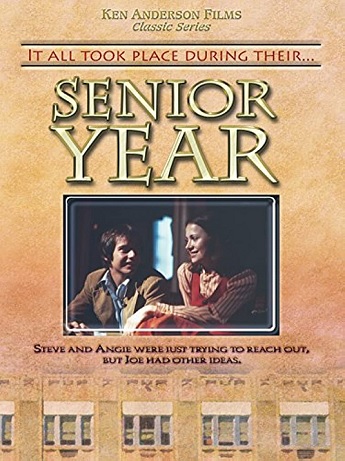
First released in 1978 and undoubtedly played at dozens of church youth group retreats for years afterwards, Senior Year tells the story of Steve and Angie.

Steve and Angie are both high school seniors.  (Hence, the name….) They’re also both Christians.  Steve used to be a jock who enjoyed drinking and having a good time.  However, over the summer, he decided to give all that up and dedicate his life to Christ.  The rest of his classmates aren’t sure how to deal with this.  They all wonder what happened to the Steve that they used to know.  They’re all worried that this new Steve is going to constantly try to preach to them.  Steve confirms their suspicions by constantly trying to preach at them.  As he quickly discovers, it can be awkward forcing your beliefs on people, especially when they’re just trying to make it from class to class.  Still, the local young minister encourages Steve to keep trying.

Joe has no interest in what Steve is saying.  Joe is a jock who doesn’t get all of that Christian stuff and kind of takes it personally the Steve is now religious.  Joe decides that he’s going to date a Christian girl, just to upset Steve!  Joe’s a real jerk.  However, Joe starts to develop real feelings for her.  He even trades in his van for a sports car, all in an effort to seem more respectable.  Anyway, as things often go in these type of movies, it all leads to a tragedy that leaves one person in wheelchair but which also inspires everyone in the high school to start reading their bible.  Steve finally manages to successfully witness to one of his coworkers.  At no point does it seem to occur to anyone that maybe there was another way that message could have been spread that didn’t involve paralyzing someone for life.

Senior Year is a pretty typical faith-based high school film.  One thing that I’ve noticed about these films is that they always take place in these upper middle class suburban high schools where nearly the entire student body is vehemently anti-Christian.  I went to an upper middle class suburban high school and my experience was markedly different.  That could just be because I’m from Texas but still, there was an element of paranoia to this film that felt more than a bit forced.  It wasn’t enough for Joe to just not be interested in reading the Bible or going to church.  No, Joe had to be a full-on sociopath who specifically tried to ruin a girl’s reputation just because she was a Christian.  It’s all a bit melodramatic.  It also doesn’t help that Steve comes across as everything that Joe claims he is.  Despite the film’s intentions, Steve does come across as being preachy and a bit self-righteous.  The actor playing him is believably awkward but also kind of creepy.  Anyone who has ever had the experience of having a complete stranger start grilling you about your religious beliefs will empathize with those who don’t want to get trapped in a conversation with Steve.

After watching this film, I checked out its imdb page.  I found two pieces of trivia.  I have no idea if either of these are correct but, for the record, imdb claims that John Travolta was offered the role of the youth minister.  That’s possible, I suppose.  Though the film was released in 1978, it features a theater marquee advertising Marathon Man and Two-Minute Warning, which both came out in 1976.  If the film was shot in 1976 than it was probably in pre-production in 1975.  If the film was in pre-production in 1975, it’s totally possible that a relatively unknown John Travolta may have been offered the part.  The other piece of trivia is that Kevin Costner appears as an extra during a high school basketball game.  Costner was 21 in 1976 and was studying acting in college so, again, its possible.  I certainly didn’t see him but, then again, I wasn’t looking.

Anyway, regardless of whether Costner is lurking in the background or not, Senior Year is forgettable.  Today, it’s best viewed as being a time capsule of the era in which it was made.  I mean, selling a van is a major plot point!  This film couldn’t be more 70s if it tried.

Cleaning Out The DVR: Urban Cowboy (dir by James Bridges)


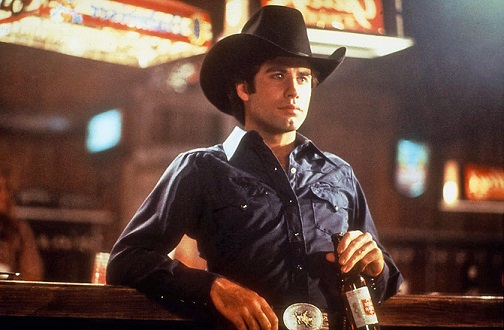
Last night, I watched the 1980 film, Urban Cowboy.  This was a film that had been sitting on my DVR for over a year.  For some reason, I had never actually gotten around to watching it.  There were many times when I started to watch it but I always ended up stopping after a few minutes.  I was never quite sure why as everything that I had heard about the film was positive.  Having finally watched it last night, I think I hesitated because I instinctively knew that John Travolta would look silly wearing a cowboy hat.

And let’s just be honest.  He does.  I mean, Travolta actually gives a fairly good performance in Urban Cowboy.  He plays Bud, a kid from West Texas who moves to Houston so that he can work on an oil rig with his uncle, Bob (Barry Corbin).  At first, he only wants to stay in Houston long enough to raise the money to buy some land back home.  But, he soon falls in love with the Houston nightlife and the local country-western bar.  (He’s Travolta so, of course, he can dance.)  He also falls in love with and eventually marries Sissy (Debra Winger).

Travolta is believable as an impulsive young adult who might not be particularly smart but who makes up for it with a lot of determination.  And he even does an okay job when it comes to capturing the country accent of West Texas.  But that said, whenever he puts on that cowboy hat, the viewer is immediately reminded that Travolta is actually from New Jersey and probably never even attended a rodeo until he was cast in Urban Cowboy.  The hat feels like an affectation, an attempt by a city boy to be more country as opposed to a country boy trying to hold onto his identity in the city.  Ironically, the term “urban cowboy” has come to mean someone who, despite having never left the city, dresses like they’re heading out to herd the cattle and rope some steers.  However, in the film itself, the hat is meant to be a natural part of Bud’s persona but it never quite feels that way.

Far more credible as a cowboy is a youngish Scott Glenn, who plays Wes Hightower.  After Bud’s chauvinistic and abusive behavior drives Sissy away, she ends up with Wes.  Wes teaches Sissy how to ride a mechanical bull, which is something Bud tried to forbid her from doing.  Wes is confident and dangerously sexy and he can even make the fact that he lives in a run-down trailer work for him.  Unfortunately, Wes also turns out to be even more controlling and abusive than Bud.  Even though Bud still loves Sissy and Sissy still loves him, Bud soon hooks up with Pam (Madolyn Smith), the daughter of a wealthy oilman.

Many more complications follow and, of course, there’s one big tragedy that causes Bud to reexamine his life.  Not surprisingly, the film’s conclusion all comes down to who can stay on that mechanical bull for the longest….

The best thing that Urban Cowboy has going for it is not Travolta or Glenn but instead, it’s Debra Winger, who gives a believable and relatable performance as Sissy, playing her as someone who may not have much but who refuses to surrender her pride.  She knows that she deserves better than both Bud and Wes, even if she is hopelessly in love with one of them.  Winger has chemistry with both Travolta and Scott Glenn, which makes the film’s love triangle feel like something more than just a typical story about a girl who can’t resist a bad boy.  She grounds the film in reality and, as such, there are real stakes to the film’s story.  Thanks to Winger, Urban Cowboy becomes about something more than just a fight over a mechanical bull.

The second best thing that Urban Cowboy has going for it is that it does manage to capture the atmosphere of a good country-and-western bar.  It’s place where people go to relax after a hard day’s work.  Unlike the discotheques  that Travolta frequented in Saturday Night Fever, the bars in Urban Cowboy eschew glamour and artifice.  Instead, they’re all about proving yourself not on the dance floor but on the back of a mechanical bull.  For Sissy, the bull symbolizes freedom.  For men like Bud and Wes, it symbolizes survival.  Myself, I’m not a drinker so my bar experience is limited.  And, though I may be from Texas and I spent a lot of time in the country while I was growing up, I’ve never been a fan of country music.  That said, I’ve danced to a few country songs and I’ve certainly stopped by a few bars, even if I was usually the one who annoyed my family and friends by just asking for a glass of water.  I’ve been to the rodeo and I’ve seen people get trampled.  I’ve also seen a few people get tossed off a mechanical bull.  I’ve never been on a mechanical bull myself but I did buy one for my Sims.  (They loved it but, sadly, I had to get rid of it because they spent so much time riding it, they kept missing work and getting fired.)  From my limited experience, I can say that Urban Cowboy got most of the details right.  Even though it was made 42 years ago, it still feels authentic.

That said, Travolta still looks odd wearing a cowboy hat.

Scenes That I Love: Olivia Newton-John and John Travolta Perform You’re The One That I Want From Grease


I just read that Olivia Newton-John passed away earlier today.  She was 73 years old.

Here she is, performing You’re The One That I Want with John Travolta at the climax of 1978’s Grease.  No matter what else you may think about this film (and, to be honest, it’s not one of my favorite musicals, just because of the way that director Randal Kleiser framed most of the dance numbers), you can’t deny that both Olivia and Travolta poured their hearts into this climax.

Cleaning out the DVR: The Boy In The Plastic Bubble (dir by Randal Kleiser)


This made-for-television film from 1976 tells the story of Tod Lubitch (played by a pre-Saturday Night Fever John Travolta).  Tod was born without an immune system and, as a result, he’s had to spend his entire life in a germ-free, plastic bubble.  When Tod was a child, it wasn’t such a big deal not being able to leave his house without getting in a plastic ark beforehand.  But now, he’s in his teens and he wants to do teenager stuff.  His parents (Robert Reed and Diana Hyland) are overprotective.  His doctor (Ralph Bellamy) says that there’s little chance that Tod’s condition will ever improve.  But the girl next door, Gina (Glynnis O’Connor), finds herself falling in love with Tod and she wants to help him live a normal life.  Gina loves to ride horses and Tod wants to ride one with her.  As we all know, horses are totally germ-free.

The Boy In The Plastic Bubble is one of those movies that has a reputation.  It’s usually cited as being the epitome of 70s schmaltz and, indeed, it is very 70s and it is very schmaltzy.  It’s one of those films where the big dramatic moments are so overdone that they instead often become kind of comedic.  When Tod finally convinces his parents to allow him to attend school, he does so while wearing a special protective outfit that makes him look like a cross between an old school astronaut and a demented teddy bear.  When it looks like his suit might be malfunctioning, he runs into the plastic cell that’s been set up in the back of the classroom and strips it off while all of his classmates watch.  Everyone’s truly impressed by both Tod’s positivity and the sight of a 22 year-old John Travolta rolling around in gym shorts.

Indeed, while watching the film, it’s impossible not to ask certain questions.  In what world, for instance, could Robert Reed, best known for playing the patriarch on The Brady Bunch, be John Travolta’s father?  Why is there such a weird tension between Tod and his mother?  (It may have had something to do with the fact that Travolta was dating Diana Hyland at the time.)  How does Tod keep his hair so perfect while living in a plastic bubble?  Did anyone think that the scene where Tod is carried onto the beach inside a plastic box would be so odd to watch?  Reportedly, The Boy In The Plastic Bubble was based on the lives of two young men who has the same condition as Tod.  According to Wikipedia, one of them was very amused by the idea the Todd’s protective outfit would keep him safe at school.  And, then of course, there’s the film’s ending, which tries to offer a ray of hope but instead leaves you convinced that Tod is going to die at any minute.

And yet, for all the obvious flaws, The Boy In The Plastic Bubble is slightly redeemed by the sincerity that Travolta and O’Connor bring to their roles.  In particular, Travolta brings a smoldering anger to his role, which may not have been present in the script but which feels appropriate for the character.  As played by Travolta, Tod may understand why he’s in the bubble but he’s still pissed off about it.  O’Connor has an even more difficult role to play because Gina’s actions often don’t make a lot of sense.  But O’Connor makes you believe that she’s sincere in her desire to give the Bubble Boy the high school experience that he deserves.  It’s a schmaltzy film but Travolta and O’Connor bring a few moments of emotional honesty to it.

Director Randal Kleiser later worked with John Travolta on Grease.  I don’t think Danny Zuko would have been a good influence on the Boy in the Plastic Bubble.

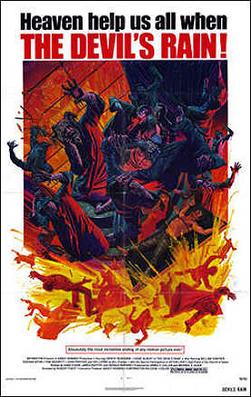
Horror Film Review: The Devil’s Rain (dir by Robert Fuest)


Was I the only one who was relieved that William Shatner didn’t die this week?

Seriously, when I heard that the 90 year-old Shatner was going to be taking a trip on one of the Amazon rockets, I was really worried.  First off, you’re taking a 90 year-old into space.  Secondly, you’re doing it with a rocket that people don’t really know that much about.  And third, that 90 year-old is a cultural icon and one who probably played no small role in causing people like Jeff Bezos and Elon Musk to become obsessed with conquering space in the first place.  With the exception of George Takei, everyone loves William Shatner.  (And, at this point, Takei’s constant sniping about Shatner is coming across as being just a little bit petty.  Move on, George!  People love you, too.)

As I watched Shatner land back on Earth, I found myself thinking about The Devil’s Rain, a film from 1975 that starred William Shatner as a man whose exploration of the unknown led to a far less triumphant result.   

In this film, Shatner plays Mark Preston, a youngish man who lives on ranch with his father (George Sawaya) and his mother (Ida Lupino).  For some reason, the Preston family owns a book that is full of evil magic.  Satanic high priest Jonathan Corbis (Ernest Borgnine) wants the book and when the Prestons refuse to hand it over, he makes it his mission to destroy them.  He gets things started by turning Mark’s father into a weird, waxy zombie who melts in the rain.  Not wanting the same fate to befall the rest of the family, Mark grabs the book and heads to a desert ghost town that has been taken over by Corbis and his followers.  Mark never returns.

Mark’s older brother, Tom (Tom Skerritt) then shows up in town, searching for Mark.  Accompanying him are his wife (Joan Prather) and a paranormal researcher (Eddie Albert).  Tom discovers that Corbis is transforming his followers into zombies who have no memories and who exist only to …. well, I’m not sure what the point of it all is but I guess it basically comes down to Corbis needing something evil to do.  Not only has Mark become one of his Corbis’s followers but, if you keep an eye out, you might spot a very young John Travolta in the background.  This was Travolta’s film debut.  According to the end credits, the character he plays is named Danny.  Danny Zuko, perhaps?  That would serve him right for making Sandy doubt herself.

The Devil’s Rain is one of the many low-budget movies that William Shatner did between the end of the Star Trek TV show and the start of the Star Trek movies.  It’s a bit of an disjointed film, as I think any film starring William Shatner and Tom Skerritt as brothers would have to be.  Skerritt gives a very laconic performance, playing his character as if he was the star of a Western.  Shatner, meanwhile, does that thing where he randomly emphasizes his words and gets the full drama out of every sentence and facial expression.  But, as much as Shatner overacts, you can’t help but enjoy his performance because he’s William Shatner and that’s what he does.  The same is true of Ernest Borgnine, who overacts in his role just as much as you would expect Ernest Borgnine to overact when cast as an evil cult leader.  For that matter, Eddie Albert isn’t exactly subtle as the paranormal researcher.  Don’t even get me started on Keenan Wynn, playing yet another small town sheriff.  Let’s just say that, with the exception of Tom Skerritt, the cast of The Devil’s Rain is not necessarily full of actors noted for their restraint.  That said, there’s something rather charming about everyone’s attempts to steal every scene in which they appear.

The Devil’s Rain is a deeply silly film but that doesn’t make any sense but it’s hard not to get caught up in it.  Even if the fact that this film is perhaps your only opportunity to see John Travolta melt on screen isn’t enough to make you watch, Shatner vs. Borgnine with Skerritt approaching in the distance is just too entertaining to resist!  Thankfully, Shatner survived appearing in this film and revitalized his career through a combination of Star Trek movies and Canadian tax shelter flicks.  He’s a survivor.  In fact, I guess I shouldn’t have been surprised that, even at the age of 90, Shatner has no trouble going into space.  William Shatner’s going to be around forever.