Firefox (dir. by Clint Eastwood)


You’d think someone with a face as chiseled as Clint Eastwood’s, he wouldn’t fit in well in the spy game. You’d recognize him almost anywhere in a line up. However, being able to direct your own films means you can still be the best person for a role. There is no finer example of this than with 1982’s Firefox, my submission for the Eastwood birthday celebration on the Shattered Lens. It’s not the strongest spy film, but it plays it’s hand very well, getting in and delivering the short jabs to set the tale and then finishing with an action packed combo in the film’s third act. 1990’s The Hunt for Red October may be more famous film about smuggling a vehicle from Russia to America, but Firefox did it first (Okay, From Russia With Love may have beaten them both, but we’re talking planes and subs, not a cipher box).

I remember first noticing Firefox while driving by the smaller of two movie theatres at the Green Acres Mall over in Valley Stream with my parents. Not every film hit the Sunrise Multipex, so the little Odeon (at least I think it was called an Odeon) held other films. My family caught Predator, Aliens, and Nine Months there to name a few. When I finally saw the movie, I didn’t care for it (to my credit, I was like 10 or 12), but loved the flying sequences. As an adult, the film makes more sense and deserves a watch despite a few tiny flaws here and there. Firefox marks Eastwood’s first production credit, despite The Malpaso Company having made films way before then.

Based on the 1977 novel by Craig Thomas, Firefox focuses on Mitchell Gant (Eastwood), one of the best pilots in the United States Air Force. Despite having some PTSD, Gant is sent on a mission in the height of the Cold War. His job is to sneak in and steal the Mig-31, Codename: Firefox, an experimental aircraft capable of speeds of Mach 5, extreme stealth and a special thought based firing system. He has all the necessary credentials. He can speak the language, has a good build and can fly the plane. After receiving a brief from his superiors (including Freddie Jones, who was in just about everything in the Early 1980s – Dune, Krull, Firestarter, Lifeforce), he’s dropped into Russia for his mission. Can Gant get the plane without getting in trouble? Unlike Top Gun, which used a fictional aircraft in the MiG-28, there was an actual MiG 31 in existence (or introduced to the world) at the time of filming Firefox, known as the “Foxhound”. The real MiG 31 and the films’ one are different. It was just a coincidence, but I know my Dad would point that out if he watched it.

What I loved the most about Firefox is that Gant’s character has to assume multiple roles/characters in order to blend in with the crowd and keep the KGB off of his tail. While we’re all aboard for seeing the plane in action, the real adventure is getting there and the characters that help along the way. One wrong turn, one wrong move could mean the different between success and failure, and it does get pretty tense in places. There’s one particular scene in a shower where I was like “Uhm, get up, get going, they’re on to you!”, but the pacing of the film is pretty good. As a director, Eastwood keeps the film moving without lingering too long in any one scene unless it’s truly necessary. This, along with some quick cuts and getting the most of the cast’s performances, allows the film to make some good use of the 2 hour and 16 minute runtime.

Firefox has a supporting cast that also helps to move the story along. Outside of Freddie Jones, we also have Kenneth Colley (Admiral Piett from The Empire Strikes Back & Return of the Jedi) as the Russian Colonel on Gant’s tail. Warren Clark’s (A Clockwork Orange) gruff character helps Gant to navigate through the city. Both Nigel Hawthorne (Demolition Man) and Ronald Lacey (Raiders of the Lost Ark) play scientists loyal to Gant’s mission. Wulf Kahler (also from Raiders of the Lost Ark) is on hand as a Russian military advisor. Alan Tivern, who played R.K. Maroon in Who Framed Roger Rabbit? is also in this, as is Toy Story’s John Ratzenberger.

One other element I enjoyed was how they resolved the actual flight sequences. Since Gant is in a fighter plane alone, there really isn’t any need to have any communication. The movie uses the black box in the plane both as a recording device for Gant’s actions, and a way for Eastwood to help narrate his intentions through the course of the third act. It helps to fill what would have normally been a near silent sequence (save for the evasive maneuvering). The flight sequences were developed by Star Wars alumni John Dykstra along with Johnathan Erland, who used a special blue screen effect that allowed reflective objects to move in front of lighter backgrounds or matte photography using UV light. It was pretty innovative at the time, even if it may look a little cartoony now.

Maurice Jarre (who I swore was Australian because of his work on the Mad Max films up until a first time watch of Lawrence of Arabia in 2024) scored Firefox, giving the film a mix between dark synths and patriotic tunes. The music definitely sets the tone leading up to the third act, though

Overall, Firefox is a good watch if you’re looking for a bit of late night espionage. As an actor, Eastwood’s Gant plays a mix of the everyman and spy (knowing when to hush, when to move and when to knock someone out) so well that I could easily imagine this as a recurring role for him, if he wanted to go that route. The film’s supporting cast is where it truly shines, as the contacts Gant makes during his mission are key to his success.

Love On The Shattered Lens: The Bitch (dir by Gerry O’Hara)


“Joan Collins is THE BITCH” announced the opening credits of the 1979 film, The Bitch.  Seriously, how can you not love a film that opens that way?

Joan Collins returns of Fonatine Khaled, the character that she previously played in The Stud.  Once again based on a novel by Jackie Collins, The Bitch follow Fontaine as she adjusts to life as a freshly divorced woman.  Though she received a good deal of money in the divorce and she has her own personal fortune as well, Fontaine is struggling to maintain her extravagant lifestyle.  A new disco has opened and is taking away the crowds that used to populate her club.  She’s running out of cash and soon, she might not even be able to fly first class!

It’s on an airplane that she meets Nico (Michael Colby, who is not particularly charismatic but still isn’t quite as dull as Oliver Tobias was in The Stud).  In an amusing in-joke, the movie that they watch on the plane is The Stud.  Nico says that he can’t decide if the movie is funnier with the sound or without.  “It’s not meant to by funny,” Fontaine replies.  Nico claims to be a wealthy Italian businessman, which immediately gets Fontaine’s attention.  Of course, Nico’s lying.  He’s actually a con artist and a jewel thief.  Fontaine figures that out when Nico tries to use her to smuggle a diamond through customs.  Fontaine is angered but she’s intrigued.

Nico is in debt to the Mafia.  The head of the British mob is a man named … and I’m not making this up …. Thrush Feathers (Ian Hendry).  Thrush Feathers demands that Nico cause a horse to lose an upcoming race.  The horse belongs to Fontaine’s friends from the first film, Vanessa (Sue Lloyd) and Mark Grant (Mark Burns).  Thrush Feathers also offers to help Fontaine keep her club open but his help comes with a price.  Whatever the price is, could it possibly be worse than being named Thrush Feathers?  Seriously, in what world is someone with that name going to take over a London crime syndicate?  How do you go from the Kray Brothers to Thrush Feathers?

Anyway, the plot really isn’t that important.  There’s a lot of double crosses and manipulation as Fontaine lives up to the title of the film.  The plot is really just an excuse to tease the viewer with visions of the decadent rich.  The clothes are expensive.  The mansions are ornate.  The conversations are always arch and full of double entendres.  This film is less about how the rich live and more about how middle class like to imagine the rich live.  It’s also about sex, though none of it quite reaches the lunatic abandon of The Stud’s swimming pool orgy scene.  The important thing is that whole thing is scored to a disco beat.

As with The Stud, it’s Joan Collins who holds the film together, giving a fierce and uninhibited performance in which she gleefully embraces the melodrama and delivers her lines with just enough attitude to let the viewer know that she’s in on the joke.  “Bitch” may have been meant as an insult but, as played by Joan Collins, Fontaine wears the title as a badge of honor.  She understands what had to be done to survive in a male-dominated world and she makes no apologies for it.  Even more importantly, she knows that once you fly first class, you can never go back.

The Bitch is not necessarily good but it is definitely fun in its sordid way.

Film Review: What If…. (dir by Dallas Jenkins)


2010’s What If…. is a likable, religious-themed twist on the It’s a Wonderful Life formula.

It tells the story of Ben Walker (Kevin Sorbo), who years ago abandoned his girlfriend and his dreams of entering the ministry so that he could be a business executive instead.  15 years later, he’s a ruthless businessman who gives heartless speeches and thinks nothing of running other people out of business.  Fortunately, a guardian angel (John Ratzenberger) pops up and punches Ben into unconsciousness.  When Ben wakes up, he’s a preacher, he’s married to Wendy (Kristy Swanson), and he’s got two daughters!

Yes, it’s basically a take on It’s A Wonderful Life.  Instead of seeing what the world would be like if he had never been born, Ben gets a chance to see what the world would be like if he hadn’t abandoned Wendy.  He would be poor, though he would still live in a pretty nice house.  However, he’d have a family and he’d have a preaching career.

You can probably guess what happens.  Ben refuses to accept that any of this is real.  He keeps saying that it’s a dream.  He stumbles through his first sermon.  He tries to return to the office where he works, just to discover that no one knows who he is.  Eventually, he comes to learn that his alternate life isn’t that bad and that, in many ways, it’s actually better than his real life.

And, to be honest, it’s kind of a sweet movie.  I mean, obviously, some of how you react to this film will depend on how you feel about religion in general.  If you’re a hardcore atheist, this film will probably make you throw a shoe at someone.  Don’t watch this film is you’re a hardcore atheist.  (Hardcore Democrats might want to avoid it as well, since the film basically stars everyone in Hollywood who voted for Trump.)  That said, Kevin Sorbo and Kristy Swanson both give earnest and likable performances and they have a really nice chemistry.  The scene where Ben gives a clueless sermon actually is funny, as are the various reactions to the listeners.  (One woman thinks Ben is a disgrace while her husband is just happy that the sermon was short.)  Much as he did with The Resurrection of Gavin Stone, director Dallas Jenkins manages to tell his story without getting too preachy.  He manages to avoid the traps that most other religious films fall into.

As I said, it’s not for everyone but it’s still a sweet-natured film.  I do have some issues with the ending because — SPOILER ALERT! — it ignores the fact that real world Ben is starting his family fifteen years later than alternative world Ben did — SPOILER END! — but it’s still a likable twist on the Wonderful Life formula.

Under the Sea: Goliath Awaits (1981, directed by Kevin Connor)


1939.  War is breaking out across Europe.  The British luxury liner Goliath is torpedoed by a German U-boat.  Presumed to be lost with the ship are a swashbuckling film star, Ronald Bentley (John Carradine), and U.S. Senator Oliver Barthowlemew (John McIntire), who may have been carrying a forged letter from Hitler to Roosevelt when the boat went down.

1981.  Oceanographer Peter Cabot (Mark Harmon, with a mustache) comes across the sunken wreck of the Goliath.  When he dives to check out his discovery, he is shocked to hear big band music coming from inside the ship.  He also thinks that he can hear someone tapping out an S.O.S. signal.  When he looks into a porthole, he is stunned to discover a beautiful young woman (Emma Samms) staring back at him.

Under the command of Admiral Sloan (Eddie Albert), who wants to retrieve the forged letter before it does any damage to the NATO alliance, Cabot and Command Jeff Selkirk (Robert Forster) are assigned to head an expedition to explore Goliath.  What they discover is that, for 40 years, the passengers and crew have survived within an air bubble.  Under the leadership of Captain John McKenzie (Christopher Lee), they have created a new, apparently perfect society within the sunken ship.  Cabot discovers that the woman that he saw was McKenzie’s daughter, Lea.

McKenzie is friendly to Cabot and his crew, explaining to them the scientific developments that have allowed the passengers and crew to not only survive but thrive underwater.  The only problems are a group of outcasts — the Bow People — who refuse to follow McKenzie’s orders and Palmer’s Disease, an infection that only seems to infect people who are no longer strong enough to perform the daily tasks necessary to keep McKenzie’s utopia functioning.   Even when people on the boat die, they continue to play their part by being cremated in Goliath’s engine room and helping to power the ship.

Everything seems perfect until Cabot announces that he has come to rescue the survivors of the Goliath.  Even though Goliath is starting to decay and will soon no longer be safe, McKenzie is not ready to give up the perfect society that he’s created.  McKenzie sets out to prevent anyone from escaping the Goliath.

Goliath Awaits is a massive, 3-hour production that was made for television and originally aired over two nights.  (The entire 200-minute production has been uploaded to YouTube.  Avoid the heavily edited, 91-minute version that was released on VHS in the 90s.)  It’s surprisingly good for a made-for-TV movie.  Because a large portion of the film was shot on the RMS Queen Mary, a retired cruise ship that was moored in Long Beach, California, Goliath looks luxurious enough that you understand why some of the passengers might want to stay there instead of returning to the surface.  Beyond that, Goliath Awaits takes the time to fully explore the society that McKenzie has created and what it’s like to live on the ship.  McKenzie may not be as benevolent as he first appears to be but neither is he a one-dimensional villain.

Mark Harmon is a dull lead but Robert Forster is just as cool as always and Christopher Lee is perfect for the role of misguided Capt. McKenzie.  The movie is really stolen by Frank Gorshin, who is coldly sinister as Dan Wesker, the Goliath’s head of security.  McKenzie may by Goliath’s leader but Wesker is the one who does the dirty work necessary to keep the society running.

Goliath Awaits also features several character actors in small roles, with John Carradine, Duncan Regehr, Jean Marsh, John McIntire, Jeanette Nolan, Alex Cord, Emma Samms, and John Ratzenberger all getting to make a good impression.  (Ignore, if you can, a very young Kirk Cameron as one of the children born on the Goliath.)

Goliath Awaits is far better than your average made-for-TV movie from the 80s.  With any luck, it will someday get the home video release that it deserves.


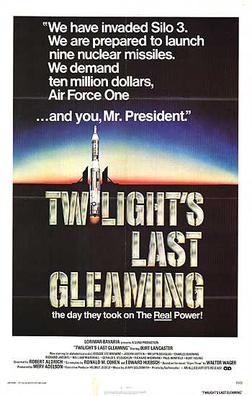
A Movie A Day #235: Twilight’s Last Gleaming (1977, directed by Robert Aldrich)


In Montana, four men have infiltrated and taken over a top-secret ICBM complex.  Three of the men, Hoxey (William Smith), Garvas (Burt Young), and Powell (Paul Winfield) are considered to be common criminals but their leader is something much different.  Until he was court-martialed and sentenced to a military prison, Lawrence Dell (Burt Lancaster) was a respected Air Force general.  He even designed the complex that he has now taken over.  Dell calls the White House and makes his demands known: he wants ten million dollars and for the President (Charles Durning) to go on television and read the contents of top secret dossier, one that reveals the real reason behind the war in Vietnam.  Dell also demands that the President surrender himself so that he can be used as a human shield while Dell and his men make their escape.
Until Dell made his demands known, the President did not even know of the dossier’s existence.  His cabinet (made up of distinguished and venerable character actors like Joseph Cotten and Melvyn Douglas) did and some of them are willing to sacrifice the President to keep that information from getting out.

Robert Aldrich specialized in insightful genre films and Twilight’s Last Gleaming is a typical example: aggressive, violent, sometimes crass, and unexpectedly intelligent.  At two hours and 30 minutes, Twilight’s Last Gleaming is overlong and Aldrich’s frequent use of split screens is sometimes distracting but Twilight’s Last Gleaming is still a thought-provoking film.  The large cast does a good job, with Lancaster and Durning as clear stand-outs.  I also liked Richard Widmark as a general with his own agenda and, of course, any movie that features Joseph Cotten is good in my book!  Best of all, Twilight’s Last Gleaming‘s theory about the reason why America stayed in Vietnam is entirely credible.

The Vietnam angle may be one of the reasons why Twilight’s Last Gleaming was one of the biggest flops of Aldrich’s career.  In 1977, audiences had a choice of thrilling to Star Wars, falling in love with Annie Hall, or watching a two and a half hour history lesson about Vietnam.  Not surprisingly, a nation that yearned for escape did just that and Twilight’s Last Gleaming flopped in America but found success in Europe.  Box office success or not, Twilight’s Last Gleaming is an intelligent political thriller that is ripe for rediscovery.

A Movie A Day #60: Outland (1981, directed by Peter Hyams)


outlandIt’s High Noon in space!

In the future, Marshal O’Neil (Sean Connery) has been hired, by Conglomerates Amalgamated, to enforce the law on a mining outpost that’s located on one of the moons of Jupiter.  Why are all the miners going crazy, taking off their spacesuits, and exploding?  Are they being hypnotized by that big red spot on Jupiter?  Or is the mining supervisor, Sheppard (Peter Boyle), forcing his workers to take amphetamines that cause them to have psychotic episodes?  O’Neil suspects the latter so Sheppard summons three intergalactic gunslingers to come and kill the marshal.  With no one, except for the outpost’s doctor (Frances Sternhagen), willing to stand behind him, O’Neil must stand up to three gunmen by himself.

The comparison between High Noon and Outland is obvious but the movie also owes much to Alien.  With its corrupt corporation, claustrophobic sets, and its blue-collar space workers, Outland seems like it could be taking place in the same movie universe as the Alien movies.  Like a lot of the films that Peter Hyams has directed, Outland is ambitious but slow.  It is never as much fun as something like Moon Zero Two.  The best thing about Outland is Sean Connery, convincingly cast as Gary Cooper in space.

Film Review: Finding Dory (dir by Andrew Stanton)


finding_dory

Finding Dory, the latest film from Pixar, tells the story of Dory (Ellen DeGeneres), a regal blue tang (for our readers in Vermont, that’s a fish) who suffers from short-term memory loss.  You may remember her from Pixar’s previous movie about fish, Finding Nemo.  In that movie, she helped a clownfish named Marlin (Albert Brooks) find his son, Nemo (voiced, in Finding Dory, by Hayden Rolence).  In the sequel, it’s Marlin and Nemo who are now helping Dory to find her parents.

Dory has spent years searching for her parents.  Of course, it would be easier if she didn’t suffer from short-term memory loss.  It seems that every time she sets out to track her parents down, she ends up getting distracted and forgets what she was doing.  However, while helping to teach a class about migration, Dory has a sudden flashback to her parents (voiced, quite charmingly, by Eugene Levy and Diane Keaton).  She sets out once again, determined to find her parents.  This time, Marlin and Nemo are accompanying her.  As Dory continually frets, she’s can’t do it alone because she can’t remember directions.

Though her memories are fuzzy and her flighty nature leads to some conflict with Marlin (who is just as cautious and overprotective of Nemo as he was in the first film), Dory eventually finds her way to where her parents were last seen.  And, in doing so, Dory discovers that she and her parents originally lived at a water park, the California Marine Life Institute.

(One of my favorite parts of the film is that apparently, Sigourney Weaver recorded several greetings and other messages that are played continuously over the Institute’s PA system.  “Hello, I’m Sigourney Weaver and welcome to the Marine Life Institute.”  Dory becomes convinced that Sigourney Weaver is some sort of God-like being who is leaving personal messages for her.  At one point, Dory exclaims, “A friend of mine, her name’s Sigourney, once told me that all it takes is three simple steps: rescue, rehabilitation, and um… one other thing?”)

Since this is a Pixar movie, Dory meets the usual collection of oddball and outcast sealife at the Institute, all of whom help her out while overcoming their own insecurities, providing properly snarky commentary, and hopefully bringing a tear or two to the eyes of even the most jaded of viewers.  Finding Dory is full of familiar voices, everyone from Idris Elba to Bill Hader to Kate McKinnon.  But, for me, the most memorable of all the voices (with the exception of Ellen DeGeneres herself) was Ed O’Neill’s.  O’Neill brought Hank, the bitter but ultimately good-hearted seven-legged octopus, to poignant life.  I imagine that, should there be another sequel, it will be called Finding Hank.

Finding Dory continues the annual tradition of Pixar films making me cry.  Finding Dory is an incredibly sweet and truly heartfelt movie but, at the same time, it’s also an extremely witty comedy.  This is one of those Pixar films where the joy comes not only from looking at the amazing animation but also from listening to truly clever dialogue being delivered by some of the best voice actors around.  DeGeneres does such a great job bringing Dory to life that, as the movie ended, my first instinct was to run out and buy a regal blue tang of my very own.  But then I read an article on Wikipedia, which explained why I shouldn’t do that.

(Basically, blue tangs may look cute but they have big, scary spikes that can cut up your hand.  As well, they don’t do well in captivity.  So, if you’re planning on getting a Dory of your very own, you might be better off just rewatching this movie…)

It’ll make you laugh.  It’ll make you cry.  Finding Dory is another great film from Pixar.

http://www.youtube.com/watch?v=UGWv91YZua4

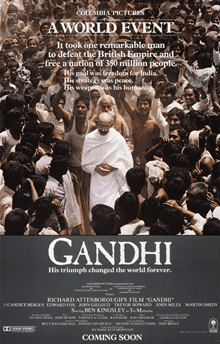
Lisa Reviews An Oscar Winner: Gandhi (dir by Richard Attenborough)


Gandhi-poster

I just finished watching the 1982 best picture winner Gandhi on TCM.  This is going to be a tough movie to review.

Why?

Well, first off, there’s the subject matter.  Gandhi is an epic biopic of Mohandas Gandhi (played, very well, by Ben Kingsley).  It starts with Gandhi as a 23 year-old attorney in South Africa who, after getting tossed out of a first class train compartment because of the color of his skin, leads a non-violent protest for the rights of all Indians in South Africa.  He gets arrested several times and, at one point, is threatened by Daniel Day-Lewis, making his screen debut as a young racist.  However, eventually, Gandhi’s protest draws international attention and pressure.  South Africa finally changes the law to give Indians a few rights.

Gandhi then returns to his native India, where he leads a similar campaign of non-violence in support of the fight for India’s independence from the British Empire.  For every violent act on the part of the British, Gandhi responds with humility and nonviolence.  After World War II, India gains its independence and Gandhi becomes the leader of the nation.  When India threatens to collapse as a result of violence between Hindus and Muslims, Gandhi fasts and announces that he will allow himself to starve to death unless the violence ends.  Gandhi brings peace to his country and is admired the world over.  And then, like almost all great leaders, he’s assassinated.

Gandhi tells the story of a great leader but that doesn’t necessarily make it a great movie.  In order to really examine Gandhi as a film, you have to be willing to accept that criticizing the movie is not the same as criticizing what (or who) the movie is about.

As I watched Gandhi, my main impression was that it was an extremely long movie.  Reportedly, Gandhi was a passion project for director Richard Attenborough.  An admirer of Gandhi’s and a lifelong equality activist, Attenborough spent over 20 years trying to raise the money to bring Gandhi’s life to the big screen.  Once he finally did, it appears that Attenbrough didn’t want to leave out a single detail.  Gandhi runs three and a half hours and, because certain scenes drag, it feels ever longer.

My other thought, as I watched Gandhi, was that it had to be one of the least cinematic films that I’ve ever seen.  Bless Attenborough for the nobility of his intentions but there’s not a single interesting visual to be found in the entire film.  I imagine that, even in 1982, Gandhi felt like a very old-fashioned movie.  In the end, it feels more like something you would see on PBS than in a theater.

The film is full of familiar faces, which works in some cases and doesn’t in others.  For instance, Gandhi’s British opponents are played by a virtual army of familiar character actors.  Every few minutes, someone like John Gielgud, Edward Fox, Trevor Howard, John Mills, or Nigel Hawthorne will pop up and wonder why Gandhi always has to be so troublesome.  The British character actors all do a pretty good job and contribute to the film without allowing their familiar faces to become a distraction.

But then, a few American actors show up.  Martin Sheen plays a reporter who interview Gandhi.  Candice Bergen shows up as a famous photographer.  And, unlike their British equivalents, neither Sheen nor Bergen really seem to fit into the film.  Both of them end up overacting.  (Sheen, in particular, delivers every line as if he’s scared that we’re going to forget that we’re watching a movie about an important figure in history.)  They both become distractions.

I guess the best thing that you can say about Gandhi, as a film, is that it features Ben Kingsley in the leading role.  He gives a wonderfully subtle performance as Gandhi, making him human even when the film insists on portraying him as a saint.  He won an Oscar for his performance in Gandhi and he deserved one.

As for Gandhi‘s award for best picture … well, let’s consider the films that it beat: E.T., Tootsie, The Verdict, and Missing.  And then, consider some of the films from 1982 that weren’t even nominated: Blade Runner, Burden of Dreams, Class of 1984, Fast Times At Ridgemont High, My Favorite Year, Poltergeist, Tenebrae, Vice Squad, Fanny and Alexander…

When you look at the competition, it’s clear that the Academy’s main motive in honoring Gandhi the film was to honor Gandhi the man.  In the end, Gandhi is a good example of a film that, good intentions aside, did not deserve its Oscar.

http://www.youtube.com/watch?v=6oWqlb_TlLQ

Playing Catch Up: The Good Dinosaur and The Peanuts Movie


http://www.youtube.com/watch?v=-RaApFZw9Hw

The Good Dinosaur (dir by Peter Sohn)

It may be hard to remember this now but, at the beginning of 2015, a lot of film bloggers were very excited about an upcoming film from Pixar Studios.  “This,” they said, “is the film that will remind people why they love Pixar in the first place!  In fact, this might be the first animated film to get a best picture nomination since Toy Story 3!”  Of course, there was another movie from Pixar that was due to come out in 2015 but everyone agreed that movie sounded too weird and silly to be a legitimate contender.  One of the movies would be a huge success and the other would probably be forgotten in a year or two.

And, at the time, everyone was sure that The Good Dinosaur would be the triumph while Inside Out would be the also-ran.

Instead, the exact opposite happened.  Inside Out turned out to be one of the most innovative and charming animated films ever.  Meanwhile, The Good Dinosaur — despite being a financial and critical success — has struggled to escape from Inside Out‘s shadow.

But you know what?  Taken on its own terms, The Good Dinosaur is a likable and entertaining movie.  No, it’s not as good as Inside Out but then again, the same can be said for a lot of good movie that were released in 2015.  Inside Out, of course, is a movie for adults that can still be enjoyed by kids.  The Good Dinosaur is definitely a movie for kids but it’s still visually striking enough that adults can get something out of it as well.

Plotwise, The Good Dinosaur imagines a world in which that meteorite did not strike the Earth and dinosaurs and humans developed next to each other.  A teenage dinosaur — eager to prove that he’s worthy despite being clumsy and easily scared — gets separated from his family and tries to get back to them.  Along the way, he deals with villainous pterodactyls and befriends a human child that he names Spot.  Sadly, the film brings about as much depth to the idea of talking dinosaurs as Pixar previously brought to the idea of talking cars but still, it’s an enjoyable and undeniably effective film.  Unlike Inside Out, it may not be great but it’s definitely good enough.

The Peanuts Movie (dir by Steve Martino)

My sister Erin and I saw The Peanuts Movie when it first opened last November.  As we left the theater, we both agreed that the movie was genuinely sweet and cute but that the ending just didn’t feel right.  Ultimately, we agreed that the ending was just too happy.

I don’t claim to be the world’s biggest expert on the life of Charlie Brown but I do know that he’s been around for nearly 70 years and, in that time, I don’t think he’s ever really had a traditionally happy ending.  From what I’ve seen of his holiday specials, it seems that Charlie is usually fated to end up sitting by himself while snow falls all around him.  And really, that always seemed to be the main appeal of Charlie Brown as a character.  Even though nothing ever goes his way, he never stops trying.  Even though he may sometimes get discouraged, he never gives up.  The Peanuts Movie actually rewards Charlie Brown for his patience and that didn’t quite feel right.

But you know what?  Maybe, after 70 years, Charlie Brown has finally earned the right to have at least one unambiguously positive ending.  The Peanuts Movie was a financial success so I imagine there will be a sequel.  If, during that sequel, Charlie wins a game or kicks that football or gets a kite to fly or actually wears a flattering outfit, it’ll be a problem.  But for now, it’s acceptable and perhaps even appropriate that he finally got to feel good about something at the end of The Peanuts Movie.

As for the rest of the film, it’s a cute homage to the original Peanuts specials.  Despite that happy ending, it remains true to the spirit of its source material and it’s obvious that the filmmakers had a lot of affection for Charlie, Linus, Snoopy, and all the rest.

And yes, Snoopy does steal the entire film.

Was there ever any doubt?

Horror Film Review: Motel Hell (1980, dir. Kevin Connor)


img_2495

You read the title of this post correctly. This is directed by Kevin Connor who has made numerous Hallmark films I’ve reviewed on this site. In addition, Bradford May was the camera operator on this film who also went on to direct numerous Hallmark movies I’ve reviewed. And it has one more connection to Hallmark because it has John Ratzenberger in it who went on to be in a few Hallmark movies.

So with all those connections to Hallmark in this 80s horror film, does it have any similarities to those films? Actually, it does in a way. In the case of Kevin Connor, it makes sense to hire a director who has proven themselves to be able to make a memorable movie with a small budget to make your small TV Movies.

Let’s talk about the movie now.

IMG_2496

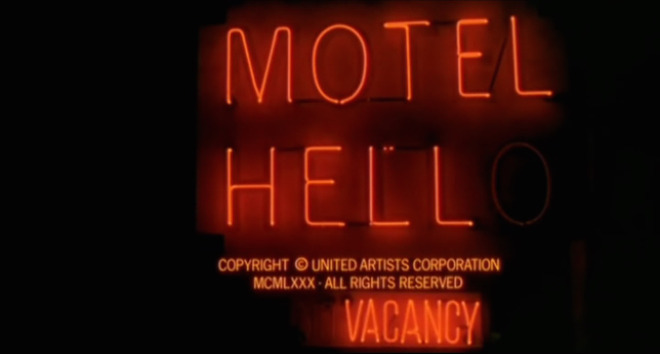
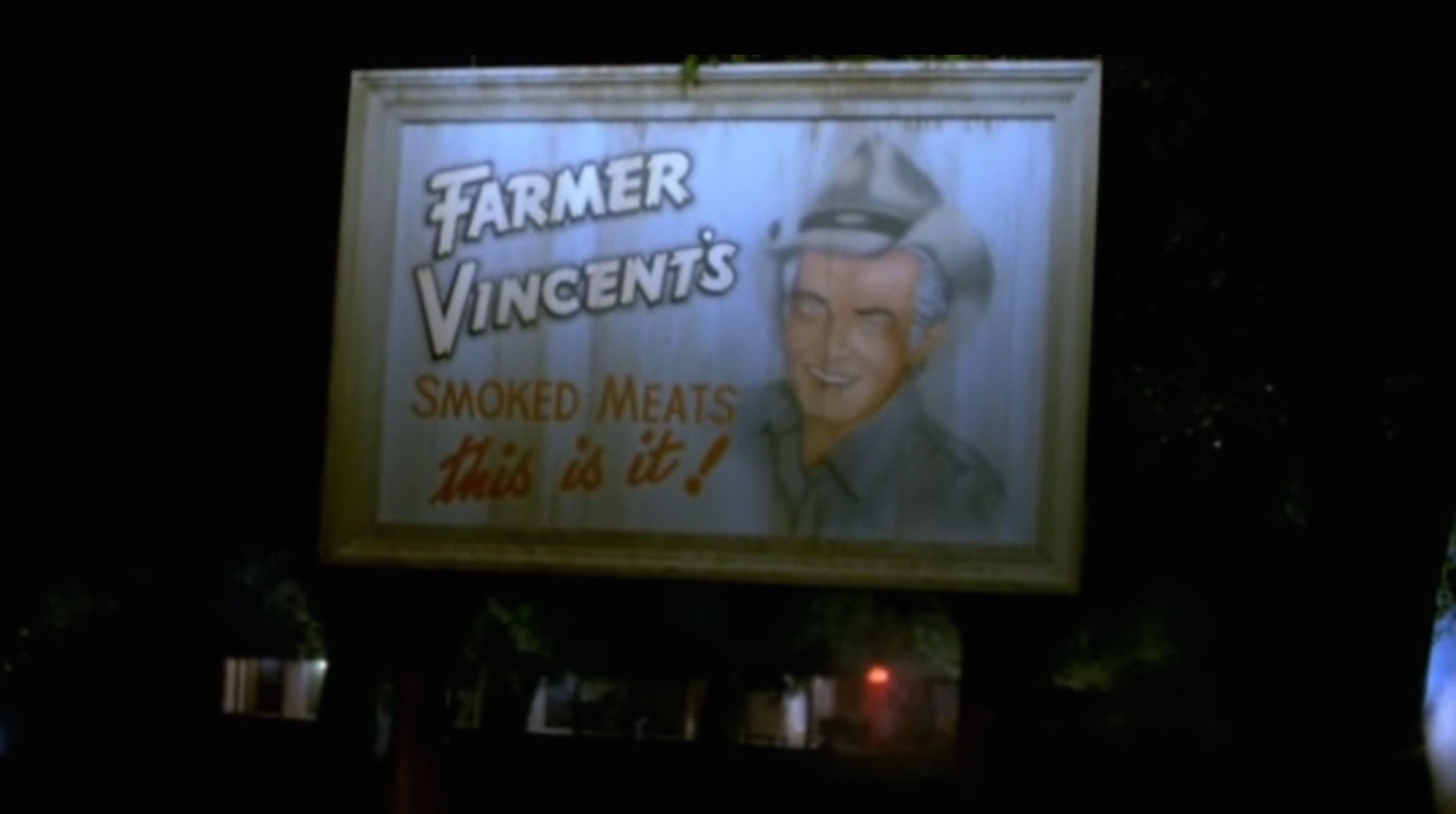
The film opens with Vincent Smith (Rory Calhoun) sitting on the porch of his Motel Hello. The ‘O’ being in need of replacing as it keeps going out. Thus changing the name of the place to Motel Hell. Smith drives out to the road and we see a motorcycle carrying a guy and a girl go past a sign.

IMG_2508

Smith sells smoked meat out of his motel. He sees the motorcycle hit something then go down. The guy is dead, but the girl is still alive. He loads them up and brings them back home.

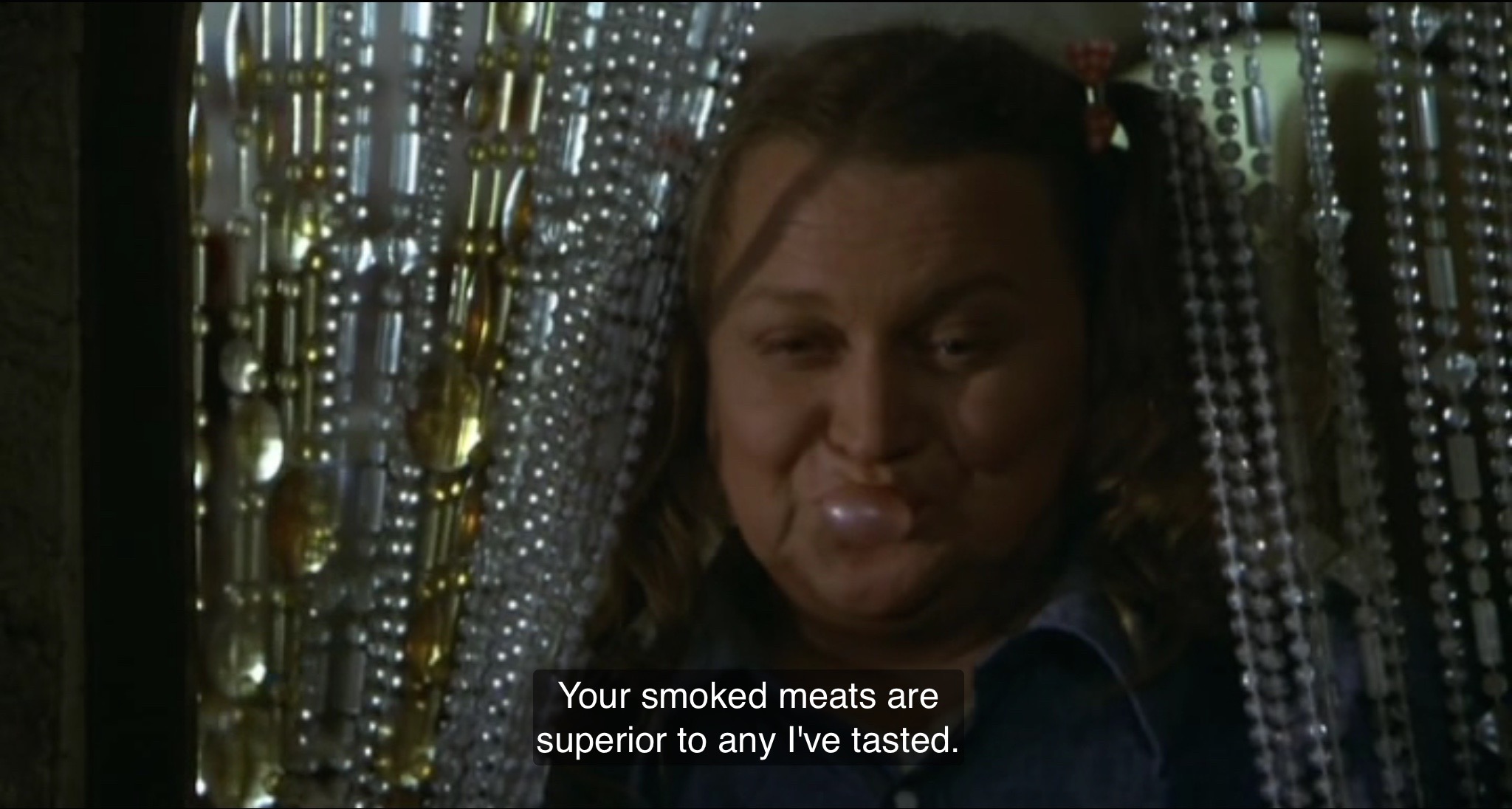
Smith doesn’t live alone. He lives with his sister Ida (Nancy Parsons). Look familiar?

IMG_2529

If a painful game of tug of war came to mind, then you do recognize her, because that’s Balbricker from Porky’s (1981). She grabs no dicks in this movie. This is Rory Calhoun’s film. And he makes it known with his time tested and approved way of calming kids down who just ran scared after wandering through a slaughterhouse.

IMG_2545

We are now introduced to the three other characters who matter in this movie.

IMG_2569

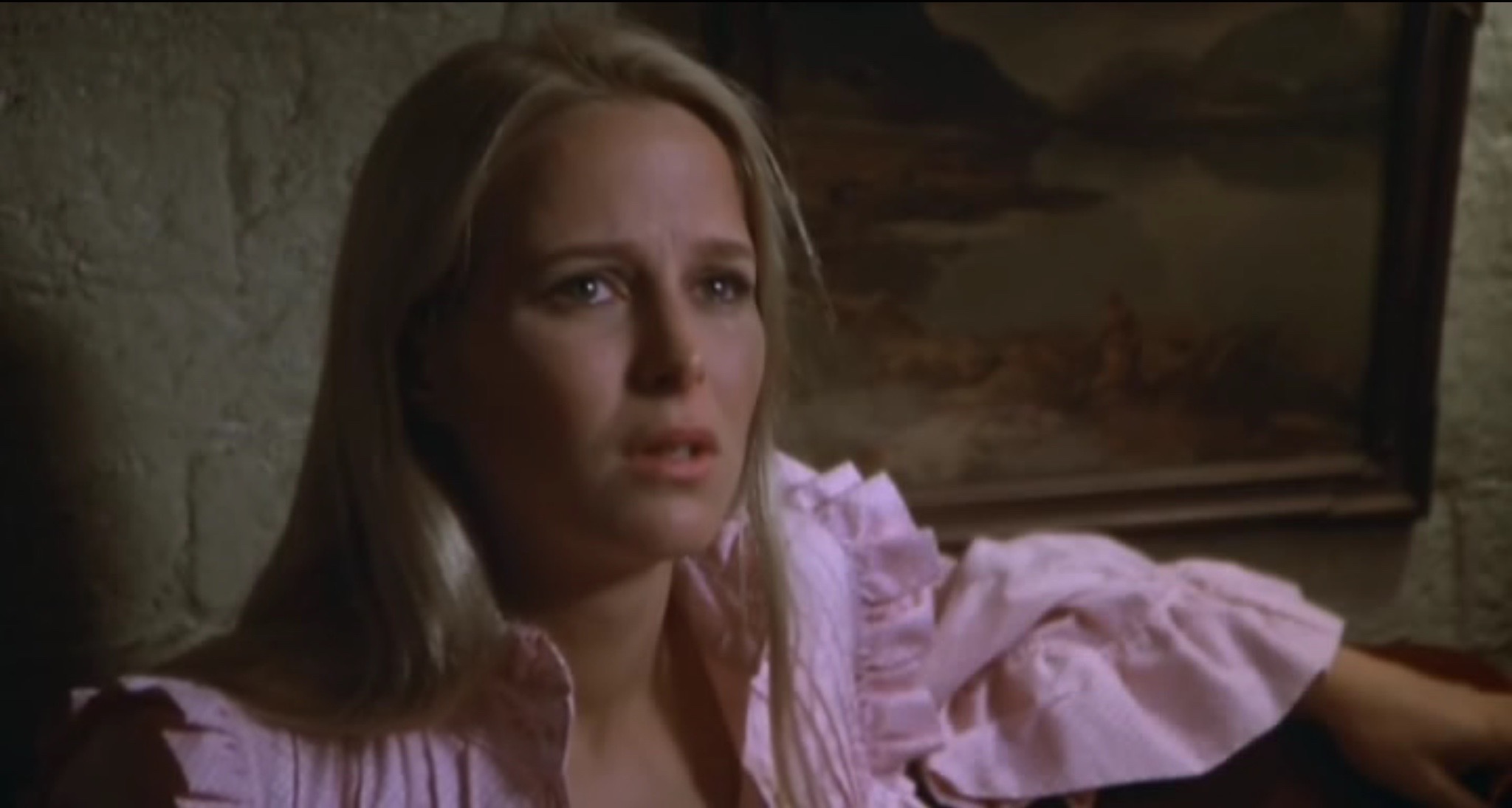
First, the girl who survived the crash. Her name is Terry (Nina Axelrod). She wakes up to find out that her boyfriend is long gone. Smith has already buried him.

IMG_2550

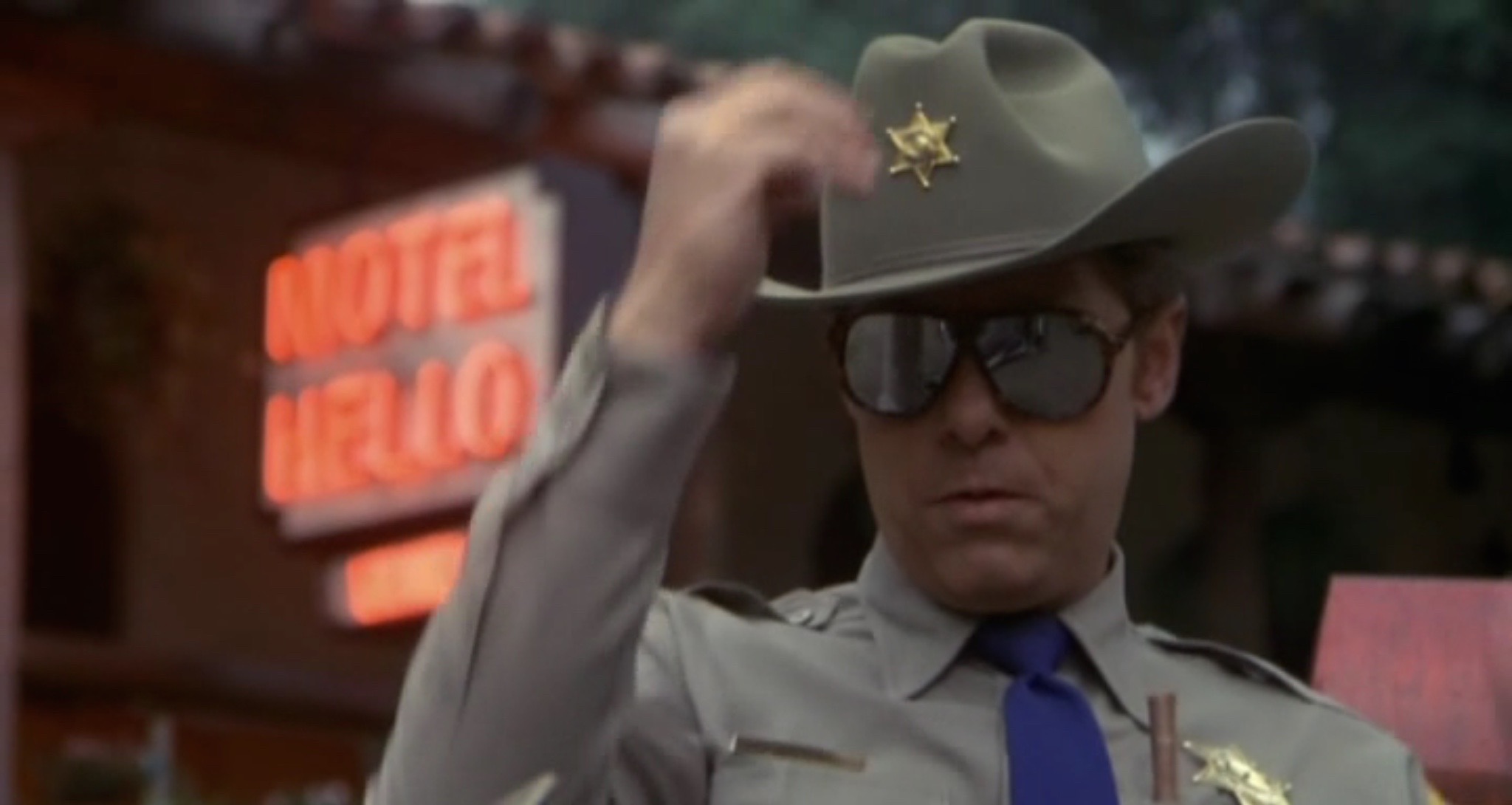
Second, the 80s sheriff Bruce Smith (Paul Linke). He’s Vincent Smith’s kid brother.

IMG_2561

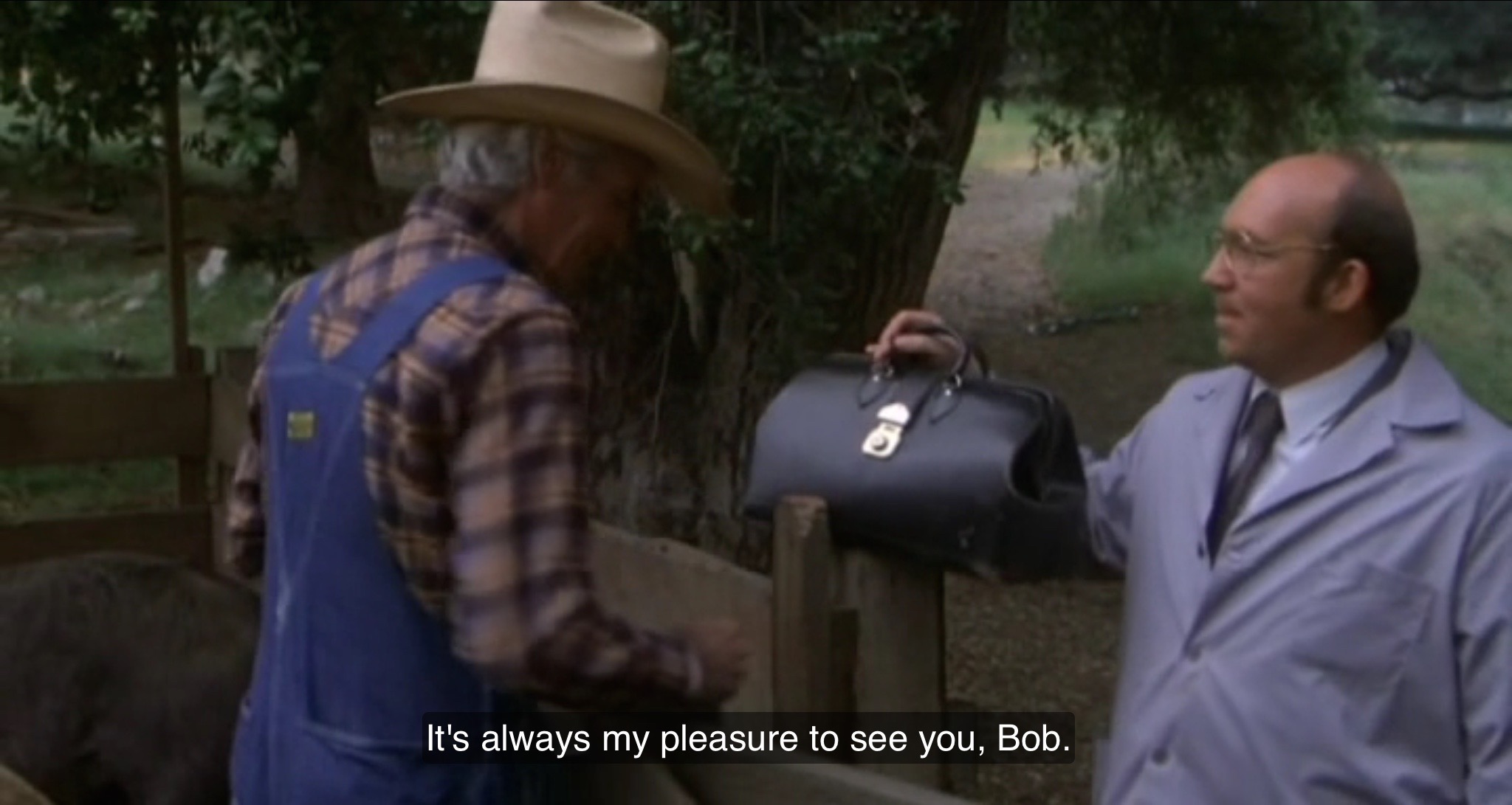
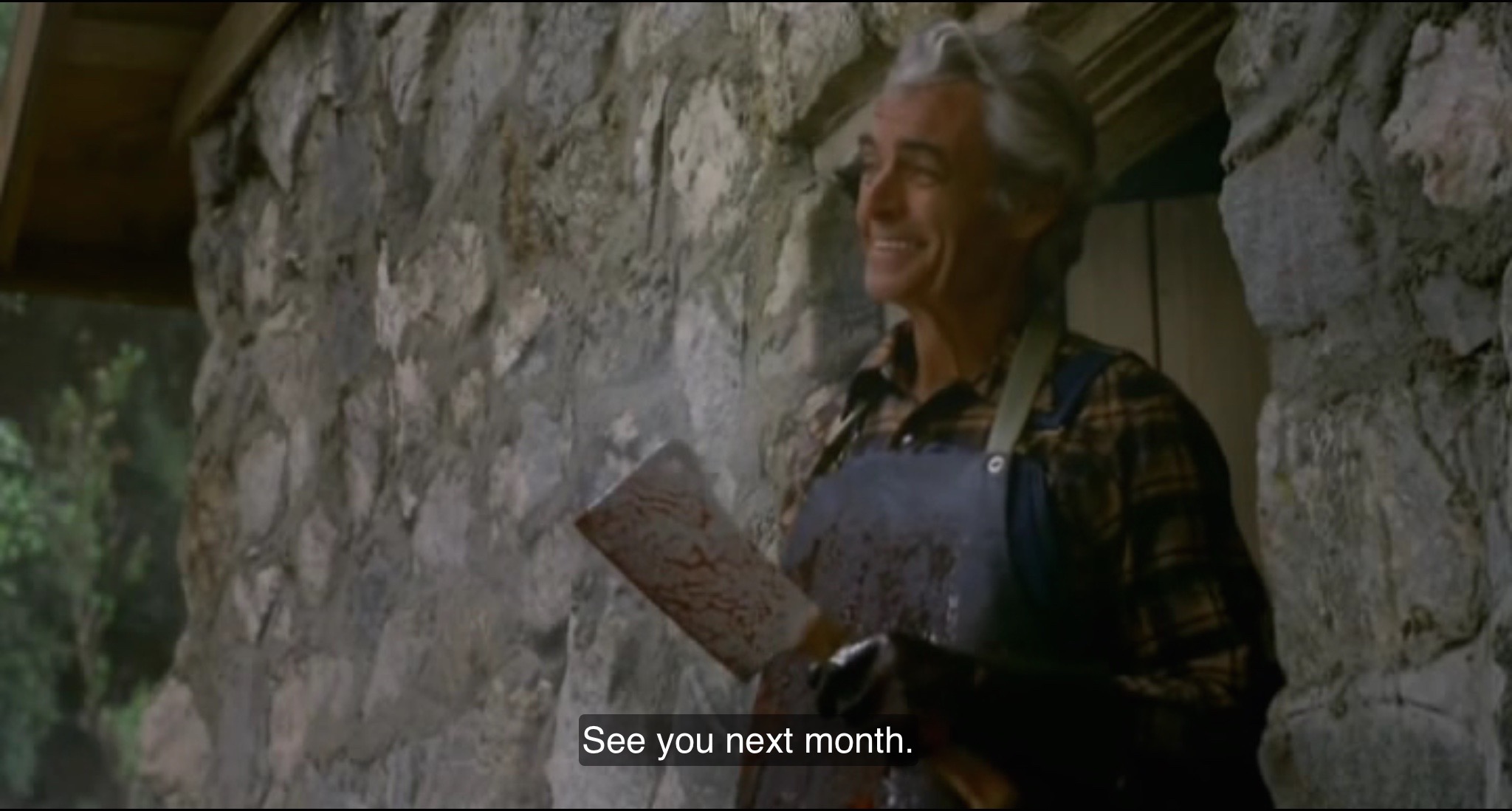
And inspector Bob Anderson (E. Hampton Beagle). Oh, poor poor Bob. Because after he gets this goodbye from Vincent.

IMG_2565

Bob makes an unfortunate discovery about Vincent’s secret garden.

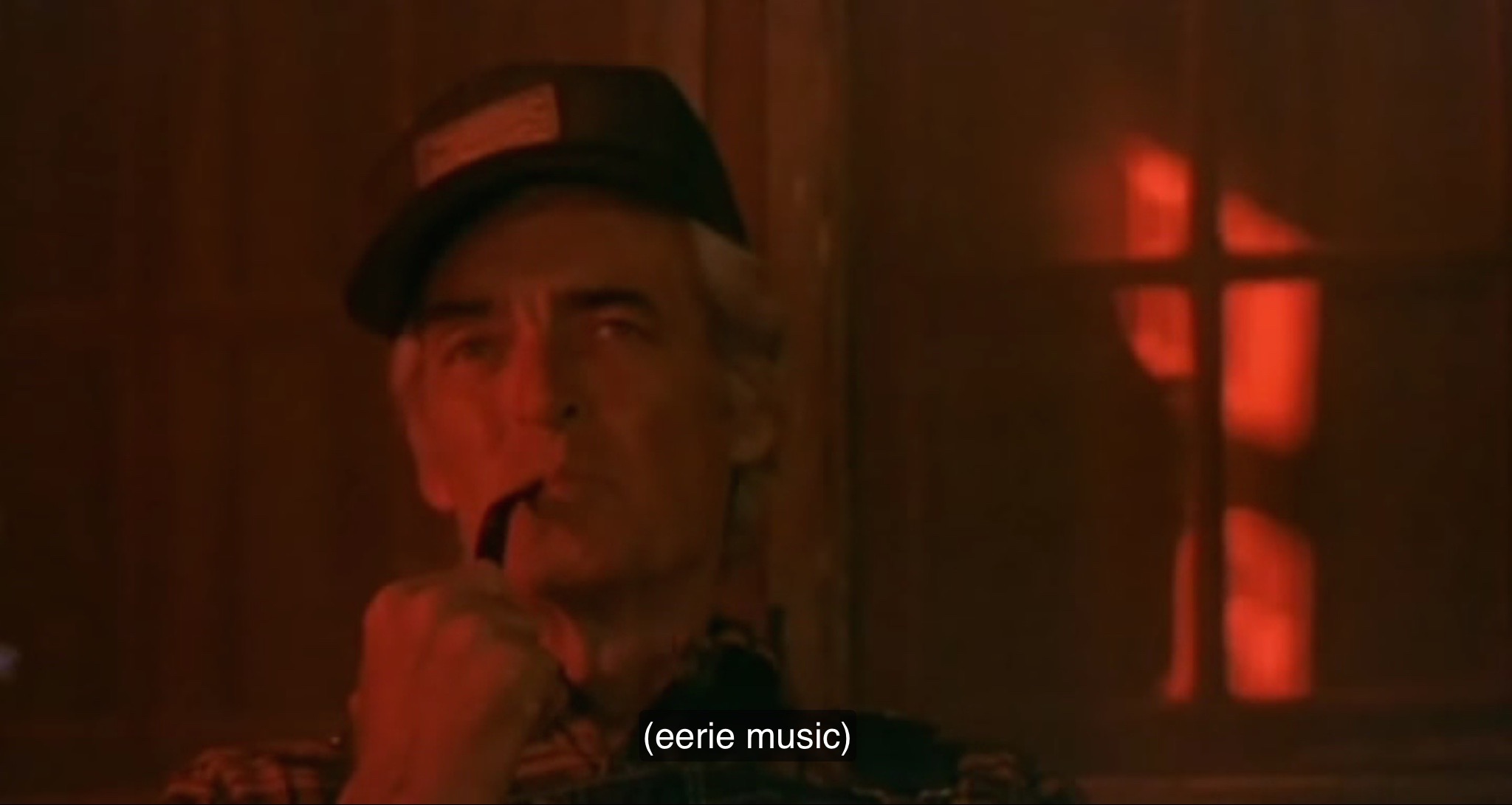
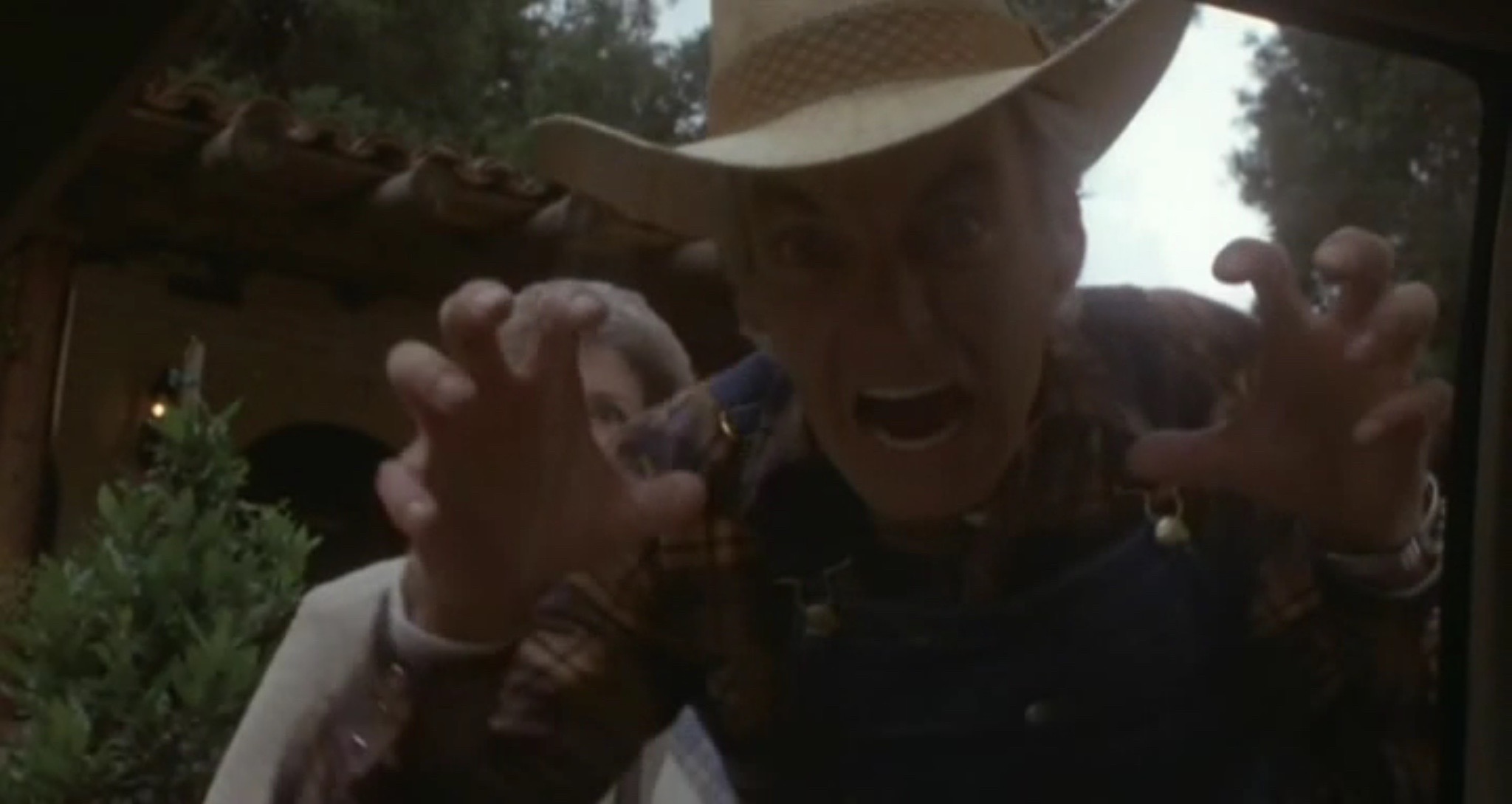
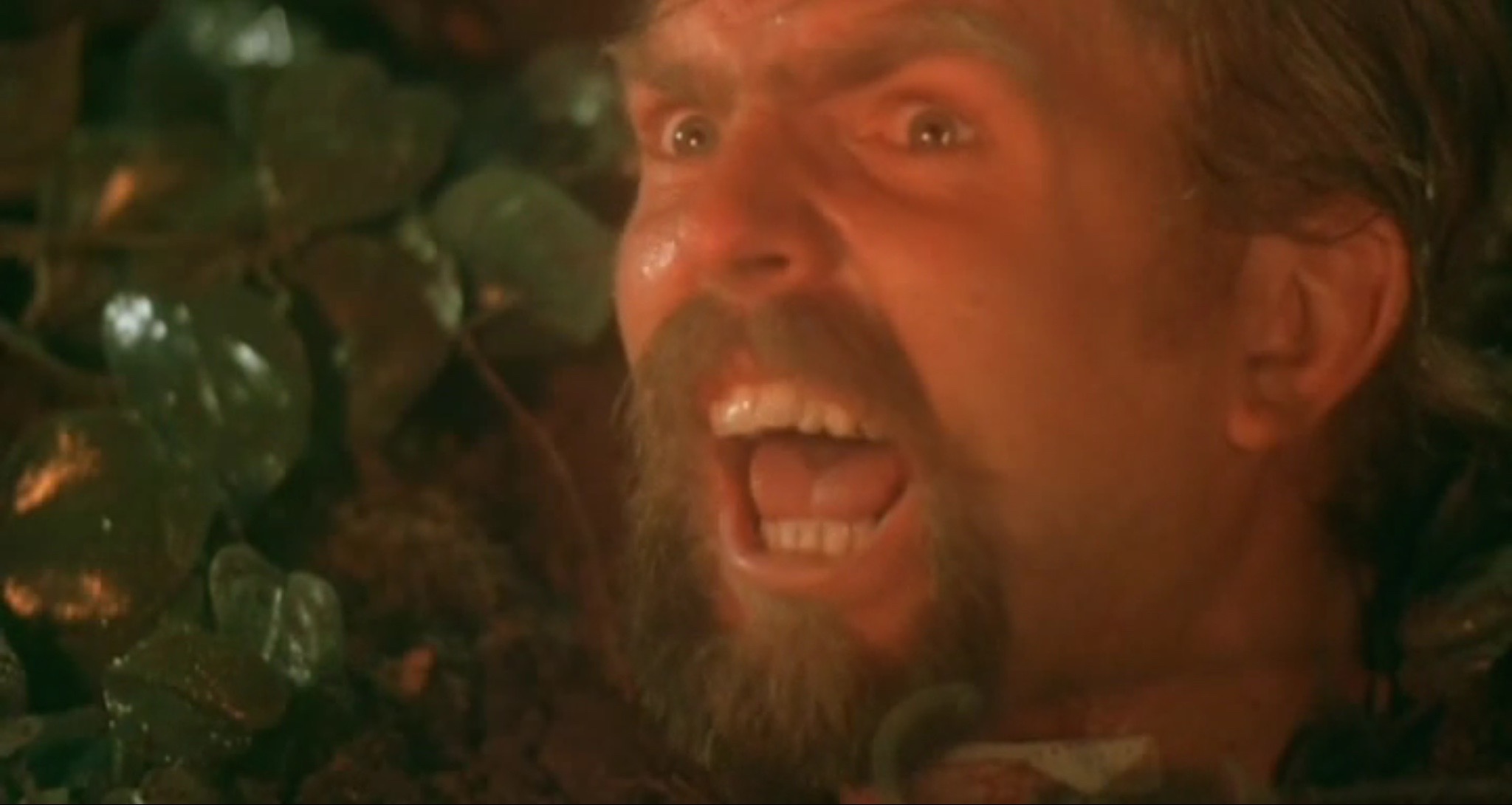
Yep, Vincent’s meat comes from people. Let me try and explain it the best I can. He sets traps on the nearby road so that people crash. He goes in and gasses them. He then takes them back to his secret garden and slits their vocal cords. He then plants them in the ground leaving just their head poking out. That’s why when the bag covering their heads are pulled off they just making groaning almost zombie like noises. Then he appears to hypnotize them using colorful pinwheels and hypnotic noise before he snaps their necks with a noose attached to a tractor trailer. They are then turned into the meat that he sells. Rather gruesome, but there honestly isn’t a whole lot to it. Here’s the scene that basically sums it all up.

Luckily, one of those heads is attached to John Ratzenberger. I say luckily because it means we finally all got our wish. Cliff Clavin has no way to tell his annoying stories anymore.

IMG_2759

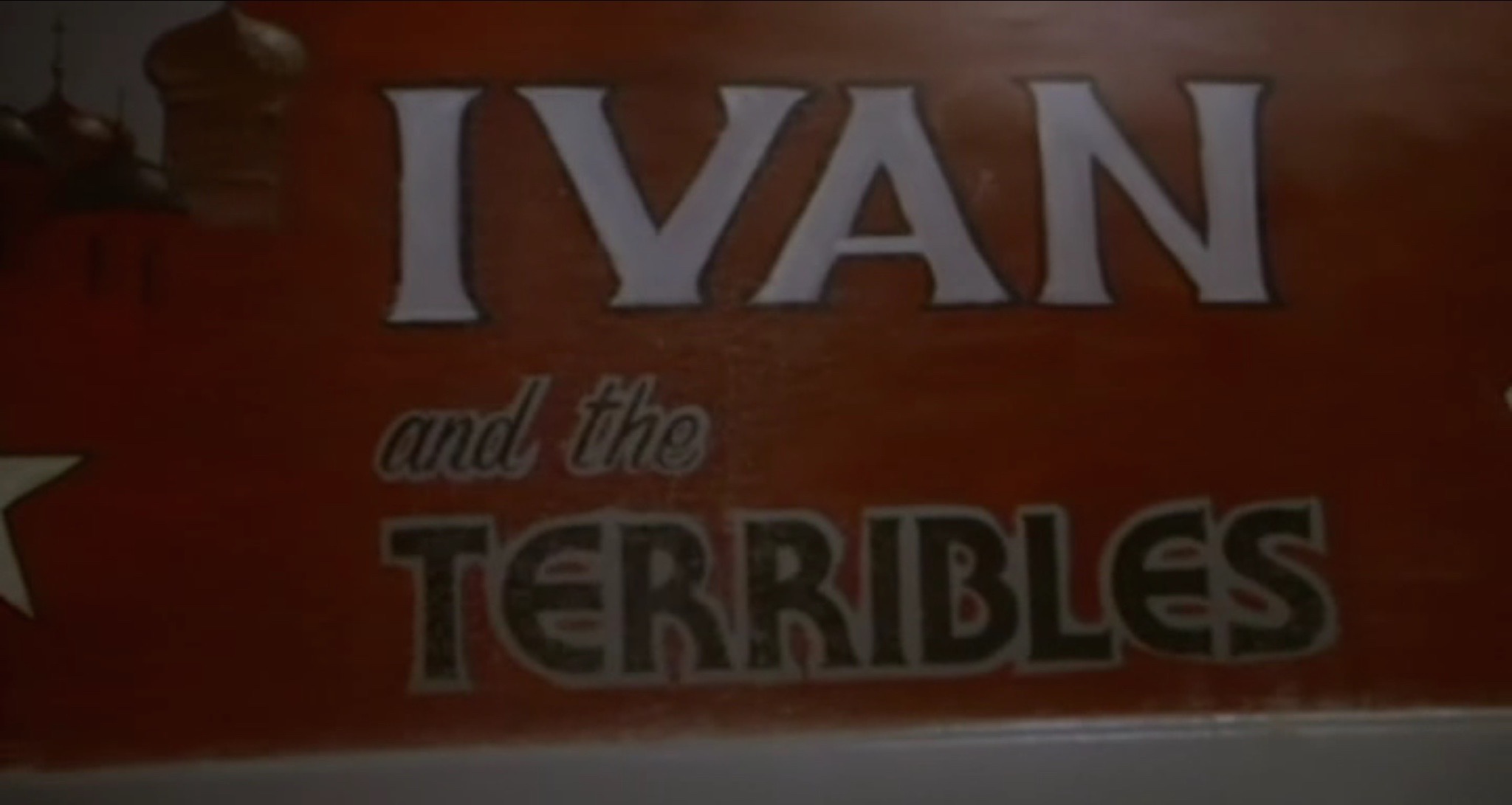
Oh, and Ratzenberger is captured after a van carrying himself and several bandmates hits a trap laid by Vincent. And you know what? More bands need to be named after Sergei Eisenstein movies.

IMG_2598

That’s basically the film right there. Vincent and Ida collecting bodies, feeding the heads, and justifying it all to themselves with crazy talk. Then Bruce and Terry eventually figure things out and the net closes in on them.

There is one particular capturing scene that is worth watching. Here’s the capture of the kinky couple.

The other thing that is worth mentioning is that Wolfman Jack is in this. He plays a reverend.

IMG_2727

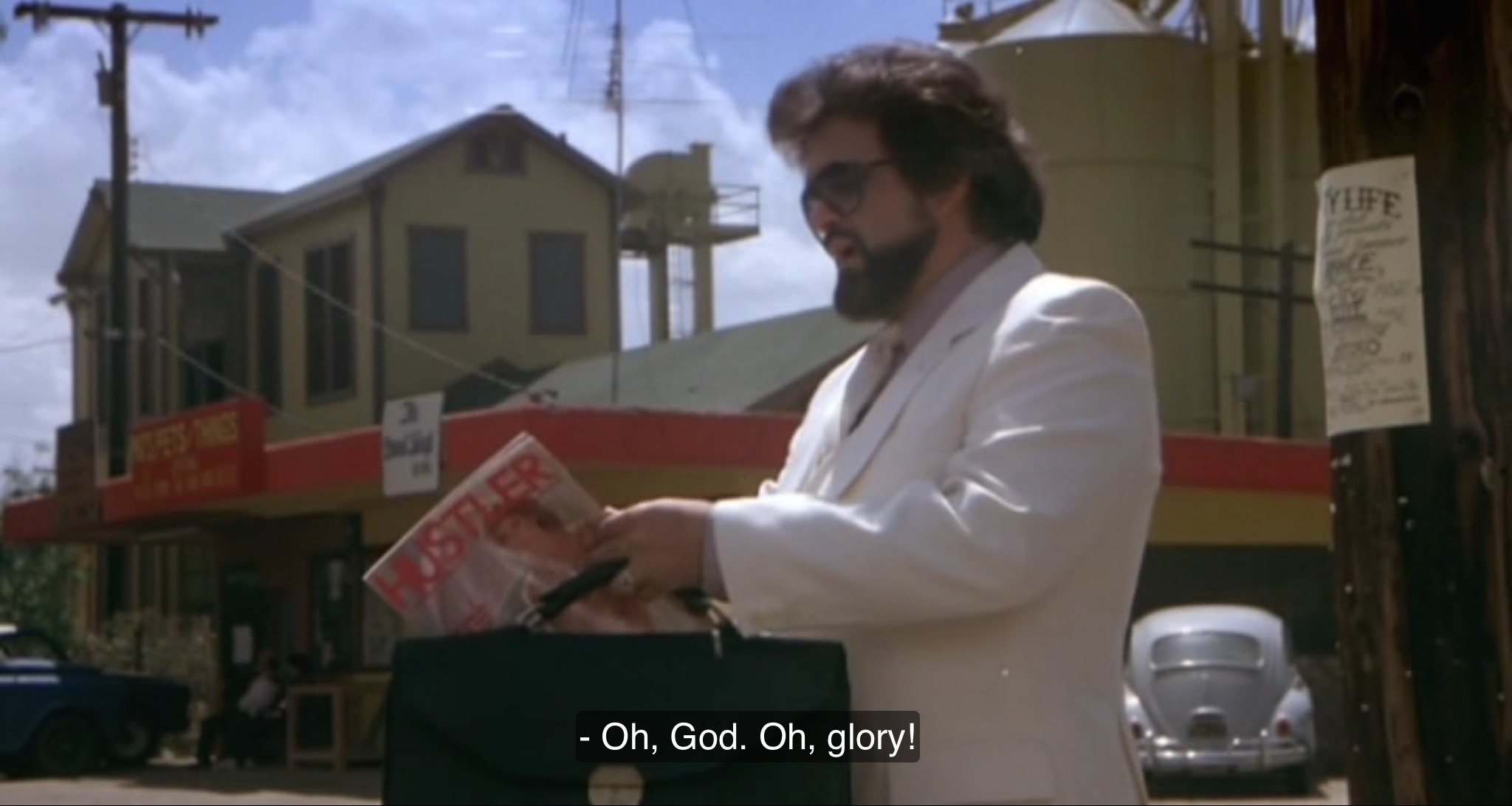
According to Motel Hell, the lord works in mysterious ways. Sometimes the lord provides you with an excuse to confiscate a copy of Hustler for your own personal collection.

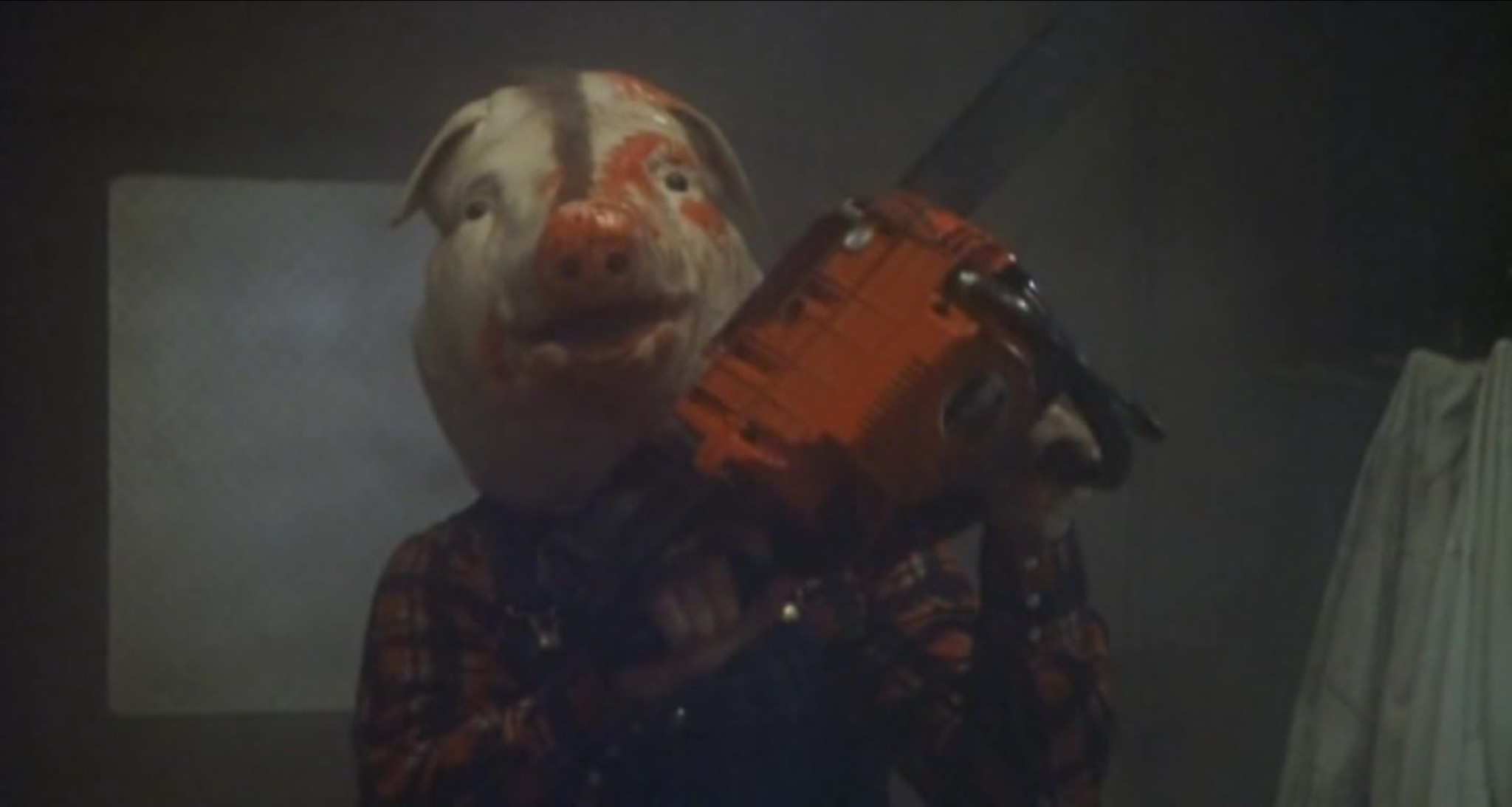
Horror really isn’t my thing and this film does begin to wear out it’s welcome at a certain point, but it’s Calhoun’s performance and the creepy atmosphere that makes it work. There are more clips up on YouTube if you want to see more in order to make your decision about watching this or not. I guess you have my recommendation.

IMG_2807