During a routine flight from Montreal to Edmonton, the two pilots (played by William Devane and Scott Hylands) discover that they do not have enough fuel to make it to their destination. Their aircraft was one of the first in the fleet to use the metric system but a conversion era led to the ground crew measuring the plane’s fuel in pounds instead of kilograms. With the help of an air traffic controller (Nicholas Turturro), the pilots try to land their plane before it falls out of the sky.
Based on a true story, Freefall is one of the many airflight disaster films that were made for television in the 80s and 90s. (Not surprisingly, the genre became less popular after 9-11.) The emphasis is on the pilots and ground control remaining calm and professional in the face of seemingly insurmountable odds. While Devane and Hylands look for a place to land, flight attendant Shelley Hack keeps the passengers from panicking. In typical disaster movie style, the passengers have their own dramas that are wrapped up as they wait for the plane to either land or crash. It’s a low-budget movie but the cast does a good job. William Devane is one of those actors who just looks credible flying an airplane.
The movie’s main lesson? Don’t use the Metric System unless you absolutely have to,
First released in 2004, Irish Eyes tells the story of two brother, born eleven months apart.
Tom Phelan (John Novak) is the older brother, the one who is destined to go to law school, join the Justice Department, and to marry Erin (Veronica Carpenter), the daughter of one of Boston’s most prominent attorneys. Tom’s future lies in politics. As he makes his reputation by taking down members of the Boston underworld, he finds himself being groomed for attorney general and then who knows what else.
Sean Phelan (Daniel Baldwin) is the younger brother. Haunted by the murder of his father and stuck at home taking care of his mother (Alberta Watson) while Tom goes to college, Sean soon pursues a life of crime. He falls under the influence of the Irish mob, led by Kevin Kilpatrick (Wings Hauser). Sean quickly works his way up the ranks. It doesn’t matter how much time he does in prison. It doesn’t matter how many people he has to kill. It doesn’t matter if it alienates the woman that he loves or if it damages his brother’s political career, Sean is a career criminal. It’s the one thing that he knows. When Sean finds himself as the head of the Irish mob and also the American connection for the IRA, his activities are originally overlooked by his brother. Sean even threatens a reporter who makes the mistake of mentioning that Sean and Tom are brothers. But soon, Tom has no choice but to come after his brother. What’s more important? Family or politics?
Obviously (if loosely) based on Boston’s Bulger Brothers (Whitey became a feared criminal while brother John became a prominent Massachusetts politico), Irish Eyes doesn’t really break any no ground. Every mob cliché is present here and so is every Boston cliché. Don’t rat on the family. Don’t betray your friends. The only way to move up is to make a move on whoever has the spot above you. Every bar is full of angry Irish-Americans. Every fight on the street turns deadly. Everyone is obsessed with crime or politics. The film, to its credits, resists the temptation to have everyone speak in a bad Boston accent. (The Boston accent, much like the Southern accent, is one of the most abused accents in film.) Sean narrates the films and you better believe he hits all of the expected points about life on the street.
That said, it’s an effective film with enough grit and good performances to overcome the fact that it’s just a wee predictable. Daniel Baldwin is appropriately regretful as Sean and John Novak does a good job of capturing the conflict between Tom’s love of family and his own political ambitions. Curtis Armstrong shows up and is surprisingly convincing as a psychotic IRA assassin. Admittedly, the main reason that I watched this film was because Wings Hauser was third-billed in the credits. Hauser only appears in a handful of very short scenes and that’s a shame. In those few scenes, he has the rough charisma necessary to be believable as the crime boss who holds together the neighborhood and it’s hard not to regret that he didn’t get more to do in the film. That said, the film still works for what it is. It’s a good mob movie.
This film was originally entitled Irish Eyes. On Tubi, it can be found under the much clunkier name, Vendetta: No Conscience, No Mercy.
THE CALL OF THE WILD (1997) is based on Jack London’s classic story about Buck, a domesticated dog who lived the first four years of his life on the regal estate of Judge Miller. In 1897, he’s kidnapped and shipped up north to the frozen arctic regions where powerful dogs are in high demand. And Buck, a St. Bernard-Scotch Collie mix, is as powerful as it gets.
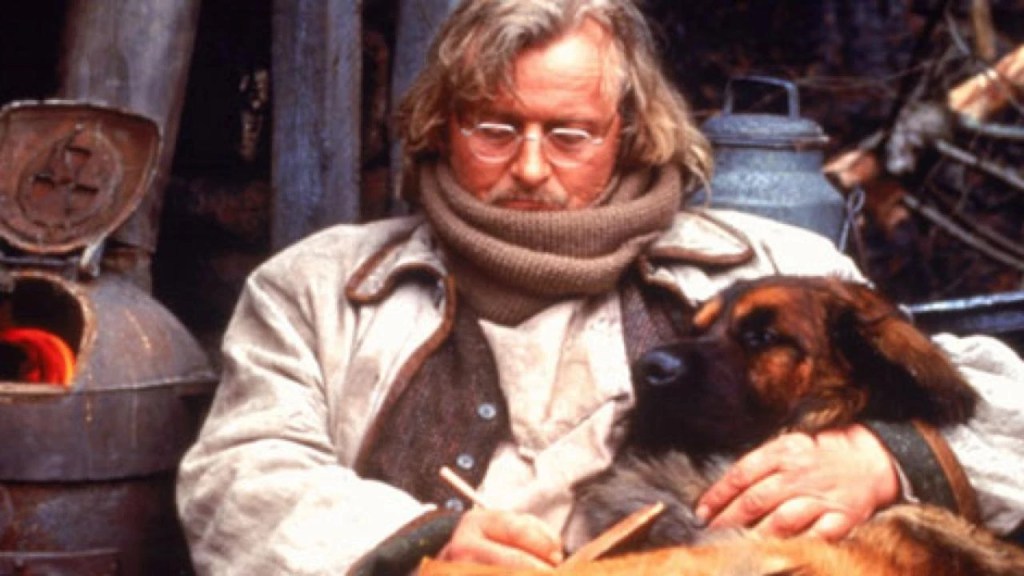
On his journey, we see Buck fall into the hands of three different masters. First, he’s purchased by a dispatch courier for the Canadian government named Perrault (Luc Morissette) whose sled driver is Francois (Robert Pierre Cote). Perrault and Francois are kind to the dogs, but life is still harsh as they carry their dispatches across the snowy, frozen north. Buck sees a dog killed by other dogs for the first time. This is where he first learns that only the strong survive, and he soon has to prove it when he’s forced to fight and kill Spitz, the lead dog of the team. Unfortunately, circumstances require Perrault to sell Buck and his sled team to a group of greenhorns led by Hal (Charles Edwin Powell), his sister Mercedes (Bronwen Booth) and her husband Charles (Burke Lawrence). These morons have no business looking for gold in the Yukon. They have no clue as to what they’re doing and seem to be leading the group to certain death. Starving, tired, and sensing disaster, Buck is lucky that the group arrives at the camp of John Thornton (Rutger Hauer) just in the nick of time. Collapsing at the doorstep of Thornton’s tent, Buck refuses to get up and go any further. As Hal begins to beat Buck with a stick, even going so far as pulling his gun to shoot him, Thornton forcibly takes Buck from the morons. With Thornton, Buck has finally found his “human.” John Thornton nurses Buck back to health and the two become inseparable. Buck has found love for the first time with Thornton and will not let him out of his sight for fear he might lose him. Then something strange happens, he starts feeling a call from the forest, and the promise of a freedom he’s never known before. His love for Thornton is strong, but is it as strong as the call of the wild?
Even though this 1997 version of THE CALL OF THE WILD is narrated by Richard Dreyfuss and includes the great actor Rutger Hauer in its cast, the true star of this film is Buck the dog. We really pull for Buck as we see him adapt to his new way of life after he’s stolen from his comfortable southern home. As hard as it is to see the animals kill the weakest among them, these are important lessons for Buck. His new world is no place for the weak, and he decides that he will never be weak again. Even though Buck has gotten tough, it’s still a relief when he ends up with John Thornton, the Hauer character. My favorite part of the film is when the two take off together in search of gold. Hauer is only in the film for about thirty minutes, but the relationship he shares with Buck is the highlight of the film as far as I’m concerned.
The last thing I want to mention about the film is that it’s directed by Peter Svatek. Svatek’s next film, BLEEDERS (aka HEMOGLOBIN) would also star Rutger Hauer, and he would follow that up with SILVER WOLF, starring Roy Scheider. For what it’s worth, the man definitely had something going for him since he was able to work with talents like Hauer and Scheider!
I’ve never read Jack London’s novel, but I have read that this version of THE CALL OF THE WILD may be the most faithful adaptation of the book out there. If that’s truly the case or not, I still really enjoyed this adaptation, and it’s an easy recommendation from me.
On December 8, 1991, YES VIRGINIA, THERE IS A SANTA CLAUS, starring Charles Bronson, made its world premiere on the ABC Network. I was 18 years old and working at the local grocery store that night so I had to set up my VCR to record the film. I was so nervous that something might happen to mess up my timed recording. In those days, all it took was a quick power flicker and your recording was screwed. I was so happy when I got home that night and everything had gone perfectly. I was a starving Bronson superfan who had not seen anything new from the man since KINJITE: FORBIDDEN SUBJECTS had been released in February of 1989. Since KINJITE’S release, Charles Bronson had faced the most difficult emotional times of his life. The love of his life, Jill Ireland, had fought valiantly against cancer but lost her battle with the disease in May of 1990. When he chose to start working again, his first two films, THE INDIAN RUNNER and YES VIRGINIA, featured him in roles where he was playing a man who is dealing with the pain from having recently lost his wife. These were tough times for the aging star, and it seems he was working out some deep emotional struggles in these two performances. At the time, the prospect of Charles Bronson performing in a heartwarming Christmas movie about a classic newspaper editorial was such a surprising film choice. I was all in!
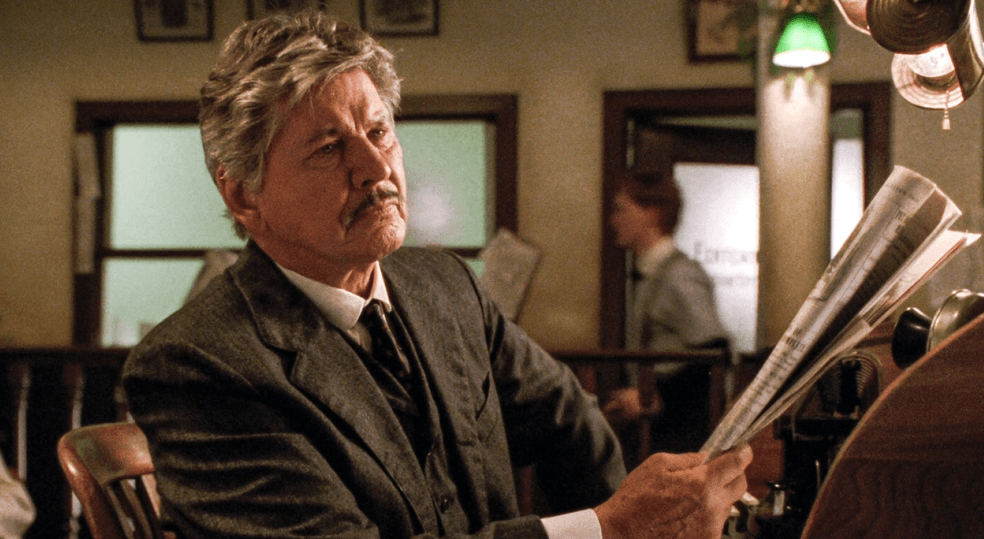
YES VIRGINIA opens with renowned journalist for The New York Sun newspaper, Francis P. Church, cleaning the snow off of his recently deceased wife and daughter’s tombstones. He turns away to take a drink of whiskey out of shame and then walks away. It seems that since they passed away, Church has become a shell of his former self. He has a lot of guilt because he was always away on newspaper business instead of being at home with his family. He’s dealing with that pain by drinking way too much. He’s not working on the stories he’s been assigned by his editor, Edward P. Mitchell (Ed Asner), and it seems he’s lost the will to live.
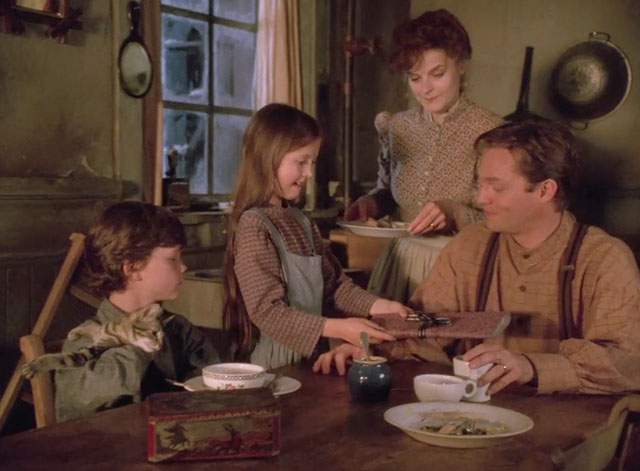
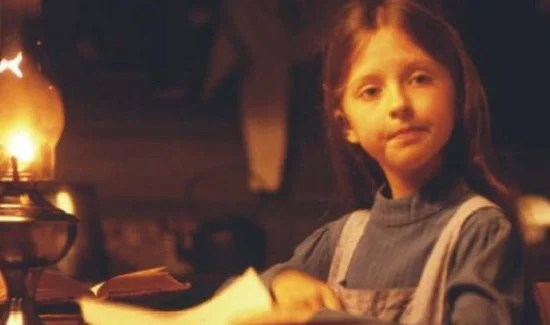
At the same time that Francis Church is dealing with his issues, we’re introduced to the O’Hanlon clan. James O’Hanlon (Richard Thomas) is the head of the family that includes his wife Evie (Tamsin Kelsey), daughter Virginia (Katharine Isabelle), and sons Teddy and Sean. We meet James on the same day that he loses his job for beating up a bigot who was insulting his Irish heritage. We follow him as he attempts to find a job so he can provide for his family. His sweet-natured daughter Virginia is having some issues of her own. One day while playing jump rope at school, some of the other girls decide to tell her that there is no such thing as Santa Claus. This cause’s Virginia a lot of stress, so she asks her dad if it’s true. Holding yesterday’s copy of the New York Sun, he tells her that if he sees it written in The Sun, he knows it’s true. Being a smart young lady, she decides to write her own letter to The Sun.
And this is where the two stories converge. Editor Mitchell assigns Church the job of answering Virginia’s question. This turns out to be just what he needs to begin seeing the good in the world around him again.
That night in December of 1991, even after working the late shift at the grocery store, there was no way I was going to wait until the next day to watch a new Charles Bronson movie for the first time in almost 3 years. I pressed play and settled in for a film that is dealing with some really serious subject matter. The main characters are dealing with severe depression, alcoholism, bigotry, extreme poverty, and attitudes of indifference and disbelief towards Santa Claus himself! Sounds like an uplifting story doesn’t it? The truth is that it is a very uplifting story because it features people with good hearts who care about the people around them. Sure, there are some jerks in the movie. This is one of those kinds of movies where those jerks end up getting their asses kicked. James O’Hanlon and his friend Donelli get the opportunity to beat up the bigots who call them potlickers and poured their beer on them. As a fan of Bronson, one of the most satisfying scenes in the movie is when Church punches out the smug, elitist A-hole, Cornelius Barrington (John Novak) who’s being disrespectful about one of Church’s female co-workers. Those scenes are satisfying, but my favorite parts of the movie are the sentimental acts of kindness we get to see throughout the film. We see co-workers taking care of co-workers. We see neighbors taking care of neighbors. We see family members taking care of each other at different times and different ways. It’s so satisfying when we see good things happen to these good people simply because someone cares enough to be kind.
The cast in this film is so good. Of course Charles Bronson is excellent as Francis P. Church. You can really feel his character’s grief, and you can understand why he runs away to the bottle. And knowing that Bronson had recently lost his wife in real life only adds to the emotional power of the performance. And I think Katharine Isabelle is so good as Virginia. The wrong person in her role could have ruined the film. They got it right with Katharine. Ed Asner is perfect as Edgar P. Mitchell, with just the right combination of toughness and caring. I really enjoy seeing the two grizzled veterans, Bronson and Asner, working together. And finally, I like Richard Thomas in this movie as well. He plays the highs and lows of his character in a dramatic way without going too far. The main cast had to be good for the movie to work, and they more than fit the bill.
And what about that famous editorial where Church answers Virginia’s question, “Is there a Santa Claus?” I just love the scene in the movie when the sweet girl gets her answer. I won’t spoil it for you with all the details, but I will say that it features so much thoughtfulness and thankfulness leading up to the reading of the actual editorial that ran in New York Sun in 1897. And the look on Virginia’s face when her dad reads “Yes Virginia, there is a Santa Claus” is priceless. It’s the perfect example of why I love the movie, and therefore, it’s a perfect ending to the film.
BONUS CONTENT – I had the great privilege to be part of an interview with Lindsay Ireland, Charles Bronson’s and Jill Ireland’s niece, as part of the “This Week in Charles Bronson” podcast. She gives so much insight into her uncle and aunt. She also provides additional context on just how hard Jill’s passing was on Bronson just prior to filming YES VIRGINIA, THERE IS A SANTA CLAUS. I’ve linked the interview below if you want to know more.
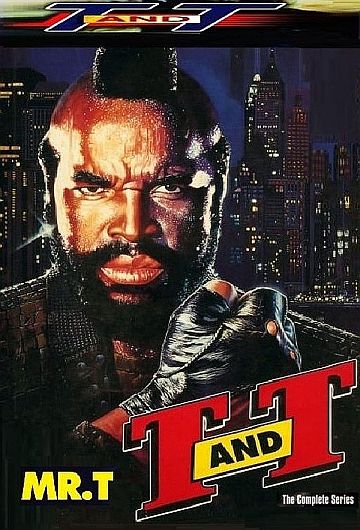
Welcome to Retro Television Reviews, a new feature where we review some of our favorite and least favorite shows of the past! On Fridays, I will be reviewing T. and T., a Canadian show which ran in syndication from 1987 to 1990. The show can be found on Tubi!
This week, season 2 begins with a supesized episode.
Episodes 2.1 through 2.4 “Straight Line”
(Dir by George Mihalka, originally aired on October 24, 1988)
Straight Line, the second season premiere of T & T, is one story that is told over the course of four, 30-minute episodes. According to both Wikipedia and the IMDb, all four of those episodes aired on October 24th, 1988. To me, that would seem to suggest that Straight Line originally aired as a made-for-TV movie and that it was later split up into four episodes for syndication. It’s something that happens with a lot of shows, especially when it comes to season premieres. Straight Line was also apparently released, direct to video, as a stand-alone film in 1990 and you have to wonder how many people ended up renting it without realizing that they were spending their money on a super-sized episode of T & T.
The second season begins with some changes to the opening credits. Most of the supporting cast — including Decker, Aunt Martha, Sophie, and Detective Jones — no longer appear in the opening credits. (Decker and Aunt Martha do appear in the episodes but both David Nerman and Jackie Richardson are credited as being “guest stars.”) Instead, it appears that there are now only three regular members of the cast — Mr. T, Alex Amini, and Sean Roberge as a new character named Joe Casper. (Roberge previously appeared during the first season, playing a character named Fabian.)
Joe Casper is a teenager who is in a bit of trouble. He’s gotten involved with a neighborhood gang known as The Future and when the Future disrupts a campaign event for a reverend who is seeking to become Toronto’s first black mayor, it leads to a bomb going off and killing Joe’s mother. Distraught by what’s happened, Joe attempts to jump off a bridge but T.S. Turner (who was at the rally) approaches Joe and says, “Take it easy, little brother,” and that’s all Joe needs to hear to turn himself into the police. Joe is going to need a good lawyer so T.S. calls Amy, who rushes over the police station and….
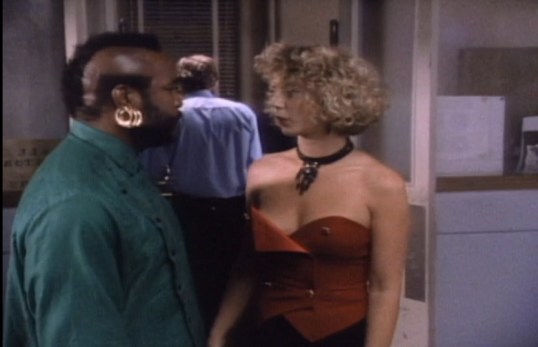
OH MY GOD, WHAT IS AMY WEARING!?
Amy explains that she was at a banquet when T.S. called but still, I would probably put on a coat or something before heading over to Toronto’s dirtiest police station.
Anyway, Amy is able to keep Joe out of jail. Joe is sent to a juvenile rehabilitation center that is run by Dr. Hammel (Kenneth Welsh). Dr. Hammel is an ally of the preacher who is running for mayor and everyone thinks that Dr. Hammel is a good and devoted social activist. Of course, the audience automatically knows that Dr. Hammel is the bad guy because he’s played by Kenneth Welsh, who I imagine is best-known in America for playing the totally evil Windom Earle in Twin Peaks.
T.S. investigates The Future and discovers that there started out as a neighborhood watch before being transformed into a bunch of Neo-Nazis. He also discovers that Dr. Hammel is the one who is behind the organization. T.S. and Amy have to expose Hammel and they better hurry because the preacher running for mayor has been assassinated and Hammel has just announced that he’s running for mayor of Toronto!
This all may sound pretty exciting but the second season premiere is actually a bit dull. The main problem is that, as opposed to the first season, T.S. doesn’t get to do much in the episode. He’s rather subdued and there’s none of the quirkiness that made the character so memorable during the first season. He doesn’t talk about his love for cookies. He hardly calls anyone, other than Joe, “brother.” There’s not even a scene of him hitting a punching bag. It’s disappointing! As well, he and Amy were separated for the majority of the show, which kind of goes against the whole idea of them being T and T. Instead, the majority of the episode was devoted to introducing Joe. The episode ended with Joe, tears streaming down his face, walking away with T.S. and apparently renouncing his former affiliation with The Future. Since Joe is in the opening credits now, I assume he’s going to become T.S.’s ward for at least the next few episodes.
Hopefully, the next episode will features T.S. acting more like T.S. Otherwise, this is going to be a long season.
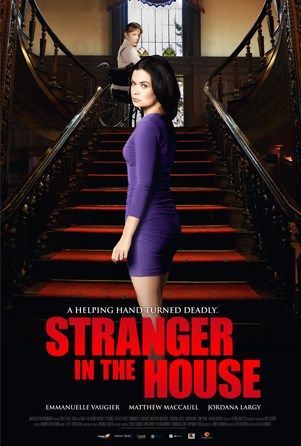
The 15th film on my DVR was Stranger In The House, which premiered on the Lifetime Movie Network on April 10th.
Stranger In The House opens with a stab at relevance by including news reports of Wall Street bailouts and footage of Occupy protesters running around in their Guy Fawkes masks. (Though I’m sure they would probably call them V For Vendetta masks.) I have to admit that, when I first saw that footage, I was worried. I didn’t know if I could particularly take a Lifetime version of The Big Short.
Fortunately, the rest of the film has nothing to do with any of that. Instead, it’s a rather enjoyable and somewhat over-the-top Lifetime melodrama, one that makes no pretense of providing anything other than wonderfully sordid entertainment.
Super-rich businessman Wayne (John Novak) has been crippled in a car crash and, now confined to a wheelchair, he goes out of his way to make everyone else miserable. He’s nearly impossible to live with and his daughter and chief caretaker, Jade (Emmanuelle Vaugier), desperately needs a vacation from him. On top of that, she’s just married the handsome but somewhat mysterious Marco (Matthew McCaull) and they want to take their honeymoon. So, jade hires a caretaker to look after Wayne while they’re gone.
At first, Wayne doesn’t much like his caretaker. Sure, Samantha (Jordana Largy) may be attractive and enthusiastic but she’s into stuff like yoga and Wayne’s too cantankerous for all that. However, we then get a five-minute montage in which we see Wayne slowly start to lower his defenses. Soon, he and Samantha are smiling and laughing and kissing. When Jade and Marco return, they are shocked by just how close Wayne and Samantha have become…
Then Wayne mentions that he and Samantha have gotten married and all Hell breaks loose.
Jade is convinced that Samantha only married Wayne for his money and she grows even more frustrated when Marco suggests that maybe she should give Samantha a chance. Wayne certainly appears to be happy and he’s even washing his hair again! But then one day, Wayne is found dead at the bottom of a cliff and it turns out that he’s left all of his money to Samantha!
Jade believes that Samantha murdered Wayne. It doesn’t help that Samantha isn’t acting like a grieving widow. Instead, she’s laughing and drinking and constantly complaining about having to wear black all the time. If that’s not strange enough, Samantha and Marco seem to have suddenly grown very close.
How close?
Close enough that they’re ducking into a bedrooms and broom closets so that they can make out…
And that all happens in the first forty minutes! Now, I’m not going to spoil the rest of the movie but I will say that this is one of those Lifetime movies where things just keep getting stranger and stranger. In fact, it’s almost ludicrous how melodramatic things get but that’s why it’s fun! This is one of those films that is so over-the-top and fun that you would have to be a real killjoy to complain about whether or not it actually makes any sense.
After all, logic really isn’t the point here. Stranger In The House is all about style and that’s something that it definitely has. This is a sleek, fun melodrama and one for which I would suggest keeping an eye out.
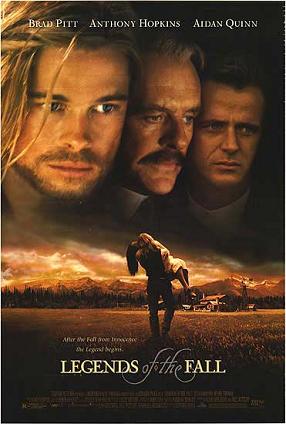
When I first started to watch the 1994 film Legends of the Fall on Encore, I was a little bit concerned when I discovered that it was directed by Ed Zwick. After all, Zwick also directed Love and Other Drugs, which is one of the worst and most insulting films of all time. In fact, I nearly stopped watching when I saw Zwick’s name. But, largely because I want to finish up this series of melodramatic film reviews at some point in the near future, I decided to go ahead and watch the film.
And it turned out that Legends of the Fall is not a bad film. I probably would have enjoyed it more if I had seen it in a movie theater as opposed to on television but, considering that it was directed by Ed Zwick, Legends of the Fall is definitely watchable. If nothing else, it’s better than Love and Other Drugs.
Legends of the Fall tells the story of the Ludlows, a family that lives on a Montana ranch at the start of the 2oth Century. Starting with the final days of the Indian wars and proceeding through World War I and prohibition, Legends of the Fall covers a lot of historical events but does so in a very Hollywood way, which is to say that all of the main characters dress like they’re from the past but they all have very modern social attitudes. In this case, Col. William Ludlow (Anthony Hopkins) may be a wealthy white military veteran but he’s also totally pro-Native American. And, of course, all the local Native Americans love him, despite the fact that he’s a representative of the institutions that have destroyed their way of life.
Anyway, Col. Ludlow has three sons. The oldest, Alfred (Aidan Quinn), is serious and responsible. The youngest, Samuel (Henry Thomas), is naive and idealistic. And the middle child is Tristan (Brad Pitt), who is wild and rebellious and looks like Brad Pitt. You have to wonder how the same gene pool could produce both Aidan Quinn and Brad Pitt.
As the film begins, Samuel has returned from studying at Harvard. With him is his fiancée, Susannah (Julia Ormond, who has really pretty hair in this movie). Though she loves Samuel, Susannah finds herself attracted to Tristan, largely because Tristan looks like Brad Pitt. Tristan is also attracted to Susannah but he would never betray his younger brother. In fact, when Samuel announces that he’s enlisted in the Canadian army so that he can fight in World War I, Tristan and Alfred soon do the exact same thing.
War is Hell, which is something that Samuel discovers when he’s gunned down by a bunch of German soldiers. Tristan responds by cutting Samuel’s heart out of his body and sending it back to Montana. He then proceeds to go a little crazy and when we next see Tristan, he’s uniform is decorated with the scalps of dead Germans.
Meanwhile, Alfred has been wounded in battle and is sent back to Montana. Eventually, he ends up married to Susannah. And then Tristan comes back home and…
Well, a lot of stuff happens after Tristan returns. In fact, you could even argue that too much happens. Zwick obviously set out to try to make Legends of the Fall into an old school Hollywood epic but far too often, it seems like he’s mostly just copying scenes from other films. There’s a hollowness at the center of Legends of the Fall and the end result is a film that’s visually gorgeous and thematically shallow.
And yet, you should never underestimate the importance of looking good. Legends of the Fall is a beautiful film to look at and so is Brad Pitt. I wouldn’t necessarily say that Brad gives a particularly good performance here because, to be honest, Tristan is such an idealized character that I doubt anyone could really make him believable. But the Brad Pitt of 1994 looked so good and had such a strong screen presence that it didn’t matter that he wasn’t as good an actor as the Brad Pitt of 2015. Legends of The Fall is one of those movies that can get by on pure charisma and fortunately, Brad Pitt is enough of a movie star to make the film work.
Legends of the Fall is not a great film but it’s still not a bad way to waste 120 minutes. (Of course, the film itself lasts 133 minutes but still…)
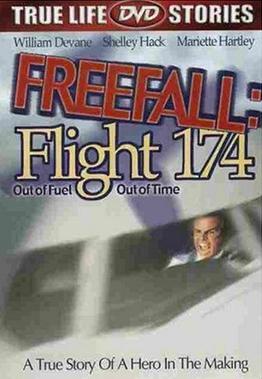 During a routine flight from Montreal to Edmonton, the two pilots (played by William Devane and Scott Hylands) discover that they do not have enough fuel to make it to their destination. Their aircraft was one of the first in the fleet to use the metric system but a conversion era led to the ground crew measuring the plane’s fuel in pounds instead of kilograms. With the help of an air traffic controller (Nicholas Turturro), the pilots try to land their plane before it falls out of the sky.
 Through the Shattered Lens