Lisa Reviews An Oscar Nominee: How The West Was Won (dir by Henry Hathaway, George Marshall, John Ford, and Richard Thorpe)


(With the Oscars scheduled to be awarded on March 4th, I have decided to review at least one Oscar-nominated film a day.  These films could be nominees or they could be winners.  They could be from this year’s Oscars or they could be a previous year’s nominee!  We’ll see how things play out.  Today, I take a look at the 1963 best picture nominee, How The West Was Won!)
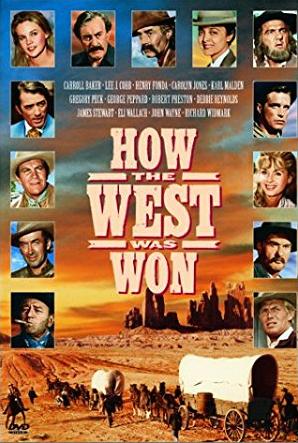
How was the west won?

According to this film, the west was won by the brave men and women who set out in search of a better life.  Some of them were mountain men.  Some of them worked for the railroads.  Some of them rode in wagons.  Some of them gambled.  Some of them sang songs.  Some shot guns.  Some died in the Civil War.  The thing they all had in common was that they won the west and everyone had a familiar face.  How The West Was Won is the history of the west, told through the eyes of a collection of character actors and aging stars from Hollywood’s Golden Age.

In many ways, How The West Was Won was the Avatar of the early 60s.  It was a big, long, epic film that was designed to make viewers feel as if they were in the middle of the action.  Avatar used 3D while How The West Was Won used Cinerama.  Each scene was shot with three synchronized cameras and, when the film was projected onto a curved Cinerama screen, it was meant to create a truly immersive experience.  The film is full of tracking shots and, while watching it on TCM last night, I tried to imagine what it must have been like to see it in 1963 and to feel as if I was plunging straight into the world of the old west.  The film’s visuals were undoubtedly diminished by being viewed on a flat screen and yet, there were still a few breath-taking shots of the western landscape.

The other thing that How The West Was Won had in common with Avatar was a predictable storyline and some truly unfortunate dialogue.  I can understand why How The West Was Won was awarded two technical Oscars (for editing and sound) but, somehow, it also picked up the award for Best Writing, Screenplay or Story.  How The West Was Won is made up of five different parts, each one of which feels like a condensed version of a typical western B-movie.  There’s the mountain man helping the settlers get down the river story.  There’s the Civil War story.  There’s the railroad story and the outlaw story and, of course, the gold rush story.  None of it’s particularly original and the film is so poorly paced that some sections of the film feel rushed while others seem to go on forever.

Some of the film’s uneven consistency was undoubtedly due to the fact that it was directed by four different directors.  Henry Hathaway handled three sections while John Ford took care of the Civil War, George Marshall deal with the coming of the railroad, and an uncredited Richard Thorpe apparently shot a bunch of minor connecting scenes.

And yet, it’s hard not to like How The West Was Won.  Like a lot of the epic Hollywood films of the late 50s and early 60s, it has its own goofy charm.  The film is just so eager to please and remind the audience that they’re watching a story that could only be told on the big screen.  Every minute of the film feels like a raised middle finger to the threat of television.  “You’re not going to see this on your little idiot box!” the film seems to shout at every moment.  “Think you’re going to get Cinerama on NBC!?  THINK AGAIN!”

Then there’s the huge cast.  As opposed to Avatar, the cast of How The West Was Won is actually fun to watch.   Admittedly, a lot of them are either miscast or appear to simply be taking advantage of a quick payday but still, it’s interesting to see just how many iconic actors wander through this film.

For instance, the film starts and, within minutes, you’re like, “Hey!  That’s Jimmy Stewart playing a mountain man who is only supposed to be in his 20s!”

There’s Debbie Reynolds as a showgirl who inherits a gold claim!

Is that Gregory Peck as a cynical gambler?  And there’s Henry Fonda as a world-weary buffalo hunter!  And Richard Widmark as a tyrannical railroad employee and Lee J. Cobb as a town marshal and Eli Wallach as an outlaw!

See that stern-faced settler over there?  It’s Karl Malden!

What’s that?  The Civil War’s broken out?  Don’t worry, General John Wayne is here to save the day.  And there’s George Peppard fighting for the Union and Russ Tamblyn fighting for the Confederacy!  And there’s Agnes Moorehead and Thelma Ritter and Robert Preston and … wait a minute?  Is that Spencer Tracy providing narration?

When Eli Wallach’s gang shows up, keep an eye out for a 36 year-old Harry Dean Stanton.  And, earlier, when Walter Brennan’s family of river pirates menaces Karl Malden, be sure to look for an evil-looking pirate who, for about twenty seconds, stares straight at the camera.  When you see him, be sure to say, “Hey, it’s Lee Van Cleef!”

How The West Was Won is a big, long, thoroughly silly movie but, if you’re a fan of classic film stars, it’s worth watching.  It was a huge box office success and picked up 8 Oscar nominations.  It lost best picture to Tom Jones.

(By the way, in my ideal fantasy world, From Russia With Love secured a 1963 U.S. release, as opposed to having to wait until 1964, and became the first spy thriller to win the Oscar for Best Picture.)

Lisa Reviews An Oscar Nominee: The Grapes of Wrath (dir by John Ford)


(With the Oscars scheduled to be awarded on March 4th, I have decided to review at least one Oscar-nominated film a day.  These films could be nominees or they could be winners.  They could be from this year’s Oscars or they could be a previous year’s nominee!  We’ll see how things play out.  Today, I take a look at the 1940 best picture nominee, The Grapes of Wrath!)

How dark can one mainstream Hollywood film from 1940 possibly be?

Watch The Grapes of Wrath to find out.

Based on the novel by John Steinbeck and directed by John Ford, The Grapes of Wrath tells the story of the Joad family and their efforts to neither get sent to prison nor starve to death during the Great Depression.  When they lose their farm in Oklahoma, they head for California.  Pa Joad (Russell Simpson) has a flyer that says someone is looking for men and women to work as pickers out west.  The 12 members of the Joad Family load all of their possessions into a dilapidated old truck and they hit the road.  It quickly becomes apparent that they’re not the only family basing all of their hopes on the vague promises offered up by that flyer.  No matter how much Pa may claim different, it’s obvious that California is not going to be the promised land and that not all the members of the family are going to survive the trip.

Tom Joad (Henry Fonda) is the oldest of the Joad sons.  He’s just been released from prison and he’s killed in the past.  Having been in prison during the start of the Great Depression, Tom doesn’t realize how bad things truly are until he arrives home and sees someone he grew up with using a tractor to knock down a house.  (It’s just business, of course.  The owners of the house can’t pay their bills so the house gets destroyed.)  The film’s story is largely told through Tom’s eyes and Henry Fonda gives a sympathetic performance, one the gets the audience to empathize with and relate to a character who is a total outsider.

As for the rest of the Joad Family, Ma (Jane Darwell) is the glue who holds them together and who refuses to allow them to surrender to despair.  (And yet even Ma is forced to make some tough choices when the starving children of one work camp ask her to share her family’s meal with them.)  Rosasharan (Dorris Bowdon) is pregnant while Grandpa (Charley Grapewin) is too sickly for the trip but doesn’t have anywhere else to go.  And then there’s Casy (John Carradine), the former preacher turned labor organizer.  Casy is not blood-related but he soon becomes a member of the family.

The Joads have a healthy distrust of the police and other authority figures and that turns out to be a good thing because there aren’t many good cops to be found between Oklahoma and California.  Instead, the police merely serve to protect the rich from the poor.  Whenever the workers talk about forming a union and demanding more than 5 cents per box for their hard work, the police are there to break heads and arrest any troublemakers on trumped up charges.  Whenever a town decides that they don’t want any “Okies” entering the town and “stealing” jobs, the police are there to block the roads.

The Grapes of Wrath provides a portrait of the rough edges of America, the places and the people who were being ignored in 1940 and who are still too often ignored today.  John Ford may not be the first director that comes to mind when you think of “film noir” but that’s exactly what The Grapes of Wrath feels like.  During the night scenes, desperate faces emerge from the darkness while menacing figures lurk in the shadows.  When the sun does rise, the black-and-white images are so harsh that you almost wish the moon would return.  The same western landscape that Ford celebrated in his westerns emerges as a wasteland in The Grapes of Wrath.  The American frontier is full of distrust, anger, greed, and ultimately starvation.  (Reportedly, the film was often shown in the Soviet Union as a portrait of the failure of America and capitalism.  However, it was discovered that Soviet citizens were amazed that, in America, even a family as poor as the Joads could still afford a car.  The Grapes of Wrath was promptly banned after that.)  John Ford is often thought of as being a sentimental director but there’s little beauty or hope to be found in the images of The Grapes of Wrath.  (Just compare the way The Grapes of Wrath treats poverty to the way Ford portrayed it in How Green Was My Valley.)  Instead, the film’s only hint of optimism comes from the unbreakable familial bond that holds the Joads together.

As dark as it may be, the film is nowhere near as pessimistic as the original novel.  The novel ends with a stillborn baby and a stranger starving to death in a barn.  The film doesn’t go quite that far and, in fact, offers up some deus ex machina in the form of a sympathetic government bureaucrat.  (Apparently, authority figures weren’t bad as long as they worked for the federal government.)  That the book is darker than the movie is not surprising.  John Steinbeck was a socialist while John Ford was a Republican with a weakness for FDR.  That said, even though the film does end on a more hopeful note than the novel, you still never quite buy that things are ever going to get better for anyone in the movie.  You want things to get better but, deep down, you know it’s not going to happen.  Tom says that he’s going to fight for a better world and Fonda’s delivers the line with such passion that you want him to succeed even if you know he probably won’t.  Ma Joad says the people will never be defeated and, again, you briefly believe her even if there’s not much evidence to back her up.

Even when viewed today, The Grapes of Wrath is still a powerful film and I can only guess what it must have been like to see the film in 1940, when the Great Depression was still going on and people like the Joads were still making the journey to California.  Not surprisingly, it was nominated for best picture of 1940, though it lost to Alfred Hitchcock’s Rebecca.

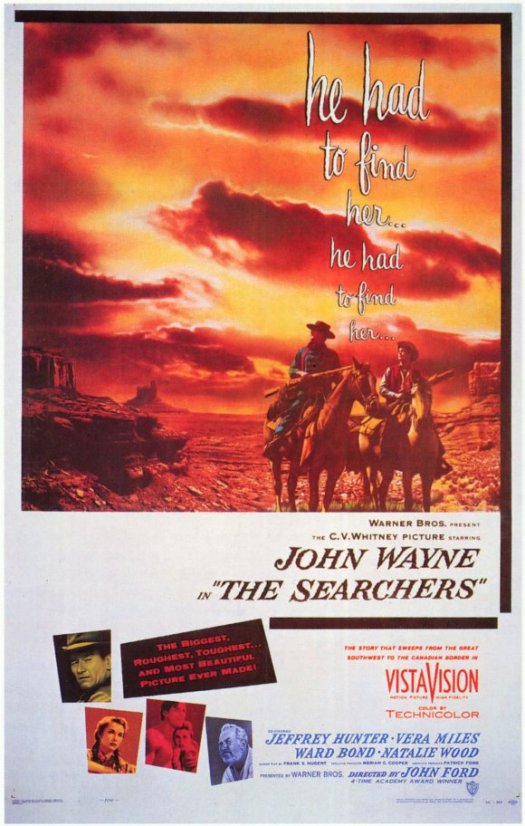
Ride Away: John Wayne in John Ford’s THE SEARCHERS (Warner Brothers 1956)


gary loggins's avatarcracked rear viewer

John Ford’s  THE SEARCHERS is without question an American Film Classic. I’d even go as far as saying it’s my second all-time favorite film, directly behind CASABLANCA. Every shot is a Remington Old West masterpiece, every actor perfect in their role, large or small, and not a minute of footage is wasted. The film has also stirred up quite a bit of controversy over time for John Wayne’s portrayal of the main character Ethan Edwards.

The plot is structured like Joseph Campbell’s “Hero’s Journey”, but let’s get it out of the way right now: Ethan Edwards is no hero. He’s a mean, bitter, unreconstructed Confederate who’s been on the shady side of the law since war’s end. When he returns to his brother Aaron’s homestead, he makes no bones about his distaste for “half-breed” Martin Pawley (really an eighth Cherokee). His hatred of Native Americans even extends to their dead, as…

View original post 1,096 more words

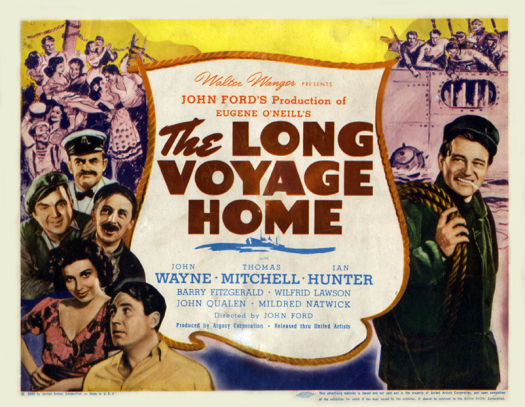
Sail Away: John Wayne in John Ford’s THE LONG VOYAGE HOME (United Artists 1940)


gary loggins's avatarcracked rear viewer

This is my third year participating in the TCM Summer Under the Stars blogathon hosted by Kristen at Journeys in Classic Film , and second entry spotlighting Big John Wayne . The Duke and director John Ford made eleven films together, from 1939’s STAGECOACH to 1963’s DONOVAN’S REEF.  Wayne’s role in the first as The Ringo Kid established him as a star presence to be reckoned with, and the iconic actor always gave credit to his mentor Ford for his screen success. I recently viewed their second collaboration, 1940’s THE LONG VOYAGE HOME, a complete departure for Wayne as a Swedish sailor on a tramp steamer, based on four short plays by Eugene O’Neill, and was amazed at both the actor’s performance and the technical brilliance of Ford and his cinematographer Gregg Toland  , the man behind the camera for Welles’ CITIZEN KANE.

THE LONG VOYAGE HOME is a seafaring saga…

View original post 674 more words

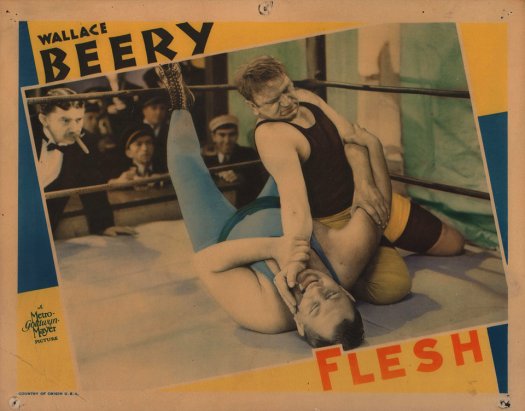
Pre-Code Confidential #13: Wallace Beery in John Ford’s FLESH (MGM 1932)


gary loggins's avatarcracked rear viewer

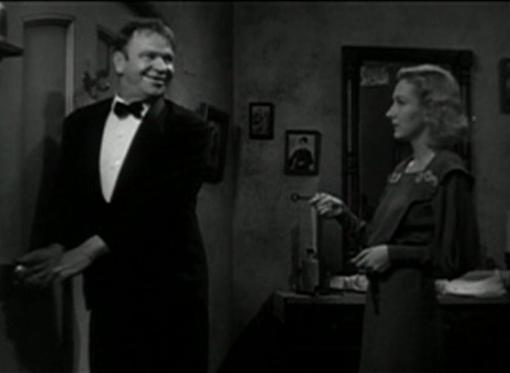
Long before his John Wayne collaborations, John Ford had worked to perfect his own style as a filmmaker. Even though the cranky, idiosyncratic Ford, who directed his first film way back in 1917,  had his directing credit removed from 1932’s FLESH, it is credited as “A John Ford Production”, and one can tell this is definitely a “John Ford Picture”.  The man himself thought the film was lousy, and most critics agreed, but I’m in the minority opinion. I think it’s worthy of reappraisal for film lovers to get a glimpse of some vintage Ford, with solid performances by Wallace Beery, Karen Morley, and Ricardo Cortez. Plus, as a long-time pro wrestling buff, the grappling game setting appeals to me, as do the many Pre-Code themes and moments.

Beery once again is a good-natured lug, a German wrestler named Polakai who doubles as a waiter in a rowdy beer garden, toting a keg on his massive…

View original post 915 more words

Classic Film Lovers Rejoice! Here’s The Trailer for Five Came Back!


If you love classic movies, you’re going to love this trailer for the new Netflix documentary, Five Came Back!

Based on Mark Harris’s brilliant non-fiction book, Five Came Back takes a look at the work that five great directors — Frank Capra, William Wyler, John Huston, George Stevens, and John Ford — did during World War II.  It’s a fascinating story and it was a fascinating book.  I just hope this documentary does it justice.

We’ll find out on March 31st!

(Incidentally, Five Came Back is narrated by Meryl Streep so expect to see her nominated for Best Actress next year…)

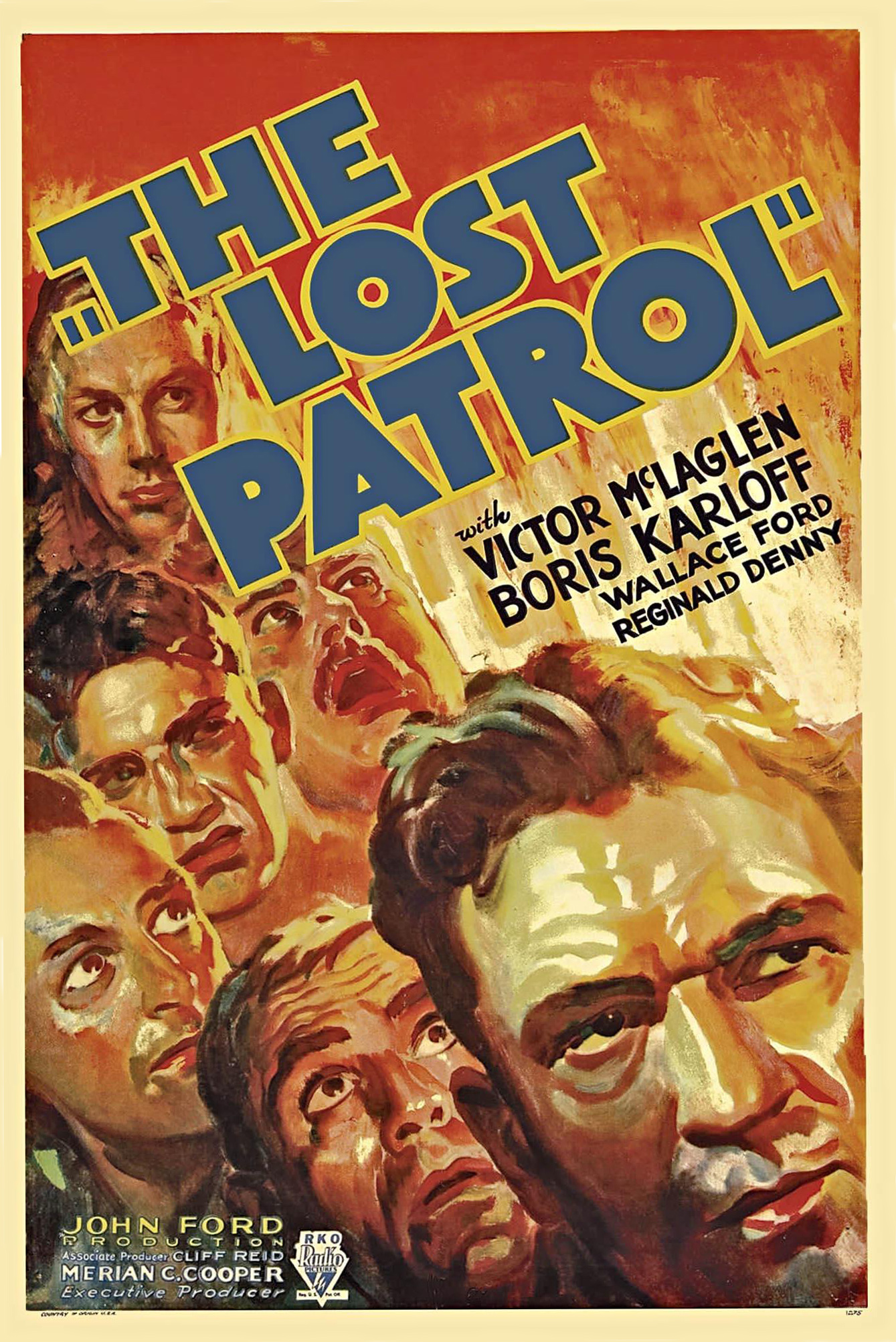
Happy Birthday Boris Karloff: John Ford’s THE LOST PATROL (RKO 1934)


gary loggins's avatarcracked rear viewer

lost1

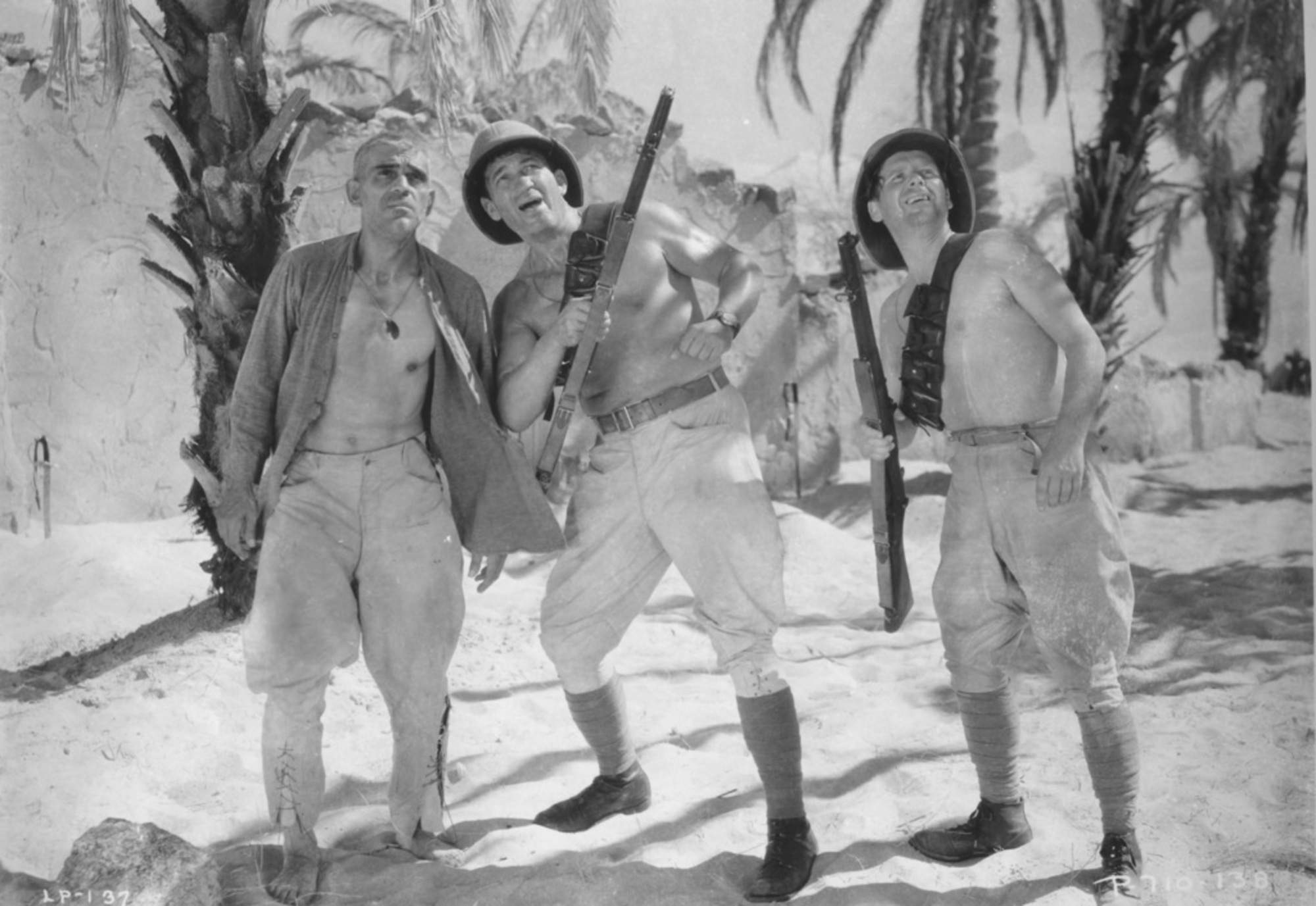
King of Classic Horror Boris Karloff was born on this date in 1887. The actor is beloved by fans for his work in genre flicks like FRANKENSTEIN, THE MUMMY , THE BLACK CAT, THE BODY SNATCHER , and many other screen tales of terror. But Karloff had always prided himself on being a working actor, and stepped outside the genre bounds many times. He excelled in some early gangster classics (THE CRIMINAL CODE, SCARFACE), played George Arliss’ nemesis in HOUSE OF ROTHSCHILD, was a Chinese warlord in WEST OF SHANGHAI, an Oriental sleuth in Monogram’s MR. WONG series, the psychiatrist in THE SECRET LIFE OF WALTER MITTY, and a scientist in THE VENETIAN AFFAIR . And then there’s John Ford’s THE LOST PATROL.

lost5

The film itself tells the story of a British troop traveling through the Mesopotamian desert circa 1917. When their leader is shot dead by an unseen Arab bullet, the stoic Sergeant…

View original post 519 more words

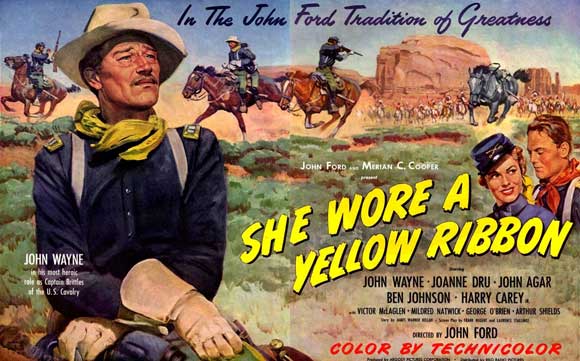
Happy Birthday John Wayne: SHE WORE A YELLOW RIBBON (RKO 1949)


gary loggins's avatarcracked rear viewer

shew1

My all-time favorite actor was born Marion Mitchell Morrison on May 26, 1907 in Winterset, Iowa. But John Wayne the movie star was born in 1930 when, after years of bit parts, he landed the lead role in Raoul Walsh’s THE BIG TRAIL. The movie flopped at the box office, but it got Wayne noticed. After scuffling along in low-budget, juvenile B-Westerns for most of the 30’s, Wayne was cast as The Ringo Kid in John Ford’s blockbuster STAGECOACH , and his career took off like a wild stallion.

“The Duke” (a nickname he picked up as a kid) was an A-Lister now, the biggest star at Republic Pictures. Wayne and Ford continued their film collaborations throughout the 40’s. At the end of the decade RKO released the second of the Wayne/Ford “Cavalry Trilogy”, SHE WORE A YELLOW RIBBON. The film was a smash hit, a rousing adventure bolstered by Wayne’s portrayal of…

View original post 898 more words

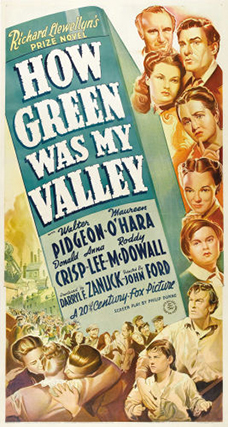
Cleaning Out The DVR #18: How Green Was My Valley (dir by John Ford)


(For those following at home, Lisa is attempting to clean out her DVR by watching and reviewing 38 films by this Friday.  Will she make it?  Keep following the site to find out!)

How_Green_Was_My_Valley_poster

Before I really get into this review, I should admit that I watched How Green Was My Valley with a bias.

Before the movie started, I was expecting to be disappointed with it.  I think that a lot of film lovers would have felt the same way.  How Green Was My Valley won the 1941 Oscar for best picture.  In doing so, it defeated three beloved films that have only grown in popularity and renown since they were first released: Citizen Kane, The Maltese Falcon, and The Little Foxes.  (As well, just consider some of the 1941 films that weren’t even nominated for best picture: Ball of Fire, The Devil and Daniel Webster, Dr. Jekyll and Mr. Hyde, High Sierra, The Lady Eve, Never Give A Sucker An Even Break, The Sea Wolf, The Wolf Man, and Sullivan’s Travels.)  Because it defeated so many great films and since we’re all used to the narrative that the Academy always screws up, there’s a tendency to assume How Green Was My Valley was really bad.

Well, after years of assumptions, I finally actually watched How Green Was My Valley?  Was it bad?  No, not really.  Was it great?  No, not all.  If anything, it felt rather typical of the type of films that often win best picture.  It was well-made, it was manipulative enough to be a crowd-pleaser while serious enough to appeal to highbrow critics, and, perhaps most importantly, it never really challenged the viewer.  Unlike Citizen Kane and The Maltese Falcon, How Green Was My Valley is a film that doesn’t require that you give it too much thought and, as such, it really shouldn’t be surprising that it was named the best picture of the year.

How Green Was My Valley was directed by John Ford and, as you might expect from Ford, it deals with a changing way of life and features good performances and a few impressive shots of the countryside.  Taking place in the late 1800s, How Green Was My Valley tells the episodic story of the Morgans, a large family of Welsh miners.  The film is narrated by Huw (Roddy McDowall), a youngest member of the family.  Though Huw’s eyes, we watch as his once idyllic and green village is transformed by the growing mining industry and blackened with soot, poverty, and death.

The film starts out as a fairly even mix of sentiment and drama.  Huw has a crush on his brother’s fiancee.  His sister, Angharad (Maureen O’Hara), has a flirtation with the new preacher, Mr. Gruffydd (Walter Pidgeon).  Much emphasis is put on communal gatherings.  There is a wildly joyful wedding celebration.  We often see the villagers in church and hear them singing both hymns and folk songs.  In their isolate village, they are are united against a changing world.

Or, at least, they think they are.  As the mining industry grows, that united front and sense of community starts to vanish.  A strike sets family members against each other, as each miner is forced to decide whether to side with management or with his fellow workers.  Each year, the wages become lower.  When management realizes that its cheaper to just continually hire new miners, several of the veteran workers are fired and end up leaving the village to seek a living elsewhere.  As new people come to the village, even Mr. Gruffydd finds himself the subject of gossip.

As for Huw, he grows up.  He goes to school, deals with a sadistic teacher, and learns how to defend himself against bullies.  And eventually, like everyone in his family, he is sent down into the mines and soon, his once innocent face is covered in soot.

And, of course, there’s a big tragedy but you probably already guessed that.  How Green Was My Valley is not a film that takes the viewer by surprise.

For the most part, it’s all pretty well done.  The big cast all inhabit their roles perfectly and Roddy McDowall is extremely likable as Huw.  Maureen O’Hara shows why she eventually became a star and even Walter Pidgeon gives a surprisingly fiery performance.  How Green Way My Valley is a good film but it’s too conventional and predictable to be a great film, which is why its victory over Citizen Kane and The Maltese Falcon will always be remembered as a huge Oscar injustice.

But, taken on its own terms and divorced from the Oscar controversy, How Green Was My Valley may be a conventional but it’s not a bad film.  It’s just no Citizen Kane.

A Star is Born in Monument Valley: John Wayne in John Ford’s STAGECOACH (United Artists 1939)


gary loggins's avatarcracked rear viewer

stage1

If you think the characters and Western tropes in STAGECOACH are familiar, you’re right. But let’s be clear… STAGECOACH introduced many of these now-clichéd devices to film, and is one of the enduring classics of the American West. Director John Ford was well versed in Westerns, having cut his professional teeth on them during the silent era. This was his first sound Western and Ford was determined to reinvent the genre, with much more adult themes than the usual Saturday matinée kiddie fare. He succeeded with a daring story featuring an outlaw and a prostitute as his heroes, and exceeded his goal by creating a brand new Hollywood star in the process: John Wayne.

stage2

Wayne had been a football player for the USC Trojans when an injury caused him to lose his scholarship. Through some university connections, he was able to gain employment in the film industry as a prop…

View original post 1,029 more words