From 1982’s The Thing, here is one of the greatest endings in the history of horror. Kurt Russell and Keith David play two characters who might be the final survivors of the The Thing’s rampage or who might just be one human talking to one alien. With nothing to do but wait for the inevitable, the two of them share a drink and prepare to freeze.
The scene features great acting from Russell and David and great direction from John Carpenter. It’s one of those endings that you will never forget.
4 Shots From 4 Films is just what it says it is, 4 shots from 4 of our favorite films. As opposed to the reviews and recaps that we usually post, 4 Shots From 4 Films lets the visuals do the talking!
Today, we wish a happy birthday to the great Kurt Russell! Last year, we pretty much reviewed every Kurt Russell films that we could find. It was a great day. This year, we cannot let the day pass without offering up….
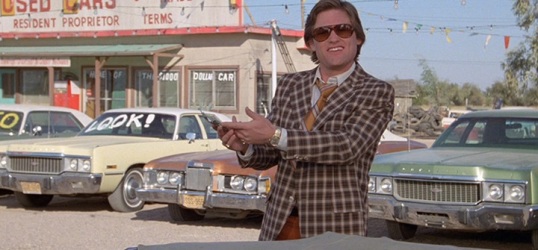
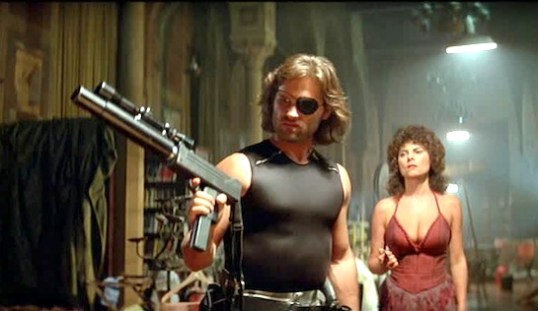
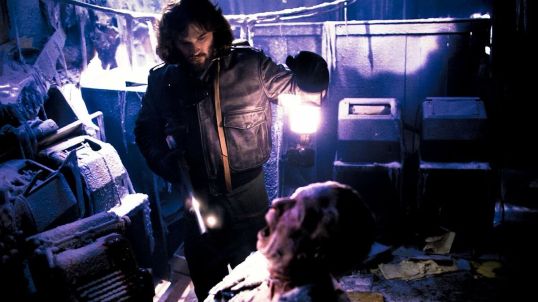
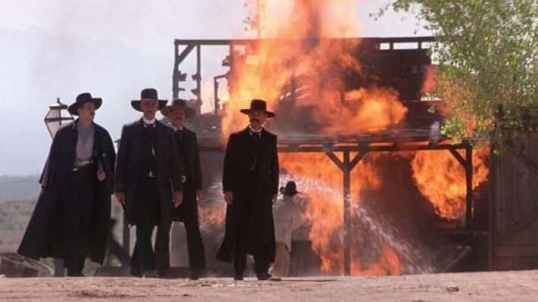
4 Shots From 4 Kurt Russell Films
Used Cars (1980, dir by Robert Zemeckis, DP: Donald M. Morgan)
Escape From New York (1981, dir by John Carpenter, DP: Dean Cundey)
The Thing (1982, dir by John Carpenter, DP: Dean Cundey)
Tombstone (1993, dir by George Pan Cosmatos (and Kurt Russell), DP: William Fraker)
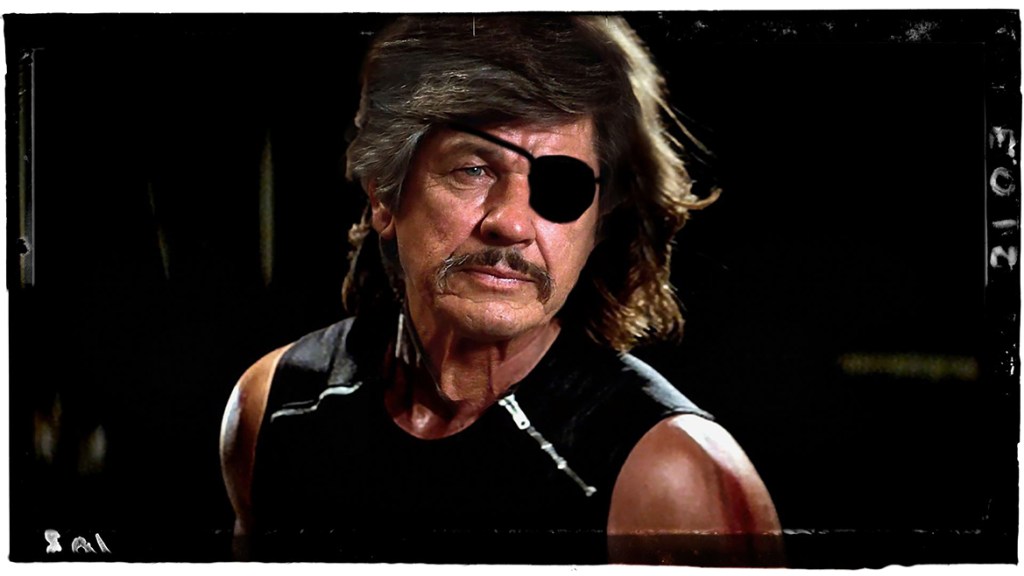
If you’re following the page today, you know that The Shattered Lens is celebrating the 78th birthday of legendary Director John Carpenter. Did you know that there was a time when the studio “suits” wanted Charles Bronson to play the role of Snake Plissken in Carpenter’s classic, ESCAPE FROM NEW YORK? A big star when the original idea of the film began kicking around, studio executives felt that an experienced, gritty actor like Bronson might be perfect for the role, especially since he was already a solid box office champ.
Carpenter, however, wanted a younger guy to play Plissken and may have even been a little intimidated to work with the veteran action star…
“Charles Bronson had expressed interest in playing Snake, but I was afraid of working with him. He was a big star, and I was this little-shit nobody.”
It all worked out well in the long run as Carpenter was eventually able to cast his first choice for the role, Kurt Russell, who was at an important stage in his own career as he was still in the process of reinventing his on-screen image from his days as a former child star and Disney star. John Carpenter had worked with Russell a couple of years earlier in the TV movie, ELVIS (1979), so he had confidence in the young actor. Russell turned out to be an incredible choice for the film and key to making it the classic it is today.
Still, for a Bronson fan like me, it’s quite interesting to know that there’s a multiverse out there that could have seen Bronson in the iconic role!
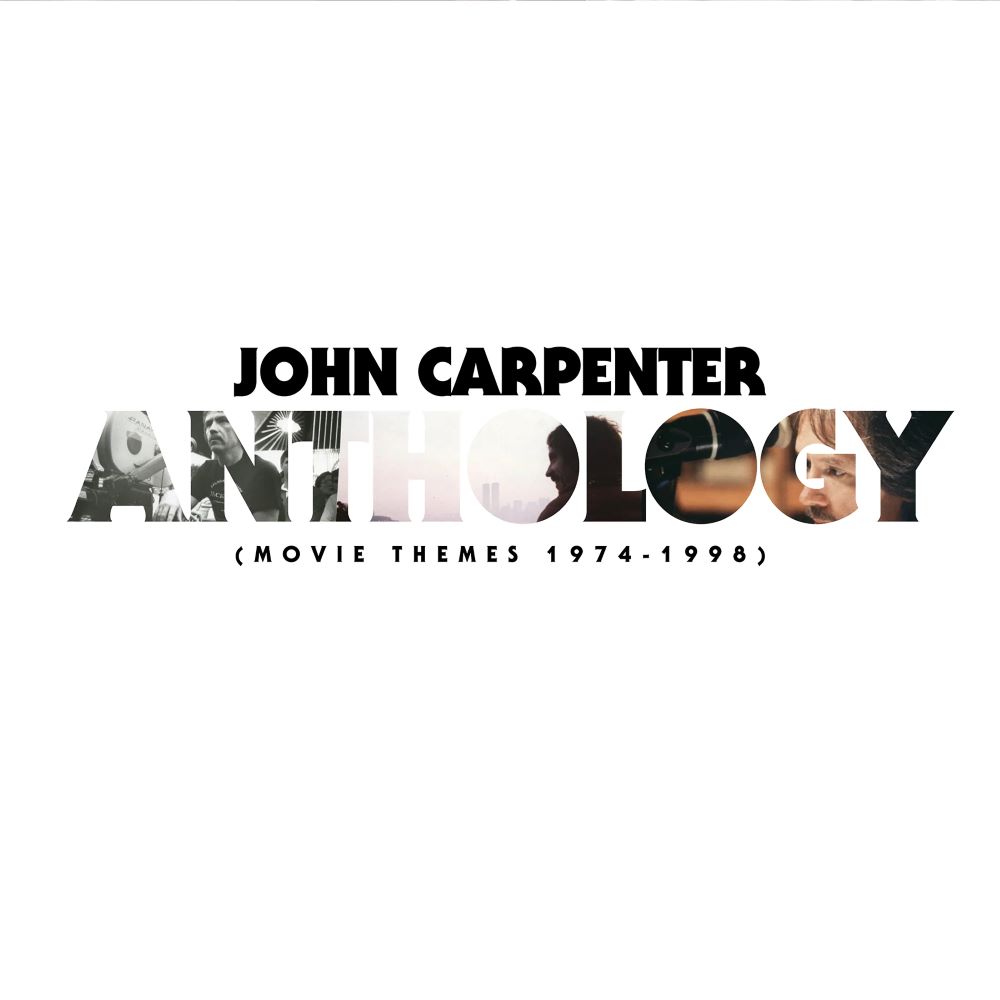
John Carpenter’s Anthology: Movie Themes 1974-1998 is an absolute gem of a compilation, breathing new life into 13 of his most unforgettable film themes with a killer mix of synth menace and live-band muscle that feels both nostalgic and freshly electrifying. Released in 2017 on the indie powerhouse Sacred Bones Records, this project pulls straight from Carpenter’s golden era of directing, spanning the lo-fi space oddities of Dark Star in 1974 all the way to the blood-soaked Western vibes of Vampires in 1998. Here, the master himself teams up with his son Cody Carpenter handling keyboards and his godson Daniel Davies ripping on guitar, delivering rerecorded versions that aren’t just facsimiles of the originals but revitalized beasts with modern production muscle. Clocking in at a tight 42 minutes, the album strikes that sweet spot between crystalline clarity and the warm, gritty analog fuzz of vintage synths, making it an essential spin for horror fans, synthwave enthusiasts, or anyone craving pure cinematic chills without firing up the projector. It’s the kind of record that turns your living room into a foggy, neon-lit nightmare factory, proving Carpenter’s scores were never mere background noise—they’re standalone monsters.
Right out of the gate, the album spotlights three absolute titans as its major standouts: the themes from The Thing, Halloween, and Escape from New York. These aren’t just tracks; they’re the sonic DNA of horror and sci-fi tension, retooled here to hit even harder with the benefit of hindsight and better gear. Take the Halloween theme—it’s the undisputed king of the collection, that iconic, haunting piano riff slicing through stabbing synth accents and a relentless, mechanical beat that creates this perfect off-kilter unease. It mirrors Michael Myers’ unstoppable, shambling lurch so viscerally that you can practically hear the Shape breathing down your neck; the simplicity is its genius—repetitive enough to burrow into your skull like a parasite, yet layered just right with those eerie high-end whistles and a pulse that never lets up. In this rerecord, the piano feels more intimate and ominous, the synths sharper, turning what was already a cultural earworm into something that demands volume cranked to 11.
Then there’s Escape from New York, which cranks everything up to gritty, dystopian overdrive with its crunchy guitar riff chewing through swelling synth waves and pounding, no-nonsense drums. It evokes Snake Plissken’s lone-wolf crawl through a prison-island Manhattan like a bluesy battle cry—mid-tempo swagger that’s tailor-made for high-stakes heists, shadowy escapes, and that pure ’80s anti-hero cool. Fans often mix it up with his Big Trouble in Little China groove because of the shared tough-guy energy, but here the rerecord leans harder into the guitar’s snarl and the synths’ ominous undercurrent, making it feel tougher, meaner, and ready for a modern apocalypse playlist. And don’t sleep on The Thing—it grabs Ennio Morricone’s frosty original cue and mutates it into peak Carpenter dread: deep, throbbing synth pulses underpin eerie, isolated stabs and desolate windswept effects that build a suffocating frozen isolation. This one’s all about the paranoia of shape-shifting aliens in an Antarctic hellscape—slow-burn horror that creeps under your skin, rewarding patient listeners with layers of tension that unfold over multiple spins. Critics might tuck it behind the flashier hits, but its subtlety makes it a powerhouse, especially in this version where the low-end rumble feels like cracking ice underfoot.
While those three rightfully dominate every conversation about the album (and they should, as they’re the heart-pounding peaks that define Carpenter’s sound), two deeply underrated gems absolutely deserve way more shine: the Christine theme and “Santiago (Vampires).” Christine sneaks up on you, opening with these foggy, ambient synth washes that evoke a quiet garage at midnight before exploding into full-on rock fury—fuzzy guitars screech, driving rhythms kick in, and it all nails the possessed Plymouth Fury’s vengeful, supernatural roar. It’s often overlooked amid the bigger icons, but this rerecord injects fresh menace, highlighting its dynamic arc from subtle creep to all-out chaos; imagine the car’s headlights flickering to life as the music revs up—pure possessed-machine terror that lingers like burnt rubber. “Santiago (Vampires)” is the other hidden firecracker, completely ditching the synth-heavy storm for sparse acoustic strums and reverb-drenched electric guitar in a sun-baked, dusty groove that screams Southwestern vampire hunt. It’s a total mood shifter—breezy yet tense, like a standoff in a ghost town at high noon—and criminally underappreciated next to the heavier hitters; the modal twang and open spaces give it a unique flavor that breaks up the album’s darker pulse beautifully, begging for more road-trip spins.
The rest of the tracklist does a stellar job setting up and framing these peaks without ever overshadowing them. “Assault on Precinct 13” barrels in early with its oppressive synth riff and militaristic pounding, hammering home that raw siege-mentality dread—still a total banger, but it takes a slight backseat to The Thing‘s more nuanced chill. “In the Mouth of Madness” dives from aggressive guitar riffs into vast ambient drifts, perfectly suiting the film’s reality-warping madness. “The Fog” floats delicate piano over misty, reverb-soaked swells that build a supernatural haze, like fog horns calling from the deep. “Prince of Darkness” broods heavy with slow, echoing riffs and a sense of gathering evil, feeding right into the album’s cohesive horror heartbeat. “Porkchop Express (Big Trouble in Little China)” grooves with that infectious trucker-rock energy, echoing Escape‘s swagger but with brighter, adventure-ready lifts for Kurt Russell’s wild ride. “They Live” layers in bluesy harmonica and slide guitar for a laconic, consumerist snarl, while “Starman” blooms into warm, romantic synth-orchestral bliss—think soaring melodies and rolling timpani for heartfelt ’80s alien love. The ultra-brief “Dark Star” blasts a proto-synth drone in under 90 seconds, more historical sketch than full banger, but it nods to Carpenter’s early experiments. All these solid supporting players keep the energy flowing, ensuring the majors land with maximum impact.
What ties it all together is Carpenter’s effortlessly cool style: deep, pulsating synth bass locks in with fuzzy, overdriven guitars and tight, hypnotic drumming to create grooves that build tension like a jump scare coiled to spring. The production is a standout—crisp and punchy, with Cody owning the rumbling low end while Davies carves sharp midrange bite, sidestepping the muffled haze of some vintage OST pressings. These themes thrive completely standalone now, untethered from their films but still evoking every shadowy corner. Yeah, there’s a touch of repetition in the fuzzy guitar tones and mid-tempo plods that can make straight-through listens feel a bit samey—it’s more killer playlist than wildly eclectic LP—but that’s a tiny nitpick when the big guns (The Thing, Halloween, Escape from New York, plus the slept-on Christine and Vampires) deliver one haymaker after another.
This collection doesn’t just compile; it cements Carpenter’s legacy as a shoestring-budget genius who scored generational nightmares with a handful of synths, guitars, and sheer instinct, directly inspiring synthwave legions like Perturbator, Carpenter Brut, and beyond. Don’t sleep on it; these tracks don’t just play—they haunt, they pump, and they endure for life, turning everyday moments into edge-of-your-seat thrills.
I was a bit shocked to realize that I hadn’t reviewed Escape from New York for this site. Leonard’s reviewed it.Jeff’s reviewed it. I’ve reviewed quite a few Italian films that were inspired by Escape from New York. Last year, I devoted an entire day to how much I love Kurt Russell. I’ve shared John Carpenter’s theme music, more than once. I’ve reacted to Mamdani’s election by telling my friends that it’s time to escape from New York. I’ve lost track of the number of times that I’ve told Leonard that it is “Time to leave the Bronx,” even though he doesn’t live in the Bronx. (What do I know? I live in Texas.) But I’ve never actually reviewed Escape From New York.
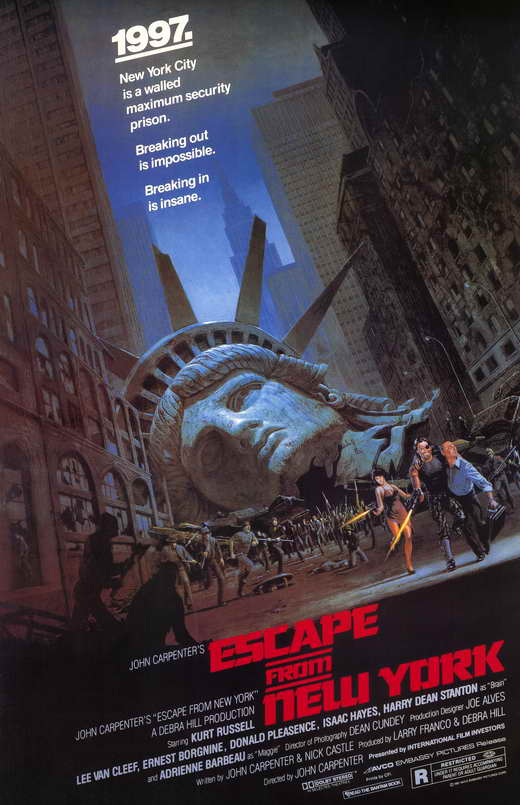
I love Escape from New York but I have to say that the film itself can’t live up the brilliant poster art. The first time I watched Escape from New York, I was really disappointed that the Statue of Liberty’s head never appeared in the middle of a street in Manhattan. If the film were made today, one imagines that the filmmakers would be able to do all sorts of things with the Statue of Liberty. But Escape from New York was made in 1981, in the days before rampant CGI. Escape from New York was made at a time when directors had to be somewhat clever and that definitely works to the film’s advantage. The lack of big time special effects meant that Carpenter had to emphasize character and atmosphere. Escape From New York might not feature the Statue of Liberty’s head but it does feature an amazing cast and a host of unforgettable characters. When you manage to get Kurt Russell, Ernest Borgnine, Donald Pleasence, Harry Dean Stanton, Adrienne Barbeau, Lee Van Cleef, and Isaac Hayes all in the same film, there’s no way it isn’t going to be memorable.
We all know the plot. Kurt Russell plays career criminal Snake Plissken. (Everyone thought Snake was dead.) When the President (Donald Pleasence) finds himself trapped on the prison island of Manhattan, Snake is the man who is sent to rescue him. The fate of the world depends on rescuing the President. If the President isn’t rescued, it could lead to nuclear war. Snake doesn’t really care about the fate of the world. He does care about the fate of himself, however. He’s been injected with a poison that will kill him unless he receives the antidote in 24 hours.
(The doctor who gives Snake the poison is named Dr. Cronenberg. Meanwhile, Frank Doubleday appears as a thug named Romero. Lee Van Cleef’s police commissioner is named Hauk, as in Howard Hawks. Tom Atkins plays Captain Rehme, as in producer Bob Rehme. The film may be about the collapse and possible end of the world but John Carpenter’s having fun. And, of course, so are we.)
The President has been captured by the Duke of New York (Isaac Hayes). It doesn’t take Snake long to track down the Duke. But rescuing the President and making it back to safety turns out to be far more difficult and violent than anyone was anticipating. Snake gets some help, from characters like Cabbie (Ernest Borgnine), Brain (Harry Dean Stanton), and Maggie (Adrienne Barbeau). Of course, that help is largely due to everyone’s self-interest. The recurring theme is that no one really cares that much about whether or not the President or even Snake lives or dies. Maggie loves Brain but, otherwise, there’s not much individual loyalty to be found in this film. Instead, everyone just cares about getting the Hell out of New York. In the end, even the President turns out to be a bit of a jerk.
(I do have to say that I absolutely love Donald Pleasence’s performance in Escape from New York. The “You’re the Duke! You’re the Duke! A Number One!” scene? That was Pleasence at his most brilliant.)
It’s a wonderfully acted and directed film, one that is often darkly humorous. (While Kurt Russell delivers his lines with a endearing self-awareness, Carpenter has a lot of fun imagining the type of criminal society that would emerge on an isolated Manhattan.) It’s also a film that understands the power of New York City. Depending on who you ask, New York either represents the worst or the best of America. That’s true today and, watching Escape from New York, it’s easy to guess that was probably true in 1981 as well. There’s a power to the “New York” name and it’s why this film wouldn’t have worked if it had been called Escape From Houston or Escape From Spokane. (One reason why Escape From LA failed was because the cartoonishness of Los Angeles couldn’t compete with the grit of New York.) We all know the saying — “New York, New York: If you can make it there, you can make it anywhere.” This film reminds us that it’s also true that if you can escape from there, you can escape from anywhere. Escape from New York brilliantly captures the way that most of the rest of country view New York but, by limiting the action to Manhattan, it also presents a story that can be enjoyed by people in Brooklyn, the Bronx, Queens, and Staten Island. I imagine the film is especially popular on Staten Island.
Escape From New York is a brilliant work of the pulp imagination. It’s a film that will probably outlive the city.
Legend has it that, when John Carpenter originally offered the role of Dr. Sam Loomis to Donald Pleasence, Pleasence was reluctant to accept it. To Pleasence, Halloweensounded like it would just be another forgettable horror film.
However, when Donald mentioned to his daughter, actress Angela Pleasence, that he had been offered a role in a film by a young director named John Carpenter, Angela immediately told him to accept. She assured him that it would turn out to be a great film. When Donald asked her why she was so sure about this, Angela replied that she had seen Assault on Precinct 13 at the Cannes Film Festival.
1976’s Assault on Precinct 13 was John Carpenter’s second feature film. (The first was Dark Star,which started out as a student film and, even after being extended to feature length, still ended up feeling very much like a student film.) The film takes place in Los Angeles, at an isolated police precinct house that is scheduled to be abandonedd. When the father (Martin Lawson) of a girl (Kim Richards) who was murdered earlier in the day seeks refuge at the precinct, a Che Guevara-influenced street gang launches a relentless late night attack on the building. (Frank Doubleday, who later played Romero in Escape From New York, appears as a member of the gang.) Lt. Ethan Bishop (Austin Stoker) is forced to work with criminal Napoleon Wilson (Darwin Joston) to defeat the gang.
Assault on Precinct 13 (1976, dir by John Carpenter. DP: Douglas Knapp)
John Carpenter later said that Assault of Precinct 13 was his attempt to make a Howard Hawks-style western and, despite taking place in the modern era, it is very much a western. Ethan Bishop is the strong and moral lawman who refuses to allow the untamed land around him to change who he is and what he believes. Napoleon Wilson is the outlaw who finds redemption. In most westerns, the attackers would represent the last gasp of the lawless frontier fighting against encroaching civilization. In the case of Assault on Precinct 13, the opposite is true. The attackers represent the collapse of society and the people in the precinct find themselves fighting not only for their lives but also the ideals of modern civilization. With their relentless drive to attack, the members of the street gang resemble the zombies from George Romero’s Night of the Living Dead. They’re so nihilistic and destructive that even a hardened criminal like Napoleon Wilson knows that they have to be stopped. The film’s ultimate message seems to be that, even if Bishop and Wilson and Leigh (Laurie Zimmer) survive the night, the assault on Precinct 13 will never truly end. In a way, we’re all trapped in that abandoned precinct house.
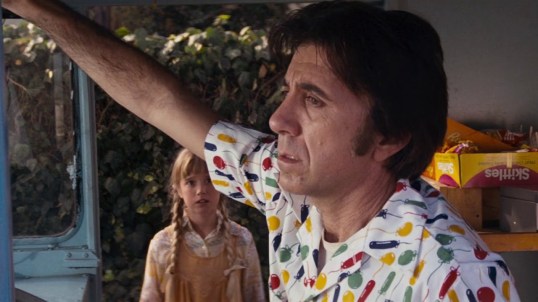
Wow, that sounds pretty grim! And really, it is a grim film. This, after all, is the film in which little Kim Richards is graphically shot in the chest while trying to buy ice cream. (From the start, Carpenter understood the importance of shocking the audience.) That said, there are unexpected moments of dark humor to be found in the film. (Even Kim Richards’s indignation over being given the wrong flavor ice cream is rather humorous, up until she asks for a replacement and gets shot as a result.) Both Bishop and Wilson make for compelling heroes. As Angela Pleasence realized when she saw the movie at Cannes, John Carpenter was and is a natural-born storyteller. Assault on Precinct 13 is a film that wastes no time in getting started and is relentless in both its suspense and its action.
Assault on Precinct 13 has been overshadowed by Carpenter’s subsequent successes but it’s still one of Carpenter’s best films. Without Assault on Precinct 13, we would never have gotten Donald Pleasence as Dr. Sam Loomis. That alone is reason enough to celebrate the film.
John Carpenter is not only a great director but he’s also a brilliant composer. Today, in honor of Carpenter’s birthday, our song of the day is his haunting Theme From The Fog.
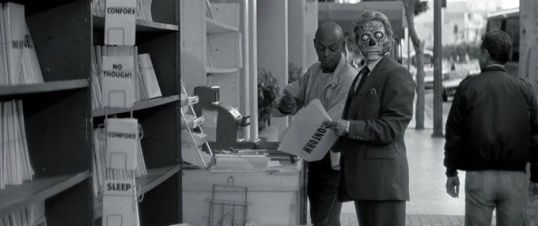
The brilliance of this scene is that it pretty much speaks for itself. It doesn’t need to be overanalyzed. It doesn’t need to be carefully explained. It works because it captures what almost everyone has always suspected, even if they didn’t necessarily have the courage to say so aloud.
4 Or More Shots From 4 Or More Films is just what it says it is, 4 shots from 4 of our favorite films. As opposed to the reviews and recaps that we usually post, 4 Shots From 4 Films lets the visuals do the talking!
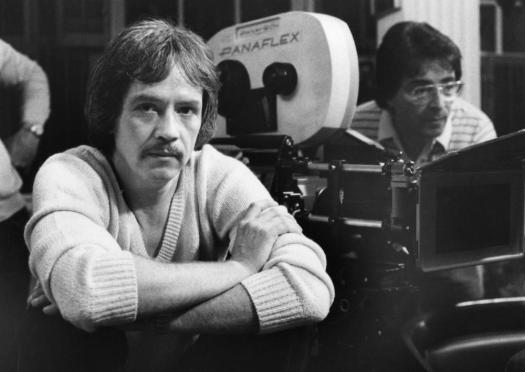
Today, the Shattered Lens wishes a happy 78th birthday to one of this site’s favorite filmmakers and a patron saint of the independent spirit, the great John Carpenter!
In honor of the man and his legacy, here are….
6 Shots From 6 John Carpenter Films
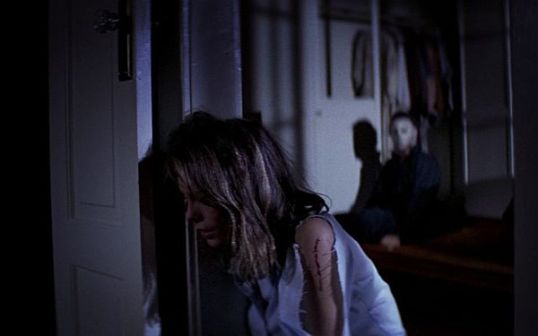
Halloween (1978, dir by John Carpenter. DP: Dean Cundey)
The Fog (1980, dir by John Carpenter, DP: Dean Cundey)
Escape From New York (1981, dir by John Carpenter, DP: Dean Cundey)
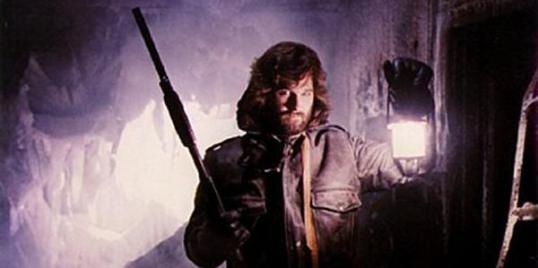
The Thing (1982, dir by John Carpenter, DP: Dean Cundey)
They Live (1988, dir by John Carpenter, DP: Gary B. Kibbe)
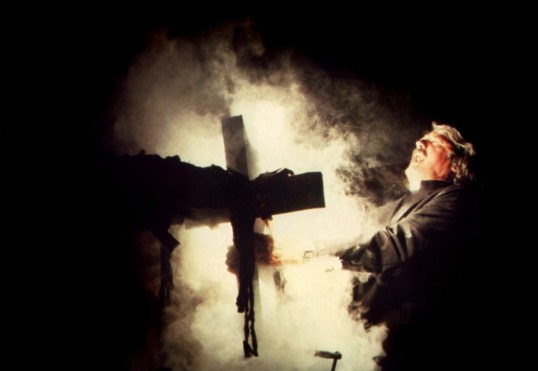
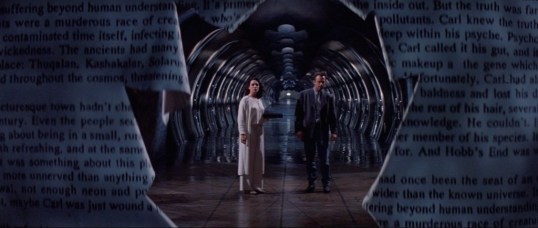
In The Mouth of Madness (1994, dir by John Carpenter, DP: Gary B. Kibbe)

 Through the Shattered Lens