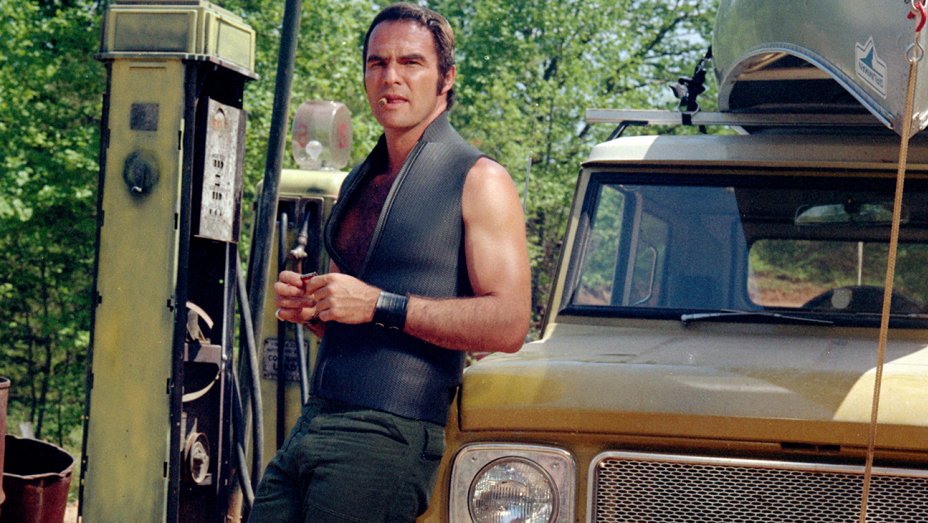
Diliverance (1972,dir by John Boorman, DP: Vilmos Zsigmond)
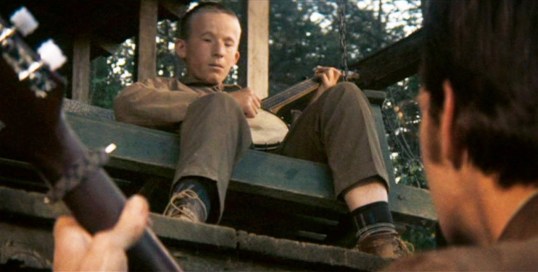
Today’s scene that I love comes from John Boorman’s 1972 film, Deliverance. For the longest time, I thought that this scene was improvised and the kid with the banjo just happened to be hanging out around the set. That makes for a nice story but I have recently read that this scene was actually scripted and the kid, while a local, was hired ahead-of-time to show up and play the banjo.
4 (or more) Shots From 4 (or more) Films is just what it says it is, 4 (or more) shots from 4 (or more) of our favorite films. As opposed to the reviews and recaps that we usually post, 4 (or more) Shots From 4 (or more) Films lets the visuals do the talking.
Today, the Shattered Lens wishes a happy 92nd birthday to British director John Boorman.
Boorman is one of those great director who sometimes doesn’t seem to get as much credit as he deserves. An undeniably idiosyncratic director, Boorman easily moved from genre to genre and who brought his own individual style to each of his films. Sometimes, critics and audiences responded to that vision and sometimes, they didn’t. And yet even Boorman’s so-called failures have come to be appreciated over the years. Zardoz is a cult classic. Even The Exorcist II: The Heretic is not quite the disaster that some insist. If nothing else, it’s one of the strangest studio productions to ever be released.
At his best, Boorman is one of the most influential directors of all time. How many neo-noirs have ripped off the look and the feel of Point Blank? The ending of Deliverance has been imitated by a countless number of horror films and, indeed, every backwoods thriller owes a debt to Boorman’s film about four businessmen spending a weekend canoeing. Excalibur is one of the most elegiac of all the Arthurian films while Hope and Glory retains its power to make audiences both laugh and cry with its portrayal of life on the British homefront during World War II. Meanwhile, films like The General and The Emerald Forest gave underrated characters actors like Powers Boothe and Brendan Gleeson a chance to shine.
So today, in honor of the career and the legacy of John Boorman, here are….
8 Shots from 8 John Boorman Films
Point Blank (1967, directed by John Boorman, DP: Philip H. Lathrop)
Deliverance (1972, directed by John Boorman, DP: Vilmos Zsigmond)
Zardoz (1974, directed by John Boorman, DP: Geoffrey Unsworth)
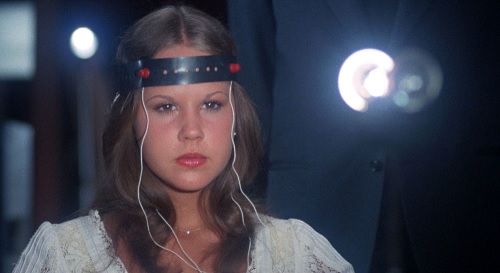
The Exorcist II: The Heretic (1977, dir by John Boorman, DP: William A. Fraker)
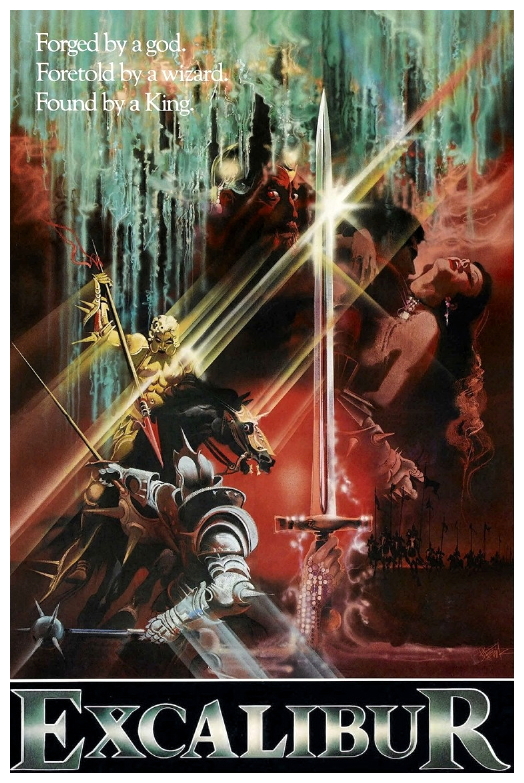
Excalibur (1981, dir by John Boorman, DP: Alex Thomson)
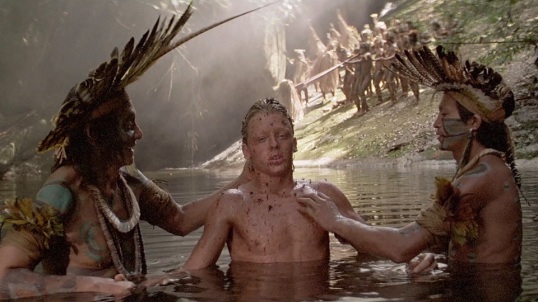
The Emerald Forest (1985, dir by John Boorman. DP: Philippe Rousselot)
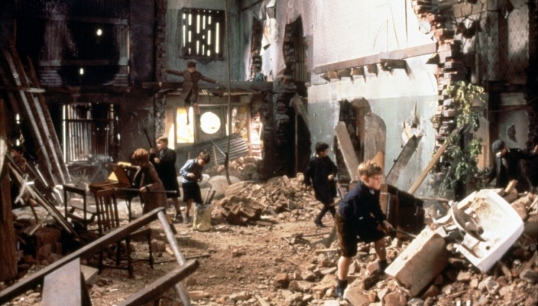
Hope and Glory (1987, dir by John Boorman, DP: Philippe Rousselot)
The General (1998, dir by John Boorman, DP: Seamus Deasy)
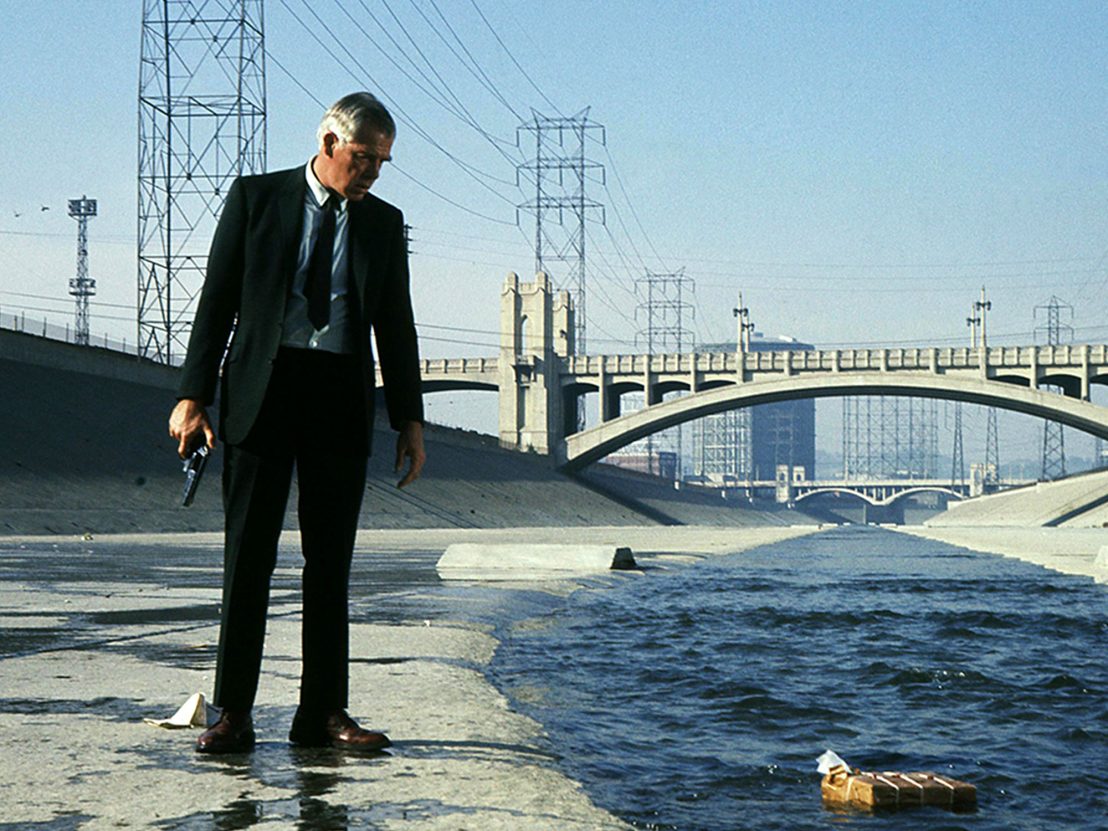
100 years ago today, Lee Marvin was born in New York City. One of the great screen tough guys, Lee Marvin played stoic and determined men who you didn’t want to upset.
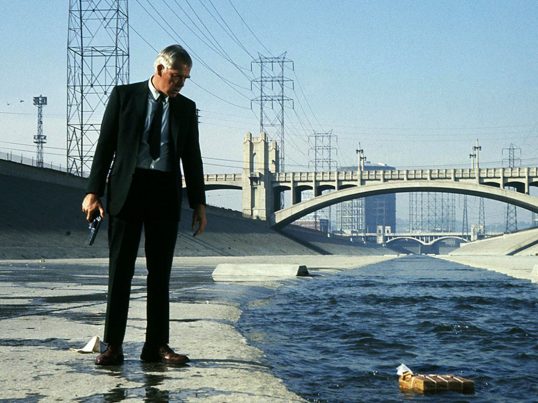
That was certainly true of his role as Walker in 1967’s Point Blank. A thief who was double crossed by his partner and the organization to which his partner was in debt, Walker is determined to get back the money that he stole from someone else. Relentlessly, Walker moves from one mob boss to another and repeatedly, those bosses make the mistake of thinking that they can double cross him again.
Point Blank (1967, directed by John Boorman)
In this scene, which was reportedly considered to be shockingly violent by 1967 standards, Carter (Lloyd Bochner) attempts to fool Walker, just to discover that Walker is smarter and far more ruthless than anyone realizes.
Today’s horror scene that I love features Linda Blair in 1977’s The Exorcist II: The Heretic, the sequel to the film for which she received an Oscar nomination.
Linda Blair was only 13 when she was cast a Regan McNeil, the girl who is possessed by a demon inThe Exorcist. She was nominated for Best Supporting Actress, only losing the award after it was revealed that Mercedes McCambridge had dubbed Blair for the scenes in which she was possessed. Blair has gone on to have a long career, appearing in movies that may not have been as honored by the Academy as TheExorcist was but which are still often very entertaining when taken on their own terms.
In The Exorcist II, Blair returned to the role of Regan. Now in her late teens, Regan says that she can’t remember anything about being possessed. Father Philip Lamont (Richard Burton) and Dr. Gene Tuskin (Louise Fletcher) think that Regan is repressing her memories and, in this scene …. well, I don’t really know how to describe this scene. Seriously, The Exorcist II is such a strange movie! Basically, Dr. Tuskin has a hypnosis machine while allows people to link minds. Dr. Tuskin links with Regan’s mind and then Lamont links with Tuskin’s mind. It’s all incredibly silly but it does allow for this scene in which “good Regan” shares the screen with “possessed Regan.”
Here is a weird scene from a weird movie, featuring a total of four Oscar-nominated performers. (For the record, Burton was nominated multiple times and, the same year he appeared in this film, he also appeared in Equus, for which he received his final nomination. Louise Fletcher won for One Flew Over The Cuckoo’s Nest. Max von Sydow would later be nominated for Pelle the Conqueror and Extremely Loud and Incredibly Close. And, of course, Linda Blair was nominated for The Exorcist.)
Zardoz (1974, dir by John Boorman, DP: Geoffrey Unsworth)
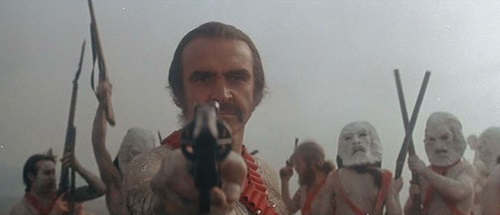
Today, the Shattered Lens wishes a happy 90th birthday to the great British filmmaker, John Boorman! Here is a scene that we love, the opening of Boorman’s 1974 film, Zardoz! Fresh from directing and receiving an Oscar nomination for Deliverance, Boorman turned down a chance to direct the original Exorcist so he could bring Zardoz to cinematic life.
(Of course, Boorman would direct the first sequel to The Exorcist.)
Directed by John Boorman and featuring Sean Connery, here is the opening of Zardoz!
4 (or more) Shots From 4 (or more) Films is just what it says it is, 4 (or more) shots from 4 (or more) of our favorite films. As opposed to the reviews and recaps that we usually post, 4 (or more) Shots From 4 (or more) Films lets the visuals do the talking.
Today, the Shattered Lens wishes a happy 88th birthday to British director John Boorman.
Boorman is one of those great director who sometimes doesn’t seem to get as much credit as he deserves. An undeniably idiosyncratic director, Boorman easily moved from genre to genre and who brought his own individual style to each of his films. Sometimes, critics and audiences responded to that vision and sometimes, they didn’t. And yet even Boorman’s so-called failures have come to be appreciated over the years. Zardoz is a cult classic. Even The Exorcist II: The Heretic is not quite the disaster that some insist. If nothing else, it’s one of the strangest studio productions to ever be released.
At his best, Boorman is one of the most influential directors of all time. How many neo-noirs have ripped off the look and the feel of Point Blank? The ending of Deliverance has been imitated by a countless number of horror films and, indeed, every backwoods thriller owes a debt to Boorman’s film about four businessmen spending a weekend canoeing. Excalibur is one of the most elegiac of all the Arthurian films while Hope and Glory retains its power to make audiences both laugh and cry with its portrayal of life on the British homefront during World War II. Meanwhile, films like The General and The Emerald Forest gave underrated characters actors like Powers Boothe and Brendan Gleeson a chance to shine.
So today, in honor of the career and the legacy of John Boorman, here are….
8 Shots from 8 John Boorman Films
Point Blank (1967, dir by John Boorman, DP: Philip H. Lathrop)
Deliverance (1972,dir by John Boorman, DP: Vilmos Zsigmond)
Zardoz (1974, dir by John Boorman, DP: Geoffrey Unsworth)
The Exorcist II: The Heretic (1977, dir by John Boorman, DP: William A. Fraker)
Excalibur (1981, dir by John Boorman, DP: Alex Thomson)
The Emerald Forest (1985, dir by John Boorman. DP: Philippe Rousselot)
Hope and Glory (1987, dir by John Boorman, DP: Philippe Rousselot)
The General (1998, dir by John Boorman, DP: Seamus Deasy)
4 Shots From 4 Films is just what it says it is, 4 shots from 4 of our favorite films. As opposed to the reviews and recaps that we usually post, 4 Shots From 4 Films lets the visuals do the talking!
96 years ago, Lee Marvin was born in New York City. After getting kicked out of several prestigious prep schools for “bad behavior,” 18 year-old Lee Marvin enlisted in the Marin Corps, was briefly a corporal before getting demoted back to private (again, because of “bad behavior”), and was wounded in action during the Battle of Saipan. (Marvin was one of the few members of his unit to survive the battle.) After he was discharged from the Marines, he worked as a plumber’s assistant at a local community theater and, after being asked to temporarily replace an actor who had fallen ill, Marvin decided to pursue a career as an actor.
Marvin became one of Hollywood’s premier tough guys. He played his share of gangsters, cops, and cowboys but, because of his background, he was a natural for playing military men. Whether it was The Dirty Dozen, The Big Red One, or The Delta Force, Lee Marvin was a natural leader and brought authenticity to every military role the played. His final film was The Delta Force,which just happens to be the greatest film ever made.
In honor of Lee Marvin’s birthday, here are:
4 Shots From 4 Films
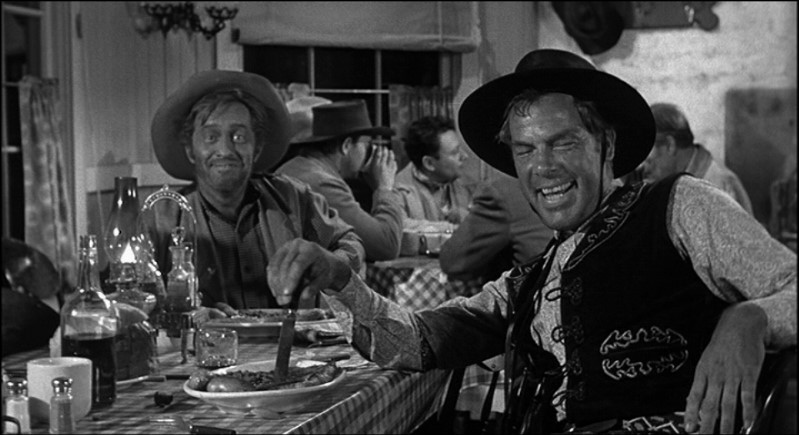
The Man Who Shot Liberty Valance (1962, directed by John Ford)
4 Shots From 4 Films is just what it says it is, 4 shots from 4 of our favorite films. As opposed to the reviews and recaps that we usually post, 4 Shots From 4 Films lets the visuals do the talking!
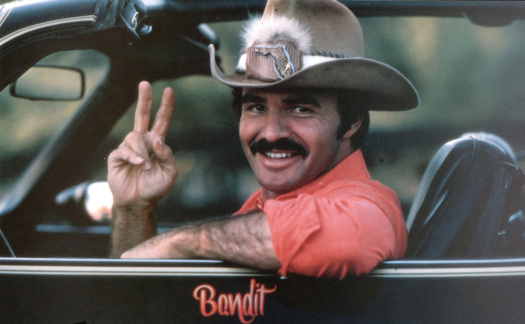
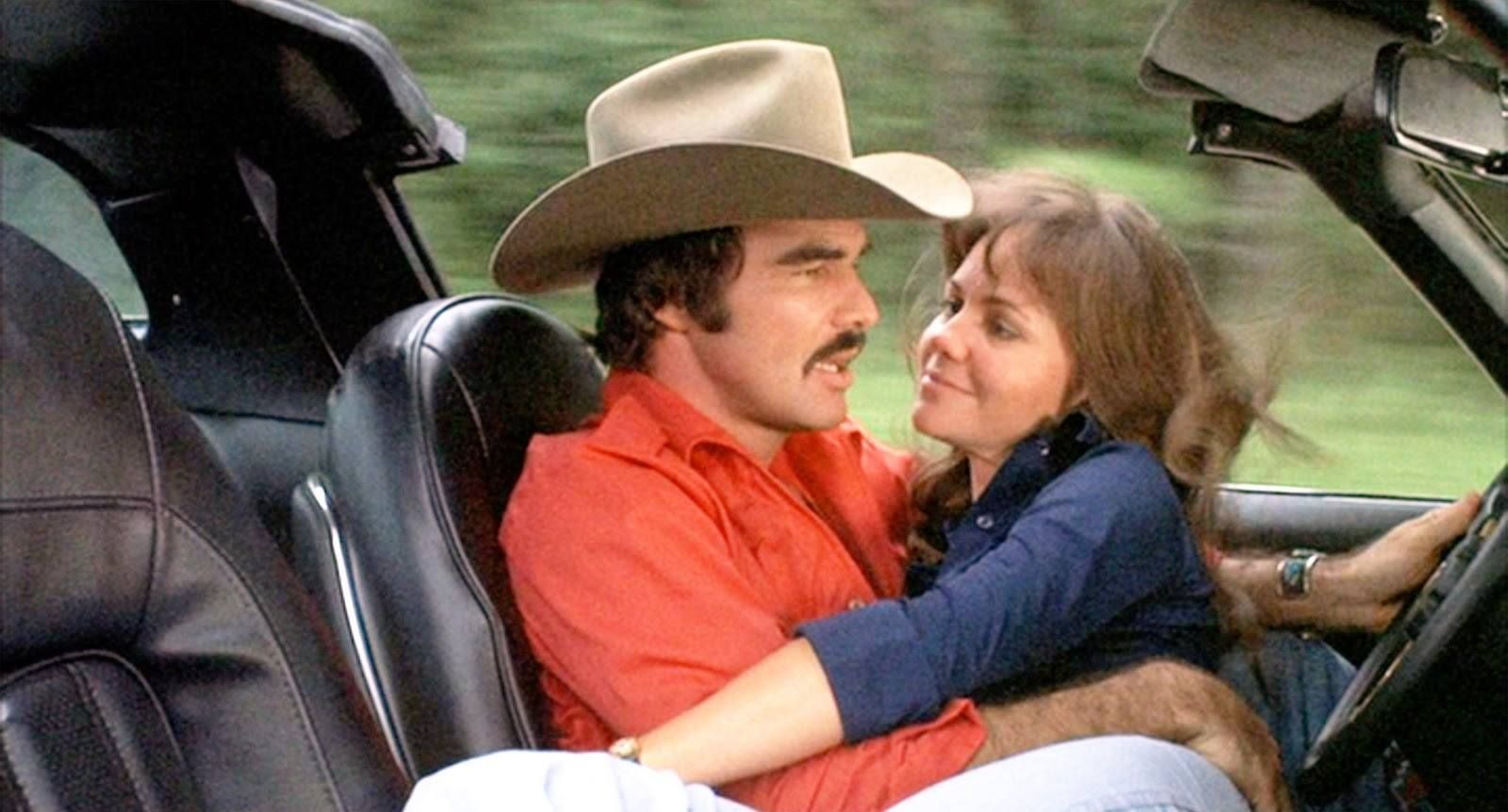
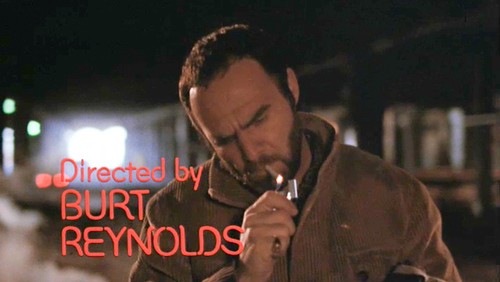
Today would have been Burt Reynolds’s 84th birthday. In honor of a legendary career that is only now starting to really be appreciated, here are 4 shots from 4 of Burt’s best films.
4 Shots From 4 Films
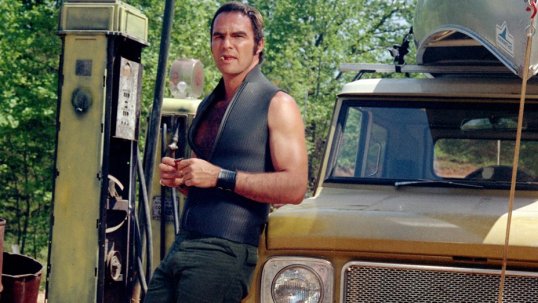
Deliverance (1972, directed by John Boorman)
Smoky and the Bandit (1977, directed by Hal Needham)
Sharky’s Machine (1981, directed by Burt Reynolds)
Boogie Nights (1997, directed by Paul Thomas Anderson)
Today is the 87th birthday of director John Boorman.
A former journalist and documentarian, Boorman got his start as a feature film director in 1965 when he was offered the chance to direct Catch Us If You Can, an enjoyable take on A Hard Day’s Night that starred the Dave Clark Five. Boorman went on to establish himself as one of the most idiosyncratic and unique directors working in the British film industry. Among the films that Boorman would direct: Zardoz, Deliverance,Point Blank, The General, Hope and Glory, and The Emerald Forest. Among the films that Boorman was offered but turned down: The Exorcist, Fatal Attraction, Rocky, and Sharky’s Machine. Few directors can claim a filmography as varied and unique as John Boorman’s.
During the 70s, Boorman made an unsuccessful attempt to put together a film version of Lord of the Rings. Boorman intended to tell the entire story in just one film but he couldn’t find financial backing for his epic vision. So, instead, Boorman directed Excalibur, an film about King Arthur which, thematically, has as much in common with Tolkein as it does with Malory.
Starring Nigel Terry, Nicol Williamson, Helen Mirren, Patrick Stewart, Gabriel Byrne, and Liam Neeson, Excalibur is my personal favorite of the many cinematic adaptations of the Arthurian legend. (I like it even more than Monty Python and the Holy Grail, though it’s a close race.) In the scene below, Arthur (Nigel Terry) first removes Excalibur from the stone. By removing the sword, Arthur confirms that it his destiny to bring “the Land,” (as Britain is referred to as being in Excalibur) together. Not everyone is convinced but Leondegrance knows a king when he sees on. (That’s not surprising, considering that he’s played by Patrick Stewart.)
The world is at war and a child is having the adventure of a lifetime.
That’s the idea behind the 1987 best picture nominee, Hope and Glory. Taking place at the start of World War II, Hope and Glory shows us the Blitz through the eyes of ten year-old Billy Rowan (Sebastian Rice-Edwards). The world around Billy is on that is full of destruction, death, and often surreal imagery. It’s a world where school children wear gas masks and the nights are full of explosions and shaking walls. In the morning, everyone steps outside to see whose house has been destroyed.
Billy’s father, Clive (David Hayman), joins the army, leaving his wife Grace (Sarah Miles) to look after the Billy, Susie (Gerladine Muir), and their rebellious older sister, Dawn (Sammi Davis). While Dawn falls in love with a Canadian soldier (Jean-Marc Barr) and Grace is tempted to have an affair with her husband’s best friend, Mac (Derrick O’Connor), Billy spends his days exploring the ruins of London and collecting scrap metal. He and his friends loot bombed-out houses for all that they can find. When they hear that Pauline’s (Sara Langton) mother was killed in the bombing, they blithely ask her if it’s true. And while Billy eventually comes to better appreciate the reality of what’s happening around him, the rest of his friends remain cheerfully unconcerned. “Thank you, Adolf!” one yells to the sky after learning that their school has been bombed.
Hope and Glory is a comedy but it has a very serious core. Even while we’re watching Billy having his adventures, we’re very aware of what’s happening in the background. For that matter, so is Billy, even if he doesn’t always immediately understand what he’s seeing or hearing. Billy may be confused as to why Grace and Dawn have such a strained relationship but, for the observant viewer, the clues are there in every tense line of dialogue, awkward silence, and sidelong glance. One of the film’s best scenes features Billy pretending to be asleep while listening to Grace and Mac talking about their past together. As they speak, it becomes obvious that Grace may have married Clive but she’s always loved Mac. Marrying Clive allowed her to have a family and a home, both of which now seem as if they could all just instantly disappear depending on where the bombs randomly land. It’s a sweet but rather sad scene, one that’s perfectly played by both Sarah Miles and Derrick O’Connor.
I cried a lot while watching Hope and Glory. I cried when Clive told his family that he was leaving. I cried when Billy was forced to confront the reality of war. I even teared up when Billy, while cheerfully exploring the ruins of a house, caught sight of the house’s former inhabitant watching him with a shell-shocked expression on her face. But it’s also a very funny film. About halfway through, Billy’s grandfather (Ian Bannen) shows up and he’s a wonderfully cantankerous and proudly contrary character. It was also hard not to like little Roger (Nicky Taylor), the pint-sized leader of the gang who swaggers like a mini-James Cagney and delivers his lines with a rat-a-tat combination of innocence and jerkiness.
Not surprisingly, Hope and Glory was autobiographical. Director John Boorman based this film on his childhood and Hope and Glory is sweetly touching in the way that only a story that comes from the heart can be. This deeply moving and very funny film was nominated for best picture but it lost to The Last Emperor.